
🔰 Introduction
Electric mobility is no longer a futuristic dream in Pakistan — it is a movement in motion. Over the past two years, the electric two-wheeler market has shifted from skepticism to visible acceptance, with dealership interest and on-road presence growing rapidly.
Major cities in Punjab, Sindh, and Khyber Pakhtunkhwa (KPK) are witnessing a steady rise in EV bikes and scooters, driven by increasing fuel prices, evolving customer behavior, and more supportive government policies.
This article explores the past progress, present momentum, and the future roadmap of electric two-wheelers in Pakistan, with emphasis on policy support, localization challenges, consumer trends, and regional disparities.
🛠️ 2020–2025: From Trial to Takeoff
1. Government Push & Policy Enablement
The Electric Vehicle Policy 2020–25 laid the foundation for this shift. In recent years, both federal and provincial governments — particularly Punjab — have initiated concrete actions to accelerate EV adoption:
- Zero customs duty on EV-specific components,
- Reduced sales tax on locally assembled EV bikes,
- Early discussions on low-interest financing schemes for consumers.
These measures have boosted investor confidence and sparked a surge in dealership applications across the country.
2. Fuel Prices: A Natural Catalyst
With petrol prices crossing Rs. 260–280 per liter, affordability has become a major concern. EV bikes, with a running cost of Rs. 1–1.5/km, offer a compelling alternative to petrol bikes, which cost Rs. 6–8/km.
For daily commuters and delivery riders, the financial advantage of EVs is too significant to ignore — making the shift more of an economic necessity than a lifestyle choice.
3. Industry Response: Learning, Testing & Adapting
Pakistan’s EV industry remains in a learning phase:
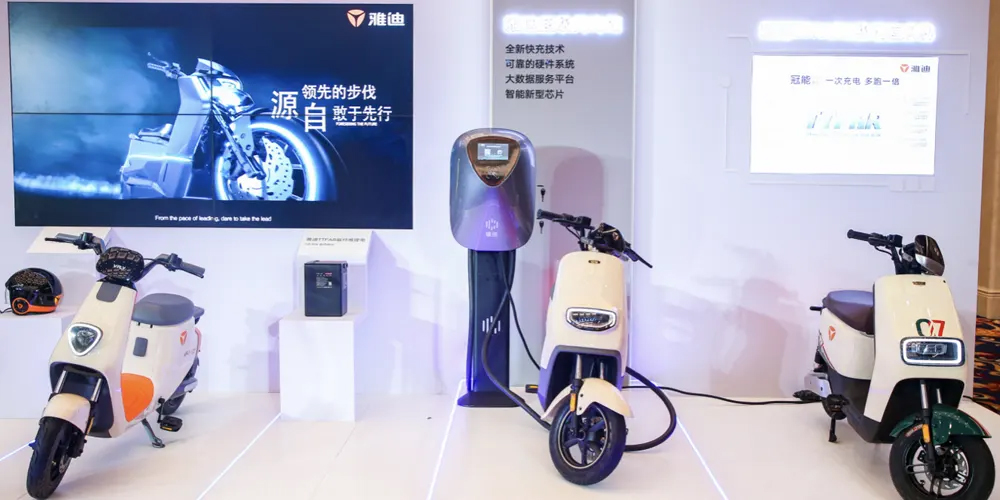
- Multiple brands — including OKLA, Yadea, Metro, Evee, Benling, Eveon, TailG, Ramza, and others — have launched diverse models with different specs.
- However, most companies are still experimenting and have yet to finalize high-volume flagship models for long-term scalability.
This uncertainty is closely tied to localization constraints. Sustainable localization becomes feasible only when:
- A model is standardized and widely adopted,
- Sales volumes are high and consistent,
- Vendors have confidence in future demand.
Without this stability, parts suppliers cannot justify the investment in tooling or economies of scale — keeping localization efforts limited and prices higher than potential.
📍 Regional EV Adoption: Punjab Leads, Sindh Lags
✅ Punjab: A Success Story in the Making
Cities like Lahore, Faisalabad, Rawalpindi, and Multan have shown strong growth in EV interest:
- Dealership networks are expanding.
- Low-rise housing makes home charging feasible.
- Higher road visibility and rising fuel costs have increased customer confidence.
⚠️ Sindh: Slower, But Full of Potential
Sindh — especially Karachi — is showing slower adoption due to a mix of factors:
- High-rise apartment living, limiting access to home charging.
- Lack of public charging infrastructure.
- Poor road conditions, which impact vehicle performance.
- Less aggressive brand outreach and promotion.
Despite these hurdles, Pakistanis are known for street-smart innovation. Creative solutions are already emerging, including:
- Ground-floor shared sockets,
- Rooftop and basement charging setups,
- Battery swapping stations in commercial areas.
These grassroots innovations — if recognized and supported — can become cornerstones of urban EV infrastructure.
💸 Cost of Ownership: A Hidden Yet Critical Factor
EV bikes offer substantial savings in fuel, maintenance, and service costs. Yet, the concept of total cost of ownership (TCO) is still largely not considered by Pakistani consumers.
- Only about 1% of buyers actively consider lifetime operating cost.
- Most purchasing decisions are based on initial price, battery range, shape/design, and brand recognition.
🔋 The Missing Puzzle: Standardization for Localization
A key barrier to EV industry growth is the lack of standardized models.
Once 2–3 flagship models are selected and scaled, vendors can confidently invest in:
- Chassis and frame production,
- Battery and controller casings,
- Local chargers and accessories,
- Plastic and cosmetic components.
This will drive down costs, strengthen after-sales support, and enable Pakistan to become a true EV manufacturing hub in South Asia.
🏭 Market Competition & Price War on the Horizon
The next 3 years will see a wave of new entrants and product diversification:
- More companies are entering Pakistan with a variety of EV bike and scooter models.
- Promotions, installment plans, and bundling of chargers/batteries will become common.
- Competition will intensify, forcing prices to drop and quality to rise.
While this is great news for consumers, it also demands that local players focus on aftersales, training, and customer retention strategies to stay competitive.
🔄 Battery Swapping: The Future of Convenience
As lithium-ion battery demand increases, especially in cities with dense housing, battery swapping stations could offer a scalable solution:
- No need for home or public charging setups
- Quick 1–2 minute battery exchanges
- Potential to support delivery fleets and ride-hailing services
For battery swapping to thrive in Pakistan, coordination between:
- OEMs (standardized battery sizes),
- Energy service providers (swapping networks), and
- Government (subsidy/infrastructure policy)
…is essential. With the right push, battery-as-a-service (BaaS) could revolutionize EV mobility.
📈 The Road Ahead: Vision 2030 & Beyond
| Area | 2030 Outlook |
| EV 2-Wheeler Adoption | Expected to exceed 1 million units on roads |
| Standardized Models | 2–3 models to dominate high-volume production |
| Parts Localization | 30–50% local content in top-selling models |
| Charging Infrastructure | Growth in home-based and smart local solutions |
| Dealership Growth | Over 500 active outlets anticipated |
| Vendor Ecosystem | Tier-2 suppliers to scale with stabilized demand |
🧠 Final Thoughts: Strategy, Scale & Sustainability
The future of EV bikes and scooters in Pakistan is bright — but only with the right strategy.
To ensure long-term sustainability, the following must be prioritized:
✅ Policy implementation and real-time enforcement
✅ Model standardization to enable localization
✅ Vendor training, tooling, and business confidence
✅ Aftersales infrastructure and technician readiness
✅ Urban charging innovation for high-rise regions
As more EVs hit the road, “seeing is believing” will fuel widespread adoption. But now is the time for OEMs, policymakers, dealerships, and vendors to collaborate and build a scalable, affordable, and locally rooted EV ecosystem.
🖊️ About the Author
Muhammad Asif Mehmood is an automotive aftersales professional with 28+ years of experience in ICE and EV platforms. He currently leads EV technical and service transformation initiatives and regularly writes about trends shaping Pakistan’s mobility future.