
Learning from the Past – Earning from the Present – Growing from the Future
Episode: 5
Summary of the Last Articles
Countries that have economically developed through the auto industry, like America, Europe, Japan, Korea, and nowadays China, are a living example of this, while Pakistan’s development is also inseparable from the auto industry.
We also reviewed the auto market trend in Pakistan and the rest of the world. SUVs are being liked for many reasons. Then we reviewed the businesses of HEV and related business potential that can be started.
Then we had looked at the past of EV and found that the auto industry started with EV vehicles maintained their place until the end of World War II, then IC engine vehicles made progress and left the EV industry behind.
In the last article, we had discussed the real journey of EV, from starting to mass production and the reasons for the rebirth of electric Vehicles. The presently marketed brands of EVs, including Electric Buses, started in different cities as a public transport within Pakistan.
Now Read On….
The Growth of Batteries is Growing to HEVs
The car battery’s history begins with the invention of the lead-acid battery by Gaston Planté in 1859. Initially, it was bulky, but improvements led to its use in early automobiles for starting engines and powering basic electrical components like headlights and horns.
Later, standardized battery sizes were introduced, and the transition from 6-volt to 12-volt systems occurred as engines became more powerful.
Today, lithium-ion batteries are becoming increasingly common in electric and hybrid vehicles.
Early Days (Pre-1910s):
Early cars relied on hand cranks for starting, and their electrical systems were limited, with magneto ignition, gas-powered headlights, and bulb horns.
The Advent of the Starter Battery (1910s):
The introduction of the electric starter in 1912 by Cadillac eliminated the need for hand-cranking, requiring a reliable power source like the lead-acid battery.
Standardization and 6-Volt Systems (1920s-1950s):
The Hudson Motor Car Company adopted the first standardized battery size, and 6-volt systems were common.
The 12-Volt Transition (Mid-1950s onwards):
Larger engines with higher compression ratios necessitated more power, leading to the widespread adoption of 12-volt systems.
The Rise of Lithium-ion (21st Century):
Lithium-ion batteries are gaining prominence in electric and hybrid vehicles due to their energy density and performance characteristics.
Ongoing Evolution:
Battery technology continues to evolve, with advancements in materials, energy density, and charging capabilities.
Battery Journey in Pakistan
The journey of car batteries in Pakistan is closely linked with the development of the country’s automotive industry. Initially, vehicles were imported along with their batteries.
Local battery manufacturing began in the mid-1950s, with Exide Pakistan being one of the pioneers.
Atlas Battery, established in 1965, later became a major player, partnering with Japan Storage Battery Co. Ltd. (now GS Yuasa Corporation) in 1966 to produce “AGS” batteries.
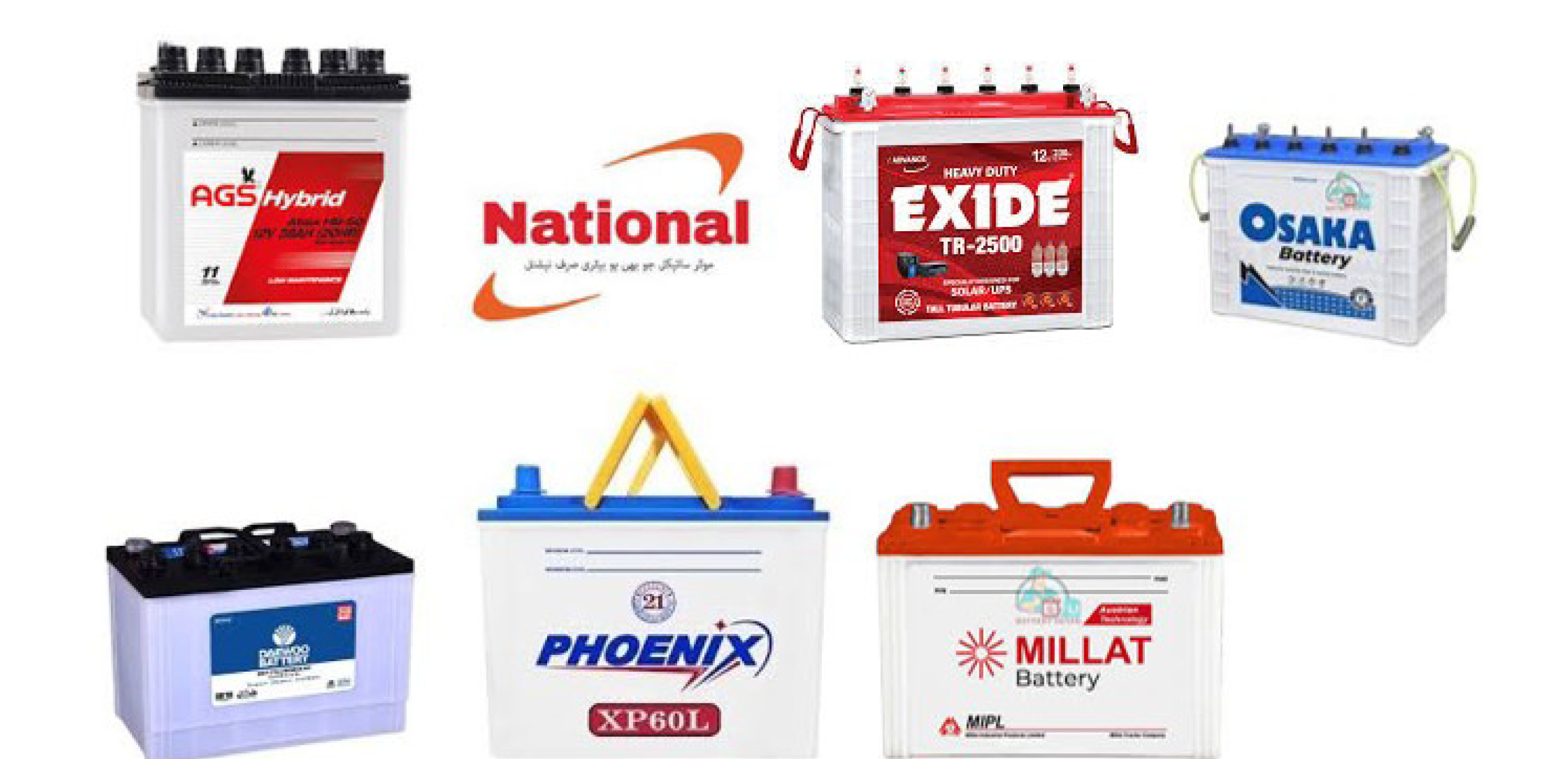
The local industry has grown, with organized players like Atlas, Exide, Osaka, Phoenix, Millat, Daewoo, and National dominating the market.
Batteries Manufacturing Business Started in Pakistan:
- 1953: Exide Pakistan started domestic production of car batteries.
- 1965: Atlas Battery was established.
- 1966: Atlas Battery signed a technical collaboration agreement with Japan Storage Battery Co. Ltd. for production of batteries in Pakistan.
- 1969: Atlas Battery commenced production under the “AGS” brand.
- 1970s-2000s: The automotive industry in Pakistan expanded, leading to increased demand for batteries. Atlas Battery, along with other manufacturers like Phoenix and Osaka, grew to meet this demand.
- Present: The organized segment of the battery market in Pakistan is dominated by a few large players, including Atlas, Exide, Osaka, Phoenix, and National, with local production reaching around 11.9 million batteries in FY21. The market is also seeing increased imports and exports of storage batteries. The growing number of vehicles on the road and the energy crisis are key drivers for the battery market.
Pakistan Battery Market Analysis
The Pakistan Battery Market is expected to register a CAGR of greater than 3.5% during the forecast period.
- Over the medium period, factors such as the growing automotive sector in the country and the low cost of lead and lithium are likely to drive the Pakistan battery market during the forecast period. Moreover, there has been a sharp increase in the sales of automobiles, particularly of the two- and four-wheeler varieties, which also include electric vehicles. This surged the demand for SLI batteries and lithium-ion batteries, which is expected to propel the Pakistan battery market.
- On the other hand, an economic slowdown and increasing government debt will likely restrain the Pakistan battery market during the forecast period.
- Nevertheless, increasing the FDI due to the OBOR (One Belt, One Road) project, which includes various infrastructure projects, is likely to create a massive opportunity for the battery companies to fully fill the requirement of energy storage demand. Moreover, transportation and the number of heavy vehicles are expected to increase due to infrastructure development, which is likely to boost the battery market during the forecast period.
Pakistan Battery Market Trends
Lithium-ion Battery Expected to Witness Significant Growth
- The lithium-ion battery market is still in its nascent phase in Pakistan. The country imports the majority of its Li-ion batteries from China. Increasing demand for backup power solutions and a rise in solar PV installations are expected to be the major drivers for the Li-ion battery market in the country.
- These trends result in a sharp and sustained cost reduction, which is expected to help cement lithium-ion as the battery chemistry of choice in all energy storage markets, including grid-scale, behind-the-meter storage, residential storage, and microgrids in Pakistan.
- Manufacturers are focusing on reducing the cost of lithium-ion technology. The price of lithium-ion batteries has fallen steeply over the past ten years. In 2022, the lithium-ion battery price was USD 135 per kWh.
- This sharp and sustained cost reduction is expected to help cement lithium-ion as the battery chemistry of choice in all industrial and commercial electronic markets, including the agricultural, material handling, and construction industries, compared to lead-acid batteries. Falling battery prices are expected to bring price-competitive electric vehicles to all the major electric vehicle segments before 2030, ushering in a period of intense growth for electric vehicles.
- Hence, with declining prices, the lithium-ion battery segment is likely to witness significant growth in the market during the forecast period.
Growth of Electric Vehicles and the Renewable Energy Sector
- The initiation of electric vehicle assembling projects in Pakistan is expected to boost the battery market in the coming years. The government has been working toward increasing the integration of EVs in the country’s automobile sector and has set a target of 30% of vehicles operating on batteries by 2030.
- Pakistan’s electric vehicle (EV) policy was approved for implementation in June 2020. Under the policy, the government aims to bring half a million e-motorcycles and rickshaws, with more than 100,000 electric cars, buses, and trucks, into the transportation system over the next five years.
- The transportation sector in Pakistan has been experiencing double-digit growth. Almost dependent on oil-based products, and the country spends nearly USD 13 billion on the import of oil every year. Continues to grow at the same rate, the bill for oil imports is expected to reach around USD 30 billion by 2025. Therefore, shifting to electric vehicles solves several sectors’ present and impending problems, including transportation, environment, economy, and power.
- The running cost of electric vehicles is relatively low, but the capital cost is relatively high. Moreover, the present infrastructure for EVs in the country needs to be improved. The Pakistani government has planned to implement incentives to support EV adoption and domestic manufacturing.
- Therefore, owing to the above points, the increasing growth of electric vehicles and the renewable energy sector in the country is likely to drive the Pakistan battery market during the forecast period.
Batteries Business Opportunities in Pakistan
Several promising battery business opportunities exist in Pakistan, driven by the growth of electric vehicles (EVs), renewable energy, and consumer electronics. The increasing adoption of EVs, spurred by government incentives, and the expansion of the renewable energy sector, particularly solar and wind power, are creating a surge in demand for energy storage solutions. Additionally, the consumer electronics segment, including smartphones and other devices, is also contributing to the overall demand for batteries.
Specific Opportunities:
- Lithium-ion Battery Manufacturing and Assembly:
The rising demand for EVs and renewable energy storage systems presents a significant opportunity for establishing lithium-ion battery manufacturing and assembly plants in Pakistan.
- Import/Distribution of Batteries:
For businesses not yet ready to enter manufacturing, importing and distributing high-quality batteries, particularly for EVs and renewable energy applications, can be a profitable venture.
- Battery Recycling:
As battery usage increases, so does the need for proper battery recycling to minimize environmental impact. This creates a niche market for battery recycling businesses.
- Battery Management Systems (BMS):
Developing and supplying advanced BMS for EVs and energy storage systems is another area with growth potential, focusing on efficiency, safety, and longevity of batteries.
- Specialized Battery Applications:
Opportunities exist in niche markets like industrial batteries, backup power solutions for businesses, and specialized batteries for electric motorcycles and rickshaws, which are part of the government’s EV policy.
- Solar Battery Solutions:
With the growing adoption of solar power, businesses can focus on providing high-quality solar batteries for homes and businesses.
- Inverter Battery Sales and Service:
Inverter batteries for backup power during outages remain a consistent market in Pakistan. Businesses can focus on sales, installation, and maintenance of these batteries.
- Advanced Battery Technologies:
Research and development in areas like sodium-ion batteries or other emerging technologies could also be a future opportunity.
Factors Favoring Battery Business Growth in Pakistan:
- Government Support:
The Pakistani government is actively promoting EVs and renewable energy, creating a favorable environment for battery-related businesses.
- Increasing FDI:
Foreign direct investment is expected to increase due to infrastructure projects, further supporting the growth of the battery market.
- Rising Energy Demand:
Pakistan’s growing population and economy are driving increased energy consumption, creating a need for reliable energy storage solutions.
- Cost Optimization:
Efficient manufacturing and supply chain management are crucial for remaining competitive.
- Innovation and R&D:
Investing in research and development to improve battery performance and develop new technologies is vital.
- Strategic Partnerships:
Collaborating with local and international companies can help businesses expand their reach and access new technologies.
Next episode, Battles between Global Lithium Demands is experiencing a significant surge, primarily driven by the widespread adoption of electric vehicles and the expansion of lithium-ion battery technology.
This increased demand is creating a “race” to secure lithium supplies, with various countries and companies exploring new extraction methods and locations.
Wait for exploring the World of Lithium by staying connected with Monthly AUTOMARK, then say together Grow Automotive Grow Pakistan, INSHALLAH.

This exclusive article has been published in Automark’s August-2025 printed edition. Written by Mumtaz Hussain