
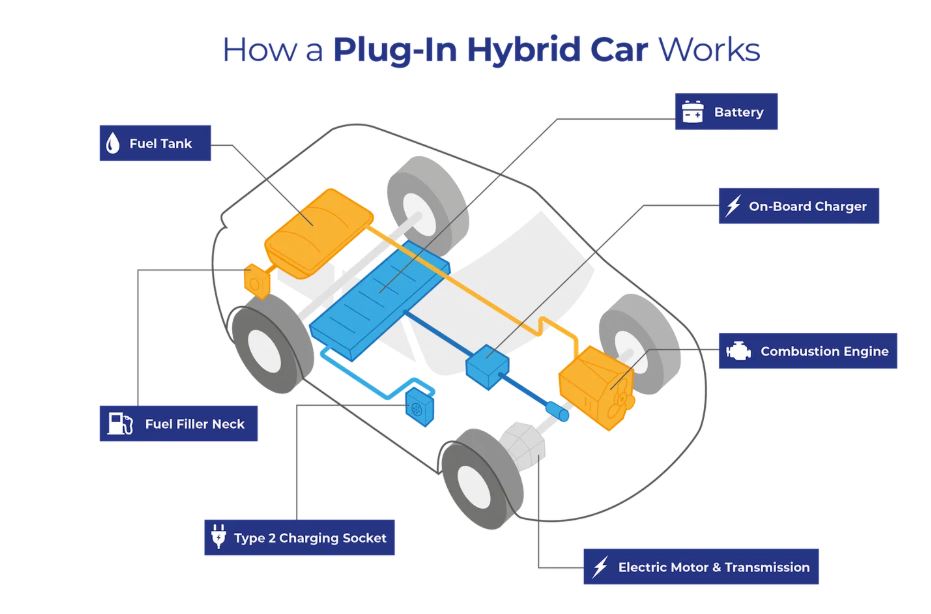
The world of transportation is rapidly changing, and Plug-in Hybrid Electric Vehicles (PHEVs) are playing a key role as a middle ground between classic combustion engines and fully electric cars. These vehicles blend an electric motor with a traditional engine to offer the benefits of quick electric power along with the longer driving range and ease provided by a fuel tank. However, a common question that comes up is why most PHEVs use gasoline engines instead of diesel ones
1. The Nature of Hybrid Operation
At the core of every PHEV is the seamless teamwork between its electric motor and combustion engine. These hybrids are designed to handle frequent stop and go driving, short bursts of electric only travel, and smooth switching between power sources. Gasoline engines are a natural fit for this role they heat up quickly, run quietly, and blend effortlessly with electric power. On the other hand, diesel engines take longer to reach their ideal operating temperature and can feel less refined during constant start stop cycles, making them a less practical match for the demands of hybrid driving.
2. Emission Standards and Complexity
Emission regulations play a big role in why the industry leans toward gasoline engines. Although diesel engines typically offer better fuel economy, they generate higher levels of nitrogen oxides and particulate matter pollutants that face strict limits in most regions. To comply with these rules, diesel hybrids would need complicated and costly exhaust treatment systems, which could eat into their efficiency gains. Gasoline engines, by contrast, emit fewer NOₓ pollutants by design, providing a more straightforward and affordable way for automakers to meet environmental standards.
3. Precision and Pleasure
Plug-in hybrids are often aimed at city drivers and eco-conscious buyers who prioritize a smooth and quiet ride. Diesel engines, known for their distinctive noise and vibrations, can’t quite deliver the same level of refinement as gasoline or electric powertrains. Gasoline engines, on the other hand, work seamlessly with electric motors to create a calm and comfortable cabin atmosphere an important feature that complements the sophisticated, cutting edge appeal of modern hybrid vehicles
4. Market Dynamics and Global Acceptance
When it comes to global trends, gasoline is still the fuel of choice in most major markets particularly in places like the US, Japan, and China, where hybrids are gaining popularity.
While diesel once enjoyed strong support in Europe, tougher emissions regulations and shifting public attitudes especially after high-profile diesel scandals have caused its demand to drop sharply. That’s why most automakers see more value in building their hybrid systems around gasoline engines, allowing them to maximize efficiency, cut costs, and deliver strong performance
on a worldwide scale.
5. The Efficiency Equation
Although diesel engines have a reputation for excellent thermal efficiency, hybrids gain similar advantages from their electric motors, which deliver instant torque and impressive efficiency at low speeds the areas where diesels usually excel. In most urban settings, it’s the electric motor in a PHEV that does the heavy lifting, handling stop and go traffic where diesel engines are less effective. This leaves the gasoline engine to step in as a lightweight, smooth, and reliable partner for longer journeys making it the perfect match for a modern electrified powertrain.
In Conclusion
PHEVs symbolize a transitional technology smartly combining electric propulsion with the practicality of liquid fuel. And while diesel’s efficiency once ruled the highways, the hybrid age demands a different partner: one that’s cleaner, quieter, and better attuned to the rhythm of electrification.
In that equation, gasoline simply fits better not just under the hood, but within the philosophy of the modern hybrid era.
How This Applies to the Pakistani Market
Turning now to our local context: in Pakistan, the question shifts from “gasoline vs diesel” to “hybrid or full electric?” Given current infrastructure, consumer behavior and policy environment, what makes most sense?
Why Hybrids/PHEVs Lead Today
The local market is still developing charging infrastructure for full electric vehicles (EVs). For example, in Pakistan the limited number of public charging stations means range-anxiety and convenience issues remain.
A plug-in hybrid (PHEV) offers the advantage of electric driving for short trips while retaining the flexibility of a conventional fuel engine for longer journeys or areas where charging
infrastructure is limited. Industry analysts in Pakistan consider PHEVs to be particularly
practical given the current state of local infrastructure. Several hybrid and plug-in hybrid options are now locally assembled in Pakistan, making electrified mobility more accessible for consumers.
These vehicles provide a balanced mix of electric range and petrol backup, making them
well-suited for everyday use in urban environments. Considering the still developing EV charging network, opting for a PHEV presents a lower-risk transition towards cleaner mobility
compared to shifting directly to fully electric vehicles at this stage.
Looking Ahead: When Full EVs Make Sense
Electric vehicles (EVs) represent the future of mobility. As charging networks expand, electricity remains cheaper than fuel, and local manufacturing along with incentives grow, EVs will become increasingly compelling. Pakistani policy is already moving in this direction, and recent events reflect this trend. The recent PAPS Autoshow held in Karachi prominently featured a wide range of electric vehicles (EVs) and plug-in hybrid electric vehicles (PHEVs), including models equipped with cutting-edge REEV (Range-Extended Electric Vehicle) technology.
However, until that future fully arrives, hybrid and plug-in hybrid vehicles (PHEVs) offer a more practical and “safer” bridge for many buyers.
Recommendation for Pakistani Buyers:
- If your driving is mostly within the city and you can conveniently charge at home or work and are willing to pay a small premium a PHEV is currently one of the most suitable options.
- If you’re more future oriented and prefer to wait, keeping an eye on full EVs as charging infrastructure improves could be the right move.
This exclusive article has been published in Automark’s December-2025 printed and digital edition. Curated by Vishal Raheja, Manager Marketing & Sales, Ghandhara Automobiles Ltd.