
Public Notice C2/2026 Reshapes the EV Classification Landscape
The classification of Range-Extended Electric Vehicles (REEVs), also known as Extended-Range Electric Vehicles (EREVs), has long occupied a grey zone within Pakistan’s automotive and regulatory ecosystem. Blending electric propulsion with an onboard fuel-powered generator, these vehicles challenge traditional definitions of electric and hybrid technologies.
With the issuance of Public Notice C2/2026, Pakistan Customs has now delivered decisive regulatory clarity:
Range-Extended Electric Vehicles are classified as Electric Vehicles under PCT 8703.80 — vehicles propelled solely by electric motor(s).
This landmark determination aligns Pakistan with international customs interpretation under the Harmonized System (HS 2022) and guidance from the World Customs Organization (WCO), while also setting a precedent for how emerging propulsion technologies will be treated in the national EV transition.
Electric Propulsion with a Range-Extending Generator
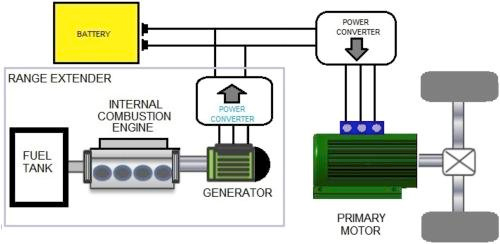
Range-Extended Electric Vehicles employ a propulsion architecture commonly described as a series hybrid configuration, yet functionally they operate as electric vehicles in all driving conditions. Their defining characteristics include:
- Wheels driven exclusively by electric traction motor(s)
- High-voltage battery as the sole propulsion energy source
- Internal combustion engine operating only as a generator
- No mechanical linkage between engine and drivetrain
In practical terms, the engine can never propel the vehicle. All torque transmitted to the wheels originates from the electric motor alone.
This single engineering fact became the decisive criterion in tariff classification.
The Regulatory Question at the Heart of the Debate
REEVs combine two energy systems:
- Electric propulsion
- Fuel-based electricity generation
This duality triggered competing classification interpretations under Pakistan’s Customs Tariff:
PCT 8703.60 — Plug-in Hybrid Electric Vehicles
Vehicles in which both engine and electric motor can mechanically drive the wheels
PCT 8703.80 — Vehicles with only electric motor for propulsion
Vehicles propelled exclusively by electric motor(s)
The central legal question therefore emerged:
Can an internal combustion engine that never transmits torque to the wheels be considered a propulsion motor?
Industry Divide: Technology vs Tariff Interpretation
Importers and proponents of REEV technology argued that propulsion remains purely electric. In their view, the onboard engine functions merely as an auxiliary electricity source — analogous to external charging infrastructure.
Conversely, several domestic manufacturers and industry stakeholders asserted that REEVs should be treated as hybrid vehicles, emphasizing their fuel consumption, emissions profile, and classification in engineering taxonomy as series hybrids.
This divergence exposed a fundamental distinction often overlooked in policy discourse:
Vehicle technology classification and customs tariff classification are not the same.
Harmonized System Principle: Propulsion Mechanics Defines Vehicle Type
Pakistan’s Classification Committee examined HS heading 87.03 and reaffirmed a core principle embedded in global tariff structure:
Vehicle categories are determined by the source capable of delivering mechanical propulsion to the wheels.
Under this framework:
- Internal combustion vehicles — engine drives wheels
- Hybrid vehicles — engine and motor can drive wheels
- Electric vehicles — only motor drives wheels
- REEVs — only motor drives wheels
Although REEVs consume fuel indirectly, the internal combustion engine does not transmit mechanical power to the drivetrain. It therefore does not qualify as a propulsion motor under HS definitions.
International Consensus and Future HS Evolution
To ensure consistency with global practice, Pakistan Customs consulted the World Customs Organization. The WCO confirmed that under HS 2022:
Vehicles propelled exclusively by electric motor(s), even if equipped with an internal combustion engine used only for electricity generation, fall under subheading 8703.80.
Recognizing the growing adoption of REEV technology worldwide, the WCO has also introduced a dedicated subheading — 8703.81 — in the HS 2028 amendments. From 1 January 2028, REEVs will be statistically distinguished from pure battery electric vehicles while remaining within the electric propulsion category.
Pakistan’s Final Determination
Based on tariff text, explanatory notes, technical architecture, and WCO guidance, Pakistan Customs concluded:
- An engine used solely for charging is not a propulsion motor
- REEV propulsion is exclusively electric
- REEVs fall under PCT 8703.80 (electric vehicles)
This ruling establishes uniform national treatment for range-extended architectures entering Pakistan’s market, including vehicles such as Deepal REEV and Forthing REEV.
Strategic Implications for Pakistan’s EV Transition
Public Notice C2/2026 carries implications far beyond tariff coding. It influences how Pakistan’s mobility transition will evolve across policy, industry, and market adoption.
1. Regulatory Certainty
Manufacturers, importers, and investors now have clear classification guidance for REEV technology.
2. EV Market Expansion
REEVs can be positioned as electric-drive vehicles with extended range — addressing range anxiety, a major barrier in Pakistan’s EV adoption.
3. Policy Calibration Challenge
Although tariff-classified as EVs, REEVs are not zero-emission vehicles. Future fiscal incentives and environmental policy may need to differentiate propulsion from emissions.
4. Alignment with Global Standards
Pakistan’s classification now mirrors international HS interpretation, strengthening trade consistency and regulatory credibility.
Technology vs Tariff: The Defining Insight
Perhaps the most important lesson from Public Notice C2/2026 is conceptual:
A vehicle can be technologically a hybrid yet legally an electric vehicle for customs purposes.
This occurs because:
- Engineering taxonomy classifies by energy architecture
- Tariff law classifies by propulsion mechanics
REEVs sit precisely at this intersection — technologically hybrid, mechanically electric.
Conclusion: A Turning Point in EV Classification
Public Notice C2/2026 resolves a complex classification challenge created by next-generation propulsion systems. By confirming that Range-Extended Electric Vehicles fall under PCT 8703.80, Pakistan has aligned itself with global customs interpretation while enabling regulatory certainty for an emerging EV segment.
The ruling ultimately rests on a simple but decisive principle:
If only the electric motor drives the wheels, the vehicle is classified as electric — even when an engine generates the electricity.
As Pakistan advances toward electrified mobility, this decision marks a pivotal step in integrating new propulsion technologies into both policy and market reality.
Here is another exclusive article has been published in Automark’s March-2026. Written by @asif-mehmood