Outcome of the PAAPAM Symposium 2026
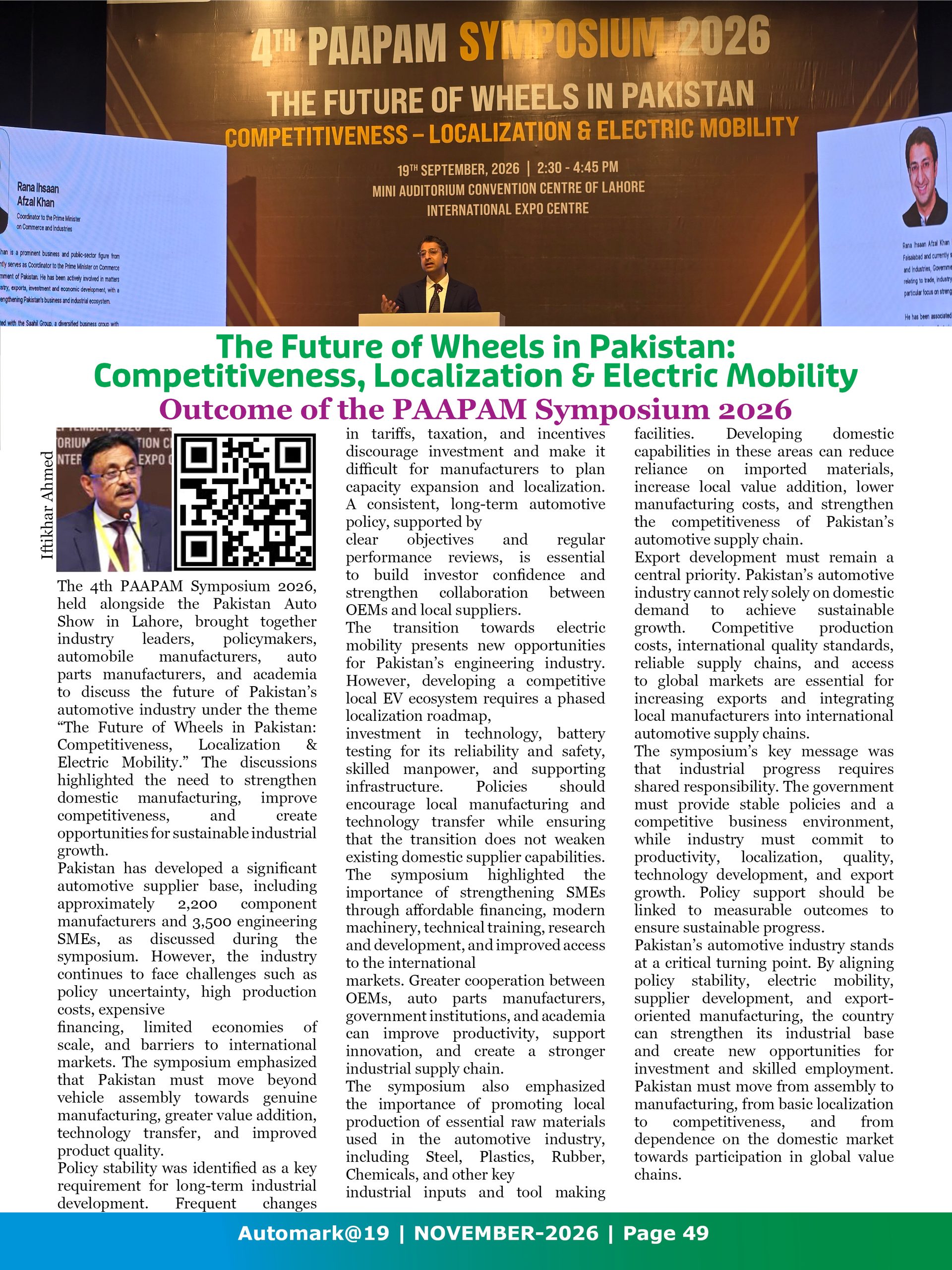
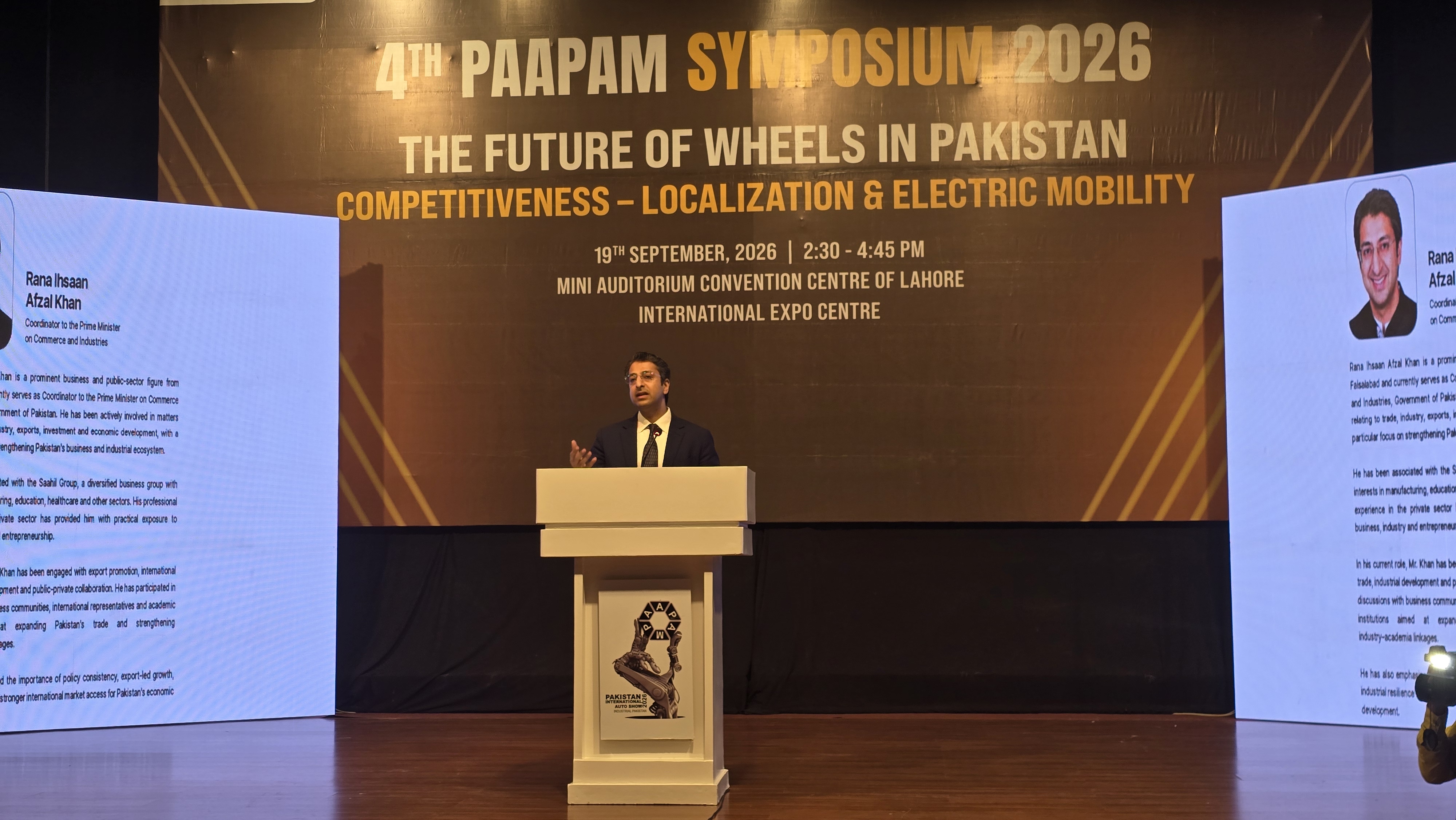
The 4th PAAPAM Symposium 2026, held alongside the Pakistan Auto Show in Lahore, brought together industry leaders, policymakers, automobile manufacturers, auto parts manufacturers, and academia to discuss the future of Pakistan’s automotive industry under the theme “The Future of Wheels in Pakistan: Competitiveness, Localization & Electric Mobility.” The discussions highlighted the need to strengthen domestic manufacturing, improve competitiveness, and create opportunities for sustainable industrial growth.
Pakistan has developed a significant automotive supplier base, including approximately 2,200 component manufacturers and 3,500 engineering SMEs, as discussed during the symposium. However, the industry continues to face challenges such as policy uncertainty, high production costs, expensive
financing, limited economies of scale, and barriers to international markets. The symposium emphasized that Pakistan must move beyond vehicle assembly towards genuine manufacturing, greater value addition, technology transfer, and improved product quality.
Policy stability was identified as a key requirement for long-term industrial development. Frequent changes in tariffs, taxation, and incentives discourage investment and make it difficult for manufacturers to plan capacity expansion and localization. A consistent, long-term automotive policy, supported by
clear objectives and regular performance reviews, is essential to build investor confidence and strengthen collaboration between OEMs and local suppliers.
The transition towards electric mobility presents new opportunities for Pakistan’s engineering industry. However, developing a competitive local EV ecosystem requires a phased localization roadmap,
investment in technology, battery testing for its reliability and safety, skilled manpower, and supporting infrastructure. Policies should encourage local manufacturing and technology transfer while ensuring that the transition does not weaken existing domestic supplier capabilities.
The symposium highlighted the importance of strengthening SMEs through affordable financing, modern machinery, technical training, research and development, and improved access to the international
markets. Greater cooperation between OEMs, auto parts manufacturers, government institutions, and academia can improve productivity, support innovation, and create a stronger industrial supply chain.
The symposium also emphasized the importance of promoting local production of essential raw materials used in the automotive industry, including Steel, Plastics, Rubber, Chemicals, and other key
industrial inputs and tool making facilities. Developing domestic capabilities in these areas can reduce reliance on imported materials, increase local value addition, lower manufacturing costs, and strengthen the competitiveness of Pakistan’s automotive supply chain.
Export development must remain a central priority. Pakistan’s automotive industry cannot rely solely on domestic demand to achieve sustainable growth. Competitive production costs, international quality standards, reliable supply chains, and access to global markets are essential for increasing exports and integrating local manufacturers into international automotive supply chains.
The symposium’s key message was that industrial progress requires shared responsibility. The government must provide stable policies and a competitive business environment, while industry must commit to productivity, localization, quality, technology development, and export growth. Policy support should be linked to measurable outcomes to ensure sustainable progress.
Pakistan’s automotive industry stands at a critical turning point. By aligning policy stability, electric mobility, supplier development, and export-oriented manufacturing, the country can strengthen its industrial base and create new opportunities for investment and skilled employment. Pakistan must move from assembly to manufacturing, from basic localization to competitiveness, and from dependence on the domestic market towards participation in global value chains.
This exclusive article has been published in Automark’s November-2026 printed and digital edition. Written by @Ifthikar Ahmed.