
Pakistan’s auto parts industry is standing at a crucial juncture. While the domestic Original Equipment Manufacturer (OEM) supply base has expanded impressively over the past few decades, our global footprint remains small—yet full of untapped potential.
With more than 250 local auto parts manufacturers actively supplying to OEMs in Pakistan, only 28 of them are currently exporting. These exporters have carved their own path, often with little institutional support. They took bold steps—investing in global marketing, participating in international trade exhibitions, building certifications, and complying with export standards—all without any guaranteed success in the beginning.
In contrast, many of their peers continue to focus solely on domestic demand. But in a shrinking local auto market—marked by volatile car sales, economic uncertainty, and heavy dependency on imported kits—this is no longer sustainable. It’s time for the rest of the community to step up and join hands in taking Pakistan’s auto parts manufacturing to global markets.
Rising Costs, Fading Margins – The Challenge of Exporting Alone
One of the biggest barriers faced by aspiring exporters is the cost of participating in international trade fairs. From booth rentals to airfare, accommodation, logistics, and sample transportation, expenses can quickly balloon to unsustainable levels—especially in the face of Pakistan’s depreciating currency and inflationary pressure.
What used to be manageable has now become nearly out of reach for many SMEs. Even securing government subsidies or trade development grants is a bureaucratic maze with few transparent outcomes.
But rather than giving up, we must adapt. We need new collaborative strategies. If every small manufacturer tries to do everything on their own, we’ll continue to struggle. But if we build clusters, pool our capabilities, and form joint marketing groups, we can make a mark on the global map.
Learning from Our Own Exporters
Before dreaming big, we must start by learning from our own exporters—the 28 companies that are already exporting. What markets are they in? How did they get there? What certifications did they need? What mistakes did they make early on?
By understanding their journeys, we can shorten our own. Regular meetups, knowledge sharing forums, and digital WhatsApp groups should be set up where insights can be exchanged. This isn’t just an industry problem—it’s a national challenge that must be tackled collectively.
Collaborate to Compete: Joint Participation in Global Fairs
Rather than every company applying for a separate booth, we must consider joint representation. Here’s the formula:
Product development collaboration: Two or three companies from different technologies can jointly develop one product for export.
Marketing representative model: One experienced exporter can serve as the group’s export marketing lead.
Joint participation in trade fairs: Share the booth, share the cost, and share the leads.
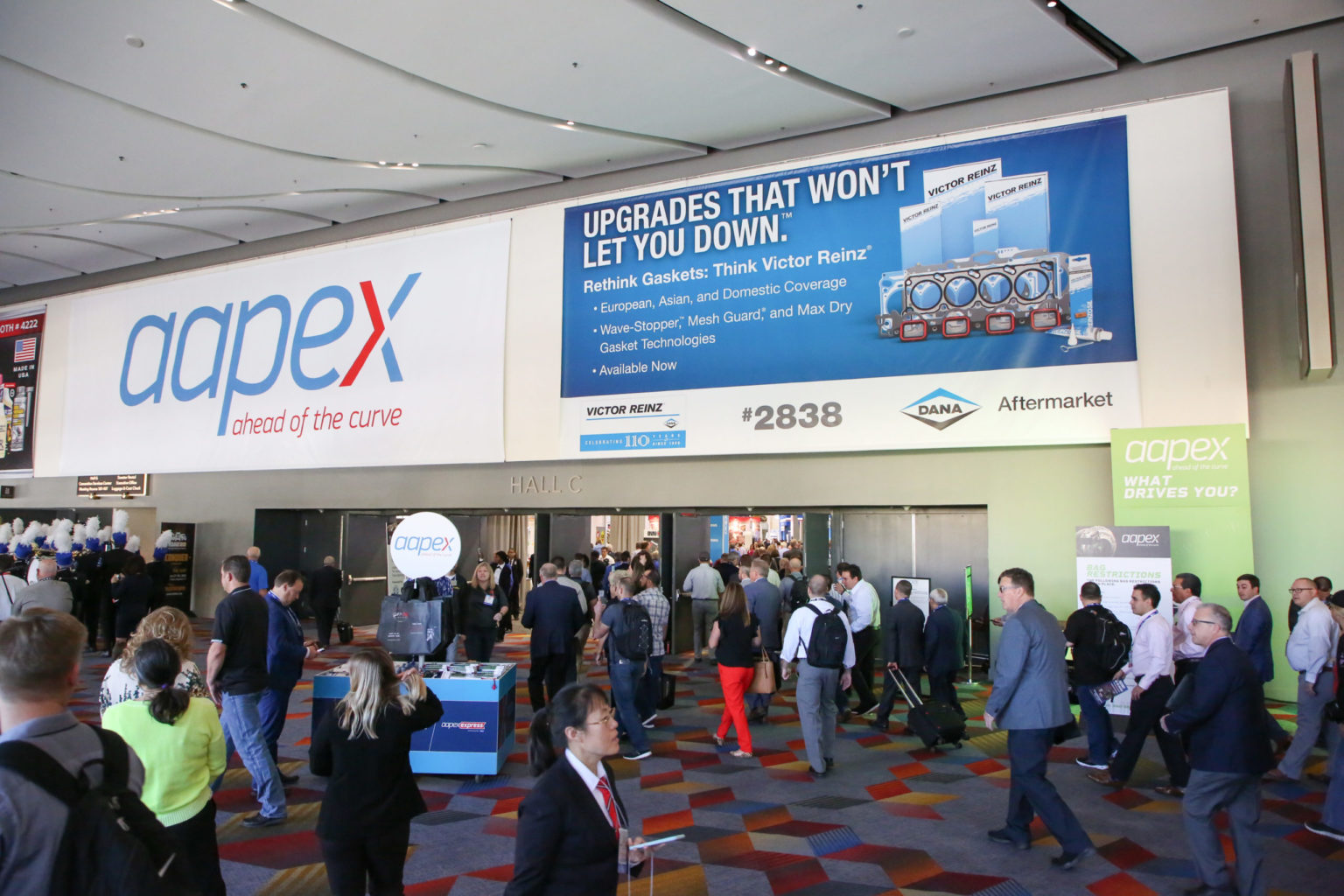
The upcoming AAPEX 2025 in Las Vegas (November 4–6) and Automechanika Frankfurt 2025 (September 9–13) are ideal platforms for such strategies.
Why AAPEX USA 2025 Matters
The American automotive aftermarket is estimated at $190.5 billion, covering parts, services, and accessories sold after the initial vehicle purchase. Alongside it, Latin America’s aftermarket is growing rapidly and now worth USD 56.13 billion (2024). These are mature, yet opportunity-rich markets.
AAPEX is a trade-only event that brings together distributors, importers, retailers, manufacturers, and service providers from the U.S., Latin America, and other global regions.
What makes AAPEX so important?
To make the most of AAPEX, Pakistani companies must understand that product quality, certification (like ISO/TS), packaging, and pricing are non-negotiables. But so is having a confident sales team that can communicate value clearly.
Why Automechanika Frankfurt 2025 Is Equally Important
Held every two years, Automechanika Frankfurt is Europe’s leading platform for the automotive aftermarket, with a market size of USD 107.83 billion. European buyers are known for being quality-conscious, environmentally focused, and compliance-driven—making it a tough but rewarding market.
Why should Pakistani firms participate?
Global Reach: Engage with buyers from over 180 countries.
Technology Insights: See what’s next in EV, hybrid, and intelligent mobility.
Supplier Networking: Build relations with raw material providers and distributors.
Sustainability Trends: Showcase eco-friendly parts, especially in rubber, metal, electronics, and lightweight polymers.
For participation, a company must first identify its core product, map it to international demand, and then study the exhibitor and visitor list from previous years. Contact potential buyers in advance and schedule meetings at the booth.
Preparing for the Leap
Export readiness is not just about making a good product. It requires a complete transformation of how companies think and operate:
Certifications: Invest in internationally recognized quality management systems and lab testing.
Packaging & Branding: First impressions matter. Your packaging must be professional and product branding sharp.
Pricing Strategy: Competitive without compromising margins. Factor in logistics and after-sales support.
Online Presence: Buyers do research before they buy. You need a website, digital catalog, and email presence.
Customer Service: Be ready to respond fast, with technical data sheets, MOQs, lead times, and shipping terms.
A Final Word: It’s Time to Move Forward
Pakistan’s auto parts sector has the capability, the talent, and the infrastructure. What it lacks is direction, collaboration, and strategic ambition.
The next two years are crucial. With events like AAPEX USA and Automechanika Frankfurt on the horizon, we have clear targets. These are not just exhibitions—they are launchpads for global growth.
Instead of waiting for perfect conditions, we must build teams, pool resources, and start now.
As a nation, if we are to reduce our trade deficit, earn foreign exchange, and move away from donor dependency, we must industrialize through export-oriented growth. And the auto parts sector, with its deep supply chains, engineering strength, and proven track record, is one of the best places to start.
Let’s collaborate. Let’s export. Let’s put Pakistan’s auto parts industry on the global map—together.
By Mashood Khan
Director – Mehran Commercial Enterprises
Expert Auto Sector / Former Chairman PAAPAM