
Dear Readers!!! Eid Mubarak 2026 to all our Automark family! We wish this blessed occasion to bring prosperity, unity, and energy to the automotive industry in Pakistan. We shall continue to drive the industry forward with innovation, partnership, and determination. We wish you all joy, success, and growth. Eid Mubarak!
The automotive industry of Pakistan is once again gaining steam as production is underway, market sentiment is cautiously optimistic, and new entrants are redefining the competitive landscape of the industry. However, underlying all of this is the larger concern of whether we are actually witnessing real change or merely another round of cyclical upswings? This article is born of exactly the same concern. It is not merely an analysis of what is happening today but rather a contemplation of what direction the industry is forced to take if it is to achieve sustainability in the long run. For in today’s rapidly changing global environment, success is no longer measured by what is being produced but by how it is being produced. “Production is not just about assembling vehicles; it is about building a nation’s industrial backbone.
Background: A Sector of Strength, Yet Structural Limitations: The automotive industry of Pakistan has long been regarded as one of the most important sectors contributing towards the development of the industrial sector of the country. The fact remains that the country has gained decades of operational experience, a base of original equipment manufacturers, and a continuously expanding vendor base, making it a place with all the necessary ingredients of a robust manufacturing environment. But the harsh reality is that there is a fundamental lack of balance in the structure of the automotive industry of the country, as a substantial part of it still remains operational under assembly-based models, relying heavily on imported parts. The manufacturing processes are still largely labor-intensive, while the use of technology and real-time data is still in its development phase. This makes it an industry that is operational but not necessarily optimized. There is a fundamental difference between having a factory and having a functioning manufacturing ecosystem, and it is exactly here that the opportunity lies as well as the urgency. “We have built production capacity, but we are yet to unlock production intelligence.”
Why This Conversation Matters Today: The pressing need to achieve this change is being driven by a number of converging factors. On a global level, the automotive sector is witnessing a significant change in the form of smart manufacturing. The digital, automated, and analytical aspects of manufacturing can no longer be considered peripheral; they have to be the core. Those who do not adopt this change will be forced to lag behind in the highly competitive global market. On a national level, the market scenario is witnessing a change. The entry of new global players into the market has forced a change in the level of competition. The customer today is more informed, more demanding, and less willing to compromise. This is a changing environment that needs a review not only of what is being manufactured, but how it is being manufactured. The economic environment adds another layer to this situation. Fluctuating currencies, increasing costs, and import issues have all made efficiency a key factor for success. In this environment, traditional manufacturing processes are not effective. The industry must change to a more efficient, more intelligent, and more resilient model.
Production as a Symphony: In order to fully grasp the degree of transformation needed, it is necessary to reconsider the concept of production. This is no longer a linear process; rather, it is a highly orchestrated process—a symphony. In the symphony of production, the human element is the performer, the processes are the instruments, technology is the conductor, and leadership is the composer. When each of these is working together properly, the result is efficiency, quality, and uniformity. When they do not, inefficiencies and disruptions ensue. “A factory does not achieve excellence through machines alone, but through the harmony of its entire system.”
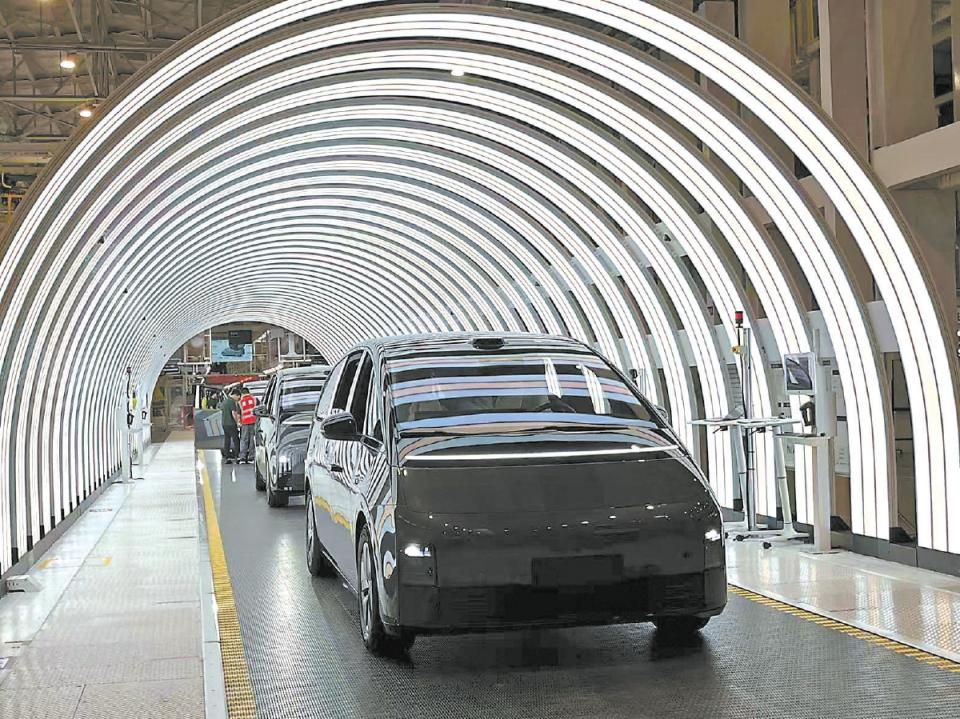
The Shift Toward Smart Manufacturing: The move from conventional production systems to smart manufacturing systems is a paradigm shift in terms of mindset. Conventional production systems are, more often than not, reactive in nature, focusing on solving problems only after they have occurred. Such systems are largely based on manual reporting systems, operate in silos, and focus on quality inspections at the end of the production line. Smart manufacturing systems, however, are proactive in nature, focusing on anticipating problems by using real-time data, integrating various operations, and infusing quality at every step of production. This is not meant to replace human effort but to enhance it by providing it with the tools it needs to be more effective in its decision-making processes. Smart manufacturing is all about creating a system that is not only efficient but also intelligent.
The Pillars of Transformation: The foundation of a successful transformation into a smart manufacturing system depends on several important aspects. Among these, the integration of data is the most important. In the modern manufacturing environment, data plays the vital role of the central nervous system. In real-time, the ability to monitor key performance indicators such as output rates, downtime, and efficiency enables the system to take immediate action. However, the second important aspect of a smart manufacturing system is the concept of built-in quality. In the modern environment, quality should be considered a part of the process, rather than a final check. This implies the need for standardization of processes, error-proofing, and a culture of “doing it right the first time.” Furthermore, the workforce should also be considered. In the factory of the future, individuals should be able to understand the system in which they work, in addition to being competent in their own area of work. Continuous training and multi-skilling are critical to the development of such a workforce. In addition, efficiency has to be redefined. The lean approach, which focuses on waste reduction and the optimal use of resources, has to be embedded into the operations. Moreover, the production systems have to be flexible enough to enable manufacturers to respond to changing market requirements.
Leadership as the Catalyst: No such transformation is possible without the presence of good leadership with a vision to lead the way. The leadership required in the automotive industry is no longer just about managing the day-to-day activities of the business. They must be the architects of the systems they lead, guiding the future course of the business. This requires strategic investment in technology, culture, and human capital as a priority. Leadership is not just about delivering today’s results; it is about laying the foundations to deliver tomorrow’s results. “True leadership is measured not by output, but by the systems it creates and the people it develops.”
Localization: The Foundation of Sustainability: An integral part of this process is the establishment of a strong supply chain in the region. Without localization, the full benefits of smart manufacturing cannot be achieved. For instance, reliance on imports is not only costly but also compromises the industry in periods of economic uncertainty. Enhancing the quality of the supply chain and encouraging the production of parts and other materials in the region is an integral step towards establishing a self-sustaining industry. Localization is not only an economic imperative but also a necessity for the growth of the industry.
The Role of Integrated Decision-Making: In the modern production environment, the speed and efficiency of the decision-making process play a determining factor. This is the idea behind the concept of a centralized production war room. This concept brings together real-time data, real-time teams, and real-time problem-solving to create a system where production decisions can be made quickly and efficiently. This is the kind of integration necessary to ensure production is not just efficient, but also flexible. “In today’s manufacturing landscape, the speed of decision-making defines the speed of success.” The road to smart manufacturing is not without obstacles. The initial investment costs, lack of organizational change, lack of skills among the labor force, and inconsistencies in policies all pose major challenges. These challenges, however, should not be considered obstacles, but rather as chances to create a more structured industry. Every challenge is a gap, and closing the gap will only make the system better.
A Vision for the Future: The future of the automotive industry in Pakistan is not just beyond the assembly lines, but a vision for a digital factory, an intelligent factory, a smart factory, a factory with a skilled, enabled, and globally aligned workforce, a factory where products are not just assembled, but engineered and manufactured with pride. To achieve this vision, there is a need for collective efforts, alignment, and commitment to excellence.
Orchestrating the Future: The evolution of the automotive industry in Pakistan is not a matter of possibility but of intent. The world is moving forward at an unprecedented pace, and the choice we are presented with is clear: evolve and lead, or stagnate and follow. The idea of a “Symphony of Production” embodies the concept of evolution. It is “a vision of harmony, integration, and excellence in which every part of the production system is working together towards a unified purpose.” “Excellence is never accidental; it is the result of deliberate design and disciplined execution.” The time has come to transcend fragmented initiatives and develop a cohesive, intelligent, and forward-thinking manufacturing environment. Because at the end of it all, the factories we construct today are going to shape the economy of tomorrow.
Take way from this article:
Smart manufacturing is redefining Pakistan’s automotive landscape by integrating digital technologies, automation, and data-driven decision-making into production systems. The outcome is higher efficiency, improved quality, reduced costs, and enhanced global competitiveness. It enables faster response to market demands, strengthens supply chain resilience, and builds a skilled, future-ready workforce. For industry leaders and stakeholders, the message is clear: embrace innovation, invest in advanced technologies, and prioritize continuous learning. Those who adapt will lead the transformation, while those who hesitate risk falling behind. The future belongs to organizations that are agile, intelligent, and committed to sustainable growth through smart manufacturing excellence.
This exclusive article has been published in Automark Magazine’s April-2026 printed edition. Written by @muhammad-rafique