
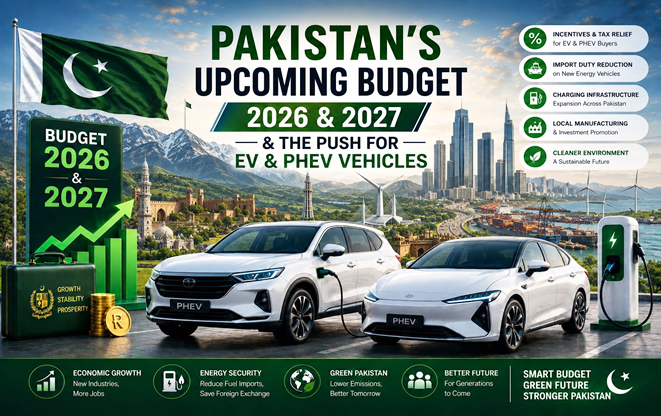
Dear Readers, Pakistan’s upcoming federal budget is expected to bring major changes to the automobile sector, especially for Electric Vehicles (EVs) and Plug-in Hybrid Electric Vehicles (PHEVs). Over the past few years, car prices in Pakistan have increased sharply due to high taxes, import duties, currency depreciation, and rising production costs. At the same time, fuel prices have remained unpredictable, putting pressure on consumers and businesses alike.
To address these challenges, the government is now considering a revised auto policy that focuses on reducing duties, restructuring tariffs, and promoting cleaner transport technologies. The main focus of these expected reforms is the encouragement of EVs and PHEVs through tax relief and incentives.
The proposed measures are not only about making cars cheaper. They are also linked to broader economic and environmental goals. Pakistan spends billions of dollars every year on importing fuel. Increasing the use of electric and hybrid vehicles can reduce fuel imports, lower pollution, improve energy efficiency, and modernize the country’s automobile industry.
Understanding EVs and PHEVs
Before discussing the expected budget measures, it is important to understand what EVs and PHEVs actually are.
What is an EV?
An Electric Vehicle (EV) is a vehicle that runs fully on electricity instead of petrol or diesel. It uses rechargeable batteries and an electric motor for movement. EVs must be charged through an electricity source, similar to charging a mobile phone.
Popular global EV brands include Tesla, BYD, and Nissan Leaf, while Pakistan has also started seeing local interest in electric cars and bikes.
Key Benefits of EVs
- No petrol or diesel required
- Lower running costs
- Reduced air pollution
- Quieter engines
- Fewer mechanical maintenance issues
However, EVs also face some challenges in Pakistan, such as limited charging stations, long charging times, and concerns about electricity shortages.
What is a PHEV?
A Plug-in Hybrid Electric Vehicle (PHEV) combines both an electric motor and a petrol engine. It can run on electricity for shorter distances and automatically switch to petrol when needed.
In simple words, a PHEV gives drivers the benefits of an electric vehicle without completely depending on charging infrastructure.
This is why many experts believe PHEVs may become more practical for Pakistan in the short term.
Why PHEVs Are Important for Pakistan
Pakistan still lacks a nationwide charging network. Many consumers worry about “range anxiety,” meaning fear that the battery may run out during travel.
PHEVs help solve this issue because:
- They can run on fuel when electricity is unavailable
- They are suitable for long-distance travel
- They reduce fuel consumption compared to traditional cars
- They require fewer charging stations than fully electric cars
Because of these advantages, the government now appears to be expanding its focus from only EVs toward broader “New Energy Vehicles” (NEVs), which include EVs, PHEVs, and other advanced technologies.
Expected Changes in the Upcoming Budget
The government is reportedly preparing major tariff and tax reforms under the upcoming Auto Policy 2026–31. The overall goal is to gradually reduce the protectionist structure of Pakistan’s auto market and encourage cleaner, more competitive technologies.
1. Reduction in Customs Duties
One of the biggest expected changes is a reduction in customs duties on EV and PHEV imports, components, and parts.
Reports suggest:
- Additional Customs Duties (ACD) may be phased out completely by FY2029
- Regulatory Duties (RD) could be reduced significantly by FY2030
- Import tariffs on vehicle components may gradually decline over the next five years
This could make imported EVs and PHEVs more affordable for consumers and assemblers.
2. Lower Sales Tax for PHEVs and EVs
The draft policy reportedly proposes a major reduction in sales tax for plug-in vehicles.
According to policy discussions:
- PHEVs and REEVs may receive a 1% sales tax
- Traditional hybrids may lose some tax benefits
- Fully electric vehicles may continue receiving maximum incentives
This is a major shift because the government wants to support vehicles that can actually run on electricity instead of only improving fuel efficiency.
3. Incentives for Local Manufacturing
The government also wants to encourage local production instead of depending completely on imports.
Possible measures include:
- Reduced duties on EV parts and components
- Lower tariffs for local assembly plants
- Incentives linked with localization targets
- Gradual transition toward domestic manufacturing
The idea is to create jobs, develop technical skills, and strengthen Pakistan’s manufacturing sector.
4. Relief on Toll Taxes
Recent reports suggest the government may also offer toll tax exemptions for EVs and PHEVs on motorways and highways.
This step may seem small, but it carries symbolic importance. It shows that the government wants to reward environmentally friendly vehicles and encourage more buyers to shift toward cleaner technology.
Why the Government Thinks These Steps Are Important
The proposed reforms are not happening in isolation. Pakistan is facing several economic and environmental pressures that make such measures increasingly necessary.
Reducing Fuel Imports
Pakistan spends a huge amount of foreign exchange on importing petroleum products. Rising oil prices increase inflation and put pressure on the economy.
If more consumers switch to EVs and PHEVs:
- Fuel imports can decline
- Pressure on foreign reserves may reduce
- Consumers can save money on fuel costs
This is one of the strongest economic reasons behind the government’s push toward electric mobility.
Controlling Pollution
Major cities like Lahore and Karachi regularly face severe air pollution and smog problems. Traditional petrol and diesel vehicles contribute heavily to emissions.
EVs and PHEVs produce far fewer emissions compared to conventional vehicles. Encouraging their use could help improve urban air quality over time.
Supporting Global Climate Goals
Countries around the world are moving toward cleaner transportation systems. Governments are offering subsidies, tax reductions, and incentives for electric mobility.
Pakistan also wants to align itself with global environmental commitments and modern automotive trends.
Increasing Competition in the Auto Sector
Pakistan’s automobile market has long been criticized for limited competition and high prices. The new policy aims to gradually reduce protection barriers and increase consumer choice.
Lower tariffs may:
- Increase vehicle options
- Improve product quality
- Encourage foreign investment
- Put pressure on local assemblers to innovate
Challenges That Still Exist
Although the proposed reforms sound promising, several challenges remain.
Charging Infrastructure
Pakistan still lacks sufficient EV charging stations. Without proper infrastructure, consumers may hesitate to purchase fully electric vehicles.
Electricity Supply Issues
Frequent power shortages and load shedding create concerns about depending fully on electric transportation.
High Initial Prices
Even with tax relief, EVs and PHEVs remain expensive for average Pakistani buyers. Financing options and affordability will remain key concerns.
Consumer Awareness
Many consumers still do not fully understand the difference between hybrids, PHEVs, and EVs. Better public awareness campaigns will be needed.
Why PHEVs May Become the “Middle Ground”
Many analysts believe Pakistan may first experience large-scale adoption of PHEVs rather than fully electric vehicles.
This is because PHEVs offer:
- Fuel savings
- Reduced emissions
- Flexibility for long travel
- Less dependence on charging infrastructure
For a country still developing its EV ecosystem, PHEVs may act as a practical transition technology.
Impact on Consumers
If the proposed budget measures are approved, consumers could see:
- Lower prices for EVs and PHEVs
- Reduced taxes on imported components
- Better financing opportunities
- Increased vehicle choices
- Lower fuel expenses over time
However, the final impact will depend on:
- Currency exchange rates
- Implementation of policy reforms
- Availability of charging infrastructure
- Response from local manufacturers
Conclusion
Pakistan’s upcoming budget could mark a major turning point for the automobile sector. The expected reduction in duties, taxes, and tariffs for EVs and PHEVs reflects a broader shift toward cleaner, more sustainable transportation.
The government appears to recognize that the future of mobility is changing globally, and Pakistan must adapt accordingly. By encouraging EVs and PHEVs, policymakers hope to reduce fuel imports, improve environmental conditions, attract investment, and modernize the local auto industry.
While challenges such as infrastructure and affordability still exist, the upcoming reforms could lay the foundation for a new automotive era in Pakistan. For consumers, businesses, and investors alike, the next budget may become one of the most important policy shifts the sector has seen in years.
This exclusive article has been published in Automark’s June-2026 printed edition. Written by @Aqeel Bashir
#Automark