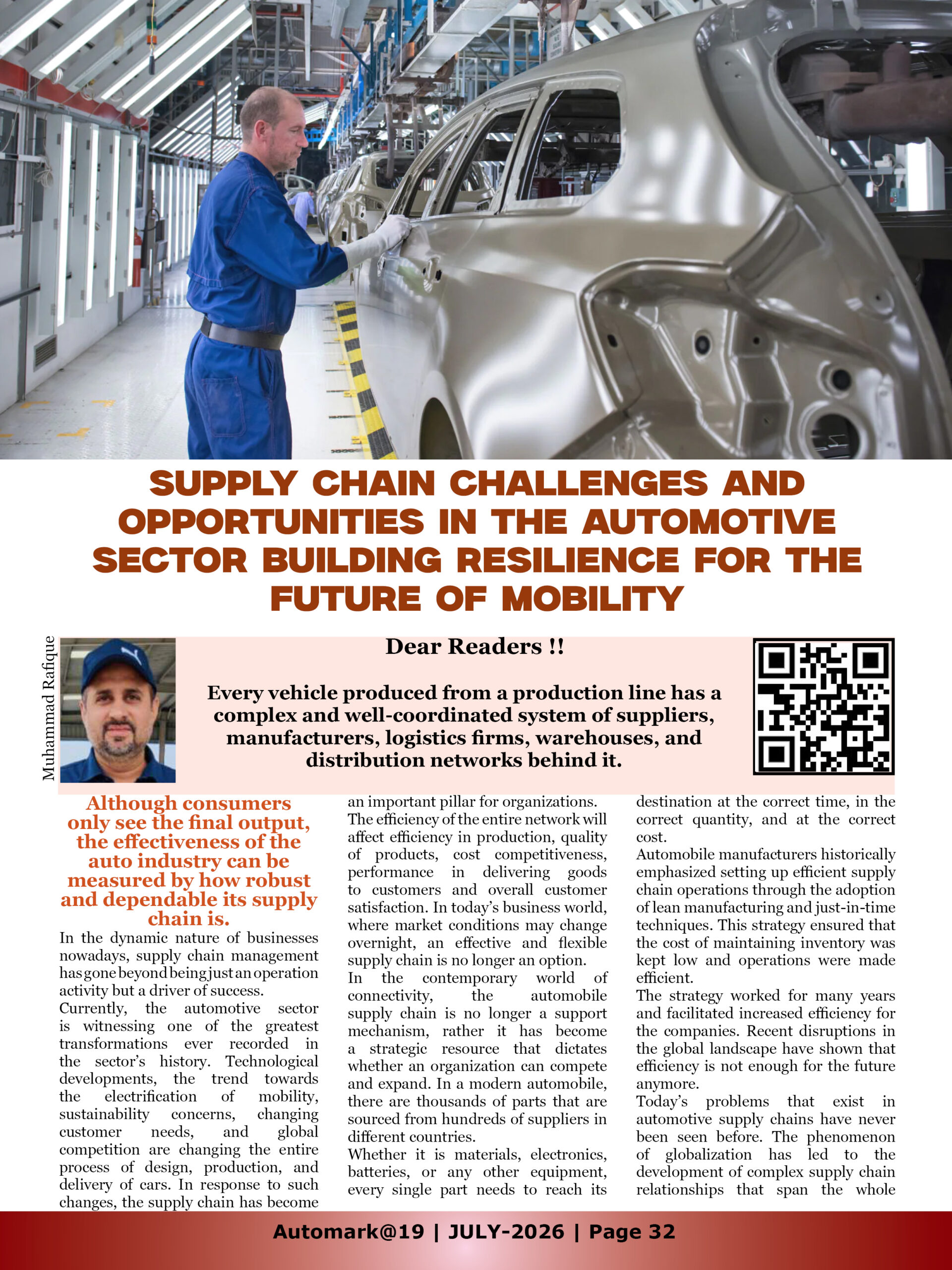
Dear Readers !! Every vehicle produced from a production line has a complex and well-coordinated system of suppliers, manufacturers, logistics firms, warehouses, and distribution networks behind it.
Although consumers only see the final output, the effectiveness of the auto industry can be measured by how robust and dependable its supply chain is. In the dynamic nature of businesses nowadays, supply chain management has gone beyond being just an operation activity but a driver of success. Currently, the automotive sector is witnessing one of the greatest transformations ever recorded in the sector’s history. Technological developments, the trend towards the electrification of mobility, sustainability concerns, changing customer needs, and global competition are changing the entire process of design, production, and delivery of cars. In response to such changes, the supply chain has become an important pillar for organizations. The efficiency of the entire network will affect efficiency in production, quality of products, cost competitiveness, performance in delivering goods to customers and overall customer satisfaction. In today’s business world, where market conditions may change overnight, an effective and flexible supply chain is no longer an option.
In the contemporary world of connectivity, the automobile supply chain is no longer a support mechanism, rather it has become a strategic resource that dictates whether an organization can compete and expand. In a modern automobile, there are thousands of parts that are sourced from hundreds of suppliers in different countries. Whether it is materials, electronics, batteries, or any other equipment, every single part needs to reach its destination at the correct time, in the correct quantity, and at the correct cost.
Automobile manufacturers historically emphasized setting up efficient supply chain operations through the adoption of lean manufacturing and just-in-time techniques. This strategy ensured that the cost of maintaining inventory was kept low and operations were made efficient. The strategy worked for many years and facilitated increased efficiency for the companies. Recent disruptions in the global landscape have shown that efficiency is not enough for the future anymore. Today’s problems that exist in automotive supply chains have never been seen before. The phenomenon of globalization has led to the development of complex supply chain relationships that span the whole globe. This makes manufacturers reliant on global transportation and logistics. Although globalization opens up new opportunities such as competitive sourcing and technological advances, it also means that an organization is susceptible to many risks, including political, regulatory, transportation, and economic ones.
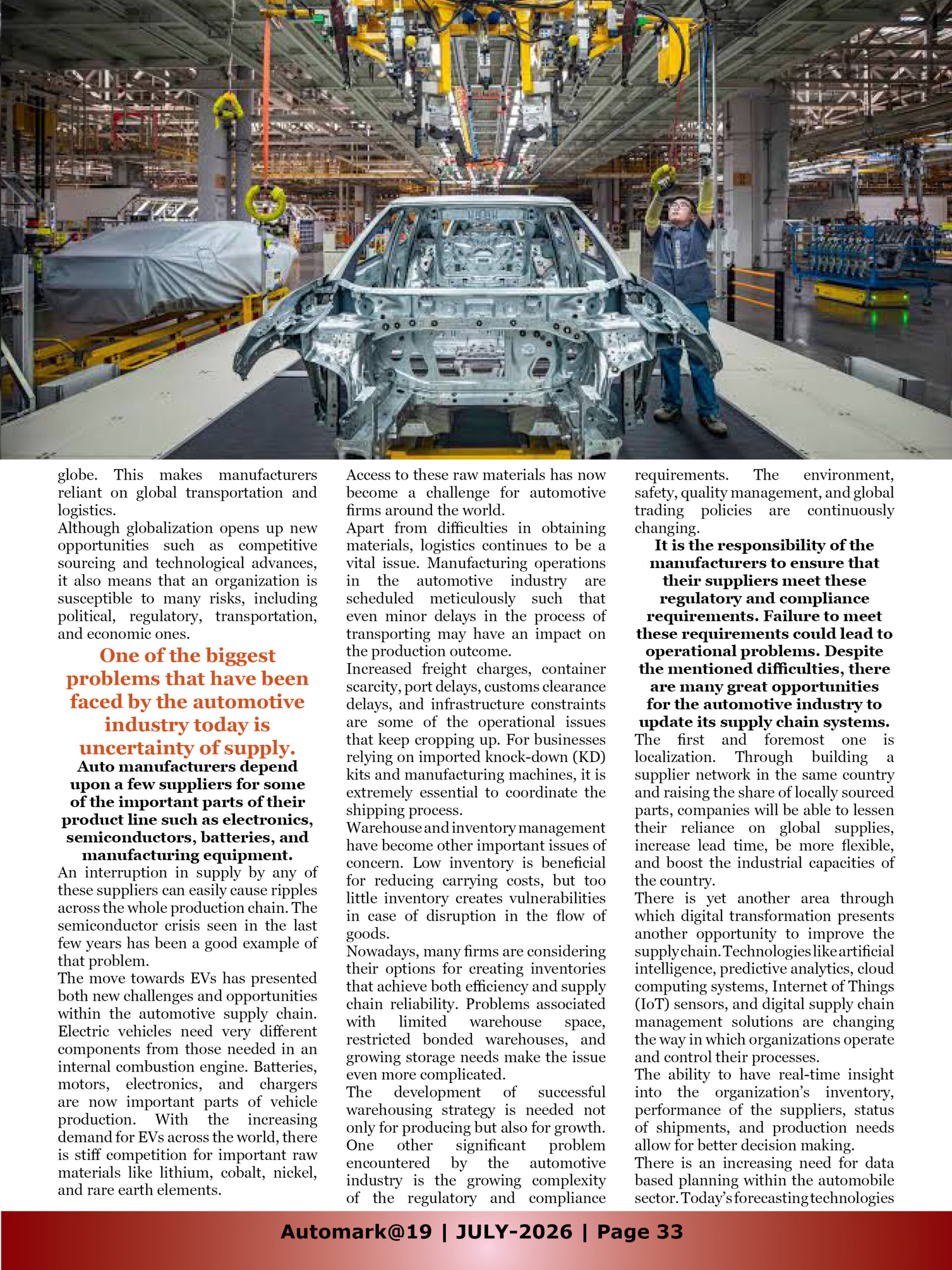
One of the biggest problems that have been faced by the automotive industry today is uncertainty of supply. Auto manufacturers depend upon a few suppliers for some of the important parts of their product line such as electronics, semiconductors, batteries, and manufacturing equipment. An interruption in supply by any of these suppliers can easily cause ripples across the whole production chain. The semiconductor crisis seen in the last few years has been a good example of that problem. The move towards EVs has presented both new challenges and opportunities within the automotive supply chain. Electric vehicles need very different components from those needed in an internal combustion engine. Batteries, motors, electronics, and chargers are now important parts of vehicle production. With the increasing demand for EVs across the world, there is stiff competition for important raw materials like lithium, cobalt, nickel, and rare earth elements. Access to these raw materials has now become a challenge for automotive firms around the world.
Apart from difficulties in obtaining materials, logistics continues to be a vital issue. Manufacturing operations in the automotive industry are scheduled meticulously such that even minor delays in the process of transporting may have an impact on the production outcome. Increased freight charges, container scarcity, port delays, customs clearance delays, and infrastructure constraints are some of the operational issues that keep cropping up. For businesses relying on imported knock-down (KD) kits and manufacturing machines, it is extremely essential to coordinate the shipping process. Warehouse and inventory management have become other important issues of concern. Low inventory is beneficial for reducing carrying costs, but too little inventory creates vulnerabilities in case of disruption in the flow of goods. Nowadays, many firms are considering their options for creating inventories that achieve both efficiency and supply chain reliability. Problems associated with limited warehouse space, restricted bonded warehouses, and growing storage needs make the issue even more complicated. The development of successful warehousing strategy is needed not only for producing but also for growth.
One other significant problem encountered by the automotive industry is the growing complexity of the regulatory and compliance requirements. The environment, safety, quality management, and global trading policies are continuously changing. It is the responsibility of the manufacturers to ensure that their suppliers meet these regulatory and compliance requirements. Failure to meet these requirements could lead to operational problems. Despite the mentioned difficulties, there are many great opportunities for the automotive industry to update its supply chain systems. The first and foremost one is localization. Through building a supplier network in the same country and raising the share of locally sourced parts, companies will be able to lessen their reliance on global supplies, increase lead time, be more flexible, and boost the industrial capacities of the country. There is yet another area through which digital transformation presents another opportunity to improve the supply chain. Technologies like artificial intelligence, predictive analytics, cloud computing systems, Internet of Things (IoT) sensors, and digital supply chain management solutions are changing the way in which organizations operate and control their processes. The ability to have real-time insight into the organization’s inventory, performance of the suppliers, status of shipments, and production needs allow for better decision making.
There is an increasing need for data based planning within the automobile sector. Today’s forecasting technologies are capable of evaluating past trends, environmental considerations, and the dynamics of customer demands to enhance the effectiveness of planning. Improved forecasting skills would allow organizations to manage their inventory and procurement practices in such a manner that material shortages or surplus can be avoided. The advent of electric mobility offers a rare chance to rethink supply chains. With companies making efforts to build electric cars, there is the need to set up new supplier networks in areas such as batteries, chargers, power electronics, and new vehicles. Companies able to secure positions within these evolving value chains will have an edge in the competitive landscape. Partnerships with tech companies, battery makers, and infrastructure firms can offer companies the potential for growth and success.
Sustainability is another significant catalyst for change in supply chain management. The customers, regulatory authorities, investors, and other stakeholders are becoming increasingly stringent about how sustainable the organization is in its processes. Sustainable supply chain management includes lowering carbon footprint, enhancing energy efficiency, cutting down waste production, using optimal transportation routes, and sustainable procurement of material resources. The organization that integrates sustainability in its supply chain strategy gains environmental effectiveness along with reputation and competitiveness. In the long run, future success in automotive logistics will hinge on the ability of the organization to foster resilience without compromising efficiency. Resilience is not about avoiding all risks, but instead having the ability to predict, adapt, and recover from any disruption. This involves diversification of supplier base, cultivating good supplier relations, optimizing inventory management, improving logistics, and using information technologies to ensure visibility and control.
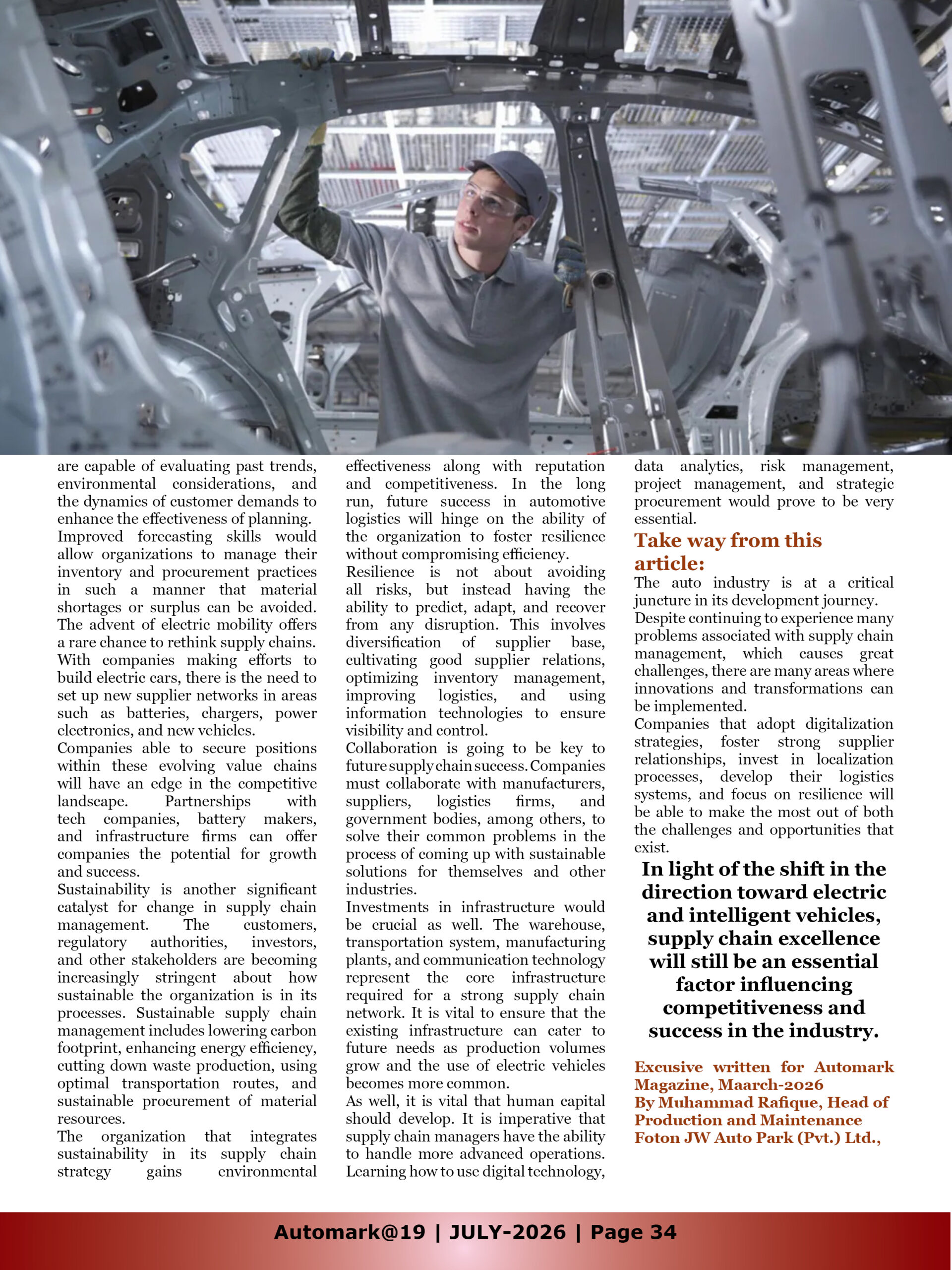
Collaboration is going to be key to future supply chain success. Companies must collaborate with manufacturers, suppliers, logistics firms, and government bodies, among others, to solve their common problems in the process of coming up with sustainable solutions for themselves and other industries. Investments in infrastructure would be crucial as well. The warehouse, transportation system, manufacturing plants, and communication technology represent the core infrastructure required for a strong supply chain network. It is vital to ensure that the existing infrastructure can cater to future needs as production volumes grow and the use of electric vehicles becomes more common. As well, it is vital that human capital should develop. It is imperative that supply chain managers have the ability to handle more advanced operations. Learning how to use digital technology, data analytics, risk management, project management, and strategic procurement would prove to be very essential.
Take way from this article:
The auto industry is at a critical juncture in its development journey. Despite continuing to experience many problems associated with supply chain management, which causes great challenges, there are many areas where innovations and transformations can be implemented. Companies that adopt digitalization strategies, foster strong supplier relationships, invest in localization processes, develop their logistics systems, and focus on resilience will be able to make the most out of both the challenges and opportunities that exist. In light of the shift in the direction toward electric and intelligent vehicles, supply chain excellence will still be an essential factor influencing competitiveness and success in the industry.
Exclusive written by @muhammad Rafique and published in Automark’s July-2026 printed and digital edition.