
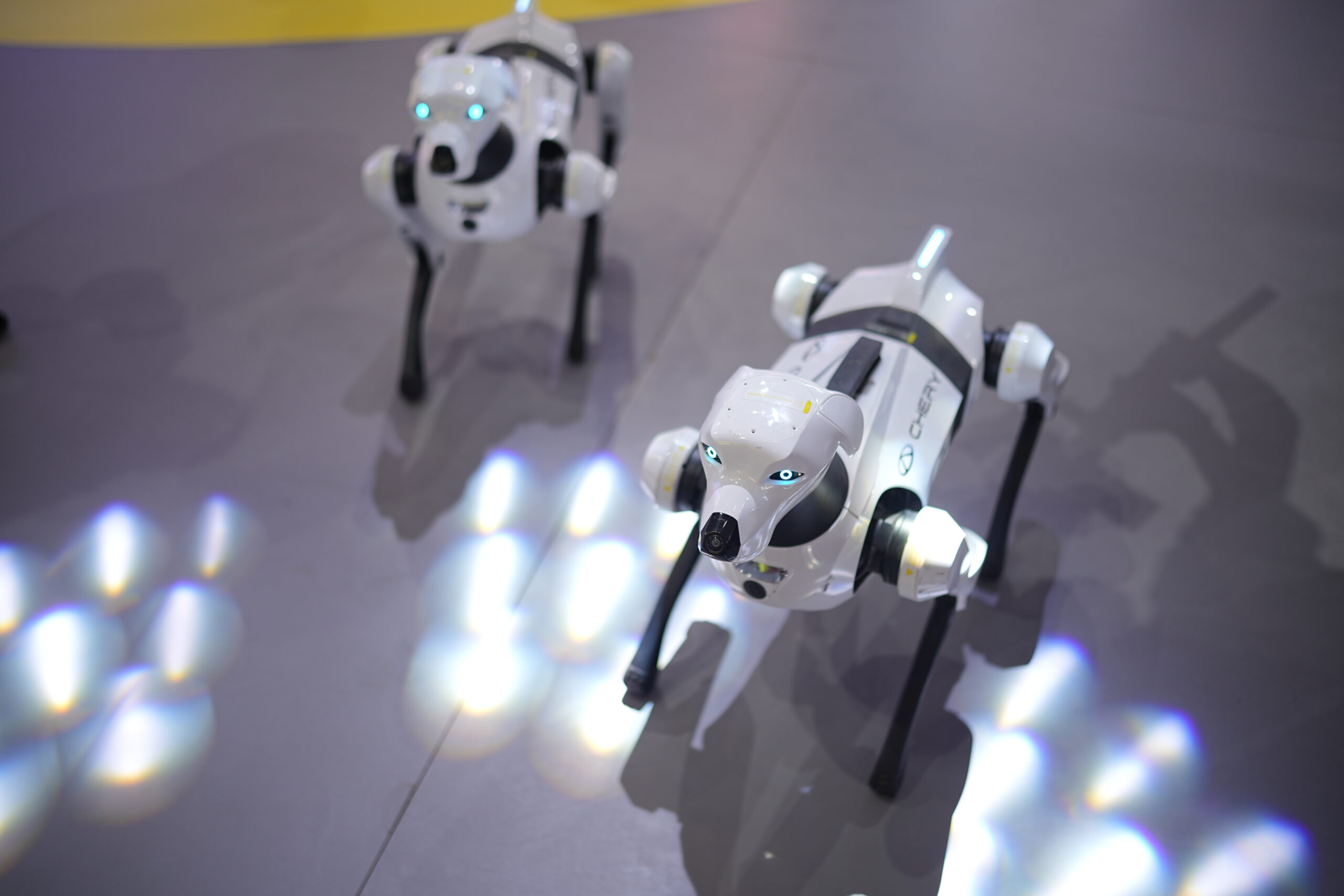
The growth of Chinese automotive brands in Pakistan has been significant, driven by competitive pricing, modern design, advanced technology and an increasingly attractive product portfolio.
However, the next challenge for Chinese automotive brands is no longer simply selling more vehicles. The real opportunity is to build long-term customer trust, loyalty and confidence throughout the entire ownership journey.
At the center of this challenge is After-Sales Service.
After-Sales: The Foundation of Long-Term Customer Confidence
As the population of Chinese vehicles on Pakistani roads continues to grow, customers will increasingly judge brands not only by the vehicle they purchase, but by the quality and reliability of the support they receive after the sale.
Spare-parts availability, competitive pricing, service quality, technical support and response time will become critical differentiators.
Manufacturers and dealers therefore need to establish robust after-sales capabilities focused on:
– High spare-parts availability and supply fill rates
– Competitive spare-parts pricing and an attractive total cost of ownership
– Short, predictable and reliable shipping lead times
– Accurate demand forecasting
– Efficient ordering and replenishment processes
– Strong technical support and service capabilities
– Effective customer communication and issue resolution
After-sales performance must become an integral part of the brand proposition rather than being treated simply as a dealer operational responsibility.
Spare Parts Availability: A Joint Responsibility
Parts availability is not merely a matter of maintaining sufficient inventory at dealerships.
It is the result of an integrated ecosystem involving the vehicle manufacturer, local distributor, dealer network, logistics providers, information systems and operational processes.
A breakdown in any one of these areas can ultimately affect the customer.
For example, a part may be physically available at the manufacturer but unavailable to the customer because of delays in ordering, documentation, logistics, customs clearance, system integration or dealer processes.
This makes supply-chain integration critical to delivering a consistent customer experience.
Building a Professional After-Sales Infrastructure
To support sustainable growth in Pakistan, Chinese automotive manufacturers should establish professional and scalable after-sales infrastructure covering the complete parts and service value chain.
Key capabilities should include:
1. Accurate Electronic Parts Catalogues
Professional electronic parts catalogues should provide accurate part numbers, VIN/application information and clear identification of applicable vehicle variants.
2. Efficient Dealer Parts Ordering Systems
Dealers should have simple, reliable and transparent systems for placing, tracking and managing parts orders.
3. Clear and Reliable Shipping Lead Times
Dealers and customers should have realistic delivery expectations supported by reliable logistics processes.
4. Strong Supply Fill Rates and Order Fulfilment
The objective should be to maximize first-time fulfilment and minimize customer waiting time.
5. Effective Urgent and Back-Order Processes
Clearly defined procedures should exist for critical, urgent and back-ordered parts, with appropriate escalation mechanisms.
6. Manufacturer–Dealer System Integration
Integration between the manufacturer’s systems and the dealer’s Dealer Management System (DMS) can improve visibility, forecasting, ordering, inventory management and customer communication.
The Customer Sees Only One Brand
From the customer’s perspective, responsibility is straightforward.
If a required part is unavailable or a repair is delayed, the customer generally does not distinguish whether the problem originated with the dealer, manufacturer, logistics provider, ordering system or supply chain.
The customer simply experiences it as a brand problem.
This is why after-sales performance should be managed as a joint manufacturer–dealer responsibility, supported by clearly defined processes, ownership and measurable performance indicators.
Important KPIs should include:
– Parts availability
– Supply fill rate
– Order accuracy
– Order fulfilment
– Delivery lead time
– Back-order ageing
– Emergency parts response time
– Customer repair turnaround time
– Warranty claim turnaround time
– Customer satisfaction
What gets measured, reviewed and improved consistently is far more likely to become a sustainable competitive capability.
The Benchmark Already Exists in Pakistan
Pakistani customers have experienced established after-sales standards from Japanese and Korean automotive brands. As a result, customer expectations have been shaped not only by vehicle quality, but also by parts availability, service quality, technical expertise, pricing, reliability and customer care.
Chinese automotive brands therefore enter the Pakistani market with an important opportunity—and a clear benchmark.
They have already demonstrated their ability to compete strongly in areas such as vehicle design, technology, features and pricing.
The next step is to demonstrate the same level of excellence in after-sales operations, spare-parts availability and supply-chain reliability.
From Selling Vehicles to Managing the Ownership Journey
The automotive business is not completed when a vehicle is delivered to the customer.
In many respects, that is where the customer relationship truly begins.
Every service visit, spare-parts requirement, warranty claim and technical interaction becomes another opportunity for the brand to either strengthen or weaken customer confidence.
Chinese automotive brands that develop a strong after-sales ecosystem from the beginning can convert vehicle sales into long-term customer relationships.
This requires close alignment between the manufacturer and dealer network, investment in systems and processes, strong parts planning, professional technical support and a customer-centric service culture.
The Strategic Imperative
The future success of Chinese automotive brands in Pakistan will depend not only on how many vehicles they sell, but on how effectively they support those vehicles throughout their ownership lifecycle.
Selling the car is only the beginning. Supporting the customer throughout the ownership journey is what builds the brand.
The next competitive advantage in Pakistan’s automotive industry may therefore not be found only in the showroom.
It may be found in the parts warehouse, the supply chain, the workshop, the technical support center and every customer interaction after the sale.