Dear friends, Happy Eid al-Adha…
The automotive industry in Pakistan is currently facing a number of challenges and the future of the industry seems to be uncertain, but there are some positive signs that the sector could rebound in the coming years. The government’s new auto policy is a step in the right direction, and if it is implemented effectively, it could help to revive the industry.This article is about Lean Techniques and Process Automation
Automotive manufacturing is a critical industry that plays a significant role in the global economy. It involves the production of vehicles, including cars, trucks, and buses, as well as their various components and parts. The different processes involved in automotive manufacturing include casting and molding, sheet metal forming, welding, machining, assembly, surface treatment, quality control and testing, supply chain management, lean manufacturing, and automation and robotics. Each of these processes plays a vital role in producing high-quality, safe, and efficient vehicles that meet the needs and expectations of consumers.
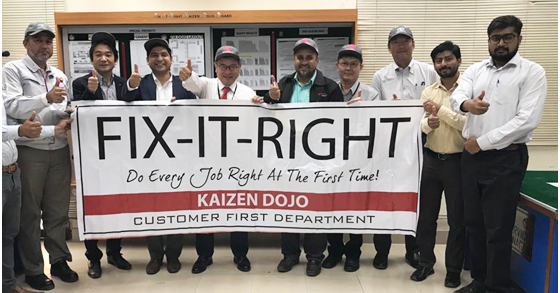
Toyota: Toyota is a pioneer in the use of lean techniques. The company has used these techniques to achieve world-class levels of efficiency and quality. Toyota’s lean production system is based on the principles of just-in-time, total productive maintenance, and kaizen (continuous improvement). using lean techniques to improve the efficiency of its assembly lines. The company has implemented systems to control the flow of materials through the lines, and it is also using value stream mapping to identify and eliminate waste. Also using lean techniques to automate production, the company has implemented a number of lean principles, including value stream mapping, kanban, and JIT, lean techniques have helped it to achieve a high level of efficiency in the production of its vehicles. The use of lean techniques in the automotive industry is likely to continue to grow in the future. As technology advances, new lean solutions will become available that can help companies to improve their operations.
The automobile industry has witnessed significant advancements in recent years, with technology revolutionizing various aspects of vehicle manufacturing and assembly. Among these technological advancements, process automation has emerged as a key driver of efficiency and productivity in the automobile manufacturing sector. This article explores the role of process automation in the automobile industry, its benefits, and the various applications that have transformed the industry. Process automation refers to the utilization of technology and software to automate repetitive tasks and streamline workflows. In the context of the automobile industry, process automation involves employing advanced technologies, such as robotics, artificial intelligence (AI), and the Internet of Things (IoT), to automate various manufacturing processes and enhance operational efficiency.
There are many benefits to process automation in the automotive industry. Automation can help to improve efficiency, quality, and safety. It can also help to reduce costs and increase productivity. Automation can help to streamline processes and eliminate waste. This can lead to significant improvements in efficiency, which can save time and money, system helps to ensure that products are consistently produced to high standards. This can reduce the number of defects and improve customer satisfaction. Automation can help to create a safer work environment by reducing the risk of injuries. This is especially important in the automotive industry, where there are many potential hazards. Ultimately with the automation system implementation, we can help to reduce costs by eliminating the need for human labor in some tasks. This can free up workers to focus on more complex and value-added tasks. Automation can help to increase productivity by allowing companies to produce more products in less time. This can give companies a competitive advantage in the marketplace.
There are many different types of process automation used in the automotive industry. Some of the most common types include, (i) Robotics: Robots are used for a variety of tasks in the automotive industry, including welding, assembly, and painting. Robots can work faster and more precisely than humans, and they can be programmed to perform repetitive tasks with a high degree of accuracy. (ii) Machine vision: Machine vision systems are used to inspect products for defects. These systems use cameras and computer software to identify and measure defects. Machine vision systems can be used to inspect a wide variety of products, including cars, trucks, and electronic components. (iii) 3D printing: 3D printing is used to create prototypes and tooling for new vehicles. 3D printing is a rapid prototyping technology that allows companies to create complex parts quickly and easily. (iv) Artificial intelligence (AI): AI is used in the automotive industry for a variety of tasks, including predictive maintenance, quality control, and autonomous driving. AI can be used to analyze data and make predictions about future events. This can help companies to improve efficiency, quality, and safety.
Lean techniques are a set of principles and practices that aim to improve efficiency and waste reduction in manufacturing processes. They can be used in conjunction with process automation to achieve even greater levels of efficiency and productivity.Some of the most common lean techniques used in the automotive industry include (i) Value stream mapping: This is a technique for visualizing and understanding the flow of materials and information through a manufacturing process. It can be used to identify waste and bottlenecks and to improve the flow of the process. (ii) Kanban: This is a system for controlling the flow of materials through a manufacturing process. It uses visual signals to indicate when materials need to be replenished. (iii) Just-in-time (JIT): This is a system for delivering materials to a manufacturing process as they are needed. This helps to reduce inventory levels and waste. (iv) Total productive maintenance (TPM): This is a system for preventing and reducing equipment failures. It involves a team-based approach to maintenance that focuses on the root causes of problems.
benefits: (i) Improved efficiency: Lean techniques can help to identify and eliminate waste in manufacturing processes. This can lead to significant improvements in efficiency, which can save time and money. (ii) Increased quality: Lean techniques can help to ensure that products are consistently produced to high standards. This can reduce the number of defects and improve customer satisfaction. (iii) Enhanced safety: Lean techniques can help to create a safer work environment by reducing the risk of injuries. This is especially important in the automotive industry, where there are many potential hazards. (iii) Reduced costs: Lean techniques can help to reduce costs by eliminating the need for human labor in some tasks. This can free up workers to focus on more complex and value-added tasks. (iv) Increased productivity: Lean techniques can help to increase productivity by allowing companies to produce more products in less time. This can give companies a competitive advantage in the marketplace.Lean techniques can play a significant role in the process automation of the automotive industry. By helping to identify and eliminate waste, improve quality, enhance safety, reduce costs, and increase productivity, lean techniques can help companies to achieve their manufacturing goals.
The Future of Process Automation in the Automotive Industry: The use of process automation in the automotive industry is expected to continue to grow in the future. As technology advances, new automation solutions will become available that can help companies to improve their operations.Some of the trends that are expected to drive the adoption of process automation in the automotive industry. As vehicles become more complex, the need for automation to ensure quality and safety will increase. The ability to automate the production of customized vehicles will be essential for companies to meet the needs of their customers. Autonomous driving will require a high degree of automation in the vehicle and in the infrastructure around it.Processautomation is a key technology that is helping the automotive industry to improve its operations. As the industry continues to evolve, the use of process automation is expected to play an even greater role.Process automation is a powerful tool that can help the automotive industry to improve its efficiency, quality, safety, and productivity. As the industry continues to evolve, the use of process automation is expected to play an even greater role. Process automation is a powerful tool that can help the automotive industry to improve its efficiency, quality, safety, and productivity. As the industry continues to evolve, the use of process automation is expected to play an even greater role.
Lean Techniquesin the Aspect of Supply Chain Management System.By using these techniques, companies can reduce costs, improve delivery times, and increase traceability. This can help them to meet customer demand, improve customer satisfaction, and gain a competitive advantage. Lean techniques and process automation are two important tools that can be used to improve the efficiency and effectiveness of a supply chain management system.Lean techniques are a set of principles and practices that aim to eliminate waste and improve efficiency in manufacturing processes.Process automation is the use of technology to automate tasks in a manufacturing process. This can include the use of robots, machine vision, and other automation technologies. Process automation can help to improve efficiency, reduce costs, and improve quality.Lean techniques and process automation can be used to improve supply chain management in a number of ways. For example, they can be used to:Reduce inventory levels: By using JIT, companies can reduce the amount of inventory they need to hold. This can save money on storage costs and improve cash flow.Improve delivery times: By automating tasks and streamlining processes, companies can improve delivery times. This can help them to meet customer demand and improve customer satisfaction.Increase traceability: By using tracking systems, companies can track the movement of products through the supply chain. This can help them to identify problems and improve visibility.Reduce costs: By eliminating waste and improving efficiency, companies can reduce costs. This can improve profitability and give them a competitive advantage.
Automotive manufacturing involves the transformation of raw materials into finished products, such as cars, trucks, and buses. This process can be broadly divided into four stages: design, engineering, production, and quality control and testing. During the design stage, designers and engineers work together to create vehicle concepts, develop designs, and conduct virtual simulations to optimize performance, safety, and fuel efficiency. The engineering stage involves the development of prototypes, the refinement of designs, and the testing of components and systems to ensure they meet the required quality standards. The production stage involves the actual manufacture of the vehicle, which can be divided into manual assembly and automated assembly processes. Manual assembly involves the use of human labor to assemble parts and components, while automated assembly involves the use of machines and robotics to perform assembly tasks. Finally, the quality control and testing stage is critical for ensuring that the finished product meets the required safety and performance standards. Quality control and testing procedures include incoming material inspection, in-process inspection, final inspection, crash testing, emissions testing, durability testing, and road testing.
Takeaway from this article:
The importance of automotive manufacturing to the global economy cannot be exaggerated. The automotive industry is a major contributor to global GDP and employment, with millions of people employed in manufacturing, distribution, and dealership/vendor, supplier. The automotive industry plays a critical role in driving technological innovation and advancing sustainable development. With the increasing focus on electric and hybrid vehicles, as well as the development of autonomous driving technologies, the automotive industry is poised to continue driving innovation and shaping the future of transportation. When lean techniques and process automation are used together, they can create a powerful synergy. Lean techniques can help to identify the areas where automation can be most beneficial, and process automation can help to eliminate waste and improve efficiency. This can lead to significant improvements in productivity, quality, and profitability.
This exclusive article has been published in Automark Magazine, July-2023 printed edition.

![Effectiveness of hand brake [PKB] in an emergency!!!](https://automark.pk/wp-content/uploads/2023/07/Rafiq-Aug-23-1-768x432.jpg "Effectiveness of hand brake [PKB] in an emergency!!!")