Kia
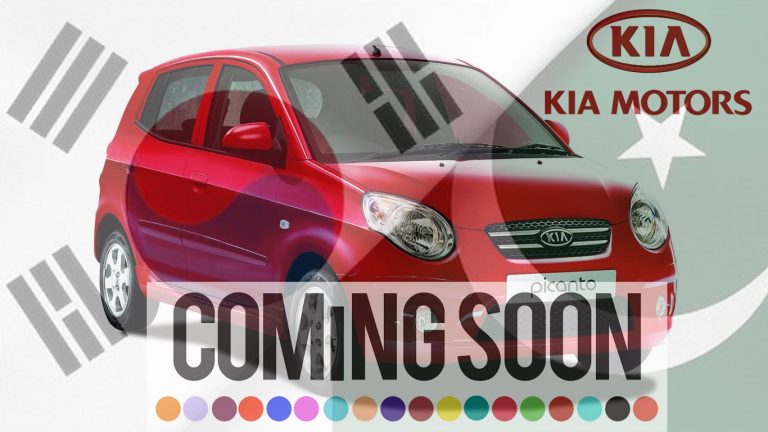
Picanto’s booking which was awaited by the Pakistanis will start next week. The
cars, however, would be seen on the roads in November or December most probably
as per industry sources.
Kia
Picanto was displayed to the Pakistani audience at Pakistan Auto Parts Show
(PAPS) 2019. The Kia Picanto is a small city car produced by the South Korean
manufacturer since 2004. It is also known as Kia Morning in its homeland South
Korea and few other markets.
The
Picanto about to be launched in Pakistan happens to be the second generation TA
series which was sold in international markets from 2011 to 2017. The variant
which will be introduced in Pakistan will be locally assembled, however the
percentage of local parts still remain to be unknown.
The
second-generation Picanto was a massive dive forwards as compared to the first
generation, designed under the supervision of Peter Schreyer who is the former
designer at Audi and the current at Hyundai and Kia.
The
Picanto making its way in Pakistan is has a 999cc engine with a horsepower of
68hp and has a great fuel economy which happens to be 23-25km/Liter. Moreover,
the EURO-6 compliant engine is quick and responsive.
Picanto
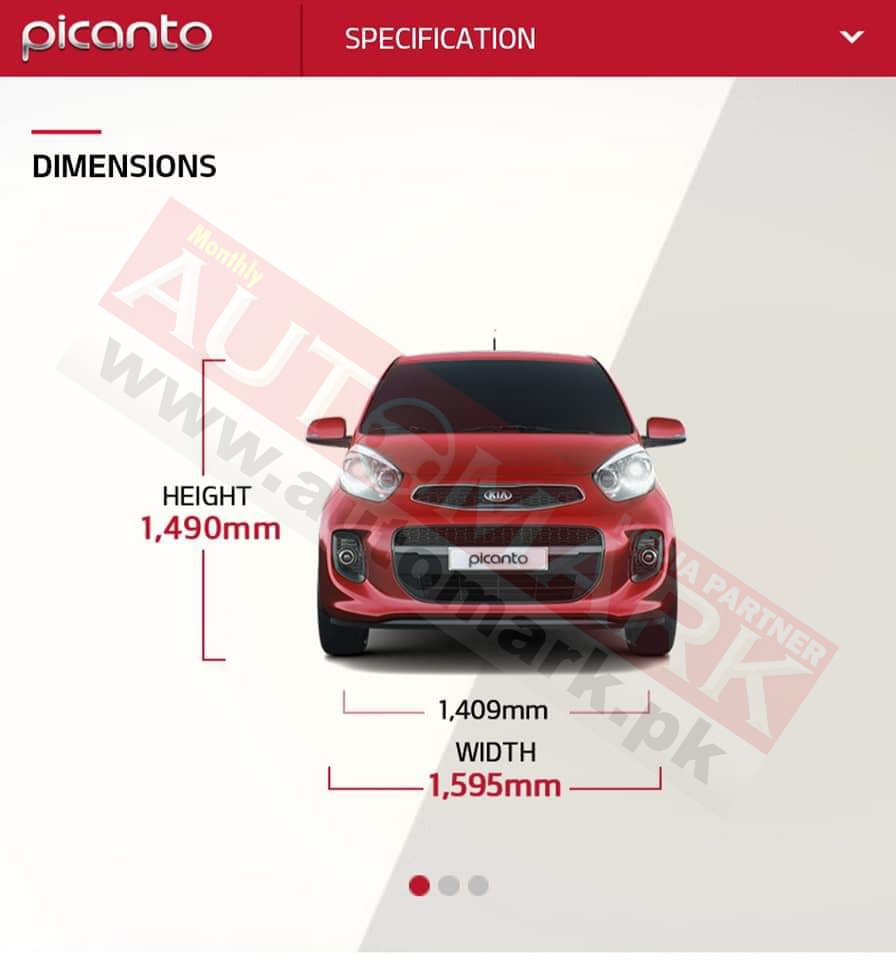
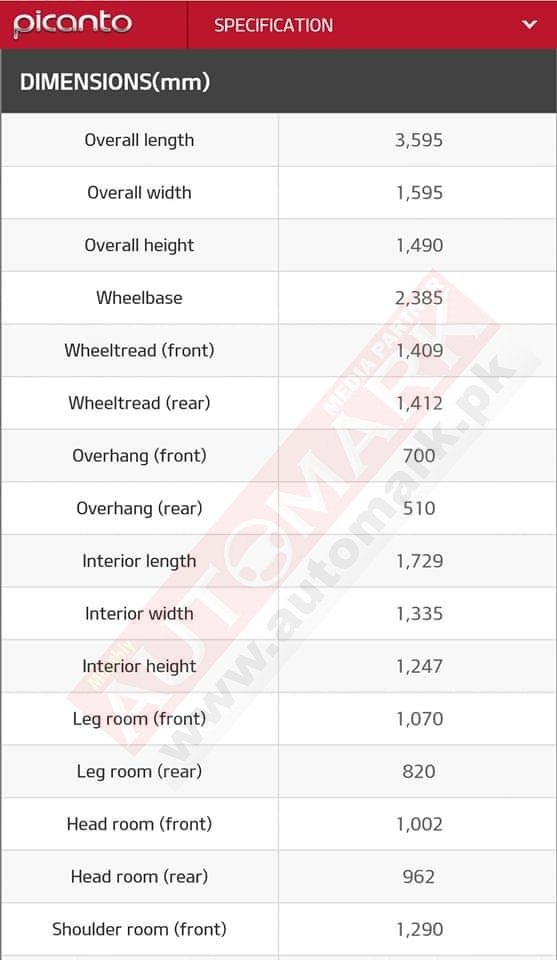
is going to introduce us to some exciting features. It is an entry-level 5-door
hatchback with a wheelbase of 2400mm which provides optimum control over the
car
The
hatchback comes in 1.0-liter engine mated with a 5-speed manual transmission
and a 1-liter engine which is offered under the optional automatic
transmission. Although the car comes airbags that are a basic safety feature it
won’t have the spear wheel at the back which is quite the need on Pakistani
roads.
Studying
the features it seems like the car is directed to compete with Suzuki’s Wagon-R
and Cultus. With an advantage of its economic fuel offers and an impressive
interior and exterior tailoring. It might prove to be just the competition KIA
needs to beat the popular Suzuki models
However,
the price of the model has not been yet set for end-users and they will be
announced with the booking.
Our
fair idea is that the price would be around 1.6mn+ and the booking is starting
from mid September 2019.
However,
the marketing expert opinion says it would be around 1.7mn at the booking (introductory
price) and then later 1.9mn after the release. It remains to be a mystery until
the company makes the official announcement.
However,
the price would determine how serious of a competition Kia Picanto can be in
the market. Possible chances are that it would be able to create some serious
stress lines for Suzuki in the small car segment.
But alas, only time will tell how Kia’s entry in the market after a decade with Picanto will prove to be.
Social media
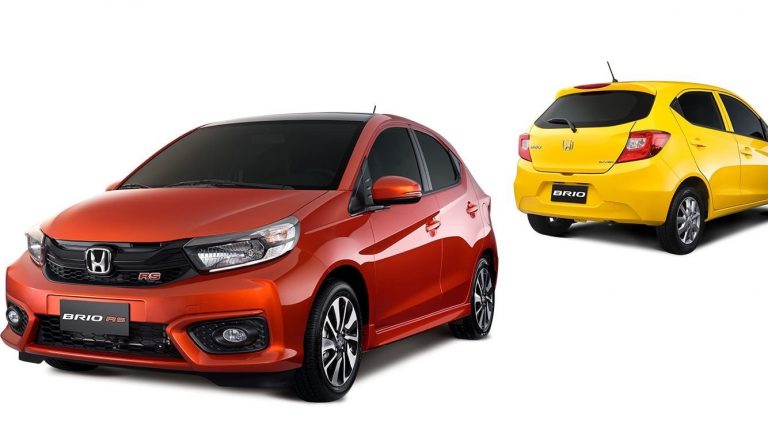
has been buzzing with the news of the launch of ‘Honda Brio’ in 2019. However,
our industry sources have confirmed that Honda has no plans to introduce Honda Brio in Pakistan.
A news website
claimed that Honda will possibly launch their model Honda Brio in 2019 in
Pakistan, which later they claimed was delayed due to the devaluation of rupee
against the dollar.
Honda Brio
is a compact five-door hatchback 1200cc car that the Japanese automaker is
selling as a budget car in India, South Africa, and Thailand markets. Unfortunately,
this model would not be seen on the Pakistani roads as the company claims it to
be unfit for the roads.
Even though
there are no plans for a ‘Honda Brio’ in Pakistan, Honda yesterday launched its
10th Generation Honda Accord in Pakistan. It is a high-end model
that has received an applaud from customers all over the world.
The all-new
Accord premium model’s booking has started on 4th September 2019.
Stay tuned as we will bring you an overview of the features of the 10th Generation Honda Accord has to offer.
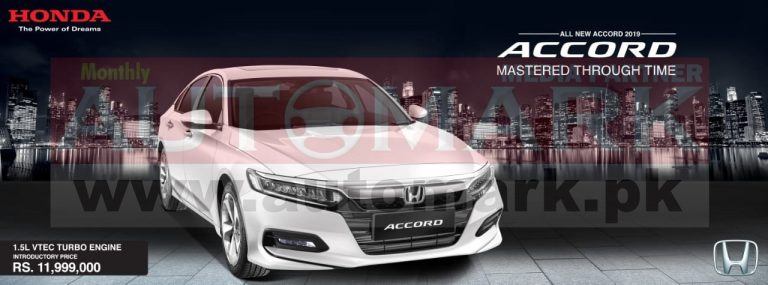
Lahore, Pakistan, September 4th , 2019 – Honda Atlas Cars Pakistan Limited (HACPL) has launched the All-new Honda Accord, one of the high-end models that have received an excellent response from customers globally. The All-new Honda Accord was launched in Lahore at Honda Plant, Manga Mandi.
Speaking on the occasion, Mr. Hironobu Yoshimura, President & CEO Honda Atlas Cars (Pakistan) Limited expressed his views about the legacy of Honda and its contribution in the automobile industry. He officially introduces the All-new Honda Accord, the premium sedan that has been mastered through time. It challenges all the limits by offering impressively powerful drive and advanced safety technology.
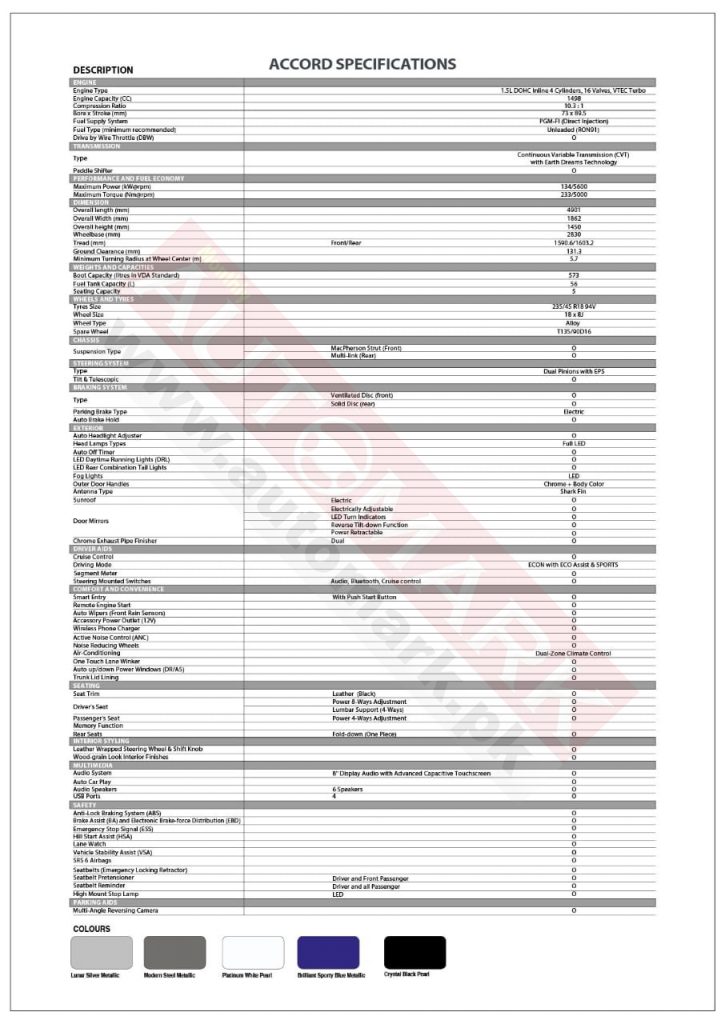
“We are confident that All new Accord will further strengthen our brand presence in the country.” Mr. Amir Nazir, General Manager Sales & Marketing gave an overview of the car and highlighted the new features of All-new Accord 2019 He also added that the 10th generation Honda Accord is powered by 1.5L VTEC TURBO engine with Earth Dreams Technology, which delivers powerful performance and fuel efficiency. Advanced safety technology, new exterior, and interior design harmonize its premium and sporty design perfectly which combined with modern several functions to fit the customers’ different lifestyle and needs.
It has been redesigned to offer a sophisticated yet masculine exterior with new front bumper design, stylish LED headlights for front and rear, plus 18-inch sporty alloy wheels to complete the dynamic outlook. Another highlight is the passenger cabin, which is carefully designed to provide the best comfort and to reflect the premium sport look and feel. It provides great convenience to the driver with premium functions, such as segment meter and 8” advanced touch audio panel, wireless charging and remote start, etc.
Honda Lane Watch brings safety to another level. The system provides enhanced safety and alerts the driver when another vehicle comes on the left, rear or right side of the car. Multi-View Camera System which shows the image from all directions using all cameras (front, left, right and rear), and Honda Smart Parking Assist System which automatically controls the steering wheel and the driver only moves forward or backward as advised and shown on the display, making reverse and parallel parking easily.
AVAILABILITY AND COLORS Honda Accord comes in five Exterior colors Platinum white pearl, Modern Steel Metallic, Crystal Black Pearl, Lunar Silver Metallic and Brilliant Sporty Blue Metallic with Black leather interior. The booking of All-new Accord will start from 4th September, 2019. Introductory Price: Rs; 11,999,000.00
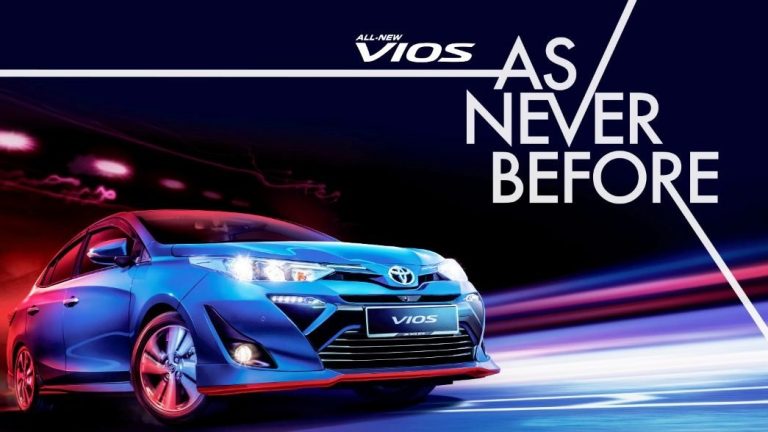
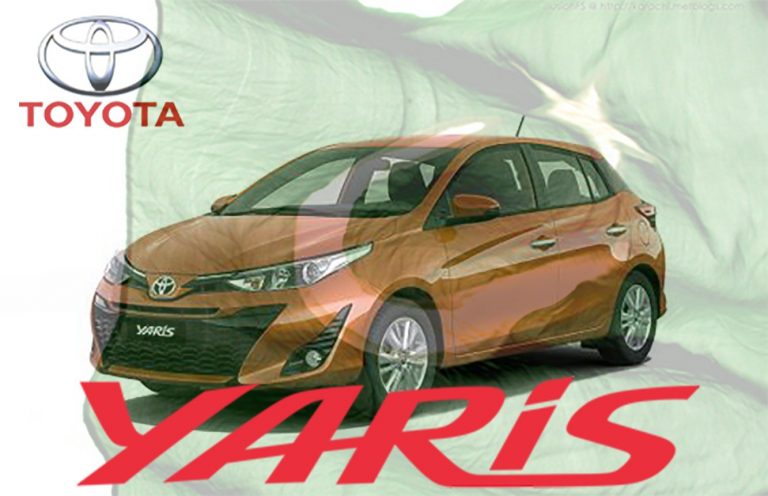
Last year, there were speculations and confirmation that Toyota has finally decided to replace their ever-popular XLI & GLI with VIOS. However, the plan was halted and now we’ll be having Yaris Sedan instead of VIOS in Pakistan.
Although many were disappointed that YARIS wouldn’t be launched as the company saw that it was not viable for Pakistan’s environment, the plan was set. VIOS was supposed to be launched by mid of 2018, however, due to the crumbling of rupee against the dollar, the idea was shelved.
There were speculations that VIOS would be launched by the end of 2019. However, it was again not possible due to the crisis faced by the auto industry in Pakistan. During this time Indus Motor company, which produces Toyota models, was closed for 8-days at the start of July and two days every week during the month of July. The executive of IMC said that the steep increase in car prices after currency devaluation as well as the imposition of Advance Customs Duty (ACD) on all imports and Federal Excise Duty (FED) on assembled cars has left them no option but to cut down the plant production.
After all this there was news released in August that Toyota will not launch VIOS, instead, they would launch Toyota YARIS. One of the possible reasons for Yaris Sedan being replaced with VIOS could be the cost difference between the two cars as Yaris Sedan costs lesser as compared to VIOS. Although they have the same platform; meaning that both cars are alike in terms of the dimensions, suspension, and other hosts of features including the interior.
Ever since their last release of GLI and XLI, the competition in the market has grown as newcomers like KIA, Proton and Hyundai introduced smaller and compact cars. Introducing YARIS sedan which has a fresh, modern and aggressive style along with a bolder design is one of the ways by which Toyota is coming back to re-establish its popular legacy. It will be February 2020 when Yaris Sedan will finally be released (as confirmed by sources) and we’ll know that replacing VIOS with Yaris Sedan will be a good decision or not.
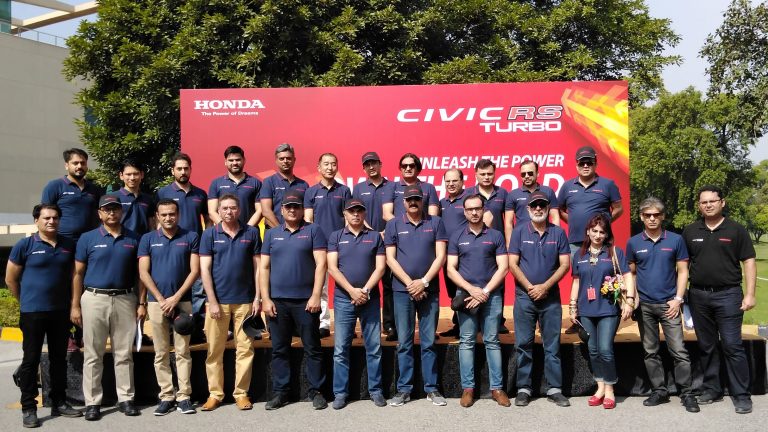
Honda arranges Civic RS Turbo test drive for media officials
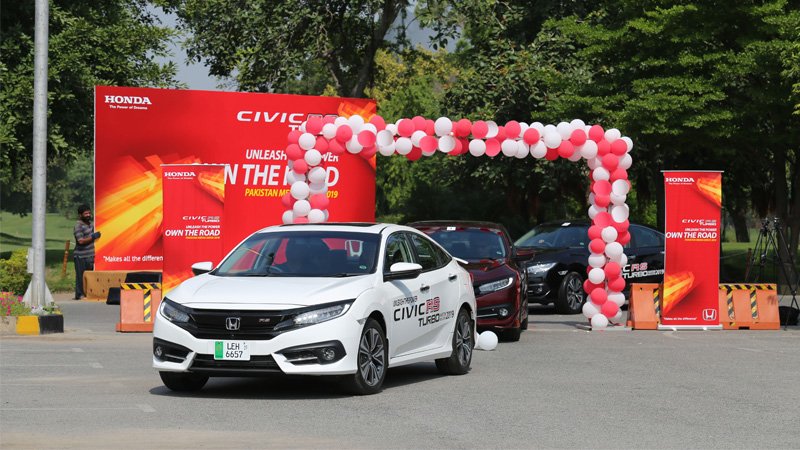
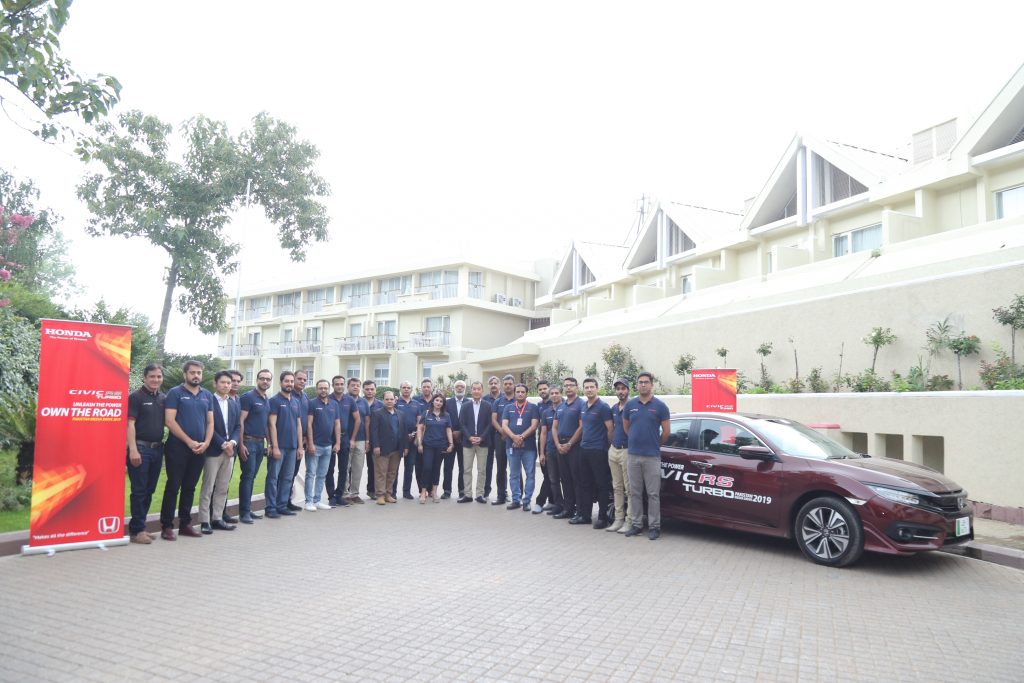
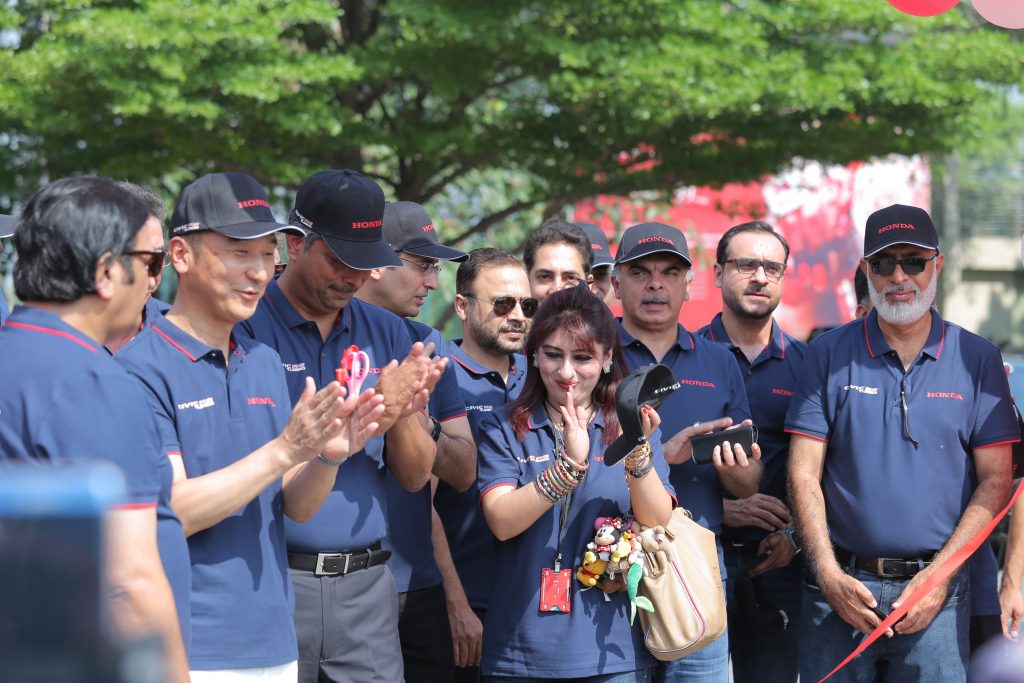
Honda Atlas Cars (Pakistan) Limited (HACPL) organized the Civic RS Turbo 2019 1.5L test drive for leading media officials in the first week of August 2019 in a bid to re-launch the model with much fanfare after suspending its production in 2017 after launching in 2016. The purpose of this event was to experience the Honda Civic RS Turbo’s comfortable drive and performance of its advance 1.5L VTEC TURBO engine. Media officials drove Civic RS turbo from Lahore to Bhurban stay in Murree and then returned to Lahore via motorway to enjoy exceptional performance.
The 10th generation Civic driving experience was appreciated by everyone. What excited them most was the RS TURBO engine, which was introduced for the first time in Pakistan. Driving the RS turbo category with new features was also an amazing experience for the participants.
All officials appreciated the new features such as headlights with DRL, 17″ alloy wheels, black leather interior with red lining and trunk spoiler along with push Start / smart entry, Remote Engine Starter & Rear entertainment system. They also admired the Civic’s RS technology with Continuously Variable Transmission (CVT), VTEC TURBO charged engine (173ps @5,500rpm), Electric Parking Brake (EPB), Auto Brake Hold (ABH), Vehicle Stability Assist (VSA), Hill Start Assist (HSA) and Emergency Stop Signal (ESS).
The participants enjoyed the driving and performance of Civic RS Turbo on an unforgettable journey. Automark’s Editor-in-Chief Hanif Memon said he drove Civic model from Lahore to Islamabad and then back to Lahore all the way on motorway to experience the unique performance of the car. He appreciated the introduction of trend setting features of the new civic 2016 model like push start/smart entry, remote engine starter and rear entertainment system. He said that the participants also learned that the car is equipped with Continuously Variable Transmission (CVT), Electric Parking Brake (EPB), Vehicle Stability Assist (VSA) and Hill Start Assist (HSA).
He said that the world’s best seller Honda civic is ruling the automobile industry with the latest model release. For 2016 model, car has got a more stylish cabin with nicer materials. “What we were most excited about was the VTEC turbo grade, introduced for the first time in Pakistan. Driving the 1.5L grade with category leading features was Honda arranges Civic RS Turbo test drive for media officials also a unique experience for the participants,” he said.
It is to be noted that HACL has unleashed its most anticipated Honda Civic model recently. The new civic model was launched in April-2019, Noriaki Abe, Chief Operating Officer, Regional Operations (Asia & Oceania), Honda Motor Co., Ltd. expressed his views saying that the Pakistan automobile market has tremendous potential to grow. He said that all-new Civic ‘made in Pakistan’ will attract Pakistani customers with its innovative, elegant design and high performance.
Toichi Ishiyama, President & CEO Honda Atlas Cars (Pakistan) Limited talked about the legacy of Honda and its contribution in the automobile industry. He said that Civic, since its introduction in Pakistan in 1994 had become a household name. It was the outcome of the joint efforts of 1200 dedicated associates working at Honda Atlas Cars (Pakistan) Limited.
HACLP had rolled out Honda Civic Turbo model with Euro IV engine in July 2016 without knowing that addition of higher manganese content in petrol would cast gloom on the future of new sedan.
Within its one year, the company continued to receive complaints from Turbo vehicle buyers relating to engine knocking. As a result, HACL had to suspend production of Turbo Civic model.
According to sources Civic Turbo has been re-launched after undergoing technical modification in its engine and now the car engine is totally compliant with the EURO II petrol in Pakistan. Consumers can drive this vehicle without any hesitation and anxiety.
Coming back to set back to Honda Civic, HACL took up the issue with Oil and Gas Regulatory Authority (OGRA) in November 2017 complaining that fuel suppliers including local units of Shell and Total as well as Pakistan State Oil (PSO) had added manganese in motor gasoline, thus damaging vehicles’ engine.
Manganese was added to fuel to make it appear to be of a higher quality but it can reduce fuel economy and potentially harm public health due to emissions. HACL informed OGRA that oil suppliers had used the additive to elevate the Research Octane Number (RON) used to grade petroleum and lower quality fuel up to the RON 92 grade required by regulatory standards.
Honda’s complaint said tests found dangerous levels of manganese in fuel samples from Shell Pakistan, Total Parco and PSO.
The tests showed levels of manganese of up to 53 milligrams per kilogram (mg/kg), while the additive is deemed at a “danger level” at 24 mg/kg, the Honda complaint said.
At that time, head of Oil Companies Advisory Council (OCAC), Ilyas Fazil took the issue in a simple way saying he had not heard of manganese additives being a problem in the industry. He said refineries were producing 90 RON, which is slightly lower than 92…pure 92 RON, that is imported.
Soon after Honda’s complaint to OGRA, other auto assemblers and oil industry executives expressed confusion that petrol carries higher-than-recommended levels of manganese additive, which is damaging its engines.
Indus Motor Company (IMC) at that time said it had received no complaints along these lines as the IMC had four different engine classes that are all Euro II-compliant and none has reported any such issue.
Pak Suzuki Motor Company Limited (PSMCL), having over 50 per cent market share, whose engines are also Euro II-compliant, said it had also received no such complaints. When other assemblers said that Honda engines are Euro IV and petrol is Euro II, Honda executive disagreed that the engine class was the issue. Honda had been assembling Euro IV engine vehicles for the over one decade and the fuel caused problems not in the engine but in the catalytic converter.
Honda official said the high levels of manganese and sulphur in the fuel caused the converter to choke. The company had sent turbo engines for testing to Japan, and samples of petrol available in local markets to a lab in Germany, “and that is where the high levels of sulphur and manganese were found.”
OCAC, the body that represents all oil marketing companies and refineries, had issued a short and vaguely worded release in response to the complaint by Honda stating that all fuel being sold in the country is strictly in accordance with the approved specifications issued by the Ministry of Energy, Petroleum Division. Therefore, the question of the sale of poor quality fuel did not arise.
The release made no mention of the specific complaint advanced by Honda that higher-than-recommended quantities of manganese have been found in samples of petrol available in the Pakistani market.
But oil executives bristled at the suggestion that the fuel quality was creating problems in some engines. Manganese was used as an octane-booster all over the world. It was a normal product to find in any vehicular fuel.
Up to 70 per cent of our fuel was imported while the rest was locally produced. Both were mixed with each other in depot storage. In November 2017, OCAC threatened Honda Atlas to withdraw its complaint about the alleged sale of low-quality fuel in the market or face legal action.
But OCAC’s difficulties appeared to have been compounded by question marks raised from within its ranks when one of its key members – Hascol Petroleum – also supported Honda’s allegation of high manganese content in petrol and asked the government to upgrade fuel quality in the market and subject fuels to stringent standard checks.
An OCAC official said Hascol was trying to cash in from badmouthing three largest OMCs for a higher market share even though its entire fuel supplies in the market were of the same origin and quality standards. He said the OCAC would deal with Hascol internally.
Contrary to the impression created by Hascol, OCAC clarified that fuel being sold in the country is strictly in accordance with the approved specifications issued by the Ministry of Energy, Petroleum Division. This is also a fact that “all OMCs, including Hascol, import and buy petroleum products from local refineries in accordance to the official country specifications.
Therefore, petroleum products being sold by all OMCs are on exactly the same specifications across Pakistan,” it said. The OCAC said the most likely cause of any observed catalyst blocking was a faulty engine management system or high sulphur fuels. Sulphur in fuel is damaging to catalytic convertors; it will poison catalyst surfaces, reducing the efficiency of the catalyst and sulphur compounds (sulphates) can block catalyst substrates.
It said Pakistan was currently at the beginning of its clean fuel journey and sulphur levels remained higher than those required for Euro-IV vehicles, such as Honda Civic 1.5L VTEC Turbo referenced in the complaint. The quality of the fuel in regard to preventing engine knock is measured by the octane value or RON of the fuel.
Based on the specifications of the VTEC turbo vehicle, 91RON fuel is recommended. It means the vehicle is calibrated to operate on 91RON fuel but has the capability of compensating for lower octane fuel. If this vehicle was operated on less than 91 Octane (regardless of the source of the octane improvement) then it might have knocked. This knock will be detected by the knock sensor, and the ignition timing will be delayed to prevent engine damage. If the knock sensor malfunctions, the catalyst plugging may actually be caused by the engine knocking, the OCAC explained.
The OCAC said octane can be improved by a number of means, including the use of high-octane blending components, increased refinery severity, oxygenates, or additives. As long as a fuel meets the required octane quality and the vehicle is properly calibrated for the region, it will not cause engine knock.
It said Methyl cyclopentadienyl Manganese Tricarbonyl (MMT) was surely a manganese-based fuel additive used in the production of unleaded fuel to enhance octane. It was also used in lead replacement as it was the only octane-booster additive, which enables old car engines to run with unleaded fuel. By using MMT, refineries can reduce the use of benzene, aromatics and olefins, hence lowering more internationally recognised harmful-to-health chemicals. Benzene is a known carcinogen.
It said the MMT use in Pakistan was started by refineries over 10 years back after extensive due diligence and ascertaining that both the US Environmental Protection Agency and an independent European Union risk assessment had confirmed that the use of MMT as an octane improver in fuel would not cause adverse effects on human health or the environment. MMT dosage is restricted to the prescribed limits.
The OCAC alleged that Honda Civic 1.5L VTEC Turbo model was currently incompatible with market fuels available in Pakistan because it was a Euro-IV vehicle in a market where sulphur levels were currently unsuitable for this emission standard.
Secondly, the engine management system of this vehicle was improperly calibrated for the Pakistan market and manganese was extremely unlikely to be the cause of failure of this vehicle. In contrast, Euro-II vehicles present in the market also have catalytic convertors and were not reporting such issues. Reports that a Honda “team from Japan was replacing the software used in the 1.5L VTEC strongly suggests that the problem is not fuel-related but because of an incompatible vehicle emission management system”, it added.
OCAC said there was no limit on manganese content in the government’s standards for petrol. In May 2018, Ministry of Energy (Petroleum Division) had specified various limits of metal contents level (manganese and iron) in the prevalent specifications of 90/92/95/97 RON petrol (imported and locally produced).
The Ministry on May 24, 2018 informed OGRA, Hydrocarbon Institute of Pakistan and OCAC that metal content (manganese) in 90, 92, 95, 97 RON local/imported petrol should be 40mg (max) per litre with immediate effect to Oct 30, 2018 while from Nov 1, 2018 to April 30, 2019 the level of manganese content should be 24mg per litre (maximum).
With stakeholders’ consensus it would be decided to phase out the manganese completely from the petrol after May 1, 2019. Iron in any form such as related to iron-base octane enhancing additives (e.g. Ferrocene) or factors other than iron base octane enhancing additives is not permitted.
On gram per litre content of manganese, Ministry of Energy said this would ensure that testing is performed in accordance with the prescribed method used by SGS, namely ASTM D 3831, whilst keeping it with the precision limits of the said method i.e. 0.25 to 40mg/litre. It is not clear whether the above phasing out of manganese as per the deadline set by Ministry of Energy has been practically implemented or not.
The new Toyota Yaris which was set to be launched in October 2019 will now be launched in February 2020, industry sources confirmed.
Previously there were speculations that the Toyota manufacturer in Pakistan, the Indus Motor Company (IMC) was planning to replace their popular 1.3 liter Toyota corolla GLI & XLI with their variant Vios Sedan. It was to be launched by mid of 2018, however, due to the rupee devaluation and the tough economic condition of the country the plan was shelved.
After that came the plan to launch Yaris Sedan instead of Vios by 2019. However, the crisis of the automobile industry has caused the manufacturers to again re-think on the launch date. Hence Yaris will now be released on February 2020 instead of October 2019.
According to the auto parts vendors, the work on the production of Yaris Sedan is in process and the parts of the car will be delivered to the IMC by November-December of 2019.
Yaris Sedan, also known as Yaris Ativ, was launched first in Thailand in 2017 complying with the Eco-car regulations it had a smaller engine of 1.2-liter petrol Dual VVT-I engine mater with a Super CVT-i transmission.
Yaris Ativ’s exterior has impressed both clients and critics. The innovative fascia and front twin colored bumper give a sporty and attractive look. It has Toyota’s signature facelift and V-shape air intake trapezium grille with sleek LED projector headlamps. Along with that the daytime hockey shaped lamp adds to the frontal beauty of the car. The doors have sport trims and the wheels arches over 15-inch alloy. Overall the car has a sophisticated touch with premium work done on it.
But it is not just all about the exterior it has an equally amazing interior which is wide and spacious. It is filled with high-tech technologies which are power steering with an analog tachometer, touchscreen navigation, multimedia panel, automatic sensing alerts of an accident, and cruise control navigations with stability sensor. Along with these the inner cabin of Yaris Ativ is fully air-conditioned and packed with safety features.
In the pricing section, Yaris Sedan as compared to Vios costs less although both cars are similar in terms of dimensions, suspension, and many other features.
In the last seventeen years, Toyota has dominated the automobile industry with its GLI and XLI models. However, their popularity took a hit when Honda introduced its new City and Suzuki’s model Cultus and Vitara hit the market. It seems like with Yaris, Toyota is back taking the competition to the next level as this model offers some amazing features at a good price. But will it be good enough to beat competition like Proton, KIA, and Hyundai?
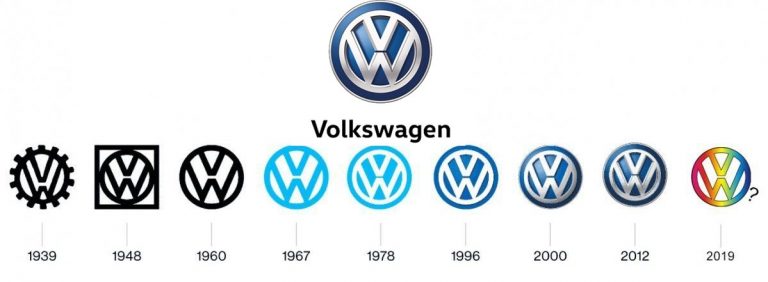
New Volkswagen (the logo’s name) is designed to make the brand younger, more digital and modern. The company has developed it for over 3 years. It is part of changes followed after the Dieselgate.
The first to carry the new logo will be the 8th-generation Volkswagen Golf which enters the market in early next year.
At the same time, the rebranding coincides with the launch of the first production car that underpins the company’s full-electric MEB platform – the Volkswagen ID.3.
The current logo dates back to 2012. The new one maintains the letters V and W in a circle in a simpler 2D design. It is flat, contrast, well perceived and better fitted to digital era. As for the colors, there will be white on a black background, or maybe red on GTI models.
The rebranding will also include a new typeface and addition of light blue alongside white and dark blue as official brand colors.
The new logo will be presented to public at the Frankfurt show and simultaneously installed at the VW’s headquarters in Wolfsburg.
Over the next 2 years, it will be rolled out across more than 10,000 dealers in 171 markets. The automaker plans to replace 70,000 logos in total.
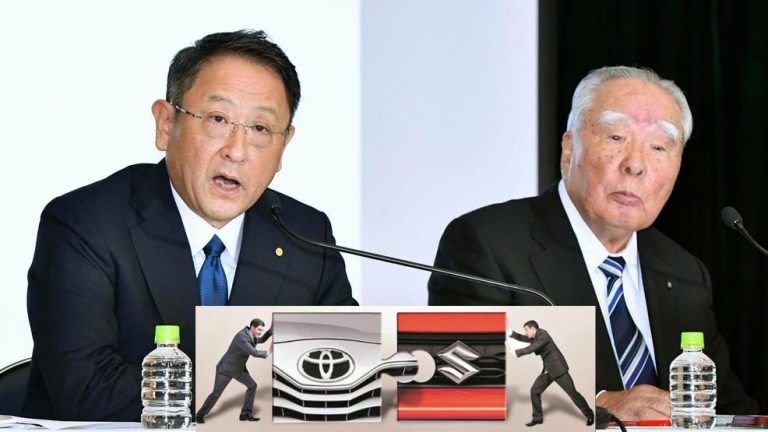
Japan’s top automaker, Toyota, and smaller rival Suzuki are partnering in the development of self-driving car technology, as manufacturers around the world grapple with innovations in the industry.
Under the deal, announced Wednesday, Toyota will take a 4.9% stake in Suzuki Motor Corp. valued at 96 billion yen ($908 million), and Suzuki will make a 48 billion yen ($454 million) investment in Toyota.
In 2017, Toyota Motor Corp. and Suzuki agreed to work together in ecological and safety technology. That deal did not include owning mutual stakes.
Auto manufacturers are facing a costly shift toward the use of artificial intelligence, the internet and other technologies. Partnerships are one way to share the enormous costs. Last month, Volkswagen AG of Germany said it is investing $2.6 billion in a Pittsburgh autonomous vehicle company that’s mostly owned by Ford, Argo AI, with a plan to put autonomous vehicles on the roads in the U.S. and Europe as early as 2021.
Under the deal, Ford will use VW’s electric vehicle platform to build zero-emissions cars for the European market starting in 2023.
In February, BMW and Daimler said they are working together on self-driving cars. Under their earlier agreement signed in 2017, Toyota and Suzuki are also cooperating in the Indian market, where Suzuki remains a strong player. They said they will continue to expand their collaboration.
“The automobile sector is currently experiencing a turning point unprecedented in both scope and scale,” Toyota and Suzuki said in a statement, referring to stronger environmental regulations as well as newcomers in the mobility business.
They said deepening their relationship will help both companies grow and meet challenges. Google autonomous vehicle spinoff Waymo is among the new players. Uber, which offers ride-hailing services and food delivery, is also working on autonomous driving.
Toyota, the maker of the top-selling hybrid, Prius, has invested in Uber.
The 17th China International Motorcycle Trade Exhibition (hereafter referred to as CIMAMotor 2019), the largest motorcycle exhibition in Asia, will be held on September 20-23, 2019 in Chongqing, China.
Industrial structure will continue to accelerate adjust at motorcycle industry. Chinese motorcycle production is expected to continue to reduce and the proportion of traditional type became low. Along with industrial structure adjusting more and more thorough, market competition increases. Quantity expansion and price competition is moving to competition mainly composed of quality-oriented and differentiation.
CIMAMotor, as one of the most important platforms for new product launch in the industry, will spare no efforts to strengthen its position not only as a platform for brand displaying, product trade, technology transfer and information releasing, but also a platform for innovative products representing the future trends of energy saving and environmental protection.
At present, international luxury motorcycle manufacturers have entered the main markets in China and domestic brands are on the rise. Having been successfully organizing motorcycle riding and other cultural activities for several years, CIMAMotor as the annual carnival for motorcyclists and enthusiasts has been widely recognized, thus making it the best promotion platform for luxury motorcycles and related products in China. To show the vitality of China motorcyclists, CIMAMotor will invite foreign motorcycle tour operators from famous motorcycle touring destinations to join in the exhibition. They will meet with more than 300 motorcycle clubs and provide numerous tour choices for nearly 20,000 motorcycle enthusiasts at CIMAMotor.
While presenting new motorcycle products and cutting-edge technologies to visitors, and depending on word class hardware condition of the venue, CIMAMotor also set up professional experience space for crossing-country, training skills, and testing drive. In order to add visual interest and participation to visitors and making experiential motorcycle exhibition, CIMAMotor is going to open up motorcycle experiential and interactive zone, motorcycle stunt wards, second-hand motorcycle trading zone, The night of rock and roll for motorcycle fans.
CIMAMotor focuses on everything about motorcycles. After being fostered for several years, it has become a reliable promotion platform and strategic partner of the exhibitors. We cordially invite you to participate in CIMAMotor 2019. In 2019, let’s meet at CIMAMotor!
Exhibition Scope
Scope of Exhibits】
> Whole Vehicles:
General
motorcycle, luxury motorcycle, off road motorcycle, special purpose motorcycle,
custom motorcycle, tricycle, new energy motorcycle, etc.
> Motorcycle Accessories and Parts:
Motor
engines, vehicle frames, shock absorbers, brakes, wheel hub, sprocket, tire,
oil tank, exhaust system, electronic devices, light, lock, covering parts and
other spare parts.
> Motorcycle Cultural Related
Products:
Clothing,
helmet, equipment and accessories for motorcycle outdoor activities, model,
ornament, refitting accessories, motorcycle club, motorcycle tour operator,
etc.
> General Fuel Motors:
General
gasoline (diesel) engine, genset, water pump unit, multi-functional
agricultural machinery, etc.
> Maintenance Products:
Special
tools and machinery for cycle manufacturing and repairing, lubricant, etc.
> Motorcycle Technology and
Service:
Industrial
design company, publication, R&D achievement, etc.
【Special
Areas】
>Motorcycle Tour:
CIMAMotor
will invite motorcycle tour operators from main foreign motorcycle tour
destinations to attend CIMAMotor 2019. Motorcyclists who love travelling in
full freedom will find partners, new attractions, new ideas and solutions here.
For the exhibitors, it is the ideal stage to meet and welcome a specific target
group.
>Custom Area:
CIMAMotor Custom Area is much more than an exhibition area, in that it aims to show passion, innovation and imagination through the people and the art forms that have characterized it over time. Besides highly stylized vehicles, the handcrafted motorbikes and unique products on display, a variety of activities are scheduled to meet the unique and personalized need which motorcyclist chase after.
For more information please visit: www.cimamotor.com/en