Home Blog Page 66

Auto Industry; way forward and Export prospects

At present the biggest issue in Pakistan is the balance of payment and for that purpose increase in exports is the talk of the town, in general more the exports; more prosper is the country and when we talk about automotive exports they are at very low level.

Actually when comparing to many developed countries our automotive sector is at infancy level. This sector needs more attention and consideration as the Automotive manufacturing sector is the back bone of Engineering spectrum in any country.

In Pakistan, Automobile sector is mainly lead by the Japanese manufacturers i.e. HONDA, TOYOTA, SUZUKI, YAMAHA, yet due to the implementation of Automotive Development Policy (ADP 2016 -2021) some western and Korean players along with Chinese are entering into the market but till now the Japanese Players dominate. To add here I want to mention that ADP 2016-2021 is the first ever Auto policy which is at executing stage.

Japanese Automotive Industry exists world wide e.g. in USA, Canada, India, Thailand etc. but we see that the Japanese Automotive manufacturer in Pakistan produce lesser variants with fewer features as compare to the global market, there are two main factors for that, one is the low market size (Manufacturer perspective) and the other one is lack of Interest (Consumer perspective). These factors have some solid backing but when we talk about increasing the exports we have to dig down to the core.

It is mentioned in Automotive Development Policy ADP (2016-2021) that:  “It lay down a comprehensive, well-defined roadmap that aims essentially to protect the interests of the consumers and raises the safety, quality and environmental standards to meet the challenges of the highly competitive export market”.

But a part from quality, safety and good features there is a fundamental requirement which needs to be addressed and that is the localisation of predominant component of an automobile in terms of performance and cost; its the Engine along with transmission. Localisation of Engine manufacturing is a difficult job, it needs a lot of Investment and RnD.

Pakistan can learn a lot from the countries who have in recent past realized substantial growth in Automotive exports. Thailand is prime example where in early 2000s their total Automobile production is around 0.4 Million and in the year 2017 they have produced around 2.0 million automobiles amongst which they have exported nearly 1.2 million units which is the 60% of their total produce. When Thailand plans to locally manufactured the engine their policy makers impose restriction on its Localisation in 1989 at 20 percent and the ratio was set to increase to 70 percent in 1996. Because of this policy assembler could not rely on expansion of in-house production, because the domestic market of Thailand at that time was too small (Just like current situation of Pakistan) and engine manufacturing is not feasible for one supplier. Thailand made strategies to overcome its issues and some of the key strategies are to:

1. Develop and create supplier network.
2. Collaboration among assemblers, especially for the engine project.
3. Develop Thailand Automotive Institute.

To the first strategy, during the initial stage of development, the Japanese automobile
manufacturers invited their Japanese parts supplier to Thailand and locating them around their assembly plants (Automobile Industrialization and Japanese Firms in Southeast Asia, Doner 1991). This was much like the CPEC of Pakistan in which Japanese Industry massively shifted in Thailand. The collaboration among assemblers for Engine manufacturing is a key step in boosting Thai-Auto Industry. Establishment of Thailand Automotive Institute provides the essential support
mechanism for the sector and its mission is:

1. To be knowledge centre and expertise for automotive industry development
2. To support operation of organizations in testing standard, inspection and
innovation development
3. To develop human resources in automotive, auto parts and related industry
4. To expand research & development and enhance competence of entrepreneur for more productivity
5. To collaborate among organizations in Thailand and international for automotive industry development

By implementing these strategies and executing Thai-govt. policies eventually Thailand has increased its Automotive exports. Pakistan can also implement these strategies and achieve advancement in this sector, establishment of Pakistan Automotive Institute is also duly planned in Auto Development Policy (ADP 2016-2021) but till now no pertinent steps have been taken so far. This institute could be the knowledge centre and expertise for automotive industry development also it can create Research and Development culture, introduce new standards and policies in this sector.

Research and Development culture by large is missing in our country, by establishing these type of Institutes and creating collaboration among the assemblers for Engine localization we can enable local car manufacturing at low-cost and not only can help in uplifting our local Auto-Manufacturing Industry but also can increase our Automotive exports which can solve our country’s balance of payment problem.

Visiting Japanese Automotive Manufacturing plant in Japan with senior Japanese Automotive experts
At JICA office Japan receiving completion certificate of training on Technical Support program for Auto Manufacturing Industry of Pakistan


About Writer: Mubeen Abid
Is part of a Public sector organisation. The writer is greatly involved in improving Quality and Productivity of Automotive Parts Industry, he has introduced World best practices in this sector through the Technical Support Program which has covered more than 50 Automotive parts suppliers from all over Pakistan. He has robust skills gained through strong association with many Japanese Automotive Experts and has an extensive exposure of Japanese and Thai Automotive Industry.
You can connect with the writer through His email: [email protected]

Sindh Government to launch Biometric Verification for Vehicle Transfer

The amendment is being proposed in Motor Vehicles rules for the introduction of a biometric system for the verification of a seller and buyer of the vehicle, preventing vehicles that are being used with an open letter.

The above amendment was discussed in the meeting headed by Sindh’s Provincial Minister for Excise and Taxation & Narcotics Control and Parliamentary Affairs, Mukesh Kumar Chawla.

DG Excise and Taxation, Shabbir Ahmed Sheikh, gave a briefing to the meeting. He told that the Excise department has received complaints that certain vehicles were being plied on open letters. Therefore, it has decided to take this action.

He said the Excise Department had decided to take action against them and in this regard a proposal had been sent to the government to launch a biometric system of verification of the buyer and seller at the time of vehicle transfer and its registration.

“The department has completed all the codal formalities regarding the launch of Smart Cards and it has more security features as compared to smart card introduced by Punjab Government,” said the official.

During the meeting, the provincial minister expressed satisfaction knowing that the use of the vehicles with open letters has reduced visibly. He further asked the officers to take more steps to discourage the practice entirely.

The minister also appreciated the arrangements being made for the upcoming Road Checking Campaign.

by Aqsa Mirza

2019 may not be easy than 2018 for bike industry of Pakistan

December has always remained the slowest month for the bike industry in terms of sales and production, but this 2018’s December may emerge as the worst month for the whole auto sector of Pakistan.

By the end of December till the finalization of this write up, car sales of three assemblers may remain depressed from July to December 2018.

Branded bike makers like Yamaha, Suzuki and Honda are selling their bikes through various promotional schemes to their dealers and not to the customers.
Ahead of start of New Year, Chinese based assemblers are getting so many notices from the Federal Board of Revenue (FBR). Besides, FIA is more active over telegraphic transfer of US dollars unofficially or through Dubai channels, thus causing anxiety among the businessmen.

So far, sales of Chinese bike assemblers have plunged by more than 50 per cent in December 2018 alone while around 30 per cent sales drop had been witnessed in the last quarter of 2018, chairman Association of Pakistan Motorcycle Assemblers (APMA), Mohammad Sabir Sheikh claimed.

However, bike sales in 5MFY19 did not witness any serious drop. Honda sales improved to 463,714 units from 454,196 followed by Suzuki and Yamaha sales to 9,814 and 10,425 from 8,528 and 8,611 units respectively.

United bike sales went up to 177,261 units from 165,481 units while Road Prince suffered heavy fall to 79,625 from 99,406 units. Ravi sales slightly plunged to 12,346 from 12,840 in 5MFY18.

Also Read: Pakistan needs uniform taxation policy for SMEs and large scale units. Time has come to remove SRO culture

According to Sabir Sheikh, bike sales of some assemblers remained unsatisfactory during September and October and even till today sales of some assemblers had partially recovered while others were still facing poor sales.

He said bike assemblers have received good news that the advisor to Prime Minister on Industries and Production, Abdul Razzak Dawood is making new policies for the small and medium enterprises (SMEs) and also for the bike industries of Pakistan.

APMA chief says Pakistan badly needs a good and long term industrial policy for the SMEs especially because the government believes that the pace of industrialization and employment can be boosted by promoting small and medium enterprises. The industry needs uniform taxation policies and valuation of goods at import stage, limited issuance of SROs as auto industry is working under five different policies and SROs. “The SRO should be one and final,” Sabir said.

Zero per cent duty on raw materials is a right step so far but duty on assemblies, sub assemblies, components and sub components should be treated at par with complete assembly. The above procedure only encourages under invoicing, misdeclartion and misuse of SROs.

From December 2017 to December 2018, rupee lost its value by 24 per cent against the dollar, thus pushing up cost of imports. As a result, bike assemblers especially Atlas Honda Limited had surged bike prices by at least six times in 2018 while Chinese bike assemblers also followed the suit.

Increase in bike prices had also hit the sales of some assemblers thus shifting a number of buyers towards installment sales. Cash buying is slowly dying due to buyers’ rising cost of living.

Consumers had already been hit hard due to rising cost of utility bills on account of increase in gas and power rates coupled with soaring petrol prices. Devaluation has played havoc with the prices of essential items also, Sabir said.

The year 2018 witnessed some cosmetic changes in branded and Chinese bikes. Only Pak Suzuki unveiled GR150cc model at Rs 219,000 during January 2018. This bike is being rolled out on almost 100 per cent imported parts.

Honda CB150F and Suzuki GD110S and some Chinese models are also being assembled on almost 100 per cent CKD kits.
Consumers are now paying Rs 189,000 for Honda CB150 versus Rs 159,000 in January 2018 followed by jump in price of Suzuki GR150 to Rs 235,000 from 219,000. Yamaha YBR125G is now priced at Rs 144,500 as against Rs 133,900.

Sabir said irrespective of economic and political turmoil, consumers have always preferred to have two-wheeler as the only cheaper mode of transportation. Many people especially those travelling in public transport had switched over to bikes.

High petrol prices coupled with ineffective transport system had kept bike demand high despite frequent rise in prices. Buyers know that at least it is better to go on bike with one litre of petrol rather than wasting time on public transport and paying high fares. Besides, ongoing construction works at different arteries of the city have also created huge problems for commuters owing to massive traffic jams. In such situation, bike is the ideal transport in reaching the destination irrespective of long distance.

On 2019, Sabir fears that in case one US dollar reaches to Rs 150 then this would also prove devastating for the local assemblers as hi tech parts are still being imported despite achieving higher localization.

He said after some strict measures on transfer of US dollar via unofficial telegraphic transfer coupled with transfer of data of declared values by the Chinese exporters of auto parts, the government would earn more revenues but the cost of industries would rise.
Some cash rich people are also seen purchasing heavy used bikes of 400-500cc but the trend may shrink as the government has put a ban on purchasing vehicle beyond 200cc. As a result, import of these bikes may record a big fall in coming months.

Some leading assemblers have also introduced imported brand new heavy bikes but due to high prices these bikes are lifted by the traffic police departments and other security agencies rather than customers.

According to figures of Pakistan Bureau of Statistics (PBS), import of bikes in 5MFY19 fell by 50 per cent to $1.74 million from $3.5 million in same period last fiscal.
Total imports of bikes in FY18 rose by 59.4 per cent to $5.7 million from $3.6 million in FY17.

Sabir expressed surprise over the media campaign of Pakistan Association of Automotive Parts and Accessories Manufacturers Association (PAAPAM) in which a very dismal picture of the auto sector was presented.

PAAPAM has claimed that bike production has declined by 30 per cent followed by 60 per cent fall in tractor production and 35 per cent decline in car production.
He said PAAPAM had been notorious in misguiding the previous governments and this time it has again come up with hollow statistics without mentioning time period in drastic fall in car, tractor and bike production.

Another hilarious claim that restriction on non filers has reduced our customer base to only 1.4 million persons besides curtailing government’s revenues making industry unsustainable is also a sheer lie when Federal Board of Revenue (FBR) and even car makers had revealed in the media that number of income tax filers had increased.

PAAPAM said it has lost over 12,000 jobs in the last three months and would lose another 50,000 soon which is hard to digest keeping in view of figures of Pakistan Automotive Manufacturers Association (PAMA). Bike production and sales have increased in the last five months followed by satisfactory sales in cars.

Sabir said truck sector had been facing recession for the last five months on which PAAPAM did not bother to mention in its media campaign.
“I do not know what PAAPAM is going to gain from its negative media campaign from the government while the market reality is totally reverse from vendors’ claim,” APMA chief said.

The July-December 2018 figures will give a clear picture of sales and production trend keeping in view ban on non filers from buying vehicles, rupee devaluation against the dollar and high interest. PAAPAM has come out with baseless claims in which no period has been mentioned relating to steep fall in production of cars, bikes and tractors.

He urged the government to counter check the PAAPAM claim otherwise the vendors would succeed in their mission in getting some decisions in their favor. In order to provide transport facilities, the Government of Punjab has announced to provide motorbikes and scooters to female students on easy installments.

Punjab Education Foundation Chairman Wasiq Qayyum Abbasi said the scheme would start at the beginning of 2019 which is aimed at providing easy travelling facility to female students in the whole province. However, the procedure as to how one can apply and get the bike has not revealed yet but hopefully, further information regarding the scheme would be available in due time.

Wasiq Qayyum Abbasi further said that bikes and scooters would be provided to the female university students and travel vouchers will be provided to the female students who are studying in metric and intermediate classes so they don’t have to spend money on travelling and reach school on time. The Chairman also discussed that the bicycles will be given to male students. He also told that there are 550 colleges and 53,000 schools, where almost 50 million students study.

This is not the first time that the government has taken such initiative to provide bikes to women, previously, under the Women on Wheels project, hundreds of subsidised bikes were given to females. In the first phase of the initiative, only the women from Lahore, Faisalabad, Multan, Sargodha, and Rawalpindi were allowed to apply for the scheme. However, the government is committed to expanding this initiative in other districts of Punjab as well.

The Women on wheels initiative started back in November 2015 with an aim to help women to learn bike riding.
Nonetheless, there is no such initiative has been taken so far in other provinces. Keeping in view the dense population and chaotic traffic situation of other provinces like Sindh, the federal government should also start this initiative to facilitate the transportation means for young girls which empower them to go to the institutions for studies without any break.

Originally published in Automark Magazine’s January-2019 printed edition

by Ali Hassan

Al Ghazi Tractors warns shutdown of plant in Pakistan

Owing to severe slowdown in the market coupled with massive Sales Tax refunds not being released by the Government, Al Ghazi Tractors Ltd. is at the verge of taking a bitter decision bringing the plant to a shut down.

The last four to five months proved quite challenging for the local tractor industry as being one of the lowest trends ever seen over the last few years bringing massive slow down while leading to considerable non utilization of capacity. It is to be noted that volume of sales declined by 30% during the second half of the year 2018 while comparing with the same period last year.

“We are barely surviving in the current situation,” said Al-Ghazi Tractors CEO Mohammad Shahid Hussain. “If the government does not immediately release the funds to tackle cash crunch, the plant’s shutdown may become inevitable.”

He said that the industry has been pleading the government to address the anomaly of input tax vs. output tax that leads to completely imbalanced and massive accumulation of refund claims which stand at around Rs.2 billion for Al Ghazi alone. “Serious attention is therefore needed with speedy action from government authorities to save us from irreversible damage,” he added.

“It is shocking to hear at this junction, that the government of Punjab is contemplating to import used tractors in Pakistan which would not only be a huge burden on our foreign exchange but also hurt the local manufacturers carrying inventory of Tractors,” said Shahid.

“Such a move at this point in time could only act as a catalyst to diminish the already ailing industry and will not only lead to negative repercussions for the tractor assemblers but will also cause considerable unemployment among parts’ suppliers,” he cautioned.

At present, thousands of people are engaged in businesses that supply parts and components for tractor assembly.

GM sold 200,000 electric vehicles in U.S. by 2018, triggering tax-credit phaseout: source

GM, which said previously it expected to reach the 200,000 sales figure before the end of 2018, declined to comment ahead of the release of its quarterly sales results on Thursday.

WASHINGTON: General Motors Co hit 200,000 total electric vehicles sold in the United States by the end of 2018, reaching a threshold that triggers a phase-out of a $7,500 federal tax credit over the next 15 months, a person briefed on the matter said Wednesday.

The largest U.S. automaker reached the figure in the fourth quarter of 2018, which means the credit will fall to $3,750 in April, and then drop to $1,875 in October for six months. The credit will completely disappear by April 2020. The 200,000 figure covers GM’s cumulative EV sales since 2010.

The tax credit is aimed at defraying the cost of electric vehicles that are more expensive than similarly sized internal combustion engine vehicles. In 2009, Congress set the phase-out threshold at 200,000 vehicles per manufacturer.

GM, which said previously it expected to reach the 200,000 sales figure before the end of 2018, declined to comment ahead of the release of its quarterly sales results on Thursday.

GM and Tesla Inc, which hit the 200,000 figure in July 2018, have both lobbied Congress to lift the cap or extend the existing tax credit. Tesla’s EV tax credit fell to $3,750 on Tuesday and Tesla said it was cutting prices on its EVs by $2,000 to partially offset the lower tax credit.
In March, GM Chief Executive Mary Barra called on Congress to expand the consumer tax credit for electric vehicles as the company boosted production of the EV Bolt in response to consumer demand. She repeated the request last month during a visit to Capitol Hill.

GM said in November it was doubling resources allocated to developing electric and self-driving vehicles as part of a significant restructuring that includes ending production at five North American plants. GM also announced it would halt production of the plug-in hybrid Chevrolet Volt by March.

In November, a congressional report said 57,066 taxpayers claimed $375 million in EV tax credits in 2016. Congress estimates the cost of the EV tax credit at $7.5 billion between the 2018 and 2022 fiscal years.

Indus Motor Company increases the car prices following rupee depreciation

Indus Motor Company (IMC), the manufacturers of Toyota cars, has once again raised the prices of its vehicles by up to Rs175,000. Apparently, the company wants to shift the increased production cost resulting from depreciating rupee entirely on to the consumers.

Indus Motor Company which increased the car prices four times in 2018 has once again hiked the prices following the depreciation of rupee against the US dollar which made import of auto parts expensive.

The revised prices are made in the range of Rs75,000 to Rs175,000 at the beginning of the new year.Previously in October 2018, the company raised prices in the range of Rs50,000-175,000 for November and December deliveries and Rs100,000-350,000 for deliveries from January 2019 onwards.

The new prices are as follows:


Model New Price Old Price
Corolla XLI M/T Rs.2,044,000 Rs.1,944,000
Corolla XLI A/T Rs.2,119,000 Rs.2,069,000
Corolla GLI M/T Rs.2,299,000 Rs.2,224,000
Corolla GLI M/T Special Edition Rs.2,373,000 Rs.2,316,000
Corolla GLI A/T Rs.2,374,000 Rs.2,299,000
Corolla Altis 1.6 Rs.2,574,000 Rs.2,474,000
Corolla Altis 1.8 MT Rs.2,689,000 Rs.2,589,000
Corolla Grande MT-SR Rs.2,864,000 Rs.2,764,000
Corolla Grande CVT-SR Rs.2,999,000 Rs.2,899,000
Hilux 4×2 S/C Standard Rs.2,929,000 Rs.2,804,000
Hilux 4×2 Single Cab (Up Spec) Rs.2,959,000 Rs.2,834,000
Hilux 4×2 Single Cab Deckless Rs.2,674,000 Rs.2,549,000
Hilux 4×4 Standard Rs.4,159,000 Rs.4,009,000
Hilux Double Cab Standard Rs4,549,000 Rs.4,399,000
Hilux Revo G 2.8 Rs.4,859,000 Rs.4,709,000
Hilux Revo G AT  2.8 Rs.5,089,000 Rs.4,939,000
Hilux Revo V AT  2.8 Rs.5,399,000 Rs.5,274,000
Fortuner 4×2 HI Petrol Rs.6,399,000 Rs.6,249,000
Fortuner 4×2 Diesel Rs.6,799,000 Rs.6,624,000


by Aqsa Mirza

Pak Suzuki Motors to increase its share capital by Rs. 3,500 million

According to Metis global news, the Board of Directors of Pak Suzuki Motor Company Limited (PSMCL) have recommended increasing the authorised share capital of the company from Rs. 1,500 million to Rs. 5,000 million. However, the decision is subjected to the approval by the shareholders in the forthcoming general meeting of the company.

The notification was issued on Friday where the Japanese automaker revealed its plan to establish second manufacturing plant at Port Qasim to increase the production capacity of Suzuki vehicles to 100,000 per year.

Brief History

Pak Suzuki Motor Company Limited was established in1983 as a result of a joint venture agreement between Pakistan Automobile Corporation Limited (representing Government of Pakistan) and Suzuki Motor Corporation (SMC) Japan. The Company started commercial production the year later with the primary objective of manufacturing, assembling and marketing of cars, pickups and vans in Pakistan.
Over 70 percent of the company’s shares are held by Suzuki Motor Corporation, Japan while less than 5 percent of the shares are held by the local public.

by Aqsa Mirza

How Did Shenzhen, China Build World’s Largest Electric Bus Fleet?

Diesel buses—and the choking smog they spew—are a common sight in most cities. But not in Shenzhen, China.

The southeastern city, which connects Hong Kong to mainland China, announced at the end of last year that all of its 16,359 buses had gone electric. The city’s buses are the world’s first 100 percent electrified bus fleet, and its largest—bigger than New York’s, Los Angeles’s, New Jersey’s, Chicago’s and Toronto’s electric bus fleets combined.
How the city overcame obstacles like high costs, lack of charging station infrastructure and more provides lessons for other cities looking to electrify their bus lines.

Costs and Benefits of E-Buses
Diesel buses may comprise a small percentage of the vehicles on city roads, but they create an outsized environmental impact. In Shenzhen, diesel buses represent 0.5 percent of a city’s total vehicle fleet, but account for 20 percent of its transport emissions because they operate longer and drive more miles than private cars.

Switching to electric buses thus offers a vital path towards clean air. Cities and states around the world, such as London and California, are pursuing e-buses as a way to meet their air quality goals.
Yet shifting from diesel to e-buses isn’t easy. Electric buses cost 2 to 4 times1 more upfront than conventional diesel buses. They need the infrastructure to support consistent charging. And their batteries need to be replaced at least once during their lifetime, which can be costly. Battery replacement is nearly half of a vehicle’s price.

Shenzhen: The Making of the World’s Largest E-Bus Fleet
Yet Shenzhen was still able to cost-effectively electrify its buses. Four tactics helped:

1. National and local subsidies
For Shenzhen and many Chinese cities, policy incentives such as national and local subsidies play a major role in closing the cost gap between e-buses and conventional diesel buses. Before 2016, a 12-meter e-bus in Shenzhen received a $150,000 government subsidy, more than half of the vehicle’s price.

Yet some studies show that subsidies may not be necessary to make e-buses cost-competitive with diesel buses. According to a study conducted by the World Bank and Global Environment Facility,2 the lifecycle cost of e-buses in Shenzhen as of 2016 (including procurement, energy and maintenance costs over an eight-year period)3 is $375,457, almost the same as a diesel bus’s lifetime cost of $342,855. In short, while e-buses in Shenzhen have a high upfront cost, their operation and maintenance costs are significantly lower than those of diesel buses.

2. Leases to reduce upfront investments
Instead of directly procuring e-buses at the subsidized prices (around $90,000-$120,000) like many other Chinese cities, some bus operators in Shenzhen lease vehicles from manufacturers. This greatly saved operators’ upfront investments, and reduced the need for debt financing.

3. Optimized charging and operation
Operating an e-bus fleet differs significantly from operating a diesel fleet. Due to shorter driving ranges and recharging needs, Chinese cities typically require 100 percent more e-buses than conventional diesel buses. This requires additional money for procurement, operations and maintenance. Shenzhen almost entirely wiped out these additional costs by optimizing its operations and charging.
Shenzhen adopted a type of e-bus where a five-hour charge supports 250 kilometers (155 miles) of driving, almost sustaining a full day of operation.

However, to ensure recharging does not disrupt bus services, bus operators collaborated with charging infrastructure providers to furnish most of the bus routes with charging facilities; currently, the ratio of charging outlets to the number of e-buses is 1:34. The charging facilities are also open to private cars, thereby improving the financial performance of the charging infrastructure.

The bus operators also coordinated the time of charging with the operation schedule, with all e-buses charged fully overnight when electricity prices are low, and recharged at terminals during off-peak travel times.

4. Lifetime warranty of batteries
The early-phase technological immaturity of e-buses, coupled with the mid-life battery replacement need, often lead to frequent mechanical breakdowns and increased costs. Bus operators traditionally shoulder all these costs, but in Shenzhen, bus manufacturers provide a lifetime warranty for vehicles and batteries, because the bus operators required this at the procurement stage.
Manufacturers are better positioned than bus operators to manage financial risks because they can continuously innovate battery technologies.

A Better City Through Better Buses
Shenzhen’s experience proves that it’s possible for cities to cost-effectively electrify their bus fleets. The result benefits citizens both on and off the bus: Shenzhen met its air quality improvement goals in both 2016 and 2017.

Courtesy: World Resources Institute
https://www.wri.org

Belarus to increase machinery supplies to Pakistan

Belarus is set to increase machinery supplies to Pakistan, including by means of expanding the assortment range of export commodities, Belarus Deputy Industry Minister Dmitry Korchik told reporters on 18 December, BelTA has learned. “We are to leave for Pakistan soon to discuss a possibility to increase machinery exports and the assortment of supplies to Pakistan,” he noted. Dmitry Korchik said that Belarusian machinery has tremendous sales potential and has aroused interest in Pakistani counterparts. “Apart from that, we want to take part in technical upgrade programs in Pakistan. I think this will also be of interest to our partners,” Dmitry Korchik noted. As of today, Minsk Tractor Works (MTZ trademark) is Belarus’ major machinery exporter to Pakistan. MTZ has been operating on the Pakistani market for over 50 years already. Apart from expanding the assortment range of export commodities, the company is determined to promote assembly manufacturing and increase the localization level.

Displaying their products on MTZ indoor and outdoor exhibition premises were domestic industry giants like MTZ, Amkodor, Bobruiskagromash, MAZ, Gomselmash, Lidselmash, and Minsk Motor Plant.


In 2019 Belarus is set to launch mass supplies of Gomselmash grain harvesters Palesse GS575 to Pakistan. This harvester has been successfully tested this year. “We are also supplying our agricultural trailers and are looking for potential partners to assemble road construction machinery,” Dmitry Korchik informed.

Chairman of the Joint Chiefs of Staff Committee of the Armed Forces of Pakistan Zubair Mahmood Hayat is on an official visit to Belarus. On 17 December the Pakistani delegation visited the MTZ premises to see Belarusian machinery and equipment, as well as products made by Belneftekhim Concern, Bellegprom Concern, Belgospishcheprom Concern, the Healthcare Ministry and the Agriculture and Food Ministry.

Mahatir launches first Proton X70 SUV in Malaysia with sub-RM100K Price tag

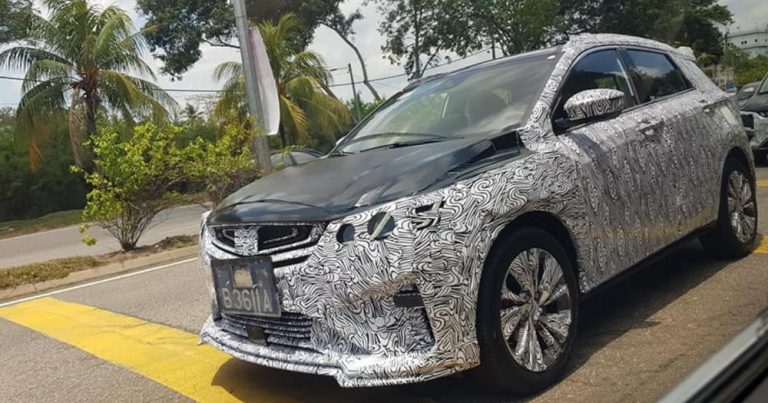
Proton X-70 Sports Utility Vehicle (SUV) officially launches in Kuala Lumpur Convention Centre, Malaysia. Malaysian Prime Minister Mahatir Muhammad was the chief guest of the ceremony who launched the much waited Proton X-70 variant.

This is the most anticipated SUV in Malaysian automotive history, with over 10,000 bookings received as at end-October 2018. The X70 is billed as the first premium SUV by a Malaysian automotive brand, and was jointly developed by Proton with partner Geely.

Dr Mahathir, in his speech, said he hopes the collaboration between Proton Holdings Bhd and Zhejiang Geely Holdings Group (Proton-Geely) collaboration will produce a truly Malaysian car in the future.

“Of course this car is not designed and built by Proton entirely but in order to be fast on the road, you have to cut corners,” he said.

However, Dr Mahathir said Proton should continue to make progress and participate in developing new models. Since partnership with Geely, Proton has made progress including the launch of its first sport utility vehicle, the X70.The model is the first collaboration between Proton and Chinese automaker Geely.

When developing the Proton X70, both Proton and Geely collaborated on multiple levels. From the cross deployment of staff in China and Malaysia, to testing in Malaysia’s hot and humid climate to the collaboration between local and international vendors, the goal was to ensure a product that is perfectly suited to the needs of Malaysian and Asean car buyers.

To prepare for its introduction, Proton embarked on a comprehensive marketing plan to build an unprecedented level of excitement amongst car buyers via on-ground events, the launch of an online booking portal and giving the SUV its public debut at the Kuala Lumpur International Motor Show 2018.

These efforts began in September and were further strengthened by social media campaigns that included a naming contest and numerous teaser videos on Facebook and YouTube.

The Xtra Service Package offers free parts and labour for the first service as well as free labour for five scheduled service appointments within 100,000km or five years.

Training activities for sales and service staff and the launch of the inaugural Proton After Sales Service Competition (PASSC) were part of efforts to ensure everyone had sufficient knowledge of the new vehicle.

“The Proton X70 is the result of more than one year of hard work by Proton and Geely engineers, designers and hundreds of other people working together to develop the first premium SUV by a Malaysian car manufacturer,” said Proton CEO Li Chunrong.

“Proton is proud of our achievement and it is our belief Malaysian car buyers will be equally proud to own an SUV that will help to transform the Proton brand.

“With over 10,000 bookings, it already has a good start so we will work hard to deliver on our product and brand promise.

A total of four variants have been introduced, which includes the Standard 2WD, Executive 2WD, Executive AWD, and Premium 2WD. All variants of the Proton X70 share a 1.8-litre TGDi turbocharged four-cylinder petrol engine that does 181 hp and 285 Nm. A six-speed automatic transmission is the sole option, routing power to either the front or all four wheels, depending on specification.

The Standard 2WD (two-wheel drive) is priced at RM99,800; RM109,800 (Executive 2WD); RM115,800 (Executive AWD – all-wheel drive); and RM123,800 (Premium 2WD).

Specs of Proton X-70

• Gets keyless entry (with active touch sensors on the front door handles)

• Electrically foldable wing mirrors

• LED projector headlights with LED DRLs & LED fog lamps,

• “Smartphone Remote Control” and “Smart Air Purifier”

• The “Air Cleaner” system

So far, the available exterior colour options as we can tell are Flame Red, Snow White, Armour Silver, Jet Grey and Cinnamon Brown.

Pakistani Management and Dealers Principals also attended the ceremony

by Aqsa Mirza / Hanif Memon