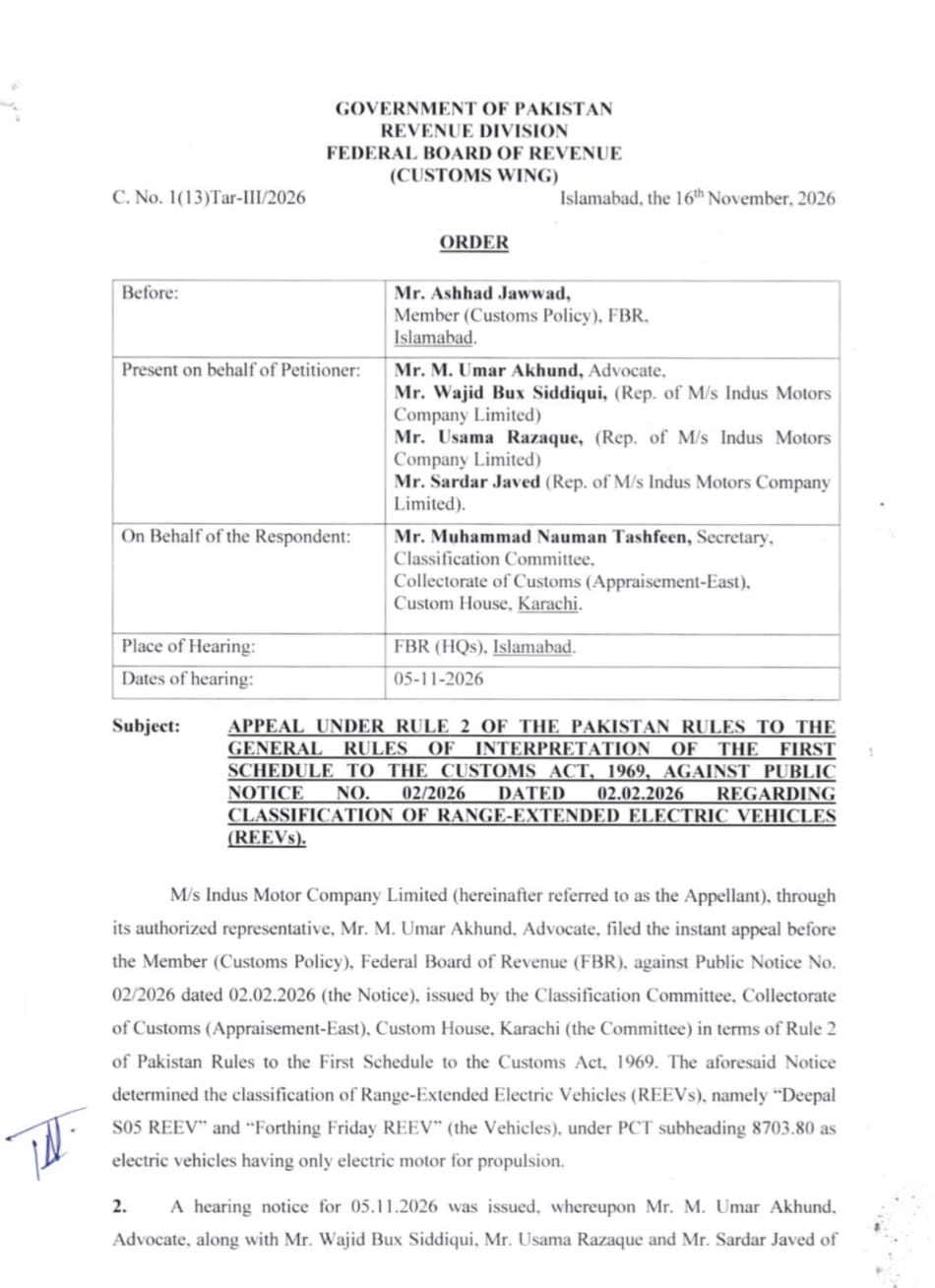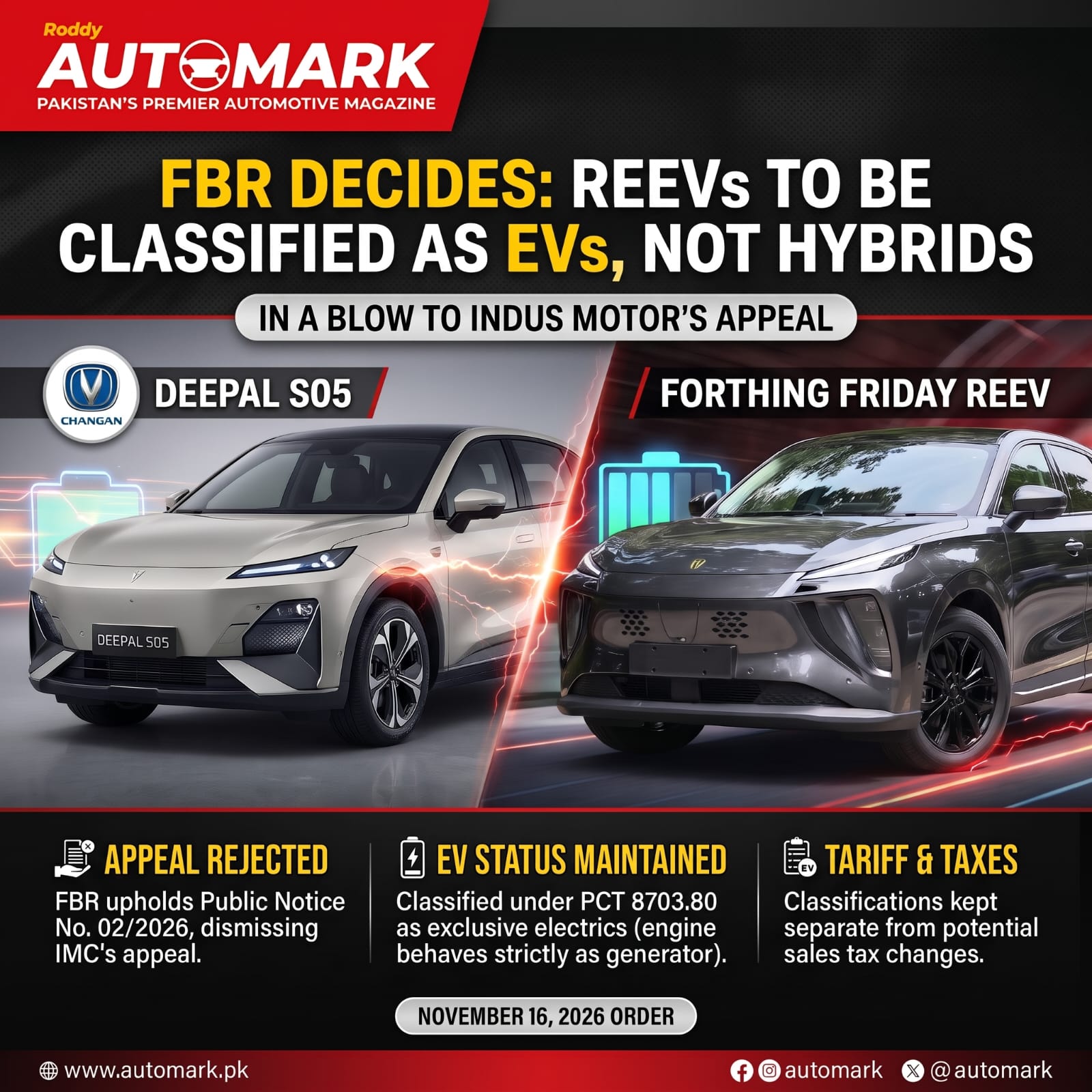
The Federal Board of Revenue (FBR) issued an order on November 16, 2026, regarding the customs classification of Range-Extended Electric Vehicles (REEVs), following an appeal filed by Indus Motor Company (IMC).
Under the ruling, REEVs will continue to fall under the electric vehicle category for customs classification purposes, rather than being classified as hybrid vehicles. The case specifically concerns two vehicles in Pakistan:
Deepal S05 REEV( Changan, Master motors)
Forthing Friday REEV( Capital Smart Motors)
Both vehicles were previously classified under Pakistan Customs Tariff (PCT) subheading 8703.80, which covers vehicles powered exclusively by electric motors for propulsion. What Was the Dispute?
As previously reported, Toyota Indus had raised concerns over the classification of REEVs and urged the FBR to review the matter and classify REEVs as hybrid vehicles rather than electric vehicles, as EVs are subject to lower taxes than hybrids. Toyota argued that since REEVs are equipped with an internal combustion engine, they should fall under the hybrid vehicle category. The appeal hearing took place on November 5, 2026, at the FBR headquarters in Islamabad. What Does This Mean for Pakistan’s Auto Industry?
The reported decision provides greater regulatory clarity for automakers selling or planning to introduce REEVs in Pakistan. However, customs classification and eligibility for tax concessions remain separate regulatory matters. The decision does not imply changes to vehicle prices or applicable tax rates.