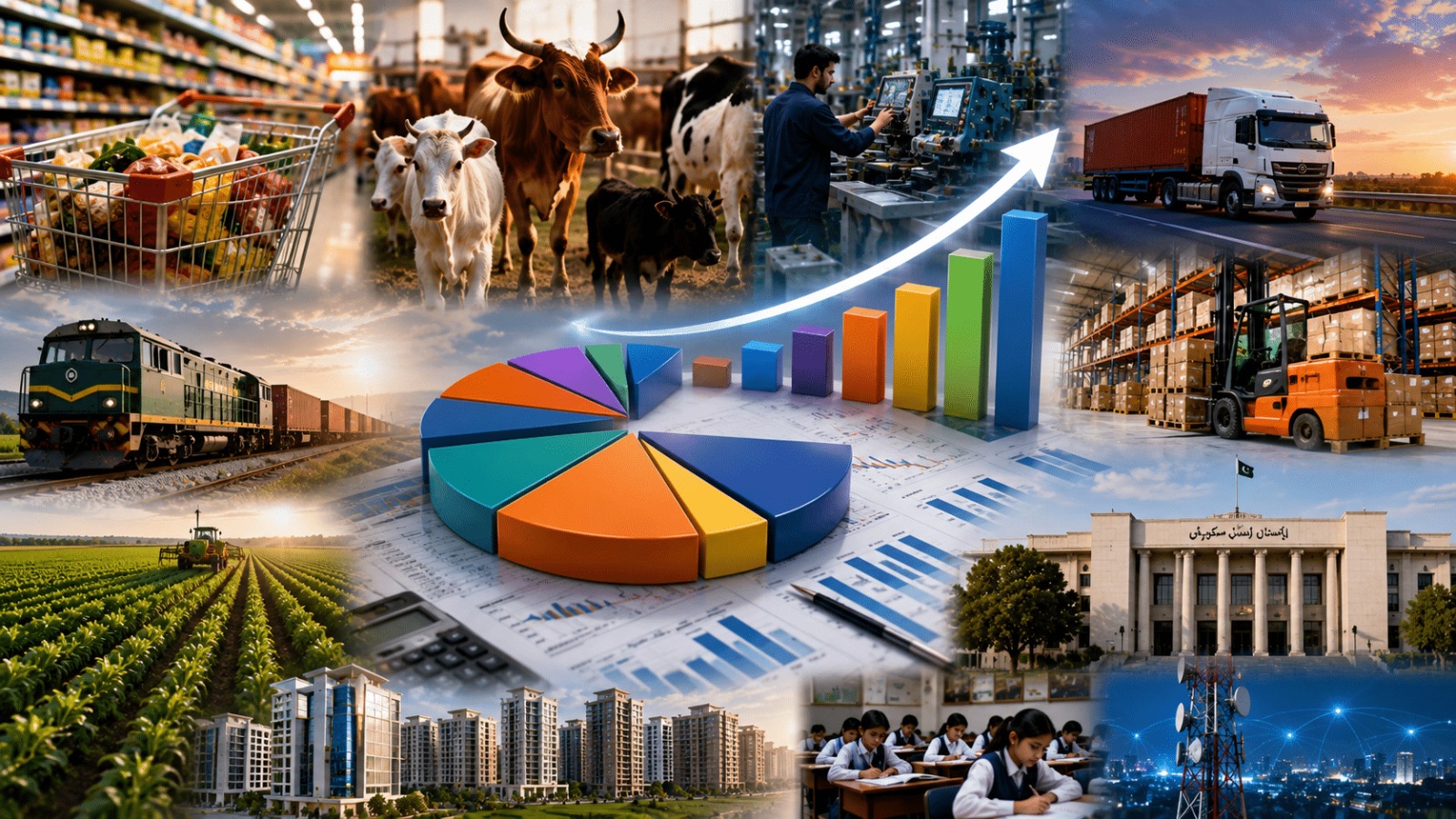
Pakistan is navigating significant economic pressures, regional uncertainties, fiscal constraints, and the challenge of generating sustainable employment and foreign exchange. In this environment, small and medium enterprises (SMEs) can play a vital role in strengthening domestic production, expanding exports, developing technical skills, and creating employment opportunities.
The Government of Pakistan has recognized the importance of SMEs by setting ambitious targets for expanding access to finance. On October 13, 2026, Prime Minister Muhammad Shehbaz Sharif directed that SME financing should increase from Rs 1.1 trillion to Rs 2.2 trillion by 2028. This is a target for financing through the banking system, rather than a single government cash allocation.
The key question is: Will these funds simply increase lending, or will they help SMEs build a stronger productive economy?
In my opinion, financing must be linked with a comprehensive industrial development strategy that addresses not only access to credit but also land, factory premises, energy costs, technology, skilled labour, and market access.
1. Sector-Wise Financing With Measurable Targets
The government’s approach should distinguish between different economic sectors and their financing requirements. Agriculture, information technology, exports, housing, renewable energy, and industrial manufacturing all contribute to economic development, but their needs and expected outcomes are different.
Industrial manufacturing should therefore receive explicit recognition within the financing framework, with dedicated targets for priority subsectors.
Industrial SMEs need financing for machinery, tooling, raw materials, production facilities, automation, testing equipment, and international certification.
The government should establish a sector-wise framework that identifies:
- The financing target for each priority sector.
- The number of SMEs expected to receive loans.
- The investment and production capacity to be created.
- The number of jobs expected to be generated.
- The expected increase in domestic value addition and exports.
- The performance indicators and reporting timelines.
This would help policymakers assess whether financing is generating productive economic activity rather than measuring success only through the total value of loans disbursed.
2. The Missing Link: Affordable Industrial Premises
One of the most overlooked challenges facing Pakistani SMEs is the cost of establishing and maintaining a suitable business premises.
A survey reveals that 81% of entrepreneurs in the service and industrial sectors operate from rented premises.
For manufacturing SME enterprises, rent is only one part of the problem. Electricity, utilities, maintenance, transport, storage, security, and other operating expenses add to the monthly financial burden.
An SMEs may have spent 20 or 30 years developing its technical capabilities, customer relationships, workforce, and reputation. Yet it may still be operating in rented premises without the security of long-term ownership or an affordable pathway to establish its own factory.
When a business has to spend a substantial portion of its income to rent and overheads, fewer resources remain available for modernization.
An SME cannot build long-term industrial capacity if it spends its working life struggling to secure a sustainable place of manufacturing.
3. From Apna Ghar to Apni Factory
The government’s Apna Ghar housing initiative reflects the importance of helping eligible citizens access to housing finance and work toward home ownership.
A comparable concept deserves consideration for manufacturing enterprises:
Apni Factory an affordable industrial premises programme for SMEs.
The objective would be to help eligible manufacturing businesses move from rented workshops into affordable, properly planned industrial units.
An Apni Factory programme could therefore become an instrument of industrial development, employment generation, and SME formalization.
Its design should be based on affordability, transparent eligibility criteria, productive use of premises, capacity building and development of products to export.
4. Use Existing Government Industrial Land
Pakistan already has industrial estates and industrial development institutions across different regions. The federal and provincial governments should review available land, unused industrial plots, existing infrastructure, and opportunities to develop smaller industrial units.
Rather than relying entirely on new land acquisition, the government should identify suitable existing industrial land and assess how much can be made available to manufacturing SMEs.
A practical model could include the following features:
1. Small, ready-to-use industrial sheds
Develop affordable units of different sizes according to the requirements of micro, small, and medium manufacturers. Units should include essential infrastructure such as electricity, roads, water, drainage, and appropriate industrial utility connections.
2. Cluster-based development
Clustering can improve access to shared services, skilled workers, testing facilities, logistics, and supplier relationships.
3. Affordable long term financing
Eligible SMEs could be offered transparent lease to own or long term installment arrangements, subject to feasibility, credit assessment, and clear repayment terms. The objective should be to make ownership achievable without imposing an unsustainable financial burden.
4. Priority for productive manufacturers
Allocation criteria should prioritize genuine manufacturing activity, employment creation, investment commitments, and the ability to use the premises productively. Transparent monitoring would help prevent speculative purchases and ensure that industrial land serves its intended purpose.
5. Provincial and federal coordination
The federal government, provincial industrial development authorities, SMEDA, financial institutions, and industry associations should work together to identify locations, develop the operating model, and monitor implementation.
This approach could turn underutilized industrial assets into productive facilities while reducing the time and cost required to establish manufacturing operations.
5. Why Manufacturing SMEs Matter for Employment and Exports
Industrial SMEs are not merely small businesses. They are essential links in domestic supply chains.
A local engineering manufacturer may supply components to automotive assemblers, agricultural machinery producers, electrical equipment manufacturers, or larger industrial enterprises. With appropriate technology and quality standards, the same business may also supply international buyers.
When local manufacturing expands, the benefits can extend throughout the economy:
- More demand for locally produced raw materials and industrial inputs.
- Greater opportunities for technicians, machine operators, engineers, and skilled workers.
- Stronger domestic supply chains and reduced dependence on imported components where local production is competitive.
- Increased opportunities for subcontracting and technology transfer.
- Greater potential for exports and foreign-exchange earnings.
However, these outcomes require a supportive and predictable business environment. SMEs cannot be expected to make long term investments if financing is inaccessible, operating costs are prohibitive, industrial premises are unaffordable, and policy changes create uncertainty.
Industrial development must therefore be treated as a coordinated national objective rather than a collection of disconnected schemes.
6. A Practical Roadmap for Implementation
The government could begin with a phased programme.
Phase One: National assessment
Conduct an updated survey of manufacturing SMEs operating in rented premises, their industrial land requirements, employment levels, production capacity, and financing needs.
Phase Two: Land and infrastructure mapping
Identify available federal and provincial industrial land, including underutilized plots and facilities that could be adapted for SME use.
Phase Three: Pilot industrial clusters
Select suitable locations in consultation with provincial authorities and industry associations. Develop a limited number of ready to use industrial sheds, affordable lease to own or long term installment models.
Phase Four: Integrated financing
Coordinate industrial premises financing with machinery loans, working capital, technology upgrades, and technical assistance.
Phase Five: Performance monitoring
Measure the programme through indicators such as the number of factories established, jobs created, private investment mobilized, production growth, SME efficiency, local value addition, and exports.
At The End: From Lending to Industrialization
Pakistan’s SME financing target of Rs 2.2 trillion by 2028 creates an opportunity to strengthen the productive base of the economy. The impact of this initiative, however, will depend on how effectively finance reaches viable SME enterprises and how well it addresses their actual business constraints.
We must recognize that an SME entrepreneur needs more than a loan. The entrepreneur needs a suitable place to manufacture, reliable utilities, modern machinery, skilled workers, access to raw materials, and the opportunity to compete in domestic and international markets.
For many manufacturers who have spent 20, 30, or even 40 years building their businesses, the dream of owning an affordable factory remains out of reach. A properly designed Apni Factory programme could help turn that dream into a productive investment in Pakistan’s future.
My proposal is simple: link SME financing with affordable industrial premises, machinery, skills, and export development.
Let us measure the success of SME policy not only by the amount of financing provided, but also by the factories established, jobs created, products manufactured, and exports generated.
Pakistan needs entrepreneurs who can build businesses, skilled workers who can earn sustainable livelihoods, and manufacturers who can compete globally.
The real objective should be to transform SME financing into SME industrialization and transform industrialization into sustainable employment, stronger exports, and national economic development.
This exclusive article has been published in Automark’s November-2026 printed and digital edition. Written by @mashood-khan, Director – Mehran Commercial Enterprises.