
What Pakistan can learn from Global Supply Chain Leaders
Dear Readers!! More than two decades of my experience in the automotive and mobility sector have taught me one truth over and over again: technology may get you attention, but only a strong supply chain keeps you in the market. And the EV transition being witnessed globally reinforces this more clearly than ever. Be it China, the European Union, or even India, electric vehicle success is not driven by marketing claims or product launches, it is rooted in deep supply chain preparedness, long-term investment, and consistent delivery.
Pakistan today stands at the early stages of EV adoption, and to attain its vision of building a sustainable EV ecosystem, it needs to learn how these markets built up the backbone of their EV production. In many ways, lessons from global EV supply chains also loop back to reinforce arguments made in “Promises vs. Service” The Hidden Test for New Auto Entrants and “Technology May Sell, But Trust Sustains.” In both articles published in Automark magazine, I have tried to highlight the simple fact that success in the automotive sector goes way beyond launching a product, it requires credibility, consistency, and long-term reliability. The evolution of China, the EU, and India’s EV ecosystems proves this all over again: strong supply chains are not just operational imperatives but instruments of trust. When a manufacturer can ensure steady production, stable quality, and predictable aftersales service, they build the kind of confidence that keeps customers, associates, and dealerships on board for decades. Pakistan’s EV landscape has reached a juncture where these earlier insights connect directly with the broader supply chain conversation: technology gives you an entry, but only a resilient supply chain sustains your presence.
The Backbone of EV Manufacturing: Most people, when thinking about EVs, imagine sleek designs, the most modern motors, or maybe even avant-garde dashboards. The real revolution, however, is behind the scenes: in the backbone of production-batteries, raw materials, and assembly lines. At the heart of every EV is the battery, powered by lithium, cobalt, nickel, and other rare earth metals. These metals represent the unsung heroes of electric mobility. They determine the range, lifespan, charging speed, and performance of a car. China has been investing aggressively to secure those materials-from Australia to South America-so as to make sure that costs remain stable and production uninterrupted. The EU, on its part, focuses on premium, energy-efficient battery chemistries for enduring performance. But sourcing is just the beginning. The transformation of metals into high-performance batteries requires precision, advanced technology, and scale. China’s Gigafactories are the best representation, manufacturing batteries at a scale where costs come down, efficiency goes up, and innovation accelerates. The EU takes a more measured approach, stressing sustainability and reliability. This is a huge opportunity for Pakistan. Our market remains highly reliant on imported batteries and raw materials; this makes EV adoption vulnerable to delays and price fluctuations. For instance, imagine a whole fleet of delivery trucks kept sitting idle for weeks due to delayed battery shipments. This is the kind of risk that a strong supply chain could avoid. Local battery assembly, research in advanced chemistries, and strategic partnerships with global suppliers are some of the areas in which prudent investment will help Pakistan create a resilient backbone for the EV market. This doesn’t just benefit individual drivers alone but empowers commercial fleets and public transport to adopt EVs with confidence.
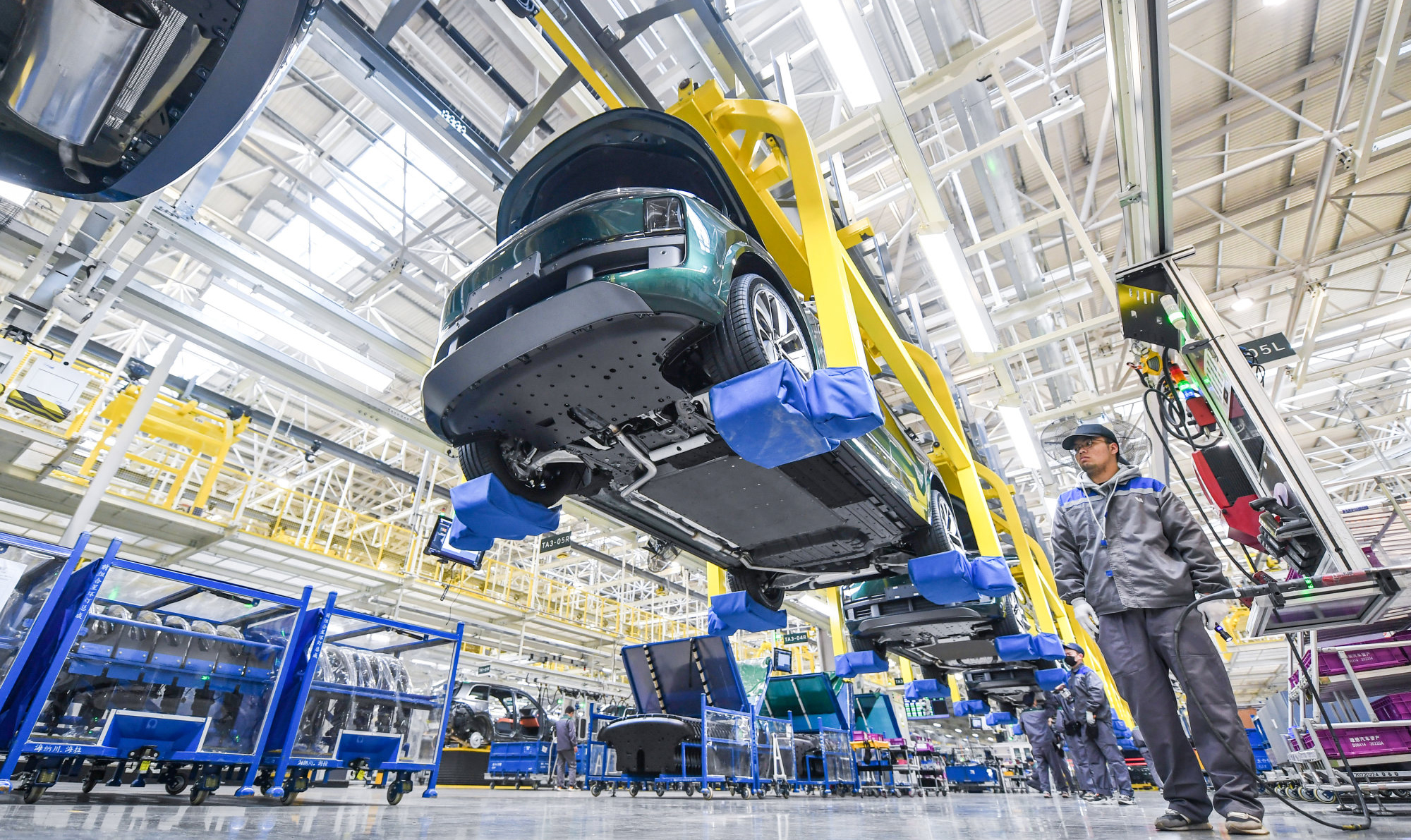
Manufacturing Scale and Supply Chain Integration: Even the most secure raw materials and advanced battery technologies lose their impact without manufacturing integration. It isn’t volume alone that propels China to the leading position in EV manufacturing; it is coordination. In fact, cities such as Shenzhen, Shanghai, and Guangzhou operate as complete ecosystems with integrated refining units, battery plants, motor manufacturers, semiconductor suppliers, BMS software developers, and vehicle assembly plants within the same industrial clusters. The proximity removes any delays and cuts transportation costs, while speeding up design improvements and enabling engineers to collaborate instantly. But Europe’s integrated approach is equally valuable. Its factories rely on automation, strict compliance frameworks, clean-energy manufacturing, and strong R&D infrastructures. The result is a supply chain that focuses on resilience, quality, and long-term sustainability. The manufacturing landscape of Pakistan remains fragmented. The EV components come from scattered suppliers, assembly is conducted in other regions, and testing capabilities are limited. Fragmentation reduces speeds, increases costs, and inhibits scale. If Pakistan wants to accelerate the adoption of EVs, the country should establish dedicated EV industrial zones that integrate battery assembly, motor manufacturing, software development for BMS and controllers, and final vehicle production into one ecosystem. Such hubs will improve quality control, create skilled jobs, attract international investment, and make Pakistan’s EV industry resilient to global supply disruptions.
Talent Development and R&D Investment: The EV supply chain replaces metal bending with material science and software. This demands a complete overhaul of the skills required by the automotive workforce, the traditional auto mechanic is replaced by the battery technician, the power electronics specialist, and the embedded software engineer. All foreign direct investment (FDI) in EV assembly should be required to allocate a percentage of revenue towards a local R&D center focused on applied EV technologies or partnering with local universities. Specialized Technical Training Centers: Invest in vocational and university programs focused specifically on battery chemistry, thermal management systems, and high-voltage safety and diagnostics. This builds the intellectual backbone necessary to sustain the industry locally, ensuring the technology remains indigenous rather than imported. For Pakistan’s new EV and hybrid players, success is no longer defined by how many cars they sell, but by how much industrial capability they build. The long-term trust of the nation will be earned through visible commitments: the smokestack of a battery factory, the presence of public charging grids, and the creation of highly specialized technical careers. By strategically adopting the lessons of global supply chain leaders, Pakistan can move beyond being an assembly market to become a genuine high-tech industrial player.
Key notes for Pakistan Automobile: The global leaders show that the success of EVs is all about building a formidable foundation, long before the vehicle hits the road. Pakistan needs to secure raw material and battery supplies on a regular basis, rather than facing supply shocks and unpredictable pricing. This will require localization of assembly, reducing reliance on imports and bringing electric vehicle prices within the reach of both private and commercial users. Integrated manufacturing zones will eliminate fragmentation, shorten lead times, and result in a manufacturing ecosystem capable of producing EVs at scale. One of the clearest lessons from China and Europe is that the approach needs to be initiated with commercial and fleet adoption. Logistics operators, delivery companies, and ride-hailing services immediately reap benefits in savings due to reduced fuel and maintenance costs. Once fleets adopt EVs with confidence, everyday consumers take up the models naturally, assured that the technology is reliable, proven, and supported by a strong supply chain. Government policy should mandate a common charging standard depending on regional partners for all imported and locally assembled EVs. This reduces the risk for charging network investors. And Swappable Battery Protocols (Especially for 2/3 Wheelers): Given the dominance of two- and three-wheelers, adopting a standardized, modular, swappable battery design can rapidly solve range anxiety and charging issues in urban centers. This opens the door for a network of local battery providers and swapping stations, mirroring successful models in South and Southeast Asia. Lock in the fiscal and tariff structure for foundational EV investments (especially those related to battery cells, motors, and inverters) for a guaranteed period of ten years. This commitment is far more valuable than a one-year reduction in duty. Focus on Value Addition Tiers: Policy incentives must be tiered based on the level of technological value addition, not just physical localization. Priority incentives should go to companies manufacturing complex power control units (PCUs) and thermal management systems, not just those assembling body panels.
Takeaway from this article:
If Pakistan wait for the EV market to first mature before strengthening its supply chain, it will already be too late. The country has to start aligning policies, encouraging local manufacturing, and supporting localization for batteries and parts. EV companies operating here need to look beyond launch-stage excitement and invest in deeper capabilities: supplier development, long-term parts planning, and after-sales infrastructure. Without those, no brand will be able to create lasting consumer confidence. The global EV landscape indicates that the early mover with a strong supply chain tends to dominate the market for decades. Pakistan still has time to position itself intelligently, but it must be proactive with learning from those countries which have already built successful EV ecosystems. The future of EVs in Pakistan will not be about who enters the market first; it will be about who builds the strongest foundation. This chapter closes here, but the story is far from over. Stay with me as we continue exploring the forces, decisions, and innovations that will define Pakistan’s automotive future, one insight at a time.
This exclusive article has been published in Automark’s December-2025 printed and digital edition. Written by @muhammad-rafique