Pakistan’s electric two-wheeler market is entering an exciting phase. Chinese manufacturers have introduced a wide range of electric bikes equipped with Lithium-ion, Lithium Iron Phosphate (LFP), and Graphene battery technologies, offering attractive designs, competitive pricing, and modern features. While lithium-based batteries have generally proven to be more durable, reliable, and consistent in performance, graphene battery technology continues to present greater challenges in Pakistan’s operating environment, particularly in battery life, charging behavior, performance consistency, diagnostics, and warranty-related concerns.
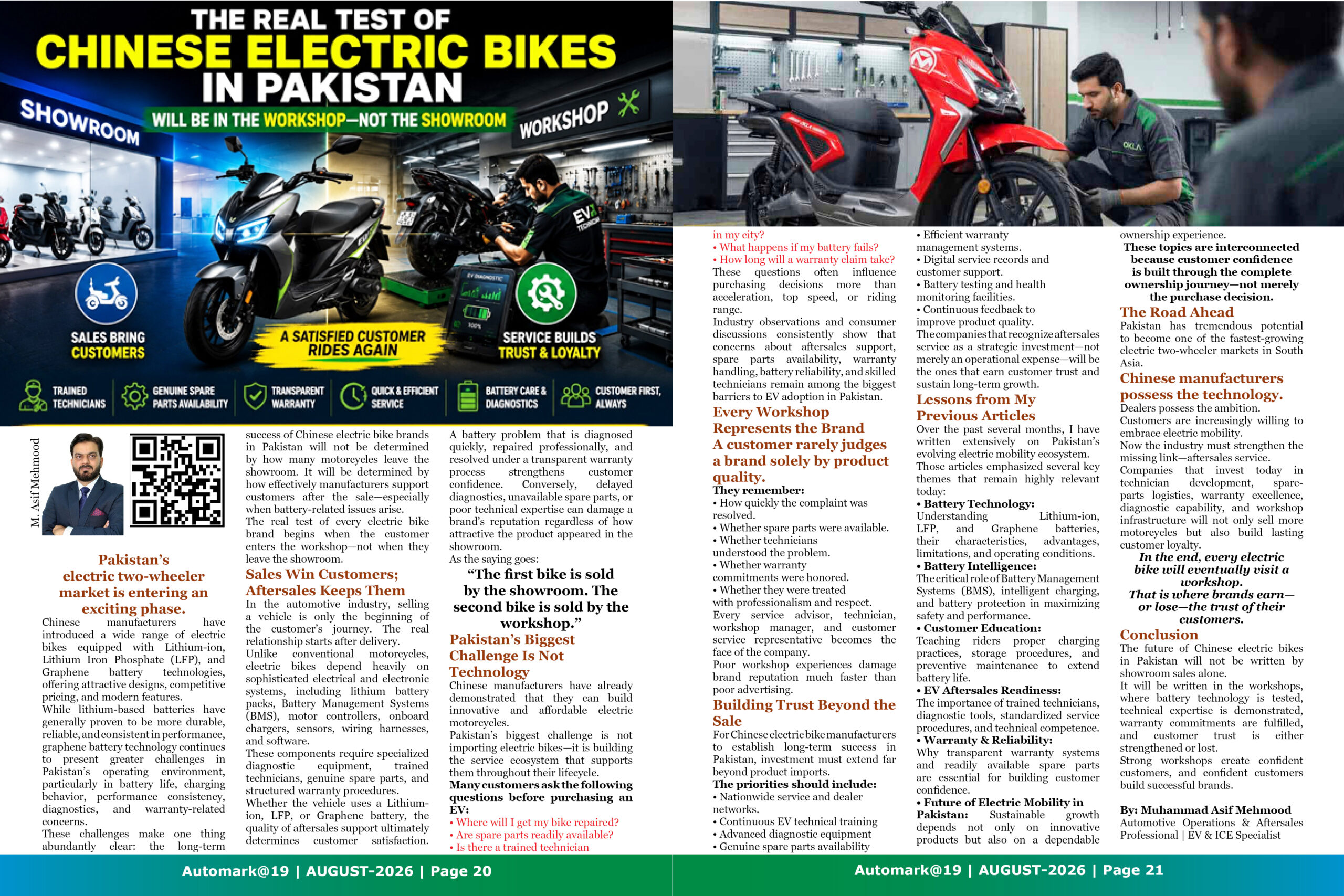
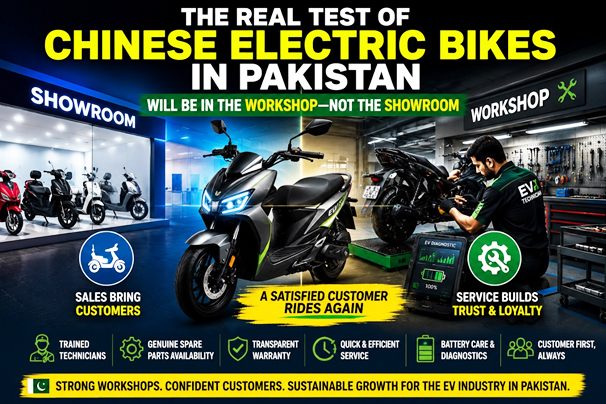
These challenges make one thing abundantly clear: the long-term success of Chinese electric bike brands in Pakistan will not be determined by how many motorcycles leave the showroom. It will be determined by how effectively manufacturers support customers after the sale—especially when battery-related issues arise.
The real test of every electric bike brand begins when the customer enters the workshop—not when they leave the showroom.
Sales Win Customers; Aftersales Keeps Them
In the automotive industry, selling a vehicle is only the beginning of the customer’s journey. The real relationship starts after delivery.
Unlike conventional motorcycles, electric bikes depend heavily on sophisticated electrical and electronic systems, including lithium battery packs, Battery Management Systems (BMS), motor controllers, onboard chargers, sensors, wiring harnesses, and software. These components require specialized diagnostic equipment, trained technicians, genuine spare parts, and structured warranty procedures.
Whether the vehicle uses a Lithium-ion, LFP, or Graphene battery, the quality of aftersales support ultimately determines customer satisfaction. A battery problem that is diagnosed quickly, repaired professionally, and resolved under a transparent warranty process strengthens customer confidence. Conversely, delayed diagnostics, unavailable spare parts, or poor technical expertise can damage a brand’s reputation regardless of how attractive the product appeared in the showroom.
As the saying goes:
“The first bike is sold by the showroom. The second bike is sold by the workshop.”
Pakistan’s Biggest Challenge Is Not Technology
Chinese manufacturers have already demonstrated that they can build innovative and affordable electric motorcycles.
Pakistan’s biggest challenge is not importing electric bikes—it is building the service ecosystem that supports them throughout their lifecycle.
Many customers ask the following questions before purchasing an EV:
- Where will I get my bike repaired?
- Are spare parts readily available?
- Is there a trained technician in my city?
- What happens if my battery fails?
- How long will a warranty claim take?
These questions often influence purchasing decisions more than acceleration, top speed, or riding range.
Industry observations and consumer discussions consistently show that concerns about aftersales support, spare parts availability, warranty handling, battery reliability, and skilled technicians remain among the biggest barriers to EV adoption in Pakistan.
Every Workshop Represents the Brand
A customer rarely judges a brand solely by product quality.
They remember:
- How quickly the complaint was resolved.
- Whether spare parts were available.
- Whether technicians understood the problem.
- Whether warranty commitments were honored.
- Whether they were treated with professionalism and respect.
Every service advisor, technician, workshop manager, and customer service representative becomes the face of the company.
Poor workshop experiences damage brand reputation much faster than poor advertising.
Building Trust Beyond the Sale
For Chinese electric bike manufacturers to establish long-term success in Pakistan, investment must extend far beyond product imports.
The priorities should include:
- Nationwide service and dealer networks.
- Continuous EV technical training.
- Advanced diagnostic equipment.
- Genuine spare parts availability.
- Efficient warranty management systems.
- Digital service records and customer support.
- Battery testing and health monitoring facilities.
- Continuous feedback to improve product quality.
The companies that recognize aftersales service as a strategic investment—not merely an operational expense—will be the ones that earn customer trust and sustain long-term growth.
Lessons from My Previous Articles
Over the past several months, I have written extensively on Pakistan’s evolving electric mobility ecosystem. Those articles emphasized several key themes that remain highly relevant today:
- Battery Technology: Understanding Lithium-ion, LFP, and Graphene batteries, their characteristics, advantages, limitations, and operating conditions.
- Battery Intelligence: The critical role of Battery Management Systems (BMS), intelligent charging, and battery protection in maximizing safety and performance.
- Customer Education: Teaching riders proper charging practices, storage procedures, and preventive maintenance to extend battery life.
- EV Aftersales Readiness: The importance of trained technicians, diagnostic tools, standardized service procedures, and technical competence.
- Warranty & Reliability: Why transparent warranty systems and readily available spare parts are essential for building customer confidence.
- Future of Electric Mobility in Pakistan: Sustainable growth depends not only on innovative products but also on a dependable ownership experience.
These topics are interconnected because customer confidence is built through the complete ownership journey—not merely the purchase decision.
The Road Ahead
Pakistan has tremendous potential to become one of the fastest-growing electric two-wheeler markets in South Asia.
Chinese manufacturers possess the technology.
Dealers possess the ambition.
Customers are increasingly willing to embrace electric mobility.
Now the industry must strengthen the missing link—aftersales service.
Companies that invest today in technician development, spare-parts logistics, warranty excellence, diagnostic capability, and workshop infrastructure will not only sell more motorcycles but also build lasting customer loyalty.
In the end, every electric bike will eventually visit a workshop.
That is where brands earn—or lose—the trust of their customers.
Conclusion
The future of Chinese electric bikes in Pakistan will not be written by showroom sales alone.
It will be written in the workshops, where battery technology is tested, technical expertise is demonstrated, warranty commitments are fulfilled, and customer trust is either strengthened or lost.
Strong workshops create confident customers, and confident customers build successful brands.
This exclusive article has been published in Automark’s August-2026 printed edition. Written by @asif-mehmood