Home Blog Page 44

Hyundai to halt S. Korea production as coronavirus causes parts shortage

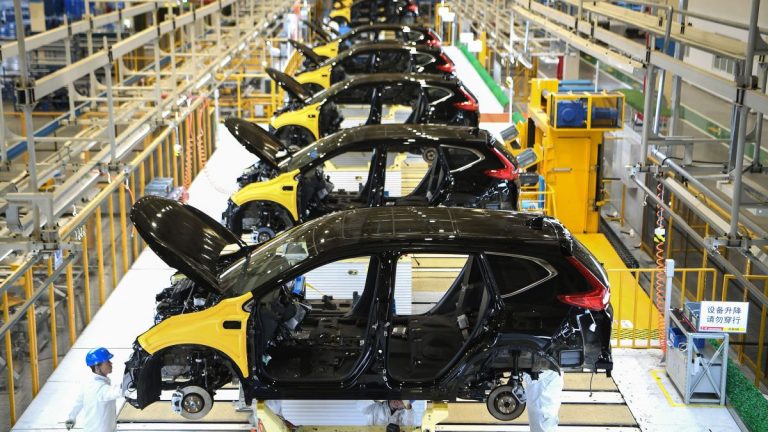
Hyundai Motor Co. said it will suspend production in South Korea, its biggest manufacturing base, becoming the first major automaker to do so outside of China due to disruption in the supply of parts resulting from the coronavirus outbreak.

Hyundai has seven factories in South Korea, catering to the local market and the U.S, Europe, Middle East and other countries. Hyundai’s production at home accounts for about 40 percent of its global output.

The automaker’s decision to halt assembly lines at home could delay supplies of popular and new crossovers such as the Palisade and Genesis GV80.

The production suspension follows a shortage of wiring harnesses which Hyundai sources mainly in China.

Two of the affected suppliers, Kyungshin and Yura Corp., said they were trying to boost production at their factories in South Korea and Southeast Asia to compensate for the disrupted supply from China.

They both also plan to resume production at their Chinese factories after Feb. 9.

“We are in an emergency,” a Kyungshin official told Reuters.

Volkswagen, BMW, Fiat Chrysler, General Motors and Ford Motor Co. said their factories outside of China remain unaffected by supply bottlenecks.

Hyundai’s decision to power down assembly lines at home could delay its recovery. The automaker recently turned in its best quarterly profit in over two years and said it was on track for higher profit margins, aided by more sales of crossovers such as the Palisade and Kona.

Hyundai already stopped production of the popular Palisade over the weekend due to a shortage of components from China.

Most of Hyundai’s South Korean factories will be fully idled from Feb. 7, while some production lines are expected to restart on Feb. 11 or Feb. 12, a union official said, declining to be identified given the sensitivity of the matter.

Schedules for suspension will vary by production line, a Hyundai spokeswoman said.

“The company is reviewing various measures to minimize the disruption of its operations, including seeking alternative suppliers in other regions,” Hyundai said in an emailed statement.

“Hyundai Motor will closely monitor developments in China and take all necessary measures to ensure the prompt normalization of its operations,” the automaker said.

Hyundai and its affiliate Kia Motors do not keep large stocks of the affected parts, said Lee Hang-koo, senior researcher at Korea Institute for Industrial Economics & Trade. “Hyundai and Kia may be more affected as they tend to import more parts from China than other global automakers,” Lee said.

Hyundai’s reliance on China has grown sharply as it built a huge production capacity in the country several years ago when its business was booming there, he added.

“South Korean parts makers followed and built their own facilities along with Hyundai,” Lee said.

South Korea imported $1.56 billion worth of auto parts from China in 2019, versus $1.47 billion in 2018, trade data shows.

Japanese trading house Mitsui & Co has also warned that the virus outbreak may slow manufacturing activities in automobiles and other sectors.

Manufacturers in China are struggling to get factory workers back to production lines due to extended holidays and suspension of public transport systems in some cities.

Many global automakers, including Tesla, Ford, PSA Group, Nissan and Honda, have already suspended production in China this week in line with government guidelines.

The flu-like virus has killed more than 420 people and spread to about two dozen nations, sparking fears for global economic growth and rattling markets, with Shanghai’s stock index losing about $400 billion in market value on Monday.

Courtesy: Automotive news

Malaysia to open a car assembly plant in Pakistan to manufacture affordable vehicles

Malaysia will open car assembly plant in Pakistan by 2021 to produce affordable vehicles in the country.

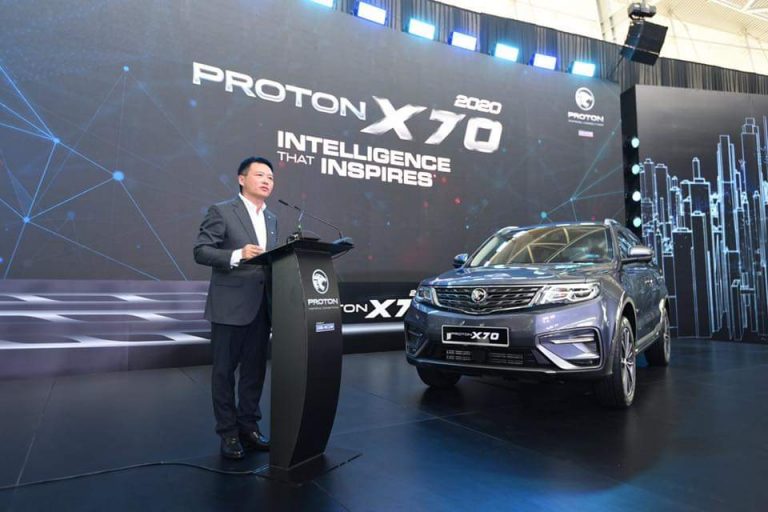
Renowned Malaysian car manufacturing company Proton will open its plant in Pakistan under a joint venture project between the two countries. It will be Proton’s first assembly plant to be set up in any South Asian Country.

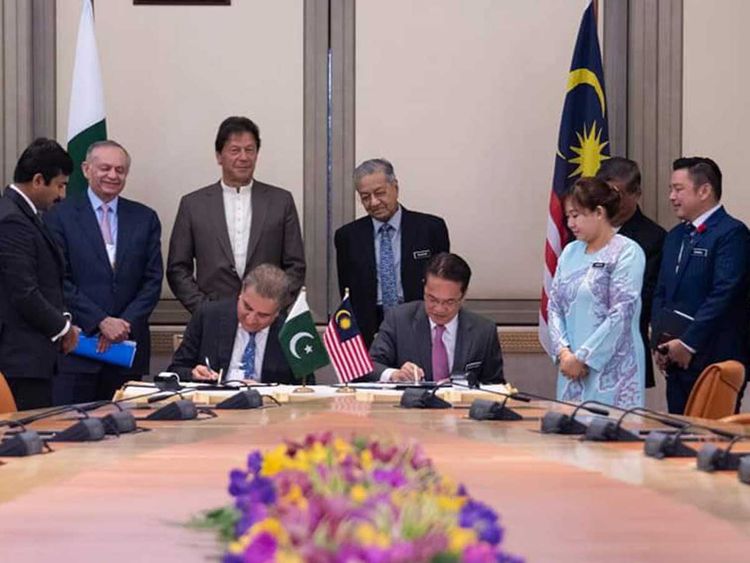
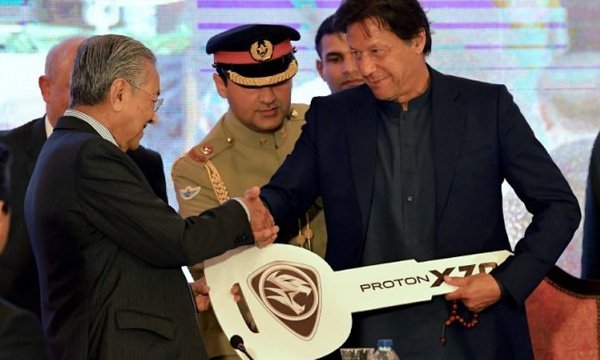
The agreement was reviewed during Pakistan Prime Minister Imran Khan’s visit to Malaysia on February 3rd and 4th. Prime Minister Imran during his meeting with his Malaysian counterpart Mahathir Mohamad, both the leaders discussed the symbolic ground breaking of the Proton Assembly Plant jointly officiated in Islamabad on March 22, 2019, and were pleased to note the progress made at the facility in Karachi, scheduled for completion in the first half of 2021.

They also discussed the joint venture between Malaysia’s Proton Holdings and Pakistan’s Al-Haj Automotive that add value with the commencement of selling Malaysian-made Proton vehicles (CBU) in Pakistan in the second half of 2020, and eventually, assembly and sale of Pakistan-made Proton vehicles (CKD) in Pakistan in the first half of 2021. The Malaysian-based corporation, Proton was established in 1983 and has so far sold more than 3 million cars. Proton cars are sold in more than 25 countries including Britain, Singapore and Australia.

Meanwhile, both the leaders also have also agreed that the strategic partnership status is a testament to the new level of bilateral cooperation between the two countries in various fields, reported APP, Pakistan’s official news agency.,.

According to a joint statement issued on Wednesday on the conclusion of Prime Minister Khan’s two-day official visit to Malaysia, the Malaysian prime minister recognised the essential role of the Pakistan Prime Minister in ensuring peace and security in the South Asian and West Asian regions through his goodwill diplomatic efforts towards the maintenance of international peace and security.

Malaysia and Pakistan will further increase collaborative efforts in international forums in upholding the true values of Islam and in addressing the common challenges facing the Ummah, including Islamophobia and the rights of Muslim minorities.

Also read: Malaysian PM Mahathir Mohamad gifts PM Imran Khan Proton X70 SUV

Malaysia and Pakistan together with Turkey will proceed with the initiatives in broad areas of strategic cooperation under the Joint Committee Meeting (JCM) to complement the efforts by the community of the Muslim world aimed at uplifting the socio-political and socioeconomic condition of the Ummah and promoting the true values of Islam, while being mindful of the centrality of the Organisation of Islamic Cooperation (OIC) and in this regard.

Malaysia and Pakistan will explore institutional collaboration in the area of halal food and services, and consumer products. Both the countries look forward to strengthening bilateral cooperation in the field of tourism, as well as continue to encourage tourism and hospitality investment and enhance educational ties.

Malaysia and Pakistan will explore new possible areas of cooperation in trade and investment, such as renewable energy, natural resources, aerospace and aeronautical, digital technology, artificial intelligence and e-commerce.

Pakistan International Airlines (PIA) will add a new direct flight destination soon from Lahore to Kuala Lumpur in order to cater for the increasing number of Pakistani travellers to Malaysia.

The prime minister of Malaysia acknowledged the extensive counter-terrorism efforts by Pakistan and progress it continue to make in complying with the recommendations of the Financial Action Task Force (FATF).

Source: Gulfnews.com

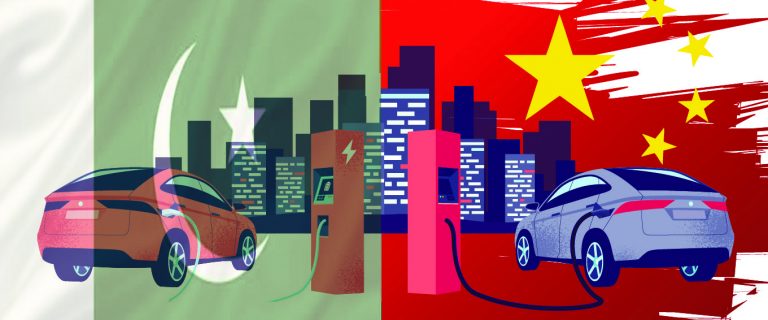
Tussle between industry, climate ministries delays EV assembling in Pakistan

PM Imran Khan wants quick implementation of NEVP

When the National Electric Vehicle Policy (NEVP), spearheaded by Ministry of Climate Change, was given a green signal by the Federal Cabinet on November 5, 2019; there was no need for another Ministry to interfere because Cabinet’s decision is considered final.

However, in case of NEVP, the situation is almost reverse owing to continuous backlash by the Japanese dominated assemblers’ body – Pakistan Automotive Manufacturers Association (PAMA) since the day NEVP was announced by the Federal Cabinet on November 5, 2019.

PAMA’s series of letters showing serious reservations over NEVP to the Advisor to Prime Minster on Industries and Production, Abdul Razzak Dawood has finally paid off as Mr Dawood made an entry to support Japanese vehicle assemblers.

Mr Dawood in the 30th meeting of Auto Industry Development Committee (AIDC) has authorized the strong arm of Ministry of Industries, the Engineering Development Board (EDB) as the key department to formulate the electric vehicle (EV) policy and directed it to submit draft proposals in this regard by the next month.

On the above developments, Chairman Association of Pakistan Motorcycle Assemblers (APMA), Mohammad Sabir Shiekh said “what is the legal status of November 5 NEVP when EDB has now been tasked with fresh mandate to formulate EV policy.”

Before new role of EDB, the Ministry for Climate Change (MoCC) had summoned an inter-ministerial meeting in Islamabad in last week of December 2,109 to discuss NEVP. The MoCC had also informed relevant ministries and government departments that the “NEVP needs to be operational by January 2020 by validation of incentive packages through the Economic Coordination Committee (ECC).”

Amid lack of infrastructure, Prime Minister Imran Khan has already called for early implementation of NEVP, especially for two- and three-wheelers as well as buses for public transport in order to prevent smog.

The climate ministry said the subject policy under section 8 envisages the constitution of an inter-ministerial committee which would include members from the federal line ministries, provinces, private sector and the academia.

This committee would be responsible for overseeing all issues related to the entire electric vehicle value chain in order to smoothly introduce and coordinate efforts towards local manufacturing.

It will also be responsible for overseeing standardization, regulation and compliance towards infrastructure. Periodic amendments in the policy based on changing technology and marketplace will also be its responsibility.

Again PAMA came hard saying that it had neither been taken into confidence on NEVP nor invited in the inter-ministerial meeting.

PAMA recalled that on November 4, 2,019, the news was swirling in the market that NEVP policy was on agenda of federal cabinet meeting the next day.
Before this, the climate ministry had circulated draft policy of electric vehicle while requisite input from the stakeholders on it was still to be obtained.

On the instance of MoCC, the EDB conveyed a meeting on May 23, 2019 with the auto sector people on the formulation of electric vehicle policy.
Here, the stakeholders had unanimously voiced that the concerned ministry was alien to the subject and it was the domain of Ministry of Industries and Production (MoIP).

PAMA had been interacting with the MoIP and the EDB and further held a consultative meeting with its own officials on November 1, 2019 in Karachi to discuss proposal on NEVP formulation for auto industry.

It was surprising for PAMA that NEVP was on the agenda of November 5 federal cabinet meeting when stakeholders were in the process of discussing it with EDB and the policy on same subject was being presented by the other arm of the government for approval.
The government had taken a crucial decision on electric vehicle policy while the entire auto industry was groping in the dark as it had neither discussed nor heard an official word in this regard, the Association said.

PAMA informed the Commerce and Production Adviser Abdul Razzak Dawood that it was unusual that the EDB under the aegis of MoIP had initiated discussion with the stakeholders on electric vehicle policy while the other ministry had already espoused the summary, on the same subject, and submitted it to the cabinet for approval.

Sabir Sheikh, by telling his story on NEVP, said after the announcement of NEVP on November 5, 2019 by the federal cabinet, the EDB called upon all car assemblers of Pakistan on January 16, 2020 for the 30th meeting of AIDC. Letter was issued on January 10, 2020.
Around 50 stakeholders including government departments were invited in the meeting. The main agenda of the meeting was discussion and formulation of NEVP by the EDB (four and two/three wheelers).

Chairman APMA Sabir Sheikh, who is also the chairman of Pakistan Electric Vehicles Manufacturers Association, said he was invited in the meeting as per invitation letter but the EDB did not send intimation or letter or email or phone for the meeting.

Surprisingly, on January 21, 2020, another government department of Islamabad sent me a letter seeking reason for not attending the meeting. He said he had informed the government official that he had been the member of AIDC for the last 10 years and still the member of AIDC.

“I do not know who had omitted my name from new list of AIDC,” he said adding that the government has not been holding negotiations on EV with genuine stakeholders who want to start EV business in Pakistan.

“When the Federal Cabinet had already approved NEVP on November 5, I fail to understand why EDB is trying to formulate EV policy,” he said adding “which department is powerful whether the federal cabinet or the EDB.”
Half of the stakeholders, who were invited in the meeting, could not participate in the meeting, he said.

Serious apprehensions were expressed by the auto sector that several government functionaries including the Ministry of Science and Technology and the environment agencies were also involved in EV policy making.

The representatives of Pakistan Automotive Manufacturers Associ¬ation (PAMA), Association of Pakistan Motorcycle Assemblers (APMA) and Pakistan Association of Auto Parts and Accessories Manufacturers (Paapam) expressed the query in this regard.

It was decided by Dawood that EV Policy is the domain of MoIP as per the rules of business and thus EDB should be the focal department.

Sabir urged the Federal Minister Abdul Razzak Dawood to take feedback from all the stakeholders including APMA before finalizing NEVP.

Dawood authorized preparation of policy to EDB and it was directed that the first draft within one month. Various tariff and non-tariff proposals were discussed in the meeting, while stakeholders sought 15-20 days for submission of concrete recommendation on local manufacturing of EVs.

EDB Chairman Raza Abbas asked the auto industry to respect the timeline for submission of proposals to the board so the first draft could be finalised before the end of February.
Sabir asked EDB Chairman Raza Abbas that he should mention APMA chairman name in the list of AIDC.

The meeting noted that investment in the EVs would be under the Auto Development Policy (ADP 2016-21), which would include investment plans, standardization of equipment, promotion of localisation, exports of parts and components in long run, employment generation and positive impact on national economy.

Sabir said all the sick industries of two and three wheelers should be allowed without wasting time to start production of EVs in their factories. They are already approved assemblers with vast experience of assembling coupled with already available infrastructure at the factories for assembly of EVs.

However, Dawood stressed that “Make in Pakistan” will be supported in each policy including EV manufacturing, and highlighted the government’s policy to discourage imports to promote creation of job in country.

“We also support” Make in Pakistan” policies for EVs to support Ministry of Industries’ policies,” he said.

Adviser to the Prime Minister on Climate Change Malik Amin Aslam in another inter ministerial meeting held in the third week of January 2,020 said electric vehicle policy would focus on encouraging manufacturing of vehicles locally with made-in-Pakistan tagline.

He said local production incentives would be offered to auto manufacturing sector.
Sabir said the EDB, AIDC, PAMA, PAAPAM, APMA, PEVMA etc are all one agenda organizations of the auto sector. The above names give an impression that they are different departments but practically they have same agenda and issue.

The agenda included finalisation of modalities regarding two and three wheelers import, manufacturing of infrastructure and parts after discussing them with relevant stakeholders including AIDC and PAAPAM and sending them to ECC for approval.

Listing benefits, the prime minister’s adviser said that possible benefits of electric vehicle penetration included decrease in emissions from transport sector, reduction in fuel import bill, and enabling the localization of EV manufacturing.

“It would enable Pakistan to become part of the global value chain of EV manufacturing,” he said.

Participants called for further consultations with stakeholders for four wheeler electric vehicles. They emphasized that standardization was an area where parameters needed to be specified.
Participants also decided that a subcommittee would be formed to draft parameters for standardization and finalization of recommendations for the ECC for two and three wheeler electric vehicles.

However, the Ministry of Industries and Production was requested to discuss proposed incentives with AIDC and PAAPAM etc., and convey their input for two and three wheelers within a week and for four wheelers within 15 days.

He invited AIDC and PAAPAM through the industries ministry for consultative meetings with the existing automobile manufacturers to address their concerns, if any.

An auto industry stakeholder said a Pandora box has been opened after the task to formulate the EV policy was given to the EDB, thus posing serious legal and constitutional issue when Federal Cabinet of the PM was not competent enough to approve any policy.

There were also reports that some serious stakeholders, who pushed on this government towards EV, were not invited in the January 16, 2020 meeting.

Some EDB officials were blamed for playing negative role by sidelining genuine stakeholders from the meeting. This is evident from a recent local newspaper report headlined “Govt officials accused of taking billions from auto sector.”

This exclusive article on Electrical Vehicle, published in Automark Magazine’s printed edition of February-2020
Honda and Toyota to keep Chinese plants closed over virus fears

Honda Motor and Toyota Motor will keep shuttered auto plants in China closed in response to the coronavirus epidemic, Nikkei has learned.

Honda on Friday announced that it will aim to restart production in the Wuhan area of Hubei Province on Feb. 17. On Jan. 29, it decided to suspend operations until Feb. 9 in response to a Chinese government notice following the viral outbreak.

Honda aims to restart production in Guangzhou on Feb. 10. If the carmaker can restart production as now scheduled, it “will not have much impact,” said Seiji Kuraishi, Honda’s executive vice president, at a news conference the same day.

Honda is the first Japanese automaker in China to extend the suspensions.

Honda’s Wuhan plants can make up to 600,000 vehicles a year — about half the manufacturer’s capacity in China — and 12,700 employees work at the plants. In 2019, the company sold 1.55 million vehicles in the country, a record.

The viral outbreak risks hurting the automakers’ upcoming results, underscoring their dependence on China in terms of production and sales.

Honda on Friday raised its net profit estimate for the year ending March 2020 to 595 billion yen from 575 billion yen, down 3% from the previous year.

Toyota, which had planned to restart operations at its four Chinese plants as early as Feb. 10, extended its production halt to Feb. 17.

All four of the automaker’s plants — in Tianjin, Sichuan, Jilin and Guangdong — are joint ventures with local companies.

Courtesy: Nikkei Asian Review

Chinese firm investing $600M in Pakistan's transportation sector

A Chinese technology company, Timesaco, plans to invest more than $600 million in Pakistan’s ailing public transportation sector, hoping to restructure and digitize it by imitating the Chinese model

“Our company is trying to restore and restructure Pakistan’s public transportation system by replicating the Chinese model that will enable the relevant authorities to track the movement of vehicles and ensure their punctuality,” Media Manager of Timesaco Asad Ullah said.
“The company intends to invest $600 million and this amount will increase with the scope of the business,” he added.

After launching “Tatu Mobility,” a transportation infrastructure network to promote the e-transportation sector business, in Rawalpindi and Islamabad, Timesaco is now set to move to the country’s southern port city of Karachi.

“In the second week of February, we will go to Karachi to meet with officials of Sindh government, including the chief minister,” he said in an interview with Arab news on last week. “We are planning to launch the service in the third or fourth week of February 2020 in Karachi.” The company provides wide-ranging mobility services, such as taxi-hailing facility, pick and drop, bus booking, vehicle rental, and other related technological solutions.

Tatu Mobility will provide an IoT (internet of Things) based transportation network in which all existing private and public transportation networks will be restored, restructured and modified into IoT technology, he continued.

Currently, Timesaco is perusing two modes of investment: Under the first one, the company will invest itself while, under the second, it will persuade other companies to invest in the country’s transportation sector.

The company also plans to streamline the existing yellow cabs and traditional taxi services in Pakistan which were largely affected by the launch of ride-hailing services.

“Negotiations with big Chinese companies have already been held, and many big players have agreed to invest in Pakistan. A plan is being considered where people will get yellow cabs and traditional taxi services with the involvement of government and banks,” Asad Ullah noted.
On the materialization of the plan, the traditional cab services will be digitized and brought on par with online services that will enable them to double their revenue.

“Vehicles will be imported from China for this purpose initially. It will also create an opportunity for the Chinese auto manufacturers to enter the Pakistani market which will offer people more choice,” he said.

Asad Ullah maintained that the Chinese companies had been informed about the existing opportunities and were likely to come to Pakistan if they saw the potential to get enough return on investment.

“In the longer run, they may get convinced to start manufacturing in Pakistan. Our aim is also to bring such players into the Pakistani market,” he said.

Proton Malaysia Records Strong Start To 2020

PROTON began the first month of the year with a continued strong showing after a stellar 2019 performance. The company recorded a total of 8,506 new registrations, representing a 20.2% increase over the same period last year. This also marks PROTON’s most successful January sales in 4 years. Market share was another key area of growth as the company’s position increased by 4.9% to 19.5%, compared to the same period last year.


Despite the short month due to the Chinese New Year holidays, the company performed well within expectations as it continued to hold its No. 2 position. “This is a great start to the year on the back of our performance in 2019. January is always a tough month but we still managed to have our best showing in 4 years”, said PROTON CEO, Dr. Li Chunrong.


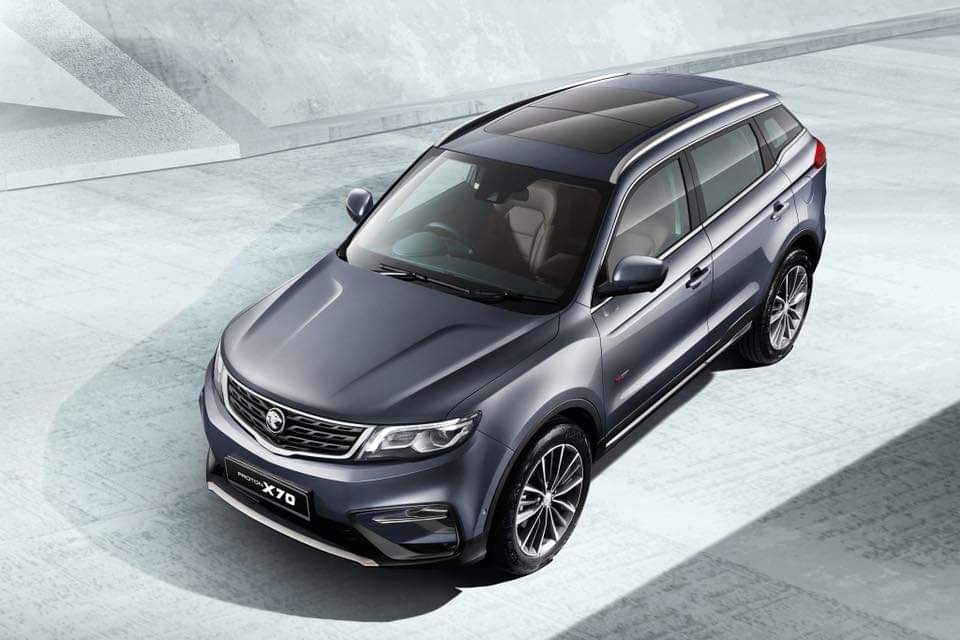
The Proton X70 continues to hold station as the segment leader with a total of 1,367 units being registered. The Saga continues to be the mainstay representing nearly half of total sales with 3,871 units sold. This represents a 72% increase over the same period last year.
The Persona, Iriz and Exora also performed well in comparison with January 2019. The Persona in particular nearly doubled in sales with 2,109 units delivered to customers. This represents an 84% increase in comparison with the corresponding period. At the same time, the Iriz grew nearly five-fold, with 785 units finding their way to new customers. This is an increase of 465%.


“Clearly our customers see the value in our much improved product line. This is especially for the Saga, Persona, Iriz and Exora which were all launched last year. We believe that our strong emphasis on technology, safety and quality is what is driving sales” said Li. “However, we will not rest on our laurels and will continue to push the envelope on raising standards both in quality and service”, he added.

New 2021 Kia Sorento SUV Exposed Ahead of Its Debut

  • These leaked images show the new 2021 Kia Sorento mid-size SUV inside and out.
  • The redesigned model is expected to debut sometime soon for the Korea market.
  • We don’t know about its arrival in the U.S. yet, but we expect to hear more in the next few months.

This is the best look yet we have of the redesigned Kia Sorento, thanks to some leaked images circulating on Instagram that expose the mid-size SUV’s front and rear ends and its dashboard. So far, it’s looking good, although we’ll reserve full judgment until we can see more official photos from Kia. The rumor is that the real thing will debut sometime in February in Korea.

Up front, there’s a distinctive grille treatment with a U-shaped pattern and Kia’s signature “Tiger Nose” grille shape that dips down just above the large Kia badge. The blocky headlights have a nice chrome surround. Vertical two-bar taillights make the rear end look interesting enough, and the overall shape and size look relatively similar to the current Sorento, as we saw in earlier spy photos.

Image result for kia sorento leaked pics"

The interior design looks like more of a radical departure, as there’s a large touchscreen spouting atop the dash, a digital gauge cluster screen in front of the driver, and aggressively shaped air vents flanking the climate controls. We don’t know if the Sorento will continue to offer three rows of seats or if it will transition to being Kia’s two-row entry now that the larger three-row-only Telluride is in the picture.

Kia has confirmed that there will be a plug-in-hybrid variant of the new Sorento, but we don’t know for sure if that will come to the U.S. market or not. More details should come soon as Kia prepares to debut the new SUV on its own terms, rather than at the speed of social media.

Courtesy: CarandDriver.com

Honda extends Chinese motorcycle plant closures over corona virus concerns

The corona virus scare has finally made an impact in the moto-world, with Honda announcing extended closures of two motorcycle plants due to concerns over the flu virus.

To be clear, this isn’t as if Honda has shut down an operating factory—not exactly. Asian Review reports Honda’s factories in Tianjin and Taicang were already closed, due to the Chinese Lunar New Year holiday, when many workers return home to be with their families. They were scheduled to re-open in early February, and that re-opening has been postponed until February 9 (unless the situation at that point requires otherwise, of course).

The closure could have a sizable impact on Honda’s output in China. Total annual production capacity for the Tianjin plant, situated in northern China, is 500,000 bikes a year. The Taicang plant, in eastern China, can build 350,000 bikes a year. The current coronavirus outbreak was originally centred around the city of Wuhan, but has allegedly spread throughout the rest of mainland China, although not to the same concentration. Current reports say there are about 7,000 infected in China. A few dozen cases have been reported in other countries.

Honda’s move comes as transportation manufacturers are looking carefully at all their production facilities in China. Honda’s also closed auto plants in China, as have Peugeot, Toyota and Ford. It also comes as the Chinese motorcycle industry was set to start several new partnership with high-end western brands: KTM, Harley-Davidson and MV Agusta all planned to start selling made-in-China motorcycles in the coming months. It will be interesting to see how this situation affects those plans, as well as the availability of made-in-China components that are already a key part of many new motorcycles, no matter where they’re finally assembled.