PROTON SAGA RETURNS TO THE TOP
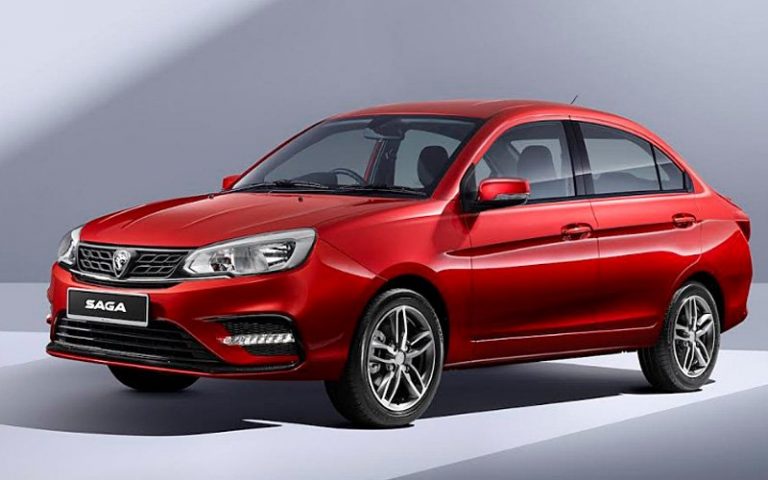
PROTON launched the 2019 Saga on 6 August, the fifth model launched by the Company in the space of eight months. The Saga is of course synonymous with the history of PROTON. With a history spanning 34 years and over 2,000,000 units delivered to customers in Malaysia and export markets, it is without a doubt the car that defines Malaysia’s carmaker.
The response to the updated model from Malaysian car buyers has been very encouraging, with over 20,000 units booked as at the end of September. How did this happen? These are the factors:
Supreme Style
Treated to a big restyle, the 2019 Saga has received numerous new exterior parts to set it apart from its predecessor. These include new front and rear bumpers, the incorporation of PROTON’s infinite weave grille and an attractive set of 15-inch alloy wheels.
An Improved and Safer Driving Experience
One of the biggest changes to the Saga has been the improvement of the driving experience. PROTON’s ride and handling engineers have painstakingly retuned the suspension to give it a more pliant ride yet retain the superb handling abilities that is the hallmark of any Proton car. Bigger brakes, taken from the Proton Iriz, were also added to improve stopping power and the cherry-on-top is the new four-speed automatic gearbox.
The Saga is the first car in its segment to come with Electronic Stability Control (ESC), Traction Control System (TCS), Antilock Braking System (ABS), Electronic Brake-force Distribution (EBD), Brake Assist (BA) and Hill-Hold Assist (HHA) as standard on the top-spec Premium model. All variants also come with ISOFIX mounting points and twin airbags, which gives the model a four-star ASEAN NCAP safety rating.
Advanced Features
With a floating 7-inch colour touchscreen being the main interface between the driver and the Saga, PROTON’s entry-level model has inherited some of the technologies from its more expensive brethren. Android smartphone users can take advantage of a full-mirroring function to access their apps while the sound system has been tuned to deliver a truly world-class sound staging experience.
A Value for Money Proposition
As per Proton’s other recent model launches, the Saga delivers even better value to customers. Priced between RM32,800 to RM39,800 it is the most comprehensively equipped vehicle in its segment. With so much going for it, it’s actually no surprise that the buying public has propelled the Saga back to the number one position.
Courtesy: ProtonAuto
Unemployment on the rise as dark clouds hover over auto sector of Pakistan
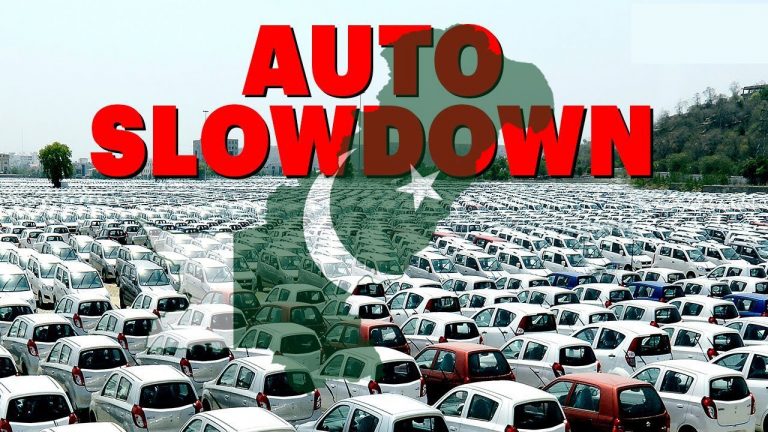
As people lose jobs, more fears loom on falling auto sales
With already struggling under high food inflation, utility bills and fuel prices – the suffering of the people further has intensified with a new wave of
joblessness in the auto sector.
Vehicle assemblers for the last few months have been passing through a turbulent phase due to tumbling sales, bringing thousands of people jobless at the assembling and vending units on which the government looks least concerned.
The Budgetary measures 2019-2020 like additional customs duty, federal excise duty of 2.5-7.5 per cent on different engine power and additional sales tax have played caused sleepless nights for the industry operators while the rest of the damage was done by massive over 30 per cent rupee devaluation against the dollar in FY19. Hike in interest rates to 13.5 per cent by the State Bank of Pakistan (SBP) brought more despair than the relief for already ailing sales. As a result of negative exchange rate and new taxes and duties, car prices, amid claim of achieving higher localization, have gone beyond the reach of many people.
Indus Motor Company (IMC), which observed eight and 10-11 non production days (NPD) during July and August, had further extended NPDs by 15 days in September thus bringing down production capacity by less than 50 per cent.
Honda Atlas Cars Limited (HACL) was the first to start 10 NPDs in July and further maintained NPDs in August and September with reports that the company had been rolling out vehicles for only two days of a week in view of falling demand.
By the time of filing this report, IMC and HACL had over 3,000 unsold stocks each of Toyota and Honda vehicles with reports of firing over 1,000 daily wagers and contractual workers each. The second shift at these two Japanese assembling units has been shut down. The second shift in Pak Suzuki Motor Company Limited (PSMCL) has also been closed down which means at least 1,000 daily workers and contractual workers had suffered their job.
For every direct job in the auto sector has a job multiplier of eight times for auto vending and ancillary industry. On this basis, the number of people who have lost direct and indirect jobs in the vending and ancillary industries is above 36,000 in the last three to four months.
Toyota Corolla production and sales dropped to 5,308 units and 3,708 units respectively in July-August from 8,804 and 8,770 units in same period last fiscal year, representing a fall of 40 and 57 per cent respectively. Toyota Hilux production and sales plunged to 793 units and 716 units from 1,383 and units 1,292 units, a drop of 42 per cent and 44 per cent respectively. Further, production and sales of Toyota Fortuner came down to 232 units and 162 units from 484 units and 424 units, a drop of 52pc and 62pc respectively.
Authorized dealers of these local assemblers say that they had not seen such a worst time in their life as only one car goes out of the showroom and sometimes we keep sitting idle the whole day.
Under a serious auto sales crisis, fear among people working in authorized showrooms is also growing of being fired while similar situation also exists in banks dealing with car financing. Reports are swirling in the market that some banks have closed the desk of auto financing besides removing the staff in view of no orders.
However, Pak Suzuki Motor Company Limited (PSMCL) has so far not tasted a bitter period like HACL and IMC despite massive sales fall in most popular Suzuki WagonR. So far
the company has not observed any NPDs.
“Alto 660cc has taken over the market share of WagonR,” market people said adding “under the current auto crisis, brisk Alto sales has literally saved PSMCL.”
However, sales of Alto model declined to 3,435 units in August from 4,585 units in July.
Overall car sales during July and August nosedived by massive 41.3 per cent to 20,094 units compared to 34,264 during the corresponding months last year.
In August, total car sales lowered to 9,126 units versus 15,389 in the same month last year. Moreover, car sales during August remained subdued because of Eidul Azha holidays, whereas discontinuation of the Suzuki Mehran model also took its toll on the overall auto sales.
As per figures of Pakistan Automotive Manufacturers Association (PAMA), Honda Civic/City sales saw the largest plunge to 2,558 units in July and August, from 8,078 units last year followed by Suzuki Swift sales, which dropped to 338 units from 839.
Suzuki Cultus and WagonR also suffered major setback with sales of 2,497 and 1,488 units versus 3,041 and 5,222 units in 2MFY18 respectively. PAMA figures showed that the last two months also saw steep fall in sales of Suzuki Bolan to 703 units from 2,559 units.
The government needs to rescue the auto sector who plays an important role in providing jobs to the fresh graduates. Perhaps the government has not realized that declining sales will bring down sales tax and duty collection. Economic slowdown coupled with low large scale manufacturing and falling imports had caused decline in Hinopak, Master and Isuzu truck sales 235, 91 and320 units in 2MFY20 as compared to 473, 210 and 516 units in same period last fiscal.
Hino, Master and Isuzu bus sales came down to 63, 34 and 63 from 78, 54 and 85 units in 2MFY19. Assemblers of these vehicles have slowed down their production due to subdued demand as some of them have shelved their future investment plan like Hino’s of Rs 300 million last year to boost production capacity. During first quarter of FY19, introduction of filer and non filer restriction for buying vehicles had affected heavy vehicle sales.
In trucks, work at certain government projects had halted, so are the supplies of trucks and the respective payments, resulting disruption of the chain of events at the trucking industry. Market is abuzz with reports that heavy vehicle assemblers have taken forced resignation from the employees to lessen the financial loss.
Sales of light commercial vehicles (LCVs), Vans and Jeeps also remained in the red in the last two months. Toyota Fortuner, Honda BR-V, Suzuki Ravi, Toyota Hilux and JAC sales went down to 162, 450, 1,162, 716 and 107 units as compared to 424, 864, 2,162, 1,292 and 130 units respectively.
Auto sector people said that below 800cc vehicle is sailing smoothly in difficult time as fear looms among people of being grilled by Federal Board of Revenue (FBR) to provide source of income in buying 1,000cc and above engine power vehicles. There are also reports that authorized dealers, as per directive of Federal Board of Revenue (FBR) demand CNIC copy of people whose service, tuning and repair bill exceeds Rs 10,000 saying that in sharp contrast, Indian car industry is also undergoing same sales debacle. But the reason of depressed sales in India is different from Pakistan.
In India, Euro6 vehicles would be introduced next year, making people reluctant to make fresh purchase. Besides, government collects 28 per cent general sales tax (GST) as well as different slab of cess depending on engine power.
In Pakistan, consumers are plying Euro2 vehicles due to Euro2 fuel availability in the country. India is far ahead in achieving fuel and vehicle standards than Pakistan.
Another reason of low sales in India is rising trend of using on line cab service like Uber among people, who believe that using these services is better than buying a new vehicle at a time when parking problem is the biggest challenge in mega cities of India.
In Pakistan, people went wild to lift new locally assembled cars for plying in Uber and Careem but it has lost charm for many new investors due to rising fares by these two cab schemes. Now old cars with air condition and rickshaws are doing pretty well business than higher engine cars due to their lesser fares than big cars.
However, bike sale in India is also going down which is surprising keeping low
prices as compared to Pakistan. Here in Pakistan, bike sales are also not satisfactory due to multiple price shocks by the manufactures amid claim of achieving over 94 per cent localization in two wheelers.
One can blame the previous and current governments for giving a free hand to the auto sector to keep jacking up prices on the rupee-dollar parity despite achieving higher localization. The governments had never checked whether the industry has really localized the bike and car segment as per targets set by the governments.
More surprisingly the vending industry people, who continue to become filthy rich, also blames vulnerable exchange rate saying that they are dependent on imported raw material for making locally made parts.
So a double edge sword exists here as both manufactures rely on imported hi tech parts followed by vendors on imported raw material. Besides, the vehicles launched by some existing assemblers and new entrants also have low localized parts, which mean that prices will remain under pressure in future.
According to Economic Survey FY19, bikes cater to lower income group and are extremely price sensitive. Still, this sector offers most preferred and economical means of transport and best alternative in the absence of public transport in the cities and thus holds a dependable and continued potential for growth in the coming years.
Bike sales showed contrasting trend as some assemblers, after enjoying a good FY19, faced precarious sales during July-August 2019 while for many manufacturers, the start of new fiscal FY20 year is almost as volatile as FY19.
Country’s total bike production fell by 13 per cent to 2.459 million units in FY19 from 2.825mn units in FY18, figures Pakistan Bureau of Statistics (PBS) revealed. Bike production in July 2019 fell by 24.4 per cent to 161,939 units from July 2018.
Amid 94 per cent claim of achieving localization in 70cc segment, the assemblers had given multiple price shocks to the consumers in the last one and half years, blaming high cost of imported parts and raw material prices triggered by losing rupee value against the dollar to Rs 158 from Rs 123 in August 2018 and Rs 110 in January 2018.
However, in a tough FY19 as well as July-August 2019 period, Atlas Honda Limited (AHL) did not lose much of their customers like other assemblers. AHL sales slightly fell slightly to 1.114 million units in FY19 from 1.150 million units in FY18 followed by further fall to 160,109 units in July-August 2019 from 170,021 units in same period 2018.
Suzuki and Yamaha, after quite a brisk FY19 sales, finally suffered decline to 3,162 and 3,805 units in July-August 2019 from 3,738 and 4,282 units respectively. Suzuki and Yamaha sold 23,352 and 23,610 units in FY19 as compared to 21,724 and 21,817.
The second largest bike maker, United Auto Motorcycle, whose sales remained low at 364,614 units in FY19 versus 405,982 units in FY18, could not recover in the start of new fiscal and sold 52,379 units in July-August 2019 as compared to 68,858 units in same period last fiscal.
PAMA figures also reveal sales recovery by some assemblers in August 2019 from July 2019 but the volumes July and August 2018 were far healthier than the same months of this year. A number of buyers lift bikes on monthly installment whose share comes to 60 per cent of total sales. As per market reports, these types of bike buyers have also become hesitant as monthly installment also goes up due to high price bike prices coupled with
falling affordability issue of maintaining monthly installment regularly, he said.
Persistent increase in bike prices had also taken away buyers from the markets as the impact of rupee depreciation against the dollar had still not been fully passed by the assemblers to the end users. Some assemblers have passed on 15-20 per cent while others by 12-15 per cent, he claimed.
The issue of sales tax registration of dealers under third schedule effective from July 1, 2019 also haunted Chinese bike dealers mainly thus causing major setback in sales as dealers stopped lifting bikes from the assemblers. However, it is good to see some dealers registering in sales tax.
On recovery in sales of Road Prince bike in August to 11,235 units from 4,827 units, he said “our last year average sales were 16,000 units per month but we lost sales by 30pc. How can we re-employ people if our sales sleep on these numbers,” he added.
“Bike sales in future will depend on various crops and their prices but consumers’ cost of living may remain under pressure owing to continuous increase in food prices,” he added.
Despite recovery in August sales, Road Prince sales plummeted sharply to 16,062 units in July-August 2019 from 28,181 units in same period last year. In FY19, sales plunged to 161,231 from 219,349 units in FY18.
Chairman Association of Pakistan Motorcycle Assemblers (APMA), Mohammad Sabir Sheikh said government’s decision of making sales tax registration for retailers compulsory under Sales Tax Schedule III has created problems for unregistered Chinese bike dealers mainly who suspended bike procurement from the assemblers.
With some dealers started registering in sales tax, reports are swirling that FBR team would start arriving from next month in the markets and it would issue notices to both assemblers and dealers after finding non registration of dealers in sales tax net, he said. He said installment business has also affected by at least 40-50 per cent during the last six months as many buyers feel difficulty in paying monthly installment of Rs 3,000-5,000 per month on 70-125cc bikes out of their monthly salary of Rs 25,000-35,000 per month. As a result, they sell their bikes back to the dealers.
On unemployment, he said daily wagers suffer the most at the factories and vending units instead of permanent and contractual workers. Attributing depressed two wheeler sales to country’s overall economic slowdown, Sabir expects sales revival depending on cotton and other crops in coming months. He said sales tax registration issue of dealers had not hit Japanese bike assemblers as majority of their dealers are registered in sales tax.
In total sales, he said CD70cc holds 70-80 per cent market share. Honda CD 70cc and CG 125cc now cost Rs 74,900 and Rs 124,500 as compared to Rs 69,500 and Rs 114,500 earlier this year.
Suzuki GD110S, GD 150, GD150SE and GR150 now sell at Rs 166,000, Rs 175,000, Rs 191,000 and Rs 259,000 as compared to Rs 155,000, Rs 162,000, Rs 180,000 and Rs 243,000 earlier this year.
Meezan Bank and Hyundai Nishat Motor sign Memorandum of Understanding for Priority Financing of Hyundai Commercial Vehicles
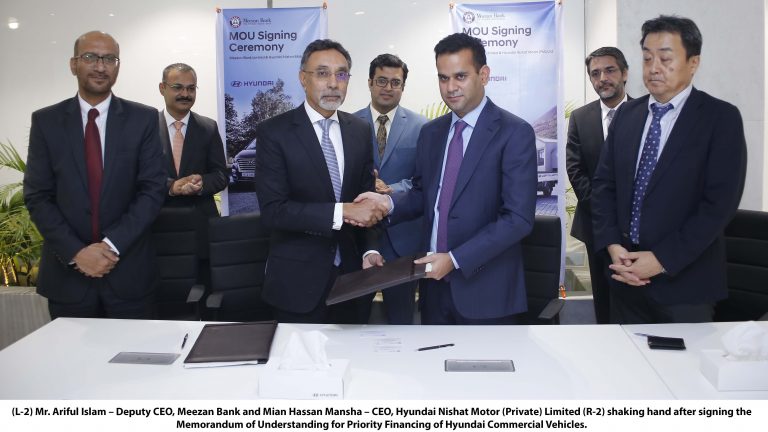
Meezan Bank Limited, Pakistan’s largest Islamic Bank and the Best Bank in Pakistan and Hyundai Nishat Motor (Private) Limited, a project of Nishat Group recently signed a Memorandum of Understanding to jointly promote Hyundai commercial vehicles in Pakistan by providing convenient financing terms with a residual value option.
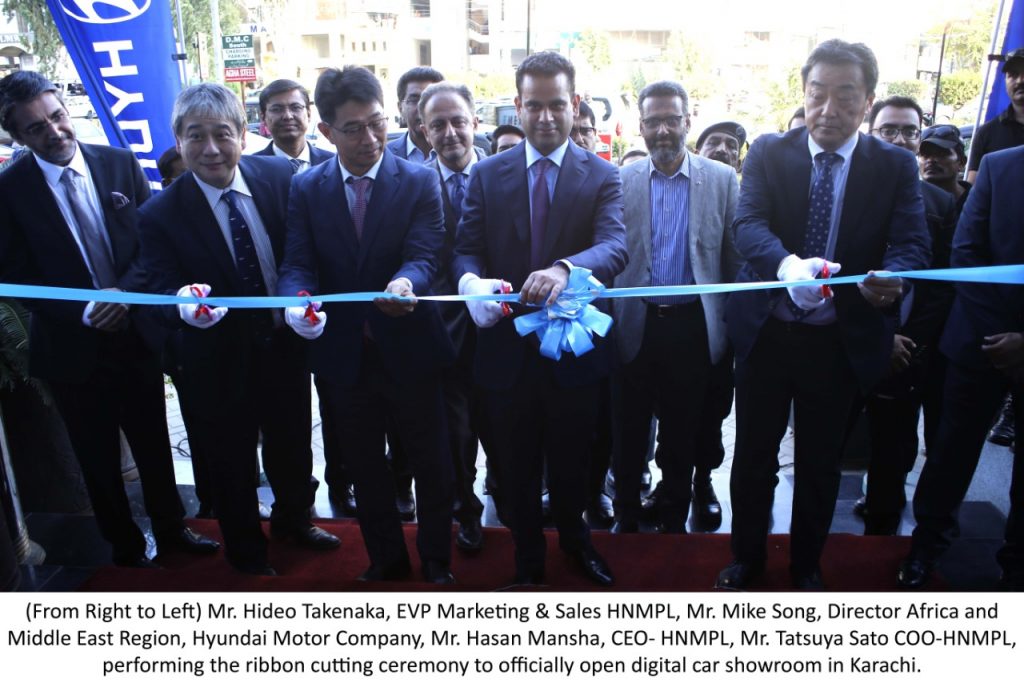
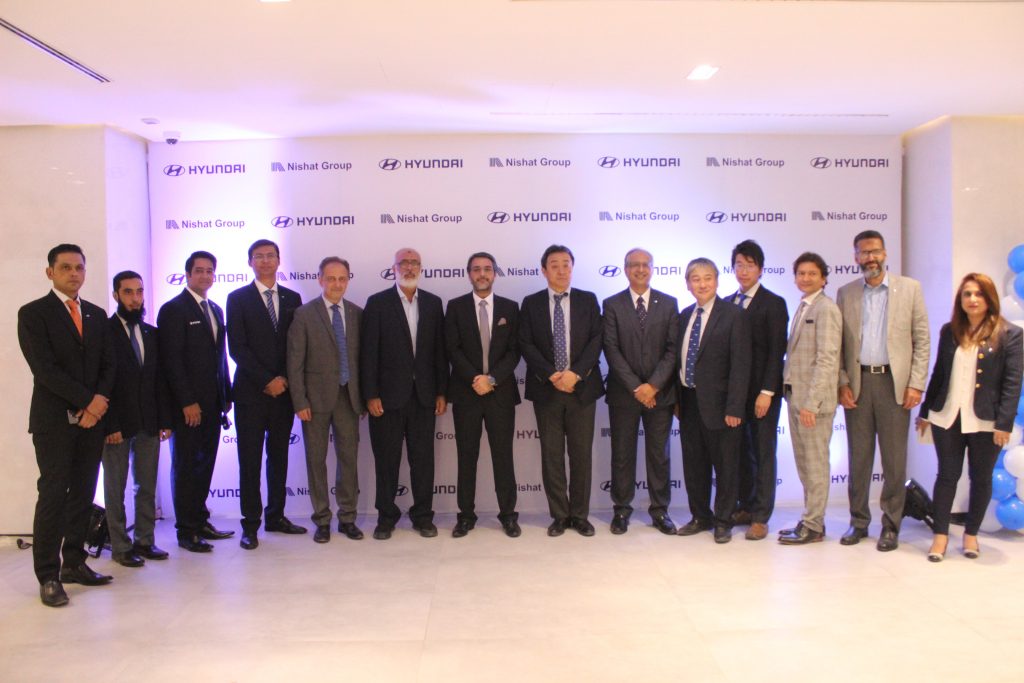
This signing ceremony was organized at the grand opening of Hyundai’s Digital City Store in Karachi and was attended by Mian Hassan Mansha – CEO, Hyundai Nishat Motor (Pvt) Ltd., Mr. Min Kyu Song – President Africa and Middle East Region, Hyundai Motor Co. and Mr. Ariful Islam – Deputy CEO, Meezan Bank.
Under the agreement, Meezan Bank will provide priority vehicle financing and additional value-added services to Hyundai’s commercial segment customers for Grand Starex and its upcoming locally assembled pick-up truck.
Commenting at the occasion, Mr.Ariful Islam – Deputy CEO, Meezan Bank said: “Our commitment towards ‘Establishing Islamic banking as banking of first choice…’ has led us to focus on the key financing needs of our customers. Alhamdullilah, Meezan Bank is one of the few banks in the country to offer the Residual Value option for commercial vehicles which will further enhance the customer’s flexibility and buying power.”
Mr.Norez Abdullah, CFO Hyundai Nishat while speaking at the occasion said: “We are delighted to have partnered with the country’s largest Islamic finance provider for our customers. This combination of strength and promise between Meezan and Hyundai shall go a long way in fulfilling the void in light commercial segment at affordable terms for our mutual customers This MoU would add a leading automobile brand in Meezan Bank’s portfolio which would benefit both the partners and ultimately offer a good option to the customers for fulfilment of their logistics needs.”
About Meezan Bank
Meezan Bank is the 7th largest bank in Pakistan and the leading Islamic bank of the country. The Bank provides a comprehensive range of Islamic banking products and services through a retail banking network of over 690 branches in 190 cities supported by a countrywide network of over 700 ATMs, VISA & MasterCard Debit cards, a 24/7 Call Center, Internet Banking and Mobile Banking facility.
Meezan Bank has consistently been recognized as the ‘Best Islamic Bank in Pakistan’ by numerous local and international institutions. The Bank has also been recognized as the ‘Best Bank in Pakistan’ by Pakistan Banking Awards– the most prestigious awards in Pakistan’s Banking sector, which is a testimony of the Bank’s commitment to excellence. Other awarding institutions include Islamic Finance News – Malaysia, Global Finance magazine – New York, Asset AAA – Hong Kong, Asiamoney – Hong Kong, The Banker – United Kingdom, South Asian Federation of Accountants, Islamic Finance Forum of South Asian Awards, Pakistan Banking Awards – Dawn & IBP Pakistan, Employers Federation of Pakistan and CFA Association – Pakistan. The JCR-VIS Credit Rating Company Limited, an affiliate of Japan Credit Rating Agency, Japan has upgraded the Bank’s long-term entity rating of AA+ (Double A Plus) and short-term rating at A1+ (A One Plus) with stable outlook. The rating indicates sound performance indicators of the Bank.
About theCompany – Hyundai Nishat Motor (Private) Limited)
Hyundai Nishat Motor (Private) Limited (Hyundai Nishat), a Nishat Groupcompany, is a jointventureamongthreeleadinginternationalbusinesses; Nishat Group, Sojitz Corporation (Japan) and Millat Tractors Ltd. Hyundai Motor Company (Korea) has partneredwith Hyundai Nishat forthemanufacturing, marketing and distribution of Hyundai’sproduct line in Pakistan. Hyundai Nishat aspires to be amongsttheleading Auto manufacturers in Pakistan in thecomingyearstoalignitstrack record withothersisterconcerns of the Nishat Group. Ourvisionistobecomethemost “Valued” & “loved” automobilebrand and recreatethe global success of Hyundai in Pakistan.
Since our inception in 2017, we are rapidly establishing our 3S distribution network across the country through our partner franchisees. Our manufacturing plant, being set up in the largest industrial estate of Pakistan avows world class precision with the deployment of the most advanced production techniques.
Honda Recalls CR-Vs for Owner’s Manual Error
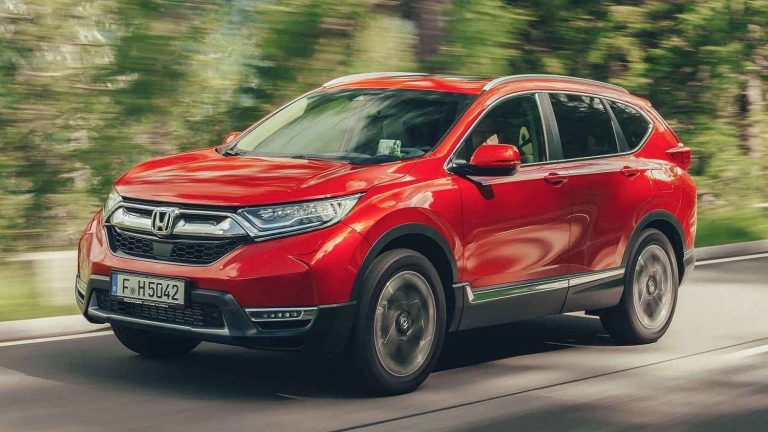
Honda is correcting the owner’s manuals in over 336,000 2019 CR-V SUVs after an owner noticed an error in the section that explains how the vehicle’s passenger airbag works.
Currently, the owner’s manual incorrectly describes when the Passenger Airbag Off indicator should illuminate. After an owner discovered the error and complained to Honda, the automaker started an internal investigation and determined that the owner’s manual needed to be corrected. Therefore, Honda will send stickers that state the correct information—plus instructions on how to apply the sticker—to owners of the affected vehicles. These stickers will be sent out starting in November.
Modern vehicles have a weight sensor in the passenger seat that determines whether an airbag should deploy in the event of a crash, or if the passenger is so light that the airbag could cause injury. In the case of Honda, that weight threshold is 65 lbs.
As such, the Passenger Airbag Off indicator should only light up when nobody is sitting in the front passenger seat, or if that person is under 65 lbs. Because their skeletal structure cannot withstand the forces of a deploying airbag, children younger than 13 years should always sit in the backseat of a vehicle regardless of their weight, according to the American Academy of Pediatrics.
Vehicles recalled: All 2019 Honda CR-V SUVs manufactured from Oct. 3, 2018 through Sept. 18, 2019.
The problem: The owner’s manual contains incorrect information about how the airbag system works.
The fix: Honda will mail stickers to owners that can be placed over the incorrect information.
Courtesy: Consumerreports.org
Hyundai launches Ioniq Hybrid Car in Pakistan
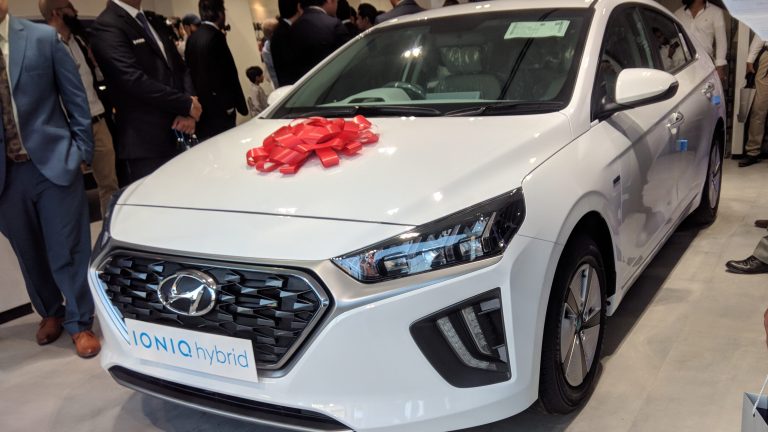
At a time, when the Pakistan Auto sector is facing tough challenges due to unstable economic conditions, Hyundai Nishat Motor (Private) Limited has launched a digital store in Karachi and along with that their new car Ioniq Hybrid.
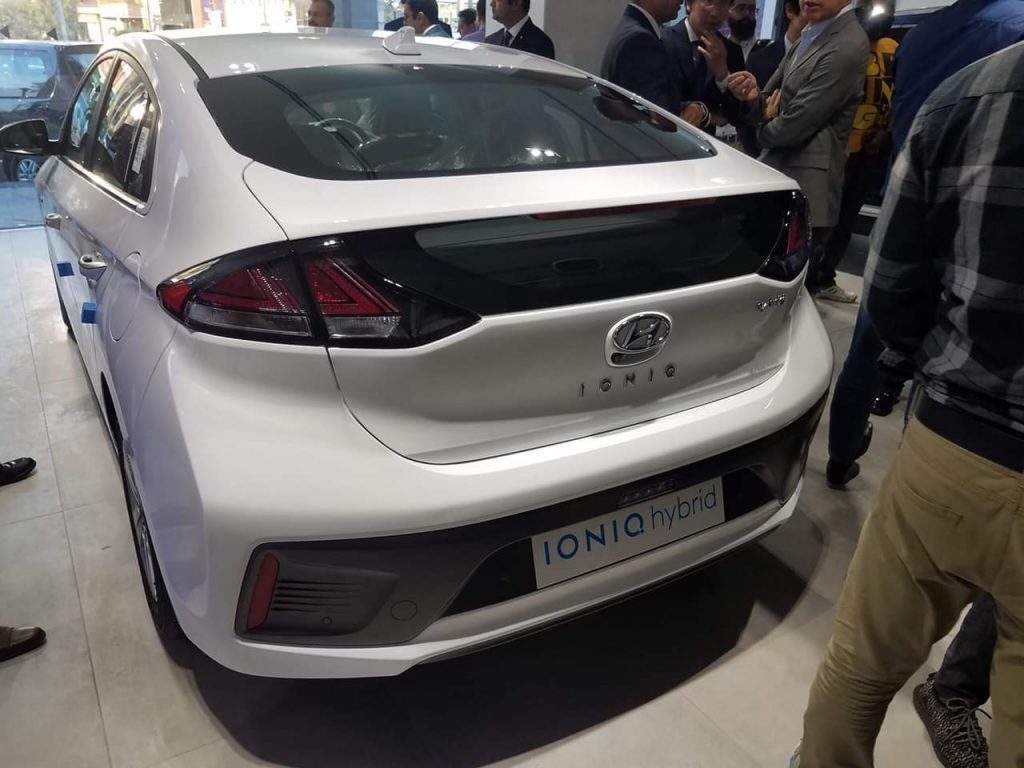
On Oct, 8th, during the launch of their digital showroom in Karachi the company Hyundai Nishat Motors Private Ltd (HNMPL) has announced to start local assembly of porter H100 with 20% indigenization from January next year. Their CEO, Tatsuya Sato, speaking to Automark reporter said that theoverall investment in the manufacturing facility of Faisalabad is around $150 million. The yearly production capacity of the facility is up to 15,000 units and the plant would be able to open up 250 employment opportunities for the local people.
Moving forward he mentioned that the company will start with 20% local parts and in the next five years take this up to 45% as localmanufacturing is the only way to compete in the market. He also said that Pakistan has the potential to export, with increased advent of eCommerce and new technologies Pakistan will soon be able to produce cost effective cars.

However, let’s jump onto the new car Ioniq Hybrid launched by Hyundai Nishat Motor (Private) Limited. The launching price of Hyundai is Rs. 6,399,000 and you can book it with fifty percent downpayment payment. With its price range segmented as Toyota Prius, both automobiles will be neck to neck in the Pakistani market.
The Prius was initially launched in Pakistan with an intent of locally produced hybrid; this however,didn’t go as planned. In practice, Toyota’s engine is bigger than the Ioniq but in terms of raw KMPL (Kilometers/ Liter), driving dynamics and being a plug-in hybrid, Ioniq outruns the competition. It can be purchased off the shelf as a firsthand vehicle where the former is available as a secondhand imported vehicle.
Interior
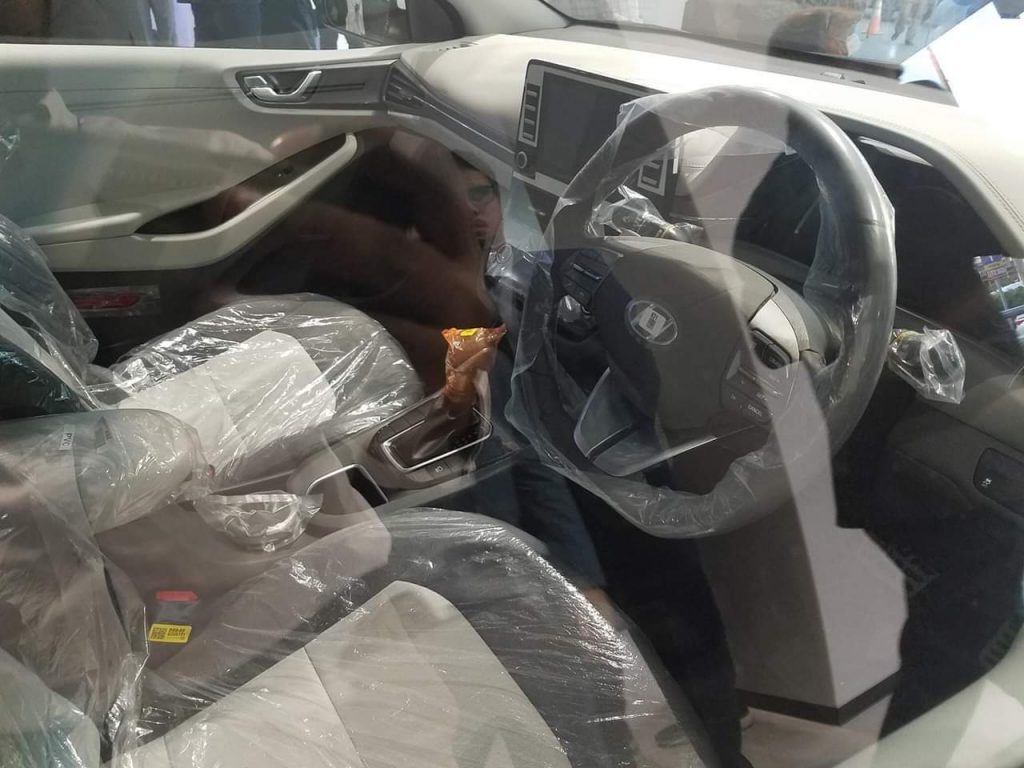
Hyundai IONIQ is equipped witha 7.0-inch touchscreen with Apple CarPlay and Android Auto com. The SEL trim level is our pick of the bunch with heated front seats, a power-adjustable driver’s seat and a 7.0-inch digital instrument cluster. Besides that, the car offers enhanced voice-recognition features and standard remote charge management for Plug-in and Electric models.
Safety Features
It is worth mentioning that in 2019, Ioniq Hybrid was voted as IIHS’ Top Safety Pick for the variant which is equipped with Automatic Emergency Braking and HID headlights.
It offers multiple safety features and some of them are Anti-lock brakes which by modulating brake pressure upsurge the vehicle’s capability to turn while braking. They also have Blind Spot Detection (BSD) and Rear Cross-traffic Alert (RCTA). It haseight airbags to cushion collision from all crucial points.
Engine
Hybrid Ioniq gets a 1.6-liter inline-4 that produces 104 horsepower and 109 pound-feet of torque. The engine is supplemented with a 32-kilo watt (43 hp) an electric motor that makes use of regenerative braking and a 1.56 kWh battery as well as solar charging in higher end models.
Exterior
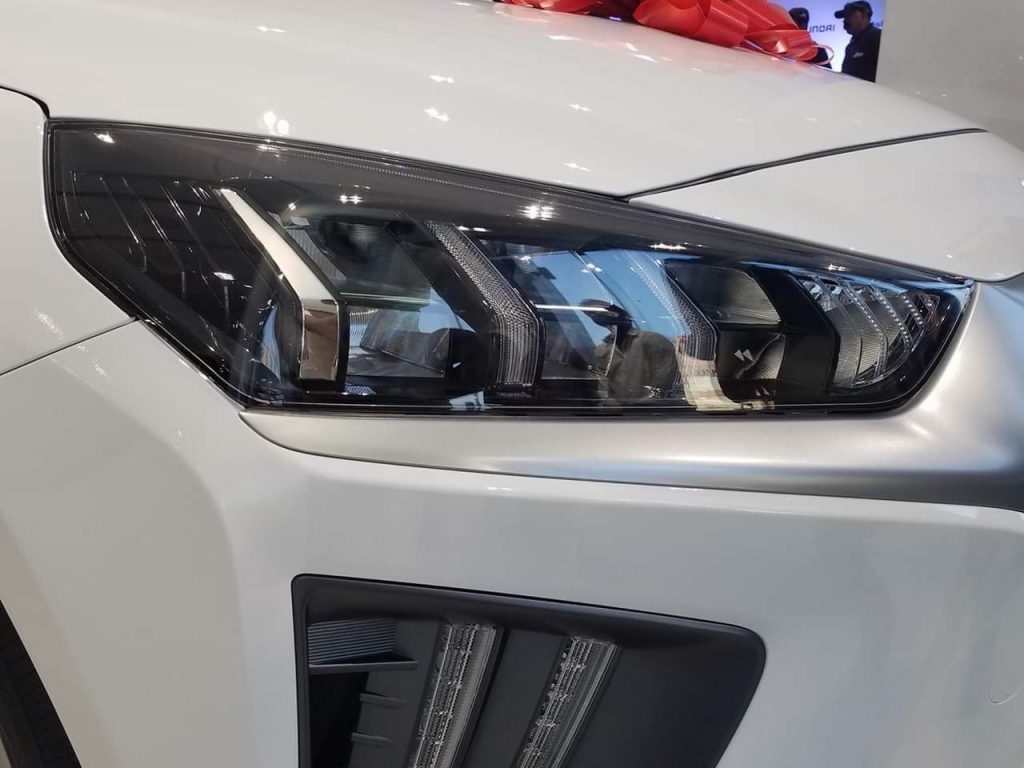
Hyundai has an elegant and defined look; the five-door liftback sedan has an overall height of 1450. It has striking design accents that are integrated into the smooth, sculpted surfaces of the bodywork. Along with that, it offers a 750 liters’trunk space and the high-strength steel and lightweight aluminum make the IONIQ strong, stable, agile & economical. With a power sunroof, chrome door handles and similar design of rear headlights and front LEDs provide a unified look to the whole exterior
Although Hyundai might take some time to surge in the market but with a strong car like Ioniq which is no match for the likes of Chevy Volt and other hybrid vehicles. Hyundai has a strong reputation globallyenabling Korean’s to set foot into new consumer markets with an iron fist.
On daily basis, a common user the car with an average speed of 70 km/hr, does not require the petrol engine as the car can run on electric charge completely for ≈130 KMs. Although the price tag is at the higher end. We feel it is worth for the feature it offers and is the way forward for a Greener & economical Pakistan.
by Hawwa Afzal
The 2020 Honda Civic Goes On Sale In USA
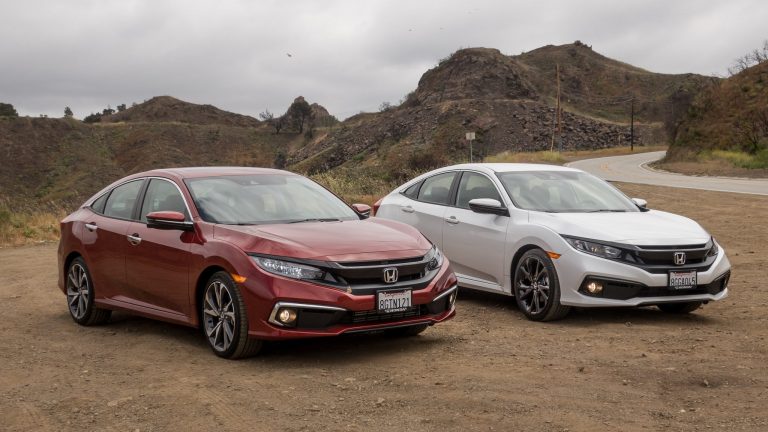
The 2020 Honda Civic — both sedan and coupe body styles — goes on sale Tuesday. Honda updated its bestselling car for 2019 with tweaked styling and a new Sport trim. The automaker also made the Honda Sensing suite of safety systems standard on all Civic coupes and sedans, from the base LX to the top Touring trim.
The 2020 Honda Civic starts at $20,680 for a base LX sedan, $200 more than model-year 2019 prices. LX coupes start at $21,880, also $200 more than the outgoing coupe.
The new Sport model, which was introduced for 2019 and consists of a sport-themed cosmetic package, also sees a price hike. For 2020, the Civic sedan Sport starts at $22,380, $200 more than model-year 2019 Sport sedans. It’s the same increase for coupe models (all prices include an equally unchanged $930 destination charge).
Honda said it’s going to make Honda Sensing standard on all models by 2022, and the 2019 model year was the Civic’s turn. The system includes features such as forward collision warning, automatic emergency braking, lane departure warning, lane keep assist and adaptive cruise control. This welcome inclusion carries over for 2020.
Si models, which had optional safety equipment for 2019 — get standard Honda Sensing for 2020, too. They see a bigger price bump for the new model year, however. For 2019, the Civic Si started at $25,230; for 2020, the price jumps to $25,930, a $700 bump.
Courtesy: Cars.com
Hyundai Nishat Motor (Private) Limited Opens digital Store in Karachi All-New IONIQ Hybrid car also unveiled
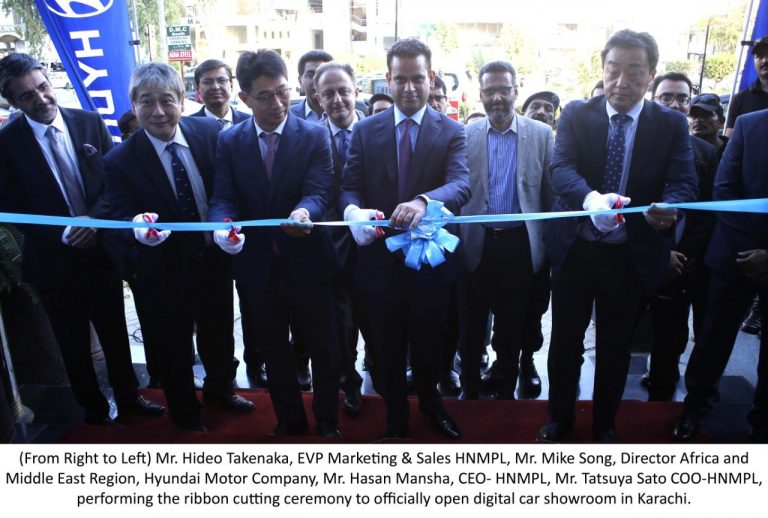
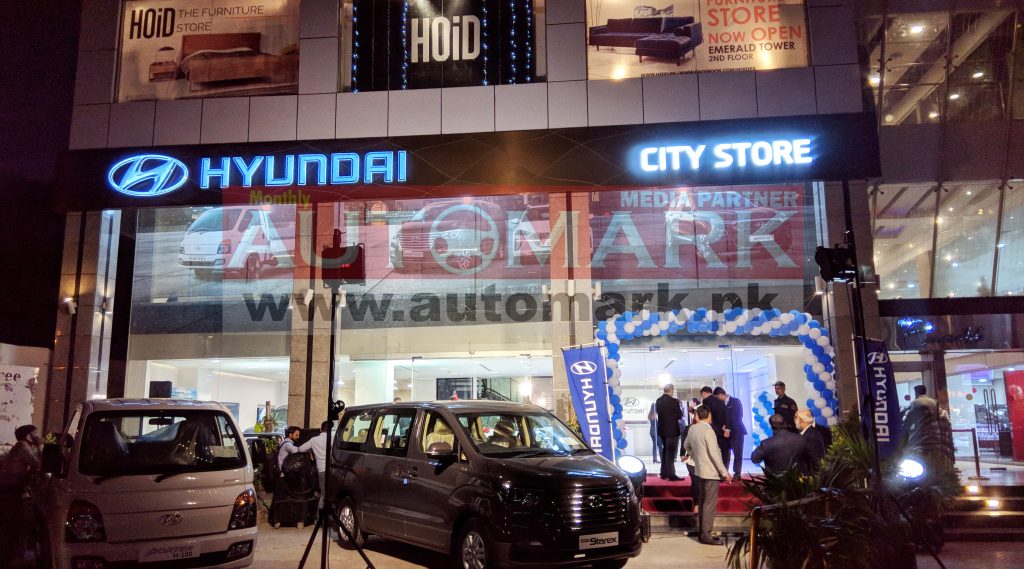
Karachi: 8th October, 2019 – After inaugurating its first 3S Dealer and Digital Showroom in Lahore, Hyundai Nishat Motor (Private) Limited (HNMPL) opens Digital Showroom at Emerald Tower, located in Clifton, Karachi as the first footprints on this largest Metropolitan City before expanding them in the City and nationwide. HNMPL is also proud of introducing the All-New Hyundai IONIQ, Hybrid Car highly appreciated in the global market to Pakistan in the occasion of inauguration of this Digital Showroom.
The Digital Showrooms have been developed under the” City Store” Concept, which is a game-changer for the auto market, supplementing traditional showrooms with a convenient, fully digitalized retail experience. It is a new way for customers to explore and discover Hyundai, which HNMPL desires to make the most beloved car brand in Pakistan.
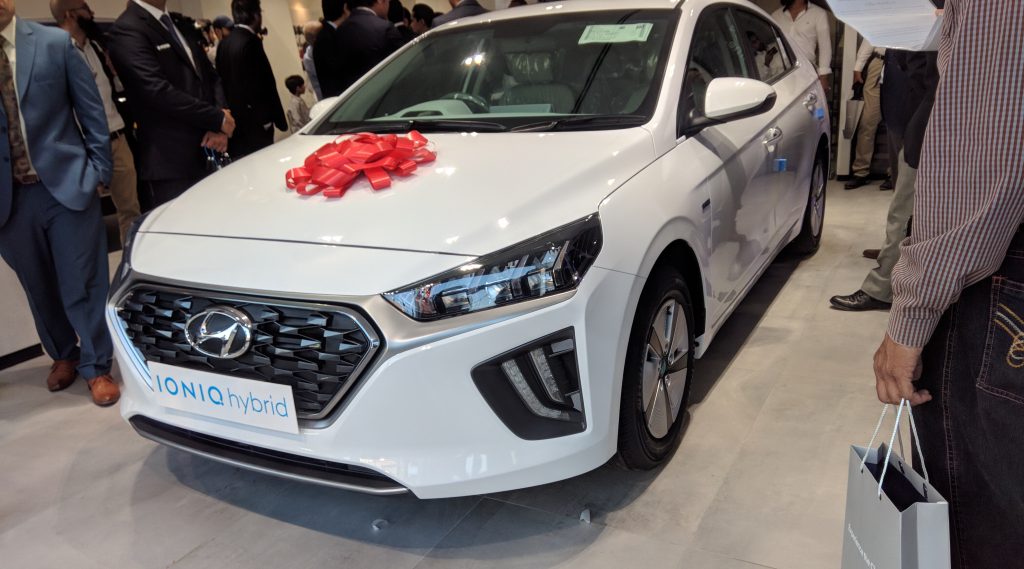
IONIQ is a Hybrid Car which realizes a powerful performance with less fuel consumption and lower emissions with its electric motor and 1.6L GDI 6-speed Automatic DCT (Dual-clutch Transmission). Apart from IONIQ to be unveiled, Grand Starex –MPV powered by a 2.4L Petrol engine with seating-capacity for 12 persons and Santa Fe – Luxury All-Wheel Drive SUV powered by a 2.4L Gasoline engine with seating-capacity for 7 persons are also displayed and available at the Digital Showroom. All these models are imported from Korea and covered by the industry’s most comprehensive Warranties in Pakistan for 4 years and/or 100,000 km, whichever comes first.
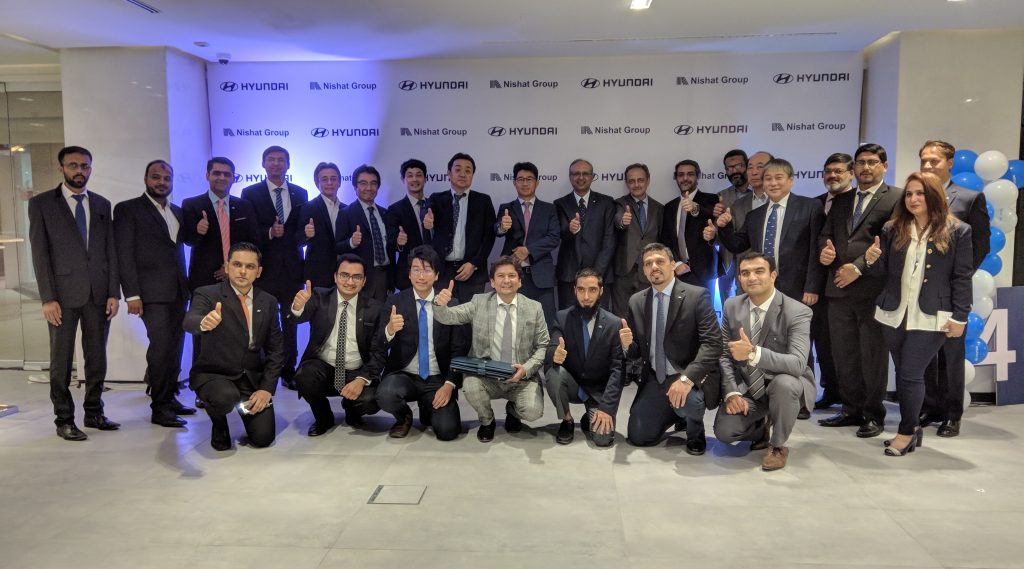
The world-leading automobile brand – Hyundai is aggressively expanding its 3S Dealer Network all over Pakistan, and more 10 3S Dealers are online to come up in 2019 in 8 major cities of Pakistan as the 1st phase, and more nationwide from 2020. Hence, the Hyundai customers will conveniently get all kinds of facilities like; Sales, Service, Spare-Parts, Official Warranties and other reliable offerings through its network. Moreover, company information can also be accessed, along with interactions and transactions, through digital connectivity.
HNMPL’s new manufacturing facility occupies 67 acres in Faisalabad with an annual production capacity up to 15,000 units, while creating thousands of jobs for economic progress. HNMPL is a joint venture company among three leading international businesses; Nishat Group, Sojitz Corporation (Japan) and Millat Tractors Ltd. Hyundai Motor Company (Korea) has partnered with HNMPL with a vision to become the leading Manufacturer, Marketer and Distributor of automobiles in the country. Lifetime Partner in automobiles and beyond.
Honda USA Dealership Accidentally Leaks Major 2020 Ridgeline Update
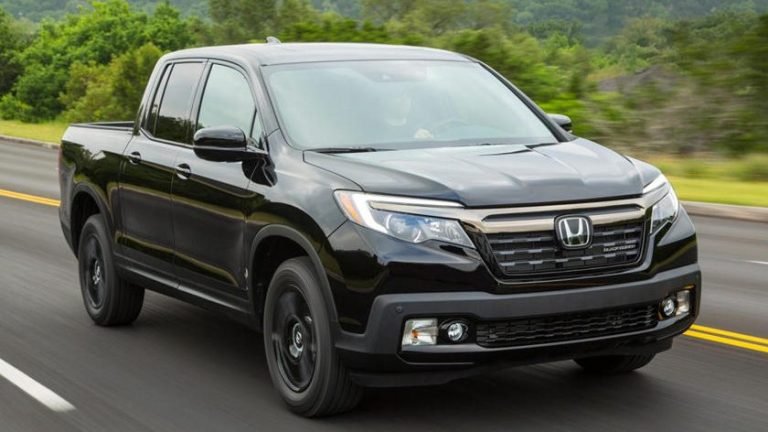
The second-generation Honda Ridgeline midsize pickup truck hit the market for the 2017 model year and has since received high praise from the media and public alike. Unlike conventional pickup trucks, the Ridgeline, like its predecessor, does not ride on a traditional body-on-frame chassis but rather a unibody frame, the same setup, though modified as the front-wheel-drive Pilot crossover.
Honda, however, gave the latest Ridgeline all-wheel drive with a fully independent suspension. Not all truck buyers require serious off-roading capabilities, but rather a more fuel-efficient vehicle that can haul stuff around town. The Ridgeline does the job and, according to Digital Trends, a major update might be due in the very near future.
Apparently, a Honda dealership in Louisiana, USA has revealed the crossover-based truck will enter the 2020 model year with some significant updates for its expected mid-life update.
Aside from a restyled front grille, the most interesting change will be under the hood: a hybrid option. The dealership, Honda of Covington, wrote on its website (it has since been removed as of this writing) that the 2020 Ridgeline will offer a 2.0-liter four-cylinder engine connected to a pair of electric motors. No technical specifications were listed.
However, this appears to be the same setup found on both the CR-V and Accord hybrid models. If so, expect around 212 horsepower, at the very least. Currently, the Ridgeline’s naturally aspirated 3.5-liter V6 is good for 280 hp. Other 2020 Ridgeline update the dealership noted include a restyled instrument cluster and some infotainment system improvements.
Courtesy: Carbuzz.com
Toyota Tsusho sets up Hino truck wholesaler in Saudi Arabia
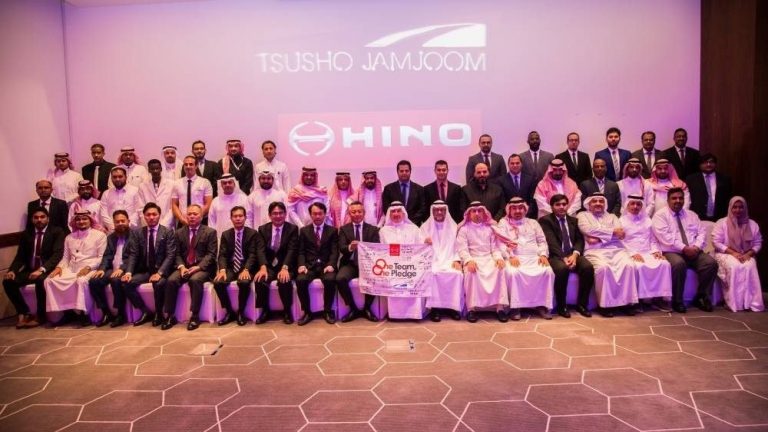
Toyota Tsusho Corporation announced Sunday it has established a Saudi Arabian wholesaler and retailer for Hino Motors, Ltd. trucks in partnership with local conglomerate Jamjoom Group. The wholesaler, Tsusho Jamjoom Trading Company (TJT), began full-scale sales activities in October 2019 as the first-ever Japanese-owned truck wholesaler in Saudi Arabia.
Saudi Arabia, one of the leading oil-producing countries in the Middle East, is pursuing Vision 2030 as its economic and social reform strategy to reduce dependence on oil production and diversify industry. Amid this reform, local truck demand continues to expand, and currently Saudi Arabia accounts for 50% of the commercial vehicle market in the Middle East. Going forward, sustained expansion of the demand for trucks is expected due to the role they play in the logistics infrastructure supporting new industry born from industrial diversification and the increase in construction investment.
In 1972, Toyota Tsusho began exporting Hino trucks to Saudi Arabia, partnering with the Jamjoom Group as a local Hino distributor. The newly established TJT combine the Jamjoom Group’s local sales network with Toyota Tsusho’s after-sales service know-how developed through its automobile business. TJT will not only enhance the sales function, but bolster total support for commercial vehicles encompassing vehicle inspection, maintenance and repair, and spare parts supply.
As economic growth continues in Saudi Arabia, Toyota Tsusho will strive to contribute to the country’s further development through supplying Hino trucks with QDR (excellent quality, durability, and reliability), generating new jobs, and training technicians.
Courtesy: Saudi Gazette