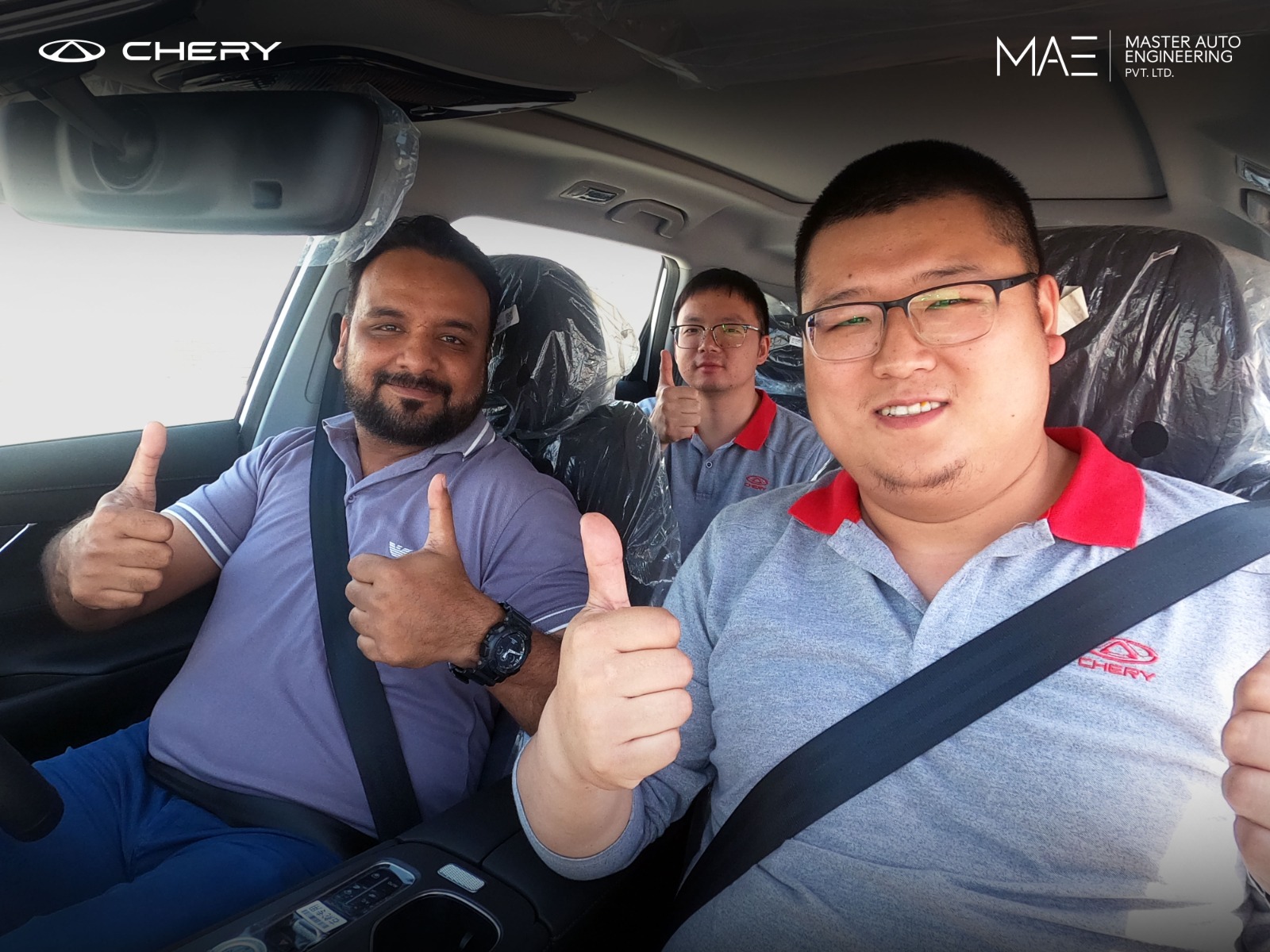
Plug-in hybrid electric vehicles (PHEVs) are emerging as the preferred entry point for electrified mobility in Pakistan and other emerging markets, as infrastructure and cost constraints slow the adoption of fully electric vehicles (EVs), according to industry data and recent market activity.
The trend comes amid a broader global shift led by China, which has overtaken Japan and Germany to become the world’s largest car exporter, driven largely by new energy vehicles, including EVs and hybrid variants.
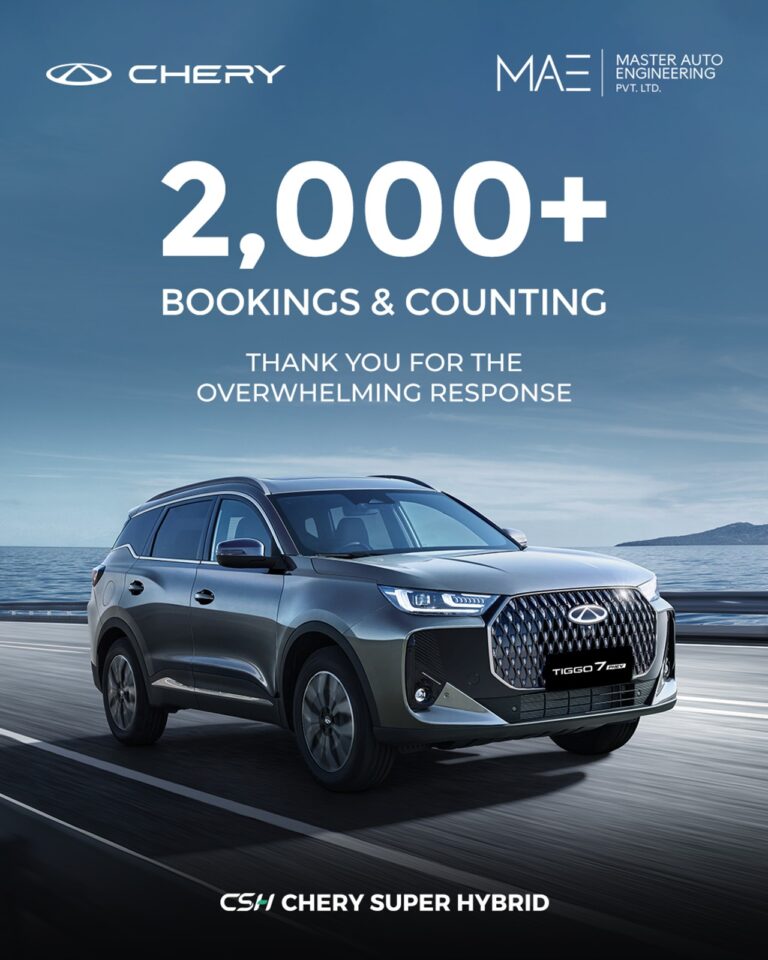
In Pakistan, early indicators suggest consumer demand is tilting toward PHEVs, with Chery Master Pakistan reporting over 2,000 bookings for its plug-in hybrid SUV lineup within a short period of market entry, company official said.
The bookings span the company’s Tiggo PHEV range — including the Tiggo 7, Tiggo 8 and Tiggo 9 — reflecting strong initial traction in multiple segments, from urban commuters to family and premium SUV buyers, he added.
Auto industry analysts say the shift is being driven by fuel economics and usability considerations rather than upfront vehicle pricing alone. With petrol prices remaining elevated, a conventional vehicle averaging around 10 kilometres per litre results in significantly higher per-kilometre costs compared to hybrid and plug-in hybrid alternatives, particularly in city driving conditions.
At the same time, structural constraints continue to limit large-scale EV adoption. Charging infrastructure remains limited, while grid reliability and range concerns are influencing purchasing decisions, particularly outside major urban centres.
This has positioned PHEVs as a transitional solution, allowing users to operate on electric power for daily commutes while retaining a conventional engine for longer travel — a combination seen as better suited to current market conditions.
Industry stakeholders note that China’s export strategy is increasingly aligned with this reality, focusing on scalable hybrid technologies that can be deployed across markets with varying levels of infrastructure readiness.
Recent activity in Pakistan’s SUV segment supports this view, with newly introduced PHEV models generating strong consumer interest and early order volumes.
Market observers say the development points to a phased transition toward electrification in Pakistan, where plug-in hybrids are expected to play a leading role in the near to medium term.
They add that consumer behaviour — shaped by running costs, fuel prices, and practicality – is likely to remain a key driver of adoption trends, alongside evolving policy measures and infrastructure investments.
As global momentum around electric vehicles (EVs) accelerates, a different reality is taking shape across emerging markets, where plug-in hybrid electric vehicles (PHEVs) are emerging as the more practical and immediate solution — a trend now visible in Pakistan’s evolving auto landscape.
The shift comes as China overtakes Japan and Germany to become the world’s largest car exporter, driven largely by its growing dominance in new energy vehicles, including EVs and hybrids. While developed markets continue to push toward full electrification, infrastructure and cost realities in countries like Pakistan are steering consumers toward alternatives that offer both efficiency and flexibility.
Industry data indicates that electrified vehicles now form a significant and rising share of China’s exports. However, in markets with limited charging infrastructure and inconsistent grid reliability, PHEVs are increasingly being positioned as a transitional technology — bridging the gap between conventional engines and full electric mobility.
Pakistan presents a clear case of this transition. With fuel prices remaining elevated and volatile, consumers are increasingly making decisions based on running costs rather than upfront pricing alone. A conventional petrol vehicle averaging around 10 km per litre translates into significantly higher per-kilometer costs compared to hybrid and plug-in hybrid options, particularly in urban driving cycles.
At the same time, the structural constraints around EV adoption remain evident. Charging infrastructure is still at an early stage, while concerns around range and usability continue to influence buyer behavior beyond major urban centers.
This has created a natural market for PHEVs — and early data suggests the shift is already underway.
Recent market activity indicates a strong consumer response to plug-in hybrid offerings, particularly in the SUV segment. Industry sources point to robust initial demand for newly introduced PHEV models, reflecting a growing acceptance of electrified drivetrains that do not compromise on convenience.
Chery’s entry into Pakistan has emerged as one of the clearest indicators of this shift.
The company’s Tiggo PHEV lineup — spanning the Tiggo 7, Tiggo 8, and the flagship Tiggo 9 — has received a strong market response, with early bookings and customer interest exceeding initial expectations, according to industry participants.
The range targets multiple segments, from urban consumers seeking efficiency to families and premium buyers looking for a combination of performance, technology, and fuel savings.
Market observers note that the appeal of these vehicles lies not only in reduced fuel consumption, but also in their ability to operate in electric mode for daily use while retaining the flexibility of conventional fuel for longer distances — a key requirement in Pakistan’s current environment.
Globally, PHEVs are increasingly being viewed as a bridge technology, particularly in regions where EV ecosystems are still developing. China’s export strategy appears to be aligned with this reality, focusing on scalable hybrid solutions that can be adapted across diverse markets.
For Pakistan, this suggests a more phased transition toward electrification.
Rather than a direct shift to fully electric vehicles, the country’s automotive evolution is likely to be driven by plug-in hybrids in the near to medium term, enabling gradual adoption while addressing immediate economic and infrastructure constraints.
As this transition unfolds, early market signals indicate that consumer behavior — shaped by fuel economics and practicality — may ultimately play a more decisive role than policy alone in determining the future of mobility in Pakistan.
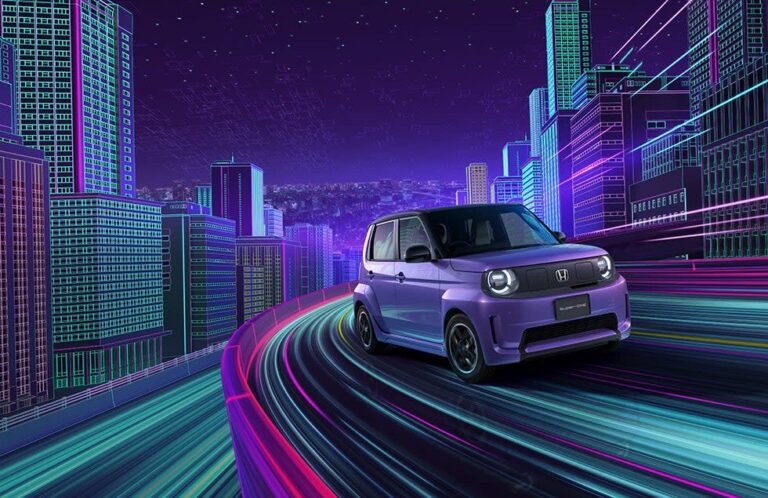
Japanese automaker Honda Motor has announced that it is scheduled to begin sales of its Super-One small battery electric vehicle (BEV) in its home market in late May 2026, as the company continues to expand its range of zero-emission models. Honda confirmed that it will begin taking pre-orders for the model at Honda dealers nationwide from mid-April, ahead of the official launch.
Honda said the Super-One is an A-segment compact EV “designed to transform everyday mobility into an exciting and uplifting experience by adopting a variety of features that make the in-vehicle experience more enjoyable for customers.”
The automaker said the Super-One offers a “sporty, yet stable and dynamic driving experience by leveraging the lightweight platform advanced for N Series models and its wide stance with a widened tread.”
The Super-One features a new ‘e-Booster’ system developed exclusively for this model, which “increases power output (from 47 kW to 70 kW) to enable the power unit to fully unleash its performance potential, while also synchronizing the simulated 7-speed transmission and the Active Sound Control system to generate a powerful engine sound and a sharp gearshift feel, as if driving an engine-powered vehicle with a traditional multi-gear transmission.”
The Super-One has a cruising range of 274 km, with the company choosing to limit its driving range in order to reduce battery weight and maximise performance. The total vehicle weight is 1,090 kg.
“Honda to launch the Super-One in Japan in May” was originally created and published by Just Auto, a GlobalData owned brand.
Muhammad Yousuf Shaikh, An Auto Industry Consultant, Motorcycle Industry Expert, Motorcycle Designer, China Sourcing Expert, Serial Entrepreneur, and the Founder & Chairman of Pakistan China Motorcycle Industry Council (PCMIC), offers his analysis of the motorcycle trade & industry trends from Pakistan & China. The Chairman of PCMIC, working with the motorcycle trade & industry for over two decades, Yousuf believes that new energy EV projects could help the motorcycle industry to design and produce new energy, new design, new tech & large displacement motorcycles in Pakistan. For further details and for assistance, please email at [email protected]
The first two articles in this series traced the global arc of the electric vehicle—from its 19th-century origins to the Chinese factories now powering Pakistan’s streets. We then examined the challenges and opportunities that come with this influx. Now, we arrive at the most critical question: How does Pakistan move from being a mere importer to a true manufacturer of electric two-wheelers?
The answer lies in a word that industry insiders are increasingly focused on: localization. And at the heart of this push is a structured, phased plan being developed by the Engineering Development Board (EDB) in collaboration with key industry stakeholders—chief among them, the Pakistan China Motorcycle Industry Council (PCMIC).
Who is PCMIC? The Bridge Between Nations
To understand the localization drive, one must first understand the organization helping to architect it. The Pakistan-China Motorcycle Industry Council (PCMIC) is a niche, industry-focused body dedicated to fostering bilateral trade, investment, and technology transfer between Pakistan and China in the motorcycle sector.
Founded in October 2011 by Muhammad Yousuf Shaikh (Founder and Chairman), PCMIC did not emerge from a vacuum. It built upon pioneering work dating back to 2002, when Shaikh first began introducing economical, high-quality motorcycles from top Chinese manufacturers into the Pakistani market—including models in the 70cc and 125cc segments that helped popularize Chinese imports.
With over 35 years of experience in the motorcycle industry as of 2026, Shaikh established PCMIC as a structured platform to formalize advocacy for policy reforms, joint ventures, and bilateral opportunities. The council’s mission extends across the entire spectrum: gasoline motorcycles, electric vehicles (EVs), parts sourcing, manufacturing localization, SME support, and export promotion.
Today, PCMIC serves as the essential bridge for Chinese investment under the CPEC framework, facilitating everything from policy dialogue to direct sourcing and consulting. Its Lahore-based operations (including PCMIC House) and active engagement via platforms like Facebook keep stakeholders connected to the latest developments in parts sales, events, and trade trends.
The Localization Blueprint: EDB’s Phased Approach
Now, PCMIC is channeling its bilateral expertise into one of the most significant policy initiatives in recent years: the government’s upcoming subsidy scheme for electric motorcycles and scooters, and the accompanying plan for parts localization.
As detailed in a recent report by Automark.pk, the Engineering Development Board (EDB) has prepared a comprehensive proposal for the standardization of key EV components. This is not just about encouraging local assembly; it’s about creating a systematic, phased roadmap that ensures quality, safety, and genuine technology transfer.
The core of the proposal focuses on standardizing three critical components that form the heart of any electric two-wheeler:
· Battery (Traction Battery): Standardization here is crucial for safety, performance, and interoperability—especially if battery-swapping networks are to become a reality.
· Electric Motor: Defining standards for motors ensures efficiency and reliability, preventing a flood of subpar, mismatched units that could harm consumer trust.
· Motor Controller: Often called the brain of the EV, the controller’s standardization is key to vehicle performance and diagnostics.
Why Localization Matters for Pakistan
For too long, Pakistan has relied on completely built-up (CBU) imports, which limits technology transfer and keeps value addition overseas. Localization flips this model. It creates jobs, builds technical expertise, reduces dependence on foreign currency for finished goods, and ultimately lowers costs for consumers.
The EDB’s phased approach recognizes that this transformation cannot happen overnight. It requires careful planning, investment, and collaboration between Chinese technology partners and Pakistani manufacturers.
The Phased Localization Timeline
Perhaps the most important aspect of the EDB’s plan is its gradual, realistic timeline for achieving indigenization. This phased approach allows the industry to build capacity step by step, avoiding the pitfalls of rushed, low-quality local production.
According to the proposals, the localization roadmap is structured as follows:
Phase 1 (Years 1-2): CBU Imports & Basic Assembly
In the initial stage, complete built-up (CBU) units from China will continue to enter the market to build consumer demand. Simultaneously, assemblers will begin bringing in completely knocked-down (CKD) kits for basic assembly, laying the groundwork for local skills development.
Phase 2 (Years 3-5): Component Localization
This is the critical transition phase. Under EDB’s oversight, assemblers will be required to begin localizing specific parts. The focus will be on high-impact, locally manufacturable components such as:
Frames and chassis
· Body panels and plastic parts
· Wiring harnesses
· Suspension components
· Basic electronic assemblies
Phase 3 (Years 5-7): Deep Localization
In the final phase, the goal is to achieve significant local value addition, including the assembly and eventual manufacturing of batteries, motors, and controllers within Pakistan, subject to achieving necessary quality standards and economies of scale.
PCMIC’s Role: Ensuring a Smooth Transition
As the EDB moves forward with these plans, PCMIC is actively working to ensure the transition benefits all stakeholders—from Chinese partners to Pakistani SMEs.
“The policy framework must encourage not just assembly, but deep localization of parts, especially batteries and motors,” emphasizes Muhammad Yousuf Shaikh. “This will ensure quality control, easier maintenance, and true technology transfer. We are inviting Chinese investors to establish R&D facilities and manufacturing units in Pakistan—proposed locations like Sunder Industrial Estate in Lahore are ideal for this.”
The council is also advocating for SME-friendly policies within this framework:
· Low tariffs on raw materials
· Incentives for joint ventures
· Support for training centers
· Export incentives once local production achieves scale
The goal is not just to serve Pakistan’s domestic market of over 2.5 million annual motorcycle sales but to eventually position Pakistan as a regional hub for EV manufacturing.
The Economic Case for Local Manufacturing
Beyond the technical benefits, localization makes strong economic sense. Every component manufactured locally reduces the import bill, creates employment, and builds industrial capacity. The battery alone—which constitutes nearly one-third of an EV’s cost—represents a massive opportunity for local value addition if assembly and eventually cell manufacturing can be established.
Furthermore, a localized EV industry would support the growth of ancillary sectors: raw material suppliers, tooling and mold makers, logistics providers, and specialized service centers. This multiplier effect can transform Pakistan’s industrial landscape.
The Road Ahead: Standards as the Foundation
For Pakistani consumers, this localization push will eventually mean more affordable, durable, and serviceable electric vehicles. For entrepreneurs and technicians, it means new jobs in parts manufacturing, battery assembly, and specialized EV repair. For the nation, it means reduced import dependency and a cleaner transport future.
The EDB’s standardization and localization plan, supported by industry bodies like PCMIC, provides the blueprint. The challenge now is execution: ensuring that the phased timeline is followed, that quality standards are enforced, and that the partnership between Chinese technology and Pakistani enterprise reaches its full potential.
PCMIC invites Chinese manufacturers and local entrepreneurs to explore joint ventures under this phased localization framework. With Pakistan’s young workforce, strategic location under CPEC, and growing domestic market, the time to invest is now.
In Conclusion
The ride toward a localized EV industry has officially begun. With the right policies and partnerships, Pakistan is poised to move from the passenger seat to the driver’s seat of its own electric future.
This is the third article in a monthly series by Muhammad Yousuf Shaikh tracking Pakistan’s electric vehicle transformation. For industry consultation, joint ventures, or to share your insights, contact the Pakistan China Motorcycle Industry Council at [email protected] or visit PCMIC House in Lahore for more information.
By Muhammad Yousuf Sheikh, published in Automark’s printed edition of April-2026
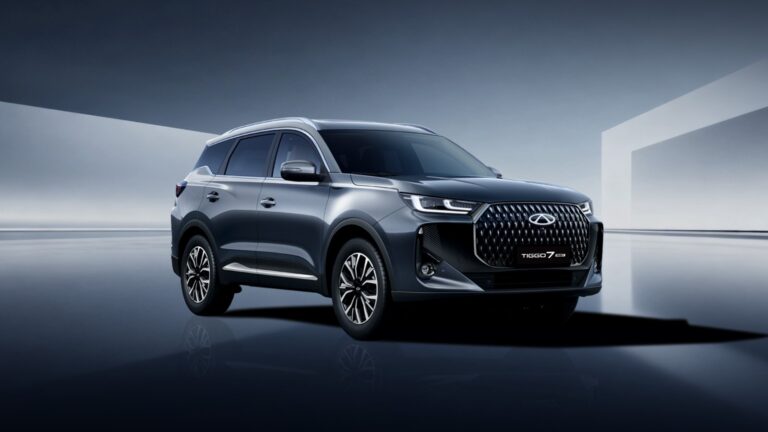
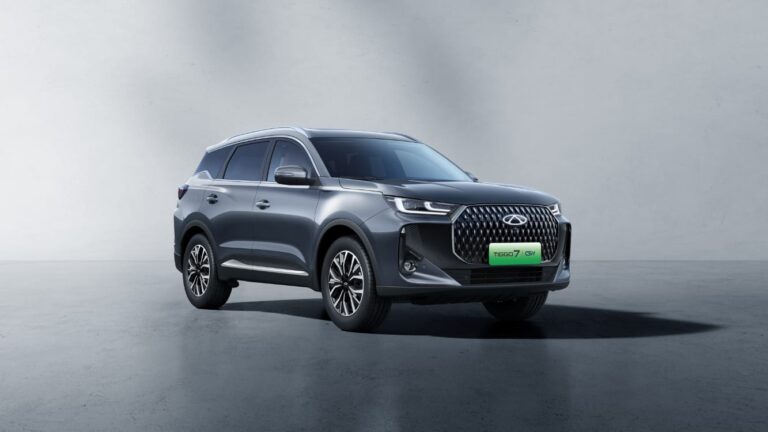
Chery Tiggo 7 PHEV arrives at a defining moment for Pakistan’s mobility landscape. As fuel costs continue to rise and everyday mobility becomes increasingly expensive, it introduces a smarter and more efficient way to move, one that reduces fuel dependence without compromising performance, comfort, or freedom. This dual capability is not just relevant, it is timely.
At a time when both consumers and the country are navigating rising fuel costs, Tiggo 7 PHEV presents a clear and immediate solution. Delivering fuel savings of over 70%, it significantly lowers running costs while contributing to reduced fuel imports. For most daily use, the vehicle can operate in pure electric mode, enabling everyday driving without consuming fuel, while delivering a smoother, quieter, and more cost-efficient experience. It is no longer an alternative, but the most practical and immediate path forward.
This launch reflects Chery Master Pakistan’s structured approach to building the PHEV category, from introducing plug-in hybrid capability with Tiggo 8, Pakistan’s only 7-seater plug-in hybrid D-SUV, to establishing the premium PHEV E-SUV segment with Tiggo 9. With Tiggo 7 PHEV, this technology now scales further, expanding access while contributing to Pakistan’s largest CKD PHEV lineup with local assembly from day one. Since entering the market, Chery Master Pakistan has moved rapidly from entry to disruption, with Tiggo 8 PHEV already reaching customers ahead of promised timelines, challenging conventional industry norms. This reflects a deliberate and accelerated build-up of Pakistan’s PHEV ecosystem.
Accelerating Pakistan’s transition to plug-in hybrid technology, Tiggo 7 PHEV enters a segment still dominated by conventional petrol and hybrid SUVs, where plug-in hybrid options remain limited, positioning itself as a technologically advanced and cost-efficient alternative.
Globally, Chery is the best-selling Chinese SUV brand of 2025, with Tiggo 7 among its leading models. Tiggo 7 is the best-selling Chinese SUVs for four consecutive years and is the most exported model in the lineup, now entering Pakistan as a globally proven product with over one million users worldwide.
Built on Chery’s 5th Generation Super Hybrid (CSH) architecture, the world’s best plug-in hybrid technology, engineered as a purpose-built platform, Tiggo 7 PHEV combines a 1.5 TGDI engine, an 18.3 kWh battery, and a dedicated hybrid transmission to deliver 255 kW of power, 342 horsepower, and 525 Nm of torque, accelerating from 0 to 100 km/h in 8.4 seconds, balancing efficiency with performance.
For everyday driving, it offers 90+ kilometres of pure electric range, allowing most daily commutes to be completed without using fuel. For longer journeys, a combined range of 1,200+ kilometres ensures uninterrupted travel without planning constraints. Combined with lower fuel and maintenance costs, it stands among the most cost-efficient SUVs in its category.
Inside, the vehicle offers a refined and intuitive experience, with a 24.6-inch dual curved display powered by the Snapdragon 8155 chipset, an 8-speaker Sony audio system, ambient lighting, and a panoramic sunroof. Heated and ventilated front seats, driver memory function, and dual-zone climate control with N95 filtration ensure consistent comfort.
Safety is positioned at the highest level in its segment, with 8 airbags and Level 2 Advanced Driver Assistance Systems (ADAS), making it one of the safest SUVs in its category. This is further reinforced by a 5-star safety rating, strong NCAP performance, and recognition as a No.1 ranking brand in J.D. Power studies, reflecting Chery’s commitment to safety and quality.
Further extending its practicality, Vehicle-to-Load (V2L) capability of 3.3 kW allows the vehicle to power external devices.
Chery’s global strength underpins this offering. As China’s number one automotive exporter for 23 consecutive years, with a presence in over 120 countries and more than 19 million users worldwide, the brand brings proven scale and engineering credibility. In Pakistan, Chery is backed by Master Auto Engineering, part of the Master Group with over 60 years of industrial expertise, ranked 4th largest automotive groups in Pakistan.
“This is not about introducing another product into the market. It is about responding to a real and immediate shift in how Pakistan needs to move. With Tiggo 7 PHEV, we are bringing advanced hybrid technology at exactly the right time, making it practical, accessible, and aligned with both consumer realities and national priorities. This is where the transition moves from early adoption to scale, and where hybrid becomes a natural choice for everyday driving in Pakistan,” said the CEO of Master Auto Engineering, Mr. Samir Malik.
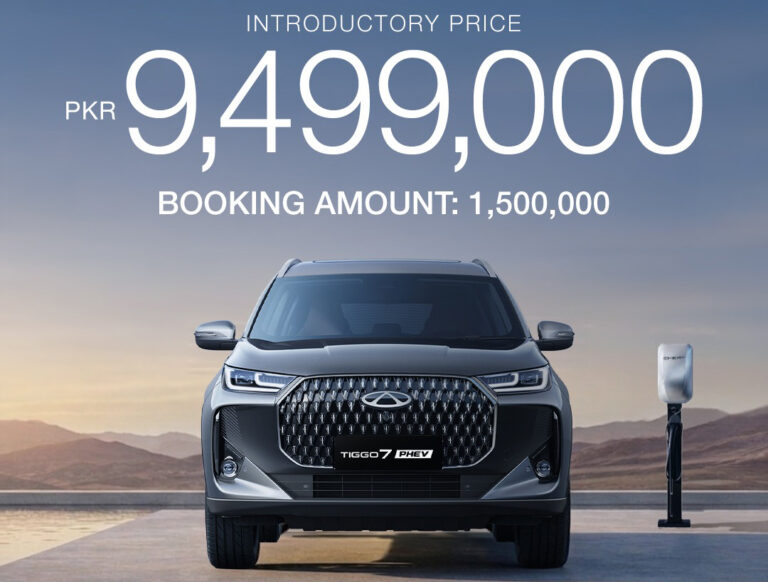
Positioned as a premium 5-seater C-SUV, Chery Tiggo 7 PHEV is now available in Pakistan at an introductory ex-factory price of PKR 9,499,000, with a booking amount of PKR 1,500,000. This is a limited-time price. With demand building and production already underway, Chery Master Pakistan aims to fulfill most customer orders within June 2026, ahead of any potential policy changes. Test drives are available nationwide.
With Tiggo 7 PHEV, Chery Master Pakistan continues to accelerate the country’s shift toward a more efficient, better built quality and sustainable mobility future.
Chery Master Pakistan is all set to launch its C-segment 5-seater plug-in hybrid electric vehicle (PHEV), the Tiggo 7, in Pakistan on April 10, as the company expands its locally assembled new energy vehicle portfolio, building Pakistan’s largest CKD PHEV lineup, and intensifies competition in the SUV market.
The company said the Tiggo 7 PHEV will be offered as a locally assembled (CKD) model from the outset, with deliveries targeted within June 2026, subject to booking volumes.
The launch comes at a time of rising fuel prices in Pakistan, with the company positioning the Tiggo 7 PHEV as a technologically advanced and cost-efficient mobility solution. It said the vehicle can reduce fuel costs by over 70% compared to conventional petrol SUVs when used in pure electric mode for daily driving, while also contributing to lower fuel imports and reduced dependence on imported energy.
Built on Chery’s fifth-generation Super Hybrid architecture, the world’s best plug-in hybrid technology, engineered as a purpose-built platform, the vehicle combines a 1.5-litre turbocharged petrol engine with an 18.3 kWh battery and dedicated hybrid transmission. The system produces 255 kW (342 horsepower) and 525 Nm of torque, with a claimed 0–100 km/h acceleration time of 8.4 seconds.
The company said the vehicle offers over 90 kilometres of pure electric driving range and a combined range of over 1,200 kilometres, positioning it as a dual-use solution for both daily commuting and long-distance travel.
The Tiggo 7 PHEV is also among Chery’s highest-volume global models. The Tiggo 7 series has remained one of China’s best-selling SUVs for four consecutive years and stands among the most exported models in Chery’s global portfolio.
According to the company, the vehicle is equipped with eight airbags and Level 2 advanced driver assistance systems (ADAS), along with features including a 24.6-inch dual display, Sony audio system, and vehicle-to-load (V2L) capability.
Globally, Chery remains China’s largest automotive exporter for over two decades, with operations in more than 120 countries and a global user base exceeding 19 million.
In Pakistan, the brand operates through Master Auto Engineering, part of the Master Group with over 60 years of industrial and automotive experience.
The company said dealership and aftersales infrastructure had been established nationwide prior to launch, with test drives available across its network.
Pricing and booking details are expected to be announced separately on 10th April, while management indicated that early deliveries are being prioritised to pre-empt potential changes in government policy affecting hybrid vehicles.
With plug-in hybrid options still limited in the segment, the Tiggo 7 PHEV enters the market as a technologically advanced and cost-efficient alternative to conventional petrol and hybrid SUVs.
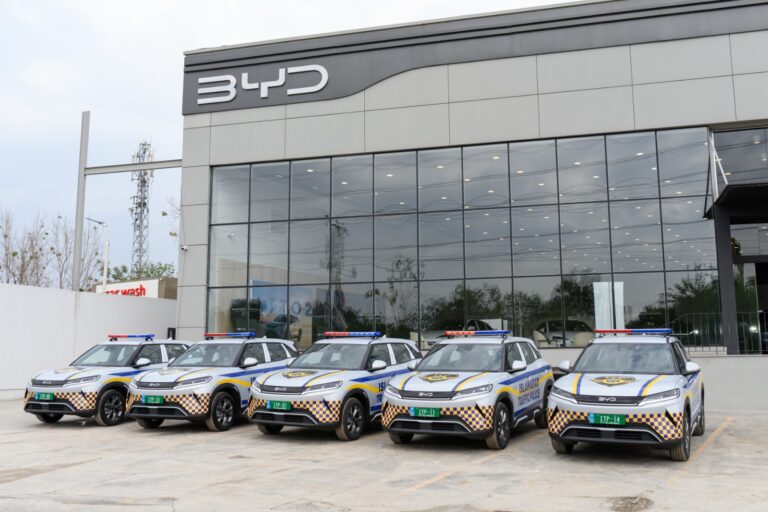
Global NEV leader BYD, through its official partner in Pakistan, Mega Motor Company, has delivered BYD Atto 2 and BYD Sealion 7 electric vehicles to Islamabad Police, marking the first operational adoption of a new energy vehicle (NEV) fleet by a federal department in Pakistan. The induction of these vehicles was formally celebrated through an official ceremony inaugurated by Prime Minister Shehbaz Sharif. Inspector General of Islamabad Police, Ali Nasir Rizvi, and Chief Traffic Officer of Islamabad, Muhammad Sarfraz Virk, were also present, along with other senior officials from the department.
The fleet has been designated for specific operational roles within the police department, supporting traffic patrol and official mobility. Its introduction will enable Islamabad Police to significantly reduce fuel dependency, lower operating costs, and introduce emission-free mobility into daily policing operations across the capital.
The initiative comes at a time when Pakistan is experiencing unprecedented volatility in fuel prices, reinforcing the need for more stable and cost-efficient mobility solutions for institutional use. By transitioning to electric vehicles, Islamabad Police is taking a forward-looking step toward reducing exposure to fuel price fluctuations while improving long-term operational efficiency.
Commenting on the initiative, an official from Islamabad Police said: “We are committed to adopting modern, sustainable solutions that enhance operational efficiency while serving the public responsibly. The integration of electric vehicles into our fleet marks a significant step toward reducing fuel dependency and enabling environmentally responsible policing. It also serves as a practical manifestation of the Prime Minister and Interior Minister of Pakistan’s vision for a greener, more sustainable future, with Islamabad Police playing a leading role in advancing this agenda.
This initiative lays the foundation for the gradual expansion of our NEV fleet as we continue to modernise our operations in collaboration with BYD.”
Commenting on the collaboration, Danish Khaliq, Vice President Sales and Strategy at BYD Pakistan-Mega Motor Company, said the initiative demonstrates how electric mobility solutions can support real-world institutional use cases.
“Islamabad Police’s decision to integrate BYD’s electric vehicles into its operational fleet reflects growing confidence in our new energy mobility solutions for real-world institutional use. As the first federal government department to take this step, it sets an important precedent for public sector organisations across Pakistan.
Beyond sustainability, this transition highlights a broader shift toward smarter fleet economics, where reduced reliance on fuel and lower maintenance requirements can significantly improve long-term operational efficiency. At Mega Motor Company, we remain focused on enabling this shift through reliable, high-performance electric mobility solutions designed for real-world demands.”
BYD’s new energy vehicles bring advanced electric mobility technology to the police fleet, offering zero tailpipe emissions, superior blade battery technology, enhanced safety systems, and lower maintenance requirements compared with conventional vehicles. In addition to environmental benefits, electric mobility presents a significantly lower running cost compared to traditional fuel-powered vehicles, particularly in high-utilisation environments such as public service fleets. The vehicles also enable silent patrolling, an operational advantage particularly suited to urban law enforcement environments.
As public institutions navigate rising fuel costs and explore more sustainable transportation solutions, initiatives such as this highlight the growing role of electric mobility in delivering both financial and environmental value while reducing reliance on imported fossil fuels.
Dear Readers, Pakistan’s long-term economic stability is deeply tied to one critical equation: localization leads to industrialization, and industrialization fuels SME growth.
Across the world, successful developing economies have demonstrated that Small and Medium Enterprises (SMEs) are the backbone of sustainable growth — contributing significantly to GDP, employment generation, and domestic value addition.
Globally, SMEs account for over 90% of businesses and nearly 50% of employment. In Pakistan, SMEs contribute approximately 40% to GDP and employ nearly 80% of the non-agricultural workforce. Despite this strong foundation, their true potential remains underutilized due to structural inefficiencies and policy gaps.
Recognizing the urgency, the government has begun focusing on SME development, particularly in light of rising import bills and mounting pressure on foreign exchange reserves. Pakistan’s imports consistently range between $50–55 billion annually, while exports struggle to surpass $30 billion. This imbalance underscores the urgent need to strengthen domestic manufacturing and reduce dependency on imported goods.
However, several systemic challenges continue to hinder SME-led industrialization.
One of the most critical issues is the imported brand culture. There exists a deep-rooted perception that imported products are superior in quality, even in sectors where local alternatives are available. This mindset drives unnecessary imports and discourages domestic production. Countries such as South Korea and China overcame similar challenges by promoting local brands alongside strict quality improvements and national pride campaigns. Pakistan must adopt a similar approach to shift consumer behaviour toward “Made in Pakistan.”
Another major barrier is limited access to finance. SME lending in Pakistan accounts for less than 10% of total private sector credit, significantly lower than the 20–30% observed in regional economies. Without affordable financing, SMEs cannot invest in technology, scale production, or compete globally. The solution lies in introducing blended financing models, including public credit guarantees, venture capital support, and fintech-driven lending platforms. Additionally, tax incentives and simplified compliance procedures can ease the financial burden.
The digital transformation gap is another pressing concern. Many SMEs, particularly in traditional sectors, remain disconnected from digital ecosystems. Integrating SMEs into digital supply chains can enhance transparency, reduce operational costs, and open access to international markets. Digital platforms can also bridge the gap between manufacturers and consumers, enabling direct market access and improved competitiveness.
Regulatory and administrative barriers further complicate growth. Complex procedures, excessive documentation, and overlapping compliance requirements discourage entrepreneurship. Simplifying these processes, along with ensuring at least 10% SME participation in public procurement, can create immediate demand for local products. Moreover, easing audit requirements for smaller SMEs can significantly reduce operational stress.
Looking ahead, green industrialization and cluster development must become central to policy planning. Around the world, governments are linking industrial incentives with environmental performance and sustainability goals. Pakistan can adopt this model by establishing industrial clusters, shared manufacturing facilities, and plug-and-play zones under public-private partnerships. Such initiatives will reduce capital costs and allow SMEs to scale efficiently.
Equally important is the promotion of technology transfer and joint ventures. A dedicated Technology Transfer Support Scheme should be introduced to facilitate partnerships between Pakistani manufacturers and global firms. This initiative can include financial incentives, matching grants, and policy facilitation for technical agreements. Local industries are ready to collaborate, and with proper government support, structured B2B engagements can connect Pakistani firms with international partners, enabling knowledge transfer and localization of advanced components.
To sustain industrial growth, Pakistan must also introduce long-term financing facilities tailored to sectors like auto parts manufacturing. Access to single-digit interest rates with extended tenures of up to 10 years will allow businesses to invest in modern machinery, tooling, and automation — essential for meeting global standards.
Furthermore, export-oriented cluster development can position Pakistan in niche global markets such as automotive aftermarket parts, EV components, and precision engineering. With shared infrastructure, testing facilities, and export facilitation, these clusters can significantly enhance competitiveness and export volumes.
The Way Forward
Localization is not just an industrial policy — it is a national economic necessity. Strengthening SMEs through targeted financing, regulatory reforms, digital integration, and industrial clustering will reduce imports, boost exports, and generate large-scale employment.
If implemented effectively, SME-driven industrialization can transform Pakistan from an import-dependent economy into a production and export-oriented nation. This shift is essential not only for economic resilience but also for securing a sustainable and prosperous future.
By @mashood-khan, published in Automark’s April-2026 edition. Director – Mehran Commercial Enterprises Expert Auto Sector / Former Chairman PAAPAM / Director – SMEDA
Dear Readers!!! Eid Mubarak 2026 to all our Automark family! We wish this blessed occasion to bring prosperity, unity, and energy to the automotive industry in Pakistan. We shall continue to drive the industry forward with innovation, partnership, and determination. We wish you all joy, success, and growth. Eid Mubarak!
The automotive industry of Pakistan is once again gaining steam as production is underway, market sentiment is cautiously optimistic, and new entrants are redefining the competitive landscape of the industry. However, underlying all of this is the larger concern of whether we are actually witnessing real change or merely another round of cyclical upswings? This article is born of exactly the same concern. It is not merely an analysis of what is happening today but rather a contemplation of what direction the industry is forced to take if it is to achieve sustainability in the long run. For in today’s rapidly changing global environment, success is no longer measured by what is being produced but by how it is being produced. “Production is not just about assembling vehicles; it is about building a nation’s industrial backbone.
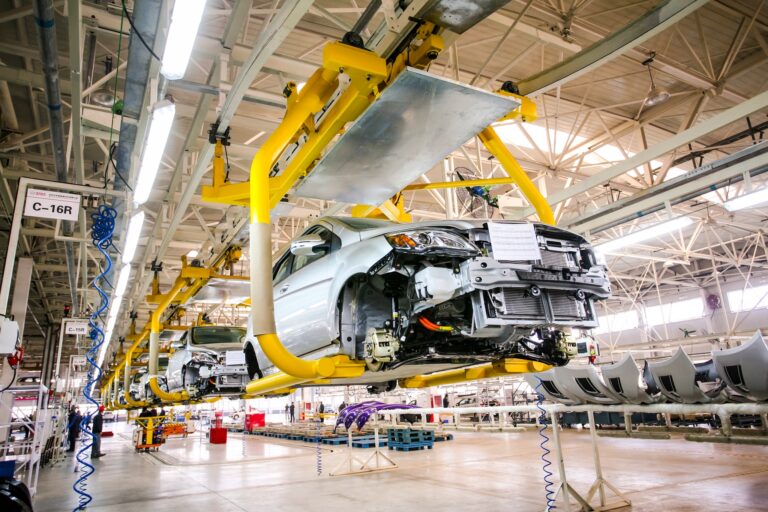
Background: A Sector of Strength, Yet Structural Limitations: The automotive industry of Pakistan has long been regarded as one of the most important sectors contributing towards the development of the industrial sector of the country. The fact remains that the country has gained decades of operational experience, a base of original equipment manufacturers, and a continuously expanding vendor base, making it a place with all the necessary ingredients of a robust manufacturing environment. But the harsh reality is that there is a fundamental lack of balance in the structure of the automotive industry of the country, as a substantial part of it still remains operational under assembly-based models, relying heavily on imported parts. The manufacturing processes are still largely labor-intensive, while the use of technology and real-time data is still in its development phase. This makes it an industry that is operational but not necessarily optimized. There is a fundamental difference between having a factory and having a functioning manufacturing ecosystem, and it is exactly here that the opportunity lies as well as the urgency. “We have built production capacity, but we are yet to unlock production intelligence.”
Why This Conversation Matters Today: The pressing need to achieve this change is being driven by a number of converging factors. On a global level, the automotive sector is witnessing a significant change in the form of smart manufacturing. The digital, automated, and analytical aspects of manufacturing can no longer be considered peripheral; they have to be the core. Those who do not adopt this change will be forced to lag behind in the highly competitive global market. On a national level, the market scenario is witnessing a change. The entry of new global players into the market has forced a change in the level of competition. The customer today is more informed, more demanding, and less willing to compromise. This is a changing environment that needs a review not only of what is being manufactured, but how it is being manufactured. The economic environment adds another layer to this situation. Fluctuating currencies, increasing costs, and import issues have all made efficiency a key factor for success. In this environment, traditional manufacturing processes are not effective. The industry must change to a more efficient, more intelligent, and more resilient model.
Production as a Symphony: In order to fully grasp the degree of transformation needed, it is necessary to reconsider the concept of production. This is no longer a linear process; rather, it is a highly orchestrated process—a symphony. In the symphony of production, the human element is the performer, the processes are the instruments, technology is the conductor, and leadership is the composer. When each of these is working together properly, the result is efficiency, quality, and uniformity. When they do not, inefficiencies and disruptions ensue. “A factory does not achieve excellence through machines alone, but through the harmony of its entire system.”
The Shift Toward Smart Manufacturing: The move from conventional production systems to smart manufacturing systems is a paradigm shift in terms of mindset. Conventional production systems are, more often than not, reactive in nature, focusing on solving problems only after they have occurred. Such systems are largely based on manual reporting systems, operate in silos, and focus on quality inspections at the end of the production line. Smart manufacturing systems, however, are proactive in nature, focusing on anticipating problems by using real-time data, integrating various operations, and infusing quality at every step of production. This is not meant to replace human effort but to enhance it by providing it with the tools it needs to be more effective in its decision-making processes. Smart manufacturing is all about creating a system that is not only efficient but also intelligent.
The Pillars of Transformation: The foundation of a successful transformation into a smart manufacturing system depends on several important aspects. Among these, the integration of data is the most important. In the modern manufacturing environment, data plays the vital role of the central nervous system. In real-time, the ability to monitor key performance indicators such as output rates, downtime, and efficiency enables the system to take immediate action. However, the second important aspect of a smart manufacturing system is the concept of built-in quality. In the modern environment, quality should be considered a part of the process, rather than a final check. This implies the need for standardization of processes, error-proofing, and a culture of “doing it right the first time.” Furthermore, the workforce should also be considered. In the factory of the future, individuals should be able to understand the system in which they work, in addition to being competent in their own area of work. Continuous training and multi-skilling are critical to the development of such a workforce. In addition, efficiency has to be redefined. The lean approach, which focuses on waste reduction and the optimal use of resources, has to be embedded into the operations. Moreover, the production systems have to be flexible enough to enable manufacturers to respond to changing market requirements.
Leadership as the Catalyst: No such transformation is possible without the presence of good leadership with a vision to lead the way. The leadership required in the automotive industry is no longer just about managing the day-to-day activities of the business. They must be the architects of the systems they lead, guiding the future course of the business. This requires strategic investment in technology, culture, and human capital as a priority. Leadership is not just about delivering today’s results; it is about laying the foundations to deliver tomorrow’s results. “True leadership is measured not by output, but by the systems it creates and the people it develops.”
Localization: The Foundation of Sustainability: An integral part of this process is the establishment of a strong supply chain in the region. Without localization, the full benefits of smart manufacturing cannot be achieved. For instance, reliance on imports is not only costly but also compromises the industry in periods of economic uncertainty. Enhancing the quality of the supply chain and encouraging the production of parts and other materials in the region is an integral step towards establishing a self-sustaining industry. Localization is not only an economic imperative but also a necessity for the growth of the industry.
The Role of Integrated Decision-Making: In the modern production environment, the speed and efficiency of the decision-making process play a determining factor. This is the idea behind the concept of a centralized production war room. This concept brings together real-time data, real-time teams, and real-time problem-solving to create a system where production decisions can be made quickly and efficiently. This is the kind of integration necessary to ensure production is not just efficient, but also flexible. “In today’s manufacturing landscape, the speed of decision-making defines the speed of success.” The road to smart manufacturing is not without obstacles. The initial investment costs, lack of organizational change, lack of skills among the labor force, and inconsistencies in policies all pose major challenges. These challenges, however, should not be considered obstacles, but rather as chances to create a more structured industry. Every challenge is a gap, and closing the gap will only make the system better.
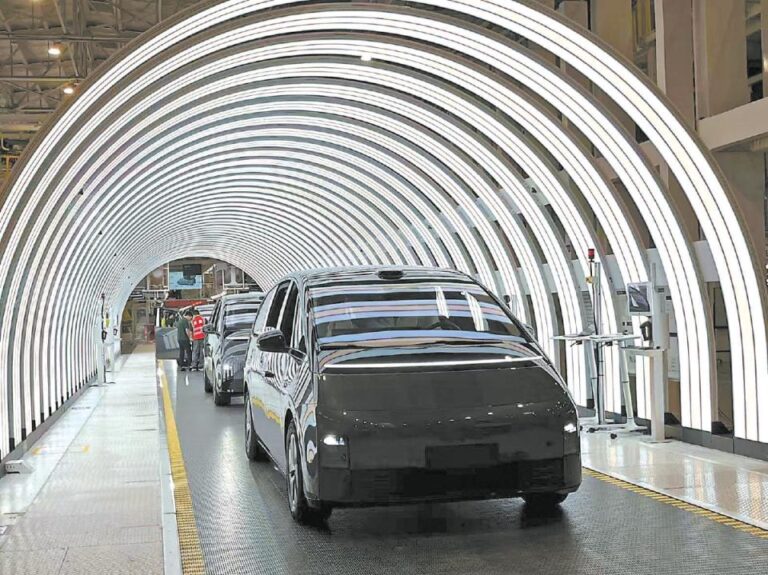
A Vision for the Future: The future of the automotive industry in Pakistan is not just beyond the assembly lines, but a vision for a digital factory, an intelligent factory, a smart factory, a factory with a skilled, enabled, and globally aligned workforce, a factory where products are not just assembled, but engineered and manufactured with pride. To achieve this vision, there is a need for collective efforts, alignment, and commitment to excellence.
Orchestrating the Future: The evolution of the automotive industry in Pakistan is not a matter of possibility but of intent. The world is moving forward at an unprecedented pace, and the choice we are presented with is clear: evolve and lead, or stagnate and follow. The idea of a “Symphony of Production” embodies the concept of evolution. It is “a vision of harmony, integration, and excellence in which every part of the production system is working together towards a unified purpose.” “Excellence is never accidental; it is the result of deliberate design and disciplined execution.” The time has come to transcend fragmented initiatives and develop a cohesive, intelligent, and forward-thinking manufacturing environment. Because at the end of it all, the factories we construct today are going to shape the economy of tomorrow.
Take way from this article:
Smart manufacturing is redefining Pakistan’s automotive landscape by integrating digital technologies, automation, and data-driven decision-making into production systems. The outcome is higher efficiency, improved quality, reduced costs, and enhanced global competitiveness. It enables faster response to market demands, strengthens supply chain resilience, and builds a skilled, future-ready workforce. For industry leaders and stakeholders, the message is clear: embrace innovation, invest in advanced technologies, and prioritize continuous learning. Those who adapt will lead the transformation, while those who hesitate risk falling behind. The future belongs to organizations that are agile, intelligent, and committed to sustainable growth through smart manufacturing excellence.
This exclusive article has been published in Automark Magazine’s April-2026 printed edition. Written by @muhammad-rafique
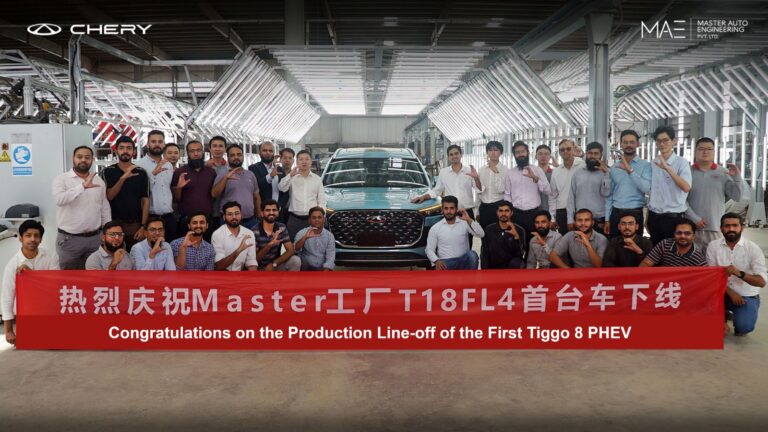
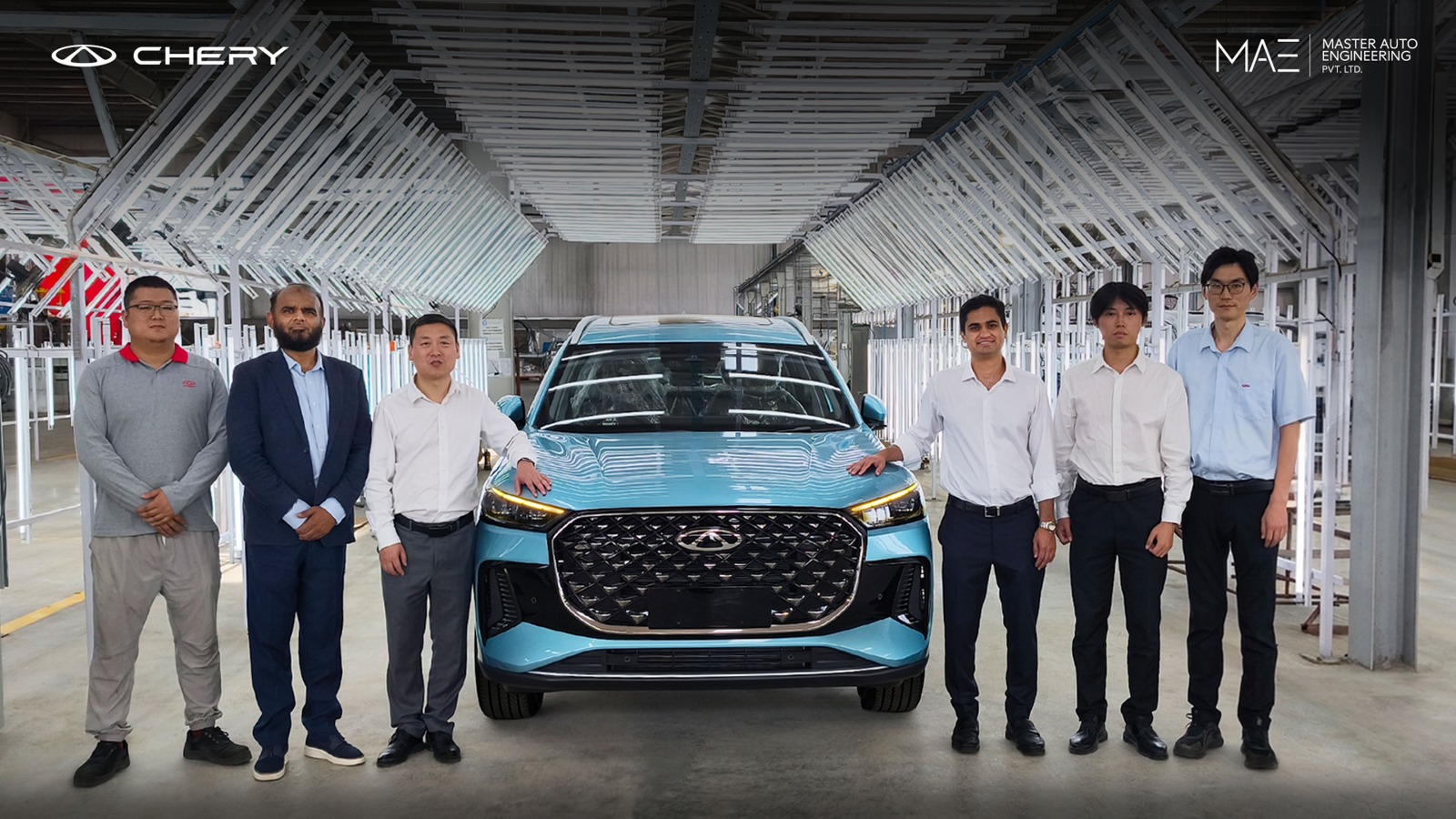
Chery Master Pakistan has successfully rolled off the first unit of Tiggo 8 PHEV, marking one of the fastest transitions from brand entry to production in Pakistan.
Backed by the manufacturing strength and industrial legacy of the Master Group, the milestone reflects the ability to execute at pace without compromising global quality standards, with production readiness achieved in record time and deliveries aligned ahead of schedule.
The first unit was lined off in the presence of Chery China’s core technical team, including Mr. Wang Xueyong, Chief Technician at Chery Automobile, recipient of the State Council Special Government Allowance, and National Technical Expert, ensuring global engineering standards, precision, and quality from day one.
Start of Volume Production (SVP) has commenced, with CKD units undergoing road testing and rigorous evaluation by Chery’s global technical teams, including testing across a 1.5 km track with over 20 test patterns to validate readiness.
Positioned as Pakistan’s only seven-seater plug-in hybrid SUV in the premium D-segment, designed for modern family mobility and offered at PKR 11,299,000, the market typically offers C-segment five-seater hybrids with compromises in size, capability, and true electric driving, typically limited to FWD configurations and without a full safety and ADAS suite. Tiggo 8 PHEV AWD brings all of it together as a high-value proposition.
In a market where Pakistan remains fuel import dependent, Tiggo 8 PHEV presents a practical shift towards reduced fuel consumption, delivering everyday efficiency and meaningful savings while maintaining long-distance usability.
Powered by Chery Super Hybrid (CSH), Tiggo 8 PHEV combines a high-efficiency 1.5 TGDI engine with thermal efficiency of around 44.5% and a dual motor setup, delivering AWD, a combined output of 496 horsepower and 735 Nm of torque. With up to 90 km electric range and 1200 km combined range, it enables daily electric driving and long-distance travel.
The vehicle features a premium three-row cabin with a 15.6-inch infotainment system and 12-speaker Sony audio, along with the Queen Co-Pilot zero-gravity passenger seat offering a 10-point massage system with five modes and three intensity levels, plus heated and ventilated front seats for enhanced long-distance comfort.
Safety is reinforced with five-star global ratings, 10 airbags, and advanced driver assistance systems (ADAS), positioning it as the safest SUV in Pakistan.
Commenting on the milestone, Samir Malik, CEO of Master Auto Engineering, said: “This marks a significant progression for Pakistan’s automotive industry. Achieving production readiness with world-class quality in such a short time was a challenge we committed to from day one, and delivering ahead of schedule reflects the level of execution we hold ourselves to. The strong market response signals growing confidence in a new direction for mobility, driven by technology, quality, and progress.”
In Pakistan, Chery is introduced by Master Auto Engineering, part of the Master Group, a trusted name for over 60 years, in partnership with Chery Automobile, China’s No.1 automotive exporter for 23 consecutive years. The collaboration brings together global engineering and local manufacturing strength across multiple powertrains, including ICE, hybrid, BEV, and plug-in hybrid systems.
Chery Master Pakistan operates a nationwide 3S dealership network with 10 facilities, planned to expand to 20 by 2027, guided by the HELLO CHERY approach prioritizing customer-first readiness across product, service, and infrastructure.
On the line-off ceremony, Syed Asif Ahmed, Director Marketing & Sales said: “We are excited to deliver Tiggo 8 PHEV as promised. Next in line is Tiggo 9 PHEV while we prepare to open bookings of Tiggo 7 PHEV from April 2026. We are gearing up to meet most of our demand within June before any change in policy”
With volume production ramping up and vehicles ready for delivery to early customers ahead of schedule, Chery Master Pakistan is set to play a defining role in shaping the future of mobility on Pakistan’s roads.