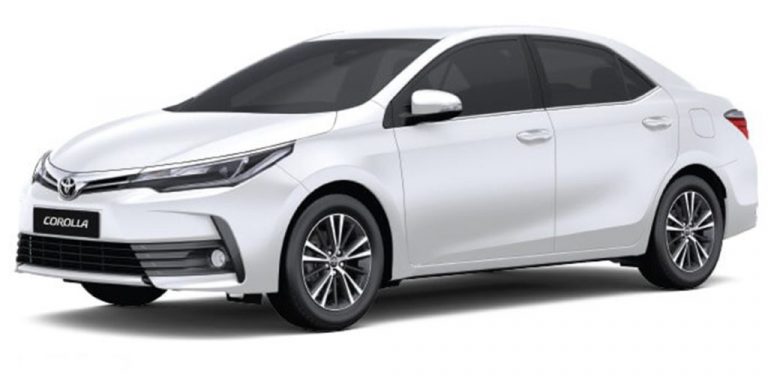
DUE TO POOR SALES IN THE EXECUTIVE SEDAN SEGMENT AND MORE AND MORE CUSTOMERS BUYING COMPACT AND MID-SIZED SUVS, TOYOTA HAS ANNOUNCED THE DISCONTINUATION OF THE COROLLA ALTIS FROM APRIL, 2020.
A rather shocking news, but Toyota will be discontinuing the Corolla Altis executive sedan in the Indian market from April 2020, when the BS-VI emission norms come into effect. Toyota also had plans of sharing the Corolla Altis with Maruti Suzuki as part of product sharing deal where a Suzuki-badged Corolla Altis would have sold through the Nexa outlets. With this decision, a Suzuki-badged Corolla Altis will never see the light of day either.
With more and more consumers moving to compact SUV and mid-size SUV segments, the sales of executive sedans have seen a sharp decline. Even Suzuki had second thoughts about how successful a Suzuki-badged Corolla Altis would have been in a dying segment of cars. Toyota was also doubtful that the brand strength may not stretch enough to be able to garner healthy margins.
In the financial year 2019, all the executive sedans witnessed a decline in sales by 30%. This includes the Toyota Corolla Altis, the Hyundai Elantra and the Skoda Octavia. Ironically though, Toyota sold 2,783 units of the Corolla Altis, finishing at the top of the segment. However, the overall numbers are still quite small and there does not seem to be much potential from a Suzuki-badged Corolla Altis as the segment itself has not been doing good at all. Toyota therefore sees no viable reason to upgrade the car or bring a new version of the sedan to India.
The Toyota Corolla Altis comes with a 1.4L diesel engine and a 1.8L petrol engine. With the BS-VI emission norms kicking in next year, there was no point upgrading the BS-IV compliant Corolla Altis to the BS-VI specifications as that would call for heavy development costs and the sales anyway aren’t enough to justify that. Also, the diesel Altis constituted a significant portion of sales for the Altis. With the diesel gone, there was no reason to keep the Corolla Altis anyway.
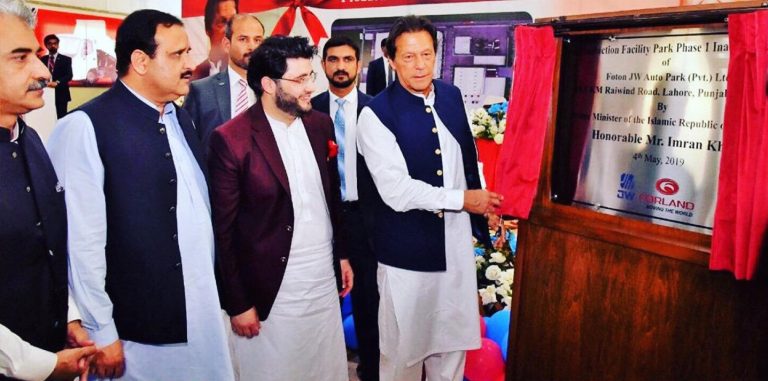
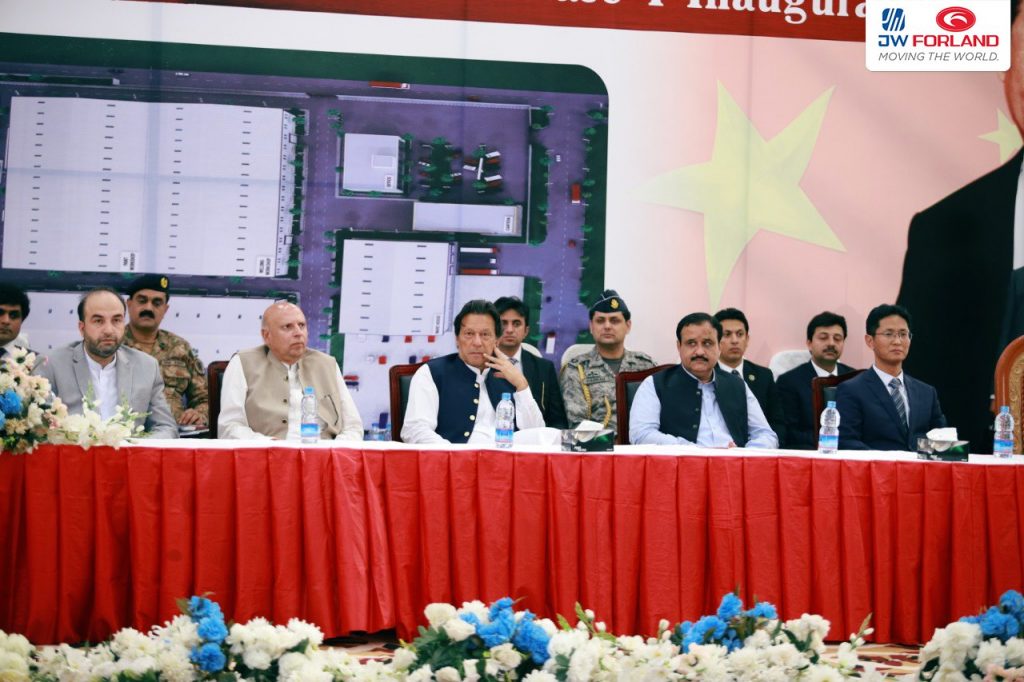
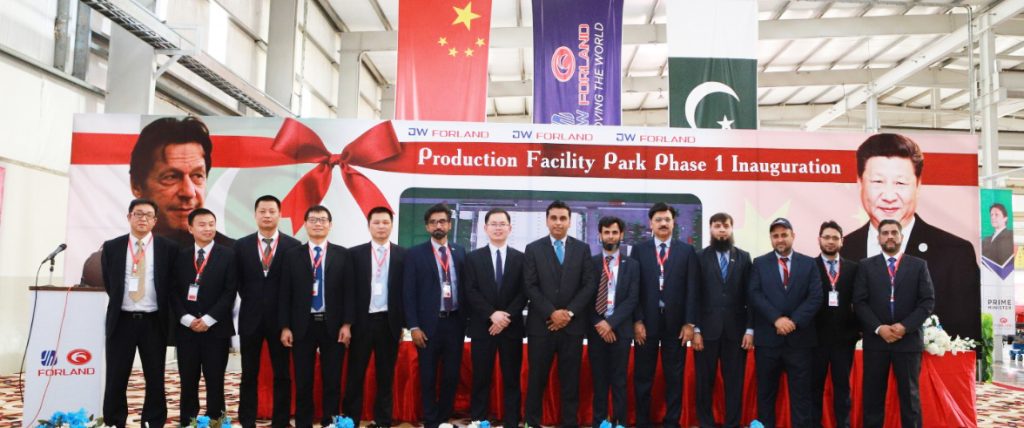
On last week Honorable Prime Minister of Pakistan Imran Khan inaugurates phase 1 production facility of JwForland truck assembly plant in Lahore. CM Punjab, Governor Punjab, Information Minister and many other high level government officials were with him on that special visit and on ceremony.
Imran Khan says Pakistan will soon be exporting ‘Pakistan-made’ vehicles. He has stated that Lahore’s JwForland Manufacturing facility would roll out autos totally Made in Pakistan, with even their spares being constructed regionally.
Addressing the ceremony right here, the premier lauded Faisal and Javed Afridi, the owner of JwForland Pakistan, for his proactive efforts to herald foreign investment and technical assistance for increasing the manufacturing facility’s operations.
He stated that Pakistan wouldn’t solely meet its automobile necessities however it should additionally export Pakistan-made autos. “We now have to take away all obstacles in approach of international traders, as solely international funding can resolve Pakistan’s financial disaster”, stated PM Khan. He additionally stated that he was trying ahead to the manufacturing of electrical automobiles within the JW Forland plant within the in future which would “resolve Lahore’s air pollution downside”.
South Korea’s transport ministry on Sunday issued recall orders for 11,500 units of 58 different imported cars, including those from BMW, Volkswagen and Honda.
The Ministry of Land, Infrastructure and Transport said 2,461 units of Germany-based carmaker BMW’s 320d and 116i models will be recalled, citing battery problems.
Around 2,000 units of 22 different BMW models, including the 523i, will also be recalled over heater issues.
Another 2,000 units of seven Volkswagen models, including the Golf 1.4 TSI, will be recalled due to potential flaws in their transmissions.
Four models of Audi, including the TT Coupe 45 TFSI Quattro, will be recalled for using defective air bags produced by Japan’s Takata.
The recall involves defective inflators in Takata air bags that may deploy improperly during crashes, shooting metal fragments into the driver and passengers.
Two models of Japan-based Honda, including the Accord, will also be recalled over the air bag issue, covering some 1,300 units. (Yonhap)
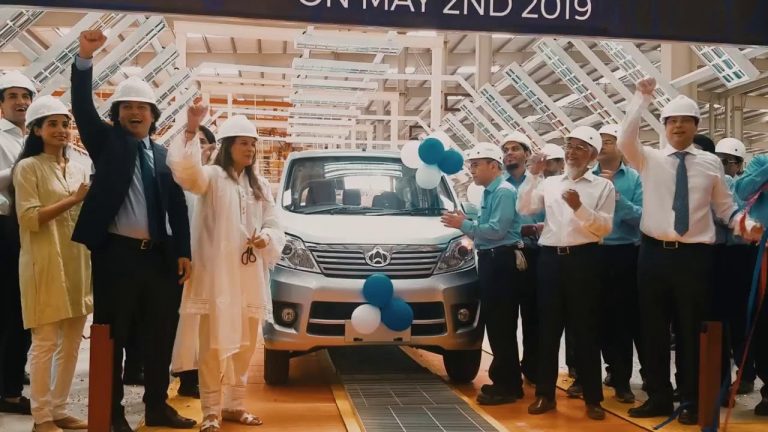
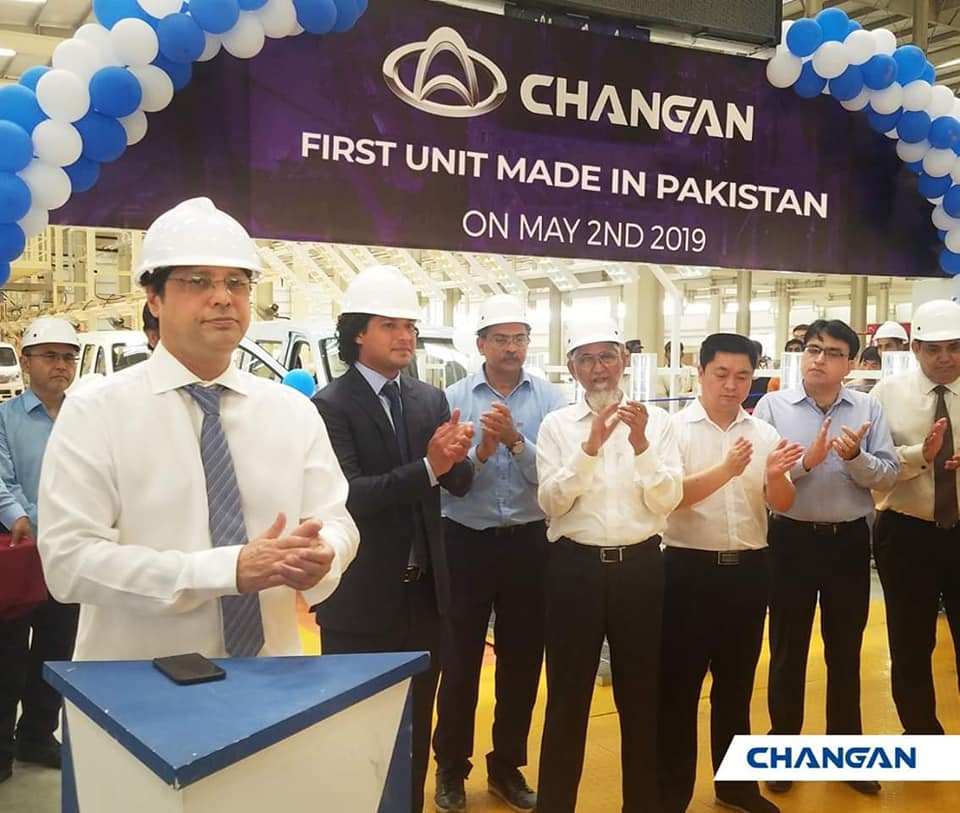
Karachi, May 03: Master Motors Ltd., has rolled out its first locally assembled vehicle Changan Karvaan on May 2nd, 2019 in just 13 months, which is record time for any Greenfield auto manufacturing plant.
“The ground breaking ceremony of the production plant was held 13 months ago on 21 March 2018 in the presence of Mr. Sardar Muhammad Arshad Khan Leghari, Minister of Industries and Production. This feat was possible due to untiring efforts and commitment of experienced team of engineers and workers of Master Motors with technical collaboration and assistance from Changan International,” said CEO MML, Danial Malik.
“State of the art latest equipment has been installed in the environmentally friendly production plant, which has the capacity to produce 30,000 units annually and follows the Changan quality systems to ensure the products would meet the international standards for export,” said Danial.
“We have designed it to achieve phase-wise automation, with the last phase resulting in full automation by 2025,” he added.
Changan Karvaan van is a luxurious 7-seater van with Pakistan’s most powerful 1000cc engine, Dual A/C and 3 years/60,000km warranty making it ideal for family’s daily commute and long distance road trips,” said Danial. “We have already been getting overwhelming response and almost all the production volume for next month have been booked” he added.
It is pertinent to mention here that Master Motor Ltd is a joint venture between Master Motor Corporation Ltd. and Changan International Corporation. The company announced local production of three Changan vehicles in Pakistan, namely Changan M8 Pickup, Changan M9 Pickup, and Changan Karvaan van, followed by full range of SUVs, MPVs and other passenger vehicles.
“All of 3S dealer partners are highly excited to serve the customers in all the major cities. We have made sure that all the dealers would have adequate spare parts stock as well as trained technicians to provide after sales support,” said Danial.
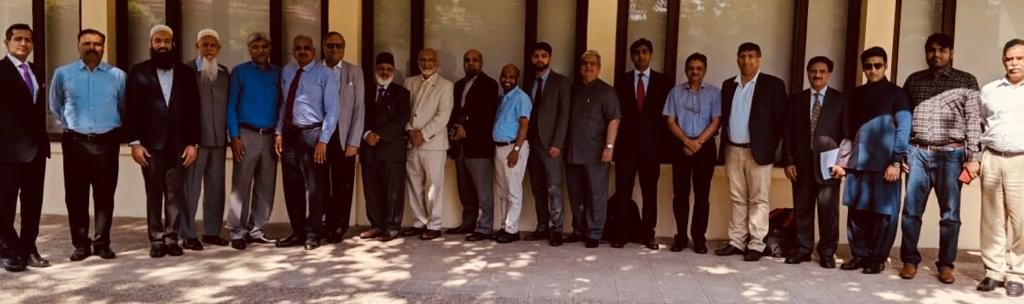
Islamabad 2nd May: A meeting of the Pakistan Aerospace Council was held today at the Islamabad Club. The meeting was attended by the general body members of the Pakistan high-tech Manufacturing community engaged in exports of high valued goods to EU and US markets.
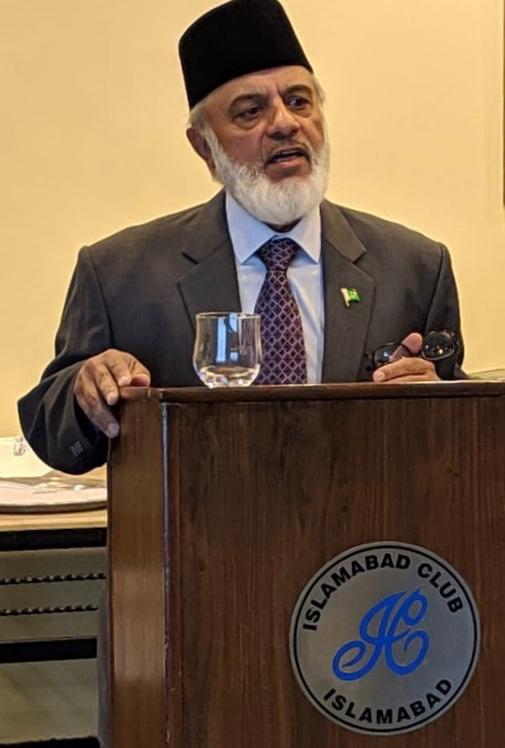
Dr. Haroon Qureshi, President, Pakistan Aerospace Council speaking at Meeting
During the deliberations of the Council, it was agreed aerospace market is growing year on year and high Tech Manufacturing offers great export potential for foreign exchange earnings for Pakistan. The council unanimously stressed that the government of Pakistan must create a policy for advancement of the aerospace related product manufacturing sector of Pakistan. The meeting called upon the Board of investment, Engineering Development Board and Ministry of Commerce to Link Pakistan’s high value added Engineering sector to global market through creation of hightech industry clusters, trade facilitation, taxation and levies measures.
PAAC Members who attended General Body Meeting
President, Pakistan Aerospace Council, Dr. Haroon Qureshi outlined the activities of the council during the past three years and contributions of its members for the advancement of science and technology, through collaboration with universities , national research organizations as well as manufacture of a diverse range of products for the national and global markets.
Dr. Haroon highlighted the need for establishment of hightech manufacturing clusters in line with international trends which could then work to host global tech giants for meeting the research and development needs by utilising Pakistani talent and youth. He brought into sharp focus the large number of technical universities in and around Islamabad and the high density of tech manpower in this valley and how this combination together with high speed, un-interrupted internet, good quality air and high class road infrastructure could transform this area into a world class technology hub.”
Michio Suzuki founded the Suzuki Loom Works in the small seacoast village of Hamamatsu, Japan in 1909. Business boomed as Suzuki built weaving looms for Japan’s giant silk industry. In 1929. The company’s first 30 years focus was on the development and production of these machines.
Michio Suzuki anticipated lack of a future in looms, he made a decision to start a consumer oriented business. After having considered the company’s technical strengths and the direction of the Japanese economy, he focused on the automobile industry. Michio had a great deal of confidence. “In the near future, it is sure that the era of automobiles will come.”
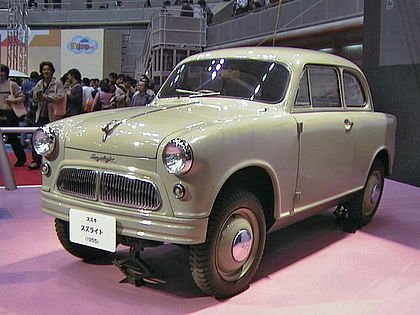
He started the car project in 1937 and within two years Suzuki had completed several compact prototype cars. These first Suzuki motor vehicles were powered by a then-innovative, liquid-cooled, four-stroke, four-cylinder engine. Unfortunately the world war II was started and production plans for Suzuki’s new vehicles were halted as government declared civilian passenger cars a “non-essential commodity”. After the War,Suzuki went back to producing looms again.But development of car was also restarted, simultaneously at last Suzulight, the first car of Suzuki was introduced in April 1955with a front-engine, rear-wheel-drive. The first Suzuki was closely based on the Lloyd 400.
This was the beginning of a great leap forward. In 2016, Suzuki was the eleventh biggest automaker by production worldwide. Suzuki has over 45,000 employees and has 35 production facilities in 23 countries and 133 distributors in 192 countries. The worldwide sales volume of automobiles is the world’s tenth largest, while domestic sales volume is the third largest in the country.
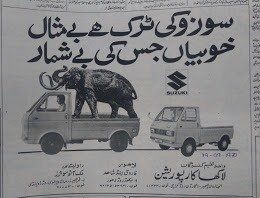
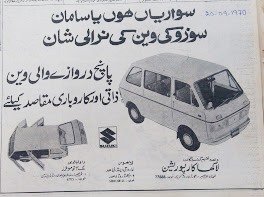
Suzuki vehicles first appeared in Pakistan market during the mid-70s through CBU imports from Japan. In 1980 Awami Autos Limited started assembly of Suzuki Pickup and small passenger vans. Pak Suzuki Motor Company Limited,was officially formed in August 1983 as a joint venture between Pakistan Automobile Corporation Limited (PACO, represented by the Government of Pakistan) and Suzuki Motor Corporation (SMC) Japan. The company started commercial production in 1984. Pak Suzuki was the first passenger car manufacturer in the industry when the commercial production started in 1983/84. Suzuki FX was the first vehicle to be produced with an 800cc engine and was priced just around PKR 45,000 for a brand new car. The FX was almost three times cheaper than most vehicles available in the market back then. And even after 30 years of its life in our market, it is surviving strong and holds a decent resale value too. However within three years of introduction price increased up to Rs. 87000/-.
Pak Suzuki was privatized in September 1992 while SMC progressively increased its equity thus acquiring the stake of PACO. The company today is the largest player in the industry with over 50% market-share and a virtual monopoly in the ever growing small car market.
Now Suzuki vehicles enjoyed good sales due to a good reputation, low maintenance cost, and no competition since imports were halted in favor of local production already. For up to 6 years, locally produced Suzuki vehicles were not available in metallic colors; paint quality was below par, optional trims were not available for most models but still the cheaper yet easy to maintain Suzuki vehicles sold quite well.In 2001, Suzuki started to roll out factory fitted CNG vehicles and in the same year, SMC increased its equity to 73% in Pak Suzuki. In 2002, Suzuki launched a facelift for Alto hatchback.
After the new auto policy 2016-21 was announced, Pak Suzuki expressed its concerns over the policy and termed it ‘devastating.’ They also indicated to shelve their investment plans in Pakistan and further demanded that the government should revisit the auto policy. What Pak Suzuki needs to understand is that they cannot sell the 30-year-old obsolete cars till eternity. But it remains the fact that these obsolete cars make up nearly 85% of Suzuki’s sales in Pakistan. Up till now Pak Suzuki has sold over two million units in Pakistan.
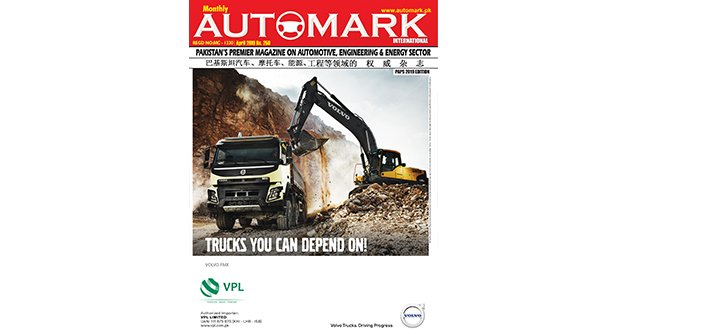
by Anwar Iqbal, this exclusive article has been published in Automark Magazine’s April-2019 printed edition.
PM Imran Khan’s visit to Beijing brought another investment
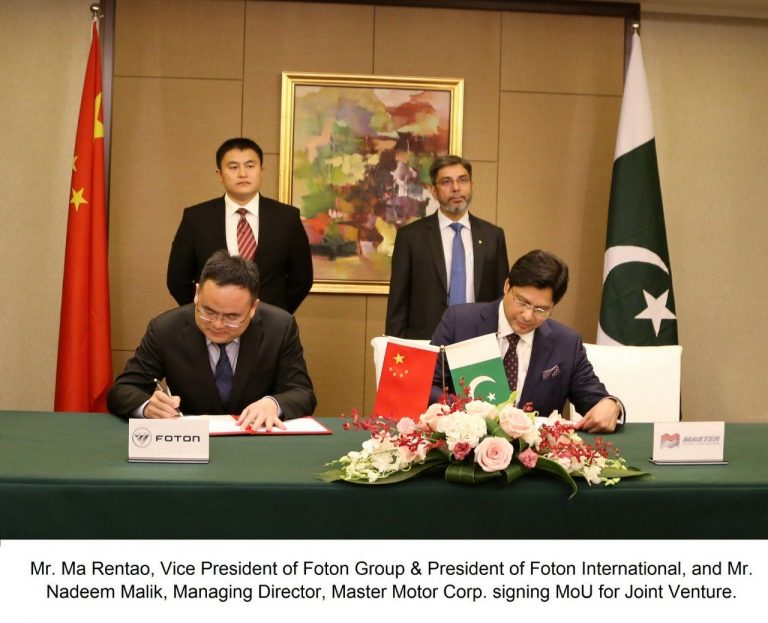
Karachi, April 29: Foton International Trade Co Ltd, Beijing signed an MOU to inject investment in the form of a Joint Venture (JV) with their local partner Master Motor Corporation (Pvt.) Limited (MMCL) who has been manufacturing, selling and providing after sales of Foton Brand of vehicles since 2003 under technical licensing agreement. In the recent visit of Prime Minister Imran Khan to Beijing for the “Belt & Road (B&R)” initiative he visited the factory of Beiqi Foton whose partner in Pakistan M/s Master Motor Corporation has sold more than 17,000 commercial vehicles. The joint venture (JV) with Master Motor Corporation (Pvt.) Limited will result in the injection of multimillion dollars, with a transfer or technology to set up a state of the art production facility in the National Industrial Park near Port Qasim in Karachi.
The JV plans to introduce the complete range of FOTON vehicles including Passenger Vehicles (TUNLAND, TOANO, VIEW CS2, SAUVANA), Light and Heavy Commercial vehicles (AUMARK S, AUMARK C, AUMARK TX, AUMAN EST and AUMAN DUMPER) and Foton Busses.
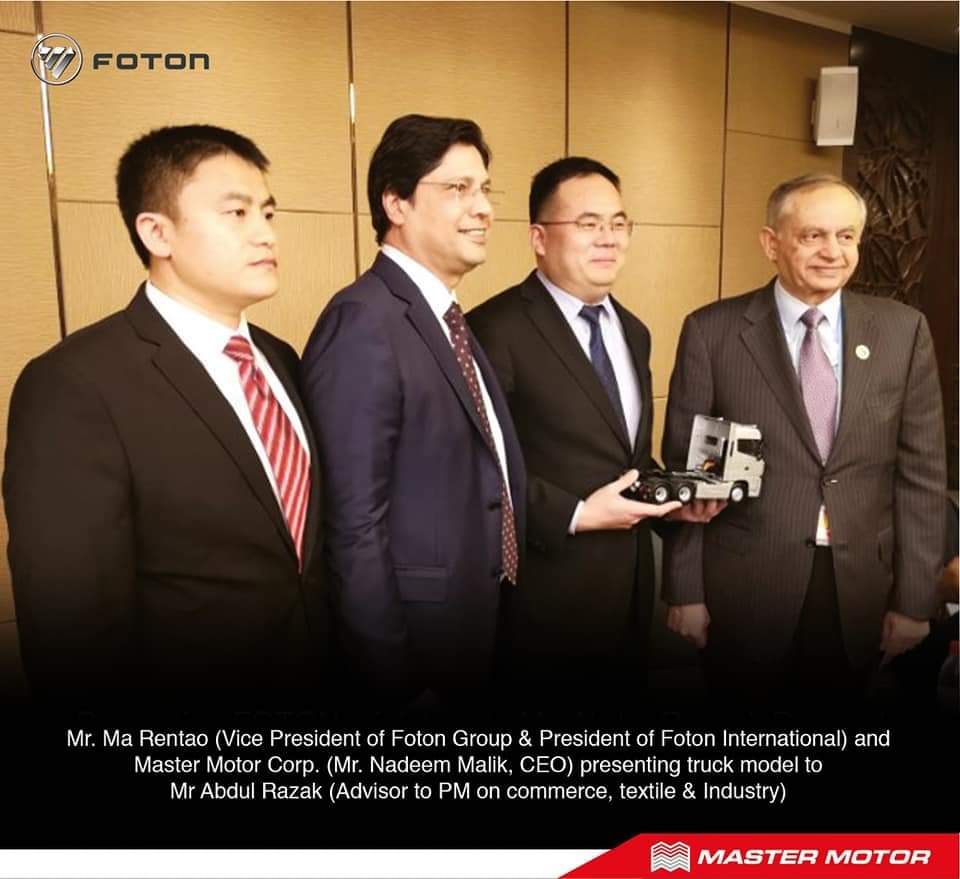
The agreement was signed in the presence of Advisor to PM on commerce, textile & Industry Mr. Abdul Razak Dawood. The MOU was signed by Mr. Ma Rentao (Vice President of Foton Group & President of Foton International) and Mr. Nadeem Malik (Managing Director of Master Motor Corp.).
“The strategic alliance will take both the stakeholders to another phase of successful long term relationship by bringing the latest technologies under the Foton umbrella to Pakistan,” said Mr. Ma Rentao.
Master Motor has been assembling commercial vehicles for the past 16 years bringing the latest generation of commercial products to Pakistan including the vast range of Foton vehicles.
“Together with FOTON, we can tap the market potential while leading on the technology front and offering latest technologies with all safety features to deliver unprecedented value to the customers. This joint venture would bring significant foreign direct investment to Pakistan, and will create more than 8,000 direct and indirect jobs, which would eventually improve the living standards of people in the country,” said Mr. Malik
KUALA LUMPUR (Reuters) – Malaysia’s national carmaker Proton has secured 1.88 billion ringgit ($455.10 million) in banking facilities from China Construction Bank to fund expansion around the region, it said in a statement late Friday.
The loans are earmarked for Proton’s growth plans to be the number one automotive brand in Malaysia and number three in ASEAN by 2027, the company said.
“Expansion to foreign markets is critical for sales growth while obtaining financing allows the company to invest in the many projects required to turn Proton into a truly global automotive brand,” Chairman Syed Faisal Albar said in the statement.
In August, Zhejiang Geely Holding Group Co Ltd which owns 49.9 percent of Proton, had agreed to extend its existing partnership with the carmaker to upgrade its line-up of cars and help expand Proton’s presence in China and other international markets.
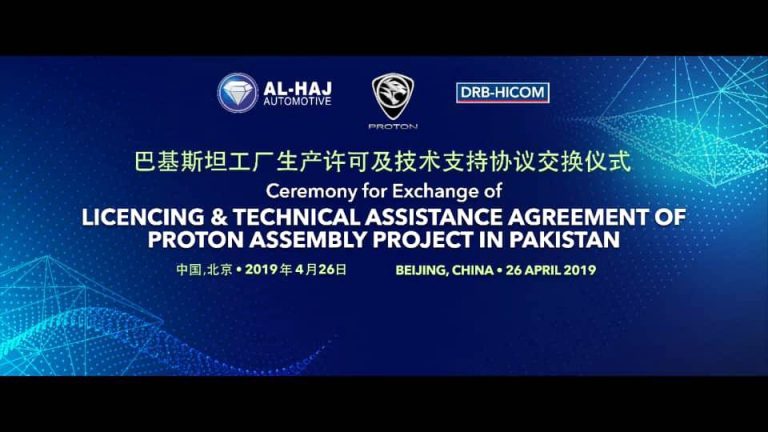
Proton said it also exchanged documents with Pakistan’s Alhaj Automobile in Beijing, where Malaysia’s prime minister is attending the Belt and Road Forum.
Proton signed a licensing and technical assistance agreement with Alhaj to build a manufacturing plant in Karachi with an initial investment of $30 million, to assemble and distribute Proton cars for the Pakistani market.
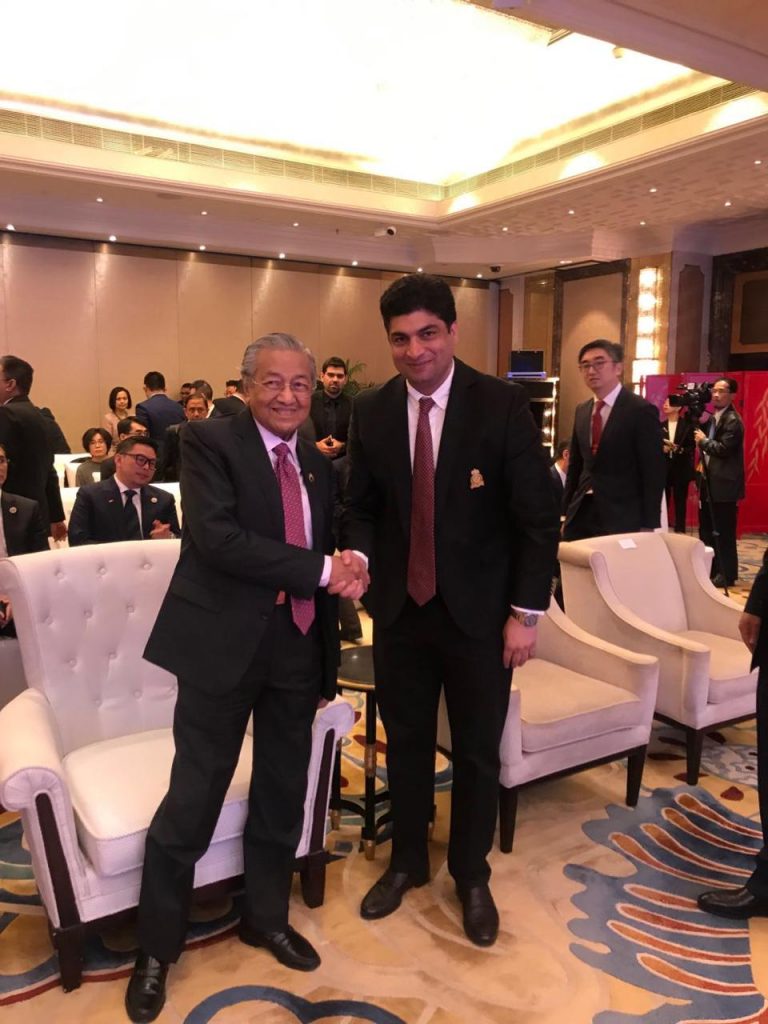
Today an exchange of documents for a Licensing and Technical Assistance Agreement between Proton Holding and Al-Haj Automotive Private Limited was conducted Beijing, China.
Both companies were represented by their senior executives. Dr Li Chunrong, CEO of Proton Holdings, and Mr Bilal Khan Afridi, Managing Director of the Al-Haj Group.
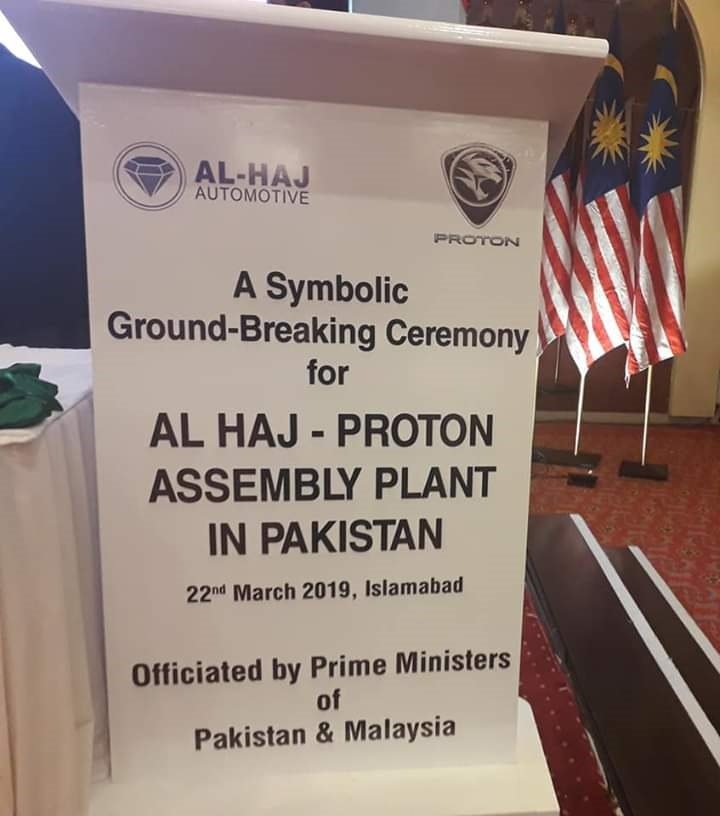
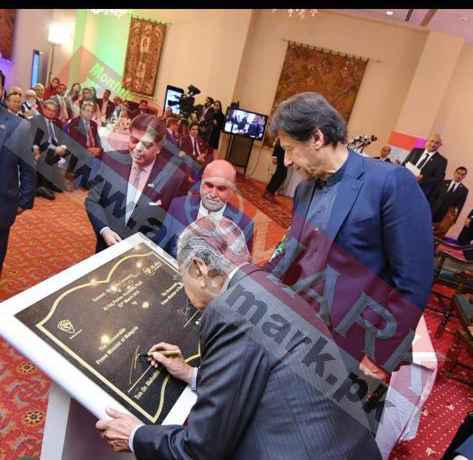
The exchange of document follows the previous announcement by Proton Holdings and Al-Haj Automotive Private Limited to develop a manufacturing facility for Proton vehicles based in Karachi, Pakistan. A symbolic ground breaking ceremony was conducted on the 22nd March 2019 in Islamabad, Pakistan and was presided by the most honourable Tun Dr Mahathir Mohamad, Prime Minister of Malaysia, as well as the most honourable Mr, Imran Khan, Prime Minister of Pakistan.
The manufacturing plant will sit on a 55 acre site in the port city of Karachi. Its construction requires an initial investment within USD 30 million. The facility will be ready for production by June 2020 and would have an annual capacity of 25,000 units.
The manufacturing plant would allow provide Proton with improved access to the growing Pakistan automotive market. The plant would also directly create 2,000 direct jobs and 20,000 indirect jobs through other areas such as local vendors.
Proton Holdings is a joint venture between DRB Hicom and the Zhejiang Geely Group.
Al-Haj Automotive Private Limited is a subsidiary of the Al-Haj Group, a conglomerate with diverse business interests such as automotive, oil & gas, logistics and estate businesses. ALHAJ Group has been associated with different Chinese and Korean Automobile companies since 2006 and has established a reputable name with vast experience in Assembly and distribution of Automotive products in Pakistan.