Home Blog Page 69

KA Hanteng Motor Company gets Greenfield status under auto policy 2016-21

Under automotive development policy 2016-21, the Government of Pakistan has awarded category-A Greenfield Investment status to KA Hanteng Motor Company Pvt. Ltd. to set up an assembly plant and start manufacturing commercial vehicles. The automaker is anticipated to bring an investment of about $50 million for the local auto sector. M/s KA Hanteng Motor Company (Pvt) Ltd., has collaborated with a famous Chinese car maker M/s. Hanteng Automobile Co. Ltd., to initiate manufacturing passenger cars & SUVs. The agreement between both companies was signed in May 2018 in Shangrao, China and it also includes technology transfer, manufacturing of electric and hybrid vehicles.

Automark has verified this news from the company representative and the joint venture is all set to establish an assembly plant at M3 Industrial Zone in Faisalabad with a capacity to build 15000 units annually. The local compay from the sports industry of Sialkot. The company has also revealed its plan to introduce Hybrid Cars & SUVs in near future.
The agreement is subjected to the following conditions:

• M/s KA Hanteng Motor Company (Pvt) Ltd shall strictly adhere to the conditions mentioned in Notifications No. 2(9)/2013-LED-II dated 2nd June 2016.
• EDB will issue manufacturing certificate and list of importable components after it verifies that the assembly/manufacturing facilities developed by the company are sufficient enough to produce quality and roadworthy vehicles.

This agreement shows increasing trust of Chinese private companies in Pakistani auto sector, economy, and investment opportunities. The joint venture will further strengthen the relationship between two countries through industrial cooperation and economic growth which is a step ahead in the CPEC project.

by Aqsa Mirza

Honda Inaugurates New Motorcycle Factory in Bangladesh

DHAKA, Bangladesh, November 11, 2018 – Bangladesh Honda Private Limited (BHL), Honda’s motorcycle business joint venture in Bangladesh, today held the grand opening of a new motorcycle factory on its own property in the Abdul Monem Economic Zone, Char Boushia, Gazaria, Munshiganj Disrict, Dhaka Division in Bangladesh.

The ceremony was graced by representatives of the Bangladesh government, namely Mr. Amir Hossain Amu, Member of Parliament and Minister of Industries; Mr. Saber Hossain Chowdhury, Member of Parliament and Ex Chairman of Inter-Parliament Union (IPU); Mr. Mrinal Kanti Das, Member of Parliament for Munshiganj-3; Mr. Md. Mosharraf Hossain Bhuiyan, Senior Secretary of Internal Resources Division and Chairman of National Board of Revenue (NBR); Mr. Paban Chowdhury, Executive Chairman of Bangladesh Economic Zones Authority (BEZA); Mr. Muhammad Abdullah, Secretary of Ministry of Youth and Sports; as well as His Excellency Hiroyasu Izumi, Ambassador Extraordinary and Plenipotentiary of Japan to Bangladesh. Representatives from Honda were Mr. Yoshi Yamane, Senior Managing Director and Chief Officer for Production Operations of Honda Motor Co., Ltd.; Mr. Noriaki Abe, Operating Officer and Chief Officer for Motorcycle Operations of Honda Motor Co., Ltd.; Mr. Masayuki Igarashi, Operating Officer and Chief Officer for Asia & Oceania Regional Operations of Honda Motor Co., Ltd., and President & CEO of Asian Honda Motor Co., Ltd.; and Mr. Yuichiro Ishii, Managing Director and CEO of BHL.

Taking a customer-oriented approach, Honda is expanding its business in Bangladesh to deliver products that meet customers’ needs for the growing market. As one of its core responsibilities, BHL is leading the development of the country’s motorcycle industry and contributing to the industrialization of Bangladesh. The company has relocated its factory, which is being officially inaugurated today, from Gazipur to the new location in the Abdul Monem Economic Zone.

Honda, along with its partner Bangladesh Steel and Engineering Corporation (BSEC), has invested a total of 2.3 billion Bangladeshi Taka on buildings, equipment, facilities, and a land area of 25 acres for the new factory in Munshiganj District, Dhaka Division. The factory itself, which currently occupies one-third of the property, took a year to complete following the groundbreaking ceremony held on November 5, 2017. It will have an initial annual production capacity of 100,000 units of motorcycles. In line with market trends, BHL plans to continue to invest in expanding its production capacity to 200,000 units by 2021, and will build its full-phase factory on the remaining two-thirds of the property to accommodate future market growth.

The motorcycle industry in Bangladesh is undergoing rapid growth with strong government support, including promoting a localization policy and reducing supplemental duty in December 2016. This enables BHL to enhance the localization of component parts, which will increase cost effectiveness for the models of motorcycles produced at the new factory. For example, the new factory is introducing welding and painting sections for localization with technical support from Honda Motor in Japan. Initially, BHL will localize the body frame and swing arm and then gradually expand localization to other parts assembled at the new factory in the future.

The new factory opens up more opportunities for employment and technology transfer to local associates. Currently, the company has 390 associates, and BHL plans to increase the number of associates in line with its business expansion. The company will also provide associates with training in the skills necessary to deliver the best-quality products that will bring joy and satisfaction to Honda customers.

Mr. Yoshi Yamane, Senior Managing Director and Chief Officer for Production Operations of Honda Motor Co., Ltd., said, “Honda’s 2030 Vision states ‘Serve people worldwide with the joy of expanding their life’s potential’ and ‘Lead the advancement of mobility and enable people everywhere in the world to improve their daily lives.’ The inauguration of the new factory demonstrates one of the most important initiatives to realize this 2030 Vision. Bangladesh Honda will aim to develop further by providing reliable, quality products from this new factory.”

Mr. Yuichiro Ishii, Managing Director and CEO of BHL, said “As the leading motorcycle manufacturer, and with the guidance and expertise of Honda Motor in Japan, we believe that the motorcycle industry will expand and contribute to the national economy by generating more employment, developing a skilled workforce, transferring technology, encouraging the growth of a parts supplier industry, and attracting more direct foreign investment.”

Bangladesh Honda is committed to offering the highest-quality products at reasonable prices while contributing to society by providing people with the joy and freedom of mobility. Through these efforts, BHL will strive to be a company that society wants to exist in Bangladesh. Driven by strong passion, the company will take on new challenges to fulfill this mission.

About Bangladesh Honda Private Limited (BHL)
Established in Bangladesh
December 2012

Representative
Yuichiro Ishii, Managing Director and CEO

Location
Head office and factory: Abdul Monem Economic Zone, Char Baushia, Gajaria, Munsiganj, Bangladesh

Capital
3.6 Billion Bangladeshi Taka

Capitalization ratio
70% Honda Group (Honda Motor Co., Ltd. and Asian Honda Motor Co., Ltd.)
30% Bangladesh Steel and Engineering Corporation

Business
Import, production, and sales of motorcycles and parts

Employment
390 associates (as of November, 2018)

Sales models
7 models
(Models produced by BHL): Dream Neo 110, LIVO 110, CB Shine125, CB Trigger 150, CB Hornet 160R
(Imported models): Dio 110, CBR150R

Factory land area
25 acres (with future expansion area)

Factory size
14,000 square meters (first phase)

Production capacity
100,000 units/year (as of November 2018)

Start of production
October 2018

Source: Honda Global

German Volkswagen’s commercial vehicles will soon be manufactured/produced in Pakistan

Pakistan Premier Motors Ltd (PML) signed the final legal agreement with the German auto giant – Volkswagen (VW) AG, the largest automotive group in the world. The agreement was signed on 7 November 2018 for manufacturing and assembling of commercial vehicles under the licensing contract of CKD Assembly in Karachi. The automotive industry is considering it a major breakthrough in the automotive sector of Pakistan. The Commercial Section, Berlin has been actively engaged with the VW and PML for the last two years and especially since signing of Letter of Intent ( LOI) on 22 June 2017.

Automark is the first source to break the news and it is hoping that the new entrant would be warmly welcomed in the country because the current local auto manufacturers are working at full capacity and still not keeping up with the demand and supply, with VW’s advent the demand and supply of the vehicle would undoubtedly increase in the country.

The news is very refreshing for the people of Pakistan because as new automakers come in the country, the more diverse the local industry would become and people can have a variety of vehicles to choose from.

Premier Systems (Pvt.) Ltd. gears towards bringing an even better experience to Pakistan to enable consumers in the country to enjoy a new level of performance and luxury. Hence, Audi was introduced in Pakistan and Premier Motors is the legal distributor of it. With the entrance of Audi in Pakistan, consumers now had access to sporty, sophisticated and progressive premium vehicles.

by Hanif Memon / Aqsa Mirza

Petition filed in IHC against ban stopping non-filers from purchasing new cars

The Islamabad High Court (IHC) on Tuesday issued notices in a petition challenging a ban on buying of new vehicles by non-filers of income tax returns. A single bench of IHC comprising Justice Aamer Farooq heard the petition and directed the attorney general to assist the court in this matter on the next hearing.

Amir Awan, a citizen, filed a petition against section 227C to the Income Tax Ordinance, 2001 through Finance Act, 2018. The petition is filed through Babar Awan Advocate and it made Federation through finance secretary and ex-officio chairman Federal Board of Revenue (FBR), director general (DG) Vehicle Registration Wing, Excise and Taxation and commissioner FBR as respondents.

The petitioner, an authorized dealer of Indus Motor Company Limited adopted that amendment introduced in section 227(c) of Finance Act 2018, offends and blatantly violates the provisions of (A) (B) (C) to Article 18 of the Constitution of Pakistan 1973 which guarantees fundamental freedom of business and trade.

He said that section 227-C is also discriminatory in nature. It is only in relation to motor vehicles and immovable property above Rs 5 million that impediments have been introduced transaction with or by non-filers.

Babar Awan submitted that the move to bar non-foilers from purchasing vehicles was illegal and unconstitutional. He added that if someone is purchasing a used Mercedes there is no bar on him/her.

He further argued that the Parliament cannot legislate any law against the wishes of the people. The Parliament is required to make laws for the welfare of the people.

The petitioner said, “This is a clear violation of Article 25 of the Constitution of Islamic Republic of Pakistan, 1973 as there is no reasonable justification based upon any objective criteria or intelligible differentia so as to introduce such a hindrance only on immovable properties and motor vehicles.”

The court had adjourned the hearing for two weeks and issued notices to the secretary of finance, FBR chairman and DG for Motor Registration.

by Aqsa Mirza

Loader Rikshaws not being approved in Punjab due to weak policies of Punjab Transport Department

The loader rikshaws are not being approved since last one year due to the weak and lazy policies of Punjab Transport department. The drivers complained that every other day, they have to pay challan on non-registered rikshaws. The popularity of loader rikshaw grew rapidly and it has been using as an alternative to Donkey cart since past a few years. However, due to lethargic policies of Punjab Transport Company, their approval has been pending from last one year. Whereas, the transport departments of other provinces have already approved the loader rikshaws in their respective provinces.

According to reports, some Rikshaw manufacturing companies have imported the manufacturing parts of Rikshaws of worth RS 6 billion and paid around RS 4 billion as a customs duty and other taxes. But unluckily, due to strong bureaucracy in Punjab transport department, their approval has been delayed.

One of the owners of Rikshaw manufacturing company told that Engineering Development Board of the Federal Government has given permission to produce loader Rikshaws and Pakistan’s Standard & Quality Control Authority has granted the licenses but due to the laziness of Excise Department and Punjab Transport Sector, the loader Rikshaws are not approved in Punjab.

by Aqsa Mirza

How Hyundai Motor, once a rising star, lost its shine

Even with discounting of as much as 25 percent, his dealership was selling barely a hundred vehicles a month, said the manager surnamed Li. A nearby Nissan dealership was selling about 400 vehicles a month, a store manager there said.

At a near-empty Hyundai Motor showroom in the Chinese mega city of Chongqing, the store manager is grumbling about his shortage of customers and a lack of bigger, cheaper SUV models popular in the world’s largest auto market.

How Hyundai Motor, once a rising star, lost its shine Even with discounting of as much as 25 percent, his dealership was selling barely a hundred vehicles a month, said the manager surnamed Li. A nearby Nissan dealership was selling about 400 vehicles a month, a store manager there said.

“The sales are simply poor,” Li told Reuters. “Look at the Nissan store next door, they have tens of customers while we just have two.”

An hour’s drive away is Hyundai’s massive $1 billion manufacturing plant, which opened last year with a target to produce 300,000 vehicles per year.

But with sales weak and the Chinese auto market slowing sharply, the factory is running at roughly 30 percent of capacity, two people with knowledge of the matter said. The sources asked not to be identified because the information was not public.

Hyundai, the world’s 5th largest automaker, declined to comment on the Chongqing plant’s production or the showroom’s sales but said it is “closely cooperating” with local partner BAIC to turn around the China business. BAIC did not respond to requests for comment.

Hyundai’s woes mark a major reversal for the automaker which was an early success story in China as it quickly and cheaply rolled out popular new models into a surging market.

In 2009, Hyundai and partner Kia’s combined sales ranked third in China after General Motors and Volkswagen.

The South Korean duo now ranks ninth and its market share in China has more than halved to 4 percent last year, from more than 10 percent at the beginning of this decade.

Executives and industry experts say Hyundai conceded its once stronghold in the low-end segment to fast-growing Chinese rivals such as Geely and BYD.

Foreign rivals not only defended their turf in premium segments but also kept pricing competitive for mass-market models, squeezing Hyundai’s positioning as an affordable foreign brand, they said.

In the United States, the world’s second-biggest auto market, Hyundai’s market share fell to 4 percent last year, near a decade low.

Hyundai ran into problems in China and the United States for similar reasons: It missed shifts in consumer tastes, especially the surge in demand for SUVs, and it sought higher prices than its brand image could command, four Chinese dealers and half a dozen former and current U.S. dealers, executives and employees said.

In a statement to Reuters, Hyundai said it is addressing its problems in its key U.S. and Chinese markets, revamping designs, launching new SUVs and giving regional units more autonomy to quickly develop products tailored to local tastes.

WRONG PRODUCTS, WRONG PRICES

Japanese rivals such as Honda, long a role model for the Korean automaker, have also struggled to adapt to the industry’s emerging challenges including self-driving cars and electric vehicles.

Last month, Hyundai posted a 68 percent plunge in third-quarter net profit and reported its operating margin shrank to 2.7 percent in the January-September period. In 2011, Hyundai’s operating margin of 10.3 percent was the industry’s highest after Germany’s BMW.Hyundai’s lack of a strong SUV line-up in key markets has also hurt.

Last year, SUVs accounted for just 36 percent of Hyundai’s U.S. sales, compared to GM’s 76 percent and the industry average of 63 percent, according to U.S. market research firm Autodata Corp data.

“One of our challenges back then, and I know it would continue to be a challenge, was that the management at (headquarters) was really big on sedans,” said Ed Kim, a Hyundai U.S. product manager between 2004-2008 who is now vice president for California-based auto consultancy Auto Pacific.

“(U.S.) product planning staff, marketing staff really wanted more truck products, more SUVs, but in so many cases, it was very difficult to convince management.”

Hyundai America Chief Operating Officer Brian Smith acknowledged the automaker was “caught a little off guard” with a rapid market shift toward big vehicles.

But a slew of new planned SUVs including a “crossover” pickup truck in 2020 will help drive a “slow, steady” recovery in sales, Smith told Reuters in an interview.

Hyundai has also in recent years hired several new designers to revamp design for next-generation models, he said.

Asked if Hyundai will be able to return to its record market share of 5.1 percent in 2011, Smith said: “It’s going to take a few years.”

DESIGN DIALLED DOWN

Hyundai made a crucial mis-step with its flagship Sonata sedan four years ago when it decided to dial back distinctive design features including its sporty, fluid curves. The redesign contributed to falling sales, U.S. dealers and former Hyundai executives said.

Scott Fink, who owns the biggest U.S. Hyundai dealer by volume, vividly recalls the moment when Hyundai brought about 20 U.S. dealers to its headquarters in Seoul to show off the new Sonata before its 2014 U.S. launch.

“I’ll never forget it. They pulled the sheet off of it and there were 20 people in the room and not one person clapped,” Florida-based Fink told Reuters.

The design was too conservative and mainstream, falling flat with dealers and consumers, he said.

“Then, more than anything else, it just became a price war,” Fink said.

In 2007, the Sonata was 10 percent cheaper than Toyota’s popular Camry sedan but by 2014 it cost more, according to U.S. market research firm Edmund.com. Hyundai, which sold nearly 200,000 Sonatas in the U.S. market in 2010, sold just 131,803 units last year.

Hyundai did not comment on the design changes or the cool response to the unveiling of the Sonata design described by Fink.

SALES SLUMP

Back in the Chinese city of Chongqing, dealers at four Hyundai showrooms visited by Reuters say the new Encino SUV, based on its small South Korean SUV Kona and launched this year in China, missed the mark.

Global automakers often tweak designs for the Chinese market, adding features such as bigger, more luxurious rear passenger zones to cater to buyers, many of whom have drivers.

“We don’t sell Encino. It simply doesn’t fit the Chinese market,” said another store manager surnamed Liu at one of Hyundai’s first dealerships in Chongqing. “Most Chinese prefer bigger, cheaper and prettier cars.”

Hyundai had a target of producing 60,000 Encinos a year, one source with direct knowledge of the matter said. But just over 6,000 Encinos have been sold in the six months since its April launch, regulatory filings show.

During a recent earnings call, vice president Koo Zayong said Hyundai will also shorten its development period for new models in China, where market trends are changing fast, driven by the rise of young customers.

Hyundai created a division dedicated to improving Chinese products in August, and replaced its China operation head in July.

But the China recovery will likely be “gradual” given an economic slowdown and intensifying competition from rivals, Hyundai said in a statement to Reuters.

FATHER’S LEGACY

Company officials, dealers and analysts expect the task of leading a revival will fall heavily on Hyundai’s third generation leader, Euisun Chung.

Chung, 48, was promoted to executive vice chairman in September, moving him a step closer to succeeding his octogenarian father and current chairman, Mong-koo Chung, who has been absent from public view and key internal meetings for the past two years.

The elder Chung is credited with catapulting Hyundai to the big leagues by drastically improving product quality and rapidly building production capacity at home and abroad.

Under his tight grip over the sprawling conglomerate and centralized decision making, Hyundai shunned partnerships and made everything in-house, from steel to key components such as engines and transmissions.

But Hyundai also invested less than rivals in research and development. Last year, Hyundai Motor spent just 2.6 percent of its revenue on R&D, compared with 6.7 percent for Volkswagen, 3.8 percent for Toyota and 3.6 percent for BYD, according to their annual reports.

In a break from tradition, the younger Chung has been investing in start-ups, hiring outsiders and forming partnerships with self-driving tech firms and others.

Last year, Hyundai appointed a chief innovation officer from Samsung Electronics to oversee a division on ride-sharing, robotics and artificial intelligence.

Euisun Chung has had some early setbacks. At the 2011 Detroit auto show, he unveiled Hyundai’s new brand vision – modern premium – to revamp its value for money image, and four years later announced the automaker’s first premium brand, Genesis.

U.S. sales of Genesis fell 45 percent year-on-year to 9,281 vehicles from January to October. Chung declined an interview request from Reuters.

Nick Reilly, a former chief executive of GM Korea, told Reuters that Hyundai’s brand image has certainly gone up but still is “not anywhere near a premium brand”.

“So I think they have to go back to the mentality to be very price-competitive in order to maintain the volumes,” he said.

Source : REUTERS

TPL Trakker Launches Big Friday Campaign

TPL Trakker has partnered with Yayvo and Daraz to launch an exclusive Big Friday Campaign for the month of November. The campaign will facilitate customers to buy the Big Friday Package which will include Free Vehicle Analytics; Driver Scorecard and Trip Analytics. The solutions will be available exclusively on TPL Trakker’s online store Yayvo and Daraz.

On its website TPL Trakker, will be offering discounts on all TPL Trakker packages including Basic, Plus, Premium and Bike Trakking from 1st to 15th November. Moreover, the company will be running a lucky draw directly on the website where all customers will have the opportunity to win incredible giveaways including televisions, Apple watches, X boxes, Play Stations and more!

The Big Friday Package features include round-the-clock Call Center Assistance, Stolen Vehicle Recovery (SVR), Anti Jammer, Geo Fencing Alerts, Vehicle Immobilization, Battery Tamper Alerts and Vehicle Analytics.

  • PR

Global Mapping and Location Services Giant HERE Technologies Signs Strategic Partnership MOU with TPL Maps

BERLIN (Germany), November02, 2018: TPL Maps (PvT) Ltd, Pakistan’s first and largest mapping company has signed a Memorandum of Understanding (MoU) with HERE Technologies, a global leader in mapping and location platform services.

Leadership team members of both companies met in Berlin to discuss a potential partnership between TPL Maps and HERE Technologies. It was agreed that HERE Technologies and TPL Maps will work towards establishing a technology partnership and product collaboration around map content operations and related platforms and services, as well as the joint development of a go-to-market strategy in the Automotive and Enterprise sectors for Pakistan and the region.

Speaking on the occasion, Stefan Hansen, Senior Vice President and General Manager HERE Technologies for EMEAR region said “At HERE we are working to bring alive what we call “the Autonomous World”, a world infused with location intelligence for innovative solutions from autonomous driving to smart city infrastructures. Our MOU for a strategic partnership with TPL Maps is a major step in bringing these solutions to Pakistan and the region.”

Adnan Shahid, CEO TPL Maps said “We are very excited with the collaboration opportunities with HERE Technologies. This MoU with HERE Technologies is the result of a lot of hard work in developing indigenous Pakistani maps and local expertise in location-based services”

Also present on the occasion were Mr. Ali Jameel, CEO, TPL Corp, Mr. Philip Mott – Director, Strategy & Growth, EMEAR, Mr. HaithamAlaqqad – Head of RMC, MEA HERE and other team members of both companies.

HERE Technologies was recently ranked as World No 1 before Google in mapping and navigation by Ovum. It provides 4 out of 5 in-car navigation systems in North America and Europe in addition to other enterprise solutions worldwide. TPL Maps provides navigation and mapping solutions to automotive sector in Pakistan and other intelligent location based solutions. This partnership will help foster the location based solutions for the local market. TPL Maps is a part of TPL Corp – a holding company for eight innovative business enterprises ranging from Insurance and telematics to properties and logistics.

About TPL Maps:
TPL Maps is a wholly owned subsidiary of TPL Corp. Pakistan’s first and most comprehensive digital mapping solution, TPL Maps was launched in 2016. TPL Maps has the largest location-based data collection of Pakistan along with Location based platform and solutions for other industry verticals. www.tplmaps.com

  • PR

Ghandhara Isuzu D-Max is available for booking in Pakistan

Ghandhara Industries Limited (GIL) has introduced the Isuzu D-Max pickup and as per our sources, the vehicle is available for booking. The company has dispatched the units to auto dealerships for booking. Ghandhara Industries Limited is a local automobile manufacturer based in Karachi.

Ghandhara Industries Limited (GIL) has introduced the Isuzu D-Max pickup and as per our sources, the vehicle is available for booking. The company has send the units to auto dealerships for display and booking. Ghandhara Industries Limited is a local automobile manufacturer based in Karachi.

Base Version
The D-Max pickup is available in two versions. The base version is called the Hi-Spark, powered by a 2.5-liter intercooler turbo engine and it is a single cabin 4×2 pickup. It is available in two trims, the Hi-Spark deckless version cost PKR 24.25 lac, whereas that with deck has a price tag of PKR 26.25 lac.

Hi-Lander Version
The second version is Isuzu D-Max Hi-Lander that has an engine powered by 2.5-litre intercooler turbo. These consist of 4×4 vehicles. It is available in both a single cabin and double cabin options. The Hi-Lander 4×4 single cabin is priced at PKR 37.25 lac and the double cabin is priced at PKR 39.75 lac.

V-Cross Version
The V-Cross comes with a double cabin 4×4 powered by a 3.0-liter intercooler turbo engine. Its manual transmission version is priced at cost PKR 44.5 lac while the automatic version cost PKR 46.75 lac.

Feature of D-Max
The D-Max V-Cross equipped with features such as Airbags, ABS with EBD, power steering/ windows, electronic drive mode selector, smart entry system, electrically adjustable seats, touchscreen infotainment system and multi-function steering wheel and many more.

The company has made a Technical Assistance Agreement with Isuzu Motors Limited (Thailand). The Isuzu D-MAX belongs to the world’s toughest, most reliable trucks line up.

by Aqsa Mirza

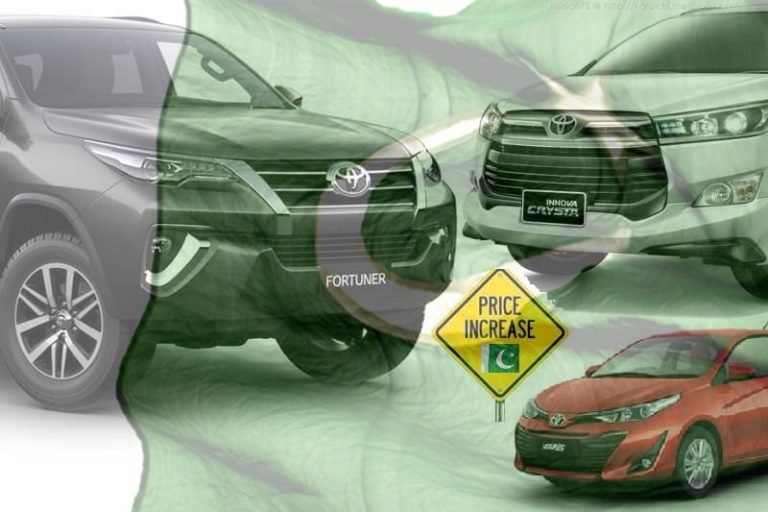
Rupee depreciation drives Suzuki and FAW to increase prices following the footsteps of Honda & Toyota

Following the devaluation of the Pakistani rupee against the US dollar recently, the country’s automakers have once again started increasing the prices of different vehicles. The latest auto assemblers to follow this trend are Suzuki and FAW. As per reports, FAW has increased prices on its product line by up to Rs 85,000.

The company issued a circular in this regard earlier today, stating the rupee’s weaker position against the dollar as the primary reason behind its price hike. Furthermore, FAW informs it dealers that the company may raise prices further, depending on its sales figures as well as an increase in exchange rate. The company says that the revised prices will come into effect from 1st November 2018.

Furthermore, Suzuki Motors have also recently issued the notification about the price increase of different Suzuki line-ups. As per our sources, the revised prices will be implemented from 1st November 2018 but not release for public.

It should be mentioned that Indus Motors, Honda Pakistan have also increased prices for their cars in recent days, with some warning of a further price increase due to the uncertain economic conditions in the country. Local and Chinese bike makers have also followed the trend and increased the prices owing to rupee devaluation.

Aqsa Mirza