Home Blog Page 77

Rupee depreciation drives Suzuki and FAW to increase prices following the footsteps of Honda & Toyota

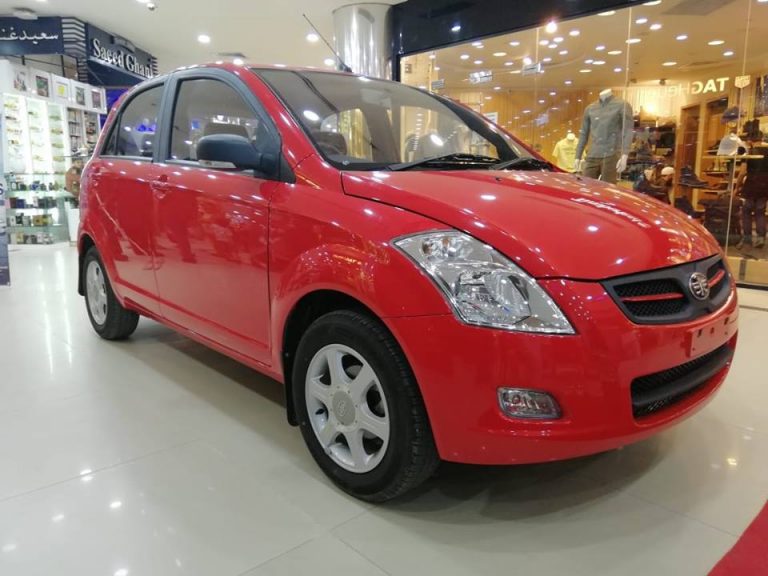
Following the devaluation of the Pakistani rupee against the US dollar recently, the country’s automakers have once again started increasing the prices of different vehicles. The latest auto assemblers to follow this trend are Suzuki and FAW. As per reports, FAW has increased prices on its product line by up to Rs 85,000.

The company issued a circular in this regard earlier today, stating the rupee’s weaker position against the dollar as the primary reason behind its price hike. Furthermore, FAW informs it dealers that the company may raise prices further, depending on its sales figures as well as an increase in exchange rate. The company says that the revised prices will come into effect from 1st November 2018.

Furthermore, Suzuki Motors have also recently issued the notification about the price increase of different Suzuki line-ups. As per our sources, the revised prices will be implemented from 1st November 2018 but not release for public.

It should be mentioned that Indus Motors, Honda Pakistan have also increased prices for their cars in recent days, with some warning of a further price increase due to the uncertain economic conditions in the country. Local and Chinese bike makers have also followed the trend and increased the prices owing to rupee devaluation.

Aqsa Mirza

China FAW secures credit line in excess of 1 trillion yuan

China FAW Group Corp., a major state-owned automaker, obtained a line of credit totaling 1,015 billion yuan ($146.2 billion) from 16 domestic banks.

FAW signed the lending agreements with the banks last week in Changchun, the capital of northeast China’s Jilin province.

The credit line will provide financial backing for all its businesses, FAW said, without elaborating on specific plans for the funds.

The 16 banks include China Development Bank — a policy bank controlled by the central Chinese government, 14 national commercial banks, and Bank of Jilin — a commercial bank mainly operating in Jilin.

FAW was established in Changchun in 1956 as a state-owned commercial truck producer. It created Hongqi as a limousine brand for government agencies in 1958. Since the 1990s, the company has introduced compact sedans under the Hongqi, Besturn and Xiali brands.

FAW also operates passenger vehicle joint ventures with the Volkswagen Group and Toyota Motor Corp. in China.


Renault is ready to enter in Pakistan market

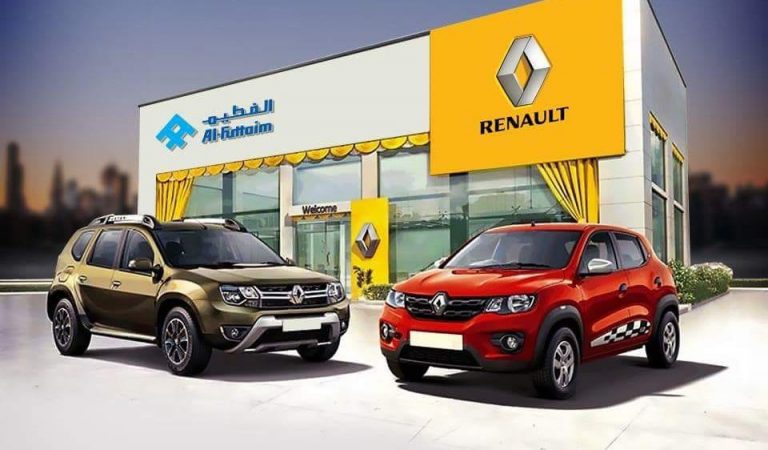
Renault has a huge automotive portfolio. They are about to start vehicle production in Pakistan in 2020, Renault Automotive has started this project in partnership with Al-Futtaim Group, one of the biggest conglomerates of the United Arab Emirate. For setting up this automobile assembly plant, the company has already acquired 56 acres of land in Faisalabad, an industrial city situated in the province of Punjab.

This would be Al-Futtaim’s second venture in Pakistan, where it also makes tractors and generators through its subsidiary Al-Ghazi Tractors. “Al-Futtaim is fully committed to the Pakistani market and to this project,” said Colin Cordery, Senior Managing Director of Al-Futtaim Automotive International. “We, together with Groupe Renault, are delighted to have completed the land acquisition, which is an important milestone in the project. Once construction work is completed, the state-of-the-art assembly plant will have a total installed capacity of over 50,000 units per annum. Al-Futtaim and Renault expect that the factory will commence production in 2020.Renault has been trying to enter in the Pakistani market since last two years, they tried signing a deal with the two Pakistani companies, Dewan and Gandhara, but the negotiations didn’t go through.

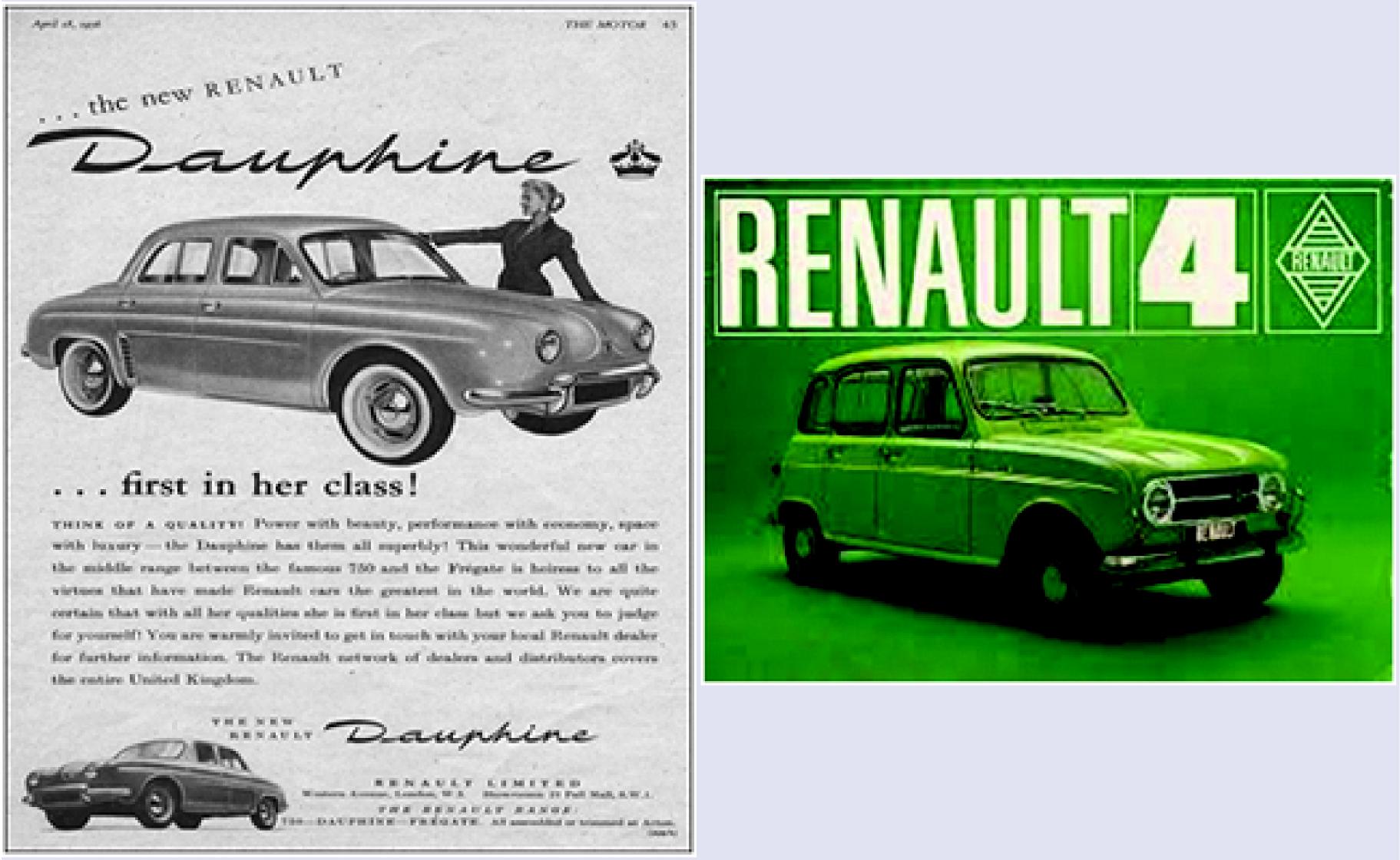
Renault sees great potential in the Middle East and India region, where it plans to increase its sales volume to more than 800,000 units by the end of its 2022 strategic plan. The company is well established in North Africa and India, and is developing rapidly in Iran; it currently does not sell any cars on the Pakistani market. However in late 50’s and in mid 70’s the following models were introduced in Pakistan. Unfortunately, against German, Birtish and Japanese cars Renault cannot make its place in Pakistan market in the past.

Now Renault is very much inspired and encouraged with its success story in our neighboring country India, although Renault has experienced many upheavals in India. When Renault first entered in India through a joint venture with Mahindra & Mahindra, it placed high hopes on its maiden product offering Logan – a mid-sized sedan launched in 2007. But the car with its dated looks and high pricing failed to strike a chord with Indian consumers. Such was the scale of the failure that it ended up killing the joint venture in 2010. Renault’s brand name took a massive hit in India. Ironically, the Logan’s failure laid the foundation for the success of Renault’s compact sport-utility vehicle (SUV) Duster. The Duster took the Indian market by storm. It fuelled the segment of compact SUVs and grabbed a 23 per cent market share within a year. The Duster’s success was such that Renault had to triple production within months of its launch from seven per hour to 20 per hour.


Similarly, Renault is expected to introduce latest vehicles and technology in Pakistan’s market in an attempt to break the monopoly of the three dominating Japanese assemblers – Suzuki, Toyota and Honda. Renault DUSTER may be the first model which would be assembled and launched in Pakistan.

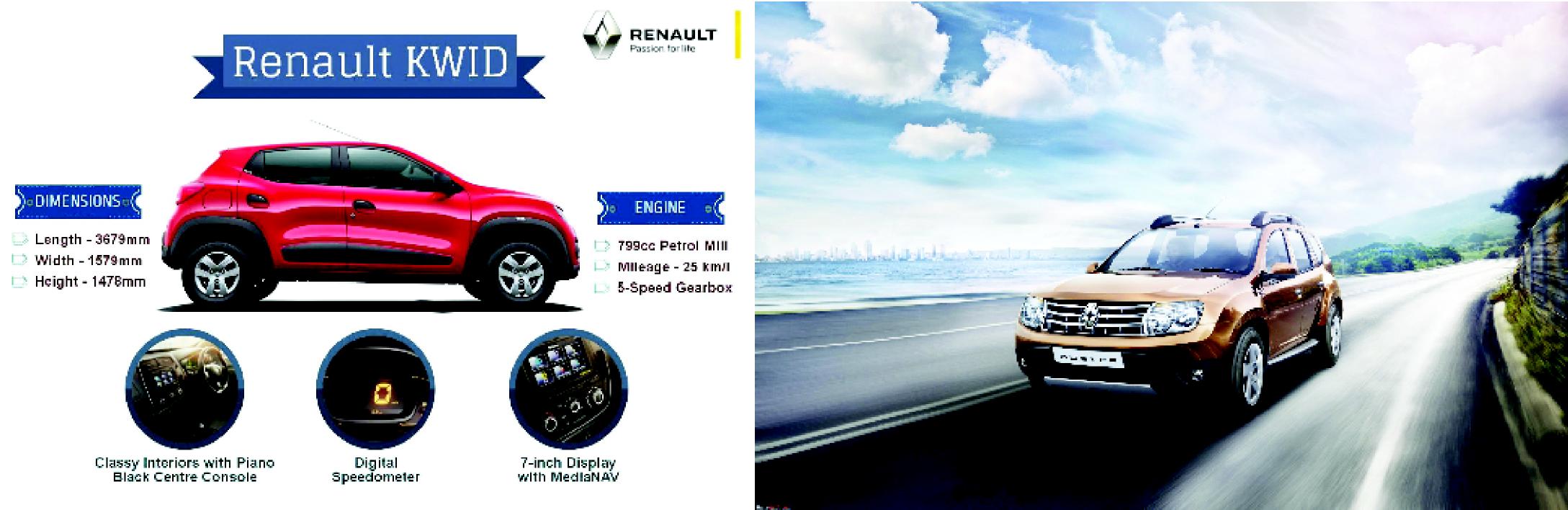
Renault DUSTER. Has a revolutionary new engine which is tuned perfectly to generate exceptional power and torque. But power is nothing if it’s not delivered dynamically. That’s why the DUSTER’s new petrol engine comes mated with a state-of-the-art X-tronic CVT (continuously variable transmission). The DUSTER also comes with a powerful 1.5 litre diesel engine. Available in two avatars, the AWD variant is designed to adapt to any terrain while the 6-speed Easy-R AMT variant makes driving effortless even in the harshest conditions. With its astounding features, the Renault DUSTER truly lives up to the term, the true SUV.

The mini-car segment is the toughest segment and very hard to break but Renault has plan to enter in this segment too. They have a model called Kwid, the Renault KWID comes with a host of thoughtful features, having an eight hundred cc engine. On the outside, the new Razor-edge Chrome Front Grille highlights the Renault diamond logo, while stylish fog lamps further enhance the Renault KWID’s striking stance. On the inside, the new stylised chrome gear knob adds to the appeal while the new first-in-class rear 12V power socket ensures phones remain charged in the backseat too. Moreover, the new first-in-class Rear Armrest of the KWID CLIMBER makes for a more relaxed posture.

Renault would be the second European automobile company who will start CKD operations in Pakistan. Italian car maker FIAT was the first European brand which started its CKD operations in Pakistan in late nineties but failed to attract the Pakistan customers.

By Anwar Iqbal, Published in Autoamark magazine’s printed edition of October-2018

Al-Futtaim awarded Greenfield investment status to manufacture Renault cars in Pakistan with investment of $300m

Ministry of Industries and Production (MoI&P) has awarded Greenfield investment status to Al-Futtaim to assemble Renault cars in Pakistan under automotive development policy 2016-21. Al-Futtaim Group is a joint venture with French car maker, Renault to run business in Pakistan.

Greenfield investment is defined as the installation of new and independent automotive assembly and manufacturing facilities by an investor for the production of vehicles of a make not already being assembled/manufactured in Pakistan.

Following the decision of Economic’s Coordination Committee’s of March 18, 2016, on Automotive Development Policy 2016-21, the government has given “Category A Greenfield Investment Status” to Al-Futtaim Automotive Limited for assembly and manufacturing of vehicles. In this regard, an agreement was also signed between the firm and the principal i.e Renault as per the following conditions:

• Al-Futtaim Automotive will strictly follow the conditions mentioned in the Notifications No. 2(9)/2013-LED-II, 2ndJune, 2016

• The company would enter into the agreement with the Ministry of Industries and Production to ensure compliance with the conditions of the ADP 2016-21, SRO 656(1)/2006.

• EDB will issue the certificates only after confirming the assembly facilities established by the company are adequate to produce quality vehicles.

As per sources company is willing to localize while maintains European standards from start of production and that is a unique factor when compared to other new entrants under new auto policy 2016-21, while Al-Futtaim hired very extensive background, local and international experience professional staff.

French carmaker Renault will start vehicle production in Pakistan in 2020 with the partnership with the Al-Futtaim Group of UAE. For setting up an automobile assembly plant, the company has acquired 56 acres of land in the Faisalabad Industrial Estate Development and Management Company (FIEDMC). The plant will have installed capacity of 50,000 vehicles per year and initially, the company may roll out five vehicle variants.

In November 2017, Renault and Al-Futtaim officially declared that they have signed definitive agreements for the exclusive assembly and distribution of Renault branded vehicles in Pakistan.

The French automaker was earlier in talks with Ghandhara Nissan Company but the deal couldn’t shape up. Later in December 2017, Al-Futtaim indicated to begin construction of their assembly plant in Karachi in 2018, while intended to sell their assembled models starting from 2019.

The company has reportedly inked a direct investment agreement worth $300 million to construct an automobile manufacturing plant in M3 Industrial Area Faisalabad, instead of Karachi. According to sources, company did not purchase land at discounted price as media keep reporting that “ Government of Punjab is offered cheaper land to French automaker to establish its plant in the province.”

by Aqsa Mirza

Master motors introduce Changan vehicles in Pakistan

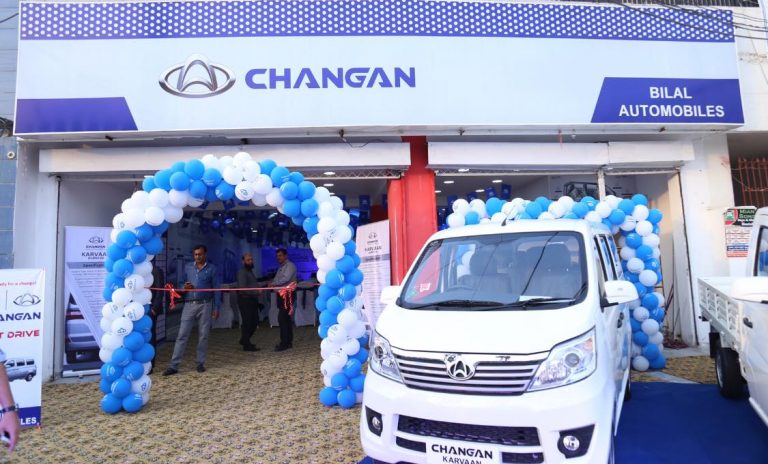
Master Motors Ltd (MMC), in a joint venture partnership with Changan International, China’s top automobile maker, has officially launched a range of light commercial vehicles (LCVs) at their first authorised dealership at Bilal Automobiles in Lahore. The light vehicles include M9, a pick-up and a 7-seater passenger van.

The statement said Changan Bilal Automobiles, the joint venture company, has initially put on sale Changan M9, a pick-up, and Changan Karavan, a passenger van. The statement said that with an ex-factory price tag of Rs919,000, Changan M9 is a 9×5 foot 1-ton pick-up with a class-leading C10 gasoline engine having 1000 cc 16-valve dual overhead cam (DOHC). Similarly, Changan Karavan is a middle-sized, 7-seater van which has 1000 cc powerful C10 engine and AC is present. It comes with a price tag of Rs999,000.

Changan is a famous automobile producing brand in China known for making SUVs, small vehicles and cars. The company offers a wide range of vehicles including CS arrangement SUV, Raeton arrangement, Eado arrangement, and Alsvin arrangement; and Oushang, Honor, and Eulove MPV items.

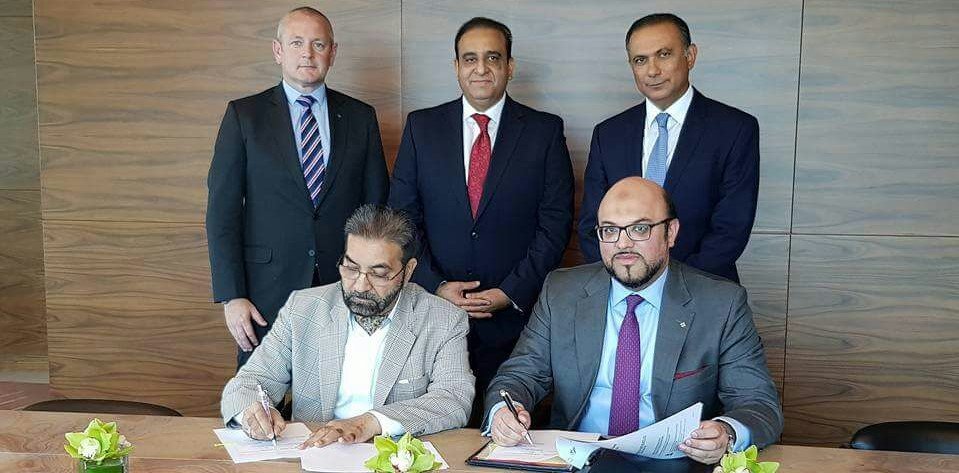
Both the companies, Changan Automobile and Master Motors Corporation, signed an official agreement on 29th June at Pearl Continental, Karachi. MMCL already purchased a land for an assembly plant in Karachi and Master Motors already stared of constructions of an assembly plant in Karachi. After ground breaking ceremony in March-2018.

In the first phase, they have introduce Pickup and passengers’ van and provides after sales services as well. Their target market will be middle and higher income group.

The car enthusiasts and deals have shown a great interest in both the vehicles and said they are satisfied over the design and prices of these vehicles.

After Indus Motor, other auto assemblers are ready to increase the prices

This year has not been good so far for auto enthusiasts as car assemblers have raised car prices many times due to rupee devaluation. All major auto manufacturers have increased car prices three to four times since December 2017.

The rupee’s depreciation against the US dollar in the past 10 months has left a devastating impact on many businesses, particularly the ones that rely heavily on imports like auto industry.

Recently, with the historic 7.5% steep fall in the rupee’s value, it is largely expected that it will again push them to raise prices once again. The rupee has lost 26.67% of its value in the past 10 months.

After analysing the rupee devaluation, some auto dealers like Indus Motor Company (IMC) has announced revised prices for vehicles on which bookings will start from 17th October.

Customers who have paid full payment for orders of Oct / Nov will get cars on same prices as company will absorb the added cost. However, customers who have made partial payments for Oct / Nov / Dec will have to give 50% of added cost.

The company has raised prices in the range of Rs 50,000 to Rs 175,000 for November and December deliveries and Rs 100,000 to Rs 350,000 for deliveries from January 2019 onwards.

The company said the devaluation of the rupee had caused a substantial cost increase because of government duties, imported components and raw materials for local parts.

After Indus Motor Company, other auto manufacturers are also ready to increase the car prices when Toyota has already done. According to information, this price increase will be based on the parts and components that are currently being imported as the car assemblers are not willing to bear the added cost, thus the price thus the consumers will have to pay the additional price.

Auto assemblers feel that the car sale will be reduced in the upcoming months as the government has again barred the non-filers from purchasing vehicles and also due to the sharp increase in prices of the cars due to the depreciation of the rupee. However, vehicles with the lower engine will be least impacted by this issue as they can service due to Uber, Careem, and other ride-hailing services.

We will keep you updated about the price increases by other auto manufacturers, keep visiting www.automark.com

by Aqsa Mirza


Suzuki to introduce locally assembled Alto 660cc variants in Pakistan

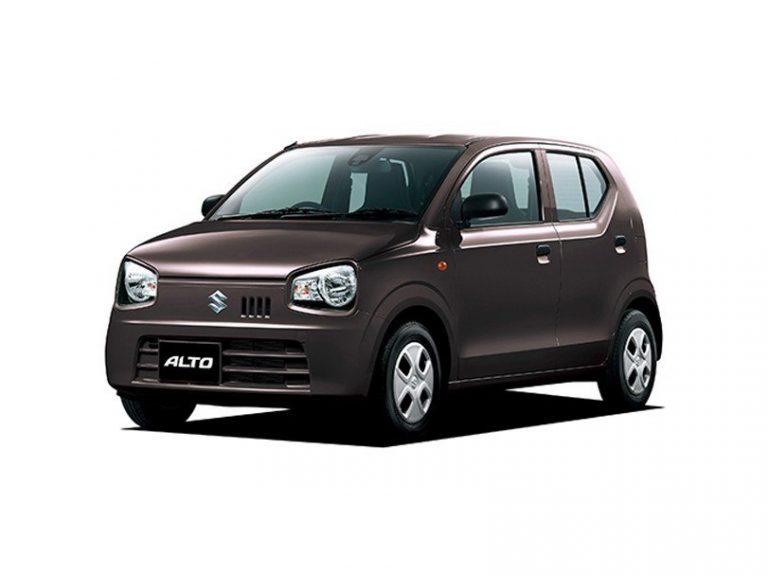
Suzuki is all set to launch a new Alto 660cc in Pakistan. According to our sources, the car is expected to be on sale in the first quarter of the fiscal year 2019-20.

Suzuki Alto will be available in three variants similar to VX, VXR (manual variant) and automatic variant. Both the manual and auto variant will come with a power steering.

The anticipated price of Suzuki Alto will be around PKR 9 to 10 lacs; a manual model will be around PKR 900,000 and the top auto variant will be priced around Rs 10+ Lacs.

Suzuki Alto will be a locally manufactured/assembled hatchback. As per our sources initially, 40% of its parts will be produce by local vendors and variants will assemble at  assembly plant in Karachi.

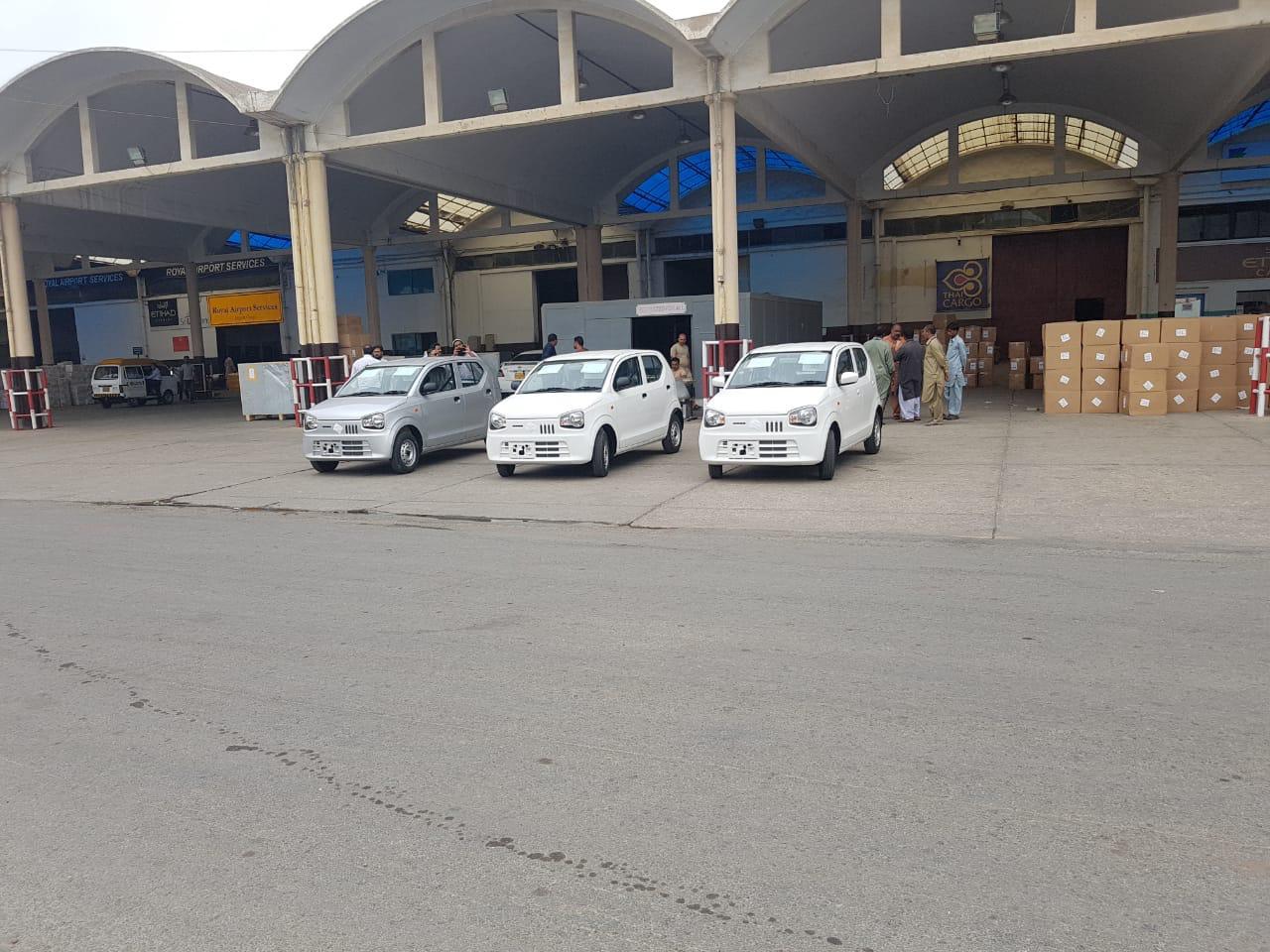
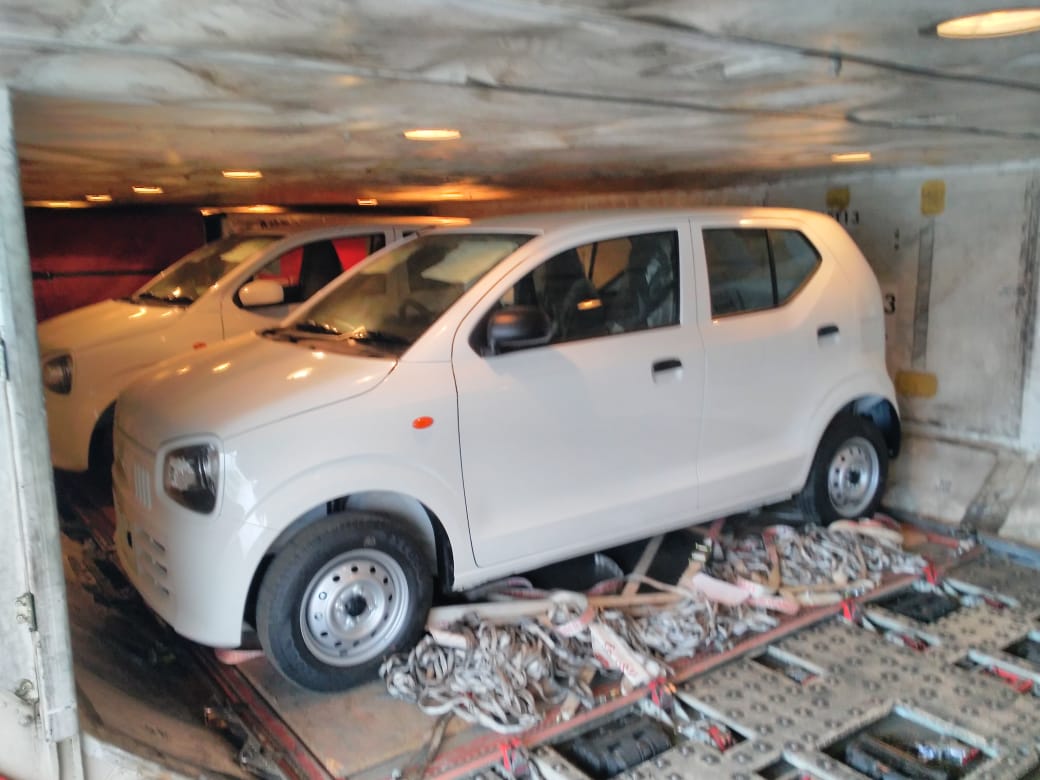
Ready for departure at Karachi Airport to Japan for testing and approval

With the passage of time localized of parts will be increased. It’s a 8th Generation engine car which has fuel consumption around 20+ KM. The 660cc engine will be imported, but the transmission has been manufactured locally.

Some people believe that Suzuki Alto will be an alternative to Suzuki Mehran which is literally not the case as Alto has been recently developed on latest Japanese technology, unlike 30 years old Mehran which has been decided to be discontinued at the end of this year.

According to Automark sources, Pak Suzuki has already assembled this car in Pakistan and three units of the car has been sent to Japan for testing and approval by Japanese engineers.

Read more : Pak Suzuki has finally decided to discontinue Suzuki Mehran from April 2019

Furthermore, Suzuki Pakistan has asked its vendors to stop the manufacturing of parts according to the company’s production plan for Mehran. After Mehran, Suzuki will be missing out its all-time top seller hatchback in Pakistan. To fill the vacuum, Suzuki Pakistan has decided to introduce new Alto 2019 with advanced features and latest technology.

By Aqsa Mirza

Pakistan has no system of scrapping and recycling old vehicles

Auto recycling is a common practice followed by the developed nations and is becoming increasingly popular in the developing nations as well. With rising concerns over global warming, countries are adopting various schemes to curb pollution by way of auto recycling. In fact, around 80 percent of a car can be recycled. Automobiles are the most recycled consumer product in the world today. Every year, around 30 million cars around the world are recovered for recycling. Over 25 million tons of heterogeneous material is recycled from old vehicles.

India’s automobile industry has ushered in an explosive growth since 2000, with car ownership rising from 127 million to 204 million in 2015. According to an estimated average end of life deadline for a car is 10-15 years National Green Tribunal’s has rights to ban and deregister your car if it supersedes the 15-year mark.

People in India have to follow a proper channel before scrapping and deregistering their old cars. First, they need to issue a letter to the RTO requesting that your vehicle is deregistered and then your car is scrapped to ensure that your vehicle or your registration isn’t used for nefarious or illegal purposes.

To get your car scrapped one must ensure that the scrap dealer is authorized by the government to ensure that the RTO can process your paperwork quickly. The first thing that the scrap dealer is supposed to do will be to remove the chassis number from the vehicle in and hand it over the vehicle owner. Prior to finally scrapping the vehicle, the owner and the scrap dealer can negotiate the best price for the vehicle basis its condition and the quality of its parts.

The vehicle owner is only required to furnish a copy of his registration certificate or photographic certificate to the scrap dealer through this process. photographic evidence is also advisable once the scrapping process is done. Then you have to get the receipt for the scrapping from the scrap dealer and show it to the RTO, who after verification of your documents register your vehicle.

This was the example of our neighbor country India where there is a legal and proper way to scrap your car if it supersedes the mark of 15-20 years. On the other hand, the auto sector of Pakistan has truly benefitted in the last five years, witnessing a phenomenal increase in sales that has invited fresh investments and expansion plans in the industry.

Different international auto players like including Kia, Hyundai and SsangYong Motor Company, French carmaker Renault and Japan’s Nissan have all announced that they would assemble vehicles in the country. Pakistan’s auto industry is rising sharply but sadly unlike India and other countries, there is no such system of car scrapping and recycling. There is no such law introduced by the government and ministry to scrap the old cars as these are the major source of pollutant in the environment. Even today we see the decades-old, poorly conditioned and worn out cars running on the roads of Pakistan.

In fact, some of the cars in Pakistan are imported from Japan and Europe and they need to be scrapped once they complete their suggested age limit.
Similarly, many of these used and old cars emit high levels of pollution, which lead to negative health and environmental impacts linked to climate change and also respiratory conditions caused by breathing in pollution and particulate matter. Older cars are also more likely to fail safety standards and cause accidents.

The government of Pakistan should take a strict step in this regard and introduce a legal system of car scrapping and deregistering to control the environmental hazards and recycle the auto parts and use them to recover steel and other useful products.

by Aqsa Mirza

Pakistan’s auto sector has declined by 57% of its market value from its peak in May 2017

The auto industry has reported its worst first-quarter sales since 2013. According to stats issued by PAMA, 58,351 units sold in the first quarter (July-September) of the current fiscal year FY19 as compared with 60,469 car units for the same period the previous year, which marks the 4% decline in units.

However, car sales increased by 3% in September 2018 as compared with the previous year. Sales stood at 19,345 units in the previous month compared to 18,798 units in September 2017.

The analysts expect a significant decline in demand in the auto sector due to a crippling macroeconomic environment, multiple times price increase since Dec 2017, and the impact of legislation which now requires car purchasers to be tax filers.

Automobile prices are expected to rise further due to sharp PKR depreciation against US dollar which will decrease the volume of the sector. Auto finance loans have become expensive due to the rising interest rates.

Trucks and Busses

Overall, trucks and buses sales saw a decline of 26% on a year on year basis in September 2018 as the sales volume declined to 589 units as compared 793 units sold in Sep 2017.

Isuzu Trucks are leading the race in both the production and sales rate. The company produced 1050 units of Trucks during July, August and September of 2017 and sold 881 units. While in 2018, the company produced 966 units and sold 801 units during the month of July, August, and September of 2018.

The cumulative units produced during these three months were 972. However, if we look at the sale rate during these three months then Hino Truck sold 252, 345, and 342 in the months of July, August and September respectively of the year 2017. The total number of units sold during three months was 939. However, the total number of units produced during July, August and September of 2018 are712 and units sold during these three months are 652.

Master Trucks produced a total of 429 units during July, August, and September of 2017 and sold 392 units. While during the months of July, August and September of 2018, the company produced a cumulative of 371 trucks and sold 285 units.

If we look at overall statistics of Truck production and sale rate then in the month of July, August and September of 2017, 2452 units were produced and sold 2230 units. While in 2018, 2049 units were produced during July, August, and September and sold 1738 units.

Cars

During September 2018, Honda (HCAR) saw a significant increase in volumes as unit sales increased by 32% year on year. Similarly, unit sales increased by 14% month on month while the first quarter sales in FY19 are up by 7% YoY.

Likewise, Civic and City increased by 47% YoY while BR-V sales continued to observe a decline by 35% year of year.
Similarly, Pak Suzuki continued to report a decline in volumes, with September sales down by 5%.

Variant Wise, Wagon-R and Swift led the growth chart up by 61% and 41% respectively. However, unit sales were declined by 37% and 23% drop in Mehran and Bolan, respectively.

Indus Motors (INDU) sales remained flat year on year, with the company recording a 2% bump on a month-on-month basis. During Sep 2018, sales were led by Corolla, up by 8% YoY.

Two Wheelers

163,680 units of motorcycles and three-wheelers were sold during the month, which was 19% higher than the sales made during the previous month and around 15% higher than that made during the corresponding period.

Variant-wise Atlas Honda Bikes saw an 18% increase with 96,008 units sold during September 18 as compared to September 2017. Pak Suzuki (Bikes) saw an 11% increase with 1922 units sold as compared to 1736 units sold in the previous year.

Tractors

Tractors, on the other hand, reported a sale of 5,818 units in September 2018, dropped by 2% year on year basis as compared to 5953 units.