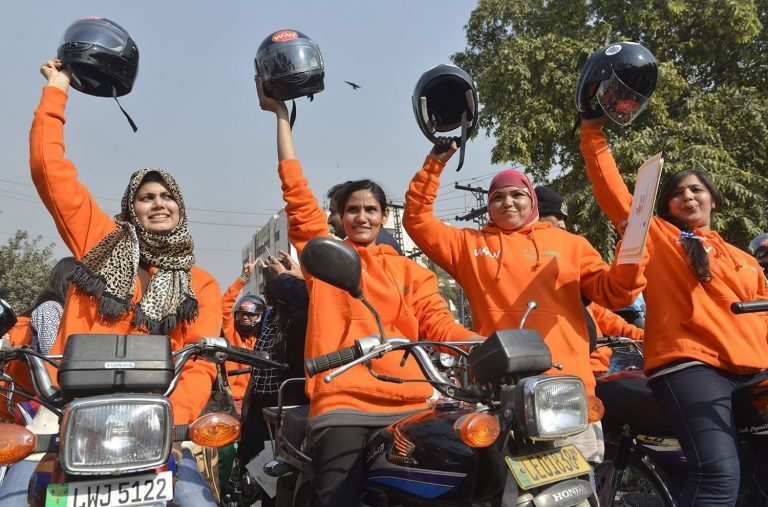
Five-year tariff for import of two-wheeler, three-wheeler notified The government has notified five-year tariff for import of two-wheeler and three-wheeler vehicles under which a uniform Completely Built Unit (CBU) rate of50 percent has been fixed for the two and three wheeler automotive segment to rationalize the tariff structure and to prevent mis-declaration.According to Automotive Development Policy 2016-2021 released by ministry of industries, the duty rate for non-localized components for the assembly of vehicles has also been rationalized for the entire segment and fixed at 15 percent to prevent mis-declaration. It further said that the duty structure under SRO655(I)/2006 pertaining to concessionary inputs available to auto parts manufacturers is being rationalized to eliminate mis-declaration among sub-components and components. Further zero-rated tariff slab has been replaced with one percent in line with overall government policy, the policy said.
Pakistan Auto Industry from Independence to Nationalization
Automobile industry is one of main economic pillar of any country. It contributes average 5 to 8 % in GDP and approx. 10 to 18% in manufacturing sector depends on the country. The reason behind the significant contributions that there are lots of industries associated with it, e.g. Steel, Rubber, Plastic, Aluminum, Chemical, Paints, Carpets, Glass, Fuel etc., auto Industry can absorb massive amount of labor in OEM, tier one and tier two vendors. Repair, Re sales, and Spare part markets are supplement to this industry.
History of automobile starts with “Model T” of Ford, which was the first car of world, produced in 1908. One can find many events back through the 18th century about the evolution of cars and its components but those entire projects were proto type. Model T was labeled as first car because it had been produced in mass production with affordable price with price tag of$850 in 1909 to $300 in 1925; actually Henry ford was passing its saving to the end customers. US have rich history of automobile industry, big three Ford, General Motors and Chrysler belonged to United States. Before Great Depression 1929, there were 32 million cars running on the road globally and US made 90% of them. After World War IIUS share reduced to 75 % and then in 1992 Japan took the lead and then China in 2008.
Fortunately history of Pakistan auto industry starts with independence of the country when in 1949General Motors Sales and Distribution Co. introduced Vauxhall Bedford Trucks in Pakistan and built assembly plant in Karachi. It was the first assembly plant of the country in a very nascent stage. General Motors brought their UK plant hangars for assembling SKD (Semi Knocked Down) and installed at the place where Awami motors was situated later in Dockyard, West Wharf, production was started but after some years stopped for unknown reason. After rapid growth in demand of cars which heralded the good potential in future demands, other three giants of US Ford, Chrysler and American Motors Corporation AMC rushed to enter into Pakistan in early 50’s so they quested for local company to grant them right as a franchisee.
In 1955 Ford came into Pakistan through Ali Automobiles and built various Ford Cars e.g Ford Cortina (which was claimed to be Pakistan’s first car by some auto industry expert), Ford Perfect, Ford Pickup, Ford Angela, Ford Combi etc. Syed Wajid Ali, who was commissioned officer of Indian Army before partition, a philanthropist and a chairman of Packages, Wazir Ali Industries, and many industries in Pakistan, started Ali Automobiles, he also incorporated Wazir Ali Engineering in 1963, for engineering and heavy Industries. Wazir Ali Engineering made assembly tools, night vision devices and hollow plate bridges for army and later introduced Lambretta Scooter, in 1962, this Italian brand motorcycle produced through progressive manufacturing. Syed Wajid Ali died in 2008 at Lahore after protracted illness.
Chrysler entered into Pakistan through Haroon Industries which introduced Dodge Dart cars in 1956. Plant was located where Hino Pak is situated in Karachi. Haroon Industries was also importing SKODA (Czech Republic brand) cars in 60’s, then the CEO Khawaja Rehman decided to build it locally in progressive manufacturing. In 1968 Haroon Industries started venture named SKOPAK and initiated development in 1969 and launched the car in 1970. Haroorn Industries was importing chassis from SKODA and making fiber glass body panels in house. The whole body was exclusively made in Pakistan, so the Haroon Industries was the pioneer of fiber glass body in Pakistan. This project ran for one year only and ended in 1971 due to nationalization.
In 1962 Kandawalla Industries introduce CJ 5, 6 and 7 Jeeps of American Motors Corporation. It is civilian version of Willey’s military Jeep, CJ is “Civilian Jeep”, Nishan Jeep, copied version of CJ-5, was said to be the first car of Pakistan made through progressive engineering in 1970 at Kandawalla Motors, plant located at SITE area Karachi.Eighty Jeeps were successfully been produced and the project was still in trial run when nationalization put an end to it in 1972. Nishan Jeep was built for Pak Army and govt. did all financing because Kandawallas had very good relations with govt. Matchless Engineering took the pride to manufacture first 4 cylinder petrol engine for CJ-5 Nishan Jeep. Govt. conferred Tamgha-e-Khidmat and Nishan-e-Pakistan to Mian Sharif Ahmed, Chairman of Matchless Engineering.
There was no substantial industrialization in early 50’s, but in the era of Ayub Khan from 1958 to 1969, known as the ‘Decade of Development’, all industries was started to flourish, Tourism, Civil Aviation, Engineering, Units, Exports etc. Unfortunately this economic and industrial growth belonged to force modernization under undemocratic system.
Previously all plants were operating in SKD (semi knocked down) operations means they were only allowed to import sub-assemblies and assemble vehicles in Pakistan, in contrast to progressive manufacturing which required the development of parts locally. In 1963 when Pakistan automobile industries were growing continuously, Lt. Gen. Habibullah Khan Khattak, father in law of Ayub Khan son,GahurAyub, acquired facilities from General Motors during Ayub Khan tenure.He named it Ghandhara Industries Limited, which became the first company of the Pakistan that was granted to make vehicle by progressive manufacturing in 1963. Plant was situated in Karachi, so that adds one more credit to the metropolitan glory, later buses and cars started progressively in this plant.
We can classify auto industry before nationalization in two phases.
• Pre Nationalization with SKD Operation ( 1949-1962)
• Pre Nationalization with Progressive Manufacturing (1963-1972)
Bedford was a huge success in trucks sector, with the sales volume was hovering around 3000 units per annum. By foreseeing that success Habibullah Khattak also incorporated Ghandhara Diesel Limited to manufacture diesel engines in-house for Bedford Truck in 1970 at Hub Chauki, which was later nationalized in 1972 and named Bela Engineers Limited. Bela Engineers was first company to manufacture engines for in Pakistan.
Auto industries got huge support when Allwin Engineering and General Tyres incorporated. Allwin Engineering, which had expertise in specialized and precision parts, incorporated in 1963, as private limited company, which was owned by Shirazi Group. General tyres was started operation in 1964, initially it was an American company, General Tire International Corp. GTIC, investment which was later sold to Bibojee Group in 1977 and now GTIC is only giving technical assistance.
Battala Engineering Company BECO Lahore, founded by Ch. M. Latif, a Mechanical Engineer graduated from Maclagen Engineering College now UET (University of Engineering and Technology Lahore), in 1932. Pakistan was the first Islamic country to build its own prototype diesel engine at BECO in early 60’s before nationalization. It was the tremendous achievement by any Pakistani company, but before engine going for mass production nationalization ruined its fortune, started with changeof its name from BECO to PECO Pakistan Engineering Company. So having huge potential for growth it collapsed and ended in making of bicycle instead of diesel engine.
In 1964, Raja Motors, Honda Motor Cycles and Rana Tractors (Millat Tractor now) was incorporated. Rickshaw and Vespa of Italian brand was introduced by Khawaja Auto Cars.An employee of Khawaja Auto Car, Raja Abdul Rehman, made his own company named Raja Motors. Khawaja Yousuf, founder of Khawaja Auto Car was not well educated businessman, but had very strong relations in Italy, Italians also trusted on him that’s why Italians introduced many products in Pakistan through Khawaja Auto Cars. Monnoo Motors introduced Toyota Corona in 1967 but they only did import CBUs (completely built unit), price tag of Toyota Corona was about Rs. 36,000. Monnoo had a plan to build their plant on Hawksbay, Karachi for Toyota Corona production, they even purchased the land there but unfortunately project fell in vain due to nationalization.
Independence to Pre Nationalization era is covered in this article. Events of nationalization; post nationalizationera; its good and bad impact on the local industry; truth about different claims of first carand factors that cause debacle of some auto companies will be covered in next articles.
Author: M. ShujaulHaq
Published in Monthly AutoMark Magazine’s March-2016 printed edition
Trucking sector of Pakistan auto industry rides high
Time will tell how the new Chinese players will grab the share from the already existing players in light and heavy commercial trucks but one
thing is certain the new players will definitely try to roll out latest engine technology as per European standards.
Economic conditions and import/export trade are considered as the life line for the production of light and heavy trucks as import and export
trade is the barometer of country’s economy
The heavy commercial vehicle scenario in Pakistan has surely witnessed drastic changes in the last few years. As many Chinese and foreign brands have tested their luck in the hot-blooded Pakistani market.
The new players are already dominated by Hinopak Motors, Ghandara Nissan, Ghandara Industries and Master Motors which cumulatively enjoy sizable market share. It can be said that the new players have proven themselves to enjoy the profit fairly.The aim to cut a slice from the old players’ share seems a gigantic task but the price difference may lure the price conscious people associated with goods’ carrier business.
After experiencing the Japanese joint venture, a number of seasoned and organized players in the auto assembling business are now with ink agreements Dysin working with leading Chinese truck makers (Sinotruk truck) and Ghandara Industries is working with Dongfeng trucks .Volvo also plans to unveil high quality trucks in Pakistan. One of the leading Japanese companies along with one Swedish heavy vehicle player are collaborating with Chinese DongFeng which is the world’s largest producer of heavy duty trucks. These workings together direct us to a pretty well road which surely is bright for Pakistan.
The expansion of the premises of MAN Diesel and Turbo Pakistan is owing to the increase of capacities to realize the sizeable maintenance contracts the company has undertaken. Furthermore, the premises are extended and customized in such way that MAN Truck and Bus can start its business in Pakistan and develop its sales and after sales services for the region, showcasing trucks, buses and high speed engines in Lahore.
In December 2015, Karakoram Motors signed a contract assembly agreement with M/s Dysin Automobiles Limited for the assembly of their 220 and 290 hp Prime Movers SINO TRUCKS of China.
All assembling arrangements are now completed and commercial production of these trucks will start in the first week of May 2016.
The plant initially assembled 300 units of Euro compliant trucks and prime movers of various categories and was scalable for production output as per market demand. The Joint Venture Agreement was signed by Quarter Master General which is also Officer Incharge NLC Lieutenant General Sajjad Ghani, Chairman HIT Lieutenant General Syed WajidHussain and Senior Vice President NORINCO Wang Lee, said an ISPR press release.
Some of the existing companies in Pakistan are Hinopak, Ghandara, Al-Haj Faw, Afzal Motors (Jac,King & Long van), PM Autos (Faw) Power brand light vehicle etc. Master Motors is a truck manufacturer based in Port Qasim, Karachi as a part of the Master Group of Industries.
Although the present transport system is not up to standards but it can be safely said that it has considerably improved compared to previous years. It is true that economy cannot grow without appropriate modernization of trucking sector. Worthy exports and imports travel on such low standards vehicles turning out to be a major risk.
Time will tell how the new Chinese players will grab the share from the already existing players in light and heavy commercial trucks but one thing is certain the new players will definitely try to roll out latest engine technology as per European standards.
Economic conditions and import/export trade are considered as the life line for the production of light and heavy trucks as import and export trade is the barometer of country’s economy.
The existing players had a nail biting experience from 2009-2010 onwards till 2012-2013. As per figures of Pakistan Automotive Manufacturers Association (PAMA), the overall sales of trucks plunged to 1,948 units in 2012-2013 from 2,394 units in 2011-2012, 2,942 units in 2010-2011 and 3,620 units in 2009-2010.
High truck prices of existing players can be blamed for low sales from 2009-2010 to 2012-2013 besides investors’ shift towards used trucks and Chinese light commercial vehicles. Even investors in goods carrier businesses also lifted only 10,734 units of Suzuki Ravi in 2012-2013 as compared to 17,015 units in 2011-2012. Hyundai Shehzore (Korean made) remained out of production from 2011-2012 to 2012-2013.
However, the PAMA figures for July-October 2013-2014 proved a bit relief for the truck makers as Hino sales stood at 263 units followed by Nissan’s 95 units, Master’s 125 units and Isuzu’s 90 units as compared to 264 units of Hino, 61 units of Nissan, 99 units of Master and 98 units of Isuzu in July-October 2012-2013.
In light commercial segment, Suzuki Ravi’s sales rose to 3,692 units in July-October 2013-2014 as compared to 3,030 in same period last fiscal year. Buyers of Hyundai Shehzorereceiveda good news with start of its production from September 2013 with 150 units, swelling to 300 units in October 2013 and still increasing till date.
One of the leading local truck manufacturers was not satisfied as cheaper Chinese trucks wereposing serious challenge to costly and big truck assemblers while arrival of used trucks continued to haunt the local industry.
One reason was Pak Rupee’s devaluation against major currencies which pushed up the cost of import of parts and accessories thus pushing up cost of production in the last five years especially from July 2013 onwards when one Dollar was equal to Rs 98.50. The peak was when one Dollar was 108. Although the cost is still up as the current Dollar to PKR is 104.8 which still is a major reason for costs going up and competition to weaken.
Chinese truck and commercial vehicle assemblers can sustain the currency parity impact due to cheap parts’ quality and low price of Chinese parts and accessories. Not only the dollar rate but the rising oil prices have had a countable impact on the demand and production.
As the Japanese assemblers are worried over the current heavy vehicle situation, the existing Chinese and Korean investors and upcoming new players must also be alarmed. The import policy permits import of used dump trucks, spraying lorries, waste disposal trucks and prime movers etc which find their way into the market for use as normal trucks. Others avenues also exist for import of used vehicles besides the baggage scheme for overseas Pakistanis which continue to be relaxed for heavy commercial vehicles with the age limit is five years and depreciation limit is two per cent.
Smuggled and under invoiced heavy vehicles are also available in the market. With the above negative conditions, the government has imposed sales tax at the standard rate on locally produced heavy vehicles which has further hit the market.
The assemblers under PAMA feel that the revival of heavy vehicle sector is not possible unless measures are taken to curb the import of used vehicles for which age limit of used trucks being imported under baggage schemes are brought down to three from five years besides cut in depreciation limit to one from two per cent. PAMA feels that there is a need to comprehensively review all the schemes and appropriately pruning the same in the light of their misuse.
The China Pak Economic corridor is going to enhance the heavy duty truck and busses sale. This is because the latest highway is going increase the demand for travelling and people would want to travel in much more luxury and a comfortable manner. It is a great opportunity for Pakistan to attain utmost benefit out of CPEC. The auto industry of Pakistan is surely going to increase if educated steps are taking by related authorities and stake holders. The latest truck launched by Hinopak named Kazay is a new step taken towards the evolution of heavy duty vehicles in Pakistan. It has been noted that the latest technology sales have increased and travelling has become much easier. Not only this heavy duty trucks will be needed to transport goods and services between the two country therefore latest technology trucks will be needed. PAMA has to create favorable policies so that the industry can boom and new investors can enter. With the entry of new manufacturers and assemblers the quality is going to increase and the prices are going to fall because of competition. The Chinese manufacturers which entered the industry have also given a tough time to the local ones which further has moved the auto sector one step ahead. Government should look up into this matter by giving further subsidies to local manufacturers so that the Pakistani heavy duty truck industry also sustains and can compete in the international market.
This exclusive article on commercial vehicles, published in Monthly AutoMark Magazine’s March-2016 edition.
#automotive #automark #magazine #march2016
Why Do We Have Leap Year?
Every leap year we welcome February 29 into our calendar – and with good reason. The humble leap day comes and goes every four years without much fuss – but it saves us a lot of trouble and is the one day women are encouraged to propose to their man.
Professor of Applied Physics at the University of Liverpool Ken Durose told the ECHO: “Leap years are a way to avoid a good deal of confusion – and some inconvenient party times.
“Without leap year we would only celebrate New Year on the stroke of midnight once every four years. The next year we’d have to celebrate at 6am, and after that at midday then the year after at tea time.
“I’ve spoken to some of the people in the lab and they weren’t too keen on having a 6am New Year ’s Eve, you’d run out of steam by then.”
We need an extra day every fourth February because a solar year is 365.25 days – not 365, so an extra day is added to keep the calendar and solar years in sync.
Without February 29 every four years the seasons would, in time, fall out of sync with the calendar.
Dr Steve Barrett from the Department of Physics at the University of Liverpool said: “If we adopt a calendar which is always exactly 365 days long then over a long period of time the calendar will slowly slip out of step with the Earth moving around the Sun. And so the seasons will occur at different times of the calendar year.
“After 100 years the seasons will have shifted by 25 days and after 400 years the shift will have amounted to 100 days. The middle of winter would then be in April and the middle of summer in October.
“To stop this happening we add a leap day into February in every fourth year. This year is exactly divisible by four and so 2016 is a leap year. This keeps the calendar in step with Earth’s motion and so the seasons come and go at the same time every year.” – Originally published on liverpoolecho.co.uk
Bike Assemblers Enjoying Famous Brands, Instead of Releasing Quality New Models
Tough competition starts in Auto Sector cars and motorcycles specially in Karachi city after the re-launch of Pakistan’s second biggest brand “UNITED” said Chairman Association of Pakistan Motorcycle Assemblers, Muhammad Sabir Shaikh, UNIQUE & SUPER POWER brands also working hard for the better position of sales in Karachi City. The more important point is that if we check the registration data of excise and taxation department Sindh, the registration of two wheelers in the month of Jan- 2016 is the highest figure in the history of Pakistan. In cars TOYOTA & HONDA’s sales are also highest in the country in the month of Jan.-2016. Delivery period of cars for booking is 04 to 05 months, for current delivery the dealers are charging highest own money in the history of Pakistan.
The second important issue in the Auto Sector is the policy matter, Sabir Shaikh also added that the alarming feature in the auto sector is the length of time that the problem has been pending, having been under discussion since 2006-07. This is similar to many other policy decisions that we have investigated in the auto sector: the AIDP, the valuation issue, smuggling, standards and export clearances have all been under discussion for years, with an inability of the government to take swift, decisive action. Some of this has to do with coordination between government departments, in this case the Ministry of Commerce and FBR. Other times it has to do with the limited capacity of the government, which comes under pressure from various interest groups who have an incentive to maintain the status quo. These include not just industry stakeholders but also customs and clearance officials. Developing a capacity to set and implement standards is crucial both for consumer protection and for industrial development.
Two Japanese bike assemblers have introduced special schemes to entice customers, while the third one, a market leader, has increased the price and its dealers are demanding premium for immediate delivery as demand outstrips supply by a big margin. Suzuki and Yamaha are offering free bike registration to buyers but those who aspire to own Honda CG-125cc had to pay over and above already higher price.
A random market survey at Akbar Road, the hub of new and used bikes, revealed that authorised dealers of Atlas Honda Limited (AHL) do not have CG-125 model even for display at their showrooms. However, some dealers while assuring buyers that the 125cc model will be available for spot delivery, were demanding an additional Rs 3,000-4,000 as ‘on money’. The dealers said CG-125 is in short supply while the demand is high.
These dealers are also readily booking for CG-125, assuring buyers of deliver after 15 days. The dealers claim the situation is same in interior Sindh and Punjab for the popular Honda model. However, the same dealers of Honda were seen offering discount of Rs500 on the retail price on other Honda models.
Chairman Association of Pakistan Motor Cycle Assemblers (APMA), Mohammad Sabir Shaikh said AHL had raised the price of CG-125 by Rs 1,000 from November 2015 to Rs 103,900 while the prices of other Honda bikes remained the same due to competition with Chinese assemblers.
Interestingly most bike assemblers have kept the prices unchanged despite one per cent increase in import duty on parts from December 1, 2015 under the Mini Budget.
Shaikh said due to depressed sales, Pak Suzuki Motor Company Limited and the maker of Yamaha bikes are selling the bikes without taking any registration fee which ranges between Rs.4,000-5,000 per bike. These assemblers have kept the retail prices unchanged so far.
The maker of Yamaha bikes has been offering free registration from December 25 and the scheme would in the end of January 2016.
“Chinese bike assemblers too have not passed on the impact of 1pc hike in import duty to buyers owing to tight market conditions,” said Shaikh. He added that only AHL sales were going strong while two other Japanese bike assemblers were facing problems.
AHL had been producing over 70,000 units per month since Oct 2015. During July-Nov, the company sold 328,763 units as compared to 247,149 units in the same period last year. AHL sales in 2014-15 rose to 653,193 units as compared to 639,499 units in 2013-14.
According to figures of Engineering Development Board – EDB, sales of Suzuki bikes had plunged to 7,080 units in July-November 2015 as compared to 9,265 units in the corresponding period 2014. Suzuki sales in 2014-15 dropped to 22,703 units from 24,356 units in 2013-14. Yamaha arrived in the Pakistani market in July 2015 and went on to sell 7,601 units in July-Nov 2015.
Pakistan’s Motorcycle assemblers have a total installed capacity of 4 million motorcycles per annum, the production for the last two fiscal years has reached to 1.7 million bikes per year, some assemblers are in a precarious position owing to which they are failing to pay the outstanding amount on received parts for production from their vendors.
Consumers have failed to get any benefit from the huge lot of assemblers as they have been producing more than three decades old 70cc models mainly and due to competition they are decreasing the quality of products.
Chairman Association of Pakistan Motorcycle Assemblers (APMA) Mohammad Sabir Shaikh said around 13 units in Karachi and Hyderabad have closed down or stopped production followed by same situation with around 26 units in Punjab, three in Khyber Pakhtunkhaw and two in Azad Jammu Kashmir. He said there was no need to allow more bike assemblers as most of the existing Chinese assemblers are already facing stiff competition and only 10 units are enjoying relatively good sales as compared to their competitors.
Atlas Honda Limited (AHL) has the installed capacity of 750,000 units per annum and despite its higher price than Chinese bike, the company produced 639,506 units in 2013-2014 and 653,193 units in 2014-2015.
Assemblers are producing lower number of bikes as per their installed capacity. The second highest bike producer is Lahore based United Auto Industries of United Bikes whose yearly installed capacity is 288,000 units while it assembled 215,897 in 2013-2014 and 230,837 in 2014-2015.
N .J. Auto Industries (maker of Super Power bikes) produced 114,158 units in 2013-2014 as compared to 124,250 units in 2014-2015 as against its annual installed capacity of 205,000 units.
The maker of Road Prince Bikes Omega Industries of Lahore made 134,612 units in 2014-2015 as compared to 117,108 units in 2013-2014 while its installed capacity is 150,000 units per annum.
D.S. Motors Hyderabad, maker of Unique bike, produced 115,731 units in 2014-2015 as compared to 107,619 units in 2013-2014 as against its installed capacity of 157,000 units per year.
In order to revive the production of closed units, Sabir said the current government has to fix sale and production quota of every assembler keeping in view last five years production and sales. Otherwise the government must close approval of new units for assembling 70cc bikes.
If the government did not experiment the above, the industry would fail to produce quality two wheelers. Atlas Honda despite being its high price and producing same 70cc as Chinese are producing is enjoying good sales due to high quality.
Pakistan produces around 1.6 to 1.7 million motorcycles every year (since last 5 years) out of which 1 million units are assembled with Chinese technology. Three Japanese motorcycle makers fill the remaining market share.
The imported used cars sales in the end of 2015 and in the month of January 2016 is also very notable. These 660 cc imported cars are famous in big cites of Pakistan due to good fuel consumption. The low prices of petroleum products are also the reason for good market of new, used cars and bikes.
This exclusive article published in Monthly AutoMark Magazine’s February-2016 printed edition
Luxury buses for intercity routes in Pakistan
Imagine travelling in a bus where you can’t find a proper place to sit, where your head hits the roof and you sweat because the air conditions don’t work properly. Yes, a major proportion of Pakistani population faces such issues and the rest lucky ones are unaware of them. The intercity transport system of the country is not up to the standards. Transport system which takes passenger from one place to another within a city is not even worth for a comment.
Although the intercity is not up to mark but continuous efforts are done by investors to revolutionize the system with introducing latest models buses with highly advanced technological features along with damaging the environment least.Previously it was only Daewoo as the only assembler of luxury buses in Pakistan and it enjoyed being the only one for a long time.
Lately the number of assemblers has increased three including Hino and Master to the list. Master entered the market in 2002 and improved the played a significant role in improving the transport system. With selling more than 10,000 vehicles it gave them a good image which further helped them having contracts with other local transporters to purchase buses from them. The luxury buses offered by Master are no less than a comfort zone.
Hinopak also figured the increasing demand in safe and comfortable travelling, therefore came up with their luxury busses too. Recently Hinopak introduced their new product Kazay, which is witnessing good response and the sales are expected to increase in future too.
With all this we come to the fact that passengers are willing to pay a higher price if they are given better services. It is noted that if the travelling is safe and secure along with good atmosphere and hygienic food, the intercity transport industry is going to account for a major proportion for the country’s income.
Daewoo was not cooperating before as they were still making profits because of their established image and also people somehow had no other option. It is highly needed that people get deserved comfort level for the amount they pay. With pressure from different group it was seen that Daewoo introduced their new luxury bus BH120 which received a very good response.
The authorized distributor of Volvo in Pakistan also launched their new ultimate luxury bus tagged B11R. The latest B11R is highly fuel efficient which reduces the cost along with less carbon emission which means it has fewer negative impacts. VPL is surely going to set new, higher and better intercity travelling. Daewoo Express, the biggest bus operator of the country has booked 10 B11R which are expected to hit the streets in the mid of March.
Using latest and luxury buses is not only going to increase the profits of the bus operators but also many people who tend to use their own cars for travelling just because the services are not up to standards will also start using the services, which is going to help using less scarce oil resources and have a healthy environment because of low carbon emission.
This exclusive article written by M. Hanif Memon, published in Monthly AutoMark Magazine’s February-2016 printed edition.
www.automark.pk
United Motorcycle – Becomes a Strong competitor for Karachi market
United Auto Industry is the 2nd largest brand in the market, are becoming a strong competitor for Karachi market. In presence of already established brands in local market United has launched its special modified model of 70cc which is getting popular in dealer and buyers.
With an increase in local production and subsequent drop in prices, two-wheelers are becoming a preferred mode of transportation for people who have suffered the most amid the fast deteriorating public transport system.
What’s special attached to the Karachi buyers is that the company gives a one year warranty on every motorcycle regardless of the mileage of the bike. While other motorcycle assemblers offer 6 months or 6000 km warranty, whichever comes first.
United Auto Industry had already started to win this page, dealers and customers have shown very high interest in the bike and offers. In a very short span of time, since launching of the bike last month in Karachi, they have sold a very good number of motorcycles with customer’s confidence.
Company has already established 30 service centers to facilitate and provide utmost customer service and satisfaction. United Auto Industry understands the needs of the market and they work accordingly. Keeping prices lower along with making parts available everywhere will make them win the market. Not to forget the quality should not be compromised as scrap material is not preferred by anyone.
United Auto Industry currently has production capacity of 360,000 units per annum and is planning to increase its production too. With a deep range of product offering the company has seen good response. Currently the company has an offering of in total 8 products which include 150cc auto cargo loader, US 125cc Euro 2, united US 100cc, united US 70cc, 70cc motorcycle for disable person, 100cc motorcycle loader, 200cc auto rickshaw and last but not the least 100cc motorcycle rickshaw.