Home Blog Page 26

Shell Pakistan promotes biker and rickshaw fuelling safety

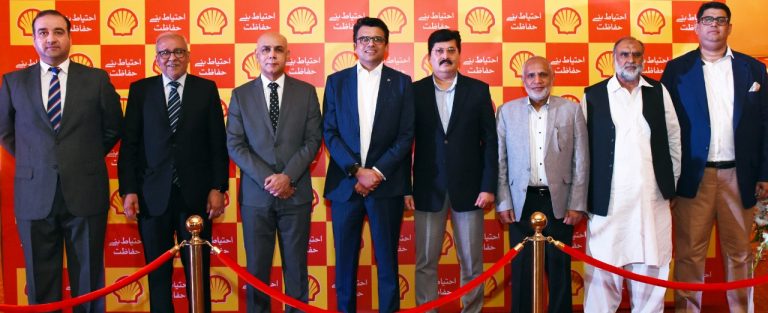
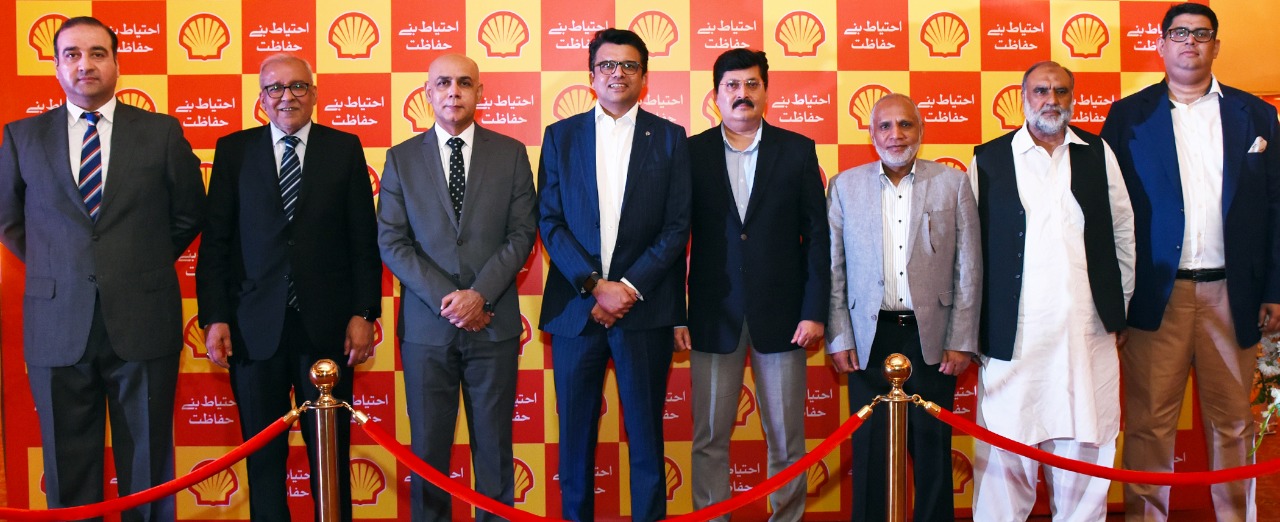
October 28, Pakistan: Shell Pakistan promotes biker and rickshaw refuelling safety to its consumers and has launched a safety campaign, named “Ehtiyaat Bunay Hifaazat” (precaution means protection), aimed at creating awareness amongst 2 wheelers and 3 wheelers of the risks of staying seated on their vehicles while fuelling. An industry level event was organised and attended by representatives of the Oil and Gas Regulatory Authority (OGRA), the Oil Companies Advisory Council (OCAC), and Oil Marketing Companies (OMCs) in Pakistan to jointly collaborate and progress.

In Pakistan, there are approximately 25 million 2 wheelers and one million 3 wheelers.  In the last five years, an estimated 2,000+ fuelling incidents have been reported in the industry related to the aforementioned vehicles. It is important for bikers and rickshaw drivers to get off their vehicles before fuelling their vehicle tank. This practice significantly reduces exposure to gasoline vapours during refuelling, reduces the risk of injury and allows time to react in case of an incident.

Speaking at the occasion, the Chief Executive & Managing Director of Shell Pakistan Limited, Waqar Siddiqui, said: “Safety of our staff and customers is of utmost priority.  We have embarked on a journey to create awareness about the safety risks while fuelling.  Many a time it is not an easy dialogue, nevertheless it is an important one.  We have learnt from other countries who have been able to inculcate these practices.  Shell Pakistan is keen to bring about this mindset and behaviour change amongst people and to help drive this industry change.’

  • Press Release

Why You Should Export?

You could significantly expand your markets, leaving you less dependent on any single one. Greater production can lead to larger economies of scale and better margins. Your research and development budget could work harder as you can change existing products to suit new markets.

Exporting is the process in which a business produces goods and services in one country to then sell them to buyers in another country. With new businesses going global every day, and many advantages of exporting, now is a great time to join the more than……

Businesses that focus on exporting expand their vision and markets regionally, internationally or even globally.

Six Benefits of Exporting for Small Businesses

Every business, however small, can grow successfully through exports

  1. Higher Demand: Global demand for any product is much higher than the demand within any one country. 
  2. Increased Profits: On average, exporters grow more quickly, make more sales and employ more people. See the opportunity in that?
  3. Diversify Risks: A wider geographical spread lessens the impact from local downturns or disasters. This is a big advantage and makes your company recession proof to a large extent.
  4. Lower production costs: Increased sales should translate to higher production volumes and lower manufacturing costs as you can order in higher quantities and your overheads are spread over a much larger volume.
  5. Education & Innovation: You will be exposed to new and different ways of doing things, new technology etc. This will lead to better products and services.
  6. Increased Lifetime of Product: You can circumvent the standard lifecycle of a product (launch – growth – maturity – decline) by staggering the launch in different locations. So, as the product reaches maturity at home you can launch elsewhere.

The advantages of direct exporting for your company include more control over the export process, potentially higher profits, and a closer relationship to the overseas buyer and marketplace, as well as the opportunity to learn what you can do to boost overall competitiveness.

Tax Benefits: Usually the government gives tax and customs duty benefits to firms engaged in exports. Your raw materials for export processing can be imported duty free while your company’s income would qualify for a lower tax rate as compared to income earned inside your country.

About Author: Imtiaz Rastgar graduated from the University of the Punjab and turned his passion for science, engineering and metallurgy into his export business.

The company, Rastgar Engineering, which he founded in 1967 was exporting heavy axle parts to more than 70 countries by the time he retired from it. As a serial entrepreneur, he founded several other companies which are also running successfully within the engineering, manufacturing sphere.

He served as CEO and VP of the Engineering Development Board of Pakistan 2004-2007. His services were acquired by the Ministry of Foreign Affairs, CBI, The Netherlands as an Engineering Sector Expert 2007-2017.In his capacity as CEO and VC EDB and as Engineering Sector Consultant for CBI, he has promoted export of engineering sector goods from Pakistan. There are many case studies of these efforts.

Now his consultancy and export marketing company PMX www.pmx.com.pk is available to all companies desiring to grow by going global.

Imtiaz Rastgar serves on the Board of Directors of Pakistan Aeronautical Complex, National Centre for Physics, Pak-Austria FachochschuleUniversity, and several other seats of learning.

This article has been published in Automark Magazine’s October-2022 printed edition.

Al-Ghazi Tractors Launches 2023 Models on its 40th Anniversary

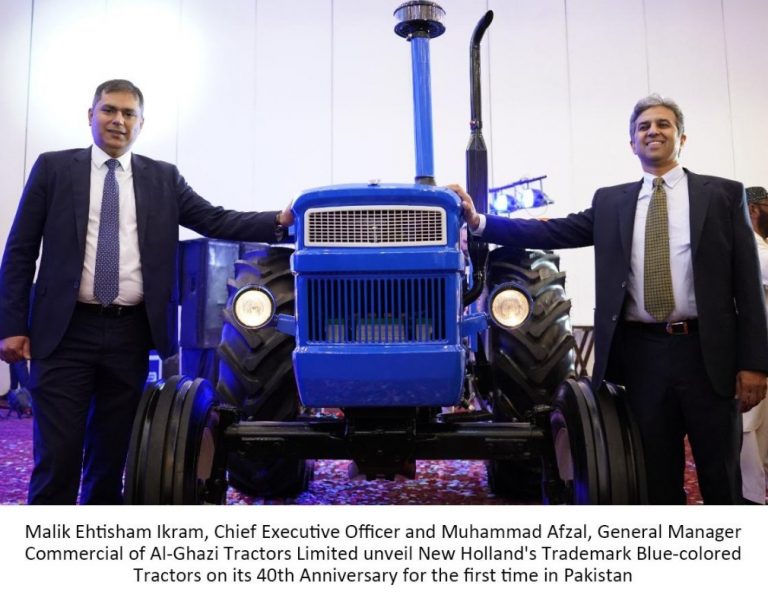
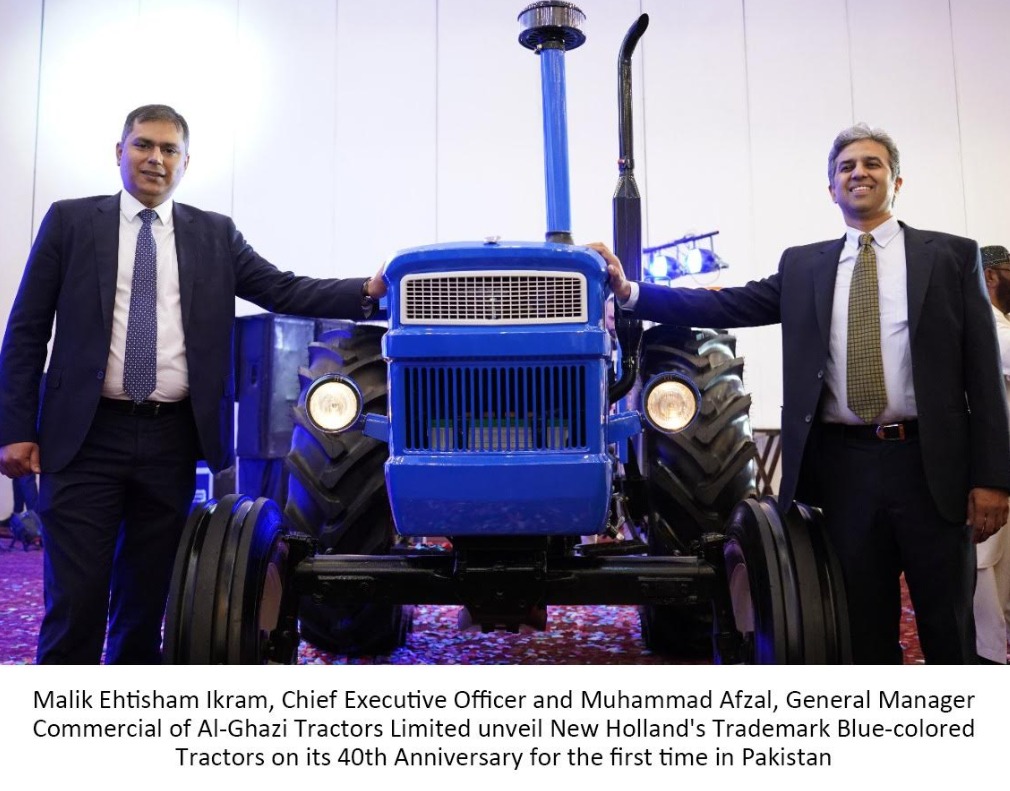
Lahore, Pakistan, 6th October 2022: To commemorate 40 successful years of its existence, Al-Ghazi Tractors Limited (AGTL) has introduced new 2023 models with high gloss paint features for all New Holland tractor variants. 

The new 2023 models will be offered for the following models: 480s, 480 Power Plus, Ghazi, 640, 70-56, and Dabang. In addition, AGTL is going to take the market by storm with a special batch of New Holland’s Trademark Blue-colored Tractors for the first time in Pakistan.

The brand-new models will enable farmers to have higher yields, thanks to AGTL’s cutting-edge technology for planting, cultivating, fertilising, and harvesting crops. The upgraded variants are highly durable, fuel and cost-efficient. The models will also feature 2023 engraved Chassis Plates.

Speaking at the 40th anniversary of the company, Malik Ehtisham, Chief Executive Officer, AGTL, stated: “AGTL lauds all of its devoted customers and partners who have stood by it through thick and thin over the years. We are working towards making AGTL the industry leader in the agriculture equipment industry. AGTL is also making significant investments in technology to uphold the highest standards in agriculture by providing our farmers access to state-of-the-art tools and modern methodologies with the help of our recently set up R&D Department. We are using advanced technology while adhering to the vision of our shareholders to ensure that AGTL becomes the benchmark for others. We hope that our customers will enjoy yielding with our ultra-modern, cutting-edge, ever-dependable, and robust tractors”.

All of AGTL’s customers are also eligible for a free servicing programme. The customers can get their vehicles serviced at their respective local dealers.

Al-Ghazi is a joint venture of the Al-Futtaim Group and CNH Agricultural Machinery Company. Its market share in the tractor manufacturing and sales industry of Pakistan stands at 46% year to date. It also marks the highest market share Al-Ghazi has had in the last 14 years, which is a testament of trust that our partners, farmers and dealers have in us.

– Press Release

Will Pakistan be able to export Electric Vehicles in coming Future?

Electric Vehicles are the vehicles which are powered by the electricity through an internal rechargeable battery system or an extravehicular source of electricity. These vehicles are different from gasoline vehicles which have nothing to do with the electricity or charging system. EVs were introduced most likely in the late 90’s and came to display in the early 2000 in US and European countries. The purpose of introducing EVs was to give the world an environment-free and cheaper means of transport in terms of fuel and energy consumption. And now, it has become the need of the hour to adapt and adopt EVs as early as possible to give help the environment breathe again.

Electric Vehicles have become vital and the need of the hour across the globe. The world is already suffering from a huge scarcity of petrol and diesel. This causes the petrol producing countries to supply it at an exorbitantly high rate. The prices of petroleum products are historically sky-high. At the same time, the gasoline vehicles have proved to be disastrous for the world’s environment too and affecting our universe drastically. The world’s increasing pollution, global warming and affected greenhouse effects are demanding us to move forward and get rid of the poisonous objects and replace them with more effective and environment-friendly ones. So, shifting from gasoline vehicles to electric ones also have become imperative.

It has been almost more than ten years since the electric vehicles started to appear in the global market, and they got an astounding rise in their sales after 2011. The importance of Electric Vehicles (EVs) has been acknowledged globally and the countries: China, Germany, US, UK, France and some other European countries are not only producing EVs but also exporting them to other countries in the world. The demand of using EVs in different countries, more importantly in US, Germany and across Europe is consistently rising. Despite some countries like US and Germany produce EVs, they have to import EVs too to meet the demand of the people in their countries. This gives opportunity to global exporters to step in.

In the race of producing and exporting EVs, Germany, Belgium, China, South Korea, and US are competing each other whereas Slovakia and Czech Republic are also in the race with a bit of lower pace like few more European countries. Germany has proved to be the biggest exporting country of the EVs while China is representing the Eastern region as the biggest supplier of the product. India the neighbouring county of Pakistan has risen in the world of technology and aims to start export of the EVs soon. Mahindra Group of India has launched XUV 400, an electric compact SUV at reasonable price for the locals. Here the question arises where Pakistan is standing in this regard; whether Pakistan will be able to produce enough EVs so it can export to other countries, whether Pakistan will bring unique and extra-ordinary revolution which will make its EVs worthier and more enchanting to export for importing countries. The market of EVs is extending gradually and this is the time for Pakistan to make the most of the demand of the EVs and take major initiatives.

Pakistan in the list of EVs exporters found nowhere and it seems if the country kicks off producing enough number of EVs and promoting them properly internationally, this list might give Pakistan some space to fit in as EVs exporting country. Pakistan needs to highlight the importance of the safer environment, eradication of global warming, and reduction of pollution to its peoples too. So that the local and international brands produce EVs for locals as well and sustain here until they Pakistan rises as an exporter of the EVs. Pakistan must build ideal paves and terrains for the EVs so that the locals find ease and comfort in preferring electric vehicles over gasoline ones.  The question is how can this be done? Has any initiative been taken by the county? Has any company been contacted to produce EVs for Pakistan to export?

The government of Pakistan, in 2020, stepped forward and took some initiatives to promote the production of electric vehicles by providing tax incentives to the producers. They stressed and encouraged the use of EVs and hybrid vehicles in the country. But the manufacturers have not given a favourable response to this initiative of the government because of the limited market. This is a solvable issue. The local market can also be expanded through proper strategy and execution. The people here should have been given awareness at a large scale on the importance of environment-friendly bikes, cars, and other vehicles. Nevertheless, Pakistan can produce EVs locally to export to those countries where EVs are on high demand. Pakistan has the potential to attract manufacturers to launch Pakistan-made EVs for the world. Pakistan has the potential to be knows as an EVs manufacturer as it has fame in textile industry.

The authorities in Pakistan have given a green signal to one of the leading brands in motor vehicles “MG”. The MG is a British based automotive marque which produces and exports gasoline vehicles. It has kicked off producing and exporting EVs. Now, MG aims to start EVs production locally in Pakistan to hit the local market as well as explore its exports from Pakistan to the region and other regions too.

We approached the MG marque and asked them a couple of questions for our readers.

While talking about the vision of the MG brand regarding EVs production and export from Pakistan, the MG General Manager Marketing Division Syed Asif Ahmed reply Automark that MG was committed to localisation and automotive exports from Pakistan. The first step to ensure automotive export was achieving global homologation and safety standards. In the AIDEP 2021 – 26 (Auto Policy) A road map had been identified for implementation of WP 29 standards. MG had already started working on the localisation of MG HS and planned to explore export RHD to relevant markets.

According Syed Asif of MG, the EVs industry has to move faster in order to get fair share of global automotive trade. The government has announced the new policy for the production and export of EVs in the country for the brands and manufacturers. The encouraging aspect of the new policy is that it requires local manufacturers to export 1% to 10% in coming 5 years which can be considered a healthy sign.

This is going to be a really positive sign in terms of Pakistan economy. If MG starts producing and exporting EVs, this will help Pakistan gain more foreign exchange, employment, and more DGP growth. So, Pakistan seems to be an exporting country in future. The challenge is how quickly Pakistan can kick off EVs exports to other countries. The sooner it takes, the healthier outcome will Pakistan have.

MG thinks that Electric Vehicles are inevitable. Pakistan has a chance to join the EV revolution by becoming part of the global EV supply chain. It can be hardware like Motors or software like Battery Management Systems.MG Pakistan is to learn from its majority shareholder SAIC, a Chinese automobile manufacturer, to develop a local talent pool of suppliers. MG ZS and MG 4 Mulan are very well accepted in European and Australian markets. In Pakistan too these models will pave the way for local EV revolution.

We also contacted an automotive expert Mashood Khan for our readers to know the progress and challenges of the industry in terms of export. He told Automark that all the assemblers of the vehicles who were working in Pakistan had not got the opportunity yet to export their assembled cars and other vehicles to other countries. This looks discouraging, Khan further told us that their suppliers and vendors were still seeking some room and opportunity to work on electric vehicles in the country. Mashood Khan expressed his hope that as any of the brands like MG starts working in the country to promote export of the EVs, their vendors will be right there to start their work too in the country.

EVs are the future of the world. This will take a while to spread EVs globally. This is possible only if the authorities understand that the necessity is the mother of invention. Global warming has become one of the biggest challenges all over the world. The world so is Pakistan thinking to rebuild the environment.

A study tells that in the field of gasoline vehicles the leading exporting countries are Germany, Japan, US and others. Likewise in the export of the EVs, so far, Germany is one of the leading countries. In this scenario Pakistan lies far behind and in fact is not seen on the map of gasoline exporting countries. Hence it seems quite challenging for the country to stand out as an exporter of EVs. This can only be possible through contacting, contracting and giving healthy business environment to the local and international brands of the EVs so that they can not only produce but also explore their exports from Pakistan to the countries across Asia and Arab. Pakistan can also help local manufacturers provide them with international technologies, automobile engineering facilities to grow and confront the global exporters. Two aspects that Pakistan should ponder over: first is to introduce user-friendly EVs with unique features that can distinguish Pakistani EVs from others, second is to meet the least cost of production so that the Pakistani EVs can be displayed for export at a cheaper rate than its rivals.

This is high time. Pakistan’s decision to give a go-ahead to the international brands like MG to produce and work on the export of EVs is being considered a much-needed decision. Pakistan needs to do more in this respect, lest it stand far behind in the list of its rivals.
Banning auto parts and tooling imports will likely result in food insecurity

In Pakistan, the solution to every problem is to ban it. If crime scales up pillion riding ban is certain to impose; if schools are exposed to threats, close the schools and stay at home; and so on. I remember a comedian was asked what would happen if the twin towers had been destroyed in Pakistan. Simply, a two-month ban on pillion riding, the comedian replied. We never bother to find the root cause to address the issues.

Similar happened with the ongoing ban on imports of 919 items on 19th May 2022 due to pressure on our foreign reserves under an impulsive move without calculating the net after effects. Ostensibly, this proscription was imposed to impede the widening trade gap and keep our foreign reserves to a certain level to avert the possible default hovering over our heads. Rising interest rates of raw materials, energy costs, freight, and sky-rocketing inflations had already robbed the industry of competitiveness and ease of doing business. This outlawing is furthering the nightmares of the manufacturers, now seeping down to the masses.

Generally, the economic sense warrants a complete import ban to hold the dwindling foreign exchange. But the scene behind the scene may be seen differently. To contain foreign exchange outflow (FE), an ongoing fashion, is proven like holding sands in a fist. The ban on the raw materials and those parts needed in the process and other industries is not a rational decision at all. Its negative impact will be glimpsed at the time of tax collections, in addition to the export shortfall, unemployment, and GDP decline. In May 2022, the imported items a must by the process industries were hooked with a classified list that required special permission from the SBP. Some consignments are lying on the ports, equating the value with demurrage. The most erroneous ban is on the items that fall under chapters 84 & 85 of SRO 655, which are part of the manufacturing of the mother automotive engineering industry. This industry is fully documented, employing four million people and Rs.billions to the national exchequer. Just calculate the tax on a car to grasp the impact.

On the tantrum of manufacturers, SBP invoked a condition on the tooling and parts needed for manufacturing. Engineering concerns were asked to furnish the immediate past import data to set a formula to fix the quota. The 50% quota was allocated on past performance, which has never been released till today, instead of high hopes. Some renowned Original Equipment Manufacturers (OEM) have reduced their production, and some are on the way. They might think about lowering the import dependency and mulling over import transfer technology. Interestingly, leakages are still there through smuggling, misreporting, and substitution. The auto and mobile sectors are especially in a hysteric mode.

The better-off government let run the wheel of the industry by allowing the import of raw materials, tooling, necessary parts of production, and machinery. Nonessential and luxury items being produced locally do not argue for not banning them. The ways to narrow down the trade gap are to tighten our borders and take stern action against misrepresentation, which is all season in Pakistan. If this un-rational ban continues, we should be ready to import wheat, rice, sugar, and so on, as the financial muscles of the tractor industry are also getting exhausted. The illustration of Siri Lanka is before us, where a ban on agrochemicals led to a drastic lowering of the agriculture yield. Foreign Exchange saved from banning imports of auto and tractor parts would be far less than the spending on import of agro-essentials. It would be prudent for the national financial managers to exempt chapters 84 & 85 of SRO 655 from the permission of imports, plug the loopholes, and impose a complete import ban on luxury, nonessential, and what is being produced locally. Indigenization is the only open secret if we want to survive in a world where survival is only possible for the fittest, and it’s not possible without doing the ease of business to attain competitiveness and economy of scale.

The author is Secretary General PAAPAM and freelance writer

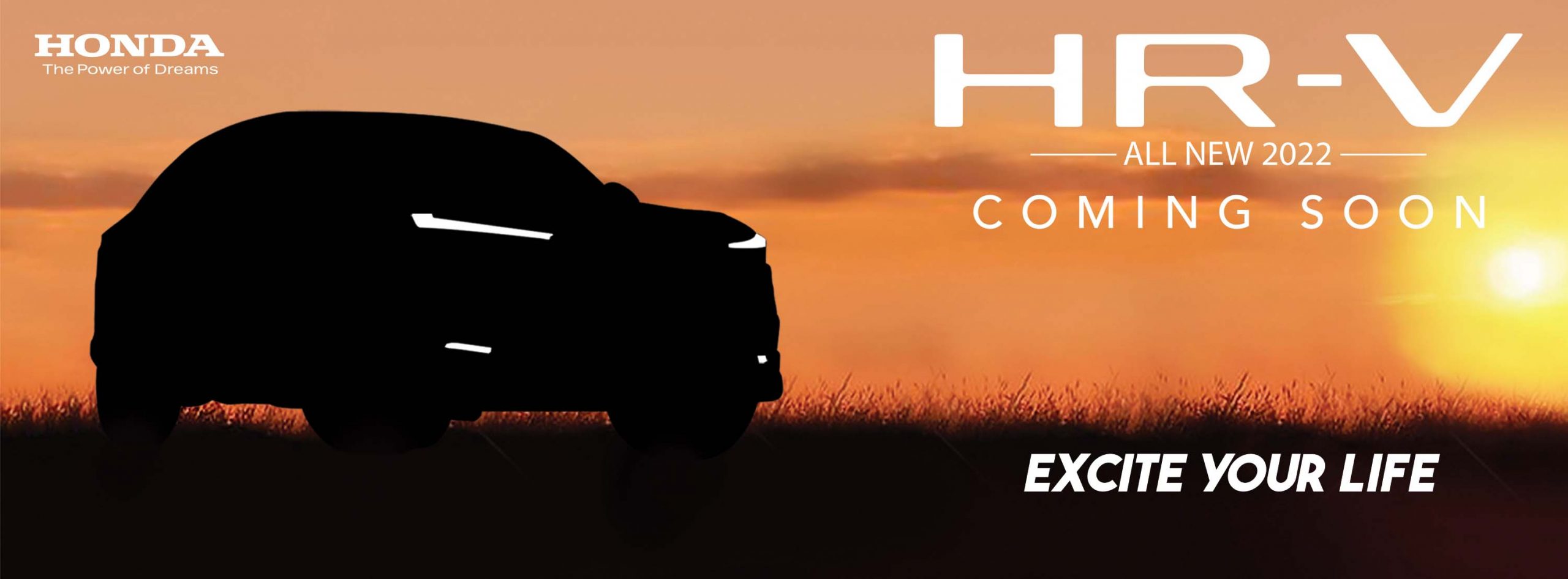
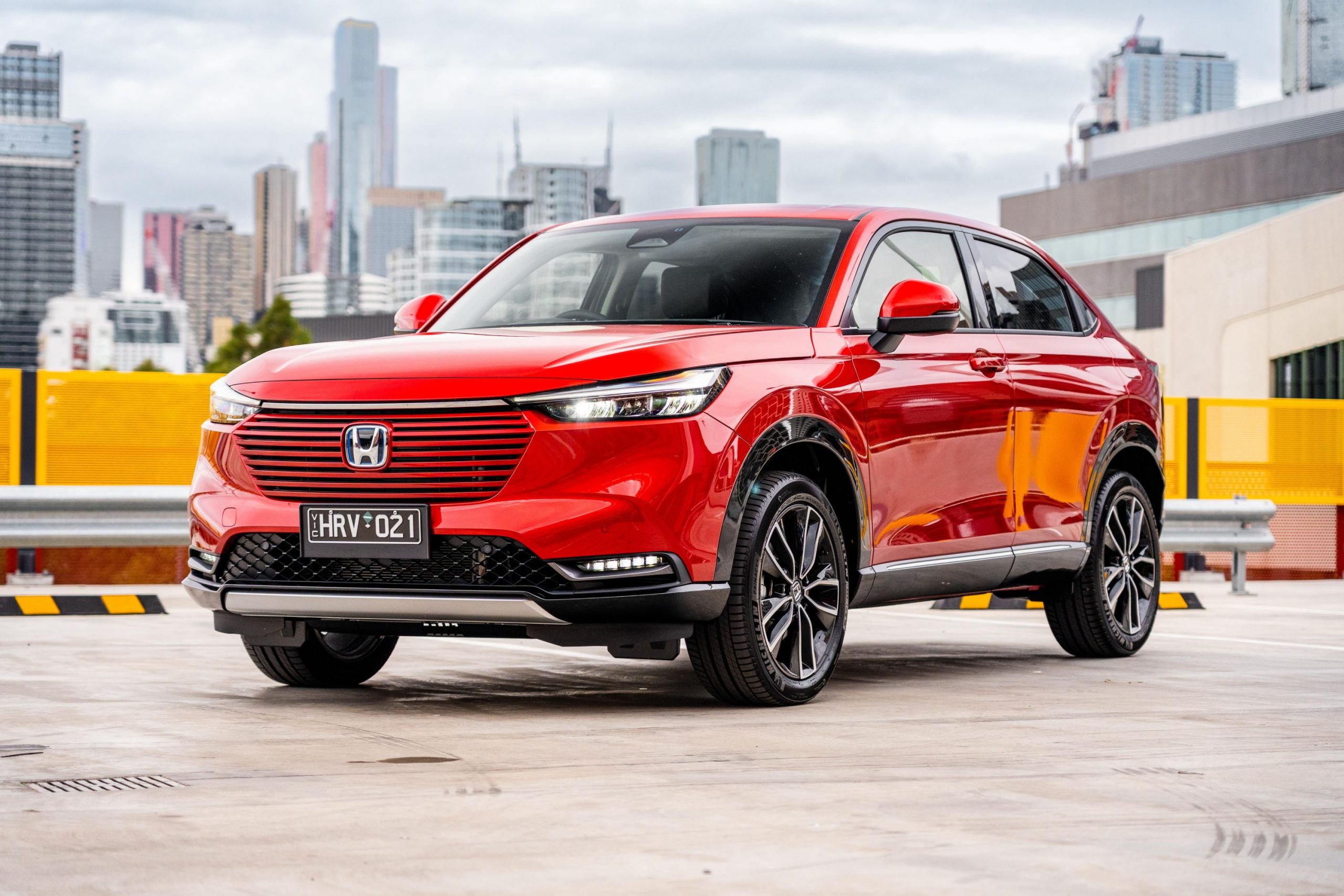
Honda HR-V will launch in Pakistan as per plan

All news in market is fake speculation

ALL NEW 2022 – COMING SOON

As Honda Atlas car Pakistan announced the debut of their new product Honda HV-R SUV during Pakistan Auto Show2022 in Lahore.

Since last few days some social media channels, websites and print media claim that Honda puts hold its plant to launch HR-V in Pakistan or postponed its plan due to the current economic situation of Pakistan, and it is not feasible that any company can launch a new car in the present circumstances.

Reliable sources confirm Automark that company didn’t hold their plan to launch, they are still going through the plan. Honda will definitely launch their new car model Honda-HRV soon.

All 50 states get green light to build EV charging stations that span 75,000 miles of highways

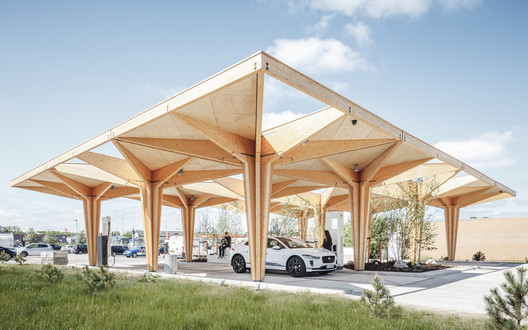
The U.S. Department of Transportation said on Tuesday it has approved plans for electric vehicle charging stations for all 50 states, Washington, D.C. and Puerto Rico, which cover about 75,000 miles of highways.

Earlier this year, the Biden administration allocated $5 billion to states to fund EV chargers along highways for five years as part of its two-tier infrastructure package. Under the plan, titled the National Electric Vehicle Infrastructure Formula Program, states submitted their proposals for EV infrastructure implementation to the Joint Office of Energy and Transportation.

The U.S. Department of Transportation said on Tuesday it has approved plans for electric vehicle charging stations for all 50 states, Washington, D.C. and Puerto Rico, which cover about 75,000 miles of highways.

Earlier this year, the Biden administration allocated $5 billion to states to fund EV chargers along highways for five years as part of its two-tier infrastructure package. Under the plan, titled the National Electric Vehicle Infrastructure Formula Program, states submitted their proposals for EV infrastructure implementation to the Joint Office of Energy and Transportation.

It’s unclear how many charging stations the money will support, and states have not yet shared specific charging locations. Transportation Department officials have said states must install stations every 50 miles and ensure that every station is within a mile of an interstate highway.

“We have approved plans for all 50 states, Puerto Rico and the District of Columbia to ensure that Americans in every part of the country — from the largest cities to the most rural communities — can be positioned to enjoy the savings and benefits of electric vehicles,” Transport Secretary Pete Buttigieg said in a statement.

The White House has invested approximately $135 billion in the development and creation of electric vehicles and aims to build a national network of 500,000 EV charging stations by 2030. Tax credits included in the recently passed Inflation Reduction Act will give consumers incentives to buy EVs.

Despite an increase in electric vehicle sales in recent years, the transportation sector is the largest source of greenhouse gas emissions in the country. The lack of convenient charging stations is one of the biggest barriers to EV expansion across the country. The US is the third largest EV market in the world after China and Europe.

The government has touted EVs as more affordable for Americans than gas-powered cars and has set a target of 50% electric vehicle sales by 2030, which will help its broader commitment to halve emissions by 2030 and reach net-zero emissions by 2050. The government has also committed to replacing its federal fleet of 600,000 cars and trucks with electricity by 2035.

California, the nation’s most populous state and the center of American auto culture, banned sales of new gasoline-powered vehicles in August from 2035. The state will likely face challenges in meeting that timeline, such as installing of sufficient charging stations and having sufficient access to materials needed to make batteries.

“With this green light, states, the District of Columbia and Puerto Rico can step up their work to build EV charging networks that will make EV driving easier and more affordable for their residents and that will serve as the backbone of our national EV network.” charging network,” Acting Federal Highway Administrator Stephanie Pollack said in a statement.

First Pakistani woman joins Koenigsegg Automotives

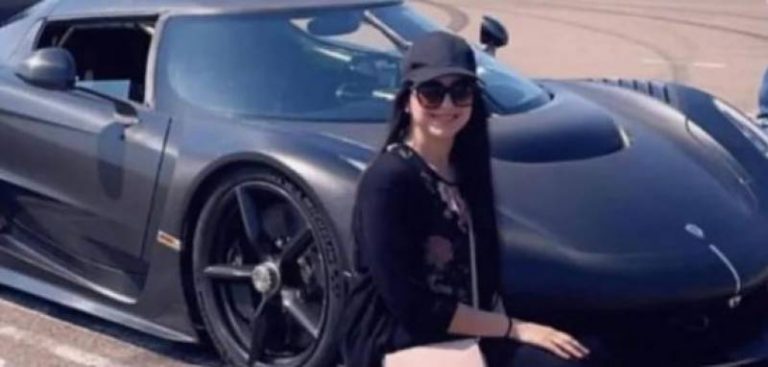
Gone are the days when Pakistani women would only dream about excelling in life and building a career for themselves. A proud moment for the country as the first-ever Pakistani woman, Amna Mustabeen Baig, has started working at the Supercar Automotive Engineer at Koenigsegg.

Baig holds a Master’s degree from the UK in Business Management and another master’s in Supply Chain Management from Sweden. Baig has more than three years of experience working as an automotive engineer. She has also worked for other well-known Swedish automotive companies such as Volvo Trucks and Scania.

With Baig’s appointment, women’s roles in the automotive industry have been augmented to a great extent.

For the unversed, Koenigsegg Automotive AB is a Swedish manufacturer of high-performance sports cars based in Sweden. Usually, this industry is a male-dominated industry.

Earlier, Farukh Kamran, a young Pakistani graduate from UET, became a part of the Swedish hypercar brand, Koenigsegg.

Courtesy: Daily Pakistan


Auto Industry of Pakistan helping flood relief funds

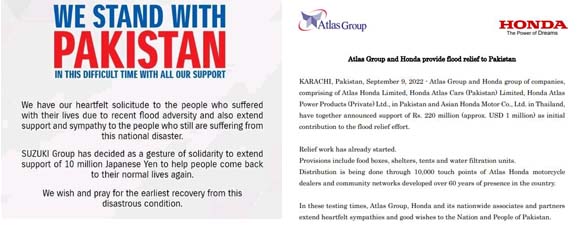
PKR 220 million for flood relief fund by Atlas Group & Honda

Suzuki Motor Corporation in Japan announced on August 31, 2022 that it will donate 10 million yen to help with the flood disaster in Pakistan.

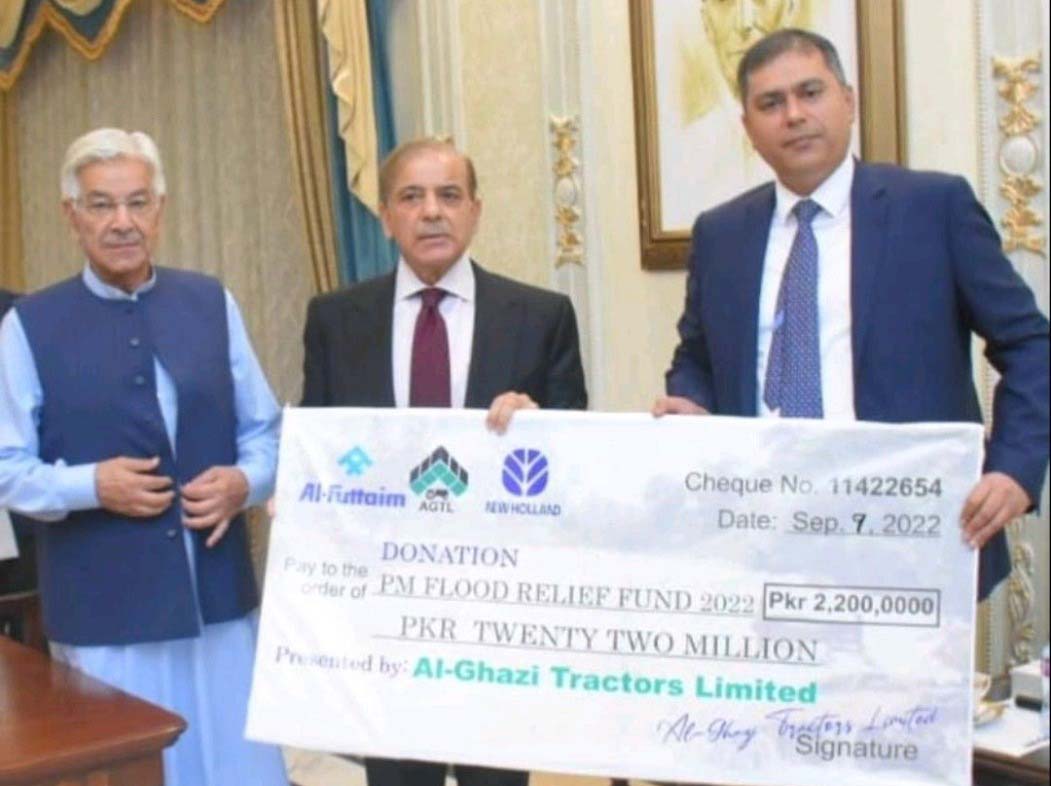
While Al-Gazi Tractor Limited, CEO met with the Prime Minister Mian Shahbaz Sharif at the PM House and presented a cheque of PKR 22 million for the Prime Minister Flood Relief Efforts. At the occasion, the CEO appreciated the efforts made for the relief for flood affectees.

Additionally, the company in partnership with its shareholders will provide further aid in the shape of medicines, food supplies etc., making the full amount of PKR 100 million.

Pakistan State Oil contributed PKR 10 million for the flood relief activities and PSO employees have contributed an additional approx. PKR 9 million from their salaries to help our brethren in deed.

This current situation in Pakistan has overwhelmed all of the people in the world to donate funds to the flood relief, Hereby some automotive industry companies have donated too. The Auto Industry of Pakistan is trying its best to help who are in need.

The large organizations should take these kinds of initiatives as the government cannot do so in the current situation.

Price increase of new cars shifts financial institutions CF Parallel focus on used car& SME lending.

According to study auto financing increased by 19.4% year-on-year in the fiscal year ended June 2022 & similarly gave boost to car sales.

Dear Readers Car sales in June-22 grew 106% YoY and 24% MoM in anticipation of increase in vehicle prices post-imposition of taxes.
Year-on-year increase in auto financing came mainly due to heavy order backlog, on a month-on-month basis, slowdown started to emerge on the back of rising auto financing rates.
Car financing was up only 0.32% month-on-month in June. New budget 2022-23 policies implementation started from July 1st, original equipment makers (OEMs) did not make any significant bookings considering huge dollar inflation & SBP import polies not issuing Letters of Credit (LCs) in compliance with State Bank of Pakistan’s (SBP) instructions to curb imports.

Loan on used car / financing
Buying a used car on loan from bank is a good deal it can reduce borers burden to pay amount upfront. It is obvious that a second-hand car will cost less compared to brand new car, thereafter, the used car loan financing will also be a lesser amount, meaning lesser monthly installments to pay.
When getting a used car, the choice of models isn’t dependent on its current on-road price. The amount you invest in a new car of a particular model can buy you a higher model in the same amount or probably even lesser in case of a second-hand car of the same make. So you may also be able to retain its original value when you intend to resell it in the future.
To get your car on loan, you will also be required to make down payment and pay government taxes as applicable.
Different Banks offer different loan option/ package considering customers profile, since demand of used cars is increasing banks & other financing institutions are introducing optional plans to create ease for customer’s in-accordance to updated SBP PL lending guidelines.

Options offered by Banks on used cars
Buying used cars on residual value, used vehicle up to 9 year can be financed, Minimum markup & insurance rates are being offered on used car by Institutions. Considering recent economic recession some Banks have also started cash loan against pre-owned vehicles as collateral.

Used Car Financing program offered by Assemblers in collaboration with financing institutions.
Toyota &Pak Suzuki in alliance with banks offer New and Used Car financing options for those who wants to own a car. Partnering Banks also offer customer ease of choosing a suitable payment plan.Rumors are that more industry assemblers are working on their Certified used car segment & intend to lunch same in the coming time.

Documentsrequired with regards to SBP PL for financing vehicle.
• Filled Application form
• CNIC copy’s
• 2 passport size photographs (colored)
• Bank Statement/Bank certificates (6 months)
• Recent Salary Slip (3 months)
• Any other documents may be required under the Bank approved policy.

Eligibility
• Minimum income criteria (Monthly installment should be around50% of net per month Income)
• Income segments: Co-applicants (up to 2), Rental Income, Foreign remittance, Saving/Term Certificates
• Age Criteria
o Salaried – min 21 years & max 60 years
o SEB/SEP – min 21 years & max 65 years
o Co-Applicant – min 21 years & max 70 years


Lists of CF Banks in Pakistan*.

  1. Bank Alfalah
  2. Habib Bank Limited
  3. Muslim Commercial Bank
  4. Askari Bank Limited
  5. United Bank Limited
  6. Bank Al Habib
  7. JS Bank
  8. Meezan Bank
  9. Standard Chartered Bank
  10. Summit Bank
  11. Bank Islami Pakistan
  12. Bank of Punjab
  13. Bank of Khyber
  14. Al Baraka Bank
  15. MCB Islamic Bank Limited
  16. Faysal Bank
  17. Dubai Islamic Bank
  18. Allied Bank Limited
  19. Habib Metro Bank

ORIX Leasing Pakistan Limited (“OLP”)
OLP Financial Services Pakistan Limited (“formerly ORIX Leasing Pakistan Limited”) was established in July 1986 as a joint venture between ORIX Corporation, Japan and local investors. The Company is listed on the Pakistan Stock Exchange.
OLP is headquartered in Karachi and has 38 branches situated in 35 cities. Its major shareholder is ORIX Corporation Japan having 49.6% shareholding. Established in 1964, ORIX is one of Japan’s leading integrated financial services groups with operations in 37 countries worldwide.
OLP offers value-added financial products and innovative customized services to a wide array of customers throughout Pakistan. The blend of international experience and local expertise acquired over the last 33 years provides OLP a distinctive competitive edge. OLP is the largest SME focused Non-Banking Finance Company in Pakistan.
OLP Consumer Auto Division offers flexible product range suiting specific requirements and financial needs of individual customers. OLP claims that their plans are as easy to understand as road signs.

Salient Features
• OLP Consumer Auto Division offers both leasing and financing facilities of vehicles.
o Straight Leases
o Cash Back Leases
o Step up and Step Down Leases
o Balloon Payment Leases
o Leases with Grace Period
o Financing against vehicles
• An auto lease contract is a non-cancellable contract for a specific period of time, typically from three to five years.
• The lessee will receive the full benefits of all warranties, guarantees, etc., offered by the manufacturers.
• The vehicle is insured by OLP on behalf of the lessee with Pakistan’s leading insurance companies and OLP’s lessees will enjoy the following distinctive features: No deductible amount on the policy, coverage of terrorism, coverage of life insurance, coverage of third party limited liability insurance.
• The auto lease comes with a complementary Tracking Device option.
• Leasing is acceptable within the Islamic modes of financing as fixed rental payments are made.
• OLP Branch Network is present throughout Pakistan.
• OLP Consumer Auto Division can lease almost all types of vehicles ranging from small to large ones.
Eligibility Criteria
Any individual who relates to:
• Business entity from sole proprietorship and partnership to public and private companies.
• Corporate employees from small and medium-sized enterprises to large corporations.
• Self-employed persons such as doctors, engineers, architects, lawyers etc.
• At least 21 years of age at the time of leasing or financing.
• A resident of Pakistan.