Home Blog Page 24

Exploring Australia’s Auto Parts Aftermarket and Economic Landscape

Australia: An Overview and Economic Insights Australia, the only country that spans an entire continent, ranks among the largest nations globally. Despite its vast natural resources and fertile land, over a third of Australia is desert. Canberra, the nation’s capital, is strategically located between the major economic and cultural hubs of Sydney and Melbourne. The Australian economy is primarily driven by its service sector, which accounted for 62.7% of GDP and employed 78.8% of the labor force in 2017. During the peak of the mining boom in 2009-10, the mining industry contributed 8.4% to the GDP. Australia excels in income, jobs, education, health, environmental quality, social connections, civic engagement, and life satisfaction.

Auto Parts Aftermarket in AustraliaThe Australian auto parts aftermarket is poised for growth, with an anticipated compound annual growth rate (CAGR) of 3.9% from 2024 to 2030. The market’s expansion is driven by the digitalization of automotive repair and component sales, along with advanced technological integrations in aftermarket component manufacturing.

Macro-Economic Factors Influencing the Market Australia’s economy has seen steady growth and low unemployment rates in recent years, boosting consumer confidence and purchasing power. Favorable interest rates and flexible financing options have further facilitated vehicle ownership. Additionally, government policies and incentives have spurred the adoption of electric and hybrid vehicles, contributing to market growth. Financial incentives and infrastructure development have encouraged consumers to consider environmentally friendly alternatives, fueling the overall growth of the passenger car market.

Market Size and Growth

More Than 2 Million Used Cars Sold in Australia in 2023

According to data released by the Australian Automotive Dealer Association (AADA) and AutoGrab, a total of 2,074,535 used cars were sold in Australia from January to December 2023. This robust supply of used cars coincides with a record year for new vehicle sales, underscoring the significance of the used car market in Australia. For every new car sold, 1.7 used cars were sold. The Australia Used Car Market was valued at an estimated USD 62.83 billion in 2023. Most of Australia’s vehicles are imported from Japan, Thailand, Germany, and Korea. Generally, imported vehicles are subject to Duty and Goods and Services Tax (GST). Toyota is expected to hold a market share of 24.9% in 2024, with a value market share of 24.2%.

Key Economic Indicators

  • Population: 26.1 million
  • GDP Annual Growth: 4.3%
  • GDP Per Capita: USD 61,340
  • Inflation Rate (2024): 3.6%
  • Interest Rate: 4.30%
  • Government Debt to GDP Ratio: 38.1%
  • Exchange Rate: 1 USD = 1.48 AUD
  • Import Tariffs: 10% to 25%

Transportation Options

  • By Air: Flights from Jinnah International Airport (KHI) to Melbourne International Airport (MEL) take about 15 hours and 30 minutes.
  • By Sea: Ship travel from Karachi Port (PKKHI) to Melbourne (AUMEL) takes approximately 21 days and 19 hours, with vessels departing every 1-2 days.
Reserved: DAYS


Key Events in Australia Auto Parts Sector for 2024~2025

Upcoming Exhibitions

25 ~ 27 Oct 20244WD & Adventure Show4WD, Caravanning and Camping, Boat, Fishing and more Adelaide Showground, Wayville. SA Australia
March ~ April (Date Not decided yet) 2025Australian Auto Aftermarket Expo 2025    Auto PartsMelbourne Convention & Exhibition Center, South Wharf. Australia
15~18 May, 2025Brisbane Truck ShowTruck New and oldBrisbane Convention & exhibition Centre, Brisbane. Australia

Conclusion Australia presents promising opportunities for the auto parts aftermarket, bolstered by a robust economy and favorable conditions for growth. Exploring these opportunities can benefit both the nation and individual companies, driving economic stability through increased exports. Embracing this potential can lead to a more prosperous future for all stakeholders involved.

By Mashood Khan, Director – Mehran Commercial Enterprises, Expert Auto Sector / Former Chairman PAAPAM

Where Science Meets Speed: The Formula for Automotive Performance

Dear readers! Understanding of automotive from manufacturing to after-service, this comprehensive overview highlights the interconnected landscape of the automotive industry, at every stage, from manufacturing to after-sales services, plays a vital role in ensuring vehicle performance, durability, and customer satisfaction. More than just a look at manufacturing, this expansive view of the automotive industry shows you how all parts of it are interconnected. Performance sustainability and customer satisfaction, in turn, depend on a seamless functioning from the manufacturing to the sale stage of the vehicle. It gives a broader insight to the multitude of fundamental workings that carry us in our daily fossil fuel-empowered way. Every step, from the drawing board in development to production and logistics through sales channels right on down to after-sales support is mission-critical in producing great cars that send drivers home smiling. But with the changing landscape of mobility, sustainability will be even more critical to meet rising demands and guarantee an automotive-oriented future. By appreciating the complicated workings behind our everyday vehicles, we gain a deeper respect for the engineering marvels that take us down the road. From the initial design and production phases to logistics, sales, and after-sales support, each stage is vital in delivering high-quality vehicles and exceptional customer experiences. As the industry evolves, embracing sustainability and technological advancements will be key to meeting the demands of the future and ensuring a sustainable and prosperous automotive landscape.

This article presents how front-line scientific breakthroughs and engineering wonders combine to drive modern high-performance vehicles. As we embark on a fact-finding mission, let us learn all about the innermost workings of how physics, materials science, aerodynamics, and cutting-edge technology all blend to form a perfect symphony to take on the road and track. Accordingly, this is what makes a car truly “fast”, but let us delve into the science behind it to know the main ingredients of the way to fast car compounding. The abovementioned list just scratches the surface of the scientific puzzles behind a car’s speed. However, backed by these and other scientific and engineering principles, car manufacturers create high-performance vehicles that challenge the edge of speed and handling. While horsepower and lap times generally determine fast or slow, performance extends beyond raw speed as you already know. Our skills as drivers, the condition of the road, or even the weather could be a factor here. A high-performance car, especially one from an esteemed automaker like Cadillac, should be nothing if not for fun to drive; it’s all about performance that amazes and thrills behind the wheel–not just what factors are written on a spec sheet. The mathematics of automotive performance is a broad field that draws from many engineering disciplines and scientific principles. Knowing these factors lets us understand the incredible engineering gymnastics involved in making machines that tickle our imagination into overdrive. The intersection of front-line scientific advancements and engineering marvels that drive the evolution of high-performance vehicles. This journey researches the intricate details of how physics, materials science, aerodynamics, and advanced technologies combine to push the boundaries of what is possible on the road and track. It’s a symphony of science and engineering working in perfect synchronization, and this understanding of what exactly makes a car “fast”, so let us probe into the key elements in the formula for automotive performance, however, these are just some of the scientific secrets contributing to a vehicle speed. The seamless integration of various scientific principles and engineering expertise allows car manufacturers to create high-performance machines that push the boundaries of speed and handling. As we are aware that horsepower and lap times are important metrics, there’s more to performance than just raw speed. Driver skill, road conditions, and even weather can play a role. The true mark of a high-performance car lies in its ability to deliver an exhilarating driving experience, seamlessly blending power, handling, and driver feedback. The formula for automotive performance is a complex topic, where various engineering disciplines and scientific principles come together. Understanding these factors allows us to appreciate the incredible feats of engineering that go into creating high-performance machines that capture our imagination.

Powertrain Innovations: Powertrain advancements are intertwined with the rise of connected car technology. Vehicle-to-everything (V2X) communication allows cars to interact with infrastructure and other vehicles, potentially optimizing traffic flow and improving safety. It all starts with the heart of the beast – the engine. Horsepower (hp) is a common metric, but it’s only part of the story. Torque, measured in pound-feet (lb-ft), represents the twisting force that translates engine power into acceleration. Modern engines utilize various technologies like turbochargers and superchargers to boost power output, while advancements in materials science allow for lighter and more efficient engines.The heart of any high-performance vehicle lies in its powertrain. Advances in engine design, such as turbocharging, direct fuel injection, and hybrid powertrains, enhance power output while improving fuel efficiency and reducing emissions. Seamless and rapid gear shifts are essential for maintaining speed and performance. Dual-clutch transmissions (DCT) and continuously variable transmissions (CVT) offer improved acceleration and efficiency.Utilizing materials such as carbon fiber, aluminum, and advanced composites reduces vehicle weight, enhancing speed and handling. These materials provide the strength needed for safety without the bulk. Powertrain innovation is driving the automotive industry towards a cleaner and more efficient future. With continued advancements in battery technology, alternative fuels, and connected car technology, we can expect even more exciting developments that will transform the way we drive. Powertrain innovations are revolutionizing the automotive industry, driving significant improvements in performance, efficiency, and sustainability. From advanced internal combustion engine technologies and electrification to alternative fuels and integrated control systems, these developments are shaping the future of mobility. As the industry continues to evolve, embracing these innovations will be key to meeting the demands of a more sustainable and dynamic automotive landscape.

Aerodynamic efficiency is crucial for reducing drag and enhancing speed. Aerodynamic efficiency is more than just a design philosophy, this is a critical factor in creating environmentally friendly, fuel-efficient, and exhilarating driving experiences. By understanding the principles of aerodynamics, we can appreciate the engineering marvels that allow us to navigate the world with greater efficiency and performance. Advancements in computational fluid dynamics (CFD) software allow engineers to simulate and optimize aerodynamic performance before a car is even built. Additionally, the exploration of new materials and active aerodynamic components promises even more efficient and performance-oriented vehicles in the future. Aerodynamic efficiency is not just for high-performance cars. Even small improvements can significantly impact fuel economy and driving range in everyday vehicles. Manufacturers are constantly striving to optimize aerodynamics, not just for performance, but also for environmental responsibility and consumer cost savings. Aerodynamic efficiency is a cornerstone of modern vehicle design, playing a pivotal role in enhancing performance, fuel efficiency, and overall driving experience. Through innovative design, advanced technologies, and a deep understanding of aerodynamic principles, engineers continue to push the boundaries of what is possible, creating vehicles that are not only faster and more efficient but also more sustainable and enjoyable to drive. As the automotive industry evolves, the pursuit of aerodynamic excellence will remain a key driver of innovation and progress. Advanced computational fluid dynamics (CFD) simulations help design vehicles that cut through the air with minimal resistance.Active Aerodynamics: Adjustable spoilers, diffusers, and air intakes dynamically optimize airflow based on driving conditions, improving stability and performance at high speeds.Downforce Optimization: Generating downforce through aerodynamic features increases tire grip, allowing for higher cornering speeds and improved handling.

Electronics and Control Systems: Electronics and control systems are at the heart of modern automotive engineering, driving advancements in performance, safety, and user experience. From sophisticated engine management and advanced driver assistance systems to connected vehicle technologies and cutting-edge infotainment, these systems transform the way we interact with and experience vehicles. As technology continues to evolve, the integration of electronics and control systems will play an even more critical role in shaping the future of automotive innovation, leading to smarter, safer, and more connected vehicles. Modern cars are no longer simply mechanical marvels; they’re rolling bundles of sophisticated electronics and control systems. These intricate networks silently orchestrate a symphony of functions, enhancing performance, safety, and comfort for drivers and passengers alike. Let’s delve into the critical role electronics and control systems play in today’s automobiles. In modern automotive engineering, electronics, and control systems are integral to vehicle performance, safety, and driver convenience. These systems manage everything from engine performance and emissions to driver assistance and infotainment. This overview delves into the key components, technologies, and advancements in automotive electronics and control systems, highlighting their impact on the driving experience and vehicle functionality. ECUs are the brains of the engine, managing fuel injection, ignition timing, and air-fuel mixture to optimize performance and efficiency. Modern ECUs are highly sophisticated and capable of processing vast amounts of data in real time. advanced ECUs work in connection with sensors and actuators to monitor and control emissions, ensuring compliance with stringent environmental regulations. This includes managing catalytic converters, oxygen sensors, and exhaust gas recirculation systems. Electronic control units manage gear shifting in automatic transmissions, optimizing shift points for fuel efficiency and performance. Features like adaptive shift logic and sport modes enhance the driving experience.

Takeaway from this article:

Automotive performance is proof of human ingenuity and the insistent drive to innovate. It is a field where science truly meets speed, resulting in machines that captivate the imagination and redefine the limits of mobility. The automotive dynamic field combines scientific principles with innovative design to push the boundaries of what vehicles can achieve. From the optimization of aerodynamics and the development of high-performance powertrains to the integration of sophisticated electronics and control systems, every aspect of automotive performance is meticulously engineered to deliver an unparalleled driving experience.  The automotive industry is on an insistent quest for even faster, cleaner, and more efficient vehicles. Advancements in powertrain technologies, material science, and autonomous driving systems promise to redefine the future of performance. As science continues to push boundaries, we can expect even more awe-inspiring feats of automotive engineering, forever chasing the elusive pinnacle of speed and driving pleasure. the quest for performance is complemented by a growing emphasis on sustainability, safety, and connectivity. Future advancements will likely see even greater integration of electric and hybrid technologies, autonomous driving capabilities, and enhanced driver-assistance systems, all aimed at creating vehicles that are not only faster and more powerful but also smarter and more efficient.The attraction of a high-performance car goes beyond its smooth design and powerful engine. It’ is evidence to the seamless integration of various scientific disciplines and engineering marvels. From the powertrain’s raw muscle to the aerodynamic finesse that slices through the air, every element plays a crucial role in achieving exhilarating speed and precise handling. While horsepower and lap times capture headlines, the true essence of performance lies in the synergy between these scientific principles and the driver’s experience. A high-performance car should not only deliver blistering speed but also inspire confidence and exhilaration behind the wheel.

Chinese Automakers Confront Tariff Challenges in EU and Western Markets

Dear Readers the global automotive market has been undergoing significant changes with the rise of electric vehicles (EVs), internal combustion engine (ICE) hybrids, and fossil fuel vehicles. Among the major players in this evolving landscape are Chinese automakers, who have rapidly advanced in technology and market presence. However, these advancements have led to concerns in Western markets about the competitive pressure on local automotive brands. Consequently, policymakers in these regions have been imposing tariffs and other trade barriers on Chinese vehicles. This paper will explore the rationale behind these tariffs, their impact on the automotive market, and the broader implications for global trade and industry.

The Rise of Chinese Automakers

Technological Advancements and Market Expansion

Chinese automakers, such as BYD, NIO, Geely and Great Wall Motors, have made significant strides in the development of EVs and hybrids. Supported by substantial government subsidies, favorable policies, and a robust domestic market, these companies have rapidly scaled production and innovation. China’s focus on becoming a leader in green technology has also propelled its automotive industry to the forefront of the global EV market.

Competitive Pricing

One of the key advantages that Chinese automakers hold is their ability to offer vehicles at lower prices compared to their Western counterparts. This competitive pricing stems from several factors:

  • Lower labor costs: Chinese labor costs are generally lower than those in Western countries, allowing manufacturers to produce vehicles more cheaply.
  • Economies of scale: The vast domestic market in China enables manufacturers to achieve economies of scale more rapidly.
  • Government subsidies: Chinese automakers have benefited from extensive government subsidies, reducing their overall production costs and allowing them to offer competitive prices in international markets.

Western Concerns and Tariffs

Threat to Local Industries

Western countries, particularly in Europe and North America, have well-established automotive industries that are integral to their economies. The influx of competitively priced Chinese vehicles poses a significant threat to local manufacturers, who may struggle to compete on price without compromising on quality or profitability. Policymakers fear that this could lead to job losses, factory closures, and a decline in domestic automotive production.

Trade Imbalances

The substantial import of Chinese vehicles could exacerbate trade imbalances between China and Western countries. By imposing tariffs, Western policymakers aim to reduce the trade deficit and protect their economies from potential negative impacts. Tariffs serve as a tool to level the playing field by making imported vehicles more expensive, thereby encouraging consumers to buy domestically produced cars.

Tariffs Imposed on Chinese Vehicles

Current Tariff Landscape

Various Western countries have implemented tariffs on Chinese vehicles to curb their competitive edge. The European Union, for instance, has been particularly vocal about the need to protect its automotive industry from Chinese competition. In 2023, the EU imposed anti-dumping tariffs on Chinese EVs, citing unfair pricing practices and government subsidies that gave Chinese automakers an undue advantage.

Similarly, the United States has also taken measures to protect its automotive industry. The Trump administration imposed tariffs on a range of Chinese goods, including vehicles, as part of its broader trade war with China. These tariffs have largely been maintained under the Biden administration, reflecting ongoing concerns about China’s trade practices and their impact on American industries.

Impact on Chinese Automakers

The imposition of tariffs has had a mixed impact on Chinese automakers. On one hand, it has made their vehicles more expensive in Western markets, potentially reducing their competitiveness. On the other hand, Chinese companies have responded by seeking alternative markets, investing in local production facilities in target countries, and improving the quality and features of their vehicles to justify higher prices.

Broader Implications

Impact on Consumers

For consumers in Western markets, tariffs on Chinese vehicles could lead to higher prices and reduced choices. While tariffs aim to protect local industries, they also reduce competition, which can result in higher prices for consumers. Additionally, the reduced availability of competitively priced Chinese EVs might slow down the adoption of green technologies in these markets, potentially hindering efforts to combat climate change.

Global Trade Relations

The imposition of tariffs on Chinese vehicles is part of a broader trend of rising protectionism and trade tensions between major economies. These trade barriers can lead to retaliatory measures, further escalating tensions and potentially leading to a trade war. Such a scenario would have negative consequences for global trade and economic growth.

Innovation and Industry Dynamics

Tariffs and trade barriers can also influence the dynamics of the automotive industry. While they may protect local industries in the short term, they can also stifle competition and innovation. A more competitive global market, with open trade policies, tends to drive innovation and efficiency as companies strive to gain an edge. Conversely, protectionist measures can create complacency and reduce the incentive for domestic companies to innovate.

Case Studies

The European Union

The EU’s imposition of anti-dumping tariffs on Chinese EVs is a significant case study in understanding the impact of such measures. The tariffs, ranging from 19.7% to 79.3%, were justified on the grounds that Chinese automakers were selling vehicles at unfairly low prices. The EU argued that these practices harmed European manufacturers and distorted the market.

In response, Chinese companies have been exploring options to mitigate the impact of these tariffs. Some have considered setting up manufacturing plants within the EU to avoid tariffs and reduce transportation costs. For instance, BYD announced plans to build a factory in Europe, aiming to produce vehicles locally and circumvent trade barriers.

The United States

In the United States, tariffs on Chinese vehicles were part of a broader strategy to address the trade deficit and protect American industries. The automotive sector, being a significant part of the US economy, was a focal point of these measures. Tariffs of up to 25% were imposed on Chinese vehicles, making them considerably more expensive for American consumers.

Chinese automakers, in response, have been looking at partnerships and joint ventures with US companies to establish a local presence. For example, NIO has been exploring opportunities to collaborate with American firms to produce vehicles in the US, thereby avoiding tariffs and gaining a foothold in the market.

Future Outlook

Potential for Increased Trade Tensions

The ongoing imposition of tariffs and other trade barriers suggests that trade tensions between China and Western countries are likely to continue. These tensions could escalate if both sides continue to implement protectionist measures and retaliatory tariffs. The automotive industry, being a significant part of the global economy, will remain a key battleground in these trade disputes.

Adaptation and Strategic Shifts

Chinese automakers are likely to continue adapting to the changing trade landscape by investing in local production facilities, forming strategic partnerships, and enhancing the quality and appeal of their vehicles. These strategies can help them mitigate the impact of tariffs and maintain their competitiveness in Western markets.

Impact on Global Automotive Industry

The broader impact of these trade measures on the global automotive industry will depend on how companies and policymakers navigate the evolving landscape. While protectionist measures can provide short-term relief to domestic industries, a more open and competitive global market is generally beneficial for innovation, efficiency, and consumer choice.

Conclusion

The imposition of tariffs on Chinese EVs, ICE hybrids, and fossil fuel vehicles by Western policymakers reflects a complex interplay of economic, political, and strategic considerations. While these measures aim to protect local industries from competitive pressures, they also have broader implications for global trade, consumer choice, and industry dynamics. As the automotive industry continues to evolve, the response of Chinese automakers and the strategic decisions of policymakers will shape the future of this critical global market. Balancing protectionist measures with the need for innovation and competition will be key to ensuring a dynamic and resilient automotive industry in the years to come.

Top of Form

Bottom of Form

Budget 2024-25 Electricity Bill Calculator

The dynamics of how an elite class can dominate and control poorer masses involve various social, economic and political mechanisms. The elite often hold a dis-proportionate amount of wealth, which they use to maintain and expand their power. This wealth enables them to influence political decisions, media, and public opinion. This class usually have better access to resources such as education, healthcare and technology, which perpetuates the gap between them and the poor masses. Normally it works through lobbying and political donations, the elite can influence policies to favor their interests, often at the expense of the poorer population. Now the typical example is the current budget in which all the perks have given to the ruling class. In this sweltering heat the government has dropped a bomb shell by increasing the POL prices and the electricity charges. From July first, the base tariff has been increased by Rs 7.25 and fuel charges will be Rs 3.41 per unit. Now, the interesting story is that the government has made two classes of the users of electricity, protected & non protected. The distinction between protected and non-protected consumers will play a crucial role in determining electricity bills and exceeding the protected limit can lead to a significant increase in monthly expenses, highlighting the importance of monitoring and managing electricity consumption. This increase will impact both protected and non-protected consumers, with non-protected consumers facing additional fixed taxes and surcharges. Protected consumers are those who will not exceeds the limit of 200 units in a month if they will exceed 200 units then automatically, they will fall into the non-protected category. Then the consequences will be earth-shattering. The monthly bill will increase drastically. Moreover, the consumer will remain in the non-protected category for 6 months, even if the consumption reduces below 200 units in subsequent months. After 6 months of being in the non-protected category, the consumer can return to the protected category, provided their consumption is within the 200-unit limit. The total number of household electricity consumers across the country exceeds 2.28 million. These consumers are divided into following categories based on their monthly electricity consumption:
Protected Consumers: Households consuming up to 200 units of electricity per month Lifeline consumer 1-100 units per month are included in this category. There is no increase in basic tariff and no monthly fuel charges for Lifeline users. Households consuming more than 200 units per month will fall in non-Protected Consumers. The tariffs and monthly bills will be:
Lifeline Users (1-50 units): Tariff: Rs 3.95 per unit & monthly bill will be Rs 200-300
Lifeline Users (51-100 units): Tariff: Rs 7.74 per unit & monthly bill will be up to Rs 1,000
Protected Consumers (100-200 units): Tariff: Rs 10 per unit monthly bill will be around Rs 2,500 (including monthly and quarterly adjustments)
Non-Protected Consumers (201-300 units): Tariff: Rs 27-30 per unit (including taxes), monthly bill will be at least Rs 6,000
Consumers fall in this category (301-400 units): Tariff: Rs 38 per unit (including taxes), monthly bill will be Rs 15,000-17,000
Consumers category (401-500 units): Tariff: Rs 42+ per unit (including taxes) monthly bill will more than Rs 21,000
Consumers category (501-600 units): Monthly bill will be around Rs 30,000
Consumers category (601-700 units): Monthly bill will be: more than Rs 35,000
Consumers category (above 700 units): Monthly bill will be around Rs 50,000
These mechanisms can create a cycle where the elite maintain and expand their power and wealth, while the poor remain marginalized and powerless. Breaking this cycle typically requires significant social, economic and political reforms aimed at redistributing power and resources more equitably.

Evolution of Electric Buses in Pakistan’s Urban Landscape

A Journey of Innovation and Adaptation

The integration of electric buses (EV buses) into Pakistan’s urban transport system marks a significant step toward sustainable mobility. This initiative reflects the power of informed decision-making and collaborative partnerships, aiming for a cleaner and more efficient future.

Learning from Karachi’s Experience

The initial deployment of EV buses in Karachi faced challenges due to inadequate feasibility studies and lack of charging infrastructure. These shortcomings underscored the need for comprehensive planning.

  • Strategic Route Planning: Detailed feasibility studies ensured optimal fleet utilization.
  • Charging Infrastructure: Establishing reliable charging stations became a priority for seamless operations.

Role of Universal Motors Pvt. Ltd.

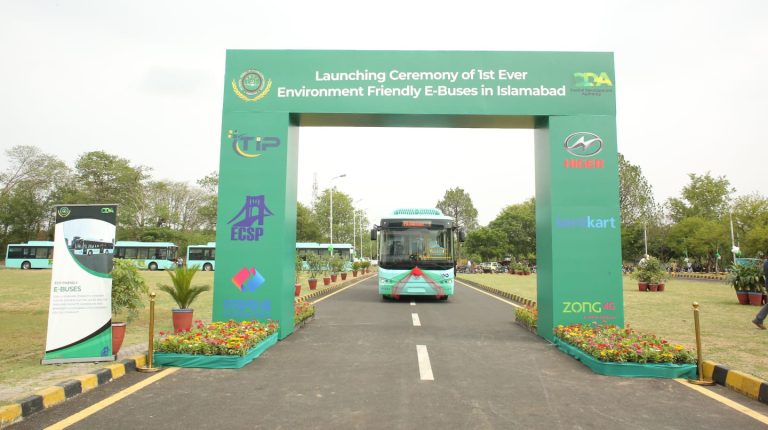
Universal Motors Pvt. Ltd., the authorized distributor and assembler for HIGER in Pakistan, played a pivotal role in overcoming initial challenges. Their expertise in automotive after-sales service and commitment to innovation have been crucial for project success.

Islamabad’s Landmark Initiative

The Capital Development Authority (CDA) and National Radio & Telecommunication Corporation (NRTC) partnered to introduce HIGER 9-meter electric buses in Islamabad. This initiative focused on technical excellence, financial transparency, and long-term sustainability.

  • Facility Overview: Universal Motors’ facility at FIEDMAC is equipped with advanced production technologies, emphasizing local production, job creation, and skill enhancement.
  • Market Impact: The facility reduces dependency on imported vehicles, fosters local partnerships, and contributes to environmental sustainability.

Technical Excellence and Reliability

HIGER buses are equipped with 282 kWh CATL batteries and DANA motors, ensuring efficient performance and durability. The 8-year warranty on batteries, with a commitment to maintaining at least 70% efficiency, aligns with Pakistan’s sustainability goals.

Financial and Operational Framework

Under a Government-to-Government (GTG) contract, CDA and NRTC established a per kilometer rate of 325 Rs, ensuring financial accountability. NRTC’s mandate includes an initial 8-year operational period, extendable to 12 years.

  • Charger Specifications: Luobinsen’s 160 kWh chargers with dual guns support high-volume operations and optimize fleet uptime.
  • After-Sales Commitment: Universal Motors ensures charger installation and maintenance, guaranteeing uninterrupted service.

Addressing Overloading Challenges

Overloading, which often exceeds capacity by 40% to 50%, poses substantial challenges to EV bus performance and longevity.

  • Technical and Operational Impacts: Overloading strains components, reduces mileage, and affects battery life and motor performance.
  • Mitigation Strategies: Implementing weight monitoring systems, enforcing capacity limits, and educating stakeholders are essential for maintaining operational efficiency and safety.

Future Outlook and Recommendations

To optimize the performance and sustainability of Pakistan’s EV bus fleet, the following actions are recommended:

  1. Conduct regular assessments of bus capacities and operational efficiencies.
  2. Enhance regulatory frameworks to enforce weight limits and penalties for overloading.
  3. Invest in smart monitoring technologies for real-time performance tracking.
  4. Educate stakeholders on the benefits of adhering to capacity guidelines for prolonged bus longevity and efficiency.

Conclusion

The deployment of HIGER 9-meter EV buses in Pakistan is a forward-thinking approach combining advanced technology with practicality and sustainability. Universal Motors Pvt. Ltd.’s partnership with HIGER sets a new standard in urban mobility, promising enhanced efficiency, reduced environmental impact, and superior passenger comfort. Through continuous innovation and collaboration, Pakistan is paving the way for a greener and more efficient future in public transportation.

This Exclusive article has been published in Automark Magazine’s August-2024 printed edition. Written by @Asif Mehmood

Yousuf Dewan Companies Partners with Pak-Qatar General Takaful Limited for Motor Takaful Coverage

Karachi, Pakistan –Pak-Qatar General Takaful Limited (PQGTL), a leading provider of Shariah-compliant General Takaful solutions in Pakistan, announced partnership with Dewan Farooque Motors Limited (DFML) to offer motor Takaful coverage for vehicles distributed through their nationwide network.
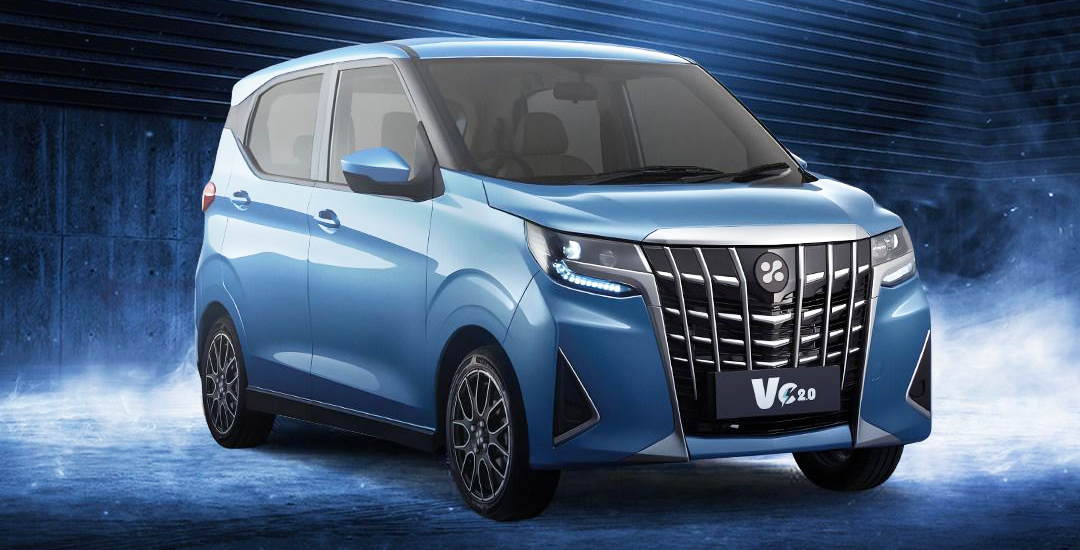
This collaboration will see PQGTL provide Takaful coverage for both variants of electric vehicle Honri Ve 2.0 and 3.0, offered under the banner of Eco-Green Motors Limited (EGML), and trucks sold through the nationwide distribution network of Dewan Farooque Motors Limited (DFML).


“We are looking forward to having a lasting partnership with Yousuf Dewan Companies for expanding our Takaful coverage to electric vehicles and a wider range of commercial vehicles,” said Mr. Saqib Zeeshan, CEO of PQGTL. “This partnership aligns with our commitment to providing innovative and Shariah-compliant solutions that meet the evolving needs of our customers.”
Ms. Saleha Hassan, Head of Marketing at DFML, said, “We are pleased to collaborate with Pak-Qatar General Takaful to offer our customers with added comfort of comprehensive Takaful coverage for their vehicles. This partnership ensures that our customers, whether they require dependable commercial vehicles or eco-friendly electric vehicles, have access to exceptional motor Takaful protection.”
The partnership highlights PQGTL’s commitment to expanding its reach and providing Shariah-compliant Takaful solutions to a broader customer base across Pakistan. Whether for commercial logistics or personal commuting, PQGTL’s motor Takaful solutions aim to deliver comprehensive coverage for diverse customer needs.

  • Press Release

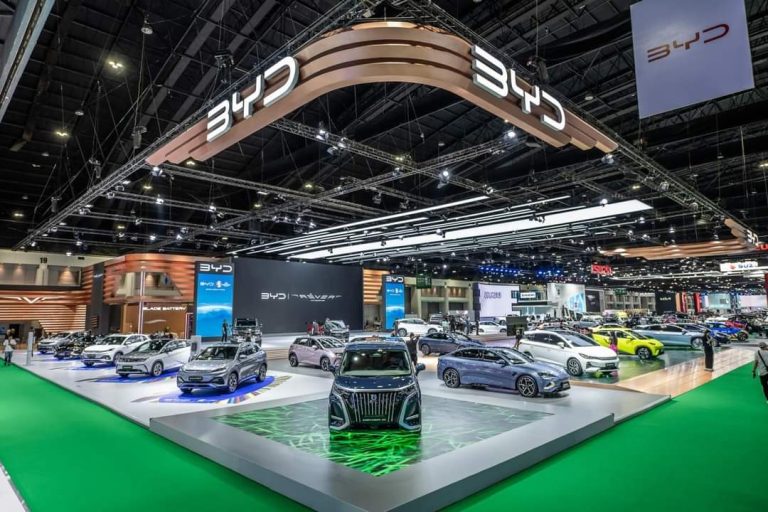
China’s BYD acquires 20% stake in Thai dealer Rever Automotive

China’s BYD, will acquire a 20% stake in its local distributor Rever Automotive in Thailand, its largest market outside of China where it is an electric vehicle market leader, the companies said Saturday.

The Shenzhen-based automaker opened its first factory in Southeast Asia in Thailand this week. The $490 million factory will have an annual manufacturing capacity of 150,000 vehicles and employ 10,000 workers.

Rever Automotive, which has over 100 showrooms in Thailand, launched the sale of BYD vehicles in 2022 and BYD soon became the country’s top-selling EV brand.

“We are thrilled to deepen our partnership to accelerate the adoption of electric vehicles and contribute to Thailand’s transition towards a more sustainable future,” said Liu Xueliang, BYD’s Asia-Pacific auto sales general manager.

In the first quarter of 2024, BYD commanded a 46% share of Thailand’s EV segment and is the third-largest player in passenger cars, according to research firm Counterpoint.

The acquisition comes as Rever faces a government investigation over steep discounts which have left some past customers feeling they overpaid for their cars. 

Mehran Commercial Enterprises Achieves Milestone with First Export Order from Australia!

Mehran Commercial Enterprises (MCE) has reached a significant milestone by securing its first export order from Australia. This accomplishment comes from partnering with a prominent Australian auto parts import group, known for its contributions to both the local and international student communities, including educational opportunities and overseas employment facilitation.

During recent discussions, the Australian group highlighted their need for skilled auto technicians. Mashood Khan emphasized that Pakistan’s automotive industry, with nearly 40 years of experience, has a highly skilled workforce ready to meet this demand. The Director of the group appreciated the potential influx of Pakistani auto-skilled workers to Australia. MCE has voluntarily agreed to support this initiative, demonstrating their commitment to international collaboration and skill development.

This achievement marks a significant step in strengthening the relationship between MCE and the Australian group, paving the way for future growth and opportunities.

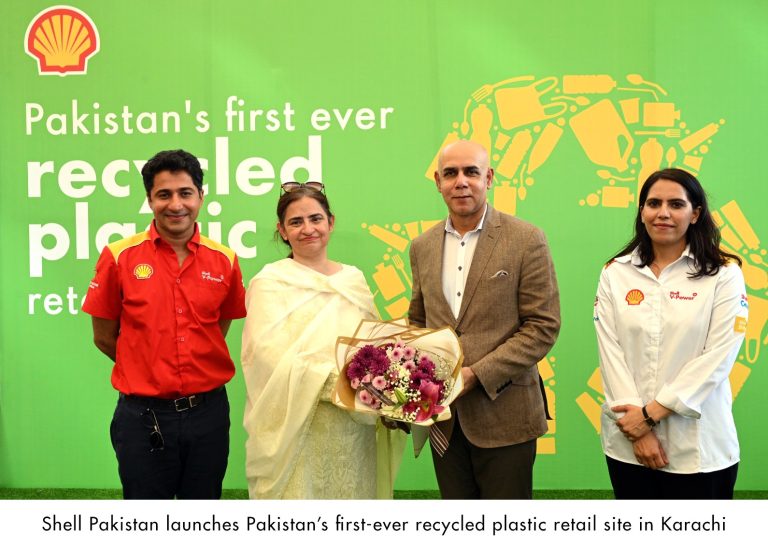
Shell Pakistan launches Pakistan’s first-ever recycled plastic retail site in Karachi

Shell Pakistan Limited (SPL) launches Pakistan’s first-ever recycled plastic retail site, Malik Service Station at Shahrah-e-Faisal, Karachi. This initiative aligns with SPL’s commitment towards sustainability; and promotes circular economy and environmentally friendly practices.

The organization collaborated with Dabeer Hemani and Syed Ali Naqi, cofounders of Concept Loop, and Shell Tameer alumnus to bring this vision to life. The construction of the retail site utilized approximately 6,500 kilograms, or roughly 1.3 million pieces, of end-of-life plastic waste, in plastic infused pavers and concrete blocks using multi layered plastic waste. According to research, a simple plastic bag can take up to 500 years to decompose while a plastic bottle can take around 300 years, leaving behind a threat to nature by being non-biodegradable and toxic. The newly rebuilt retail site represents a significant step towards a more sustainable future.

The initiative demonstrates the potential of recycled materials in building robust infrastructure and emphasizes the importance of sustainability in modern development.

Speaking on the occasion of the inauguration of the site, the Chief Executive and Managing Director of Shell Pakistan Limited, Waqar Siddiqui, stated, “We are incredibly proud to unveil this one-of-its-own-kind retail site. Innovative solutions such as this need to be tried and tested. The success of the plastic infused road and the recycled plastic site can serve as an inspiration for future infrastructure developments. A ripple effect is what aspire to achieve – inspiring broader adoption of sustainable practices.”
The recycled plastic retail site marks a significant milestone for SPL’s sustainability journey and circular economy practice. The company remains committed to exploring new avenues for environmental responsibility and innovation.

  • PR

Containers to Curtain Carriers 2.0

CONTAINERS TO CURTAIN CARRIERS 2.0

SEQUAL OF OUR PUBLISHMENT IN FEB 2024 ED “CURTAIN ON THE WHEELS

CONGRATULATIONS to all those transport companies who want to reduce turnaround times at depots for loading and unloading.

We have launched the gold standard for transporting palletized cargo especially in the FMCG sector.

Conventionally, the palletizedgoods are transported in heavy modified shipping containers in Pakistan while the rest of the world has moved on to lighter, efficient and aesthetically pleasing “Curtain Sider” trailers. 

There is a normal perception of a fabric/curtain to be weak and prone to damage. How come it could serve as a container when installed over a trailer? Also the fleet owner is many a times concerned about the theftof cargo as the cargo seems easily accessible.

However, this is not the case.

Because the fabric comes in various compositions and mesh interweaved within. This type of fabric has extreme fatigue strength and cannot be vandalized easily.

AUTOCOM has recently developed a fleet of curtain trailers that will soon be witnessed on roads in Pakistan and abroad. It is a fully TIR compliant curtain trailer and specifically made for export of palletized cargo. The fabric of roof is tested against the EN ISO 1421 -1 standard for breaking strength and against DIN 53 363 for tear strength. Here are some results for the fabric installed on Roof tested against the standards. Also the side curtain fabric is much more in strength than that of a roof. Its breaking or Warp strength is 4000 N/5cm whereas for Roof it is 2500 N/5cm.

Also, for the fact the type of trailer could be opened from right side, top, left side and from back doors, making it more friendly for loading and unloading. Also you do not need loading and unloading docks for offloading the cargo. With the help of a fork lifter you can easily unload the trailer at your warehouse or wherever needed.

There are some precautionary measures to unlocking it, sliding the curtain, locking it at an interim position, offloading the cargo and locking it back. These handling guidelines are shown step by step in the image. For unloading of cargo from sides, there is a ratchet tensioner that needs to be opened via pulling and sliding the curtain sideways.

Also in order to protect the profiles on the roof upon which curtains are mounted, it is strongly recommended not to:

  1. Allow a person walking on the roof of the trailer, unlike metal superstructure, where there are walk ways for top loading especially in fuel tankers.
  2. Allow heavy loads to rest on the trailer top at specific unit area.
  3. Allow dew or snow to be accumulated on the curtains roof top.
  4. Allow unlocking the roof top, when some external fluid is resting on the top of the trailer.
  5. Harsh turning of trailers with back doors open.
  6. Harsh turning of trailer with back doors and roof top unlocked.

You don’t need to invest in a new trailer as AUTOCOM is offering to convert your existing flat bed semi-trailer to curtain siders by mouting the “montage”.  Following are some of the uses of a curtain truck/trailer.

Top Uses of a Curtain Side Truck

  1. Shipping perishable goods
  2. Transporting fragile items
  3. Shipping large or bulky items
  4. Shipping heavy machinery
  5. Shipping oversized items

Since it is a light weight trailer (45-foot curtain trailer can weigh as low as 7 tons while a 45’ container box trailer would weigh around 10 tons), you can carry more pay load instead of dead weight.

AUTOCOM’s Curtain Sider Trailers ensure the compliance on TIR with the following points:

  1. The curtain, doors and all the other constituent parts of the load compartment on AUTOCOM’s trailer are assembled in such a way that they cannot be opened or closed without leaving obvious trace.  This is the primary rule of the TIR compliance.
  2. The curtain is designed in such a way that it overlaps the solid parts at the top of AUTOCOM’s trailer by at least ¼ of the actual distance between the rollers.
  3. The curtain guidance and other movable parts of the system are assembled in such a way that no movable part can be opened or closed from the outside without leaving obvious traces. The curtain guidance and other movable parts are assembled in such a way on your trailer that it is impossible to gain access to the load compartment without leaving obvious traces.
  4. The horizontal distance between the rings, used for customs purposes, on the solid parts of our trailer will not exceed 200 mm as required in the TIR regulation.
  5. The distance between the tensioning straps on our trailer will not exceed 600 mm as required in TIR regulation.
  6. The fastenings used to secure the sheets to the solid parts of the vehicle will fulfil the requirements of TIR as the kit is provided with the steel wire rope of one piece of at least 3 mm diameter.

The launch of AUTOCOM Curtain Sider isn’t only our organization’s success milestone, but it will prove to be a game changer in the logistics landscape of our country.  We are confident that the fleet operators will welcome this product as, with reduced turnaround times, it will help them reduce the number of vehicles required to complete the job.

AUTOCOM thrives on innovation.  We are indebted to our customers and business partners who keep pushing the boundaries of “conventionallogistics.”  We practice “Change for Good” that makes us advocates of innovation.We cannot complain of staying back and experiencing the “Kodak moment”. As the saying goes:

“When the window of opportunity appears, do not pull down the ‘curtain’.”

This exclusive article has been published in Automark Magazine’s July-2024 printed/digital edition.

Written by Sumaiyah Murtaza