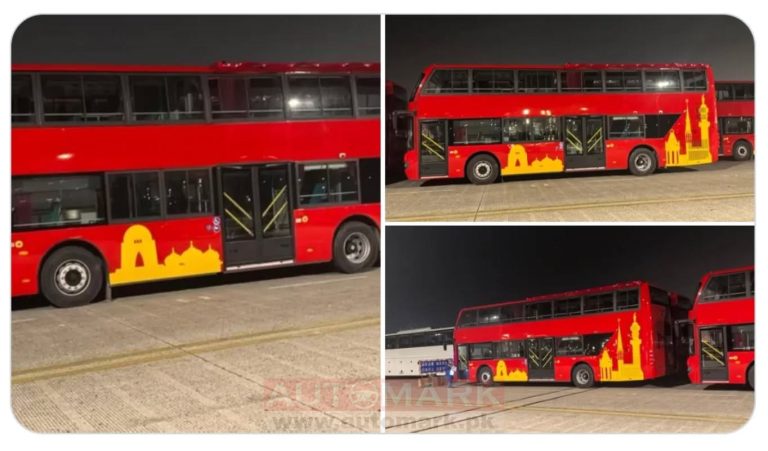
The Government of Sindh’s Transport Department has received a new fleet of double-decker buses at Karachi Port, marking a significant step toward enhancing public transport and promoting tourism in the city.
According to sources, five double-decker buses manufactured by leading Chinese brand Higer have arrived and are currently undergoing initial clearance and inspection procedures. The buses are expected to be operational on Karachi’s roads in the near future.
Sources indicate that these double-decker buses will primarily be deployed for tourism purposes, offering residents and visitors a unique way to experience Karachi’s major landmarks and coastal routes. The initiative aligns with the Sindh government’s broader efforts to modernize transport infrastructure and improve urban mobility.
“Inshallah, these buses will soon be on the roads for the people of Karachi,” sources within the Transport Department shared, adding that route planning and operational details will be announced after final approvals.
The introduction of double-decker buses is anticipated to not only enhance the city’s tourism appeal but also provide a comfortable and modern travel experience, reflecting the government’s commitment to improving public services.
Further details regarding routes, fares, and launch dates are expected from the Sindh Transport Department in the coming days.
Choosing the right car tyres can be one of the most important decisions for your vehicle’s performance, comfort, and safety. Whether you drive a luxury sedan or a budget-friendly daily commuter, neglected or poorly chosen tyres can damage your car and seriously put lives at risk. If you often wonder “What car tyres do I need?” or “How do I choose the best tyres for my car?”, this guide will help you make a smart, informed decision.
Begin with the Manufacturer’s Recommended Tyre Size
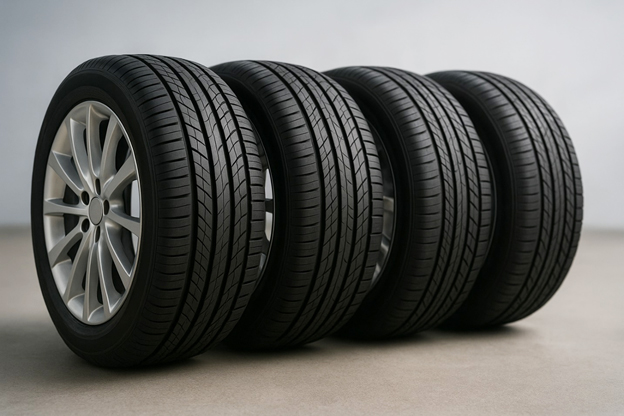
The first and most crucial point of selection while choosing tires is by confirming the proper size of the tire for your car. Since there is no universal size for tires, you need to stick with what the car manufacturer specified.
You can find your tyre size in three places:
On the sidewall of your existing tyre
On the sticker inside the driver or passenger door
Consult the vehicle owner’s manual
A typical tyre size looks like this: 255/55 R17 72H Here’s what it means:
255 – Tyre width in millimeters
55 – Aspect ratio (sidewall height as a percentage of width)
R – Radial construction
17 – Wheel diameter in inches
72 – Load index (maximum weight capacity)
H – Speed rating
A mere deviation of 10mm from the recommended width can affect suspension, fuel economy, and safety. Wider tyres may look attractive, yet in most instances, they overwork the suspension, diminish comfort, and increase running costs, especially for underpowered cars.
Understand Load Index and Special Tyre Markings
The load index is the load-carrying capacity of a tyre. For instance, a load index of 72 equates to the tyre being able to support 355 kg at maximum inflation.
For electric and hybrid vehicles, tyres with HL (High Load) specifications are being used more and more. These tyres support heavier vehicle weight without changing tyre size. You can identify them by the “HL” prefix on the sidewall.
Also, some manufacturers use OE tyres, those specially designed and approved for specific brands like Audi, BMW, or Mercedes. If your car came with OE-marked tyres originally, then normally replacing those with similarly marked ones is usually recommended.
Choose Tyres Based on Climate Conditions
Weather plays a major role in tyre performance.
Summer tyres: Best for regions where temperatures remain above 7°C.
Winter tyres: for areas with snow, ice, and prolonged cold weather
All-season tires work for moderate climates, usually those with mild winters with minimal snow.
Winter tyres in hot weather result in too much noise, wearing, and poor fuel economy, so selection should be based on the prevailing climate.
Match Tyres to Your Driving Style
Your driving habits count for more than you think.
For a comfortable, quiet ride:
Go for touring tyres designed for low noise on the road and smooth performance; these normally have lower speed ratings such as S, T, or H.
For sporty handling and cornering:
High-performance tyres have a sharper steering response and better grip at higher speeds; however, they provide a firmer ride.
Always ensure the speed rating is never lower than the manufacturer’s recommendation.
Check Brand Reputation and Manufacturing Date
You don’t have to be a tyre expert; just choosing a reputable brand is enough. Popular options include Michelin, Continental, Yokohama, Dunlop, Hankook, Kumho, and General Tyres. Always research the specific series and reviews, not just the brand name.
Equally important is the date of manufacturing, given in a four-digit code, such as 1221 for week 12 of 2021. Old tyres dry out, crack, lose air, and may even burst irrespective of the depth of their treads. Avoid tyres older than five years and buy only from trusted dealers to prevent fraud.
Final Thoughts
The best car tyres aren’t the most expensive but those that fit the specifications of your car, climate, road conditions, and driving manner. Avoid extreme modifications with extra-wide or very low-profile tyres unless it’s a car made to take them. In the long run, the right tyres will give you better safety, comfort, fuel efficiency, and peace of mind.
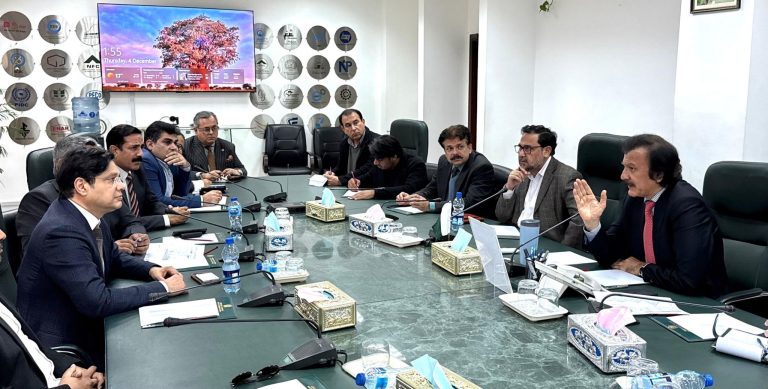
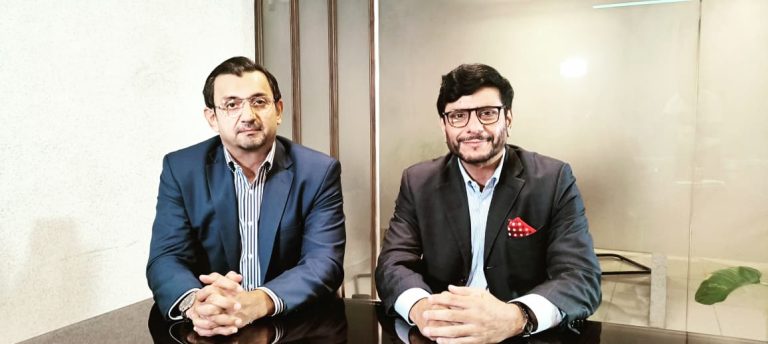
A delegation of leading automotive manufacturers met today with Special Assistant to the Prime Minister (Industries), Mr. Haroon Akhtar, and Secretary Industries, Mr. Saif Anjum, to share growing concerns over the rising used vehicle imports and the pressure it is placing on Pakistan’s local auto sector.
Industry representatives noted that nearly 22,000 used vehicles entered the country under baggage scheme between July and November—capturing almost 25% share of the market. If this trend continues, they warned, total imports could surpass 50,000 units this year, posing a serious threat to local investment, production, and employment. “Because of outdated and significantly lower fixed customs valuations, used vehicles brought in under the baggage scheme pay far less in duties and taxes than locally manufactured cars. This imbalance is deeply concerning,” said Nadeem Malik, Chairman, Master Changan Motors.
The delegation emphasized that these imports do not comply with UN safety regulations, which all local manufacturers must meet. “No Government agency is currently checking whether these imported vehicles meet basic safety regulations. This puts both consumers and the public at risk,” said Babar S. Khan, Director, Lucky Motor Corporation. The industry also highlighted the strain on local operations, which are running at only ~35% capacity. “It is unfortunate that despite such low capacity utilization, used vehicle imports under the baggage scheme continue at this scale,” said Sohail Nawaz, COO, Hyundai Nishat Motors.
Underscoring the industry’s broader economic role, Aqib Zulfiqar, Director NexGen Auto (Omoda & Jaecoo), noted: “Local manufacturing creates jobs, supports value addition, drives technology transfer, and strengthens large-scale manufacturing – the backbone of our economy. In contrast, uncontrolled used car imports burden the economy while putting lives and long-term investments at risk.”
Reflecting on the changing market dynamics, Mian Ali Hameed, COO of Sazgar Haval added: “The original justification for allowing used imports no longer exists. Consumers today have so much choices – 16 new players offering modern vehicles with full safety and advance driver assistance features, zero-interest financing options, and immediate availability with no waiting periods.”
In response, SAPM Haroon Akhtar assured the delegation that the government remains committed to ensuring a fair and competitive playing field. He confirmed that all imported vehicles will be brought under the same safety and quality regulations applicable to local manufacturers, and that issues of undervalued customs assessments will be taken up with FBR and Customs Valuation.
“Fixed valuations and ITPs for used vehicles must be updated and reviewed annually. The Ministry of Industries will continue prioritizing local manufacturing, job creation, and a progressive auto policy—one that encourages competitive pricing which ultimately benefits Pakistani consumers,” the SAPM stated.
Dear readers, especially those waiting eagerly for the new edition of AutoMark and looking forward to my next article, your responses always motivate me. I write with one thing in mind: the perspective of the Pakistani user.
This time, the thought occupying my mind for days has been simple yet unsettling: How lucky China is, and how unfortunate we appear in comparison. Our oldest friend and closest neighbour continues to build success story after success story, while we merely observe from the sidelines. But none of this is China’s fault. They recognized opportunity, seized it, and extracted maximum advantage from it.
Why do I call China “lucky”? Because they received an almost-ready fruit. All they needed was to clean the apple, slice it, and enjoy it. The foundational work, the invention, experimentation, and evolution, had already been done.
The Germans invented the automobile. The Americans engineered rugged off-road machines for wartime. The British infused motoring with luxury. Then came the Japanese, who revolutionized efficiency and compactness, building durable, fuel-efficient cars that still offered comfort where needed. France, Italy, Sweden, and South Korea also contributed distinct strengths.
Mercedes defined luxury. BMW set the benchmark for performance engines. Ford built unstoppable machines. Volvo mastered safety. Range Rover brought unmatched presence. Toyota and Volkswagen dominated with durability and volume. Ferrari and Lamborghini symbolized speed and style.
And then came China, blessed with access to all these perfected recipes. The dishes had already been cooked by others, the Chinese only needed to garnish them, refine their presentation, and select colours appealing to the global palate. They executed this brilliantly.
The results speak for themselves: a compact Chinese SUV outselling its Japanese rival by a wide margin. China did not need to start from 1886, like the Germans, nor design their first 4×4 eighty years ago like the Americans, nor invent compact efficiency like the Japanese. The homework was completed by others. Germany provided the handbook for engineering excellence, America for power, Japan for efficiency. China studied all three, and then built its own library.
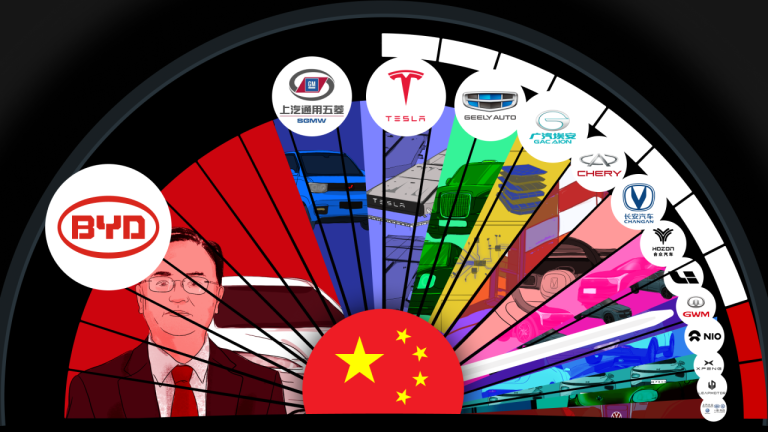
Yet this does not take away from China’s achievements. Their own innovations today are remarkable. Consider news of the BYD Yangwang U9 track edition breaking a record previously held by Bugatti, or Chinese brands challenging the world’s top luxury automakers. In many markets, BYD has even overtaken Tesla.
But there is a caveat: when your foundation rests on the hard work of others, certain weaknesses emerge at extremes. A recent example was a Chinese automaker’s failed attempt to break Range Rover’s record of climbing 999 steep steps, a stunt that ended in a dramatic crash.
Still, China has progressed. Pakistan, unfortunately, has not. Despite 80 years of independence, and despite selling German, Japanese, Korean, and now Chinese cars in our market, we have yet to produce even a 500cc car of our own. Not a single truly Pakistani electric vehicle exists. We do not even manufacture our own 50cc motorcycle. Our automotive industry is a global anomaly: crowded with brands, yet none belonging to Pakistan.
Where China and India developed industries built on their own products, Pakistan remains a base for assembling and selling vehicles developed by others. In simple terms, we are working for the world, but the world is not working for us.
Do share if you have words about the article through [email protected] or 0311 0 179 007.
This exclusive article has been published in Automark’s December-2025 printed and digital edition. Written by Zahid Malik
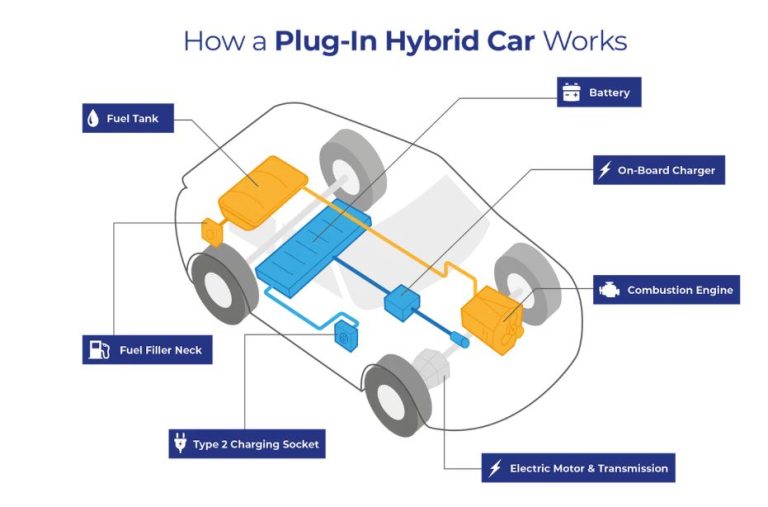
The world of transportation is rapidly changing, and Plug-in Hybrid Electric Vehicles (PHEVs) are playing a key role as a middle ground between classic combustion engines and fully electric cars. These vehicles blend an electric motor with a traditional engine to offer the benefits of quick electric power along with the longer driving range and ease provided by a fuel tank. However, a common question that comes up is why most PHEVs use gasoline engines instead of diesel ones
1. The Nature of Hybrid Operation
At the core of every PHEV is the seamless teamwork between its electric motor and combustion engine. These hybrids are designed to handle frequent stop and go driving, short bursts of electric only travel, and smooth switching between power sources. Gasoline engines are a natural fit for this role they heat up quickly, run quietly, and blend effortlessly with electric power. On the other hand, diesel engines take longer to reach their ideal operating temperature and can feel less refined during constant start stop cycles, making them a less practical match for the demands of hybrid driving.
2. Emission Standards and Complexity
Emission regulations play a big role in why the industry leans toward gasoline engines. Although diesel engines typically offer better fuel economy, they generate higher levels of nitrogen oxides and particulate matter pollutants that face strict limits in most regions. To comply with these rules, diesel hybrids would need complicated and costly exhaust treatment systems, which could eat into their efficiency gains. Gasoline engines, by contrast, emit fewer NOₓ pollutants by design, providing a more straightforward and affordable way for automakers to meet environmental standards. 3. Precision and Pleasure
Plug-in hybrids are often aimed at city drivers and eco-conscious buyers who prioritize a smooth and quiet ride. Diesel engines, known for their distinctive noise and vibrations, can’t quite deliver the same level of refinement as gasoline or electric powertrains. Gasoline engines, on the other hand, work seamlessly with electric motors to create a calm and comfortable cabin atmosphere an important feature that complements the sophisticated, cutting edge appeal of modern hybrid vehicles
4. Market Dynamics and Global Acceptance
When it comes to global trends, gasoline is still the fuel of choice in most major markets particularly in places like the US, Japan, and China, where hybrids are gaining popularity. While diesel once enjoyed strong support in Europe, tougher emissions regulations and shifting public attitudes especially after high-profile diesel scandals have caused its demand to drop sharply. That’s why most automakers see more value in building their hybrid systems around gasoline engines, allowing them to maximize efficiency, cut costs, and deliver strong performance on a worldwide scale.
5. The Efficiency Equation
Although diesel engines have a reputation for excellent thermal efficiency, hybrids gain similar advantages from their electric motors, which deliver instant torque and impressive efficiency at low speeds the areas where diesels usually excel. In most urban settings, it’s the electric motor in a PHEV that does the heavy lifting, handling stop and go traffic where diesel engines are less effective. This leaves the gasoline engine to step in as a lightweight, smooth, and reliable partner for longer journeys making it the perfect match for a modern electrified powertrain.
In Conclusion
PHEVs symbolize a transitional technology smartly combining electric propulsion with the practicality of liquid fuel. And while diesel’s efficiency once ruled the highways, the hybrid age demands a different partner: one that’s cleaner, quieter, and better attuned to the rhythm of electrification.
In that equation, gasoline simply fits better not just under the hood, but within the philosophy of the modern hybrid era.
How This Applies to the Pakistani Market
Turning now to our local context: in Pakistan, the question shifts from “gasoline vs diesel” to “hybrid or full electric?” Given current infrastructure, consumer behavior and policy environment, what makes most sense?
Why Hybrids/PHEVs Lead Today
The local market is still developing charging infrastructure for full electric vehicles (EVs). For example, in Pakistan the limited number of public charging stations means range-anxiety and convenience issues remain.
A plug-in hybrid (PHEV) offers the advantage of electric driving for short trips while retaining the flexibility of a conventional fuel engine for longer journeys or areas where charging infrastructure is limited. Industry analysts in Pakistan consider PHEVs to be particularly practical given the current state of local infrastructure. Several hybrid and plug-in hybrid options are now locally assembled in Pakistan, making electrified mobility more accessible for consumers. These vehicles provide a balanced mix of electric range and petrol backup, making them well-suited for everyday use in urban environments. Considering the still developing EV charging network, opting for a PHEV presents a lower-risk transition towards cleaner mobility compared to shifting directly to fully electric vehicles at this stage.
Looking Ahead: When Full EVs Make Sense
Electric vehicles (EVs) represent the future of mobility. As charging networks expand, electricity remains cheaper than fuel, and local manufacturing along with incentives grow, EVs will become increasingly compelling. Pakistani policy is already moving in this direction, and recent events reflect this trend. The recent PAPS Autoshow held in Karachi prominently featured a wide range of electric vehicles (EVs) and plug-in hybrid electric vehicles (PHEVs), including models equipped with cutting-edge REEV (Range-Extended Electric Vehicle) technology.
However, until that future fully arrives, hybrid and plug-in hybrid vehicles (PHEVs) offer a more practical and “safer” bridge for many buyers.
Recommendation for Pakistani Buyers:
If your driving is mostly within the city and you can conveniently charge at home or work and are willing to pay a small premium a PHEV is currently one of the most suitable options.
If you’re more future oriented and prefer to wait, keeping an eye on full EVs as charging infrastructure improves could be the right move.
This exclusive article has been published in Automark’s December-2025 printed and digital edition. Curated by Vishal Raheja, Manager Marketing & Sales, Ghandhara Automobiles Ltd.
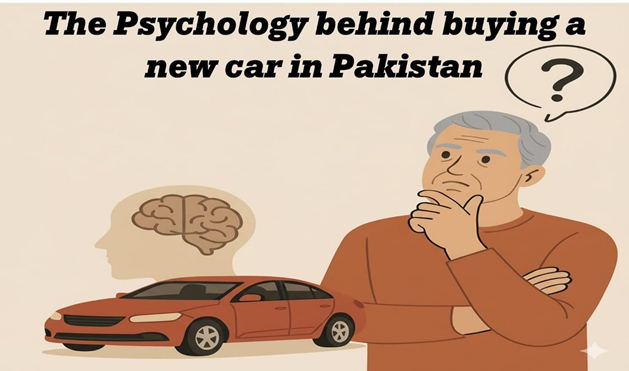
In Pakistan, buying a car is rarely just a “purchase.” It’s an event and a car is often considered an investment, a form of security, and a badge of stability. It’s the discussions within family, the endless comparisons with friends, and the late-night scrolling through PakWheels or online reviews. For many, that first car means arrival. It’s pride on wheels. Whether it’s a Corolla, Civic, or even an Alto, the emotions run deeper than engine oil.
The Emotional Engine: Pride, Status s Sentiment
A car in Pakistan is more than mobility it’s identity. We don’t just buy what moves us; we buy what represents us.
HondaCivic:shows status, confidence, pride, and a sense of achievement.
ToyotaCorolla:signals reliability and trust.
SuzukiAlto:freedom for the first-time buyer , an independent start.
We attach emotion to design, color, and even number plates. And let’s be honest: nothing beats that feeling of driving your new car home for the first time recitation on, dua-e-safar hanging on the mirror, windows slightly down, feeling like everyone is looking. That moment stays with you.
Then Comes Reality: Resale, Fuel s Finance
But emotions alone can’t outrun inflation. In today’s economy, every buyer is doing mental math long before finalizing the choice:
“Will it hold resale?”“What’s the mileage?” “Are parts easily available?” “Can I get financing on better terms?”
Some even calculate the exact taxes and registration impact before making the call.
Car buying today is a blend of passion and practicality. We might dream with our hearts, but we decide with our calculators and that’s not a bad thing. It shows maturity in a market that once ran purely on reputation.
The New Influencers: Digital Media, Online Reviews s WhatsApp Groups
Remember when the family elder’s word was final?
“Beta,Hondalelostylishtohaina.” “BhaiCorollalayloresaleachihai.” Those days are fading fast.
Now, car buying decisions are shaped online through influencers, Facebook groups, TikTok walkarounds, and real-owner reviews.
Today’s buyer walks into the showroom already knowing the specs, features, warranty terms, and hidden costs sometimes better than the salesperson. Digital literacy has made buyers bolder, smarter, and harder to mislead.
The Turning Point: The Kia s Hyundai Era
A major mindset shift began when Korean brands re-entered Pakistan with feature enriched models like the Sportage, Sonata, Tucson, and Picanto. For the first time in decades, customers actively experimented outside the Japanese brands. People saw variety of styling, newer platforms, longer warranties, and competitive pricing and many were willing to take the leap. This era opened the door for a new consumer mindset: “If the value is better, we’re willing to try.”
Kia and Hyundai didn’t just sell cars they broke the psychological barrier. They proved that Pakistanis could move beyond long-held brand loyalty when given a fascinating alternative. And that consumer confidence paved the way for newer Chinese players to enter and compete.
The Shift: From Loyalty to Smart Choices
Once, Toyota families stayed Toyota. Honda fans swore by VTEC. Today, value is the new loyalty.
Chinese entrants Changan, MG, Haval, Geely, etc. are proof that buyers are open to experimenting if the product offers technology, comfort, and a price that feels justified.
The Pakistani customer is no longer predictable. They are evolving.
The Road Ahead: Emotion Meets Evaluation
The Pakistani car market stands at a fascinating crossroads.
People still crave the feeling of ownership that emotional connection with a machine, but they are far more aware of value, maintenance, transparency, and total cost of ownership. The winners of tomorrow will be brands that can speak to both sides of the brain:
· The heart that wants pride, and
Themindthatdemandsvalue.
Because at the end of the day, every car tells a story of dreams, progress, and identity. And understanding those stories is key to understanding where Pakistan’s auto market is heading next.
The Future: What Will the Next Generation of Buyers Look For?
Looking ahead, Pakistan’s car-buying behavior will continue to evolve. The next generation of customers will prioritize value, technology, efficiency, and transparency more than ever before. Features like ADAS, hybrid and EV options, digital dashboards, safety ratings, and after-sales experience will influence decisions. Subscription-based ownership, certified used cars, and online booking platforms will also gain momentum as younger buyers prefer convenience and flexibility over traditional dealership interactions. In short, the future buyer will be emotionally connected, financially cautious, digitally informed, and open to alternatives pushing the industry toward higher standards and healthier competition.
A Glimpse of What’s Coming: Customer Excitement at PAPS 2025
The shift in consumer mindset was clearly visible at the recently held PAPS 2025 Auto Show, where thousands of visitors showed remarkable interest in newly launched and upcoming models. Families, young buyers, and even long-time loyalists crowded around hybrid concepts, mid-sized SUVs, and hatchbacks. What stood out the most was how comfortably consumers compared features, questioned representatives, and discussed technology as if they were industry analysts themselves. The buzz around new EV options, advanced safety features, and modern infotainment systems showed one thing clearly: Pakistani buyers are no longer just looking for a “brand” they are looking for innovation, value, and future-proof choices. The energy at PAPS 2025 reflected a market ready to explore, experiment, and embrace the next chapter of mobility.
(A candid take on emotions, egos, and economics on four wheels)
This exclusive article has been published in Automark’s December-2025 printed and digital edition. Written by #Mawiz Akhtar
What Pakistan can learn from Global Supply Chain Leaders
Dear Readers!! More than two decades of my experience in the automotive and mobility sector have taught me one truth over and over again: technology may get you attention, but only a strong supply chain keeps you in the market. And the EV transition being witnessed globally reinforces this more clearly than ever. Be it China, the European Union, or even India, electric vehicle success is not driven by marketing claims or product launches, it is rooted in deep supply chain preparedness, long-term investment, and consistent delivery.
Pakistan today stands at the early stages of EV adoption, and to attain its vision of building a sustainable EV ecosystem, it needs to learn how these markets built up the backbone of their EV production. In many ways, lessons from global EV supply chains also loop back to reinforce arguments made in “Promises vs. Service” The Hidden Test for New Auto Entrants and “Technology May Sell, But Trust Sustains.” In both articles published in Automark magazine, I have tried to highlight the simple fact that success in the automotive sector goes way beyond launching a product, it requires credibility, consistency, and long-term reliability. The evolution of China, the EU, and India’s EV ecosystems proves this all over again: strong supply chains are not just operational imperatives but instruments of trust. When a manufacturer can ensure steady production, stable quality, and predictable aftersales service, they build the kind of confidence that keeps customers, associates, and dealerships on board for decades. Pakistan’s EV landscape has reached a juncture where these earlier insights connect directly with the broader supply chain conversation: technology gives you an entry, but only a resilient supply chain sustains your presence.
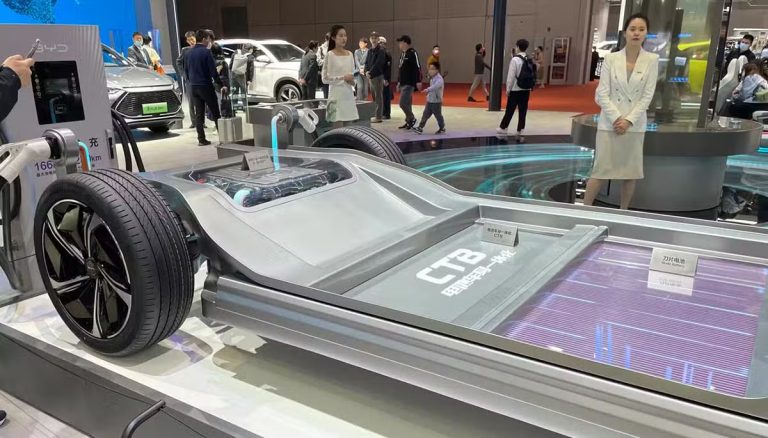
The Backbone of EV Manufacturing: Most people, when thinking about EVs, imagine sleek designs, the most modern motors, or maybe even avant-garde dashboards. The real revolution, however, is behind the scenes: in the backbone of production-batteries, raw materials, and assembly lines. At the heart of every EV is the battery, powered by lithium, cobalt, nickel, and other rare earth metals. These metals represent the unsung heroes of electric mobility. They determine the range, lifespan, charging speed, and performance of a car. China has been investing aggressively to secure those materials-from Australia to South America-so as to make sure that costs remain stable and production uninterrupted. The EU, on its part, focuses on premium, energy-efficient battery chemistries for enduring performance. But sourcing is just the beginning. The transformation of metals into high-performance batteries requires precision, advanced technology, and scale. China’s Gigafactories are the best representation, manufacturing batteries at a scale where costs come down, efficiency goes up, and innovation accelerates. The EU takes a more measured approach, stressing sustainability and reliability. This is a huge opportunity for Pakistan. Our market remains highly reliant on imported batteries and raw materials; this makes EV adoption vulnerable to delays and price fluctuations. For instance, imagine a whole fleet of delivery trucks kept sitting idle for weeks due to delayed battery shipments. This is the kind of risk that a strong supply chain could avoid. Local battery assembly, research in advanced chemistries, and strategic partnerships with global suppliers are some of the areas in which prudent investment will help Pakistan create a resilient backbone for the EV market. This doesn’t just benefit individual drivers alone but empowers commercial fleets and public transport to adopt EVs with confidence.
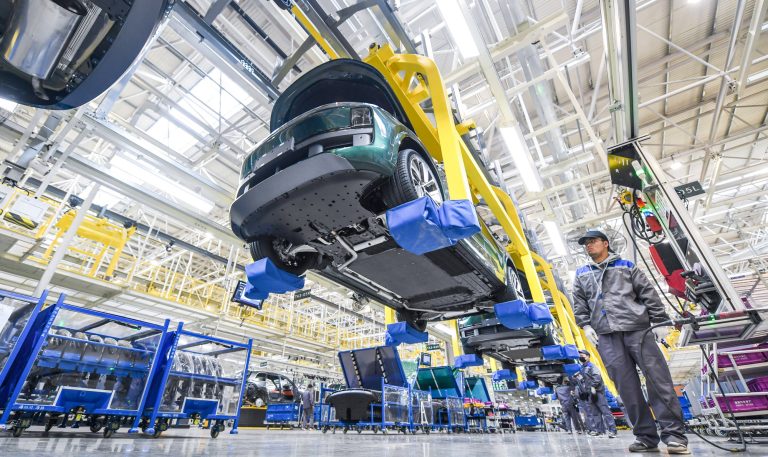
Manufacturing Scale and Supply Chain Integration: Even the most secure raw materials and advanced battery technologies lose their impact without manufacturing integration. It isn’t volume alone that propels China to the leading position in EV manufacturing; it is coordination. In fact, cities such as Shenzhen, Shanghai, and Guangzhou operate as complete ecosystems with integrated refining units, battery plants, motor manufacturers, semiconductor suppliers, BMS software developers, and vehicle assembly plants within the same industrial clusters. The proximity removes any delays and cuts transportation costs, while speeding up design improvements and enabling engineers to collaborate instantly. But Europe’s integrated approach is equally valuable. Its factories rely on automation, strict compliance frameworks, clean-energy manufacturing, and strong R&D infrastructures. The result is a supply chain that focuses on resilience, quality, and long-term sustainability. The manufacturing landscape of Pakistan remains fragmented. The EV components come from scattered suppliers, assembly is conducted in other regions, and testing capabilities are limited. Fragmentation reduces speeds, increases costs, and inhibits scale. If Pakistan wants to accelerate the adoption of EVs, the country should establish dedicated EV industrial zones that integrate battery assembly, motor manufacturing, software development for BMS and controllers, and final vehicle production into one ecosystem. Such hubs will improve quality control, create skilled jobs, attract international investment, and make Pakistan’s EV industry resilient to global supply disruptions.
Talent Development and R&D Investment: The EV supply chain replaces metal bending with material science and software. This demands a complete overhaul of the skills required by the automotive workforce, the traditional auto mechanic is replaced by the battery technician, the power electronics specialist, and the embedded software engineer. All foreign direct investment (FDI) in EV assembly should be required to allocate a percentage of revenue towards a local R&D center focused on applied EV technologies or partnering with local universities. Specialized Technical Training Centers: Invest in vocational and university programs focused specifically on battery chemistry, thermal management systems, and high-voltage safety and diagnostics. This builds the intellectual backbone necessary to sustain the industry locally, ensuring the technology remains indigenous rather than imported. For Pakistan’s new EV and hybrid players, success is no longer defined by how many cars they sell, but by how much industrial capability they build. The long-term trust of the nation will be earned through visible commitments: the smokestack of a battery factory, the presence of public charging grids, and the creation of highly specialized technical careers. By strategically adopting the lessons of global supply chain leaders, Pakistan can move beyond being an assembly market to become a genuine high-tech industrial player.
Key notes for Pakistan Automobile: The global leaders show that the success of EVs is all about building a formidable foundation, long before the vehicle hits the road. Pakistan needs to secure raw material and battery supplies on a regular basis, rather than facing supply shocks and unpredictable pricing. This will require localization of assembly, reducing reliance on imports and bringing electric vehicle prices within the reach of both private and commercial users. Integrated manufacturing zones will eliminate fragmentation, shorten lead times, and result in a manufacturing ecosystem capable of producing EVs at scale. One of the clearest lessons from China and Europe is that the approach needs to be initiated with commercial and fleet adoption. Logistics operators, delivery companies, and ride-hailing services immediately reap benefits in savings due to reduced fuel and maintenance costs. Once fleets adopt EVs with confidence, everyday consumers take up the models naturally, assured that the technology is reliable, proven, and supported by a strong supply chain. Government policy should mandate a common charging standard depending on regional partners for all imported and locally assembled EVs. This reduces the risk for charging network investors. And Swappable Battery Protocols (Especially for 2/3 Wheelers): Given the dominance of two- and three-wheelers, adopting a standardized, modular, swappable battery design can rapidly solve range anxiety and charging issues in urban centers. This opens the door for a network of local battery providers and swapping stations, mirroring successful models in South and Southeast Asia. Lock in the fiscal and tariff structure for foundational EV investments (especially those related to battery cells, motors, and inverters) for a guaranteed period of ten years. This commitment is far more valuable than a one-year reduction in duty. Focus on Value Addition Tiers: Policy incentives must be tiered based on the level of technological value addition, not just physical localization. Priority incentives should go to companies manufacturing complex power control units (PCUs) and thermal management systems, not just those assembling body panels.
Takeaway from this article:
If Pakistan wait for the EV market to first mature before strengthening its supply chain, it will already be too late. The country has to start aligning policies, encouraging local manufacturing, and supporting localization for batteries and parts. EV companies operating here need to look beyond launch-stage excitement and invest in deeper capabilities: supplier development, long-term parts planning, and after-sales infrastructure. Without those, no brand will be able to create lasting consumer confidence. The global EV landscape indicates that the early mover with a strong supply chain tends to dominate the market for decades. Pakistan still has time to position itself intelligently, but it must be proactive with learning from those countries which have already built successful EV ecosystems. The future of EVs in Pakistan will not be about who enters the market first; it will be about who builds the strongest foundation. This chapter closes here, but the story is far from over. Stay with me as we continue exploring the forces, decisions, and innovations that will define Pakistan’s automotive future, one insight at a time.
This exclusive article has been published in Automark’s December-2025 printed and digital edition. Written by @muhammad-rafique
Dear Readers, Pakistan’s new energy vehicle (NEV) market is finally gaining momentum. After years of speculation and early experiments, major players are now launching or assembling four-wheeled NEVs locally. These companies include Mega Motor (with BYD), Sazgar, Capital Smart Motors (CSM) partnering with Geely, the Nishat Group / Chery (Omoda and Jaecoo), MG Pakistan, and even Dongfeng through future partnerships. This article provides an in-depth look at the types of four-wheel NEVs being introduced, their likely market share, which segments they suit, and what buyers should think about before making a purchase.
Types of Four-Wheel NEVs in Pakistan
Here’s a look at the major NEV players in Pakistan and the types of four-wheel vehicles they are bringing in or assembling.
Mega Motor / BYD
Partnership: Mega Motor Company, a subsidiary of Hub Power Company (HUBCO), is working with BYD.
Models: BYD has launched models like the Atto 3, Seal and Shark in Pakistan.
Assembly: They plan to locally assemble NEVs; an assembly plant is set up by 2026.
Ambition: According to Mega Motor / BYD, NEVs could make up as much as 50% of Pakistan’s vehicle sales by 2030.
Market share target: BYD aims for around 30–35% share of the NEV segment in Pakistan.
Sazgar Engineering Works
Background: Historically known for rickshaws, Sazgar holds ~30% of the local rickshaw market.
NEV Plans: Sazgar is building on its legacy to produce electric three-wheelers (e-rickshaws).
Four-Wheel NEVs: They have also announced plans to assemble hybrid / electric four-wheelers; e.g., they had a joint venture with Great Wall Motor for hybrid vehicles.
Timeline: According to local sources, their NEV four-wheeler rollout is expected around March 2026.
Capital Smart Motors (CSM) / Geely
Partnership: CSM (a venture of Habib Rafiq Engineering Ltd.) has signed an MoU with Dongfeng & Geely Auto Group.
Brands & Models: CSM is bringing in Forthing Friday, Geely Zeekr (premium EV), Riddara (electric pickup), and Farizon (commercial EV).
Specific Launches: In October 2025, CSM launched six EV models: Zeekr 009 (MPV), Zeekr X, Zeekr 7X, Forthing Friday REEV, JMEV Elight, and Riddara RD6.
Specs Example: The Riddara RD6 pickup comes in variants (2WD / 4WD), with a reported range of ~373–455 km (CLTC cycle).
Nishat Group / Chery (Omoda and Jaecoo)
Partnership: Nishat Group’s NexGen Auto is collaborating with Chery International to launch Omoda and Jaecoo brands in Pakistan.
Models Introduced: Omoda E5 (fully electric) and Jaecoo J6, J5, J7 etc.
Investment: Nishat is investing ~$100 million into a manufacturing facility near Faisalabad for assembly.
Variants: According to prior reports, they will launch EV and PHEV (plug-in hybrid) models: e.g., Jaecoo J7 REEV PHEV.
MG Pakistan
Status: MG has already shown interest in NEVs, especially in hybrid and plug-in hybrid models.
Model Example: MG HS PHEV is reportedly one of their NEV/hybrid offerings.
Market Presence: According to media, MG claims to be among the top NEV / hybrid brands locally.
Dongfeng NEV Distributors
As of now, there’s limited clear public information about Dongfeng assembling NEVs in Pakistan under local partnerships. There have been mentions in the user prompt, but I found no credible public source confirming a major four-wheel NEV rollout by Dongfeng in Pakistan by 2025.
Estimating Market Share — Current & Future Outlook
Quantifying precise current market share by each NEV assembler in Pakistan is challenging due to the nascent stage of NEVs and limited publicly disclosed sales figures. However, based on available data and strategic projections, we can provide a reasoned analysis:
Mega Motor / BYD: As one of the first major NEV entrants, BYD (via Mega Motor) is likely to capture a significant portion of the NEV segment — their own target is 30–35% share.
Capital Smart Motors (Geely): Given its aggressive six-model launch in 2025, CSM could secure 20–25% share of early-adopter NEV buyers, especially in premium and utility segments.
Nishat / Chery (Omoda & Jaecoo): With local assembly investment ($100M), they are positioning to serve both mid and upper segments — potentially 10–15% share initially, growing as infrastructure builds.
MG Pakistan: MG’s hybrid / PHEV market share could remain in the 10–20% range in the NEV category, especially among consumers hesitant about full EV infrastructure.
Sazgar: While dominant in three-wheeler EVs / e-rickshaws, its four-wheel NEV share is likely modest in early years, perhaps 5% or less, unless they scale assembly rapidly.
These are rough estimates, based on company ambition, local partnerships, and market trends. Given that NEV adoption in Pakistan is still in early stages, these shares could shift rapidly depending on infrastructure, policy, and consumer uptake.
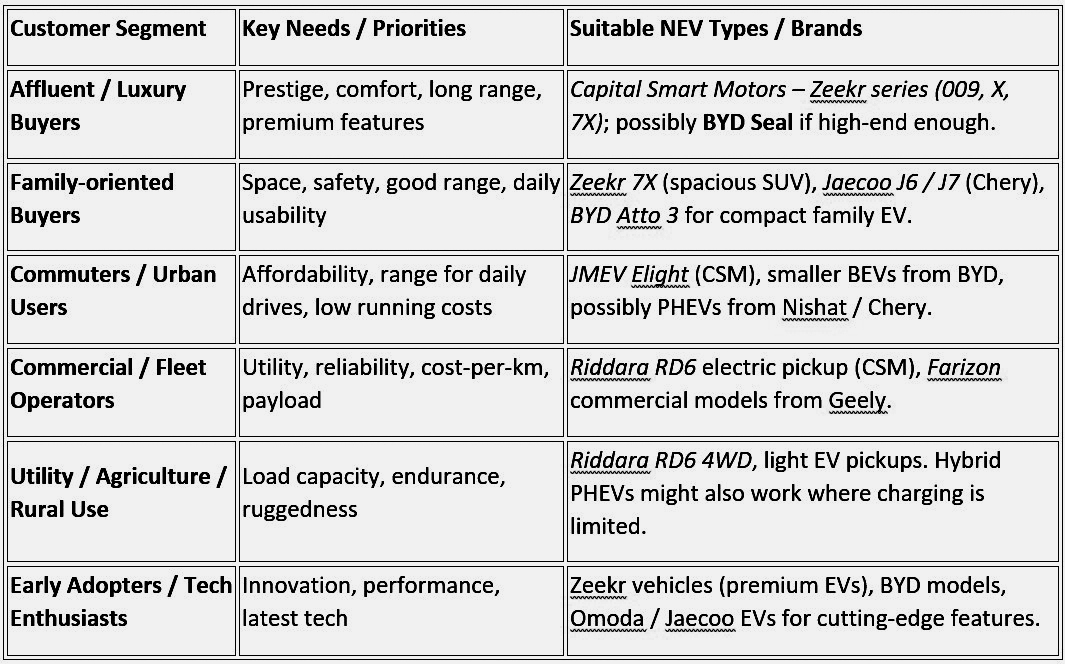
Customer Segments and Suitable Vehicle Types
Different NEV types appeal to different customer segments. Here’s a breakdown of likely customer segments in Pakistan and which NEV types / brands might suit them.
Key Factors Potential Buyers Should Consider Before Buying a NEV / Brand
If you’re thinking of buying a four-wheel NEV in Pakistan, here are the most important factors to evaluate — plus brand-specific considerations.
Charging Infrastructure
Check the availability of charging stations in your city / route.
For full BEVs, reliable charging is crucial; PHEVs (or range-extended EVs) offer flexibility where charging is limited.
Government policies may evolve; early buyers should be aware of any future risk.
Safety & Features
Look for ADAS (Advanced Driver Assistance Systems) features, crash safety.
Technology features (infotainment, battery management) differ by brand; prioritize based on needs.
Financing Options
Are there EV-friendly financing options in Pakistan?
Insurance costs for NEVs vs conventional cars.
Risks & Challenges for NEV Adoption in Pakistan
While the NEV market is promising, there are several risks that potential buyers and investors must be aware of:
Charging Infrastructure Gaps: Despite growth, public charging remains underdeveloped in many parts of Pakistan.
Electricity Costs / Reliability: Even if charging is available, consistent power supply and cost per kWh will impact running costs.
Battery Degradation: Over time, batteries degrade, and replacement / maintenance costs can be high.
Policy Risk: NEV incentives, duties, and import conditions may change.
Market Liquidity / Resale: As NEVs are new, used NEV market is limited; resale risk is higher.
Consumer Awareness: Many buyers may lack understanding of EVs, leading to lower adoption or unrealistic expectations.
Supply Chain / Localization: Local assembly may take time; imported CBUs could remain expensive in the short-term.
Strategic Outlook & Future Trends
Localization Push: With local assembly certificates being issued (for plug-in hybrid SUVs and NEV cars) per Pakistan’s NEV policy, the country is making a push toward localized production.
Charging Network Expansion: As NEV adoption grows, we can expect partnerships for charging infrastructure (e.g., between Mega Motor / HUBCO and oil marketing companies).
Diversified NEV Portfolio: With players like CSM bringing in SUVs, MPVs, pickups, and compact EVs, the NEV market is no longer niche — it’s becoming broad-based.
Commercial EVs Growth: Brands like Geely (via Farizon) may bring in commercial EVs (light trucks, minibuses), which could be very relevant for logistics, public transport.
Consumer Education: To drive adoption, consumer education will be critical — buyers need to understand benefits, costs, and trade-offs.
Conclusion
Pakistan’s NEV journey is unfolding in earnest. From Mega Motor / BYD building its first locally assembled plant, to Capital Smart Motors launching six EVs across different categories, to Nishat Group partnering with Chery for Omoda and Jaecoo — the ecosystem is expanding fast. While MG leverages its existing market presence with hybrid NEVs, Sazgar brings its manufacturing experience to both three- and four-wheeled EVs.
For potential buyers, the choice will depend heavily on purpose (commuter vs utility), budget, access to charging, and willingness to adopt new technology. With the right decisions, NEVs in Pakistan can offer cleaner, more efficient transportation — but navigating this emerging market requires careful consideration.
This exclusive article has been published in Automark’s December-2025 printed and digital edition. Written by #Aqeel Bashir
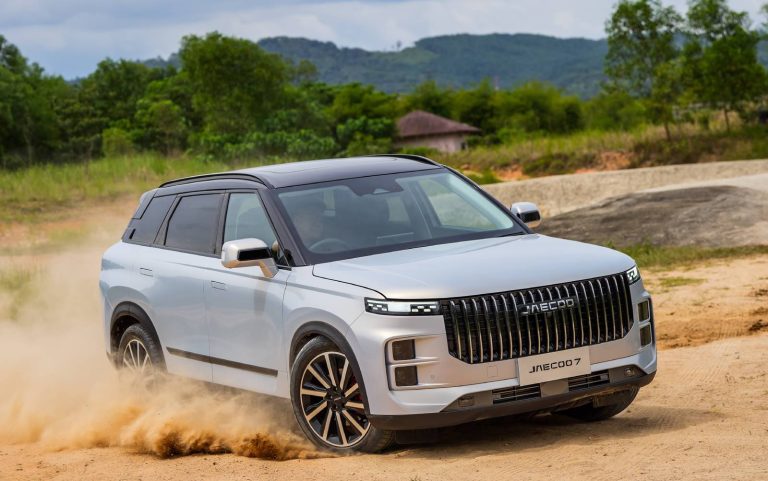
The Pakistani automotive landscape witnessed a defining moment on 22 October when Nishat Group unveiled the Jaecoo J7. This was not simply the introduction of another SUV. It marked the arrival of a breakthrough mobility experience, and the market responded immediately. Within just fifteen days, the Jaecoo J7 secured an impressive two thousand bookings, making it one of the most talked-about SUVs in the country.
From the very first look, the Jaecoo J7 captures attention with its bold design language. The SUV reflects the confidence and elegance of global premium vehicles while maintaining its own distinct character through sharp geometric lines, a muscular stance, and a signature front grille. The panoramic sunroof elevates the interior atmosphere, brightening the cabin with natural light and creating a refined sense of openness.
What truly sets the Jaecoo J7 apart is its advanced engineering. The J7 is a plug-in hybrid electric vehicle powered by Jaecoo’s SHS Super Hybrid System, a next-generation technology platform designed to deliver powerful performance with exceptional efficiency. The system pairs a 1.5-liter turbocharged engine with dual electric motors, creating a powertrain that is smooth, responsive, and engineered for long-distance capability. The J7 offers a remarkable combined range of up to twelve hundred kilometers, giving drivers confidence on extended journeys. For daily travel, the pure electric mode covers more than ninety kilometers, allowing silent and environmentally friendly commutes.
The hybrid system is enhanced by an intelligent battery management setup that improves efficiency, extends battery life, and ensures optimal safety. Power delivery remains refined and continuous through an E-CVT smart transmission, while multiple drive modes such as EV Mode, Hybrid Mode, and Save Mode give drivers full control over how they want to balance power and economy. Regenerative braking further extends the range by converting braking energy back into usable power. For those who enjoy exploring beyond paved roads, the J7 also offers strong off-road capability, supported by an advanced all-terrain driving system available in the AWD variant. Together, these technologies contribute to remarkably low fuel consumption and a smooth driving experience in all conditions.
Beyond its engineering, the Jaecoo J7 offers a premium driving environment. The sleek nineteen-inch alloy rims reinforce the SUV’s confident styling while ensuring stability on highways and urban roads. Inside the cabin, the combination of intelligent infotainment, quality materials, and thoughtful design details creates a space that feels modern, comfortable, and ready for any journey.
The overwhelming booking response reflects a significant shift in the expectations of Pakistani consumers. Drivers today are ready to embrace advanced, future-focused vehicles that combine sustainability, technology, and luxury into a single driving experience. With the launch of the Jaecoo J7, Nishat Group has not only introduced a new SUV but has also set a new benchmark for what smart mobility can look like in Pakistan.
The success of the Jaecoo J7 marks the beginning of a new era, signaling that intelligent, electrified, and premium mobility has firmly arrived in the country.
Dear Readers, We had the pleasure of speaking with Mr. Ghulam Hussain Agha, General Manager of Business Development at Pak Suzuki Motors. As Pakistan looks toward cleaner and more sustainable mobility solutions, biofuels and Bio-CNG are becoming key topics of discussion.
In this conversation, we’ll explore what inspired Mr. Agha to advocate for biofuels in Pakistan, how Pak Suzuki Motors is aligning with national and global carbon neutrality goals, and his long-term vision for Bio-CNG adoption in the automotive sector. We’ll also touch on the environmental impact of these initiatives, including how methane emissions from cattle can be managed, and discuss the economic opportunities and business models that can encourage private sector investment in biogas plants and refueling infrastructure.
What inspired you to advocate for biofuels as a sustainable mobility solution in Pakistan?
Foremost, we are driven by our principal; Suzuki Motor Corporation’s Vision which is to be an infrastructural mobility Company connected to peoples lives.
Secondly, Fact is Pakistan has a large rural population est. 65% out of which 60% are involved in agriculture economy which contributes around 1/4th to our GDP. Rural population has no Natural gas for cooking, heating and power generation. Pakistan ranks 7th in world cattle population. If this indigenous freely available cattle feedstock is availed for fulfilling energy needs of rural population; not only their standard of living will upgrade but also their net contribution to GDP will increase which will add to overall economic progress. So, Biogas/Biofuel is perfect development economics solution.
Thirdly our inspiration is that Biogas generation has massive the Co2e reduction impact resulting in Environmental upgradation.
2.How does Pak Suzuki Motors plan to align with Pakistan’s carbon neutrality goals and the UNFCCC commitments?
Pakistan is a signatory to environmental goals by commitment of national determined contribution under UNFCC to achieve overall CO2e footprint reduction to 15% (w/o condition) by 2030.
We estimate that by 2040, 9,000 biofuel plants can significantly reduce CO2e Annual national emissions by 20% up to 44 m tCO2e; (Pak.Nat. Annual consumption=225m tCOe)
3.What is your long-term vision for Bio-CNG adoption in Pakistan’s automotive sector?
We estimate that by 2040; 9,000 bio fuel plants will provide clean green BioCNG for 1.8 million vehicles; reducing our Forex Oil import bill by 10%.
Environmental Impact & Carbon Neutrality
4. Can you elaborate on the carbon reduction potential of Bio-CNG compared to traditional fuels and EVs?
BioFuel or BioCNG has low Co2e footprint; 75% against Diesel, 125% against LPG, 30%-70% against fossil fuels
5. How do cattle-related methane emissions factor into your carbon neutrality strategy?
Cattles are responsible for 7% of Global GREENHOUSE Gas Emission!!
Global Warming Potential of Methane (CH4 ) is 28 x times more than Carbon dioxide
i.e. simply put; 1 ton of methane/cow dung discarded near villages /cattle farms exudes
28 tons of CO2e in environment which is a devastating impact on environment.
6. What role do carbon credits play in your business development strategy?
Carbon Credits not only are potential big source of forex earnings for the country. Sindh Govt already taken a lead in Delta Blue Project where 3m CC sold in international voluntary markets earning $40 million. This is just tip of ice berg!
But the biggest advantage / role CC can play is motivating the Private sector not only to invest in plants and earn but contribute to Environment by reduction in CO2e as a bigger objective.
Economic & Business Development
7.How can biofuel adoption help reduce Pakistan’s trade deficit and forex outflows?
As already indicated, natural gas reserves are gradually depleting and Oil/petrol imports + LNG imports (est.40% of total) are massive burden on forex reserves.
It is estimated that if concerted efforts in biofuel policy and infrastructure development are harnessed by Government; by 2030, 1500 plants can result in forex savings of $270 m. Further, by 2040, 9,000 plants can cause $1.67 bn SAVINGS (which is 10% of oil import bill) to our national exchequer.
8. What business models do you foresee for private sector investment in biogas plants and refueling stations?
Private Sector has great opportunity in this untapped sector.
As happened in other countries; in first 2-3 years; a big technologically and financially sound business enterprise like Pak Suzuki leads Prototype Business Model by setting up state of the art Biofuel plant.
GoP to establish POLICY FRAMEWORK
Govt. and private Sector: Nos. of plants, CNG Stations Revival plan may be conceived,
3-7 years (mod-term) is the start of TECHNOLOGY GROWTH which Enable entrepreneurs to build Biogas plants.
GoP lease land on fav.terms to Private entrepreneurs, subsidize all CBG plants with subsidy or Financial assistance, Banks to offer special lending rates under green financing.
Revival of CNG stations/ massive employ. generation
Example: As an idea, not only 3,500 closed stations can be operationalized and made profitable but the 40,000 to 50,000 employment can be generated.
Long term; between 7-10 years; saturation occurs where in this critical stage: if Gov to EXTEND construction of biogas plants/ stations Foremost need consistency in Govt. policies, tax break, low interest loans investors
Further, Organic fertilizer has vast demand potential in increasing productivity and huge Savings for farmer vs. synthetic fertilizers.
So, the business model feasibility of Biofuel encompasses Bio fertilizer revenue as well.
9.How does Pak Suzuki plan to support rural development through biofuel initiatives?
The rural population segment is deprived of natural gas; using Firewood (resulting in massive de-forestation), untreated cow dung and hazardous LPG (high Sulphur content) for their personal consumption.
These alternative to NG have long terms hazardous impacts on population.
BioCNG is the local FOC available source generated clean, green fuel.
PS plan to empower rural lives through job creation; improving living standards and income of rural population.
Just fyi;
Bio Fuel will results in in est. Rs.250.000/- annual savings to single famer in farm to road transport.
Bio fertilizer will result in est.3.5 million annual savings per 100 acres which is huge savings for farmers.
Automotive Integration
10.Is Pak Suzuki exploring vehicle models optimized for Bio-CNG?
Pakistanis have great adaptability and understanding of alternative fuel.
It is evident from fact that from 2002 to 2014; Pak Suzuki sold 590,000 vehicles
And due to demand 80% vehicles manufactured were CNG factory fitted vehicles.
Even global player; Landi Ranzo set up factory in Bin Qasim area.
So; supported by Govt. policy; PS is looking forward for producing CNG factory fitted vehicles with hybrid option; BioCNG and Petrol vehicle.
11. How feasible is retrofitting existing CNG vehicles to run on Bio-CNG without modification?
CNG and BIO-CNG are perfectly complementary fuels and lighter than air.
BioCNG requires no modification in CNG factory fitted kit as well as engine.
We already successfully tested vehicles and are satisfied with smooth performance of engine and running of vehicle.
12. What challenges do you anticipate in scaling Bio-CNG infrastructure nationwide?
As a matter of fact; 3.500 CNG stations are closed.
We got a survey conducted from reputable research firm where 50 CNG station owners were visited.
Results were very positive. More then Over 90% CNG station owners show willingness to restart Bio CNG ops. Govt Policy requirement identified as a key Challenge for INVESTOR CONFIDENCE. So we need Bio CNG policy framework
Global Trends & Benchmarking
13. What lessons can Pakistan learn from India, Thailand, and European countries in biogas adoption?
In India: Prime Minister inaugurated the Asia’s largest public private Bio-CNG plant in 2024 where 400 public buses are being run on Bio-CNG
The Govt at national level has launched concerted schemes to utilize this indigenous clean fuel advantage as well support and attract investors in biogas/biofuel technology development.
SATAT: Large nos. of plants established under SATAT (Sustainable Alternative towards Affordable Transportation- loan subsidy scheme)
75 plants already operational, LoI issued for 2,212 plants, Govt. to ensure a guaranteed offtake price and encouraging commercial partnerships with Oil & Gas marketing companies.
Viable projects under SATAT are eligible for loans up to 75% of the project cost.
WTE: The Govt.under the Min of Renewable energy has established “Waste to Energy Funds” under National Bio Energy program for providing central financial assistance to build Biofuel plants:
In Thailand:
Currently 1,788 biogas plants;
Govt. through the Ministry of Energy is promoting the use of Compressed Biogas to replace NGV under the “Biomethane Promotion Strategic Plan Project for Commercial Energy Use”.
Bio-Energy Conservation fund of up to 20% to 30% of CAPEX is provided by Govt. for building Biomethane plants based on different capacity levels.
European countries:
Already taken lead and now policies are pushing the sector to increase sustainability and reduce biogas production costs.
Germany is at the top with10,000 plants followed by France 1,600 plants and UK with 700 plants,
Policy & Government Engagement
14. What kind of policy framework do you believe is necessary to accelerate biofuel adoption?
Together with Government of Pakistan we need to formulate Biogas/Biofuel policy and investment infrastructure.
Foremost; is forming working group of ministries/committee for biogas/bio-cng
policy framework.
Once policy guidelines are established, Pak Suzuki model biofuel/biofertilizer plant will serve as catalyst for private sector investment; resulting in massive socio-economic, employment generation, rural empowerment. Above all oil import forex savings will result in reducing Trade deficit in coming years.
15.How can public-private partnerships be leveraged to build biogas infrastructure?
Pakistan geographically is endowed with river Indus cascading from Karakoram mountains inj North to Arabian Sea in South. Fortunately; cattle farms sprawl along the river indus from North to South.
The Govt. Revenue departments in each province particularly cattle rich districts of Punjab Province own lands near major cattle colonies.
Pak Suzuki sees this an ideal opportunity to Support Govt. through Public Private partnerships by converting “Waste to Energy” through a Structured “Nation-wide/Province wide Bio Energy program”.
This would also propel rural employment generation and improve socio-economic condition of farmers through Organic Fertilizer which will enhance farm productivity and save forex by reduction in imports of Fertilizer
16. What role should the government play in incentivizing biofuel production and usage?
Govt. can allocate Land for setting up Biogas plants.
Provision of basic utilities infrastructure; water, sewage, Electricity and others
Facilitation for relevant Provincial authorities/ dept. to provide seamless delivery in obtaining Licenses, registrations, NoCs, Approvals
Govt. can also create a Program fund for financial assistance to private entrepreneur setting up Bioenergy plant.
Govt. can provide income tax relief and subsidy in taxes for setting up bioenergy plants and / or setting up reviving of CNG gas stations
Govt. can guarantee offtake of Biofuel by OMC and also organic Fertilizer sales through Private Fertilizer distribution networks.
This exclusive conversation has been published in Automark’s November-2025 printed edition, by @hawwa-fazal