Home Blog Page 44

Four wheeler makers cautiously optimistic over 2HFY20 sales

Many assemblers of four wheelers see second half of FY20 almost similar to IHFY20 despite some improvement in sales in January 2,020 compared to December 2,019 as buyers lifted bikes and other vehicles due to change of model year.

Import of semi and completely knocked down kits by the local assemblers of cars, bikes and heavy vehicles had also become positive in January 2,020 to $57 million from $12 million in December 2,019 but the January 2,020 figure is still far lower than $90 million recorded in January 2,019 which is alarming.

The overall semi and completely knocked down kits during 7MFY20 plunged by 45.5 per cent to $417 million. Out of this total figure, import of kits and accessories for heavy vehicles, motor cars and motor cycles came down by 47 per cent, 46 per cent and 34 per cent to $115 million, $261 million and $41 million in 7MFY20, figures of Pakistan Bureau of Statistics (PBS) stated.

The auto market especially car segment is struggling from the impact of federal excise duty ranging from 2.5pc to 7.5pc on car engines of different horsepower, additional customs duty of seven per cent on raw material imports, additional sales tax of three per cent on import of CKD kits and raw material, record high interest rates and strict vigilance by the Federal Board of Revenue (FBR).

Buyers still lack confidence in buying automobiles with free mind. People usually resume vehicle purchase from January or February after suspending it from November to December owing to model change but this change may witness increase in month to month sales rather year on year improvement.

Perhaps brown field and green field investors are more worried as their over one billion investment under Auto Development Policy 2,016-2,021 is now at stake because of economic slowdown and depressed vehicle demand.

Under Category A, 18 investors have been granted the greenfield status since 2016. Two closed-down units have also been revived under the brown field status. Regal Automobiles, United Motors, Master Motors, JW Foreland, Kia Lucky Motors and Hyundai Nishat Motors have already started car and SUV production.

Al-Futtaim Renault and Ghandhara Nissan Datsun investment plans have hit the rocks due to various reasons and they are unlikely to roll out vehicles in Pakistan.

Another key point here is that the Auto Development Policy 2,016-2,021 is going to end in 2,021 and those Greenfield companies, who had yet to start their operations or facing some kind of delay in materializing their projects, may face serious problems in getting incentives and tax benefits. As a result, they have to pull back their investment plans or wait for new policy.

It is interesting to note that some new entrants like Chinese and Korean, who had dared to take plunge in volatile Pakistan’s auto market, are not ready to share their sales numbers since they started rolling out their vehicles. They have kept sales figures as a big secret as they fear losing fresh customers in case they reveal low sales numbers.

When asked over the sales prospects of new cars by Korean and Chinese car assemblers in second half of 2,019-2,020 by the new entrants, an assembler said this may create excitement for new buyers and may post a growth of five per cent. He added the auto market still lacks new buyers in big volumes.

It is true that some buyers of Toyota Fortuner, Revo, Hilux and Honda Civic had switched over to Kia Sportage because of massive price difference but Kia Picanto is facing problems due to its high prices otherwise its lower price can give a big challenge to Suzuki 1,000 vehicles like WagonR and Cultus.

In an uncertain economic situation, current investors are a bit shy in making any further expansion. “All eyes of current and new entrants are on new budget and this will really be a test case for the government,” the assembler said adding that the current revenue shortfall of over Rs 400 billion also signals for a possible mini budget to cover up revenue target.

The issue of filer and non filer had also affected the sales of four vehicles mainly.

While remembering 2,019 as the year of job losses especially in the vending industries, the assembler said that at least “40-50 per cent of people had become jobless in 2,019 due to up 72 per cent drop in car sales.” Tractor industry had suffered the most due to growers/farmers reluctant towards tractor buying in view of failure of cash crops like cotton and rice and high input costs triggered by high fertilizer prices.

He hoped that Rabi crops in Sindh and Balochistan may jack up tractor sales from February but the overall tractor sales in FY20 may remain 30-40 per cent flat compared to FY19.

Amid economic slowdown and high taxes and duties, many new entrants are determined to test more vehicles by importing completely built up units before they start their local assembly depending on the market response.

Honda is looking forward for bringing Honda City which is due now as the company had not changed its model since 2,009. Hyundai Nishat is also planning to launch new vehicles, while Sazgar Engineering Works also plans to launch new cars which in the last week of January had introduced country’s first fully electric three wheeler vehicle.   

Adviser to PM on Climate Change Malik Amin Aslam said there were four main benefits of the EV policy as these vehicles would run on 70 per cent less cost compared to its fuel-based counterpart.

From low running costs to being environment-friendly, introduction of electric vehicles in the country would also help cut oil import bill, yield countless benefits for environment, people’s overall lifestyle and the way our cities look, the adviser added.

He said efforts were being made for localisation of EV manufacturing, enabling Pakistan to become part of the global value chain of electric vehicles.

He said the EV policy and economic incentives would also be extended to the auto manufacturing sector to produce electric vehicles locally.

Emission of climate change-causing carbon dioxide from traditional vehicles contributes to greenhouse gases in the atmosphere and accelerates climate change and overall environmental degradation and cause health problems.

In the third week of February, Crown Group had unveiled a series of electric vehicles which would be built at Rs two billion 26 acre plant at Port Qasim. The price ranges from Rs 55,000 to Rs 400,000.

The company, with installed capacity of 120,000 units per year, claims that two and three wheelers will enable users to drive one km in only Rs 1.25.

Here the Japanese car assemblers, who roll out fossil fuel vehicles, must be worried as they are tight lipped over electric vehicles.

In case Chinese assemblers bring in electric vehicles and infrastructure for charging improves, then the existing Japanese assemblers will have to strive hard to overcome the challenge of Chinese four wheelers.

The existing assemblers will have to wait for the green signal from their Japanese investors as it is still not clear what plans they have for electric vehicles.

However, there have been no serious discussions over the availability of infrastructure for electric vehicles.

It seems that the Science Ministry has been trying hard to take the lead from the Ministry of Industries and Production in handling the electric vehicle issue.

Whether fossil fuel vehicles or electric vehicles, it is now high time that the government should form an authority to check the quality of vehicles so that locally produced vehicles should come at par with imported vehicles.

The National Assembly Standing Committee on Industries and Production had raised concerns over high prices and low quality of locally produced vehicles but surprisingly the Committee after visiting Pak Suzuki and Indus Motor Company, had returned satisfied after the senior management of these two companies gave various reasons on these two issues.

Pak Suzuki informed the Committee that the Auto Policy 2,016-2,021 had authorized Engineering Development Board (EDB) for developing automobile standards as per UN WP 29 regulations. The auto industry often received meeting notices from the Pakistan Standard Quality Control Authority (PSQCA) regarding making their own standards. It is very bothersome for the industry with a point in question who they are appropriately answerable to EDB or PSQCA.

Pak Suzuki urged the Standing Committee to look into this important subject.

The company urged the government to remove taxes and duties and the State Bank should cut interest rates. 

This article was published in Automark Magazine’s March 2020 printed edition

Hyundai Down Korea Factory Tested Positive for Coronavirus Following Employees

Hyundai has shut down a plant in South Korea after a coronavirus worker has found positive.

The closed factory is in Ulsan, which manufactures the Korean car maker’s numerous SUVs. Including the Santa Fe, Palisade, Tucson, and the recently revealed Genesis GV80.

The carmaker has also put in self-quarantine workers who came into contact with the contaminated staff and took action to get them to check for the virus, says Reuters.

Complexity:

Hyundai did not say when the plant would re-open, saying only that the facility disinfected. The Korean car manufacturer has five Ulsan factories with an annual production capacity of 1.4 million cars. So, about 30% of their global production. Ulsan is the biggest car complex in the country, with 34,000 workers employed by Hyundai there.

Also, Ulsan is less than an hour away from Daegu, the epicenter of the outbreak in the region. South Korea actually has the most cases of coronavirus outside of China. With the most recent total number of infected people remaining at 2,022.

Samsung also had to shut down one of the country’s telecommunications factories over the past weekend. Following the discovery of a worker who was infected with the virus. But they resumed production Monday.

Hyundai’s share prices fell by 5 percent after the news broke. Handing the Korean automaker another setback after gradually. Restarting production at local plants hit by a shortage of parts from China in the middle of the coronavirus outbreak.

Samsung also had to shut down one of the country’s handset factories over the past weekend. Following the discovery of a worker who was infected with the virus. But resumed production on Monday.

Hyundai’s share prices dropped by 5 percent after the news broke. Giving the Korean automaker another setback after gradually. Restarting production at local plants hit by a shortage of parts from China in the middle of the coronavirus outbreak.

Source: https://autofreak.com/

Pakistan Auto Show-2020 – Review

Era of Pakistan Auto Parts Show PAPS started from 1995, when PAAPAM members first time displayed their products from auto industry platform. A show was organized in Marriot Hotel, Islamabad from 9th to 11th December 1995 in which 42 members participated.

Chaudhry Mukhtar, then Federal Commerce Minister from 1993 to 1996 in Benazir Bhutto led cabinet, was the chief guest. It was fully sponsored by Export Promotion Bureau and for the first time in the history of Pakistan, government officials took a glimpse of specialized and hi-tech parts which were being manufactured in Pakistan.

Like every year, PAPS organizing committee successfully organized Pakistan’s biggest Auto Show ‘PAPS 2020’ in Lahore. It was the 16th annual show of PAAPAM, reaching new heights of success every year. It was a three day event which started from 21st February in the Expo Centre Lahore and concluded on 23rdth February 2020.

The show was witnessed by government officials, defense personnel, counsel
generals, bureaucrats and a large number of visitors.

The Show started at 1100 hours at Auditorium/Convention Center International Expo Lahore. All the chairmen’s of OEM, CEOs of auto parts manufacturing company, attired in
elegant raiment, arrived before time.

Mr. Almas Hyder, Chairman EDB inaugurated the ceremony by delivering a powerful speech and welcomed all the guests. On 22nd Feb in the afternoon, PAAPAM also arranged a symposium at mini auditorium of international expo center, in which they had invited many auto industry professionals and businessmen (mentioned below). The symposium tag line was ‘ENGAGE TODAY, TO SHAPE TOMORROW’. Speakers were talking about current challenges faced by the Auto Sector of Pakistan, Auto Policy 2021-2013, Role of localization in the development of automotive sector of Pakistan, Challenges faced by the New Entrants and Industry & Academia Linkage.
Mr. Amir H. Shirazi (Chairman Atlas Group)
Mr. Sikandar Mustafa Khan (Chairman Millat Group)
Mr. Mian Muhammad Mansha (Chairman Nishat Group)
Mr. Feroz Uddin Khan (Ceo OJ Engineering Industries)
Mr. Mashood Ali Khan (Ceo Mehran Commercial Enterprises)
Mr. Mumshad Ali (Ceo RK Gears)
Mr. Almas Hyder (Chairman EDB)
Prof. Dr. Fazal A. Khalid (Chairman HEC (Punjab)
Mr. Awais Raoof (Chairman Board Of Governors – UOL)
Mr. Ibrahim Arif (Sahiban Services)
Mr. Zaheer Uddin Dar (Independent Analyst

PAAPAM Chairman Captain (retired) Muhammad Akram showed his gratification to Mr. Razzak Dawood, Advisor to PM on Commerce, for resolving auto industry filer/non filer issues, removal of RD on raw material and other industry associated matters. Unfortunately, Mr. Razzak was unable to attend the exhibition.

The industrialists emphasized that the government needs to draft effective automotive policies in order for the economy to excel. The automotive industry has provided numerous jobs all over Pakistan as more than 3000 auto-part manufacturers are operating in the country. Furthermore, around 50,000 skilled workers as direct employees and 2.4 million as indirect employees are hired with a decent salary throughout the country and it still has potential to grow further.

The Chairman further said that since Pakistan is the cheapest source for producing tractors, it not only needs to capitalize on this market but other parts production as well to boost the income from exports. The industry has generated investment volume of Rs400 billion and contributes revenues of Rs90 billion per year to the national exchequer. It has also achieved an import substitution worth US$ 3 billion per annum and an exports volume of US$200 million per annum.

Mr. Nabeel Hashmi, Chairman PAPS Committee said that this event allows vast amount of knowledge to be shared amongst everyone attending it. It has also pushed many youngsters in pursuing a career in engineering and automotive industry. Moreover, fresh and fruitful technological ideas are also generated and shared with brands, businessmen and enthusiasts to expand their business networks as well.

Mr. Saad Sherani, SVC for PAAPAM, said that as the demand for automobiles is expected to rise continuously over the next 3-5 years, the big challenge for Pakistan is to nurture local assemblers and vendors and ensure rapid investments in capacity-building to meet the sharply rising demand.

PAPS has become an international brand of Pakistan which attracts many foreign exhibitors as well. However, compared to last year, very few foreign industry specialists attended the event. Moreover, hardly any of the Chinese suppliers and industrialists could make it due the unfortunate spread of corona-virus.

This year many new entrants of auto industry participate like, Hyundai Nishat Motors and Sazgar Engineering. They displayed new product-line, visitors had take very much interest while existing assemblers, Honda Cars and Pak Suzuki also participated in this exhibition, while many auto vendors and auto related companies, Servis Tyres, Panther Tyres were also presented.

To conclude, the overall event was a success as it definitely brought certain issues to light, how the automobile industry can achieve new lengths of success by further localizing production and definitely allows the cars and parts manufacturers to be marketed in a well-known platform. However, there were no prominent government officials who visited this event, nor a closing ceremony was performed…..

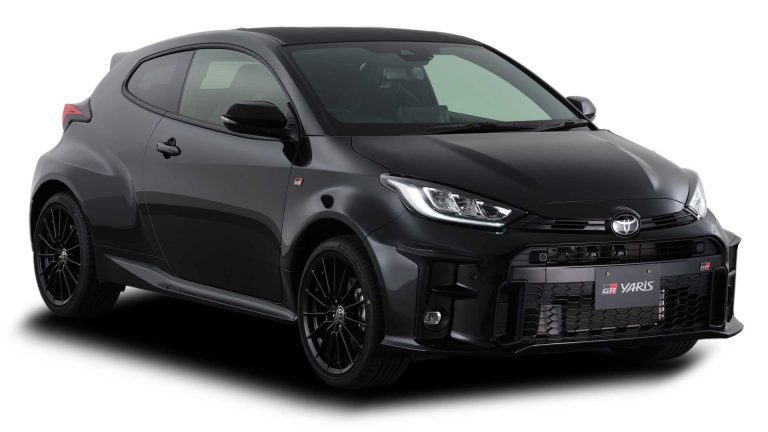
Wait is finally over, Toyota Yaris Sedan launching in Pakistan

Toyota Pakistan all set to launch All New Toyota Yaris sedan replacing Corolla 1.3L XLi and GLi variants. Expected launch date for Yaris is 26th March. According to
source dealers training will be starting from 8th March and product launching cermeny will be held in Lahore.
All New Yaris to have 6 variants namely:

  • Yaris GLi Manual 1.3
  • Yaris GLi 1.3 CVT Auto
  • Yaris ATIV Manual 1.3
  • Yaris ATIV 1.3 CVT Auto
  • Yaris ATIV X 1.5 Manual
  • Yaris ATIV X 1.5 CVT Auto

Yaris ATIV X 1.5 (MT/CVT) being the top variants to feature all new 1.5L dual VVVt-i engine (NR Series), push start, automatic climate control, alloy wheels, leather seats, navigation / infotainment system, different driving modes: ECO/Sport, LED Day Time Running Lamps, fog lamps, chrome trims on front grill and side window rails, chrome door handles. However, features like dual airbags, ABS, MID etc are standard throughout the lineup.

1.3L Yaris variants also getting all new 1330cc Dual VVT-i engine and CVT-i transmission is standard in all auto variants of Yaris.

Pricing:
Yaris shall be available at the price ranging from 2.4 Million to 2.9 Million PKR.

VavaCars partners with the leading Islamic Bank in Pakistan, Meezan Bank to provide innovative Financing products for Car Trading

VavaCars, a globally recognized car transaction platform and Meezan Bank, Pakistan’s leading Islamic Bank, entered into an agreement to pave the way for providing innovative and efficient financing solutions for car traders in order to facilitate the entire purchase process for vehicles through VavaCars. . The agreement was signed by Mr. Mujahid Khan, Country Manager, VavaCars and Mr. Syed Tanvir Hussain, General Manager & Head of Commercial Banking at Meezan Bank.

This partnership aims to provide convenience to car traders who otherwise do not have access to financing, thus bridging the gap between banks and traders. Auto dealers having limited financing options will be able to increase their capacity to purchase vehicles from VavaCars through Shariah-compliant financing products offered by Meezan Bank. VavaCars auto trading partners will enjoy a priority status when they apply for financing through Meezan Bank.

Speaking at the occasion, Mr. Mujahid Khan, Country Manager, VavaCars said: “I am excited about partnering with Meezan, the leading Islamic Bank in Pakistan. This partnership is a reflection of our shared values of Trust, Transparency, and a passion to serve our customers, and will bring ease of securing Shariah-compliant financing for our partner auto traders.”

“Meezan Bank is excited to join hands with VavaCars to facilitate car traders in purchasing used vehicles from Vavacars. Meezan Bank will use technology platforms to provide complete banking solutions to Car traders and VavaCars. This will be a first-of-its-kind partnership to promote the trade of used vehicles in Pakistan and we are optimistic that Meezan Bank and VavaCars will jointly play a vital role in its success”, said Syed Tanveer Hussain, General Manager & Head Commercial Banking, Meezan Bank Limited.”

About VavaCars:

VavaCars launched its operations in Pakistan in 2020 and offers a fast and secure way for consumers to sell their car in 3 easy steps: 1) Free Valuation 2) Free Inspection and 3) Secure Payment. For Dealers, the VavaCars platform has been designed to make the process of buying cars as fast, secure and painless as possible by 1) Searching Vehicle 2) Placing bids 3) Getting the car. VavaCars vision is to become the world’s most trusted car transaction platform.

VavaCars comes from a global group founded over 50 years ago, focused on the energy sector. Worldwide, the group is invested in over 5,000 fuel stations, five oil refineries and 18 million cubic meters of storage for petroleum products, as well as other energy infrastructure, including ships. VavaCars is also operational in Turkey.

About Meezan Bank
Meezan Bank is the first and largest Islamic bank of Pakistan and the 6th largest bank in the country. With a network of 760 branches in more than 220 cities, it has the largest Islamic banking network in Pakistan.

Meezan Bank has consistently been recognized as the Best Islamic Bank in Pakistan by numerous local and international institutions including its recognition as the ‘Best Bank – 2018’ by Pakistan Banking Awards – the most prestigious award in the country’s financial sector. The Bank has been recognized by Islamic Finance News – Malaysia, Global Finance magazine – New York, Asset AAA – Hong Kong, Asiamoney – Hong Kong, The Banker – United Kingdom, South Asian Federation of Accountants, Islamic Finance Forum of South Asian Awards, – Dawn & IBP Pakistan, Employers Federation of Pakistan and CFA Association – Pakistan.
VIS Credit Rating Company Limited (Formerly JCR-VIS Credit Rating Company Limited) has reaffirmed the Bank’s long-term entity rating of AA+ (Double A Plus) and short-term rating at A1+ (A One Plus) with stable outlook. The rating indicates sound performance indicators of the Bank.

Should coronavirus be a concern for cars or parts bought from East Asia?

Thanks to today’s hyper-globalized economy, there’s a good chance you’ll either buy a new car or order parts for your classic ride sourced from an East Asian country. Right now, that region is significantly impacted by the coronavirus outbreak.

With that said, is the risk of infection a serious concern for the auto industry workers or classic car hobbyists? The short answer is that  quite unlikely, but let’s take a deeper look.

According to the CDC, the virus survives about two hours on copper and steel surfaces, and there’s concern it can last longer on plastic and cardboard. The likelihood that the coronavirus lives long enough on a package to reach the USA is low, since it normally takes weeks (or months!) to arrive.

The CDC also states that physical contact with infected objects “is not thought to be the main way the virus spreads.” Which is good for this discussion, as contact with a part (or vehicle) made in a country with a coronavirus outbreak is absolutely nothing like being next to a person with the flu in an airplane.

That difference cannot be understated. A native American shared his views on how he continued his purchase habits as normal: in mid-January he said he ordered bulk LED light bulbs for his collection of Fords, coming from China due to the obscure requirements (size T-5, warm white tone matching the factory incandescent bulbs) and obvious cost savings.

His packages arrived last week, complete with shipping labels from China. He stated to removed the bulbs, threw away their packaging, and washed his hands. While he didn’t wash his hands for the CDC-recommended 20-second duration, he didn’t touch his face at any time beforehand.

The odds of him getting sick is probably close to zero, but considering a possible 27-day incubation period, perhaps time will tell if one of his fellow staff members falls prey to the coronavirus.

Source: This article was originally published on MSN Auto news

Toyota plans new $1.2 billion EV plant in Tianjin with FAW

Japanese automaker Toyota plans to build a new electric vehicle plant in the Chinese city of Tianjin with its local partner FAW Group, a document from the local authorities showed.

The joint venture between Toyota and FAW plans to invest around 8.5 billion yuan ($1.22 billion) in the planned car plant in Tianjin, according to a document issued by authorities of the China-Singapore Tianjin Eco-city.

The plant will have manufacturing capacity of 200,000 new energy vehicles a year, the document showed. In China, new energy vehicles include battery-only, plug-in hybrid and fuel-cell vehicles.

Toyota declined to comment on the project but said in a statement that the company regards China as one of its most important global markets and is constantly considering various measures to implement in China to meet the needs of growing the business in the country.

Last year, despite China’s overall auto market dropping 8.2%, Toyota sold 1.62 million Toyota and premium Lexus cars in China, the world’s biggest auto market, a 9% sales jump compared with a year earlier.

It is also expanding car manufacturing capacities in its Guangzhou-based venture with another partner GAC.

Source: Reuters.com

Hyundai Motor Company appoints Bang Sun Jeong as New Vice President of Middle East and Africa

Hyundai Motor Company has today announced the appointment of Bang
Sun Jeong as their new Vice President of the Middle East and Africa region.
Based at Dubai’s regional headquarters in the United Arab Emirates, Jeong will oversee the day-to-day operations and will be responsible for strengthening Hyundai’s presence and brand value across the MEA region.

Jeong has accumulated abundant experience at Hyundai Motor Company that will help maximize results in his new position. In his previous role, he had served as Hyundai’s Vice President of Asia Pacific, Africa and Middle East Operations Division and also held the Executive Director – sales and marketing role for Hyundai Motor India. He also held positions in Poland and Turkey.

Jeong said: “I am delighted be named as the new Vice President of Middle East and Africa for
Hyundai Motor Company. It is a company that I know very well having gained vast knowledge of the brand during my career.

“As the Vice President of Middle East and Africa at such an important phase, I am compelled by a strong responsibility to confront the challenges ahead of us. In 2019, we made solid progress and moved forward despite the challenges faced in the previous year.

“It is essential we build on this success in 2020 and I forward to helping sustain our growth
momentum to reach our best sales record, and in doing so, we hope to set a new milestone in our journey.”

Jeong replaces Mike Song, who has been promoted and will now work with the Genesis Division
Headquarters. Song said: “Jeong has strong knowledge of Hyundai Motor Company and I have no doubt that he will take the brand to the next level in the Middle East and Africa region.
“In what was a challenging 2019 year for the whole industry, Hyundai still made significant sales and at the same time, the company cemented its position as a global brand in the automotive industry.”

Federal Adviser to PM for Climate Change visits Crown Industrial Park

The Federal Adviser to Prime Minister of Pakistan for Climate Change, Mr. Malik Amin Aslam recently visited the Crown Electric Vehicle Co. Plant to personally observe the electric vehicles facility, test drive the vehicles and talk about the future of Electric Vehicles in Pakistan.

With this visit, Crown Group aims to strengthen the electric vehicle eco-system in Pakistan by promoting the use of rechargeable electric stations. Recently, Crown Group organized the market testing and sales display of its exclusive range of CROWNE Electric Vehicles which included two, three and four-wheelers, which be locally manufactured at the Groups Port Qasim facility on which PKR 2 billion has already been invested.

Besides helping the government in controlling pollution, CROWNE 3 wheeler costs Rs.1.50 per km thus benefiting the masses in economical transport facilities and low cost of cargo movement.

At the visit, Chairman Crown Group, Mr. M. Farhan Hanif stated: “It is an honour for us that the Federal Ministry is taking interest in our initiative. Our vision goes beyond the conventional ways travel is done in Pakistan. We aim to enable the masses of Pakistan to get affordable, economical and reliable vehicles for their everyday travel. Together, in coordination with the government, we will pursue our vision and aim and provide Pakistan with the technologies they need”.

Crown is a leading brand in the two and three wheeler industries of Pakistan and the only local consumer brand that exports to international markets while offering solutions for all segments of the industry within Pakistan. Crown Group has the largest network of spare parts and after sales service in Pakistan with 62,000 retailers, wholesalers and workshops on board.

Federal Minister Malik Amin Aslam said draft of Electrical Vehicle Policy will be submitted to the ECC soon

Federal Minister and Prime Minister’s Adviser for Climate Change Malik Amin Aslam has said that a draft of Electrical Vehicle Policy will be submitted to the ECC soon”

He further stated that currently work on policy concessions and SROs is in the final stages and a revolution of electric vehicles is in the coming in the country. Moreover USAID has shown the possibility of saving $2 billion in one of its reports. This will also be beneficial since it will utilise our capacity of producing 4,000 MW power which is currently utilised. Malik Amin Aslam said that there are more than 200 million motorcycles and rickshaws in the country, while more than 3,000 CNG stations across the country can be used for electrical charging stations.

About Crown Group:
Crown Group has been the forerunner in two and three-wheeler automotive industries since 1963. Having the largest network of motorcycle parts across pan Pakistan, Crown deals in manufacturing motorcycles, tyres and tubes for more than 15 years.

  • Press Release

Honda To Shut Down Its Production Facility In Philippines

The Philippine unit of Honda said on Saturday its production facility will shut down next month, as the Japanese automaker struggles to shore up global automobile operations.

Japan’s third-largest automaker has seen its profitability decline by more than half in the past two years, led by a series of quality-related issues.

In a statement, Honda Cars Philippines said its production plant south of the capital Manila will cease operations next month. But automobile sales and after-sales services will continue through Honda’s regional network.

“To meet Honda’s customer needs in the Philippines for reasonably priced and good quality products, Honda considered efficient allocation and distribution of resources,” the company said.

Production will focus on other hubs in Asia and Oceania, it added.

Honda Philippines’ manufacturing plant, which has 650 employees and associates, started operations in 1992. It makes BR-V and City passenger cars catering to local demand.

Honda Philippines counts Rizal Commercial Banking Corp and a unit of conglomerate Ayala Corp as its local partners.

The Philippines’ automotive output is a minnow compared with its Southeast Asian peers, notably Thailand. A government tax incentive program launched in 2015 has failed to significantly raise the country’s local auto production.

Courtesy: Yahoo News