MVM and Yutong Strike A Partnership To Manufacture Electric Buses In Pakistan
A multinational electric company known as MVM Group has signed a memorandum with Zhengzhou Yutong Bus Co., LTD for the manufacturing of electric buses for the Pakistani auto sector. This initiative occurred under the umbrella of CPEC arrangement and is known to bring economic stability in the country.
The official ceremony of the project launch will be held in February of 2020. During the ceremony, Yutong will conduct a trial run of the electric buses before making available for the general public. The aim of launching electric transportation is to revolutionize the Pakistan Public Transportation into sustainable with the zero-emissions system. The first step is to accumulate electric buses into the metro system and then disperse them to intercity transportation. With the launch of electric vehicles, the country will also face financial stability and the fares of transportation will decrease for the general public.
MVM Group is an electric power generating company that is situated in Hungary. It is the largest electrical manufacturing company in the country and is responsible for large scale distribution, sale, and production of electricity.
Yutong is situated in China and is formally known for manufacturing large scale commercial level vehicles. In particular, the buses by Yutong are the most famous all over the subcontinent. According to a 2016 sales report the company was considered as the world’s biggest bus manufacturer in sales volume. Yutong is famous worldwide for its coaches, intercity buses and city buses.
Courtesy: TechJuice.com
New 48v Mild-Hybrid For Suzuki Line-up
Suzuki will introduce a new 48v mild-hybrid powertrain to the Swift Sport, Vitara and S-Cross early next year.
The engine will offer up to 20% lower CO2 emissions, a greater level of torque and a 15% overall improvement in fuel consumption. It will directly replace the current 1.4-litre Boosterjet.
Similar in basic principle to the 12v hybrid SHVS (Smart Hybrid Vehicle by Suzuki), the newly developed 48v hybrid powertrain remains lightweight in design and the components add less than 15kg to the overall weight of the vehicle.
A 48v lithium-ion battery, Integrated Starter Generator (known as ISG) and 48v-12v (DC/DC) converter is used to power components requiring lower voltage including lights, audio and air conditioning. The ISG acts as both a generator and starter motor, is belt driven and assists the petrol engine during vehicle take off for a higher level of torque with 235Nm available from 2,000rpm.
The battery stores electrical energy recovered from deceleration and braking and incorporates an idle stop function operated via the Integrated Starter Generator. This battery, along with the DC/DC convertor unit, are located under the front seats to assist overall weight distribution.
A further benefit of the new 48v hybrid system is the introduction of electric motor idling when the clutch is disengaged and the engine speed is approximately 1,000rpm. This feature essentially replaces fuel injection with power from the electric motor to then control and maintain engine idling at vehicle speeds below 10mph and when stationary.
This function therefore eliminates fuel consumption under these conditions as engine momentum is electrically controlled by the ISG unit and the car is ready to re-accelerate on request with no engine restart delay.
Further detail and full specifications of the three new Hybrid models will be announced in the new year. The new vehicles will be launched in March.
Courtesy: FleetNews
Wagon- R VXL (AGS) version will soon be on the Pakistani roads
It’s time the Wagon- R fanatics gear up as per credible sources Pak Suzuki is going to launch the Wagon- R VXL automatic gear shift (AGS) soon. Soon enough you will be able to find people driving this version on the road and if you want to book yours you can book them from Suzuki dealerships across country.
Suzuki Wagon-R is one of the highest selling cars of Pak Suzuki in the last five years. In 2014 when it was launched it may have not gotten a response but it was soon reverted with the commencement of ride-hailing services in the region.
This was a blessing for them as the company had no competition from the local market. The car became a hot-piece of cake with consumers rushing to buy it. Although it has a simple designed tall-boy body with little to no attraction. But it was cheap and gave good mileage.
The strategy of introducing the AGS variant was first adopted by the company in its lineup of Cultus, last year. With a good response on Wagon-R the company has decided to launch its variant and given the demand, it seems like the correct decision.
Wagon- R which then was quiet in the trend saw a sharp decline in the fiscal year 2019-2020. As of the first 5 months of this fiscal year, the sales of Wagon R got reduced by 72% to just 3,339 units compared to 13,341 units sold in the same period a year earlier.
Pak Suzuki might be hoping to increase their sales with the launch of their latest version. Experts say that the prices would be increased by Rs 100,000. The Wagon-R retails at Rs 16.25 lac even though its safety and basic tech feature like power mirrors. If the AGS version wouldn’t have these features then the consumers may not be compelled to buy it.
While competitors like Honda are keeping their production plants closed on certain days of the month. Pak Suzuki is aiming to make new cars and have the same production days.
Maybe this was the comeback Pak Suzuki needed with competition down to again make their mark in the auto market.
Hyundai's Vision T nods to next-generation Tucson
Hyundai’s new concept crossover, the Vision T, is more than just a styling exercise that will influence future vehicles. It’s also very much the design model for the next-generation Tucson coming next year. Hyundai won’t say that in so many words, but the “T” is more than coincidence.
“Without giving it 100 percent away, I think that what you see downstairs is what you’re going to see coming right around the corner,” said Randy Parker, vice president of national sales for Hyundai Motor America. “I happened to be in Korea just a few weeks ago and I saw the same car — let’s call it the almost production version of it — and it was beautiful,” Parker said at the Los Angeles Auto Show. “That concept pretty much looks like the production version.”
Unlike the coming Tucson, the concept is imagined as a plug-in hybrid with a charging port, and the “Sensuous Sportiness” design language will find its way into additional Hyundai vehicles.
“The long hood and level roofline coupled with a long wheelbase and short overhangs reflect a ready-for-anything dynamic character,” the automaker said. “In contrast to prevailing compact-SUV designs, Vision T uses crisp geometric angles and edges to create a striking contrast between a sleek silhouette and masculine wedge lines.”
The Vision T has a length of 181.5 inches, compared with 176.4 for the current Tucson on sale in the U.S., so perhaps the compact crossover is growing for the next generation. Let’s just hope the hidden front headlamps and running lights that fade into the grille when not being used make it from the concept into the production crossover.
Courtesy: Automotive News
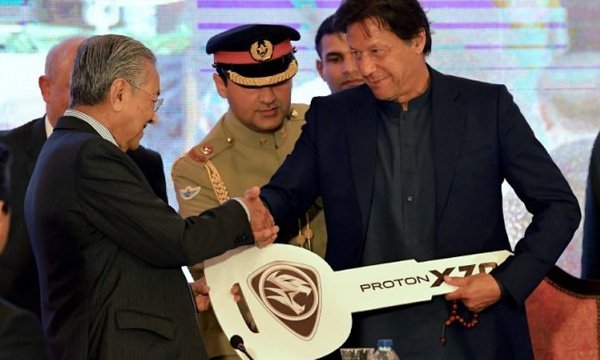
Malaysian PM Mahathir Mohamad gifts PM Imran Khan Proton X70 SUV
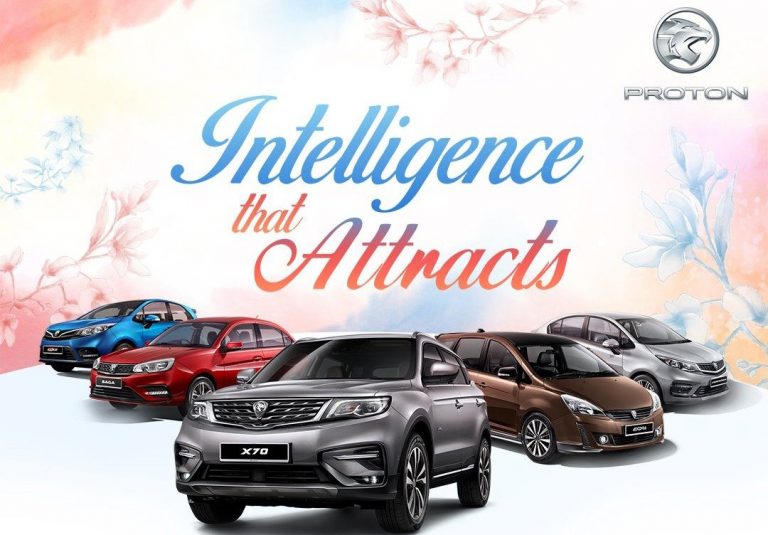
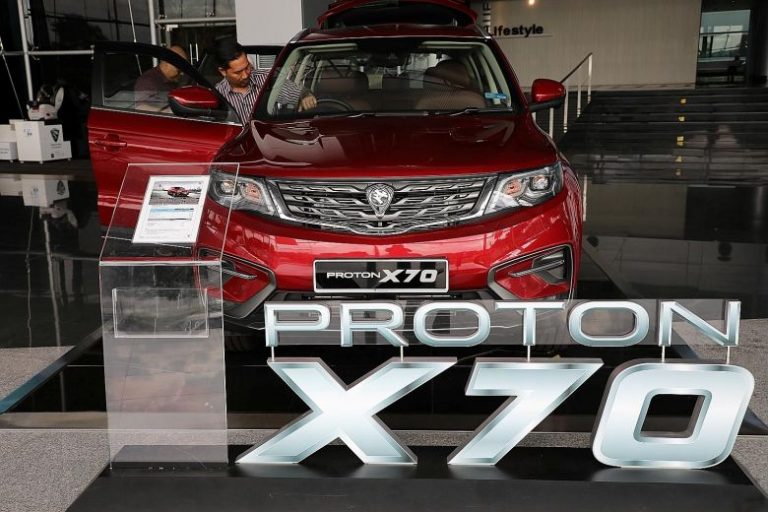
As promised, Malaysian Prime Minister Mahathir Mohamad gifted Imran Khan a SUV car as a gesture of goodwill and to initiate producing the Malaysian brand car here in Pakistan. The car is none other than Made in Malaysia, Proton X70 SUV.
It recently arrived in Pakistan, as a special gift handing ceremony was held in Islamabad on 16th December 2019. Advisor to PM, Mr. Razzak Dawood was the guest of honour, who received the SUV by Malaysian High Commissioner Mr. Ikram, on behalf of PM Imran Khan.
Mr. Hilal Afridi from Al-Haj Automotive was present, Mr. Muahmmad Zahid who is the Chairman of Board of Investment and other government officials ; along with Al-Haj team members attended this event.
The Ministry of Industries and Production (MoI&P) has awarded Greenfield investment status to Al-Hajj automotive group to assemble Proton cars in Pakistan under automotive development policy 2016-21 last month.

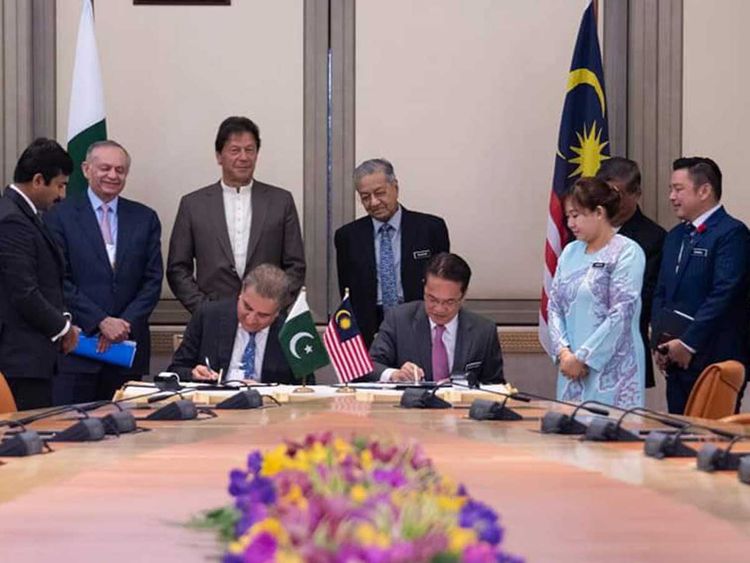
This Proton plant will be the first-ever CKD plant in Pakistan, the plan officially began back in 22nd of May 2019 when the Malaysian Prime Minister and Pakistani Prime Minister, Imran Khan signed a ceremonial marble plaque at an event held in Islamabad, Pakistan.
The plans began back in the year 2017 when the Proton developers disclosed their plans to achieve the target of selling 400,000 units by 2027. The major part of their plan was to establish CKD plants in overseas markets. For making their way in Pakistan they choose Al-Haj Automotive and the agreement between both companies was signed on 29 August 2018. To take benefit of the subsidized duties offered to CKD vehicles a plan came in the form to establish an assembly plant in Pakistan.
Al-Haj Automotive group has the resources and the experience to give growth to Proton in Pakistan. The new CKD plant which will be built on Greenfield assembly has an initial investment of USD30 million. The assembly plant will create 2,000 direct employment opportunities in the first three initial years of commencement and 20,000 indirect jobs as the plant commissions.
Maruti Suzuki to recall over 60,000 units of Ciaz, Ertiga and XL6 models in India
Maruti Suzuki India today announced a recall of over 60,000 units of petrol Smart Hybrid (SHVS) variants of Ciaz, Ertiga and XL6 vehicles that were manufactured between 1 January 2019 and 21 November 2019. Maruti will inspect 63,493 vehicles of petrol SHVS of Ciaz, Ertiga and XL6 for a possible issue with the Motor Generator Unit (MGU), India’s biggest carmaker said.
A possible defect may have occurred in the MGU during manufacturing by an overseas global part supplier, Maruti added.
Recall campaigns are undertaken globally to rectify faults that may be potential safety defects.
Vehicles requiring replacement of faulty part will be retained for part replacement free of cost, Maruti said. For customer convenience, Maruti Suzuki said dealers may make alternate mobility arrangements, if required.
Starting today, owners of the suspected vehicles under this recall campaign will be contacted by Maruti Suzuki dealers for inspection and replacement of the faulty parts, Maruti said.
Maruti Suzuki shares were trading 1% lower at ₹6,932 apiece in noon trade.
Maruti Suzuki had earlier announced a price hike starting next month. The price increase will vary for different models, Maruti Suzuki said in a communication to exchanges, without disclosing the quantum of price hike. Maruti Suzuki cited increase in various input costs for its decision to increase prices.
Currently, Maruti sells a range of vehicles starting from entry-level small car Alto to premium multi-purpose vehicle XL6 with price ranging from ₹2.89 lac to ₹11.47 lac.
Courtesy: Livemint.com
Nissan's new board to kick off with fresh faces behind the wheel

Nissan Motor will accelerate its shift to a fresh management team, with its new President and CEO Makoto Uchida taking office on Dec. 1, one month earlier than initially planned.
The company plans to hold an extraordinary general meeting of shareholders in February and appoint new board members before the regular June meeting. The new management team will be led by a generation of executives who have climbed up the corporate ladder since Nissan allied itself with Renault, two decades ago.
Ahead of the transition, alliance partners Nissan, Renault and Mitsubishi Motors announced Friday that it will appoint a general secretary to coordinate and facilitate major alliance projects going forward. The general secretary will be named in the coming days.
The announcement came after alliance chairman Jean-Dominique Senard, Renault’s chairman, hosted leaders of the alliance in Boulogne-Billancourt, France. Attending were Nissan’s Uchida, incoming Chief Operating Officer Ashwani Gupta, acting Renault CEO Clotilde Delbos, her acting deputies Jose-Vicente de Los Mozos and Olivier Murguet, and from Mitsubishi, Chairman Osamu Masuko and CEO Takao Kato.
Nissan and Renault seek to restart the engine of the alliance, which was once touted as the most successful auto alliance in history, but was severely battered after the arrest in November 2018 of the charismatic then-Chairman Carlos Ghosn on charges of financial misconduct.
The arrest triggered a bitter battle over management control between the Japanese automaker and its French parent, ruining both the health and the reputation of the partnership.
The relationship is now in its worst shape since Nissan and Renault forged the alliance based on cross-shareholdings in 1999. The dispute has also badly damaged the bottom lines of both companies.
The first order of business for Uchida, the current head of Nissan’s China operations, is to fix the strained relationship with Renault in a way that best serves the interests of all stakeholders, including Nissan’s minority shareholders, employees and business partners.
Uchida spent his early childhood outside Japan and left trading house Nissho Iwai (now Sojitz) to join Nissan in 2003 in a career move inspired by Ghosn’s efforts to globalize the carmaker’s operations. By capitalizing on his rich international experience and fluent English, Uchida demonstrated strong leadership skills in the joint business with Renault.
On Sunday, Gupta, currently the COO of Mitsubishi, will join Nissan to become its COO. Senior Vice President Jun Seki, who has spent most of his years at Nissan in its manufacturing operations, will become vice COO to support Gupta.
The planned extraordinary shareholders meeting to be held in Yokohama on Feb. 18, 2020, will be the third shareholder meeting in less than a year, which is unusual for Japanese companies. At the meeting, the appointment of Uchida, Gupta and Seki to their new top posts should be approved, while Pierre Fleuriot, lead independent director of Renault and confidant of Chairman Senard, is set to be elected as a new Nissan board member.
Nissan has also decided to let go of some long-standing figures who opposed the merger with Renault, including Yasuhiro Yamauchi, the current chief operating officer who has been serving as interim CEO.
Hiroto Saikawa, who succeeded Ghosn as Nissan CEO, has been forced to step down after admitting he received improperly inflated compensation, while Renault’s board voted last month to oust Thierry Bollore as CEO. Bollore’s successor has yet to be named.
If approved, Nissan’s board of directors will consist of 12 members. With the exception of seven independent outside directors, the remaining five will be Uchida, Gupta, Seki, Fleuriot and Senard. The number of Nissan executives will increase to three from two on the current board. The nominating committee, made up of outside directors, has decided to nominate new directors.
“While Uchida and Seki were recommended by Nissan to the committee, Gupta, who worked for both Nissan and Renault in the past, was jointly recommended by Renault and Nissan,” said a Nissan executive. The addition of the new executives and board members is viewed as providing a more balanced lineup that can heal the conflict-riven alliance.
Many Nissan executives are speculating that as its new management team will be less hostile to the idea of the Renault-Nissan marriage, Senard may launch a fresh initiative toward the integration of the two automakers.
The global auto industry is undergoing radical changes, driven by new technologies and services epitomized by the acronym CASE (connectivity, autonomy, sharing and electrification), which are reshaping the sector.
Nissan has wasted precious time in management turmoil, even as competition with rivals has become increasingly fierce. In China, the world’s largest auto market, where Nissan was said to have been the most successful among Japanese automakers, the company has lost market share in the passenger car segment to Toyota Motor.
Under Ghosn’s leadership, Nissan relaunched the low-priced Datsun brand in emerging markets. The brand has not grown as much as expected and the automaker will soon stop manufacturing those models in Indonesia. In the U.S., Ghosn’s expansion strategy, which entailed massive sales incentives, has stalled and profits deteriorated.
Nissan on Nov. 12 lowered its net profit forecast for the full year through March 2020 to 110 billion yen ($1 billion), down 65.5% from the previous year and the lowest since fiscal 2009.
“Unlike in the past, we are not chasing market share; we are not chasing volume; we are really primarily focused on sustainable long-term growth,” Corporate Vice President Stephen Ma, who will become the new chief financial officer on Sunday, said at an earnings announcement, emphasizing the shift from the past management.
The new management team, led by people who have built their careers under Ghosn’s powerful leadership, which left both positive and negative legacies, needs to act swiftly to lay out a clear and convincing vision for the new capital structure of the alliance and strategy for growth.
Courtesy: Nikkei Asian Review
Here they go again; Suzuki raises motorbike prices for several models

Several bike manufacturers have increased their prices this year due to a decline in sales and prevailing economic conditions. Devaluation of Rupee has also been cited as one of the causes behind the increase in prices however, the currency has remained stable during the past six months.
The latest bike maker to hike their prices is Suzuki Motorcycles, who have announced an increase in the prices of multiple models. You can see the updated prices below:
| Model | New Price |
| Suzuki GD110S | Rs. 172,000 |
| Suzuki GS150 | Rs. 182,000 |
| Suzuki GS150SE | Rs. 199,000 |
| Suzuki GR150 | Rs. 273,000 |
It is pertinent to point out that these prices are ex-factory but include the freight charges.
Interestingly, the motorbikes by Suzuki are priced higher than the bikes made by Honda and Yamaha. The major features for Suzuki’s bikes were the lease facilities and zero markups offered by the company. There have been cases where they were sold below the invoice prices.
However, an increase in the prices might hurt the company’s sales considering that Yamaha has revamped its bike lineup for 2019.
Moreover, motorbike prices has been increasing rapidly throughout the year, even though the Dollar to Rupee rate has been stable for quite some time. the company’s approach to repeatedly increasing prices may prove to do more harm than good.

Hyundai-Nishat introduces 'Porter H-100' for Rs.2,449,000

Hyundai Nishat Motors Private limited (HNMPL) has started the booking of their ‘Hyundai H-100 Porter’ truck and the introductory price is starting from Rs. 2,449,000. A launching ceremony, booking opening and the price announcement was held on 2nd of December 2019 in Lahore. The ceremony invited large number of dealers, various bankers, vendors and valued customers.
Pakistan’s famous light commercial truck/pickup ‘Shehzore’, has the same engine as that of Hyundai H-100 previously which has now been discontinued and people are waiting for this pickup since a long time. The pickup has 1.0 ton towing weight capacity, 2.6 L Euro II diesel engines with 5-speed manual transmission power. The Porter H-100 has various applications; it can be used as a flat deck van, an ambulance, a security van, a refrigerator van, and a delivery van. Also, Hyundai H-100 Porter will be the first locally assembled pickup that offers a four- year or 100,000 km warranty. This news is a relief for the rapidly, falling automotive industry of Pakistan.
The offer has never been given by any other local assembler in Pakistan because of which the consumers have been anticipating the pickup to be launched for a long time. These offers make the Hyundai H-100 Porter a tough competition to tackle.
Hyundai Nishat Motors Private limited (HNMPL) announced a local assembling vehicle plant in October 2019 during its launch program. According to the announcement, the plant was to be operational by January 2020. The launch ceremony was done for their digital showroom and Hyundai Ioniq Hybrid car in Karachi on last month. The inaugurated facility included the company’s trademark 3S dealership, along with a digital showroom.
Locally assemble Huyndai Porter H-100 in its manufacturing facility in Faisalabad which would give the Hyundai H-100 Porter a 20% indigenization. Talking with media at the occasion of Inauguration ceremony of showroom in Karachi, Tatsuya Sato of HNMPL says that a total investment of $150 million has been made in the Faisalabad facility which will have an annual production capacity of 15,000 units. It is a CKD operation in which the parts would be imported and locally assembled in the production plant. Also, the facility will open up 250 employment opportunities for the locals. Lastly, he added that the company aims to increase localization by 45% over the next 5 years.
With the rupee depreciating as dollar raises the indigenization can help make the market more sustainable. Speaking on this the COO said that that this parity is also hitting current assemblers regardless of attaining 65% localization. “Higher indigenization in vehicles can stabilize on which we are focusing more.”

As per Automark sources, the HNMPL is also eyeing the Prime Minister ‘Kamyab Jawan Kamyaab Pakistan’ campaign by the National Youth Development program. The program offers 6 schemes through which the youth can get more opportunities to excel in their desired programs.
HNMPL is a joint venture between Nishat Group (Pakistan), Sojitz Corporation (Japan), and Millat Tractors Limited (Pakistan), and is partnering with Hyundai Motors (Korea) to become a leader in the automobile market in Pakistan.
Companies like HNMPL are focusing on the startup scheme through which the young people will be encouraged to try their hands at business by investing in the commercial vehicle business. Opportunities like these are lucrative for both the industrialist and the youth. If successful, this would be a boost to the industrialists who are moving rapidly towards indigenization.
The ground breaking ceremony of the Hyundai-Nishat vehicle assembly plant at Faisalabad’s M-3 Industrial City took place in last December 2017. The local production of vehicles is expected to begin within two years. Hyundai-Nishat Motors signed an investment agreement with the Ministry of Industries and Production under the Automotive Development Policy 2016 – 21 in early December 2017 to set up a Green Field project to undertake assembly and sale of passenger cars and one-ton commercial vehicles.
The groundbreaking was performed by the Prime Minister of Pakistan Mr. Shahid Khaqan Abbasi. The venture sees an investment of US $230 Million as the plant will initially produce 7,000 vehicles by 2020 and will enhance its production to 30,000 units by year 2023. Hyundai-Nishat intends to launch a range of vehicles from hatchbacks, sedans & SUVs to commercial vehicles. Three vehicles were displayed during the event, namely Hyundai Tucson, Hyundai H-1 van and Hyundai H-100 pickup (The latest version of Hyundai Commercial Pickup known as Shehzore in Pakistan).