
Dear Readers, My Last month’s discussions through article in the automotive Automark magazine largely focused on electrification trends, hybrid technologies, and the rapid market shift toward cleaner mobility solutions. But this month, the discussion has moved even beyond that point and started focusing on the need to integrate sustainability into the whole business ecosystem.
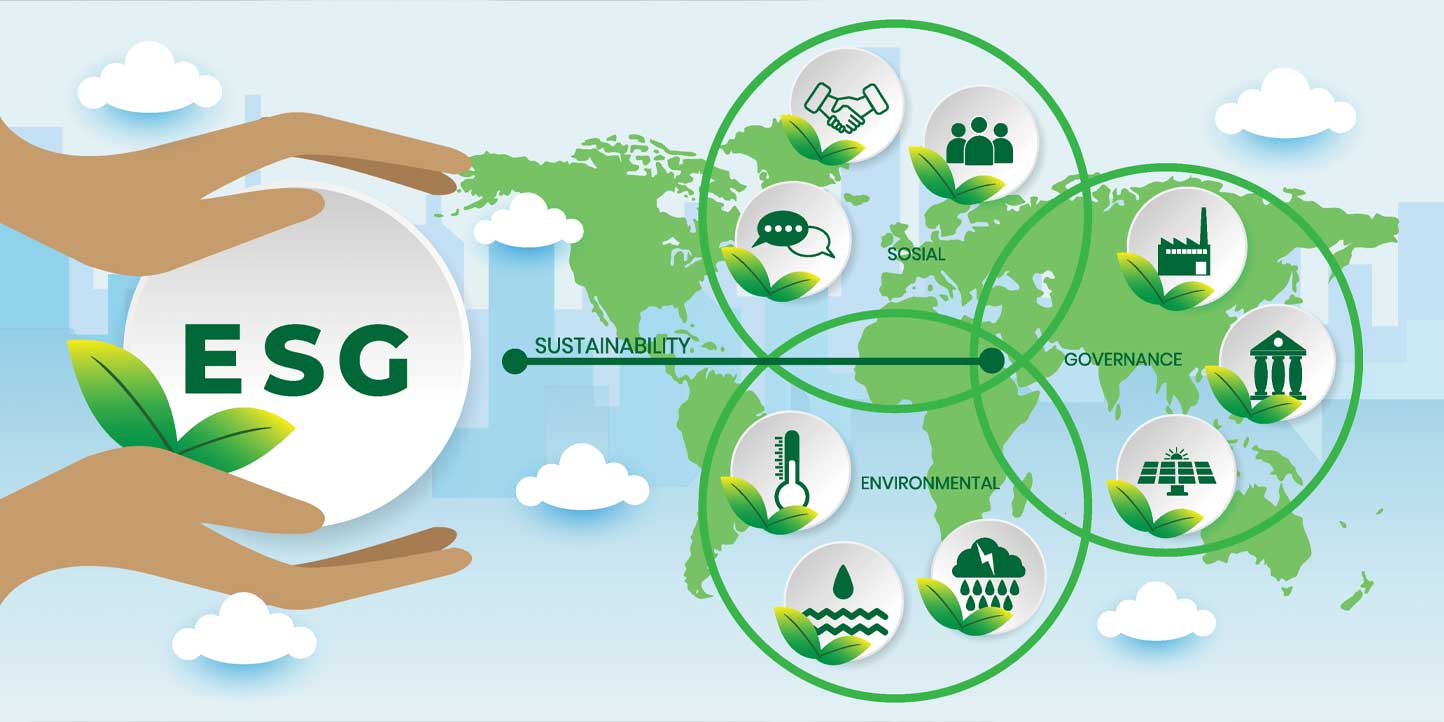
While it was once sufficient for companies to only build electric vehicles or hybrids, it is now becoming imperative for organizations to make sure that everything from manufacturing to warehousing and logistics and even vendor management aligns with ESG (Environmental, Social, and Governance) guidelines. At the moment, the automotive sector is experiencing one of the most revolutionary stages in its existence.
Over the past few years, the focus was on topics such as localization, AIDP implementation, supply chain resilience, and transitioning to EVs. Nevertheless, a completely different problem has arisen recently, affecting all business processes in the automotive supply chain – integrating ESG factors, which include Environmental, Social, and Governance aspects. Sustainability is no longer an option but rather a necessity for any business process.
The significance of ESG has further increased in Pakistan owing to changing regulatory expectations. SECP’s (The Securities and Exchange Commission of Pakistan) emphasis on sustainability and ESG reporting is a clear indication of the new business paradigm in Pakistan. The companies will also be expected to establish sustainable goals for themselves, maintain a clear governance structure, and implement the ESG approach.
Moreover, the shift is creating immense opportunities for the automobiles and industry sector of Pakistan. By adopting ESG approach in an active manner, businesses will become globally competitive and efficient in their operations. They will gain a greater chance to bring in investments from foreign sources and will also have better business relations with their international partners. Sustainability-oriented industries are increasingly perceived as less risky and ready for the future, being able to withstand economic and environmental shocks. However, adoption of the ESG approach allows making efforts towards achieving sustainability at the operational level by optimizing costs. In particular, energy-efficient operations, effective waste management, sustainable inventory management, logistics, and purchasing processes will help eliminate inefficiencies.
According to industry insights and recent trends discussed in the media in connection with automotive and sustainability news, the concept of ESG has currently become a decisive determinant of sustainable development and competitive success of industrial firms in both international and domestic markets. The regulatory body for ESG practices in Pakistan, i.e., the SECP, has further strengthened this approach by means of an official ESG regulatory roadmap and sustainability disclosures.
In order to prove their compliance with ESG standards, enterprises have to show their tangible achievements in the field of environmental management and corporate governance instead of focusing solely on financial results. In this regard, environmental considerations currently become the most obvious and pressing motive for implementing ESG principles in practice. Industries, especially the automobile industry, are expected to implement effective strategies aimed at lowering carbon dioxide emissions, enhancing energy.
The automobile sector is especially vulnerable to ESG pressures owing to its connection to emission levels, energy use, logistics operations, waste creation, and labor management processes. Historically, automobile businesses have placed great emphasis on manufacturing output levels and localization rates. The contemporary scenario, however, sees global firms measuring corporations in terms of their carbon-reduction efforts, sustainable procurement methods, workplace safety measures, energy conservation techniques, recycling procedures, and good governance principles. Sustainable reporting is just as critical as financial reporting.
The environment is now the leading and most apparent pillar for ESG implementation. It is now a challenge for automotive factories to minimize their carbon footprint, manage energy efficiency, waste management processes, and follow environmentally sustainable manufacturing processes. Across the globe, automotive businesses are adopting circular manufacturing methods, renewable energy usage, sustainable packaging, and low-emissions logistics. () The trend is taking root in Pakistan as well, particularly when considering that automotive manufacturing is growing in popularity and the volumes are being restored.
The third part of ESG known as the “Social” is equally important and related to training, workforces’ development, safety culture, diversity, and the well-being of employees. In the case of automotive production, sustainability is not only about meeting ecological objectives but also about developing a safe working environment, technical skills, equal employment opportunities, and personnel development. Training drivers, improving their skills, increasing their awareness, and educating them about technology have become integral parts of sustainable production. Firms lacking investment in human resources will find it difficult to sustain future compliance.
Governance, the third pillar of ESG, is rapidly becoming a key benchmark for investors, regulators, and international business partners. Today, governance encompasses issues such as transparency, ethical procurement, compliance, audit processes, risk management, and proper sustainability disclosures. It can easily be noticed that the latest actions by SECP clearly point towards the fact that Pakistani corporates have started moving into an age of measurable and transparent sustainability performance. Those companies that embrace good governance principles today will surely benefit tomorrow.
The adoption of ESG standards also has an impact on the company’s supply chain. Modern global car manufacturing companies are looking for suppliers who have the ability to prove their adherence to sustainability standards. This means that local suppliers, manufacturers of components, logistics firms, and storage facilities need to be able to meet the criteria of ESG in order to be competitive. Another key determinant behind the use of ESG principles lies in the rising tendency among both the investor community and the stock market to favor sustainable businesses.
International financial agencies and investors have begun to invest more and more money in those companies which perform well according to ESG criteria. The efforts of SECP to adopt ESG criteria for investment and sustainable finance regimes are indicative of this trend. The coming future in the automotive industry will not just depend on production capability or volume of sales. What will define the future is sustainable practices, accountability, and resilience in the long run. Businesses that have incorporated ESG into their operations now will benefit from better compliance with regulations, better efficiency, better reputation, and confidence from investors.
Businesses that do not take sustainability seriously now may survive but will ultimately face pressure due to various reasons. It can be said that the automotive industry in Pakistan currently finds itself at a crucial juncture where localization, digitalization, electrification, and sustainability go hand-in-hand. ESG cannot be talked about in the future anymore, as the current realities demand it.
Take way from this article:
The adoption of ESG and sustainability principles in the automotive industry is no longer a futuristic concept; it is currently a present-day need. The industry is moving towards a new age where the success of companies will not be evaluated on the basis of numbers produced, localized, and sold, but also on the extent to which companies responsibly address the environmental consequences, develop their human resources, establish efficient governance structures, and commit to sustainability.
The path that is being set out worldwide, and now also in Pakistan through SECP regulations, clearly shows that sustainability will emerge as one of the pillars of competitive advantage for industries. In contrast, companies that resist the need for such transformation might face regulatory compliance issues, logistical problems, reputational risks, and decreased availability of business opportunities on a global scale. Consequently, sustainability cannot simply be regarded as a burden; instead, it has to be seen as a chance to bring the entire automotive industry to a new level by making its processes up-to-date.
It is important to ensure that sustainability principles become a part of the entire operational strategy, including manufacturing facilities, logistics, warehouse management, and employee management as well as research and development. When all these factors are taken into account, sustainable practices can only be reached when corporate social responsibility is incorporated into business decisions on a daily basis. As mentioned before, significant transformations in the automotive industry have already happened as a result of localization, AIDP implementation, digital transformation, and the rise of EV technology.
However, the most important transformation to come might be the implementation of sustainability throughout every stage of business operation. The companies that recognize this challenge and make bold moves towards embracing such a transformation can be seen as leaders in the Pakistani automotive industry in the near future.
Exclusive written for Automark Magazine, June 2026
By @muhammad-rafique, Sr. General Manager Production and Maintenance
Foton JW Auto Park (Pvt.) Limited