Home Blog Page 34

Bike sales boom amid credibility issues over production data

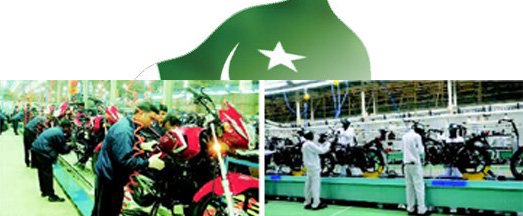
In July 2020, Pakistan motorcycle industry produced and sold the highest ever 300,000 units in a month, which was also appreciated by the Prime Minister’s advisors and ministers in the government’s cabinet.

In August 2020, the country recorded second highest sales of 240,000 units despite heavy rains all over the country and flooding in Karachi.

Contrary to this, the figures of Pakistan Automotive Manufacturers Association (PAMA) did not give a clear picture of production and sales due to limited numbers of its members.

As per PAMA data, a number of manufacturers witnessed revival in the sales from depressed sales during lockdown due to rising COVID-19 cases in the country.

For instance, Atlas Honda Limited sold 179,003 units in 2MFY21 from 160,109 units in same period last fiscal while Suzuki and Yamaha sold 2,730 and 2,596 units versus 3,162 and 3,805 units in 2MFY21, showing a drop of 14 per cent and 32 per cent respectively.

Road Prince and United Auto Motorcycle registered massive jump in sales to 25,120 and 70,419 units from 16,062 and 52,379 units, up by 56 per cent and 34 per cent respectively.

Chairman Association of Pakistan Motorcycle Assemblers (APMA), Mohammad Sabir Shaikh said the buyers are still upbeat in the markets during September. As a result, the markets are facing a shortage of two wheelers against soaring demand.

One of the reasons of shortage of bikes in the markets are slow supply of parts by the vendors to their respective manufacturing units followed by huge demand from the buyers due to lack of transport in big cities and poor conditions of taxis and rickshaws, he observed adding people avoid sitting in old vehicles and their fares also do not allow buyers to take risk under pandemic situation.

“The current quarter of July-September 2020 will end with a record production and sales in the bike industry especially,” Sabir hoped with confidence saying that bike sales on credit at the showrooms have also been thriving.

Like other countries, COVID-19 had hit Pakistan during March and many markets and industries remained closed for three months, resulting in massive unemployment in the country and pay cuts in industrial and private sector business units. As a result of the above situation, a booming two wheeler market remained subdued, APMA chief recalled.
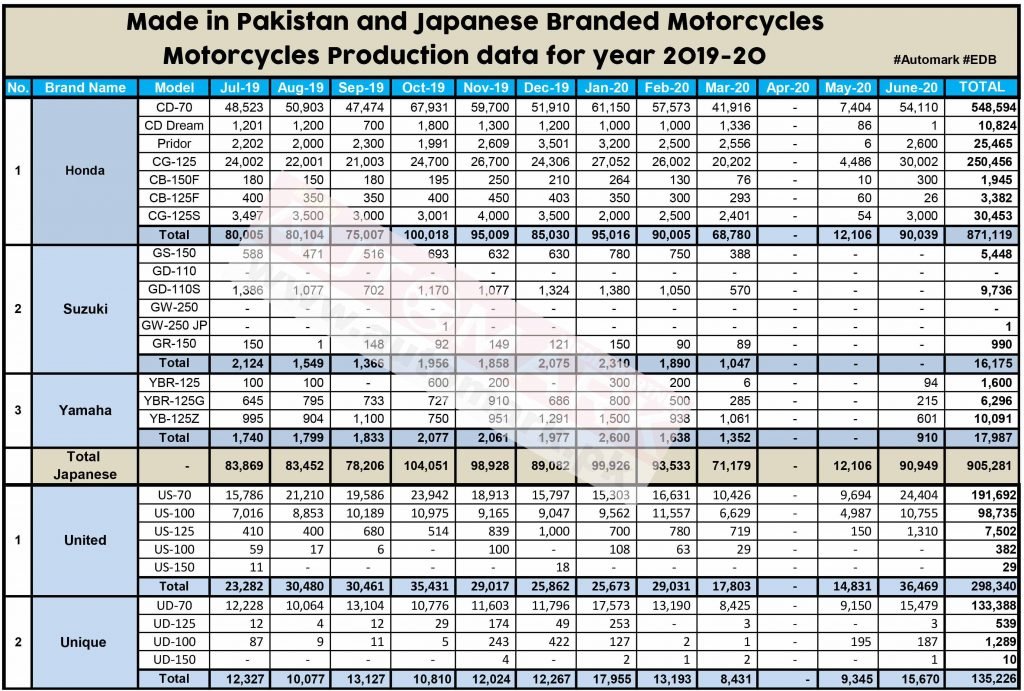
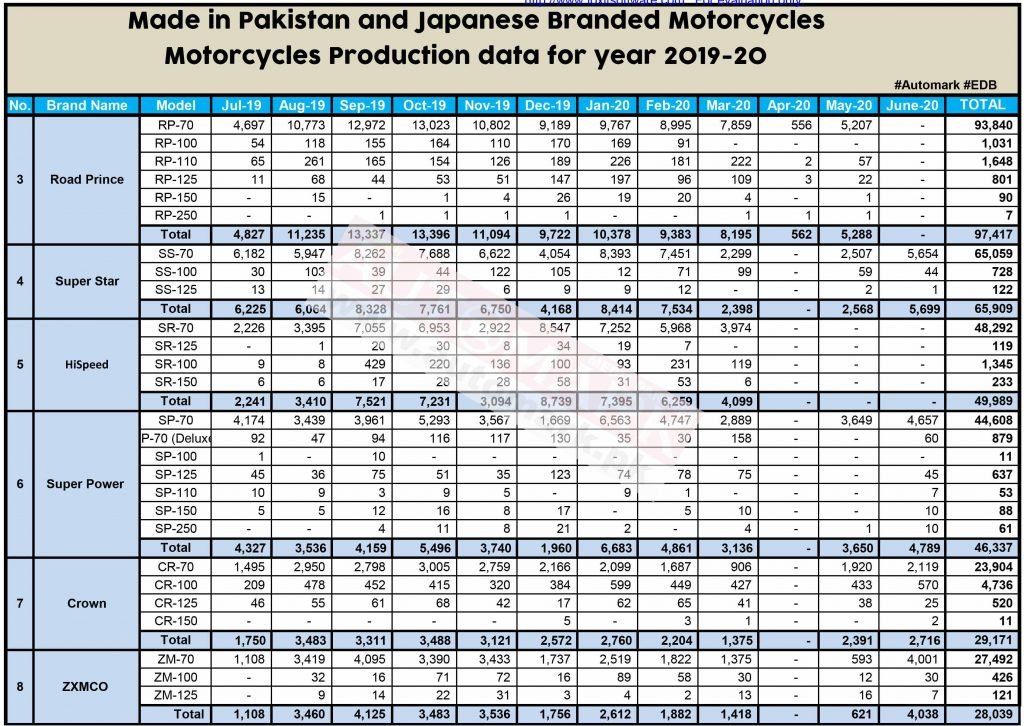
The largest bike maker – Atlas Honda Limited, however, managed to roll out 871,119 units in FY20 followed by 298,340 by United Motorcycle. Unique by DS Motors rolled out 135,226 units while Road Prince made 97,417 units.

Super Star assembled 65,909 units while Hi Speed ended the 2019-2020 with production of 49,989 units. Super Power produced 46,337 units while Crown assembled 29,171 units.

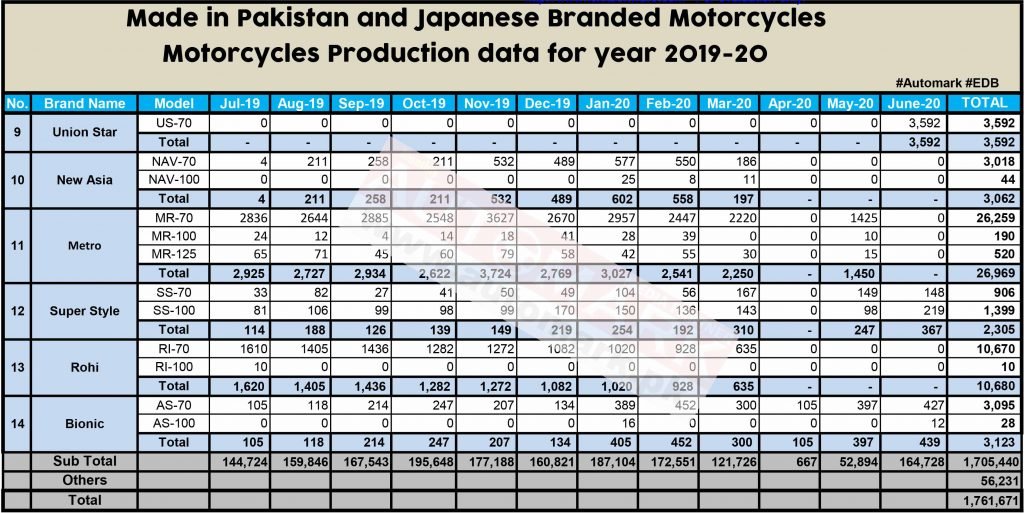
Zxmco and Metro made 28,039 and 26,969 units while Super Style, Roohi and Bionic produced 2305, 10,680 and 3,123 units.

Union Star bike assembler, a famous brand, declared 3,592 units in June 2020 while market sources said that the company had produced more than 60,000 units in 2019-2020. Some more than 20 small brands produced 56,231 units.

As per the date of Engineering Development Board (EDB), the country assembled 1.761 million units in FY20 while market sources said that the figures have exceeded 2.320 million units.

The market players have always remained skeptical about the actual or genuine production data as many companies are reportedly not sharing the true picture of their production to the government.

This is not the case in two wheelers’ industries as other industrial units are also playing with the figures.

The Federal Board of Revenue (FBR) has finally come up with an SRO on September 21, 2020 to check misdeclaration by the manufacturers and monitor and check genuine production of 30 different industrial sectors including motorcycles and auto rickshaws.

In a bid to curb ongoing rampant tax evasion, the FBR has made over 30 major manufacturing sectors “binding for installing electronic monitoring equipment at their premises to monitor real time production. “

The FBR has issued 889 (I) 2010 to amend the Sales Tax Rules, 2006. The manufacturers of over 30 major sectors are required to install “intelligent video analytics” at their premises for electronic monitoring of production on a real-time basis.

Sabir Sheikh said this SRO by the FBR may prove a game changer in unearthing real production data of various sectors depending on how the manufacturers really cooperate with the FBR.

Pak Suzuki Motor Company produced 16,175 units of two wheelers in FY20 followed by 17,987 units by Yamaha Pakistan.

Market sources said these two Japanese assemblers have never engaged in misdeclaration of production due to their market reputation. However, declining production of these assemblers have been attributed to strict rules and regulations and SOPs which they have been following since March. As a result, these two units have been operating with low staff and workers.

The models of these two companies are high priced due to low localization and higher imported parts and components.

Sabir Shaikh said the next quarter of the current fiscal year October to December may prove a good quarter keeping in view good crop prospects in cotton and higher prices.

According to the FBR’s issued rules, the provisions of these new rules shall apply to video surveillance for electronic monitoring of production on real-time basis. The production of specified goods, manufactured in Pakistan, shall be monitored through intelligent video surveillance, and video analytics by installation of equipment including video cameras, sensors, etc, at production lines, as are approved by the Board for real-time collection of data that shows production through object detection and object counting; transmission of data to central control room at the FBR on real-time basis, storage and archiving of data; detection of unexpected stops; quantitative analyses of productions and data analytics for required legal actions.

No person engaged in manufacturing of specified goods shall remove the production from its business premises unless it has undergone the process of intelligent video surveillance. The manufacturers of specified goods shall buy video monitoring equipment only from the authorized vendor. No manufacturer of the specified goods shall buy video monitoring equipment, which is not authorized or approved by the board. The FBR will set up an approval committee, which shall function in accordance with the provisions of these rules. The Project Director shall be the convener of the approval committee and its headquarters shall be located at the FBR House, Islamabad. The Board shall provide secretarial and other allied support required for functioning of the approval committee.

The approval committee shall devise procedures for its functioning, which shall be in accordance with these rules. The vendor shall be required to have and demonstrate ability to provide equipment with high security and efficiency for electronic monitoring of production and video analytics on real-time basis. The equipment offered by the vendor must have the following features including the equipment shall have high definition video camera and sensor that can record and count the production; the equipment shall have ability to weigh the product contained in bags; the equipment shall have ability to integrate with the software recommended by FBR which will be used for transmission of data to central control room; the equipment will conduct video analytics and communicate results thereof to central control room(CCR); the equipment will report any unauthorized stoppages of production through generation of appropriate alarm; the system should have sixty days remotely retrievable local, on-site, and at place, specified by the Board, off-site, data storage at each site; the CCR should have a central data storage capacity capable of storing and retrieving data on long term basis up to five years and the equipment must be stable, fault-tolerant, secure and accessible only by username and password as authorized by the Board.

Sabir said the Excise and Taxation Department, Sindh, has not been providing registration numbers of all brands on a monthly basis to the media and other concerned departments. It is important that how many brands are being registered in the biggest city of Pakistan – Karachi – as there is a need to study the last five years data of registered bikes in Karachi.

This exclusive article has been published in Automark Magazine’s printed edition of October-2020
Al-Haj to launch Proton variants in Pakistan

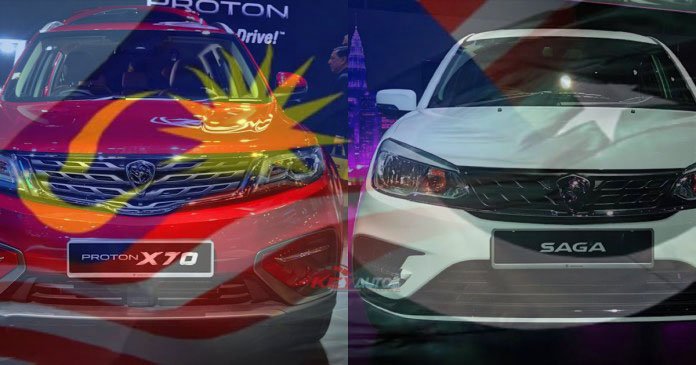
Malaysian auto giant Proton, which has collaborated with Al-Haj Automobile, the assembler of FAW automobiles in Pakistan, will be launching its SUV crossover X70 by end of this year along with a sedan named Saga.

An per news, company has confirmed that it will launch the two vehicles by the year end and initially, they will offer variants in CBU condition. The company will switch to local assembly by June 2021.

The X70 is the same car former Malaysian prime minister Mahathir Mohamad gifted Prime Minister Imran Khan in December 2019.

According to the news, the SUV crossover X70 will compete with Korean companies Hyundai and Kia by offering the car “with more features and lesser price”.

The Hyundai Tucson and Kia Sportage have 2000cc engines and the X70 has a 1500cc engine. But the official claimed its “1500cc turbo engine is much more powerful than the Tucson or Sportage engines”.

Proton has received a green-field status under the Auto Development Policy 2016-21. Under the status, new companies such as Proton, Kia, Hyundai, and Changan etc will be paying less duties compared to firms already operating in Pakistan such as Toyota, Honda and Suzuki.

The ADP 2016-21 policy ends in June 2021 and the models introduced by new companies, known as new entrants in the industry, will be considered for duty relaxations.

According to another source, all new companies will try to launch as many models as they can before the ADP 2016-21 policy ends.

It is expected that the government will roll out the new ADP next year for passenger cars with a focus on electric cars. The Electric Vehicle (EV) Policy has already been rolled out for two and three-wheel vehicles, trucks and buses.

The policy for passenger cars has not been given because the ADP 2016-21 has yet to end. The Engineering Development Board (EDB), the government’s wing that falls under the Ministry of Industries and Production, is reluctant to go against the running policy that assured new entrants that the new policy will not be given until the current ADP ends.

Why does Pakistan’s auto industry likes SUVs?
The addition of the Proton X70 SUV crossover will make it the fourth SUV to be launched in the category in the last two years, according to JS Global Capital research analyst Ahmed Lakhani. Regal Automobiles launched the SUV Prince Glory earlier this year and Changan is also gearing up to launch its SUV and a sedan before the ADP 2016-21 policy ends in June.

Lakhani says the industry finds high-end cars–expensive cars such as the Sportage, Tucson or X70–a lucrative segment. The Sportage and Tucson prices are in the vicinity of Rs5 million. It is expected that the X70 will be sold at around Rs4 million.

“I think it shows that the rich are becoming richer,” Lakhani said. “They have the buying power and they are buying. There’s not a significant demand for low price vehicles that may help companies earn on volumes.”

Lakhani added that low-end passenger cars’ data doesn’t represent the actual population. The lowest price of a reliable brand is well above the Rs1 million mark.
“The low-priced 70cc bikes actually represent our population. The sales of low-priced Chinese 70cc bikes are increasing every year,” he said.

Courtesy: SAMAA

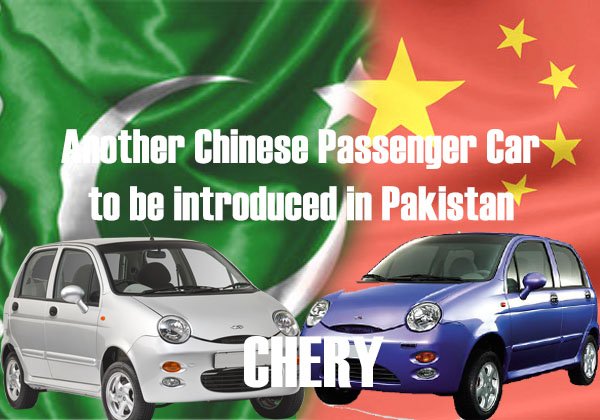
Another Chinese Passenger Car to be introduced in Pakistan

According to sources, Chinese passenger car ‘Chery’ is going to be released in Pakistan later this year. The car is being brought to Pakistan by the Lahore based company, United Auto Industries. They are the manufacturer of United Bravo car and United Motorcycle Company. United Motorcycle has also been stated as Pakistan’s No.1 national brand.

The variants is a 1000cc passenger car expected to be available in both manual and automatic transmission. The car will come in CBU condition and then locally assembled.

This is not the first time Chery is being introduced in Pakistan. The first generation Chery QQ was introduced back in 2003. However, soon after it’s released the car importer could not manage for spare parts and after sales services as they were purely traders.

However even then the car remained in production for 10 years (2003-2012). The Cherry QQ was available in 4 variants namely 0.8 MT, 1.1 MT, 1.1 AMT and 1.0 MT.

Chery is going to be the fourth Chinese car that is going to be introduced in the Pakistani market. The first one being FAW V2, then United Bravo were introduced and then‘Price Pearl.’ Pearl was launched by Regal Automobiles in January 31st, 2020. The launching price of the car was PKR 1,049,000, however with fluctuating dollar price it was increased to PKR 1,149,000.


With Covid-19 ending things are finally returning to normal. There couldn’t have been a more perfect launch time. However, we can only guess how the car will perform once we know the car details and the price tag of the car. We cannot guess the prices at this stage let’s hope for the best.

TPL Trakker will provide AVN Systems in the New Hyundai Tucson

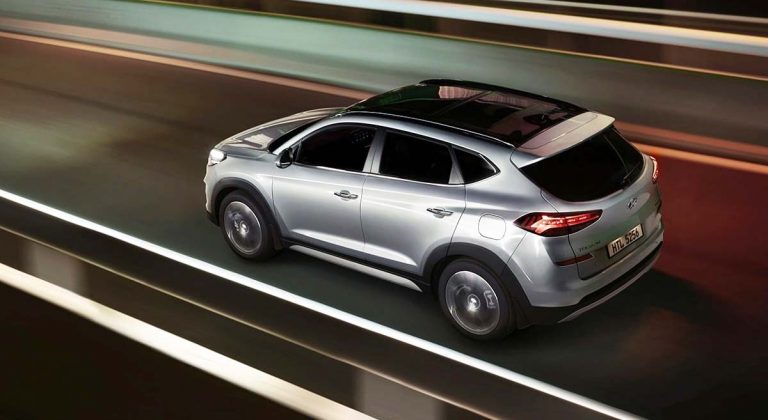
KARACHI: Hyundai Nishat Motor (Private) Limited is the sole authorized manufacturer and distributor of Hyundai brand passenger and light commercial vehicles in Pakistan. Equipped with a state of the art manufacturing facility, located near Faisalabad, the company has launched Hyundai Porter and Hyundai Tucson as CKD, as it aims to become the most valued automobile brand in the country and recreate the global success of Hyundai in Pakistan. Hyundai Nishat Motor (Pvt.) Limited also offers Hyundai Santa Fe (7 seat SUV), Hyundai IONIQ (1.6L hybrid sedan) and Hyundai Grand Starex (12 seat MPV) in Pakistan.

The Tucson’s In-Car AVN System is powered by TPL Trakker, Pakistan’s leading IoT Company providing Telematics, Tracking and Location Based Services.

The move is in line with TPL Trakker’s long term strategy to power the auto industry and define parameters for driverless cars both in Pakistan and global markets. TPL Trakker’s state-of-the-art AVN System installed in the Tucson will enhance the driving experience with a host of innovative and intuitive features and functions. These include a unique 10.1 inch capacitive HD Touch floating Screen, Built-in DSP, 32 GB Built–in Flash Memory for Music and Navigation, Mirror link for smartp hones and a Built-in Microphone. The Home Screen can be customized with any App for easy accessibility.

The Tucson crossover SUV has been recognized as the number one compact SUV by the US JD power IQS study. The car has a 16-valve in-line four-cylinder gasoline engine and a six-speed automatic transmission among various other features. Tucson is available in the AWD Ultimate and the FWD GLS Sport variants in Pakistan.

Commenting on the launch of the Hyundai Tucson, Sarwar Ali Khan, CEO, TPL Trakker said, “We take deep pride in being chosen as the exclusive AVN Partner by Hyundai Nishat Motor Pvt. Ltd.. With the passing of Automotive Development Policy (ADP) 2016-21, major international players including Kia Motors and Hyundai have entered the Pakistan Automobile market with mega investments to setup manufacturing plants in Pakistan. At TPL Trakker, we see this as a brilliant opportunity and time to enter the AVN market and provide entertainment to customers of new high-end vehicles in Pakistan.”

TPL Trakker will continue to provide with AVN for both vehicles launched by Hyundai Tucson and Starex. Bringing innovation to the navigation domain, the Company has aligned themselves with global mapping player, HERE Technologies and is poised to provide navigation solutions for a large variety of vehicles in Pakistan.

  • PR

Motorcycle Production data for Year 2019-20

Made in Pakistan and Japanese Branded Motorcycles

Motorcycle Production data for Year 2019-20 .This figures/data has been published in Automark Magazine’s September-2020 printed edition

Source: EDB

Does The Electric-Vehicle Revolution in Pakistan Has A Visibility Problem?


An electrical vehicle commonly known as EV is an automobile that runs on an electrical motor instead of an internal combustion engine. Electrical energy used instead of fossils fuel to provide power to Automobile. The History of the electrical vehicles starts from backdated 18 Century, at that time the vehicle used for only short distance coverage.

Till 1915 it is popular after the ready availability of fossil fuels and the introduction of the IC engine let it be less popular. At that time the biggest drawback is the electrification of the world, charging of batteries, and Range. Only a few metropolitan cities had an infrastructure of electricity. This causes a backlash of charging stations. After the increase of petroleum prices and concern about emission gases by an environmentalist in the mid-1970s paved the way for renewable energy such as Solar, Wind, Hydropower, Geothermal.

Further scientists think for the alternative to Petrol / Diesel power vehicles. At that time 20% to 30% of air pollution is contributed by automobiles, including trucks, car bikes, etc. This let to think for alternative clean energy to zero-emission vehicles such as EV. In order to make EV adoptable, the drawback such as the charging range must be addressed. In the 1980s the introduction of dry battery (Lithium-ion) make the revolution and gives answers to the drawback faced a century agoAlthough in the world modern EV development starts in the mid-1970s which results in commercial production in the mid-2000s. Some of the famous types of EVs are Hybrid Electric Vehicles (HEV), Plug-in Hybrid Electric Vehicle (PHEV), Battery Electric Vehicles (BEV), commonly known as simple EV and Fuel cell electric vehicles (FCEVs). The commercial production of EV depends upon the condition and acceptability of a particular region. For example, in Pakistan, we had seen demand for HEV only because of low operating expenses as compared to conventional cars.

The Government of Pakistan had finalized the electrical vehicle policy for two-wheeler three-wheeler buses and trucks while skipping four-wheeler. It is approved for implementation on 10 June 2020. It aims to bring half a million electric motorcycles and rickshaws, along with more than 100,000 electric cars, buses and trucks, into the transportation system over the next five years. The goal is to have at least 30 percent of all vehicles running on electricity by 2030.

It gives various tax and investment incentives such for potential investors. These benefits were given in light of the fact that Electrical vehicles cost 40% to 60% more than the conventional vehicle. By given incentives, the vehicle will be launched at attractive pricing to make it affordable and acceptability Pakistani market. From policy perspectives, the manufacturing, quality, investment, and pricing incentives were addressed but operational feasibility is neglected somehow consider the current condition of the country such as charging, electrification, and repair/Maintenance, etc.

As per the World Bank survey report, more than 50 million population of Pakistan is without grid-connected electricity. Further despite having an installed capacity of 33,961 MW only 25,300 MW is available to the system. In the peak demand summer period, an acute shortage of electricity is expected over the next few years. Even in the Metropolitan city, Karachi load shedding had been started.

The drawback of battery electrical vehicle or EV is that it required proper infrastructure of electrical charging stations as it can only be powered by and electricity. The two major challenges for EV are 100% grid electrification results in lack of infrastructure all over Pakistan and electricity shortage in peak demand time. Consider a situation when all of the sudden Electricity went off or you are in an area where no charging station is what you would do. In both cases the results are no desirable. Someone might suggest avoiding the remote, but it will cost two cars at a time. Since a dedicated car garage is not available the provision of home charging will not bring fruits. We had seen in the case of CNG the people used Petrol and in case of non-availability of CNG. This won’t be that case in EV as Electrical Vehicle only runs on electricity.

The main challenges for EV disturb the charms are we don’t have 100% grid power electrification in Pakistan, means changing stations not all over the country and, the electricity shortage in peak demand summer season which may lead to abandoning the vehicle at the parking place
According to a report prepared by LUMS a suggestion is being given to utilize complete capacity during off-peak winter season this will help in reducing the cost of electricity by increasing capacitive utilization. But for user prospective challenge is Peak summer season.

Consider the projected EV in the next 5 years and by the year 2030 considering an average of 0.5 KWH per kilometer is consumed electricity additional 4.3 TWH energy is required. It is available on the off-peak period but the challenges remain in demand periods such a summer. Consider the threat we face because of a single source of power we can make it more feasible if we used dual source power vehicle such as PHEV plug-in hybrid electric vehicle instead of going towards battery electrical vehicle at this stage of time. The advantage of PHEV it will be in incase the peak demand period when charging station is not available or you are in a remote area one can used fossil fuel. Although PHEV doesn’t have a range within the city it will be proved optimal.

The success of EV lies in how we handle the threat (week points) of EV such as charging stations, availability of electricity, high charging time, and repair and maintenance. The better we tackle the threat better we will be able to launch a new product. It’s high time to do consider user prospective. It will be more feasible if EV policy is implemented step by step like the world did in last three decades we will be more successful else we face the same problem as we are facing for problem CNG. If it occurs people become reluctant to get new technology.

By: Rehan Ashraf

Electric Vehicle Policy Starts Attracting Investment

Electric Vehicle Policy was for 2-3 wheelers and heavy commercial vehicles formulated after extensive efforts of Engineering Development Board (EDB), Ministry of Industries and Production Ministry of Climate Change, Ministry of Industries and Production, and approved in principle by ECC of the Cabinet in its meeting held on June 10, 2020. The policy has been ratified by the Cabinet on 16th June, 2020 and is at various stages of implementation.

The policy was extensively deliberated in Automotive Industry Development Committee (AIDC), which is a Cabinet’s approved body working under Engineering Development Board for promotion of automotive industry. The recommendations mainly focused on “Make in Pakistan” strategy and were duly endorsed by EDB’s Board of Management which include prominent automotive sector businessmen and experts. This policy initially encompasses electric vehicles in 2/3 wheelers and Heavy Commercial Vehicles (Trucks and Buses) and related ecosystem for said electric vehicles. However, its scope will be extended further to cars, sports utility vehicles and light commercial vehicles under the approval of the high level committee formulated by the Government under the Chairmanship of Minister for Industries and Production. The prominent members of the Committee include Minister for Science and Technology, Minister for Planning, Development and Special Initiatives, Advisor to PM on Climate Change, Special Assistant to PM on Petroleum, Advisor to PM on Institutional Reforms and Austerity, Deputy Chairman Planning Commission and Secretary Ministry of Commerce.

The approved recommendations mainly include 1 % customs duty on Electric Vehicles Specific Parts and 1 % sales tax which are expected to make 2-3 wheelers viable in the market in price comparison with their gasoline substitutes. The local manufacturing in HCV segment and infrastructure development has also been incentivized in the policy but its more dependent on development of local infrastructure, whereas charging 2-3 wheelers in relatively easier than four wheelers and HCVs.

Responding to a well thought out policy prepared by EDB, mainly with the support of Ministry of Industries and Production and Ministry of Climate Change, and approved by the Cabinet, several local companies have started exploring the EV segment of local vehicle market, which is expected to recover soon after pandemic. M/s Jolta Electric (Pvt) Ltd. Lahore, which has already made significant investment in designing and development of EV specific equipment, has submitted its request to EDB for local manufacturing of electric bikes in Pakistan. Similarly, United Auto Industries, the second largest manufacturing brand in motorcycle segment is working in close coordination with EDB for launch of various electric versions of their motorcycles and scooters. Sazgar Engineering Works Limited has already manufactured electric three wheelers whereas Crown Group of Companies Karachi has test marketed various electric 2-3 wheelers and are expected to shift to their local manufacturing soon.  Electric motorcycles of Eiffel Industries Ltd. (Road Prince) will also be launched in the local market soon. Apart from this, several companies are contacting EDB and are aligning for manufacturing of electric 2-3 wheelers. As a result of this initiative, the adverse impact of pollution on environment will reduce whereas operating and maintenance cost of vehicles will also be reduced.

EDB has already taken up approved recommendations such as exemption of registration fee, reduction in toll taxes, exemption from annual renewal fee, availability of loans at favorable terms etc with various government entities and provincial departments including State Bank of Pakistan, Ministry of Communication and provincial registration authorities.

Introduction of EVs in local market will be beneficial in providing additional employment for the talented youth in Automobile sector of Pakistan. The investment applications will be processed by EDB.

The battery-powered Electric buses to hit the roads soon: Fawad Chaudhry

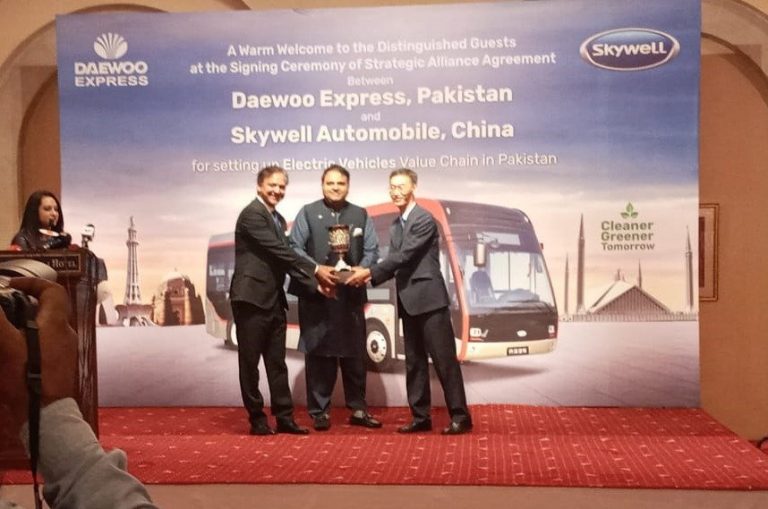
Minister for Science and Technology Fawad Chaudhry has announced that electric buses will start plying in the country this year.

He was speaking at an MoU signing ceremony signed between a private transport company of Pakistan and a Chinese company, in Islamabad at local hotel on August 26, 2020.

The MoU will lead to introduce an electrical vehicles chain in Pakistan which, will help reduce air pollution as well. In the first phase, 50 million dollars will be invested in building infrastructure; while in the second phase, manufacturing of electric buses will start in Pakistan within next three years.

The Minister termed it a breakthrough in fulfilling another promise by the PTI government to take the country to progress. He said that Pakistan would be first country in Asia that will have electric vehicles.

He said in next three years, these electric buses will be completely manufactured in Pakistan. He said the PTI government is working to promote Pakistan’s new energy vehicles policy.

Speaking on the occasion, Chinese Ambassador Yao Jing said the governments and peoples of the two countries are working together for development and strengthening of bilateral ties.

He appreciated role of Pakistan in providing facilities to the private sector for strengthening business to business relationship between the two countries. He said several power plants are also being set up under China-Pakistan Economic Corridor to overcome power shortage.

Think Your Car Door Sounds Nice and Solid When It Slams? It’s Faked

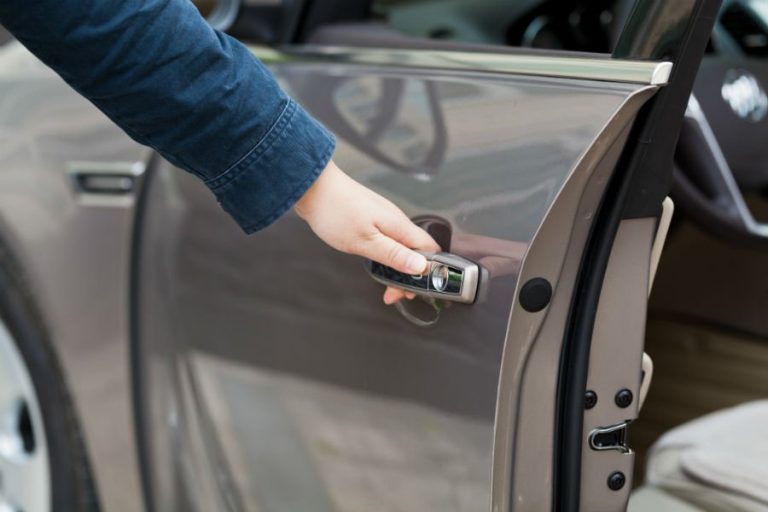
The sound of your car’s door slamming is a lie. A trick. A clever ruse. And it’s all thanks to the engineers who designed your car. 

Your car doors are carefully designed to sound sturdier than they really are, reports Mel. You can thank psychoacoustics for this practice, which is the study of the mind’s perception of different sounds. 

Here’s an example: Ever experience the satisfying thud of closing a 1980s BMW door? There’s a heft to those doors that makes them feel solid. Substantial. You’re safe here. This car is well-made. 

Yet we all know that even high-end cars have lost a lot of that extra heft, largely thanks to advances in automotive safety, as AutoBead co-founder James Ford explained to Mel: 

Engineering the sound of a car door closing can be traced back to changes in the car manufacturing industry 10 years ago. Increased safety measures meant that car manufacturers had to add extra bars to the side doors to meet safety regulations, which subsequently impacted the sound that doors made while closing

So, while your car may be safer now, automakers know that you associate that meaty clunk with quality. 

Less expensive cars have emulated this, too. The author of the Mel story talks about how satisfying the sound of his 2012 Nissan Sentra’s door slamming is, and a Sentra is about as far from a luxury car as you can get without buying something like a Mitsubishi Mirage or a Kandi Coco

“One of the first things a prospective car buyer encounters is the sound of the driver’s door closing — often inside the showroom. This sound gives a subconscious sense of value,” music professor Jonathan Berger explained to Mel

Berger, who works in the Stanford University Center for Computer Research in Music and Acoustics, has even tested out this theory by making students in his psychoacoustics class rank different car doors from most to least expensive based solely on the sound of their doors. Respondents claimed that the low, soft thuds with an after-sound of some sort (the example Berger gave with a “ker-chunk”) came off as the fanciest. A Purdue University survey from 2016 cited by Mel came to a similar conclusion: tinny-sounding door slams came off as cheap and flimsy. 

Car companies know that perception matters when it comes to selling their cars, too. Ford themselves admitted that “engineering the right sound of a car door closing was their first opportunity to make buyers feel the car’s quality, craftsmanship and safety and to justify a premium price tag,” as quoted by Mel. Lexus even made a whole video about their quest for the perfect close. Mercedes’ own manager of sound quality and design Tobias Beitz also told Bloomberg that “the optimal acoustic design of the door structure, latches and seals” was what signified the quality buyers wanted–not weight. Even Opel–purveyor of fine reasonably-priced European cars–spends a good amount of time analyzing the sounds that different parts (including doors) make before a car goes into production, as shown in the Deutsche Welle video above. 

This is why each brand staffs sound engineers like Beitz to make sure the car door has the right combination of foam, mats and other soft components to make you think you’re feeling an eighties 3 Series door, even when you’ve got a modern Sentra. Even the locking mechanism is specifically tinkered with to make the right click. 

So, we hate to break it to you–your doors are one big lie. 

Source: Msn.com

Pakistan needs national Kei Car

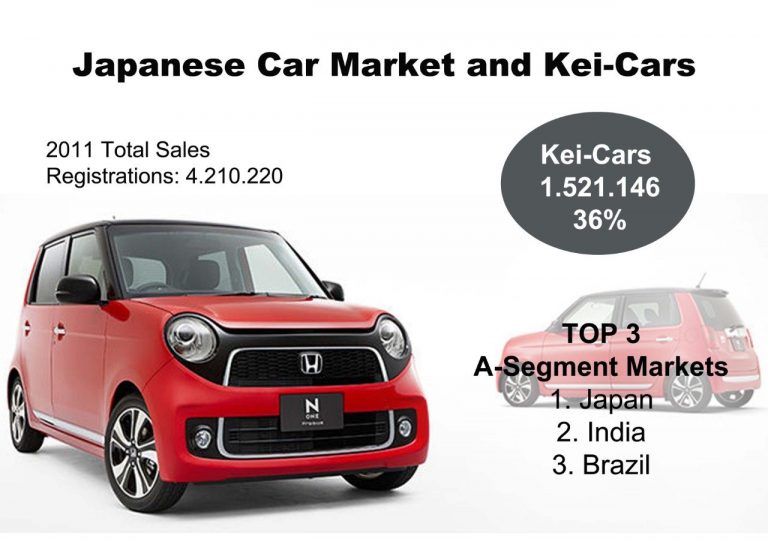
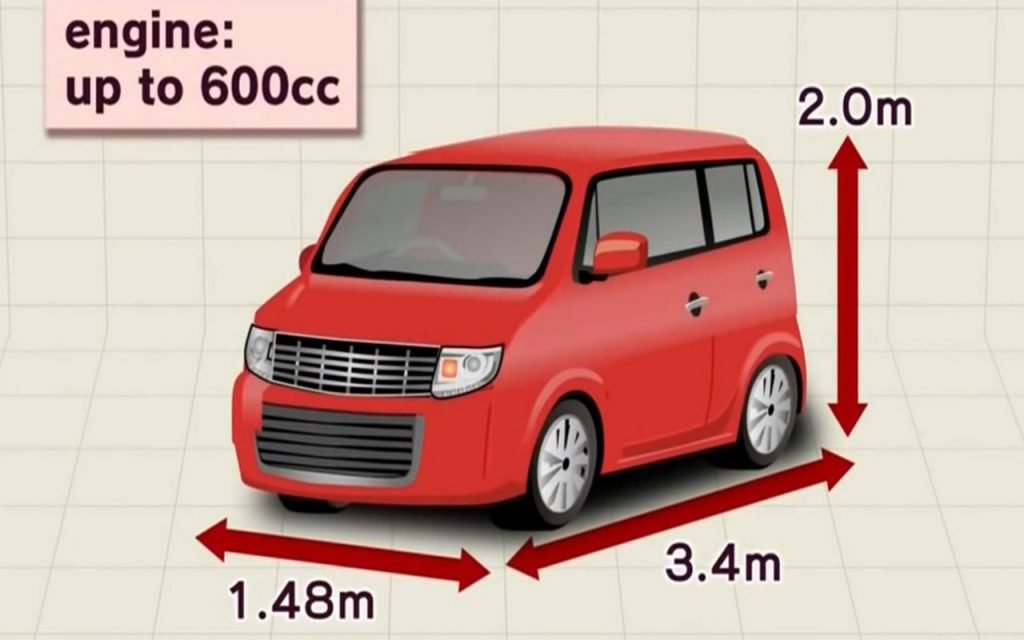
Kei car class of vehicle emerged as Japan’s economy was suffering post World War 2, and people could not afford a full sized car, yet enough to buy a motorcycle. To promote the growth of the car industry in Japan and as alternative delivery method for small business owners the KEI Car class was introduced so that owners may enjoy both tax and insurance benefits on the other side OEM get attractive tax reduction benefits. Originally limited to a displacement of only 150 cc (9 cu in) (or just 100 cc for two-stroke engines) in 1949, dimensions and engine size limitations were gradually expanded (in 1950, 1951, and 1955) to tempt more manufacturers to produce Kei cars.

In 1955, the displacement limit increased to 360 cc (22 cu in) for both two-strokes, as well as four-stroke engines, resulting in several new kei car models beginning production in the following years. These included the 1955 Suzuki Suzulight and the 1958 Subaru 360, the first mass-produced Kei car, finally able to fill people’s need for basic transportation without being too severely compromised. In 1955, the Japanese Ministry of International Trade and Industry also set forth goals to develop a “national car” that was larger than kei cars produced at the time. This goal influenced Japanese automobile manufacturers to determine how best to focus their product development efforts for the smaller kei cars, or the larger “national car”. The small exterior dimensions and engine displacement reflected the driving environment in Japan, with speed limits in Japan realistically not exceeding 40 km/h (24.9 mph) in urban areas.

The class then went through a period of ever increasing sophistication, with an automatic transmission appearing in the Honda N360 in August 1968, with front disc brakes becoming available on a number of sporting kei cars, beginning with the Honda Z GS of January 1970.Power outputs also kept climbing, reaching a peak in the 40 PS (29 kW; 39 hp) Daihatsu Fellow Max SS of July 1970. Sales increased steadily, reaching a peak of 750,000 in 1970.

As Pakistan’s financial woes are going from hard to worse, the national fiscal deficit surges to over 7% of gross domestic product (GDP) and could reach 9-10% as dry up amid Covid-19 economic devastation. That’s raising questions among analysts’ and business executives of whether the country is headed towards a budgetary blow out, induced financial collapse. This is a war like situation which is also hurting automobile sector of Pakistan and last quarter shows no sale or very little sales of cars.  Since March 2020 like all other sectors, the auto industry also came to a complete stand still due to lockdown. With no end in sight, it is not clear how long this crisis will continue. This situation demands that Pakistan should start a national Kei car project immediately. This national Kei car should be 100% indigenized. The outline of the project may be chalked out by engineering development board. This project may include electric car too.

By: Anwar Iqbal