Home Blog Page 8

Gaps on the Road: Unlocking the Potential of Pakistan’s Underutilized Commercial Vehicle Market

Dear Readers Pakistan, with its strategic location, rising population, and emerging logistics needs, presents a unique opportunity in the commercial vehicle sector. While private automotive markets—especially motorcycles and small cars—have seen rapid expansion, the commercial vehicle industry remains relatively stagnant. A combination of fragmented planning, policy loopholes, and strategic missteps from key local players has left a significant vacuum in this market.

This article explores the current approximate size of Pakistan’s commercial vehicle market, a breakdown of different segments including LCVs, pickups, heavy-duty trucks, vans, MPVs, and luxury buses, and uncovers why the vacuum exists—mainly due to misaligned priorities and underinvestment by major local entities.

1. Market Size and Overview

Pakistan’s commercial vehicle market has not kept pace with the country’s logistics and infrastructure demands. With road freight still accounting for more than 92% of goods transport in Pakistan, the demand for commercial vehicles—especially LCVs and heavy trucks—should ideally be higher than current numbers suggest.

Estimated Annual Sales by Segment (approximate figures based on industry insights and market trends up to 2024):

SegmentAnnual Units Sold (2023)Comments
LCVs (Light Commercial Vehicles) – Pickups (0.5 – 2 tons)20,000–25,000 unitsDominated by Suzuki Ravi, Toyota Hilux
Medium Pickups / 3-ton Trucks4,000–6,000 unitsFragmented; some Chinese imports
Heavy-Duty Pickups / 5-ton3,000–4,000 unitsPrimarily for industrial use
Heavy Trucks (above 6 tons)5,000–6,500 unitsIncreasing demand with CPEC/logistics
Vans / MPVs12,000–15,000 unitsUsed for passenger/family + school
Luxury Buses (Intercity + Executive)1,500–2,500 unitsMostly import-based, high-margin segment

Total Market Size (2023): 50,000 to 60,000 units/year

Despite a sizable freight and passenger demand, these numbers reflect underutilization of potential, especially in freight vehicles and intercity buses.

2. Key Players and Brands

Local OEMs / Assembling Players:

  • Ghandhara Industries (Isuzu trucks and buses)
  • Master Motors (Foton, Changan, Yutong)
  • Hinopak (Hino trucks & buses – facing decline)
  • Suzuki Pakistan (Ravi, Bolan – LCV segment)
  • Toyota Indus Motors (Hilux – premium pickup)

Import Players (Used/New):

  • Chinese brands like Dongfeng, JAC, FAW
  • Japanese imports (used buses, MPVs)
  • European players in luxury segment (Volvo, Mercedes)

Many of these brands are under-marketed, poorly positioned, or neglected due to a shift in business focus or financial constraints.

3. Segment-Wise Insights

a. LCVs & Small Pickups (0.5 – 2 Ton)

This is the most active segment due to its use in small logistics, agriculture, and urban goods transport. The Suzuki Ravi dominates due to price point, though it’s outdated and lacks features.

Growth Potential: Huge. A modern alternative with better payload, safety, and efficiency could disrupt this space.

b. 3-Ton and 5-Ton Trucks

Historically served by Hino and Isuzu, this segment is now underserved. With industrial logistics growing (e.g., e-commerce, FMCG, pharma), demand for efficient mid-size trucks is increasing.

Challenge: Lack of product innovation, dealer networks, and financing options.

c. Heavy-Duty Trucks (6–30 Ton)

Demand is largely project-driven: CPEC, highways, ports, and fuel tankers. Players like Isuzu and Foton have attempted to serve it, but limited financing and low aftersales coverage slow adoption.

Opportunity: Leasing-backed sales model and fleet programs could unlock growth.

d. Vans / MPVs

Used by schools, tour operators, and families (especially in northern areas), MPVs like Suzuki APV, Toyota Hiace, and Changan Karvaan have steady demand.

Growth Driver: Tourism resurgence, rural mobility needs.

e. Luxury & Intercity Buses

A niche yet highly profitable market. Mostly served by Yutong and Higer (through Master Motors), these buses are used in premium intercity services like Daewoo, Faisal Movers, Road Master, etc.

Missed Potential: No local bus manufacturing plant has captured the premium market fully.

4. The Vacuum: Why the Market Isn’t Thriving

Despite economic and logistical potential, the market lags. The key reasons include:

a. Lack of Strategic Focus by Local Players

Some major players, particularly those with strong history in truck/bus manufacturing (like Hinopak), have failed to innovate or adapt. They have also diverted resources to other segments or haven’t invested in R&D.

b. Shift to Passenger Vehicles

Local assemblers and investors have prioritized passenger cars, MPVs, or SUVs due to:

  • Easier financing
  • Consumer-driven demand
  • Higher margins per unit
  • Lower regulatory complexity

This has left the commercial sector in a state of under-service.

c. Poor Government Policy / High Duties

  • High import duties on CKD and CBU units
  • Lack of tax benefits for fleet modernization
  • No scrappage policy for old commercial vehicles

These discourage investment in new commercial vehicle lines.

d. Financing Bottlenecks

  • Most commercial vehicles are bought cash-down
  • Financing options are rare outside Tier-1 cities
  • No government-backed fleet-leasing programs

This reduces sales penetration, especially in heavy segments.

5. Benefits of Filling the Vacuum

If stakeholders take action, the payoff could be significant:

a. Economic Multiplier Effect

More commercial vehicles = faster goods movement = better supply chains. This fuels growth in:

  • Agriculture
  • Retail/FMCG
  • Manufacturing
  • E-commerce logistics

b. Employment Generation

Every new truck/bus supports 2–3 direct jobs (drivers, mechanics) and dozens indirectly (logistics companies, suppliers).

c. Export Opportunity

With right scale and focus, Pakistan could export commercial vehicles to:

  • Afghanistan
  • Central Asia
  • East Africa
  • Smaller Gulf states

d. Environmental Modernization

Upgrading to Euro-IV/V compliant fleets can drastically reduce emissions. Government support can make Pakistan a green transport leader in South Asia.

6. What Needs to Change?

To unlock the potential, key reforms and actions are needed:

StakeholderRequired Action
Local OEMsInvest in R&D, launch modern commercial models, create fleet-leasing programs
GovernmentReduce duties, incentivize local assembly, offer commercial vehicle financing schemes
Banks & NBFCsLaunch tailored CV loan products, especially for SMEs and logistics startups
InvestorsReassess commercial sector profitability vs saturated car markets
International PartnersEncourage CKD partnerships with Chinese and Japanese commercial brands

The commercial vehicle sector in Pakistan stands at a critical juncture. While demand for logistics and mobility continues to rise, the supply side—especially for trucks, LCVs, and buses—remains underdeveloped due to poor planning, diverted corporate focus, and policy neglect.

This vacuum is not just a gap—it’s an opportunity waiting to be seized by forward-looking automakers, logistics firms, and policymakers. With the right alignment of vision and investment, Pakistan could transform its transport landscape and unlock billions in economic value.

This exclusive article has been written by @Aqeel Bashir, and published in Automark’s May-2025 printed/digital edition.
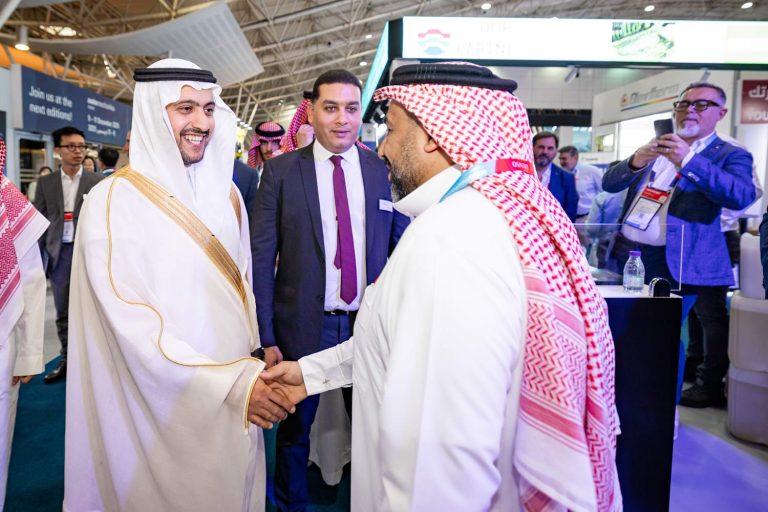
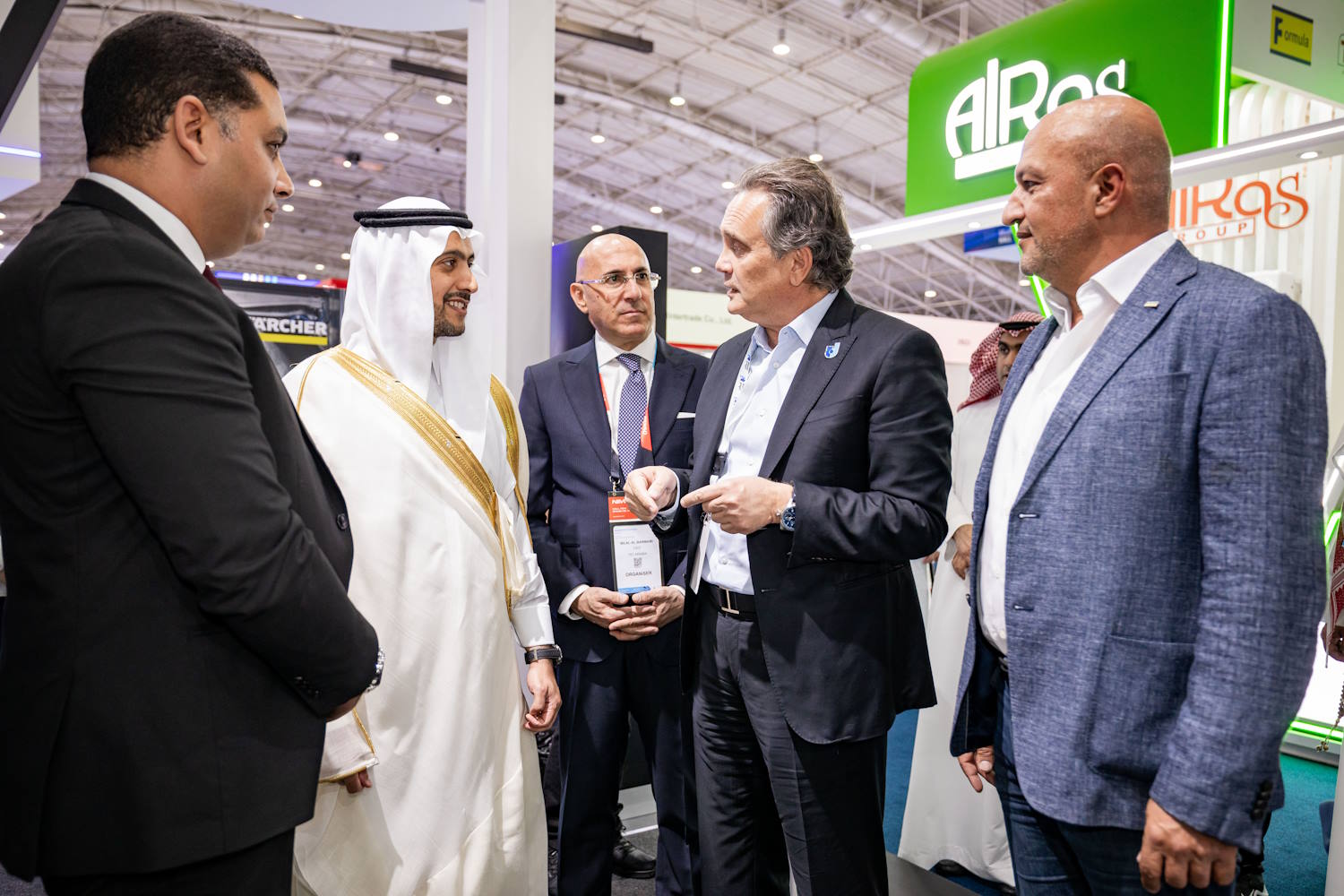
Saudi Arabia’s leading automotive aftermarket event inaugurated by Mr. Ajlan bin Saad Al-Ajlan

Mr. Ajlan bin Saad Al-Ajlan has officially opened the seventh edition of Automechanika Riyadh

Key topics to be discussed during the three-day sold-out event include tackling skills shortages and embracing digital change, establishing the Middle East as a global automotive hub, and the importance of a customer-centric approach

The event will welcome a record number of exhibitors, with more than 450 from over 30 countries with over 19,000 visitors expected

Always a pleasure to photograph you!

Riyadh, KSA: Automechanika Riyadh, Saudi Arabia’s leading regional trade show for the automotive aftermarket industry, has been officially inaugurated by Mr. Ajlan Saad Al-Ajlan, Vice Chairman of Board of Directors, Riyadh Chamber, with the event continuing until Wednesday, 30 April, at the Riyadh International Convention and Exhibition Centre (RICEC).

As part of the official opening ceremony and tour, by Mr. Ajlan Saad Al-Ajlan visited several of the 450 exhibitors, including Neweast, Al-Kadi Commerce & Industry LLC, Hexis Middle East, DJ Auto Parts Co. Ltd, and RedLine Car Services.  Automechanika Riyadh saw an increase of 32% on last year’s exhibitor numbers, which also includes a record number of Saudi businesses covering all aspects of the automotive aftermarket and underscoring the market growth within the country, with several new and returning exhibitors.

This year’s exhibition is set to break previous attendance records, with more than 19,000 visitors expected throughout the three days, resulting in an extended show floor which has seen the number of halls increase from three to five to keep pace with demand from exhibitors and visitors.

Following the official opening, Dr. Faisal Al-Kadi, Chief Executive Officer of Al-Kadi Commerce & Industry and Automechanika Riyadh Advisory Board member, shared expert insights on key industry developments within the automotive aftermarket in the region as part of his opening keynote speech.

Bilal Al Barmawi, CEO and Founder of 1st Arabia, the licensee of Automechanika Riyadh directed by Messe Frankfurt Exhibition GmbH, said: “We are proud to officially open Automechanika Riyadh 2025, a platform that continues to drive transformation across Saudi Arabia’s automotive aftermarket. This year’s edition marks our most expansive and ambitious show yet, reflecting the Kingdom’s dynamic progress under Vision 2030.”

Aly Hefny, Show Manager, Automechanika Riyadh, Messe Frankfurt Middle East, said: “We’re excited to welcome a record number of visitors and exhibitors to this year’s Automechanika Riyadh, which promises to be our most international and dynamic edition yet. The strong growth in participation from global brands underscores the Kingdom’s rising influence in the automotive aftermarket. At the same time, the diversity of Saudi companies exhibiting highlights the strength of local innovation and industrial development. Together, they reflect the Kingdom’s evolving mobility landscape and our ongoing commitment to connecting markets and unlocking new opportunities.”

The Automechanika Riyadh Academy, which is held under the theme Localisation & Aftermarket Innovation on day one, featured a range of industry leaders, including Ulf Schulte, COO, EVIQ, who highlighted the rapid expansion of EV charging infrastructure in Saudi Arabia through strategic partnerships and the role of aftermarket solutions in enhancing the longevity and efficiency of charging networks.

Elsewhere, Mohammed Alsuhaim, Managing Director, National Automotive & Vehicles Academy (NAVA), outlined the critical role of training and development in shaping the future automotive workshop and showcased how NAVA is addressing the skills gap through hands-on, targeted training programs.

A panel discussion led by Emad Daghreri, Co-Founder & CEO, Autobia, and Alisdair Walton, Senior General Manager – Digital Transformation & IT, Abdul Latif Jameel Enterprises, focused on driving digital innovation and profitability for aftermarket distributors where they discussed implementing integrated e-commerce platforms and developing data-driven pricing strategies.

This year, Automechanika Riyadh will showcase case a range of product areas, including Parts & Components, Electronics & Systems, Tires & Batteries, Oils & Lubricants, Accessories & Customising, Diagnostics & Repairs, Body & Paint, and Car Wash & Care.

ENDS-

About Automechanika Riyadh

Automechanika Riyadh, licensed by Messe Frankfurt GmbH, will take place from 28 April – 30 April 2025 at Riyadh International Convention and Exhibition Centre. This will be the 7th edition of Automechanika in Saudi Arabia, which is the leading exhibition dedicated to the automotive aftermarket industry in the Kingdom. The dedicated exhibition is one of 14 instalments of Automechanika – the most successful and largest automotive aftermarket exhibition brand in the world. 

For more information, please visit our website.

About 1st Arabia

1st Arabia Tradeshows & Conferences is a leading exhibition & conference organizer in the Kingdom of Saudi Arabia. Headquartered in Riyadh, 1st Arabia has regional offices in Jordan and is set to expand its operations in more countries regionally. 1st Arabia organizes top international trade exhibitions and conferences that provide unparalleled networking and business opportunities for companies looking to excel and grow within the Kingdom. Apart from conducting quality and high profile B2B trade fairs, country specific shows, corporate events, conferences, events management and festivals, 1st Arabia also provides a complete marketing tool and exhibition solutions to their valued clients. 1st Arabia is the only MICE organization in the Kingdom of Saudi Arabia who is a member of the International Organizations like IAEE, ICCA, MPI PCMA, SISO and, UFI.

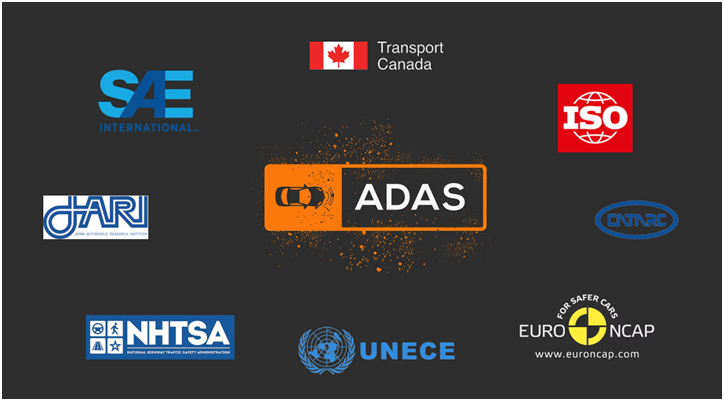
ADAS Standards Bodies and ADAS Safety Protocols

Greetings, Dear Readers!

Nowadays, all OEMs (Chinese, Korean, Japanese, etc.) claim to have ADAS features. It is very important to have a thorough understanding of ADAS from all angles. The most important thing is to have an understanding of standard bodies who develop ADAS standards and keep them up-to-date.

My purpose in this article is to describe all standards governing bodies that are currently working on ADAS standards because the rapid pace of ADAS technologies and the accompanying technology testing creates a challenge for standards bodies and enforcement agencies. Some of the ADAS technologies installed in cars, trucks, and buses today were absolutely unthinkable even 10 years ago.

There is already an array of organizations around the world, each involved in various aspects of vehicle safety. And since ADAS (advanced driver assistance systems) are increasingly built into cars, trucks, and buses, these organizations have been steadily incorporating more and more ADAS-related standards and protocols. 

ADAS is meant to reduce human errors that lead to vehicle accidents, as i covered in my 1st article of this series. ADAS operates both passively, i.e., alerting the driver of a potential collision, or actively, by braking and/or steering the vehicle. But whether an ADAS system simply warns the driver or takes control of the steering wheel and performs an automatic emergency brake maneuver, the goal is the same: to save lives. Please refer to my 1st article published in Automark Nov’24 edition of this series for a comprehensive list of ADAS features.

These organizations are continually defining, refining, and mandating automotive testing and regulations across Europe, North America, and around the world.

Due to the dynamic nature of ADAS development, it’s a constant challenge for regulators to keep up. So, while over-regulation can sometimes constrain development, under-regulation might lead to compromised safety protocols, and no one wants that. The point of ADAS is to save lives by preventing accidents. The regulators are charged with making sure that any technology built into our cars only improves safety, and does not present a hazard itself.

Below are the major organizations involved in setting, maintaining, and in some cases, enforcing these standards.

1.SAE International

The Society of Automotive Engineersare used by 120,000 members all around the world, in the automotive and aerospace domains. SAE standards do not have legal authority, but they are often referenced and incorporated by the National Highway Traffic Safety Administration (NHTSA) in America, as well as Transport Canada. For example, SAE J3016, which defines the six levels of automation for cars, has been adopted by the NHTSA.

2.ISO 26262 ASIL – automotive safety integrity level

ISO is the International Organization for Standardization. ISO develops and publishes International Standards for a wide range of technologies, including automobiles. ISO 26262 defines a risk classification system, also known as an “ASIL” (Automotive Safety Integrity Level) for the functional safety of road vehicles.

ISO 26262 defines four levels, where A is the lowest level of risk, and D is the highest. Systems including airbags and anti-lock brakes get the highest level, since their proper function is so critical to safety, whereas less critical systems such as brake lights rate an A level.

ASIL levels are determined by three factors: severity, exposure, and controllability, and each one of these three has several classes. For example, severity is classified from S0 to S3:

S0: No injuries

S1: Light to moderate injuries

S2: Severe to life-threatening (survival probable) injuries

S3: Life-threatening (survival uncertain) to fatal injuries

3.NHTSA – National highway and traffic administration

NHTSA is a department within the US DOT (Department of Transpiration) They describe their mission as, “Save lives, prevent injuries, reduce vehicle-related crashes.” They manage and enforce automotive-related safety standards, including those developed internally as well as some external standards from SAE, for example. The NHTSA famously invented the crash test dummy in the 1960s. They license foreign and domestic manufacturers to sell their vehicles within the USA, and they have the power to block the import of vehicles that do not meet the Federal Motor Vehicle Safety Standards (FMVSS).

4.UNECE

Part of the United Nation  the UNECE is the United Nations Economic Commission for Europe. UNECE fosters economic harmonization among nations. In 2012 the UNECE’s World Forum for Harmonization of Vehicle Regulation established new regulations intended to improve passenger safety, including:

  • Lane Departure Warning System (LDWS)
  • Child Restraint Systems (CRS)
  • Advanced Emergency Braking System (AEBS)

5. Transport Canada

Transport Canada is a federal agency that is responsible for transportation policies and programs in Canada. They manage defects and recalls, the importing of foreign-made vehicles, child car seats, and a wide range of safety standards for private and commercial vehicles. Canada has a set of safety standards similar to the USA’s FMVSS called the CMVSS (Canada Motor Vehicle Safety Standards).

Transport Canada performs extensive crash testing at their Motor Vehicle Test Centre in Quebec. They manage safety recalls for the Canadian market, and are involved in every aspect of road and vehicle safety.

6. EURO NCAP

EURO NCAP (The European New Car Assessment Program) has a five-star rating system that ranks the safety of vehicles, for the benefit of consumers and vehicle fleet managers. They derive these results by conducting tests on their own and accredited proving grounds.

Their rankings from 0 to 5 stars are defined on their website.

0-star safety: Meeting type-approval standards so can legally be sold but lacking critical modern safety technology.

1-star safety: Marginal crash protection and little in the way of crash avoidance technology.

2-star safety: Nominal crash protection but lacking crash avoidance technology

3-star safety: At least average occupant protection but not always equipped with the latest crash avoidance features.

4-star safety: Overall good performance in crash protection and all-round; additional crash avoidance technology may be present.

5-star safety: Overall excellent performance in crash protection and well equipped with comprehensive and robust crash avoidance technology.

6. JARI (Japan)

The Japan Automobile research Institute (JARI) is a foundation dedicated to automotive research and testing In 2003, JARI merged with the Japan Electric Vehicle Association (JEVA) and the Association of Electronic Technology for Automobile Traffic and Driving (AETATD).

7. CATARC (China)

The China Automotive Technology and Research Center (CATARC) is a scientific research institute. Established in 1985 to help China manage its automotive industry, it is now a part of SASAC (State-owned Assets Supervision and Administration Commission of the State Council).

Among other things, they are involved with C-NCAP, C-ECAP, and proving ground testing.

8. NTC (Australia)

The Australian government’s Department of Infrastructure, Transport, Regional Development, and Communications administers the Australian Design Rules (ADRs), which are national standards of vehicle safety. They are focused on driver protection, emissions, braking, and much more.

 Every automobile driven on Australian roads, regardless of where it was manufactured, must comply with the ADRs. The official policy of the Australian government is to bring their standards into harmonization with international regulations of the UN (see above), wherever possible.

Exclusive written for Automark Magazine, April 2025 printed edition. By Muhammad Usman Iqbal

One Zone One Product One Billion US$, Export?

I mean with profound feelings of certainty that if we could develop Small Enterprises (SE) for manufacturing classified & chosen export products to produce in special clusters of Zones is an practical approach to search and enter the Global market & find potential to EXPORT to them.

This way of coordinated efforts will not only enhance the EXPORT volume but will also be able to reach targeted ONE Billion US$ EXPORT within a given time.

I am confident about presenting this action plan in line with my vision for “One Zone One Product One Billion US$ Export.” This strategic initiative aims to not only revitalize our engineering exports but also position Small Enterprises Zone with one product, for example, ONE PRODUCT of Aluminium Die Casting as a global exporter in specialized engineering products.

“Unveiling Opportunities for Small Enterprises“

International Market Research to identify the buyer and product. To exhibit their products in Global exhibition  to visit and meet the buyers.

“The Import Value of the World Products”

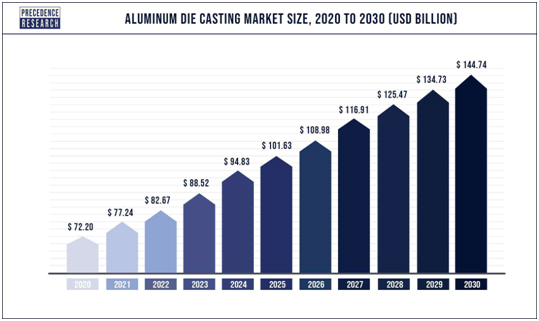
Aluminum Die casting is shown as US 72 Billions in 2020 and forecast  2032 is US$ 144 billions

Toys is shown almost as 100 billions in 2023 and forecast 2028 is US$ 180 Billions

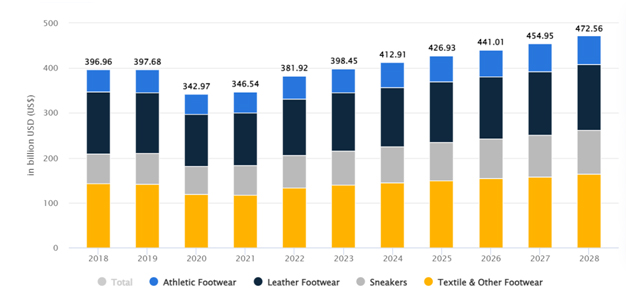
Shoes is shown as 390 Billions in 2023 and forecast 2028 is US$ 470 Billions

Examples:

1. Focus ONE PRODUCT  i.e Aluminum Die Casting :

Recognize the vast opportunities in Aluminum Die Casting and prioritize efforts to strategically focus on this product category for EXPORT.

2. Special EXPORT Policy for Zone Small Enterprises:

  1. Provide zone Small Enterprises with special support of financing at 3%,
  2. Participating in exhibition at 80% discount on international trade fairs at least 3 exhibitions in a year.
  3. Incentive of EXPORT rebate of 5% on export sales amount.
  4. One time import of machinery should be made available to enterprise free of all taxes and duties according to same policy of SEZ companies. 
  5.  All SEZ companies in the region should be made liable to procure 10% of materials and sub components from Small Enterprises. This will amplify visibility on the domestic and global stage to find place in the market.
  6.  Small Enterprises need support for technical standards and international certification to meet the requirement of buyers in EU & USA.

All these actions are the requirement demanding a specific EXPORT policy for Small Enterprises Zone to be declared and notified by the Government to achieve ONE BILLION US$ EXPORT target in certain time of 5 years

3. Cost Effectiveness:

Offer zone Small Enterprises special minimum electricity rates in line with Bangladesh & India or explore alternative cost-effective sources to ensure for making our products globally competitive. Solar and wind energy is the real options as minimum energy cost.

4. Zone Location at Karachi – PIDC Area:

Without pondering over the land requisition, at the beginning stage, I suggest to utilize the land of 5 Acres out of approximately 17 Acers available existing land of PIDC opposite SEZ near Steel Mill Area. AT & TC was previously situated in some portion of this land. This will serve as a model case for promotion and enhancement of export.

6. Land Allocation for Small Enterprises:

Allocate land within the zone to small enterprises, offering them a 10-year installment plan for 1200 Square yards at Rs 7.5 million. This will empower small enterprises to thrive and contribute significantly to my export goals.

7. Income & Sale Tax Incentives:

Grant zone enterprises a 2% income tax incentive for a minimum of 10 years, providing them with the financial stability needed for sustained growth.

 Zone enterprises will produce goods to export and has to procure local raw materials required for production. At this point zone enterprises pays 18% Sale Tax which will appear on weboc on export and Sale Tax is refundable. Refund is a problematic issue in FBR and time consuming activity. Enterprises immediately need refund of sale tax just after exporting Goods.  The Government is to devise a procedure for immediate refund of Sale tax.

8. Focus on Production and Export Orders: 

Encourage zone enterprises to prioritize production and meet export orders efficiently. Refer my Aluminum Die Casting market size of the world standing at US$ 72 Billion and I am confident to get Pakistan share at least one and a half percent from Aluminum Die Casting Products.

9. International Market Research:  

Continuous efforts in International Market Research for obtaining orders engaging regular productivity amongst the Small Enterprises. One Small Enterprises is to be established as a EXPORT HOUSE on behalf of ZONE Small Enterprises for market research to  obtain data collection and negotiation to finalize export order from foreign companies. These orders will be placed to Small Enterprises in the ZONE and the Marketing Small Enterprises will export the products from the Zone.

I believe that the successful implementation of these actions will play a pivotal role in realizing my vision of ONE ZONE ONE PRODUCT ONE BILLION US$ EXPORT.

Let us work together as a NATION with a firm belief, will, dedication and support of the government to bring a fundamental shift in the industrial policy only designed and exclusively for Zone Small Enterprises.  SMEs have been recognized as the backbone of industrialization. To achieve substantial growth by industrialization we have to establish, promote and support Zone Small Enterprises.

By Mashood Khan,  Director – Mehran Commercial Enterprises / Expert Auto Sector / Former Chairman PAAPAM

Published in Automark Magazine’s April-2025 printed edition.

Electric Vehicles: Beyond Financial Incentives for a Sustainable Pakistan

Electric vehicles (EVs) are transforming the global automotive landscape, offering sustainable alternatives to traditional internal combustion engine vehicles. While financial incentives like tax breaks and reduced import duties have been pivotal in promoting EV adoption, non-financial incentives often subtle yet impactful play a crucial role in accelerating this transition. In Pakistan, integrating such incentives can significantly bolster EV acceptance and integration.

The Power of Non-Financial Incentives

Non-financial incentives, though not directly monetary, enhance the overall appeal and convenience of owning and operating EVs. These incentives can be instrumental in influencing consumer behavior and fostering a supportive environment for EV adoption. Key non-financial incentives include:

1. Dedicated Parking Spaces

Allocating exclusive parking spots for EVs in public areas, shopping centers, universities, and office complexes not only underscores the importance of sustainable transportation but also offers tangible convenience to EV users. Such measures have been effective in various regions, encouraging more drivers to consider EVs. Municipal authorities can designate EV-only parking spaces in urban centers and public facilities, enhancing the convenience for EV owners.

2. Toll Reductions or Exemptions

Implementing reduced toll fees or complete exemptions for EVs on highways and toll roads can serve as a significant incentive. This approach has been adopted in several countries to promote cleaner transportation options. Collaborating with highway authorities to offer reduced or waived toll fees for EVs can serve as a compelling incentive for long-distance travelers.

3. High-Occupancy Vehicle (HOV) Lane Access

Allowing EVs to use HOV lanes, regardless of the number of occupants, can significantly reduce commute times and serve as a strong incentive for potential buyers. This strategy has been successfully implemented in various regions to encourage EV adoption.

4. EV-Only Zones in Congested Urban Areas

Implementing EV-only zones in densely populated city centers can effectively reduce air pollution and noise levels. By restricting access to internal combustion engine vehicles, these zones encourage the use of cleaner transportation options, leading to improved public health and environmental benefits. Such initiatives have been successful in various global cities, resulting in decreased emissions and enhanced urban livability.

5. Enhanced Parking Incentives at Educational Institutes

Providing dedicated parking spaces and charging stations for EVs at Educational Institutes can encourage students and staff to transition to electric vehicles. This not only promotes sustainable transportation habits but also serves as an educational tool, showcasing the institution’s commitment to environmental stewardship. Universities that have implemented such incentives have observed increased EV adoption rates among their communities.

Mandating Electric Public Transportation

Transitioning public transportation fleets to electric power is a crucial step toward reducing urban pollution. The Punjab government’s recent initiative to introduce electric buses in Lahore exemplifies this approach. In January 2025, the Chief Minister inaugurated the first electric bus service in the city, highlighting the administration’s commitment to providing affordable, safe, and environmentally friendly transportation. The initiative includes free travel for students, senior citizens, and individuals with special needs, with other passengers charged a subsidized fare of Rs20. The Chief Minister emphasized that these electric buses are a significant step toward achieving a cleaner, greener Punjab.

Furthermore, the Punjab government has announced plans to deploy 400 electric buses in Lahore as part of a comprehensive strategy to combat smog and enhance eco-friendly transportation. This initiative aims to improve air quality and reduce pollution levels in the city.

Global Success Stories

Norway stands as a testament to the efficacy of non-financial incentives. The country has implemented measures such as free parking for EVs, access to bus lanes, and exemptions from tolls, leading to a remarkable increase in EV adoption. As of 2024, nearly 89% of new cars sold in Norway were fully electric, showcasing the impact of these incentives.

The Path Forward for Pakistan

Pakistan’s National Electric Vehicle Policy (NEVP) has laid the groundwork by offering various incentives to promote EV adoption. However, to further accelerate this transition, integrating non-financial incentives is essential.

While financial incentives are vital, the integration of non-financial incentives can substantially enhance the appeal of EVs in Pakistan. By adopting strategies such as dedicated parking, toll reductions, access to restricted zones, and the mandatory electrification of public transport, Pakistan can create a more supportive environment for EV adoption, steering towards a sustainable and eco-friendly transportation future.

Electrifying Pakistan: A Comprehensive Roadmap to a Sustainable EV Future

Dear Readers,

This article analyses the evolution of Pakistan’s electric vehicle transition as a major step in resolving the pressing environmental, economic, and energy challenges facing the country. It utilizes global trends, local statistics, and policy analyses to delineate a strategic roadmap for increasing EV penetration in Pakistan. The article mentions major market enablers, infrastructural constrains, renewable integration, and details a comprehensive five-year action plan implemented with data-driven tables and comparisons of cases.

Introduction

The global automotive industry is rapidly shifting toward electric mobility with climate change, technology, and economic changes driving the automotive industry across the globe, movement toward electric mobility is very fast. For countries like Pakistan where air pollution, dependency on fossil fuels, and energy insecurity are serious issues, it has a strategic opportunity in terms of moving toward electric vehicles. The Article has a very detailed present status analysis on electric vehicles, as well as recommendations on what government and industry should do following the target of 30% EV penetration by 2030 according to the National Electric Vehicle Policy (NEVP) 2020.

Global EV Trends: Lessons for Pakistan

1. The Accelerating Global Shift

The widespread acceptance of electric vehicles will not stop here. The figure crossed more than 14 million EVs sold worldwide in 2023, with market shares distributed as follows: China: ~60% Europe: ~25% USA: ~10% Norway, with a staggering 87% market share in car sales made of EVs, proves that the combination of proper policy and infrastructure investment can make all the difference

2. Key Factors Behind Success

• Policy Incentives: Subsidies, rebate taxes, and regulations concerning the phaseout of internal combustion engines (ICE).

• Infrastructure Investment: E.g., China now has millions of charging points, with over 6.8 million in place.

• Economic Benefits: Lower total cost of ownership (TCO) due to low costs in fuel and maintenance.

Pakistan’s EV Landscape: A Data-Driven Analysis

1.Policy Framework

The NEVP 2020 looks forwards to:

• 30% of EVs in passenger cars, buses, and trucks by 2030.

• 90% Electrification for motorcycles and rickshaws.

• Favorable Import Duties: EV components have a reduced duty of 1% versus up to 50% for ICE vehicles

Progress (2020–2023):

• Electric 2/3-Wheelers: Over 50k sold by brands like Jolta, Metro, and Sazgar.

• 4-Wheelers: Fewer than 1,000 registered EVs, mostly luxury imports.

2. Market Barriers

Economic Challenges

Infrastructure Deficit

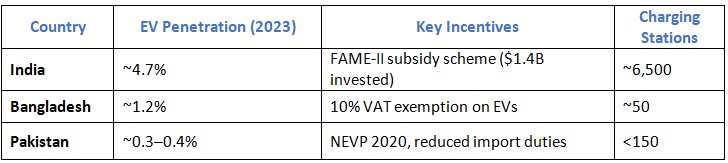
  • Charging Stations: Pakistan has barely 150 operational charging stations in most major areas: Karachi, Lahore, and Islamabad.
  • Geographic Disparities: Most rural areas are poorly serviced, raising anxiety about how far potential users can travel

Map: Concentration of charging stations in major urban centers.

Energy Grid Constraints

  • Pakistan’s power grid now experiences: 15 – 20% loss in transmission.
  • Experiences load-shedding of around 6 – 8 hours a day in many areas.

 These call for the charging of EVs with renewable energy for stability in the grid.

Consumer Perception

From a 2023 Gallup Pakistan survey,

65% of the population is unaware of available tax incentives for EVs.

 72% said charging infrastructure is a major barrier.

58% questioned performance under extreme conditions of heat (45°C+).

3. Comparative Analysis: Regional Overview

Strategic Opportunities for Pakistan

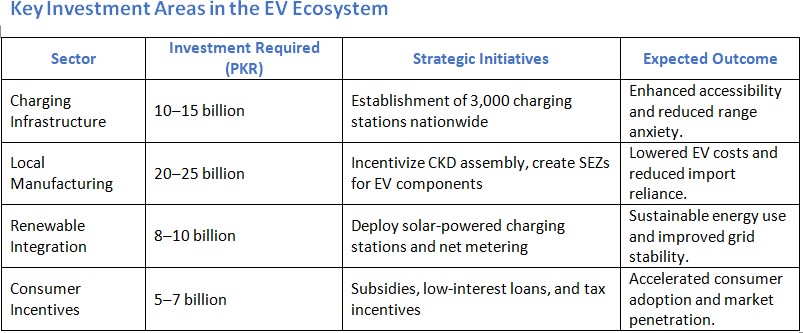
1. Local Manufacturing Ecosystem

Case Study: Turkey
Turkey successfully reduced EV costs by 30% through local battery production and FDI partnerships, including Ford’s $2B investment in an EV plant.

Recommendations for Pakistan:

  • Incentivize CKD Assembly: Facilitate local assembly plants for EVs and batteries.
  • Foster Global Partnerships: Collaborate with industry leaders like BYD and NIO for technology transfers.
  • Establish Special Economic Zones (SEZs): Develop dedicated hubs for EV R&D and component manufacturing.

2.Renewable Energy Integration

Pakistan’s solar potential of ~60 GW (World Bank estimate) can sustainably power EV infrastructure.

Initiatives Include:

Solar Charging Station: Implementation pilot project(s) in the provinces of Punjab and Sindh.

Net Metering Programs: Allow EV owners to sell surplus solar energy back to the grid.

Prototype of solar charging station in Islamabad.

3. Fiscal and regulatory reforms

Subsidize Domestic Battery Production: Reduce reliance on expensive imports.

Introduce Low-Interest EC Loans: Bridge the gap with other banks (e.g., Meezan Bank) without extensive financing.

Reallocate Subsidies from Fossil Fuels: Use them for phasing out EV tracks for infrastructure development or investment.

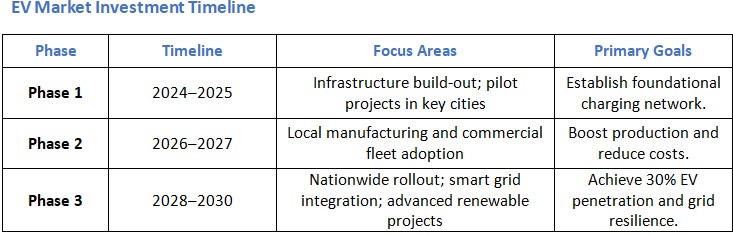
The Road Ahead: A Five-Year Plan of Action:

2024-2025:

 Infrastructure: Install about 500 charging stations along major corridors like Karachi,Lahore,Islamabad.

Awareness: Launch aggressive media campaigns to increase public knowledge as well as confidence.

2026-2027:

Local production: Develop attractive policies and FDI to attain 30 percent localization in EV battery production.

Commercial: Start giving target subsidies for fleet operators and ride-hailing services.

2028-2030:

Market penetration: Aim at 15 percent penetration for passenger vehicles and then reach 50 percent for two-three wheelers.

Smart grid integration: AI driven energy management systems, ensuring grid stability and efficiency.

Conclusion:

The transition of Pakistan towards the electrification of transport is not just a new technology; it is a transformational socio-economic change. Only under robust policy reforms, charging infrastructure, and renewable energy can this pay off with a considerable reduction of the oil import bill while placing Pakistan as a regional leader in sustainable mobility. Comprehensive data, strategic milestones, and a call for immediate need and paving of this path are built into the roadmap above

References

  International Energy Agency (IEA). Global EV Outlook 2023.

 Pakistan Ministry of Climate Change. National Electric Vehicle Policy 2020.

 Gallup Pakistan. Consumer Perceptions of EVs in Pakistan, 2023.

 BloombergNEF. Electric Vehicle Market Analysis: South Asia, 2023.

This exclusive article has been published in Automark Magazine’s April-2025 printed edition. Written by @Muhammad Hamid Tariq

Localization in Pakistan’s Auto Sector: Challenges and Opportunities

Eid Mubarak to the Automotive Family of Pakistan! On this joyous occasion of Eid, we extend heartfelt greetings to the entire automotive community of Pakistan, manufacturers, dealers, mechanics, engineers, and all the hardworking individuals driving this industry forward. Your dedication and innovation keep the wheels of progress turning, shaping a brighter future for Pakistan’s mobility sector.

May this Eid bring you and your loved one prosperity, happiness, and success. Let’s continue building a stronger, more dynamic automotive industry.

The recent discussions within the Automark Professional Group have shed valuable light on the multifaceted challenges and opportunities surrounding automotive industry localization in Pakistan. The group’s diverse perspectives, encompassing manufacturers, suppliers, policymakers, and industry analysts, have underscored the critical need for a holistic and strategic approach to this crucial issue. By fostering open dialogue and sharing expertise, the group is playing a vital role in shaping the future of the sector.

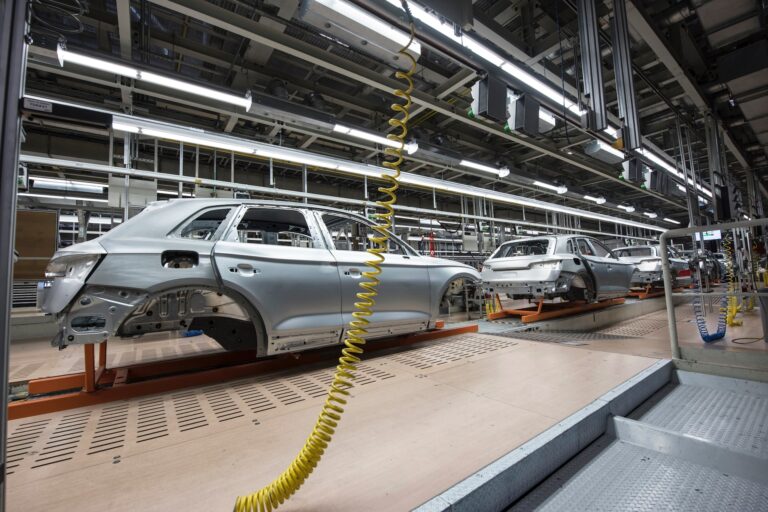
Let’s have an overview related to Localization in Pakistan’s Auto Sector with Challenges and Opportunities. The first question always being asked that Why are Pakistani cars so costly? Or why, even with a well-established auto industry, do we continue to depend so much on imported components? The answer is localization, the making of vehicles and their parts locally. Although localization can be an enormous economic gain, it also comes with tremendous challenges.

This article explores the reasons deeply why localization is vital for Pakistan, the challenges that it has to face, and how it can overcome these by taking cues from successful cases like Maruti Suzuki. while the road to localization is complex, a coordinated effort between the government, industry players, and academia can help Pakistan’s auto sector unlock its full potential and drive the country towards industrial self-reliance. On the one hand, issues such as inconsistent government policies, limited technological capabilities, reliance on imported raw materials, and the lack of a robust vendor base have slowed the pace of local manufacturing on the other hand, localization offers immense potential for economic growth, job creation, and technological advancement. If effectively implemented, it can reduce Pakistan’s trade deficit by decreasing reliance on imports and encouraging exports of locally produced components. Government initiatives like the Automotive Development Policy (ADP) and incentives for new entrants have started to show positive signs by attracting foreign direct investment (FDI) and promoting joint ventures.

Why is Localization Vital for Pakistan? Consider this- if all car components were manufactured domestically, car prices would decrease, additional employment would be generated, and we would not need to import at such expensive rates. At present, Pakistan’s automotive sector is only contributing 2.8% of the nation’s GDP. With further localization, the figure can go much higher, which will improve the economy and lessen the reliance on international markets. Additionally, localization can shield the industry from currency fluctuations. The rupee has been devalued time and again in recent years, increasing the price of imported auto parts. Car manufacturers would not need to change prices as often had more components been made locally. Secondly, localization provides a strong supply chain environment, stimulating allied industries like steel, plastics, and electronics. An efficiently developed auto industry can also generate exports, generating foreign exchange for Pakistan. A long-term, strategic vision, coupled with consistent implementation, is essential for realizing the full potential of localization and ensuring a sustainable and prosperous future for the industry.

What’s Holding Us Back? Localization is a wonderful idea, but it is not easy. A few major issues keep Pakistan from localizing auto manufacturing. The greatest challenge is Pakistan’s low number of vehicles being produced. For localization to work, auto companies have to make cars in huge quantities to establish a stable demand for locally produced components. In 2023, Pakistan only made 150,000 vehicles, while neighboring India produced more than 4 million. The smaller scale of production hinders local vendors from making investments in quality manufacturing plants. Without mass production, the unit cost is still high, which renders locally made components less competitive than imported ones.

Another major challenge is technological gaps and shortage of expertise. The global auto industry is changing fast, with electric vehicles (EVs) and hybrid technology being the standard. Pakistan, though, does not have the domestic expertise to build advanced parts like lithium-ion batteries, electronic control units (ECUs), and sophisticated safety systems. While Pakistan’s goal is 30% EV penetration by 2030, we still depend significantly on imported parts, which hinders the process of localization.

The vendor base is also limited and underdeveloped. Most manufacturers of parts are short of money and technology to make high-quality auto parts, and automakers tend to import parts because of worries about quality and reliability. Without robust networks of suppliers, localization will not work. Government policies and regulatory hurdles have also affected localization efforts. Excessive import tariffs on raw materials, irregular taxation policies, and poor enforcement of quality standards are other impediments for local manufacturers. To enhance localization, the government needs to implement long-term, business-friendly policies that promote investment in local manufacturing.

A second crucial aspect is the localization strategy for various brands selling in the Pakistani market, especially Chinese and Korean cars. Localization occurs in two main ways. 

• AutoCAD Drawings Method: Technical designs and drawings provided by the parent company to produce locally.

• Reverse Engineering Method: Here, the already available vehicle parts are researched, duplicated, and produced locally. Of these, reverse engineering has been fairly successful in Pakistan, with local suppliers being able to design some components successfully. The biggest challenge, however, continues to be technology transfer, which still lags. Although reverse engineering facilitates production, it does not fill the gap in advanced technology development, which is needed for long-term localization and innovation. The success of localization efforts in Pakistan’s auto sector hinges on collaborative efforts between the government, industry stakeholders, and consumers. By addressing the challenges and capitalizing on the opportunities, Pakistan can transform its auto sector into a driver of economic growth and technological advancement.

Maruti Suzuki: A Case Study in Successful Localization: Pakistan can learn valuable lessons from India, where Maruti Suzuki has successfully localized its supply chain and manufacturing processes. Maruti Suzuki crossed 2 million annual sales in 2023-2024, proving how localization supports growth. The company holds a dominant 50% market share in India’s passenger vehicle sector. Extensive production facilities across India reduce costs and ensure vehicles are suited for local conditions. A vast network of vendors produces affordable, high-quality auto parts, and Maruti Suzuki designs cars that cater to Indian road conditions and consumer preferences. By following a similar model, Pakistan can enhance its localization efforts and strengthen its auto sector.

How Can We Bridge the Gap? To ensure localization, Pakistan requires an overall strategy that is provided with government backing, industry participation, and skills development. The government can contribute significantly by offering tax relief, subsidies, and low-interest loans to promote local production. Lowering import duties on raw materials needed for producing auto parts and establishing special economic zones (SEZs) for the automobile sector will also spur investment. Strategic partnerships with international brands can assist in transferring technology for high-technology manufacturing, R&D competency for innovation, and best practices for developing vendors. Localization demands skilled personnel. The private sector and the government must institute technical training institutions specializing in automobile engineering, implement apprenticeship courses in collaboration with international automobile producers, and initiate research & development centers to ensure innovation.

The Road Ahead: Localization is not a pipe dream, it’s a must. Challenges notwithstanding, Pakistan can establish an independent auto industry. Look to the future when most cars are locally produced, are cheaper, and the economy booms. Achievement will necessitate high production levels to reduce costs, investment in technology to produce sophisticated components, a good vendor base to provide quality parts, and government policies encouraging local production. With guidance from successful case studies such as Maruti Suzuki, Pakistan is capable of evolving its automotive industry into a viable, competitive industry.

Takeaway from this article:

The path to localization in Pakistan’s automotive industry is fraught with challenges, but the benefits heavily outweigh the difficulties. A properly established local industry translates into cheaper car prices for consumers, more employment opportunities for Pakistanis, and less reliance on imports, making the economy stronger. Let’s understand that Localization in Pakistan’s auto sector presents both significant challenges and promising opportunities. On the one hand, issues such as inconsistent government policies, limited technological capabilities, reliance on imported raw materials, and the lack of a robust vendor base have slowed the pace of local manufacturing. Localization in Pakistan’s automotive sector faces structural and systemic challenges, strategic interventions and collaborative efforts can unlock its true potential. The focus must now shift toward sustainable industrialization, skill development, and innovation-driven localization, paving the way for Pakistan to emerge as a significant player in the regional automotive value chain. Additionally, high production costs and the absence of economies of scale make it difficult for local players to compete with established international brands. This can only be achieved through collaboration between the government, industry players, and schools. With proper policies and investments, Pakistan can localize and become a major force in the regional auto industry. The journey forward is tough, but with proper drive, we can arrive at our destination. So, what do you think, can Pakistan localize to the fullest?

This exclusive article has been published in Automark Magazine’s April-2025 printed edition. Written by @Muhammad Rafique, Head of Production and Maintenance at Foton JW Auto Park (Pvt) Ltd., Lahore – Pakistan.