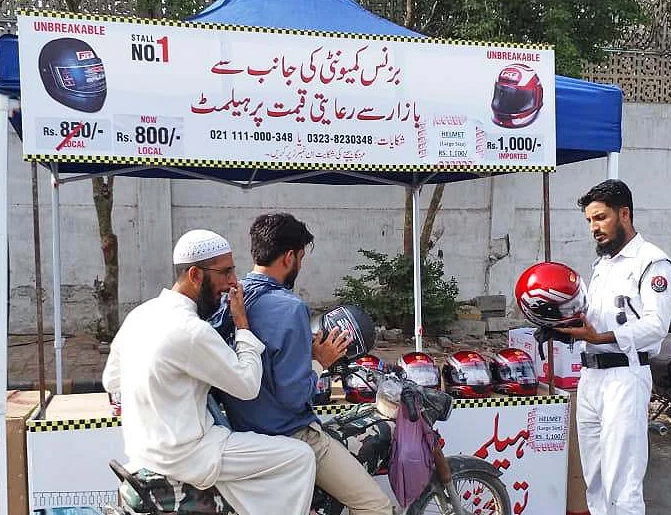
Motorcycles are an essential mode of transport, offering affordability and efficiency in traffic congestion. However, reckless riding behavior has turned them into a major safety hazard, contributing to accidents, fatalities, and traffic chaos. From riding on the wrong side to ignoring traffic signals, removing side mirrors, and using ultra-bright headlights, these unsafe practices endanger not only bikers themselves but also other road users.
Despite existing traffic laws, weak enforcement has allowed dangerous habits to persist. This article highlights the most common motorcycle violations and proposes immediate actions to improve road safety.
1. Wrong-Side Riding – A Deadly Gamble
One of the most dangerous and frequently ignored traffic violations is riding against the flow of traffic. Many motorcyclists take this risk to save time or avoid making U-turns, but it leads to head-on collisions, often causing fatal accidents.
Motorcyclists weaving against traffic confuse drivers, forcing them into sudden braking or swerving, increasing the risk of multi-vehicle crashes. This issue is particularly severe in high-speed areas and at night, where visibility is lower.
Solution:
✅ Strict Fines & Zero-Tolerance Policy – Riders caught driving on the wrong side must face heavy penalties, including impoundment of their vehicles for repeat offenses.
✅ Physical Barriers & Roadblocks – Installing medians, dividers, and barriers at intersections can prevent motorcyclists from illegally entering the wrong side.
✅ Mass Awareness Campaigns – Road safety awareness through billboards, TV ads, social media, and school programs can help educate the public on the dangers of wrong-side riding.
2. Ignoring Traffic Signals – No Fear of Punishment
Traffic signals are designed to ensure smooth traffic flow and prevent accidents, yet many motorcyclists ignore red lights, treating them as optional. This reckless habit is common because bikers are rarely fined for violating signals, unlike car drivers who face strict penalties.
Disregarding traffic signals leads to high-speed collisions at intersections, posing a serious risk to both riders and pedestrians.
Solution:
✅ Heavy Fines & Camera-Based Enforcement – Automatic cameras should capture motorcyclists violating signals, and digital fines must be issued immediately.
✅ Increased Police Presence – Deploying more traffic officers at major intersections can help curb violations.
✅ Public Shaming of Habitual Offenders – Authorities should consider publishing the names and license plate numbers of repeat violators to deter reckless behavior.
3. No Side Mirrors & Broken Indicators – A Recipe for Disaster
Many bikers remove side mirrors, falsely believing they obstruct movement. However, without mirrors, riders cannot check blind spots, making lane changes extremely dangerous.
Additionally, broken or non-functional turn indicators make their movements unpredictable, leading to frequent accidents.
Solution:
✅ Mandatory Motorcycle Inspections – Like cars, motorcycles should undergo regular inspections to ensure side mirrors and indicators are functional.
✅ Strict Traffic Law Enforcement – Authorities should issue immediate fines for motorcycles without side mirrors or working indicators.
4. Disregard for Dedicated Bike Lanes
Even in cities where separate motorcycle lanes exist, many bikers refuse to use them, instead riding dangerously between cars, buses, and trucks. Some even treat roads like a MotoGP race track, weaving through traffic at high speeds.
This behaviour not only slows down traffic but also increases the risk of severe crashes.
Solution:
✅ Physical Barriers for Bike Lanes – Governments should install dividers to prevent motorcycles from entering the main road.
✅ Strict Penalties for Lane Violations – Riders should be fined for failing to use designated lanes, with repeat offenders facing license suspensions.
5. Ultra-Bright Headlights – Blinding Other Drivers
Many motorcycles are fitted with high-intensity LED lights, creating a shocking light flux that blinds oncoming traffic, especially at night. Instead of improving visibility, these dangerously bright headlights increase the risk of road accidents.
Solution:
✅ Headlight Intensity Regulations – Governments should enforce limits on headlight brightness and ban modifications that exceed safety standards.
✅ Mandatory Headlight Inspections – Regular roadside checks should ensure headlights are angled correctly and do not blind other road users.
6. Loud Horns & Noise Pollution
Many motorcyclists modify their horns to produce extremely loud, high-pitched sounds. These horns disturb hospitals, schools, and mosques, contributing to severe noise pollution.
Solution:
✅ Strict Noise Pollution Regulations – Laws must set decibel limits on motorcycle horns, with heavy fines for violators.
✅ Awareness Programs on Noise Pollution – Riders should be educated on the impact of loud horns, especially in sensitive areas.
Final Thoughts – It’s Time to Take Action!
The reckless behavior of many motorcyclists is causing serious traffic hazards, road rage incidents, and avoidable deaths. The lack of law enforcement has emboldened riders to disregard basic road rules, putting themselves and others at risk.
What needs to be done? ✔ Traffic laws must be enforced equally for all violators – including bikers. ✔ Public awareness campaigns should highlight the deadly consequences of reckless riding. ✔ Stronger infrastructure and road design changes must encourage safer motorcycling.
Road safety is a shared responsibility! If you’re a biker, follow the rules and ride responsibly. If you’re a policymaker, enforce strict penalties. If you’re a citizen, demand better traffic enforcement.
It’s time to bring discipline to our roads and protect lives. Let’s act before more tragedies occur.
This exclusive article has been published in Automark Magazine’s April-2025 printed edition. Written by @Asif Mehmood
Dear Readers In the fast-evolving automotive landscape, the move towards eco-friendly and energy-efficient mobility solutions has brought hybrid and electric vehicles to the forefront. Among these innovations, the e:HEV hybrid electric system has emerged as a groundbreaking technology, offering a unique blend of electric and internal combustion engine (ICE) power for enhanced performance and fuel efficiency. This article delves deep into the e:HEV system, highlighting how it differs from traditional hybrid vehicle technologies, exploring how it contributes to superior fuel economy, and comparing it with Plug-in Hybrid Electric Vehicles (PHEVs). Additionally, we analyze the advantages of each system and identify the ideal customer segments for e:HEV and PHEV.
What is e:HEV Hybrid Electric System?
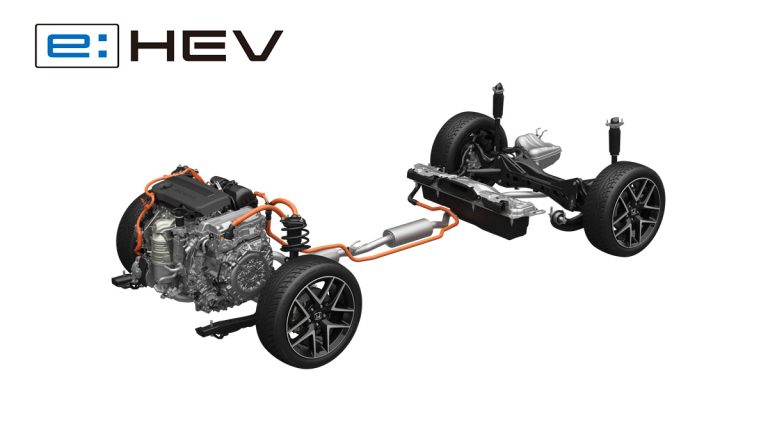
The e:HEV (Hybrid Electric Vehicle) system, developed by Honda and adopted by other automakers, is an advanced full hybrid system designed to optimize both electric motor and engine usage. Unlike traditional hybrid systems that often rely heavily on the internal combustion engine, the e:HEV utilizes a dual-motor system: one motor acts as a generator and the other as a propulsion motor.
The system works in three primary driving modes:
EV Drive – Powered solely by the electric motor using battery energy.
Hybrid Drive – The gasoline engine powers the generator motor, which in turn powers the drive motor.
Engine Drive – The engine directly powers the wheels through a lock-up clutch for highway cruising.
This dynamic power distribution ensures that the vehicle operates in the most energy-efficient mode based on real-time driving conditions.
Difference Between e:HEV and Traditional Hybrid Vehicle Technology
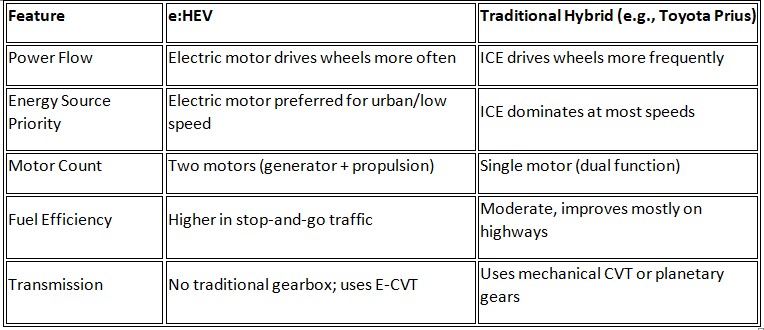
While both e:HEV and traditional hybrids combine ICE and electric motors, the e:HEV differs significantly in architecture and operation:
The e:HEV’s ability to maximize electric drive at lower speeds and use the ICE primarily as a generator gives it a distinct fuel economy advantage in urban settings, unlike traditional hybrids that often use the ICE for direct propulsion.
How e:HEV Vehicles Offer More Fuel Efficiency
Fuel efficiency in e:HEV systems is achieved through optimized energy management. Here’s how:
Electric-First Philosophy: The system prefers EV Drive and Hybrid Drive modes over Engine Drive, using battery power or regenerative electricity whenever possible.
Regenerative Braking: Captures kinetic energy during braking and deceleration, converting it into electricity stored in the battery.
Seamless Transition Between Modes: Unlike conventional hybrids, e:HEV intelligently switches modes without noticeable gear shifts or lag, keeping the engine in its most efficient operating range.
Idle Stop Technology: Automatically shuts off the engine at stops and restarts it instantly when needed, reducing fuel wastage.
Smaller Engine Load: Since the engine often serves as a generator, it operates at optimal RPMs, reducing fuel consumption and emissions.
These attributes make e:HEVs especially ideal for city driving, where start-stop traffic can severely impact the efficiency of traditional ICE vehicles.
How Does PHEV (Plug-in Hybrid Electric Vehicle) System Work?
Plug-in Hybrid Electric Vehicles (PHEVs) represent the next step in hybrid technology, featuring larger battery packs that can be charged externally via a plug, in addition to regenerative braking. A PHEV can operate as a pure EV for a limited range (typically 30–60 km), after which it switches to hybrid mode using the ICE.
Key Components of PHEV Systems:
Large High-Capacity Battery: Offers extended electric-only driving range.
Dual-Mode Operation: EV Mode for local commutes and Hybrid Mode for longer trips.
Charge Port: Enables grid charging via standard household or fast-charging outlets.
Smart Energy Management System: Balances battery usage and fuel consumption efficiently.
Advantages of PHEV Systems:
Can function as an electric vehicle for daily commutes, saving fuel entirely.
Reduces range anxiety, unlike fully electric vehicles.
Offers greater flexibility in mixed driving conditions.
Unique Selling Propositions (USPs) of e:HEV and PHEV Systems
e:HEV USPs:
No need for external charging infrastructure
Seamless and intelligent drive mode transitions
Higher fuel efficiency in urban settings
Lower maintenance costs due to optimized engine use
Environmentally friendly without range limitations
PHEV USPs:
Electric-only operation for daily urban drives
Significantly reduced fuel use when charged regularly
Government incentives and tax benefits in many countries
Smooth transition from ICE vehicles to full EVs
Higher torque and performance in electric mode
Best Fit Target Customers for e:HEV and PHEV Vehicles
Understanding customer segmentation is key to promoting these technologies effectively.
Target Customers for e:HEV Vehicles:
Urban dwellers with daily city commutes
Environment-conscious consumers without home charging setups
Fleet operators or taxi services seeking high mileage with low running costs
First-time hybrid buyers seeking reliability and fuel savings
Target Customers for PHEV Vehicles:
Suburban or semi-urban residents with short commutes and occasional long trips
Tech-savvy individuals with access to home or workplace charging
Corporate users looking for green mobility options
Luxury car buyers valuing power, silence, and low emissions
Users transitioning towards full EV ownership
Conclusion
The automotive industry is undergoing a remarkable transformation, and hybrid electric technologies like e:HEV and PHEV are spearheading this change. While e:HEV offers a fuel-efficient, low-maintenance, and charging-free hybrid experience, PHEVs take a step closer to electrification by allowing pure EV operation without sacrificing range flexibility.
Both systems cater to different customer needs and driving habits, making them integral pillars in the journey toward a sustainable and cleaner mobility future. As governments and consumers alike push for lower carbon footprints, the adoption of these technologies will continue to rise, shaping a smarter, greener road ahead.
This exclusive article has been published in Automark Magazine’s April-2025 printed edition. Written by @Aqeel Bashir
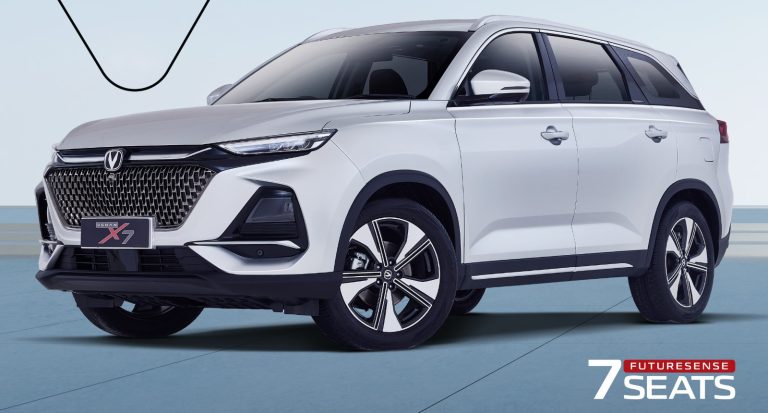
Master Changan Motors Limited is a joint venture between Master Group of Industries and Changan Automobile, continues to make strides in Pakistan’s automotive industry. Its commitment to innovation and quality has led to a major achievement—the Oshan X7 now has over 10,000+ units on the road, setting a new benchmark for SUVs. Alongside this milestone, Master Changan has recorded its highest-ever monthly SUV sales, with figures crossing the four-figure mark, further cementing its leadership in Pakistan’s SUV market.
Launched in March 2022, the Oshan X7 quickly gained popularity as a premium yet accessible SUV. In August 2024, it received a facelift, introducing a 7-seat option in its top FutureSense variant, along with a new interior color and additional features—all incorporated in response to strong customer demand. The Oshan X7 FutureSense 7-seater is now the best-selling SUV in Pakistan, solidifying its position as the market leader.
Not only does the Oshan X7 excel locally, but it has also made history as the first SUV from Pakistan to be exported to three different countries, reinforcing Master Changan’s global footprint. Additionally, it stands as the first and only locally produced SUV in Pakistan equipped with a Euro 6-compliant engine, setting a new standard for environmental efficiency and performance.
Equipped with a Euro 6-compliant 1.5L turbocharged engine, the Oshan X7 delivers 186 hp and 300 Nm of torque, offering both power and efficiency. It remains the only SUV in Pakistan with 5- and 7-seat configurations, catering to diverse customer needs.
Leading with Changan’s FutureSense technology, the Oshan X7 ensures an advanced driving experience with features like: • Autonomous Emergency Braking (AEB) • Forward Collision Warning (FCW) • 6-way Powered Seats • Heated & Ventilated Seats • Voice Commands • Panoramic Sunroof
The Oshan X7’s premium design, spacious interior, and cutting-edge features continue to set new industry standards. With innovation, global recognition, and record-breaking sales, Master Changan is driving Pakistan’s SUV market toward an exciting future.
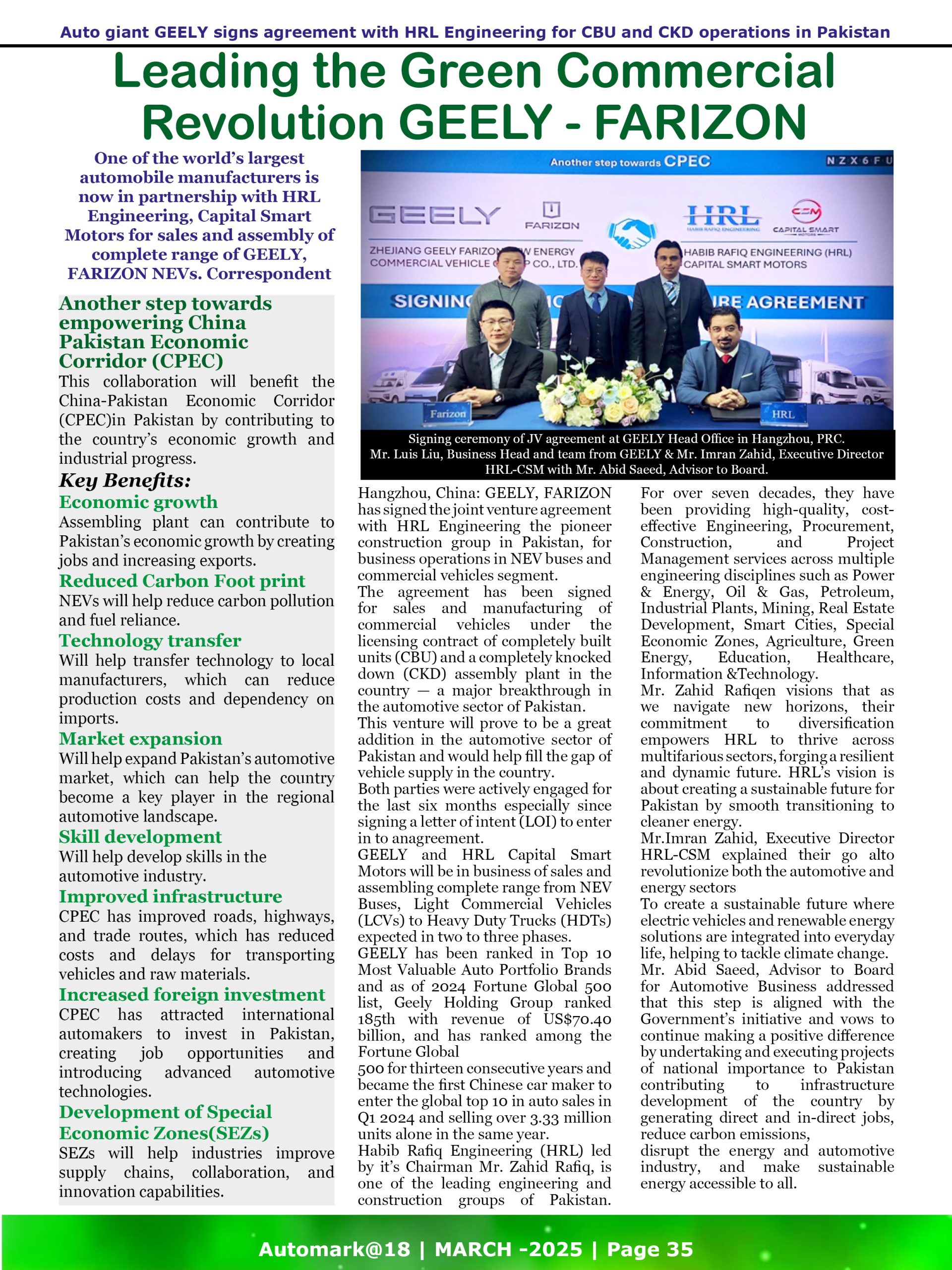
Auto giant GEELY signs agreement with HRL Engineering for CBU and CKD operations in Pakistan
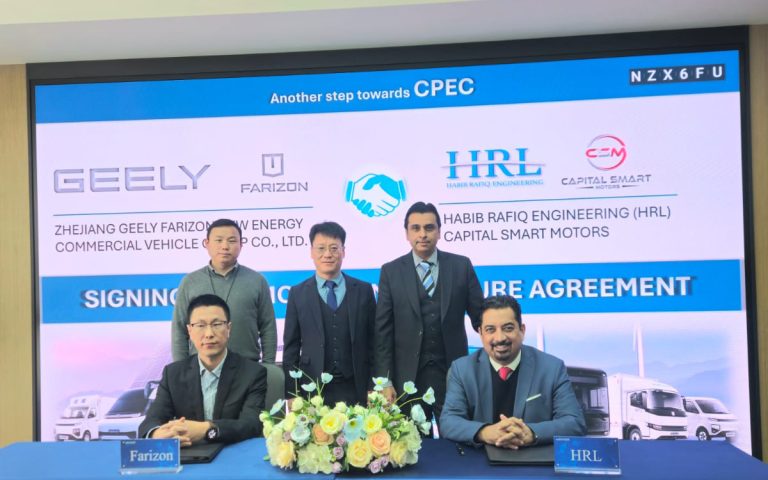
One of the world’s largest automobile manufacturers is now in partnership with HRL Engineering, Capital Smart Motors for sales and assembly of complete range of GEELY, FARIZON NEVs. Correspondent
Hangzhou, China: GEELY, FARIZON has signed the joint venture agreement with HRL Engineering the pioneer construction group in Pakistan, for business operations in NEV buses and commercial vehicles segment.
The agreement has been signed for sales and manufacturing of commercial vehicles under the licensing contract of completely built units (CBU)and a completely knocked down (CKD) assembly plant in the country — a major breakthrough in the automotive sector of Pakistan.
This venture will prove to be a great addition in the automotive sector of Pakistan and would help fill the gap of vehicle supply in the country.
Both parties were actively engaged for the last six months especially since signing a letter of intent (LOI) to enter into an agreement. GEELY and HRL Capital Smart Motors will being business of sales and assembling complete range from NEV Buses, Light Commercial Vehicles (LCVs) to Heavy Duty Trucks (HDTs) expected in two to three phases.
GEELY has been ranked in Top 10 Most Valuable Auto Portfolio Brands and as of 2024 Fortune Global 500 list, Geely Holding Group ranked 185th with a revenue of US$70.40 billion, and has ranked among the Fortune Global 500 for thirteen consecutive years and became the first Chinese car maker to enter the global top 10 in auto sales in Q12024 and selling over 3.33 million units alone in the same year.
r seven decades, they have been providing high-quality, cost-effective Engineering, Procurement, Construction, and Project Management services across multiple engineering disciplines such as Power & Energy, Oil & Gas, Petroleum, Industrial Plants, Mining, Real Estate Development, Smart Cities, Special Economic Zones, Agriculture, Green Energy, Education, Healthcare, Information &Technology.
Mr. Zahid Rafiq envisions that as we navigate new horizons, their commitment to diversification empowers HRL to thrive across multifarious sectors, forging a resilient and dynamic future. HRL’s vision is about creating a sustainable future for Pakistan by smooth transitioning to cleaner energy.
Mr. Imran Zahid, Executive Director HRL-CSM explained their goal to revolutionize both the automotive and energy sectors to create a sustainable future where electric vehicles and renewable energy solutions are integrated into everyday life, helping to tackle climate change.
Mr. Abid Saeed, Advisor to Board for Automotive Business addressed that this step is aligned with the Government’s initiative and vows to continue making a positive difference by undertaking and executing projects of national importance to Pakistan contributing to infrastructure development of the country by generating direct and in-direct jobs, reduce carbon emissions, disrupt the energy and automotive industry, and make sustainable energy accessible to all.
Another step towards empowering China Pakistan Economic Corridor (CPEC)
This collaboration will benefit the China-Pakistan Economic Corridor (CPEC) in Pakistan by contributing to the country’s economic growth and industrial progress.
Key Benefits:
Economic growth
Assembling plant can contribute to Pakistan’s economic growth by creating jobs and increasing exports.
Reduced Carbon Footprint
NEVs will help reduce carbon pollution and fuel reliance.
Technology transfer
Will help transfer technology to local manufacturers, which can reduce production costs and dependency on imports.
Market expansion
Will help expand Pakistan’s automotive market, which can help the country become a key player in the regional automotive landscape.
Skill development
Will help develop skills in the automotive industry.
Improved infrastructure
CPEC has improved roads, highways and trade routes, which has reduced costs and delays for transporting vehicles and raw materials.
Increased foreign investment
CPEC has attracted international automakers to invest in Pakistan, creating job opportunities and introducing advanced automotive technologies.
Development of Special Economic Zones (SEZs)
SEZs will help industries improve supply chains, collaboration, and innovation capabilities.
Learning from Past – Earning from Present – Growing from Future
Episode: 2
Summary of the Last Articles
In the previous article, we mentioned the countries that have achieved economic development through the auto industry. Over the past century and a half, the auto industry has given immense industrial and economic development to America, Europe, Japan, and Korea and included them in the list of developed countries in the world. This journey of development through the auto industry is still ongoing, and China is a living example of this, while Pakistan’s development is also inseparable from the auto industry. In today’s article, we will review the trends that have emerged in the auto industry in the last few years and the facts behind them that led to those trends and will also review their continuation in the coming years.
Now Read On….
If we talk about the current auto industry of Pakistan, the 2 trends are very prominent. Number 1 is the increase in demand for SUV cars, and number 2 is the beginning of the journey of electric hybrid cars and people’s concerns and curiosity as well as their interest in buying them.
First, Let’s Review SUV
The demand for SUVs, or sports utility vehicles, is increasing in the vehicles running on the roads in many major countries of the world. The increase is not only in rich and developed countries, but also in countries with weak economies like Pakistan.
According to a study by Sherman Securities, the SUV market in Pakistan has doubled in 2024 and their number has currently reached 16,000 units, while this number is estimated to reach 25,000 units in the fiscal year 2025. On the other hand, it is also being said that the number of hybrid SUVs in the market will reach 20,000 units in the fiscal year 2025.
Concerns of the United Nations and environmental experts
The United Nations and environmental experts have emphasized that due to the deterioration of the ecosystem and the increasing cost of living, the need for small and environmentally friendly vehicles should be emphasized. SUVs negate green technology due to their large size and high carbon dioxide emissions. SUVs consume more resources in production, occupy more space on the roads and affect the sustainability of the roads. Despite all these concerns, the huge increase in the number of such SUVs is contrary to this reality.
For these reasons, it was expected that the demand for small and hybrid vehicles would increase, but the opposite is true. At present, the weather on the planet has intensified and it has become necessary to reduce carbon emissions in all sectors, including transport. If SUV sales are continuously increasing.
Market data situation
According to data from the organization Global Data, 54% of the petrol, diesel, hybrid and electric vehicles sold globally in 2024 were SUVs. This proportion is three percent higher than in 2023 and five percent higher than in 2022. According to the International Energy Agency IEA, 95% of the SCUVs currently on the road run on fossil fuels, while five percent are electric, i.e. hybrids. The state of SUVs in Europe. According to analysts, in 2018, about 3 million 27 thousand small cars were sold in Europe, while in 2024 their number decreased to 2.1 million 30 thousand. During the same period, sales of small SUVs increased from 1.5 million to about 2.5 million.
Status of SUVs in China.
China was the top country selling SUVs in 2024, with about 11.6 million SUVs sold in a year, followed by the United States, India and Germany.
Reasons behind the SUV trend
Despite all these concerns, it is difficult to ignore SUVs. This is because these vehicles are large and heavy, and their interior is also spacious.
They have high ground clearance and a high driving position, which gives the driver a better view of the road and provides confident and safe driving.
In addition, there is a trend of introducing hybrid models in new models and SUVs easily provide space for a large battery for hybrids.
The purchasing power of people from under-developing countries is increasing, due to which SUVs are being liked more.
Car manufacturers also introduce only those vehicles that are in demand in the market and marketing is also done in such a way that the customer feels that they are buying a special vehicle or a large and comfortable vehicle at the price of a normal vehicle. Perhaps because of these qualities, SUVs are being liked.
Status of SUVs in Pakistan.
It comes to light that high ground clearance is liked due to the uneven roads of Pakistan.
The family system in Pakistan is quite strong, due to which it has family-friendly features and more seating capacity. Safety features that were lacking in small cars are also being given in SUVs.
To some extent, the new SUV models are also quite fuel efficient.
Even today in Pakistan, a car is considered a symbol of wealth and affluence, so SUVs fulfill this social desire of people due to their size and luxurious look. Popular
Popular Models of SUVs in Pakistan
Toyota Fortuner
Kia Sportage
Honda BRV
Hyundai Tucson
GWM
MG HS
These SUVs are quite popular and have won the trust of people, while the names of Jetour and Chery can be mentioned among the newcomer’s models.
2ndly, Let’s Review EV/ Hybrid
As per state media reported, Pakistan has granted licenses to 57 manufacturers of electric vehicles (EVs), as the government moves to transition to green transport solutions and beat climate change.
The government of Pakistan approved an ambitious National Electric Vehicles Policy (NEVP) in 2019 with the goal of electric vehicles comprising 30 percent of all passenger vehicle and heavy-duty truck sales by 2030, and an even more ambitious target of 90 percent by 2040. For two- and three-wheelers, as well as buses, the policy set a goal of achieving 50 percent of new sales by 2030 and 90 percent by 2040.
“The government is focusing on expanding local EV production, with licenses issued to fifty-five manufacturers for two and three-wheelers, and two for the assembly of four-wheelers,” Radio Pakistan said in a report. “A plan is under consideration for establishing charging stations, including fast chargers and battery swapping stations.”
Public ana Media Trend
Nowadays, comments on electric vehicles are common among people on almost every media forum and in public gatherings.
The government of Pakistan has also regularly launched fleets of electric buses in Islamabad and Lahore.
Car assembling and selling companies are also trying to introduce every new model from electric and hybrid. Even the most advanced hybrid vehicle, PHEV i.e. Plug-in Hybrid Car, has been introduced by MG Car Company and is becoming quite popular among the public.
Talking about pure electric vehicles, EV, then BYD has started delivering CBU models of pure EV vehicles.
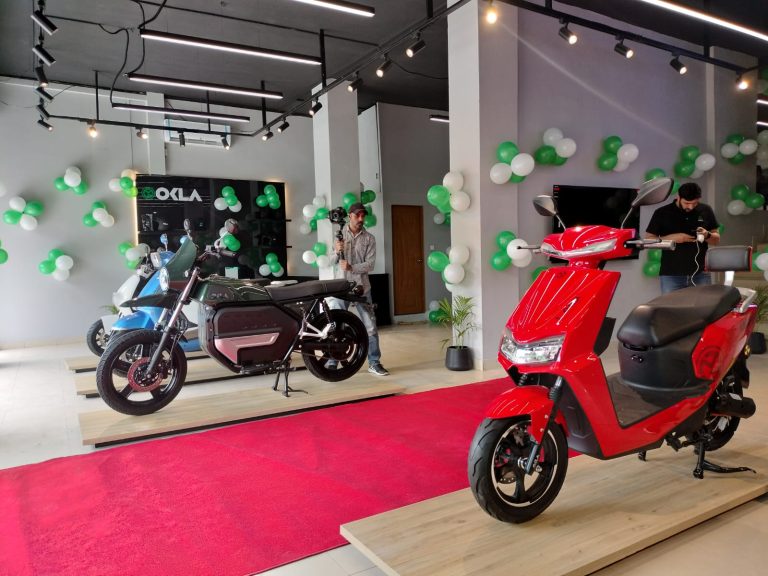
Electric Two Wheelrs, means E Motorcycles are springing up almost everywhere and a significant number of people in Pakistani society have started using them regularly and others are gathering information to convert to them.
Considering this news and the situation of electric vehicles, we can say with certainty that numerous new business opportunities are going to arise in the automotive sector and the EV-related sector will grow in the near future.
Businesses related to the auto sector should not ignore this situation and should review all the sectors of EV while expanding their existing businesses and starting new businesses, which we have just started to mention.
Electric car business opportunities
Along with the title, a short description of the EV business ideas is also given. Read, learn, explore, think, and start your dream business related to electric vehicles.
EV Training Centers, Institutes
First, EV experts will be needed in the automotive industry and their training will be needed to produce experts. EV training centers will be the best choice as additional sectors in the existing auto sector.
Entrepreneurs as a business, EV training centers and institutes will be the best choice. EV training centers and institutes will not only bring financial benefits to entrepreneurs, but this initiative will provide an opportunity for the nation of Pakistan and the industrialization of Pakistan to understand, adopt and develop modern technology.
Electric Car Servicing Garage
Electric car service is entirely different from internal combustion engine vehicle service. Electric motor repair, Inverter repair etc. would be part of the servicing garage.
EV Charging and Chill Station
Another electric car-related business opportunity is EV charging station. Electric car charging station business opportunity will be practical in Pakistan as the number of EVs increases day by day. The time taken to charge an electric vehicle is more than the time to fill fuel of IC engine vehicle.
The EV charging and Chill stations would be some infrastructure where drivers can drink coffee, watch a movie, have a meal, play games, etc. while their EV charges.
Electric Car Painting & Denting Workshop
Electric car body and paint specialist workshop would be another business opportunity related to electric vehicles due to electric safety concerns and conventional body and paint shop have illiterate workers.
Charging Station Setup Installation/ Maintenance Service
Electric car charging station setup installation service can be started Service, Charging station setup training service along with charging station repair business.
Electric Car Rental Service
Electric car rental service can be started to those who are due to limited affordability of purchasing EV but craze of using hi-tech, luxurious or supports EV cars.
Spare Parts Manufacturing/ Selling
Electric vehicle spare parts manufacturing or selling is another business that can be started. It’s also good to sell spare parts after importing them from the manufacturing units.
Electric car battery shop
Battery replacement is necessary in electric vehicles in almost 5 to 10 years. An electric car battery sales shop would be a profitable venture as the number of EVs increases.
Electric Car Washing
Electric car washing can be started as part of other car washing stations. This is another add to the electric car business opportunities.
Mobile Electric Cars Repair Services
Electric car repair stations that can be provided at the location where the car breaks down would be helpful. The person who knows electric car repair can easily start the business and promote the business through advertisements.
Portable Charging Station
Electric car charging stations are not available in all places. There is a place for portable charging stations to charge electric cars at emergencies. The business can be started along with other businesses.
Solar Charging Station Installation Center
Electric vehicle charging stations that use energy from sun is a solution for high electricity demand of charging stations. Installation of solar based homes, or private charging stations require expertise. There is a good business opportunity.
Battery Scrapping
Batteries of electric cars would be unusable after 1000s of charge-discharge cycles. Lithium might cause water and soil pollution if not disposed of properly.
A battery scrapping station can be set up to reuse the old battery parts and dispose of the waste.
The battery of EVs can be used for some other electrical storage purposes once the capacity is reduced.
Multi Story Residencial Pay Park & Charging
Residents of multi-story residencia can’t avail in-house parking and EV domestic charging ports for Ev Cars and E Motor Sycle/ Scooter. Business opportunities have arisen for commercial parking with charging ports and chargers for Electric Cars and Electric Scooters in such buildings.
There are more EV and Automotive sector businesses which we will explore in next episode of Monthly AUTOMARK’ S article Grow Automotive Grow Pakistan, INSHALLAH.
This exclusive article has been published in Automark Magazine’s April-2025 printed edition. Written by @Muhammad Mumtaz Hussain
Today, EV motorcycles—or more accurately, electric scooters—have powerful marketing tools at their disposal in Pakistan in 2024. Whether targeting youth, urban residents in cities like Islamabad and Lahore, or students aged 20 to 27, digital platforms such as Facebook, Instagram, YouTube, and others can effectively help companies reach their audience.
But why aren’t the results matching the discussions between the EV industry and the government, which is actively trying to promote EVs in Pakistan?
As a common motorcyclist, I believe the issue lies in the lack of focus on ground realities, which are vastly different from those in many other countries.
What I have observed in my area is that EV scooters are mostly used by people who do not travel much on a daily basis. For example, top-of-the-line and mid-range models are mostly seen with girls, while lower-end models are used by senior citizens for short trips, such as going to a nearby market. Very few men use them.
This suggests that EV scooters are primarily purchased by people who have never used traditional motorcycles before, meaning they have captured a niche market rather than converting common motorcyclists. That’s why these scooters are considered successful only in theory—mainly by people who see just one side of the picture.
If an EV scooter is parked in a home that already has two or three standard motorcycles, it simply means it’s an addition for a new user rather than a replacement for an existing motorcycle. True success will come when a standard motorcycle user is fully convinced and replaces their bike with an EV scooter.
Let’s take the example of a standard motorcycle user and consider what he has in mind.
Suppose he rides a Honda Pridor (100cc), priced at Rs. 2,09,000. He lives near Harbanspura and commutes 33 km, from his home to factory. In addition, he travels another 20-30 km for various work-related visits. That makes a total daily distance of approximately 96 km (33 + 33 + 30 = 96 km).
Now, keep in mind that he rides at varying speeds depending on road conditions, typically between 50 to 75 km/h. This estimate doesn’t even account for emergencies—though in reality, they are quite common.
Now, let’s replace his motorcycle with an EV scooters (closest in price at Rs. 2,03,000). This EV has a maximum speed of 60 km/h and a range of 90 km per charge.
This means:
He would need to leave home earlier in the morning.
If his management asks him to visit a customer for after-sales service or a warranty claim, he would require extra travel time.
If he returns home and his family wants to go out, they would need to wait for a recharge.
This scenario highlights a major practical challenge for EV scooters in replacing standard motorcycles.
Lastly, if there is an issue and he needs to replace a part of the scooty, would it be as easy as it would be for the Honda Pridor?
Would he be able to find a dealership in any town of Lahore for the required part, just like he could for the Honda Pridor? Or would he have to visit the company’s outlet since the parts for such machines are not easily available?
People say that EVs have fewer parts compared to standard motorcycles, but what if the disc brake malfunctions? What if the headlight breaks in an accident? What if a car damages the body?
Fuel is expensive, but is recharging a scooty really that convenient? Can it be done anywhere, anytime? What about the battery—how long before it needs replacement? What if an electric shock damages it while charging?
When I searched online, I found the following warranty details:
Motor: 24 months
Battery& Controller: 20 months
Frame: 36 months
Charger: 3 months
The longest warranty is for the frame, which is already the strongest part. However, the most critical components—the motor, battery, and charger—have relatively short warranty periods. Given the unstable electrical system in our country, the battery and charger are particularly at risk.
We all know that if an electrical part is damaged due to an electric shock, the warranty becomes void. Another concern is: what happens if the motor fails after 24 months? Or if the battery stops working after 20 months?
Even more concerning is the charger, which has only a three-month warranty, despite being a daily-use component that is constantly at risk.
After considering all this, I have one more important question: Will the company still be around when my warranty expires and I need to buy replacement parts out of my own pocket?
In the past, companies selling unique products have entered the market, sold a few units, and then disappeared, leaving customers stranded and frustrated. If manufacturers believe that other OEMs will eventually sell similar motors, batteries, and parts, they should keep in mind that while I can buy a bulb for my bike from any shop, I would never risk buying an engine component from just anywhere.
I am the founder of Pakistan Bikers Club, established in 2007. I have shared the views of riders—what they truly think about these machines. Personally, I believe that the EV segment will see real success only when companies take ground realities into account, which are different even from those of our neighboring countries. This is a major change, and for a motorcyclist, a significant shift. It will require extensive efforts from the companies’ side. They need to think differently—in fact, only out-of-the-box thinking can help them succeed.
Let me share an example to illustrate this. You may recall the Honda CD Dream, which was introduced with several aesthetic enhancements, including a plastic front fender similar to their top models. However, it later reverted to the old steel fender design—this time painted in color. Honda is the strongest motorcycle brand in Pakistan, yet even they had to listen to user preferences and adapt accordingly.
An EV scooty will replace a standard motorcycle in a household only when a common motorcyclist is completely satisfied with every aspect mentioned above.
This exclusive article has been published in Automark’s March-2025 printed and digital edition. Written By: Muhammad Zahid Iqbal Malik ([email protected])
Artificial Intelligence (AI) has been brought into the realm of Developing Sophisticated Driver Assistance Systems (ADAS) To power integrated technologies in modern cars while boosting safety, efficiency, and the overall driving experience. From thousands of cameras, LiDAR, radar, ultrasonic sensors, and V2X communication the AI-driven ADAS systems process huge amounts of data that provide instant decisions to avoid various accidents, improve traffic flow, and assist the driver.
As autonomous driving and AI-expert mobile applications gain popularity, ADAS is advancing from basic driver assistance to smart vehicular navigation and collision avoidance. From Object Detection, Adaptive Cruise Control, Collision Prevention, to V2X Communication — Elements of AI in Autonomous Vehicles with case studies, realworld applications and future trends.
AI-Powered Object Detection: It Can Enhance Situational Awareness
“One of the most important AI applications within ADAS turns out to be real-time object detection.” AI-powered systems fuse data from multiple sensors to create a 360-degree perception of the vehicle’s surroundings.
ADAS Sensor Fusion Diagram
📡How AI Integrates Sensor Data for Object Detection & Collision Avoidance
✅ Radar – Speed and depth detection for moving objects
✅ Ultrasonic sensors – obstacle detection in close range
✅ AI Processor – Sensor fusion for real-time decision making
How AI Improves Object Detection:
🔹 AI identifies and classifies objects even in low visibility (night, fog, rain) 🔹 Uses machine learning models to predict pedestrian movement 🔹 Recognizes traffic signs and lane markings for better navigation
🚘Example: Tesla’s AI-Based Computer Vision Tesla Full self-driving (FSD) system incorporates computer vision where neural networks are trained to understand the road, identify obstructions, and control the car. In contrast to conventional ADAS, it is equipped with a feedback loop where it learns from actual driving, which is a much more effective and accurate approach.
Smart Adaptive Cruise Control: AI for Traffic Flow Optimization
🚦 Traditional cruise control requires the operator to set the vehicle to a specific speed, which is more difficult in busy areas. AI powered Adaptive Cruise Control (ACC) maintains safe following distances by adjusting the speed accordingly to the prevailing traffic.
📊How AI-Based ACC Works: ✅ Monitors surrounding vehicles using radar & cameras ✅ Predicts speed variations and adjusts braking accordingly ✅ Enhances fuel efficiency by optimizing acceleration & deceleration
🚘Example: Mercedes-Benz Intelligent Drive DISTRONIC PLUS system from Mercedes-Benz cars, which is based on AI, incorporates radar and cameras that oversee the traffic ahead the car and alters the velocity to avoid hitting other vehicles
Predictive Collision Avoidance: AI’s Role in Accident Prevention
AI powered collision avoidance systems monitor multiple risk indicators for collisions in an ongoing basis, some of which include the following:
🔹 The conduct of the driver during driving (fatigue, distraction, reaction time).
🔹 Variations in traffic density & speed.
🔹 Conditions of the road (wet roads, construction zones, ice).
In the event a potential collision is noticed, the AI undertakes the following measures:
🔹 Notify the user through alerts
🔹 Applies Automatic Emergency Braking (AEB) if there is no response from the user
🔹 Provides steering assistance to prevent collision.
📊AI vs. Human Reaction Time in ADAS Systems
Reaction Source
Average Response Time (ms)
Human Driver
1,500 – 2,500 ms⏳
AI-Based ADAS
100 – 500 ms⚡
LiDAR + AI Fusion
< 100 ms 🚀
✅ AI-powered ADAS reacts 10x faster than human drivers, reducing accident risks significantly.
🚘 Example: Case in Point: Volvo City Safety System
Volvo City Safety AI is able to see pedestrians, cyclists, and big animals, and put the brakes in gear before stopping for an emergency. Vehicle to Everything (V2X) Communication: AI for Smart Mobility
Vehicle-to-Everything (V2X) Communication: AI for Smart Mobility
📡 Exchanges of information is possible due to V2X communication which allows real-time information to be shared between vehicles and communication devices.
✔️Other vehicles (V2V): collision sidestep with speed and movement pacing
✔️Traffic infrastructure (V2I): provides signal control and congestion warnings
✔️ AI does recognize humans without vehicles as other road users (V2P)
✔️ Proposing to receive traffic information and provide navigation aids V2C
V2X Communication Flow Diagram
🚘 Example: The V2X system developed by Toyota with the use of AI technology.
The passionate contribution of Toyota with artificial intelligence helps with their Highway Teammate. It provides traffic predictions, AI-enforced lane switches, and autonomously adjusted speed features.
Case Studies &Real-Life Use Cases
🔹 Tesla’s FSD AI – AI-driven perception for real-time object detection & navigation
🔹 BMW’s Driving Assistant Plus – AI-powered lane centering & adaptive cruise control 🔹 Audi’s AI Traffic Jam Pilot – Automates highway driving at speeds < 60 km/h
📊ADAS Feature Adoption in Leading Automakers (2025 Projection)
Automaker
AI-Based Object Detection
Collision Avoidance
V2X Connectivity
Tesla
✅
✅
✅
Mercedes-Benz
✅
✅
❌
BMW
✅
✅
✅
Volvo
✅
✅
✅
Toyota
✅
✅
✅
By 2025, most premium brands will integrate full AI-ADAS & V2X technology.
The adoption and barriers of ADAS in Pakistan
ADAS systems which are AI driven are taking around globe but it comes with many huddles within the automotive industry of Pakistan.
🚗 ADAS vehicles in Pakistan
🔹MG HS & MG ZS EV- ADAS includes the lane-keeping assist, adaptive cruise control, and emergency braking.
🔹Hyundai Tucson – Include technology that saves you from a car crash, warns you in case you go outside the predetermined lane, and smart cruise controls your driving distance from a car ahead.
🔹 Changan Oshan X7 – AWD-enabled and is one of the first locally assembled SUVs with ADAS features.
⚠ Major Challenges in the ADAS Market in Pakistan
1️⃣Poor Road Infrastructure – Without sufficiently demarcated lanes, failure of traffic signals, and smart road technologies, ADAS will not provide accurate functionality.
2️⃣ Regulatory Delays – Lack of definite government policy about AI-based ADAS implementation and local safety regulations.
3️⃣ High Import Cost – Most of the ADAS-equipped vehicles are imported and hence are highly expensive for the mass market.
4️⃣ Cybersecurity Risks – Growing chances of car hacking as well as data privacy issues are also being caused due to the AI connectivity.
🔮 Future of ADAS in Pakistan
✔ The auto industry in Pakistan is turning towards AI-enabled mobility, through government-backed initiatives such as EV policy & smart traffic systems.
✔ Like other local automakers, in order to make ADAS much more popular, Toyota Indus, Honda Atlas, Pak Suzuki must invest money in this technology’s R&D.
✔ Investment in collaboration with AI start-ups will help develop low-cost ADAS solutions entirely suitable for the traffic conditions in Pakistan.
Challenges & Future Trends
Challenges
⚠Cybersecurity Risks – AI-powered vehicles are vulnerable to hacking ⚠AI Decision-Making Limitations – Needs more training data for accuracy ⚠Data Privacy Concerns – Ensuring personal driving data security
Future Trends
🔹5G-Enabled ADAS – Ultra-fast connectivity for AI-powered decisions 🔹Edge AI Processing – Real-time, onboard computing for instant safety responses 🔹AI & Deep Learning Evolution – AI continuously improving based on real-world data
Conclusion
AI-driven ADAS is revolutionizing automobile safety and intelligent navigation. By leveraging deep learning, real-time analytics, and V2X connectivity, AI enhances collision avoidance, traffic flow, and driver assistance. While cybersecurity and AI limitations exist, ongoing advancements in machine learning, 5G, and automation will shape the future of mobility.
🚀The road to fully autonomous driving is closer than ever!
In the mid-2000s, The Centre for the Promotion of Import for Developing Countries (CBI) under the Netherlands Ministry of Foreign Affairs. This initiative, which supported Pakistani entrepreneurs in the metalworking export sector, ran from 2006 until 2017. I was honored to be one of the 100 metalworking export coaching participants, an experience that profoundly shaped my understanding of international trade and business strategy. Today, I would like to share some insights on developing an export strategy and marketing plan—a roadmap that can guide businesses toward successful international expansion.
The Importance of a Well-Defined Marketing Plan
A robust marketing plan is the foundation of any successful export strategy. It begins with thorough market research and a detailed assessment of available resources. Understanding market trends, customer preferences, and competitive dynamics is crucial when choosing a product to export. In my experience with the CBI project, we emphasized the need for a well-researched approach that combined both qualitative insights and quantitative data.
A comprehensive marketing plan should include the following elements:
Market Research: Evaluate global market trends, identify potential target countries, and understand the competitive landscape.
Resource Assessment: Analyze your production capacity, technology, manpower, and financial resources.
Product Selection: Choose products with a competitive edge that can meet international standards.
Choosing Target Countries and Developing a Distribution Plan
Once you have a clear understanding of your product and market landscape, the next step is to identify target countries. This involves understanding regional demand, regulatory environments, and cultural nuances. During our coaching sessions, we learned that the export distribution plan should be meticulously designed. It is important to determine the most effective channels for distribution, whether through agents, distributors, or direct sales platforms like online marketplaces.
A successful export distribution plan typically includes:
Channel Strategy: Evaluate whether to use agents, distributors, or direct-to-consumer models.
Logistics: Ensure a seamless supply chain with efficient warehousing, transportation, and customs clearance.
Local Partnerships: Build relationships with local businesses and stakeholders who can support your expansion efforts.
Crafting Pricing, Advertising, and Promotion Strategies
Pricing is one of the most critical elements of an export strategy. Your pricing plan must reflect not only the cost of production but also the competitive landscape and customer purchasing power in your target market. I learnt from the CBI project, we crafted pricing models that balanced affordability with profitability.
An effective export strategy should include:
Pricing Plan: Set competitive prices that reflect product quality, technological superiority, and brand positioning.
Advertising and Promotion: Develop a comprehensive plan that leverages both traditional and digital marketing channels. This includes social media, trade shows, and localized advertising campaigns.
After-Sales Support: Establish a system for customer service and after-sales support to build trust and ensure long-term success.
Differentiating Your Product in the Global Market
In a competitive international market, differentiation is key. Your product must stand out through:
High Quality: Consistently superior quality can help build trust and a strong reputation.
Advanced Technology: Utilize high or new technology to add value to your product.
Innovative Designs: Creativity in design can capture the attention of discerning global consumers.
Efficient Service: Quick and efficient service can set you apart from competitors.
Branding and Packaging: Invest in great branding and attractive packaging to make a lasting impression.
These elements are not just marketing tactics—they form the core of your company’s identity and competitive advantage.
Critical Questions for Company Management
Before embarking on an international strategy, company management must answer several key questions:
Commitment to Expansion: Is there a genuine management commitment to expand internationally? This requires budget, personnel, and time commitments.
Understanding End-Users: Who are the end-users, and why do they need your products? Clearly identify the role your products play for each consumer segment.
Competitive Advantages: What sets your company apart—price, features, quality, customer service, brand image, or technology?
Distribution Channels: Which is the most effective distribution channel for your products: agents, distributors, or direct-to-end users via online platforms?
Value Chain Role: What role does your company play in the value chain? Identify the value-added activities that enhance your product offering.
Scaling or Stopping International Expansion: When and how will you know if your international expansion should be scaled back or halted? Determine the level of investment in time and resources (including cash) that you can commit before reassessing your strategy.
Qualities of a Successful Exporter
Based on my experience, successful exporters share certain qualities:
Long-Term Thinking: International expansion is not a quick win; it requires vision and persistence.
Patience and Flexibility: Adapting to new markets takes time and a willingness to adjust strategies as needed.
Cultural Sensitivity: Understanding and respecting cultural differences is essential.
Attention to Detail and Strategic Vision: A successful exporter can manage day-to-day operations while keeping a strategic overview.
Excellent Communication Skills: Building and maintaining relationships is crucial in global trade.
Conclusion
Reflecting on my journey with the CBI and the Netherlands Ministry of Foreign Affairs, I am reminded that successful export strategies require a balanced approach. It is not just about having a great product—it is about building a comprehensive plan that covers market research, product differentiation, pricing, distribution, advertising, and after-sales support. For developing nations, adopting merit-driven processes and investing in manufacturing industries can pave the way for sustainable international growth.
By answering critical questions and nurturing the qualities of successful exporters, businesses can set themselves on a path to global success. The lessons learned from my experience in the metalworking export sector remain relevant today, serving as a blueprint for Pakistani entrepreneurs and companies aiming to thrive in the international market.
Embrace the challenge, invest in quality, and remember that a well-crafted export strategy is the key to unlocking new opportunities on the global stage.
This exclusive article has been published in Automark’s March-2025 printed and digital edition. Written by Mashood Khan Director – Mehran Commercial Enterprises Expert Auto Sector / Former Chairman PAAPAM
Businesses undergoing turnaround and transformation face significant operational, financial, and strategic challenges. The success of such initiatives depends on key vital factors, including leadership effectiveness, financial restructuring, cultural reinvention, operational efficiency, and market reorientation. This article examines these vital components, exploring how businesses can navigate crises, regain stability, and position themselves for long-term success.
Introduction
Business turnaround and transformation are critical processes for organizations facing financial distress, market disruptions, or strategic misalignments. Turnaround refers to short-term corrective actions to restore viability; while Transformation is a long-term restructuring to achieve sustainable competitive advantage. Both require strategic decision-making, financial discipline, cultural shifts, and operational improvements.
Key Vitals in Business Turnaround and Transformation
Leadership and Strategic Vision
Leadership plays a pivotal role in steering a company through turnaround and transformation. Effective leaders must:
Recognize distress signals early and act decisively.
Communicate a clear vision for the company’s future.
Balance short-term financial recovery with long-term strategic goals.
Foster stakeholder confidence, restoring trust and ensuring alignment across employees, investors, and customers.
Case Example:
Howard Schultz’s return to Starbucks in 2008 demonstrated the power of leadership in turnaround. By refocusing on core brand values and operational efficiencies, he revived Starbucks’ growth trajectory (Moon, 2010).
Financial Restructuring and Liquidity Management
Financial stability is crucial in any turnaround. Companies must:
Identify and cut non-essential costs to improve cash flow.
Restructure debt to reduce financial burden.
Optimize working capital by improving cash conversion cycle.
Explore alternative financing sources, such as asset sales or strategic partnerships.
Case Example:
Ford Motor Company’s restructuring in 2006, which included securing a massive credit line before the financial crisis, enabled it to avoid bankruptcy and emerge stronger (Vlasic, 2011).
Cultural and Organizational Renewal
A company’s culture can either accelerate or hinder its turnaround efforts. Key cultural factors include:
Promoting agility and adaptability.
Encouraging a problem-solving mindset among employees.
Aligning incentives with turnaround goals.
Retaining top talent while addressing inefficiencies in the workforce.
Case Example:
Microsoft’s transformation under Satya Nadella involved shifting from an internal competitive culture to one of collaboration, innovation, and cloud-first thinking (McAfee & Brynjolfsson, 2017).
Operational Efficiency and Process Optimization
Revamping operations is essential to achieving cost efficiency and productivity improvements. Businesses should:
Streamline supply chain and production processes.
Adopt lean methodologies to eliminate waste.
Leverage technology to drive automation and efficiency.
Improve quality control to enhance customer satisfaction.
Case Example:
Nissan’s revival under Carlos Ghosn involved aggressive cost-cutting, strategic partnerships, and manufacturing efficiency enhancements, leading to a historic turnaround (Magee, 2007).
Market Repositioning and Customer-Centric Strategy
Businesses must realign their offerings to meet changing market demands. This involves:
Conducting market research to identify new opportunities.
Refining product and service portfolios.
Strengthening brand perception and customer engagement.
Expanding into high-growth segments or geographies.
Case Example:
Apple’s turnaround in the late 1990s under Steve Jobs was driven by a sharp focus on innovation, design, and user experience, leading to iconic products like the iPod and iPhone (Isaacson, 2011).
Framework for Successful Turnaround and Transformation
A structured approach can enhance the likelihood of success:
Crisis Assessment: Identify and quantify the extent of business distress.
Stabilization: Implement immediate measures to restore financial and operational stability.
Strategic Redirection: Define a clear strategic roadmap.
Execution and Monitoring: Implement changes with performance metrics.
Sustainable Growth: Institutionalize long-term operational and cultural improvements.
Conclusion
Turnaround and transformation require a multidimensional approach encompassing leadership, financial prudence, cultural change, operational excellence, and market repositioning. Companies that effectively address these vital factors not only recover from distress but also emerge stronger and more competitive. Organizations must be proactive, adaptable, and resilient to successfully navigate complex business landscapes.
References
Isaacson, W. (2011). “Steve Jobs.” Simon & Schuster.
Magee, D. (2007). Turnaround: How Carlos Ghosn Rescued Nissan. HarperCollins.
McAfee, A., & Brynjolfsson, E. (2017). Machine, Platform, Crowd: Harnessing Our Digital Future. W.W. Norton & Company.
Moon, Y. (2010). Different: Escaping the Competitive Herd. Harvard Business Review Press.
Vlasic, B. (2011). Once Upon a Car: The Fall and Resurrection of America’s Big Three Automakers—GM, Ford, and Chrysler. William Morrow.
Author: Faisal Sharif, MD & COO JW Foton & Forland and Advisor to JW Group Board
Led multiple turnarounds and transformations for some of the world’s most renowned automotive and retail brands, across multiple geographies.
This exclusive article has been published in Automark’s March-2025 printed and digital edition.
Learning from Past – Earning from Present – Growing from Future
Episode: 1
Automotive is an industry that has been mobilizing the entire world for the past century and a half, not only humans but also almost every aspect of human life. The automotive industry first developed America and then the entire Europe economically to such an extent that the economic development of these countries began to touch the limits. It raised the living standards of the residents of these countries above all other countries. Along with eliminating unemployment in these countries, it not only made every difficult task of workers easier but also made them respectable and proud.
My entire active life has been associated with the automotive industry. After serving and learning for eight years at Hyundai and Kia Motors in the Middle East, I shifted to Pakistan and was active in the auto industry for 30 years at Honda Atlas Cars, the production, warranties, field engineering and dealer development taught me so much that I had become a teacher, an instructor and an auto enthusiast.
Thanks to Honda Cars, who considered me an automotive trainer and handed over their state-of-the-art training center to me, providing a wide range of training for all the technical staff of the dealer networking spread across Pakistan, where the process of learning and teaching the automotive industry continued for 20 years.
Meanwhile, Honda Motor Company Japan has invited four times to its first Honda plant in Tokyo, which has now become a training center, and its first Honda plant in Bangkok, Thailand, which has now become a training center, to provide training on every modern automotive technology, register certified automotive trainers, and issue their certifications.
When the automotive industry has transferred and accumulated so much knowledge and experience in a person, then his identity is no longer just his own, but his knowledge and experience become a trust for his society, and it becomes his duty to return the trust to his rightful society as soon as possible.
It has been my long-standing desire to be the first to share my knowledge and experience with the responsible service providers and dynamic thinking and passion of assemblers, manufacturers, vendors, importers, exporters and service providers associated with the automotive industry in Pakistan. Similarly, I can educate and train talented students from technical institutions, colleges and universities as well as workshops and those who have the passion and passion to make their future in the automotive sector.
I thank Allah and the Messenger of Allah (peace be upon him) for providing me passion with the effective platform of the popular monthly magazine AUTOMARK, which has been popular in the Pakistan Automotive Industry for years, to make this goal a reality.
I am deeply grateful to the dynamic team of AUTOMARK and its talented, dear to everyone, handsome and compassionate leader Mr. Hanif Memon, who has connected the Pakistan Automotive Industry with his strategy and the platform of his monthly magazine AUTOMARK and has provided a platform to share the knowledge and experiences with others.
When the automotive industry has transferred and accumulated so much of its knowledge and experience in a person, then his identity is no longer just his own, but his knowledge and experience become a trust of his society, and it becomes his duty to return this trust to the rightful society as soon as possible. It has been my long-standing desire to be the first to share my knowledge and experience with the responsible, service-minded and passionate assemblers, manufacturers, vendors, importers, exporters and service-providing businessmen associated with the automotive industry in Pakistan as soon as possible. Similarly, I can educate and train talented students from technical institutions, colleges and universities as well as workshops and those who have the passion and desire to make their future in the automotive sector.
Let us now come to the main topic. I have planned to study the automotive sector from the past to the future so that the strategies, secrets of success and points of development of each era can be studied and applied in the automotive industry of the present era according to our own needs.By studying the famous inventors, scientists, masters, businessmen, industrialists, companies andbrands of the automotive industry, Pakistan’s automotive industry can benefit from their experience.
Man has always learned from his past to improve his present era, but one should only keep an eye on the past as much as a rear-view mirror while driving a car. We should keep our business economy on the path of survival and development by using our best abilities, attention, hard work and resources while living in the present era. We should keep our eyes on our front screen as much as possible, because that isour future path. So that in the present era, our business economy vehicle becomes fast while driving safely and continuously. By adopting every modern and advanced technology as soon as possible, that is, by meeting the requirements of conquering future destinations, it should grow forward and forward.
For this purpose, it was necessary to make this introduction to explain our point of view. While one article of AUTOMARK is not enough to adequately study the auto industry spread across the world. Therefore, we will try to continue writing it in episodes until every aspirant associated with the automotive industry in Pakistan is able to benefit from something or the other. You are requested to stay connected with Auto Mark. Keep reading our episode articles completely and keep implementing its positive aspects. In addition to providing constructive criticism, which is your right, please continue to provide us with your valuable feedback and guidance.
The word AUTOMOTIVE comes from the Greekautos (self), and Latinmotivus (motion), referring to any form of self-powered vehicle. This term, as first came into use to describe automobiles in 1898.
The automotive industry began in the 1860s with hundreds of manufacturers pioneering the horseless carriage. Early car manufacturing involved manual assembly by a human worker. The process evolved from engineers working on a stationary car to a conveyor belt system where the car passed through multiple stations of more specialized engineers. In the 1960s, robotic equipment was introduced, and most cars are now mainly assembled by automated machinery.
For many decades, the United States led the world in total automobile production, with the U.S. Big ThreeGeneral Motors, Ford Motor Company, and Chrysler being the world’s three largest auto manufacturers for a time, and G.M. and Ford remaining the two largest until the mid-2000s.
In 1929, the world had 32,028,500 automobiles in use, of which the U.S. automobile enterprises produced more than 90%. At that time, the U.S. had one car per 4.87 persons. After 1945, the U.S. produced around three-quarters of the world’s auto production.
In 1980, the U.S. was overtaken by Japan and then became a world leader again in 1994. Japan narrowly passed the U.S. in production during 2006 and 2007.
In 2008 also China, which in 2009 took the top spot (from Japan) with 13.8 million units, although the U.S. surpassed Japan in 2011, to become the second-largest automobile industry.
In 2023, China had more than 30 million produced vehicles a year for the first time in history, after reaching 29 million for the first time in 2017 and 28 million the year before.
From 1970 (140 models) to 1998 (260 models) to 2012 (684 models), the number of automobile models in the U.S. has grown exponentially.
Countries Grow by Automotive Industry
The history of the automobile industry, though brief compared with that of many other industries, has exceptional interest because of its effects on history from the 20th century. Although the automobile originated in Europe in the late 19th century, the United States completely dominated the world industry for the first half of the 20th century through the invention of mass production techniques.
In the second half of the century the situation altered sharply as western European countries and Japan became major producers and exporters then, later on this trend was followed by Korea and finely by China.
Automobiles represent freedom and economic growth.
Automobiles are a liberating technology for people around the world. The personal automobile allows people to live, work and play in ways that were unimaginable a century ago. Automobiles provide access to markets, to doctors,to jobs and businesses. Nearly every car trip ends with either an economic transaction or some other benefit to our quality of life.
Auto industry is the single greatest engine of economic growth in the world.
The global auto industry is a key sector of the economy for every major country in the world. The industry continues to grow, registering a 30 percent increase over the past decade.
Autos create jobs, jobs, jobs.
Building 60 million vehicles requires the employment of about 9 million people directly in making the vehicles and the parts that go into them. This is over 5 percent of the world’s total manufacturing employment.
It is estimated that each direct auto job supports at least another 5 indirect jobs in the community, resulting in more than 50 million jobs owed to the auto industry. Many people are employed in related manufacturing and services.
Autos are built using the goods of many industries, including steel, iron, aluminum, glass, plastics, glass, glass, carpeting, textiles, computer chips, semiconductors, rubber and more.
Automotive Industry of Pakistan
Currently, the auto market is mostly dominated by Honda, Toyota, Hyundai, Kia, Changan, MG, Sazgarand Suzuki.
MG JW Automobile Pakistan has signed a memorandum MoUwith Morris Garages (MG) Motor UK Limited, owned by SAIC Motor, and started sale and assemblingof electric vehicles in Pakistan.
Presently Pakistan has almost attained 95% localization for tractors, 3 wheelers and motorcycles, 50 % for cars, and 20-25% for trucks and buses.
Unfortunately, the economy of scale demands one million productions of cars for more localization, whereas we are resolving around 200k only per annum.
The critical phase for the auto and part sector started in July 2022 when the Government restricted the import of CKDs and parts immediately under the showingdark of default.
Tractors, cars, and Chinese motorcycle producers are the top affectees of this ongoing crisis.
Original Equipment Manufacturers (OEMs) would not have transferred technology to cost down and maximize their production due to so many hurdles and reasons.
The way forward lies with exports and localization, which can be categorized into the short-term and long-term. As a trade-off action, the government should restore the quota regime immediately. At least machinery, equipment for measurement, metrology, calibration equipment, designing equipment, CAD, CAM, and CAE software, Molds, dies and fixtures, 3-D Printing, etc., should be duty-free.
The rationalization of duties on the import of parts and raw materials needs immediate review. Government should have a dialogue with OEMs to bring technology to Pakistan and export products to a certain incremental portion of the production.
The group-based training initiative can reduce the gap. Safety testing equipment and laboratories do not exist in Pakistan and how export can be possible without them? This issue could also be addressed through clustering and government support.
In the next episode, INSHALLAH we will study, Pakistan’s automotive industry, its current challenges and strategies to address them, as well as the opportunities for EV vehicles and related businesses. Until then, with words of determination and conviction…
This exclusive article has been published in Automark’s March-2025 printed and digital edition written by Muhammad Mumtaz Hussain