Home Blog Page 38

Automark Exclusive: IMC announces support package for vendors in Pakistan

Indus Motors to extend help to their vendors to bear the impact of the 40-day countrywide lockdown that is most likely to extend beyond May 7. Not just enhancing the capability on manufacturing the parts during and after the lockdown, its retail finance arm for easier liquidity.

Indus Motor Company (IMC) in a recent memo announced that they will be giving out a short-term interest-free emergency loan to the vendors so that they can have a bit of liquidity in the lockdown period. According to the memo, the loans will be from May 2020.

The Covid- 19 has disrupted the lives of people around the world even those living in the most stable countries. Pakistan as a developing country has to put in double the effort to support the economy

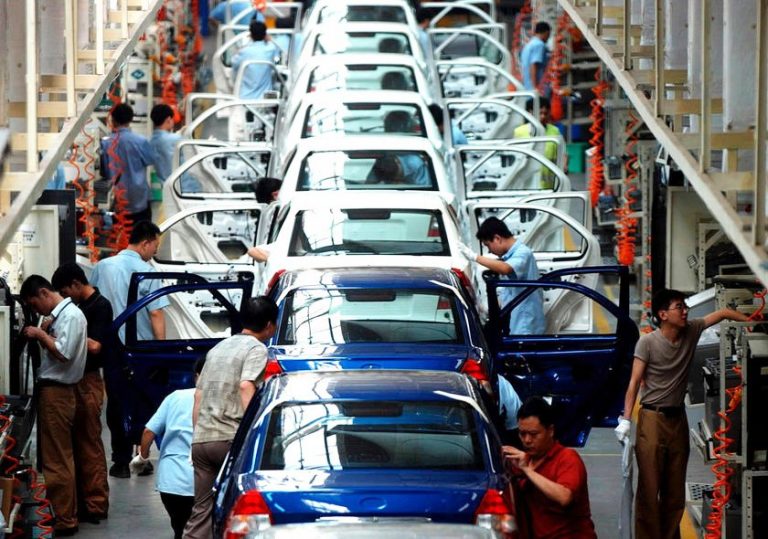
Among all industries in Pakistan, the auto industry has been hit hard. However, the assemblers have come forward and lent a hand to the vendors. IMC said that they consider the Vendors a part of their family and understand the hard times they might be facing.

Speaking to Automark Magazine editor, about this recent announcement Mashood Khan, the ex-chairman of PAAPAM; Director of Mehran Enterprise (parts manufacturer) & vendor of IMC; said “We highly appreciate the financial support given to the vendors. Indeed we face an acute financial crunch which will hopefully be resolved by this step of management.”

He also said that the vendors also tried conveying their issues to the government to get some sort of relief but their woes were dismissed and unanswered.

Lastly, he said “We hope other OEM including Chinese OEM assemblers will take the same step to support the vendors and urged the vendors to not exploit the offer rather respects it.”

HOH under the leadership of late Mr Ali Habib has always looked after it’s suppliers and vendors as a family. It is nice to see that the legacy continues. Another vendor says

The Indus Motor company plants were shut down on 23rd March 2020 following the government announced lockdown. The memo announcing the shutdown expressed support to the government’s effort to control the spread of Covid-19 and no reopening date was given. 

The company also announced in another public notice that the delivery of the cars will be delayed; the notice also said “Due to the international economic conditions and the fluctuation in the FOREX index, regretfully the prices of our products and vehicle range are being revised. The new prices will not affect any full payments made however if a customer requires a refund, they may approach our Customer Assistance Center (CAC) which will process a complete refund without any penalties or deductions.”

Hence we can expect a rise in the price of the newly introduced Toyota Yaris which was only softly launched in March at the IMC Karachi plant.

The pandemic has affected industries around the world but for an already struggling Pakistan Auto Industry things seem to be getting worse. Only time will tell what will be the losses and effects of the lockdown – once things go back to normal.

China’s BYD, Toyota’s Hino partner in electric commercial vehicles

Chinese electric vehicle maker BYD <002594.SZ> said on Thursday it has partnered with Toyota-owned truck maker Hino Motors <7205.T> to develop electric commercial vehicles, as BYD deepens electric collaboration with Japan’s top automaker.

The partnership will focus on electric buses and trucks, in addition to BYD and Toyota’s <7203.T> joint development on electric passenger cars.

Shenzhen-based BYD, which is backed by U.S. investor Warren Buffett, has been building electric commercial vehicles including London’s electric double-decker buses and electric road sweepers in Beijing.

Hino has been developing battery electric trucks but so far has yet to bring a fully electric model to market.

In China, Hino makes trucks with Guangzhou-based GAC <601238.SS>, which is also a partner of Toyota.

Toyota, which expects to achieve half of its vehicle sales from electrified models by 2025, has been developing its own electric vehicle batteries and has been tapping new suppliers to avoid a shortfall in supply as demand for electrified vehicles is expected to increase in the coming decades.

(Reporting by Yilei Sun in Beijing and Naomi Tajitsu in Tokyo; editing by Jason Neely)

Chairman of Indus Motors Ltd, Ali Habib Passed away

Chairman and Founder of Indus Motors Ltd, Ali Suleman Habib passed away in Karachi on Friday after an undisclosed illness, He was 63.

Habib, apart from being chairman of the Indus Motor Company, also headed operations for the House of Habib, a legacy business conglomerate that has several successful businesses functioning under its umbrella.

Habib served as director on the management boards of multiple companies operating under the umbrella of the House of Habib — including Thal Limited, Shabbir Tiles & Ceramics Limited, Habib Metropolitan Bank Limited, Metro Habib Cash and Carry Pakistan (Pvt.) Limited.

He was also a member of the Board of Governors of Habib University, which the Habib family established.

Habib was the founding chairman of the Young Presidents Organization, Pakistan Chapter, and chairman of the Pakistan Business Council. He was also a member of the Board of Governors of the Shaukat Khanum Memorial Trust.

He graduated with a mechanical engineering degree from the University of Minnesota, USA and also attended the PMD Program at Harvard.

Due to the prevailing conditions the funeral will be for family only. Family member requested to everyone that recite Surah Fatiha and 3 Surah-e- Ikhlas for the departed soul from their homes.

May God grant him the highest place in Jannat-ul-Firdous and give everyone strength to bear this loss. Our deepest condolence on the sad demise of Ali Suleman Habib the founder of Indus Motor Company Limited.

Changan Automobiles introduced the ‘protective cars technology’ in its product ranges

As the recent COVID-19 pandemic grips the world, increasingly the need to integrate health and safety systems in today’s automobiles has never been greater. Changan Automobiles, China’s leading auto manufacturer, has always led the field with its superior technology. Now, Changan Automobiles is offering drivers cars equipped with ‘PM0.1’ air filters. These air filters are designed to not only provide protection against fine dust and pollution, but they are also equipped with a high-efficiency composition anti-virus filter. In addition to purifying the air, this unique feature will help drivers’ combat viruses and bacteria, helping drivers and passenger enjoy a pollution-free and a healthy journey.

Changan Automobiles has set-up these protective cars in order to help its customers fight against the global pandemic – COVID-19. Changan has always provided its customers with new and modern features, and has always looked to meet the specific demands or the needs of its customers. This ‘PM 0.1’ filter is the perfect example of commitment. With over eight design centers across the globe, research and development have always been a core component of Changan Automobiles, with over 10% of revenue invested into R&D. It’s no surprise that Changan Automobiles is not only known for its intelligent vehicles in China but also holds a world record for an autonomous driving automobile.

Pakistani drivers can also soon expect to see a range of Changan personal vehicles at their disposal. Changan Master Motors, which has until recently dominated the local industry for commercial vehicles, will be launching a variety of passenger cars at accessible price ranges, and with the latest features. With China’s leading automobile manufacturer, the leader in automotive technology, Pakistani consumers will soon have access to some of the world’s best automobiles.

Changan holds the title of top-selling domestic Chinese automotive brand. With more than 32 years of experience, Changan Automobiles is a Chinese state-owned enterprise that is considered a first-mover in the Chinese auto industry with annual sales of above 3 million units. The Changan brand is synonymous for technologically advanced vehicles, and Changan Master Motors is committed to bringing this to the people of Pakistan, with a promise of providing the most beautiful design and technologically advanced vehicles in their class at an accessible price point. Pakistani consumers will now have choices and be able to afford the features and safety they have always dreamed of.

Japan auto industry vows to protect jobs amid virus crisis

Toyota Chief Executive Akio Toyoda promised Friday that the Japanese auto industry would seek to protect jobs worldwide as it endures the coronavirus pandemic.

Toyoda, speaking as head of the Japan Automobile Manufacturers Association, said he was worried the Japanese economy might be destroyed before the world can win the fight against the sickness caused by COVID-19.

“If our hospitals get overloaded to the point of devastation, then Japan may never be able to recover,” Toyoda said on an online news conference.
The group that brings together Japanese automakers, including Nissan Motor Co. and Honda Motor Co., and also parts makers, will set up a special fund to help those laid off find jobs, Toyoda said.

Toyoda said the biggest threat to the industry is the potential loss of skilled workers with their manufacturing and engineering finesse.

After World War II, Toyota made pots and pans and grew potatoes on farms, Toyoda said, emphasizing automakers’ determination to make practically anything to protect jobs and survive.

Like its counterparts in the U.S., Toyota has begun making face masks, although they were too wrinkly to be sold and will instead be used at Toyota facilities to reduce demand elsewhere, Toyoda said.

Japan declared a state of emergency this week as cases have continued to surge, especially in Tokyo and other urban areas. Japan has about 5,500 coronavirus cases, but the fear is that there may be an exponential jump. The world has 1.6 million confirmed cases, with more than 466,000 in the U.S.

Toyoda said 3,000 rooms now being used to quarantine auto workers returning from abroad, could, if needed, be used for other people.

He compared the current uncertainty and the need to stay home to enduring a long winter. Some assembly plants have halted production because cars aren’t selling.

“We are now feeling more than ever that being able to go wherever you want is a truly moving experience,” Toyoda said.

“We must survive. Or else there can be no spring.”

Courtesy: abcnews

Volkswagen: Flexible quick charging stations launch in China

Volkswagen Group Components and DU-POWER establish a joint venture

Volkswagen Group Components and the start-up Shanghai DU-POWER New Energy Technical Co., Ltd. plan to work together to produce flexible quick charging stations in China. An agreement to this effect was signed by representatives from both companies in Suzhou, China. Series production of the flexible quick charging stations is currently scheduled to start in the second half of 2020. Establishing production with a local partner is a key step in the rapidly growing electric vehicle market.

“A comprehensive charging infrastructure is the key to the success of e-vehicles. The planned joint venture with DU-POWER therefore represents a significant milestone as we continue to make progress along the path to electric mobility. The innovative design of our flexible quick charging station has huge potential in China, not least because of the rapid growth of electric mobility,” commented Thomas Schmall, CEO of Volkswagen Group Components.

“The electrification of the global automotive industry is a megatrend. As an ambitious high-tech company with a competent technical development core, we will work with Volkswagen to create a solid foundation to support the success of electric vehicles. The partnership for establishing a joint venture in China enables us to collaborate close on the technical aspects of the project to provide flexible, reliable and efficient solutions for the charging infrastructure,” remarked Yong Kang, CEO of Shanghai DU-POWER New Energy Technical Co., Ltd..

Following the conclusion of the requisite approval process with authorities, including merger control, Volkswagen AG and Shanghai DU-POWER New Energy Technical Co., Ltd. will ultimately each own 50% of the shares in the joint venture. The new company will be located in the Suzhou Wuzhong Economic & Technological Development Zone, near Shanghai, China.

As previously announced, flexible quick charging stations will also be produced at the Hannover site in future. Production is to begin this year.

Introducing the flexible quick charging station
With compact dimensions, the flexible quick charging station can be installed almost anywhere it’s needed or where a charging infrastructure is not yet in place. When connected to the low voltage grid, the station becomes a permanent charging point without the additional cost and effort required for a comparable fixed quick charging station. The built-in battery pack can store a buffer of energy meaning that it can be disconnected from the grid. This then eases the strain on the power grid, particularly at peak times. If electricity generated from renewable sources is fed into the charging station and temporarily stored there, the station enables carbon-neutral mobility. To ensure the sustainable use of valuable resources, the charging station is also designed to be able to use old batteries from electric vehicles as energy accumulators in future. Thanks to quick charging technology, e-vehicles can be charged with up to 150 kW.
SOURCE: Volkswagen

Honda CBR 250RR showcased at Honda Virtual Motorcycle Show

Let’s not confuse this bike with the Honda CBR 250R that we have in India. The Honda CBR 250RR is a bike that was a racetrack machine which was made production-ready. Honda has revealed the bike at Honda Virtual Motorcycle show. It’s an online event that Honda had to conduct as most of the gatherings in the world have been cancelled. Read further and know more about the Honda CBR 250RR.

Honda CBR 250RR Design
The Honda CBR 250 RR gets the design elements from the Honda Fireblade. The bike has been made sharp and aggressively looking. The faring of the vehicle is pointed at the front. The headlights are integrated in a striking manner and the LED daytime running lights are placed above it. The windshield looks rather short and the mirrors do not jut out as much. The wheel of the bike gets golden alloys and these look great with the HRC WorldSBK bike paint scheme. The front forks of the bike are golden in colour to match the wheel and also the disc brakes have a golden tinge on the inner rim.

The tank of the bike has a sculpted look with a good amount of shoulders. The badging of the Honda and CBR is in the form of stickers and there are not raised logos. The bike gets a dual-port exhaust at the back and a complete step-up racing type dual seat. This design has definitely evolved over time and the Honda CBR 250RR looks like a monster.

Specifications
The Honda CBR 250RR gets the most power-focused engine on a 250cc bike. The bike is a pocket rocket in true sense. The engine is a 4 cylinder power plant and it now packs 3 more horses. Its a 40 bhp bike and all this power come at 12500 rpm. The bike is ready to take on the Kawasaki ZX-25R. But it is also rumoured that the Kawasaki will make 45 BHP. You might be thinking what is so special about a 4 cylinder 250cc bike? Being a 4 cylinder the bike is a very high revving and fast-revving motor. Although the top speed might me not as much as a middleweight bike, the engine reaches those high speeds much faster.

The Honda CBR 250RR is also equipped with a slipper clutch and bi-directional quick-shifter. But these come as add on packages and will cost more. The bike also gets 3 riding modes which alter the power and change the traction control systems.

Honda CBR 250RR Price
The bike might not make it to India but we are expecting a price tag of Rs 5.05 lakhs (Indian Rupees). At this price, it will be a serious competitor to the Kawasaki ZX-25R. There is no other competition to this bike but we are expecting something from Triumph soon.

Courtesy: https://motoroctane.com/

Beijing Motor Show Officially Rescheduled Brings Hope To Car Industry

Is this a sign that China is on the road to recovery?

So far this year, the Geneva and Detroit Auto Shows have been canceled outright due to the novel coronavirus pandemic. June’s 2020 Goodwood Festival of Speed has been postponed, as has this month’s New York Auto Show, now rescheduled for August. Organizers of fall’s Paris Motor Show are still hoping to hold some charity events, but the show itself is canceled. But the first international auto show to be put on hold was the Beijing Motor Show, also originally set for this month. And now its organizers have officially set a new date.

The show will now run from September 26 to October 6 and will be held at the same location, the China International Exhibition Center. There’s still no word whether all or just some of the automakers originally signed up will have displays this time around. For example, an electrified version of the Maserati Ghibli was originally set to premiere, but we should be finding out relatively soon if this is still the case.

The official Beijing Motor Show website has yet to reveal an updated floor plan or list of attending automakers. There are a few reasons why automakers might still be undecided. Attending auto shows is normally a very expensive affair. Display stands, sponsoring media events, and flying in executives amounts to millions of dollars. With production lines currently grounded and sales in a sharp decline because of coronavirus, it would be perfectly understandable for brands to cut costs wherever they can. Hosting online live streaming debuts has already proven to be a significantly cheaper alternative to a traditional auto show.

Based on the current low infection rate, Chinese authorities believe life will be back to normal within the next few months, and it’s not alone with this prediction. Volkswagen stated last week it expects sales in the world’s largest car market will quickly recover. Signs of this recovery have already happened as last month’s Chinese market sales were already a significant improvement over February’s tally. Several Chinese production plants have also restarted operations, including Fiat Chrysler, Ford, and BMW. Production of the all-new Polestar 2 is also now up and running.

Obviously China will still need to maintain a high level of caution regarding overseas media. Not all countries have yet to achieve the coronavirus suppression level China has and it’s still unknown whether they will or not by late September. More than likely, China will need to enforce strict monitoring measures for overseas guests.

Courtesy: https://carbuzz.com/

Toyota and BYD detail electric-vehicle joint venture for China

Toyota and BYD have released more details of an electric-vehicle joint venture for the Chinese market, which was announced in November 2019.

The two automakers will invest 50-50 in a new company—BYD Toyota EV Technology Co. Ltd—with operations scheduled to start in May.

Engineers from Toyota and BYD will work together under the same roof on EV research and development, Toyota’s Hirohisa Kishi, who will serve as chairman of the new company, said in a statement.

For now, the partnership is for China only. But it could potentially lead to technology agreements that reach out to other regions.

BYD joins numerous other Toyota EV partners, including battery makers Panasonic and CATL.

One aspect of the Panasonic partnership has been tests of the Japanese firm’s cylindrical battery cells in Chinese-market Toyota plug-in hybrids.

The new joint venture could lead to more of this kind of exploration between Toyota and BYD, although BYD did just launch its own new battery pack for electric cars.

Toyota’s partnership with Panasonic also includes investigations into solid-state battery tech, which Toyota views as a prerequisite to mass EV adoption. Proponents of solid-state battery cells claim they can deliver greater energy density than current lithium-ion cells, allowing for greater range without a physically larger battery pack.

If Toyota and Panasonic can get solid-state batteries into mass production, they could be used in electric cars for many different markets.

For markets outside China, Toyota is also partnering with Subaru to develop a platform that will underpin an electric SUV. That will fill a niche for both automakers, as neither has a battery-electric vehicle in its lineup right now.