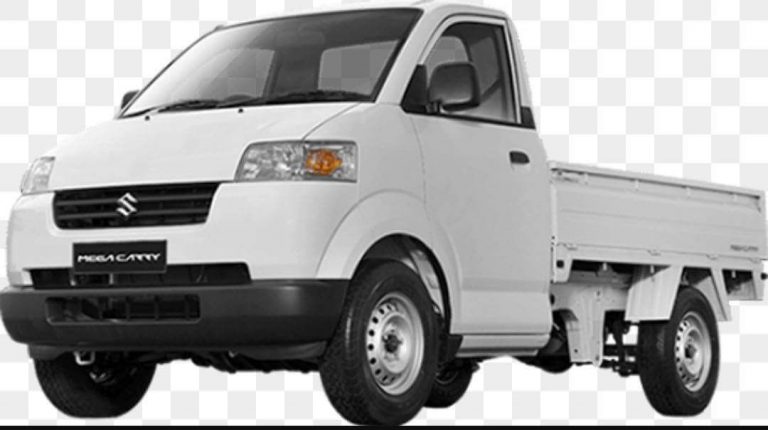
With the growing competition, the companies have to release new models with high tech features to keep up in the race. Suzuki striving, with the focus on customer values to develop a product with multiple uses and superior value. Pak Suzuki proudly announces introduction of Suzuki Mega Carry Extra which is initially imported in CBU condition from Indonesia.
Salient Features of Mega Carry
Mega carry has a 1493cc Euro II latest technology powerful petrol engine which is super silent considering Euro Spec and reliable as well. It comes equipped with a wide loading deck 1670 X 2450mm and a pay load capacity of 750 kg with a three way loading deck making it very convenient. Multiple storage spaces and sun visor for the driver. Petrol tank capacity is 46 liters and has 14 inch steel tires.
Pricing and Release
Expected date of arrival is 13th, November 2017 with a retail price of 1,499,000/- excluding advance income tax.
Suzuki Introduce Mega Carry EXTRA in Pakistan
The Horizon of world automobile industry will be totally changed by 2030
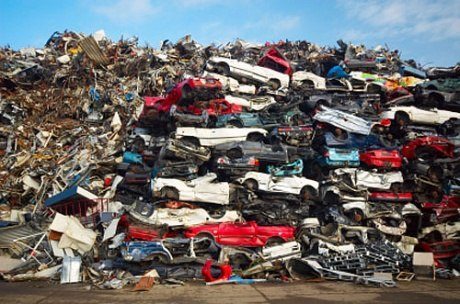
It appears the death of the internal combustion engine is finally happening. The only question now is ‘when’, not ‘if’.
Why has this moved so quickly from the possible to the inevitable? Because the question marks surrounding cost, range and charging have all now been answered. Battery costs are plummeting, and Bloomberg New Energy Finance predict that electric vehicles (EVs) will be cheaper than petrol cars by 2022. A Nissan Leaf can already receive a 80% charge in 30 minutes, and that will only improve. There are electric buses that have achieved 600 miles on a single charge. ‘Range anxiety’ will soon be a quaint historical term.
Americans bought more electric vehicles in September than any other month this year. According to Inside EV’s monthly sales report, 21,325 battery EVs and plug-in hybrid EVs found homes last month. That’s 20 percent more than this time last year and the second highest number ever. 2017 looks like it will be a record year; a total of 159,614 EVs were sold, a figure that should easily be eclipsed by the end of October.
BMW has already said it will electrify its entire range, as has Volvo. Volkswagen plans to introduce 20 new all-electric cars by 2020, with a manufacturing plan capable of building “2 to 3 million all-electric cars a year by 2025”. Norway and Holland have declared intentions to ban emissions-producing vehicles by 2025, and in October Germany’s Bundesrat passed a resolution to ban the internal combustion engine starting in 2030. India’s Road Minister also recently announced an ambition for the country to become a “100 percent electric nation” by 2030.
Britain’s plans match a similar pledge made this month by France, and are part of a growing global push to curb emissions and fight climate change by promoting electric cars. Carmakers are also adjusting, with Volvo notably saying recently that it would phase out the internal combustion engine in the coming years and BMW deciding to build an electric version of its popular Mini car in Britain.
Once customers have the right range and price, and they can charge at home so they never need to go to a petrol station again, why would they will buy a petrol car? In order to meet air quality targets, every city could go electric for public transport within the next ten years. For car companies it means the biggest disruption since the internal combustion engine itself. There will be a reshuffling of the pack in terms of winners and losers, but it’s a transition that’s definitely achievable. Infrastructure also needs to keep up with, or ideally stay ahead of, demand. The entire market for land transport will switch to electrification, leading to a collapse of oil prices and the demise of the petroleum industry as we have known it for a century.
Surprisingly the market leaders in electric car segments are having no long historical background of automobile industry. They are relatively new entrants in the world of automobiles. The BYD Auto from China is top selling plug in electric car manufacturers. It is also very amazing in the global history that China is leading this ultra high technological segment, American, European, and Japanese are runners up and behind China. The number one company in electric vehicles is BYD China and number two is Tesla U.S.A.
BYD Auto Co., Ltd. is a Chinese automobile manufacturer based in Xi’an, Shaanxi Province, and a wholly owned subsidiary of BYD Company. It was founded in 2003, following BYD company’s acquisition of Tsinchuan Automobile Company in 2002. Its principal activity is the design, development, manufacture and distribution of passenger cars, buses, forklifts, rechargeable batteries and trucks sold under the BYD brand. It also has a 50:50 joint venture with Daimler AG, Shenzhen BYD Daimler New Technology Co., Ltd., which develops and manufactures luxury electric cars sold under the Denza brand.
BYD Auto sold a total of 506,189 passenger cars in China in 2013, making it the tenth-largest selling brand and the largest selling Chinese brand. In 2015, BYD Auto was the best selling global electric vehicle brand, ahead of Luxgen. For a second year running, BYD was the world’s top selling plug-in electric car manufacturer with over 100,000 units delivered in 2016. In October 2016, BYD Auto became the all-time largest global plug-in car manufacturer.
In 2008, BYD Auto began selling its first mass-produced, plug-in hybrid vehicle, the BYD F3DM. China subsidizes oil (an incentive for the State to encourage use and manufacture of electric cars), and Chinese automakers see opportunities in less mature electric vehicles because Western companies have yet to develop much of a lead in the technology. In late December 2008, Warren Buffett spent $230 million on the acquisition of a 10% stake in BYD Auto’s parent, BYD Company. In 2009, the company sold 448,400 cars in China, and two-thirds of sales were its BYD F3 model. In the same year, BYD began the export of its cars to Africa, South America, and the Middle East.
Some of its first all-electric vehicles were offered via fleet sales to government buyers in China. The BYD Qin plug-in hybrid, launched in the Chinese market in December 2013, ranked as the top selling plug-in electric car in China in 2014. The car also ranked seventh among the world’s top 10 best selling plug-in cars in 2014. In 2015, the Qin remained as the top selling passenger new energy vehicle in China. The BYD Qin was the world’s second best selling plug-in hybrid car in 2015 and also ranked fifth in 2015 among the world’s top selling plug-in electric cars. Three BYD Auto models topped the Chinese ranking of best-selling new energy passenger cars in 2016. The BYD Tang plug-in hybrid SUV was the top selling plug-in car with 31,405 units delivered, followed by the BYD Qin (21,868), and the BYD e6 (20,605). As of December 2016, the BYD Qin, with 68,655 units sold since its inception, remained the all-time top selling plug-in electric car in the country.
Cumulative sales of 250,000 plug-in cars since 2008, BYD ended 2015 as the world’s top selling manufacturer of highway legal light-duty plug-in electric vehicles, with 61,772 passenger vehicles sold, mostly plug-in hybrids. Accounting for heavy-duty vehicles, BYD total sales rises to 69,222 units. BYD continued as the world’s top selling plug-in car manufacturer in 2016 with over 100,000 units sold, up 64% from 2015. BYD sold more than 100,000 new energy passenger cars in China in 2016. The BYD Tang was the top selling plug-in car in China in 2016 with 31,405 units delivered.
The runner up in electric vehicles segment is Tesla, Inc. (formerly named Tesla Motors). The company was incorporated as Tesla Motors in July 2003 by Martin Eberhard and Marc Tarpenning who financed the company until the Series A round of funding. The founders were influenced to start the company after GM recalled and destroyed all of its EV1electric cars in 2003.
Tesla’s early primary goal was to commercialize electric vehicles, starting with a premium sports car aimed at early adopters and then moving as rapidly as possible into more mainstream vehicles, including sedans and affordable compacts for the mass market. Now the company renamed as Tesla Inc., registered as an American automaker, energy storage company, and solar panel manufacturer based in Palo Alto, California. The company specializes in electric cars, lithium-ion battery energy storage, and, through their SolarCity subsidiary, residential solar panels.
Tesla first gained widespread attention following production of the Roadster, the first mass-produced electric sports car, in February 2008. The company’s second vehicle, the Model S, an electric luxury sedan, debuted in June 2012 and is built at the Tesla Factory in California. The Model S has been the world’s best-selling plug-in electric car for two years in a row, 2015 and 2016. Its global sales achieved the 150,000 unit milestone in November 2016, four years and five months after its introduction. As of December 2016, the Model S ranks as the world’s all-time second best-selling plug-in after the Nissan Leaf. The Model S was then followed in September 2015 by the Model X, a crossover SUV. Tesla’s fourth vehicle that is designed for the mass-market is the Model 3, which was unveiled in March 2016 and its production started in July 2017 with a base price of US$35,000, before any government incentives.
Tesla global sales passed the 200,000 unit milestone in March 2017, making the carmaker the second largest global pure electric car manufacturer. For two years running, 2015 and 2016, Tesla ranked as the world’s second best selling manufacturer of plug-in electric cars after BYD Auto. Musk, the CEO, has said that he envisions Tesla as a technology company and independent automaker, aimed at eventually offering electric cars at prices affordable to the average consumer.
Tesla is named after a Serbian electrical engineer and physicist, Nikola Tesla. The Tesla Roadster uses an AC motor descended directly from Nikola Tesla’s original 1882 design. The Roadster, the company’s first vehicle, was the first production automobile to use lithium-ion battery cells and the first production EV with a range greater than 200 mi (320 km) per charge. Between 2008 and March 2012, Tesla sold more than 2,250 Roadsters in 31 countries. In December 2012, Tesla employed almost 3,000 full-time employees. By December 31, 2015, this number had grown to 13,058 employees, and to over 30,000 (of which 25,000 in US) after acquiring Grohmann and SolarCity in late 2016.
Global sales of the Model S achieved the 150,000 unit milestone in November 2016, just eleven months after passing the 100,000 unit mark. As of November 2016, the Model S ranks as the world’s second-best-selling plug-in electric car in history.
Could electric cars be introduced in Pakistan as well?
Electric cars require charging stations. Unless there are enough charging stations across the country, like petrol pumps, consumers cannot feel comfortable enough to purchase an e-car. With load shedding a norm in the country, the existence of charging stations cannot be enough either.
Even if investment in setting up the infrastructure (perhaps even in greater renewable energy) is made, and consumers can get behind adapting the technology in terms of its unique functioning, there will remain the matter of price. Will the new electric cars that may be introduced meet a price point advantage over traditional cars? It seems unlikely.
However electric cars can bring the import bill down considerably in Pakistan as oil imports continue to overpower the current account. These cars also run on a single electrical motor, not requiring additional costs of oiling and other costs associated to the engine. The long term advantages of electric cars are many, but the investment required for these cars to kick off in the market are significant, both on the part of manufacturers and the government. Will Pakistan see a rise in electric cars over the next five years? Only time will tell.
Exclusive written by Anwar Iqbal for AutoMark Magazine; published in Automark’s November-2017 printed edition
Honda says fuel from Shell, Total, PSO harms engines in Pakistan
(Reuters) – Pakistan’s state oil and gas regulator said on Thursday it would investigate a complaint that fuel suppliers including local units of Shell (RDSa.L) and Total (TOTF.PA) as well as Pakistan State Oil (PSO) (PSO.KA) had added manganese to their gasoline.
Honda Motor Co’s Pakistan subsidiary, Honda Atlas Cars (Pakistan) Ltd. (HATC.KA), filed the complaint, saying the additive appeared to be damaging engines in its vehicles.
Manganese can be added to fuel to make it appear to be of a higher quality but it can reduce fuel economy and potentially harm public health due to emissions.
Honda’s complaint states Pakistani suppliers used the additive to elevate the Research Octane Number (RON) used to grade petroleum and lower quality fuel up to the RON 92 grade required by regulatory standards.
“We have received a complaint from Honda, and the relevant department will look into the issue,” said Imran Ghaznavi, a spokesman for the Oil and Gas Regulatory Authority (OGRA).
The Honda complaint, a copy of which was seen by Reuters, said tests found dangerous levels of manganese in fuel samples from Shell Pakistan Ltd, Total Parco Pakistan Ltd and Pakistan State Oil Company Ltd.
The tests showed levels of manganese of up to 53 milligrams per kilogram (mg/kg), while the additive is deemed at a “danger level” at 24 mg/kg, the Honda complaint said.
A spokesman for PSO said the company’s “products fully adhere to official specifications laid out by the Ministry of Energy” and all products were tested before being released to the market.
“Products below official standards are rejected and returned,” company spokesman Imran Rana told Reuters.
Officials from Shell in Pakistan and London had no immediate comment. Total officials could not immediately be reached.
Ilyas Fazil, head of Pakistan’s Oil Companies Advisory Council, said on Thursday he had not heard of manganese additives being a problem in the industry.
“Other refineries are producing 90 RON, which is slightly lower than 92…pure 92 RON, that is imported,” he said.
Pakistan’s petroleum sales have spiked in the past two years, rising 10 percent between 2015 and 2017 and continued growth is expected as Chinese-backed development projects spur the transportation and automotive sectors.
A senior industry official said Toyota Pakistan had not experienced the same issues with their engines but said the company was concerned about high manganese levels in petroleum.
“Now that Honda has formally complained they may also follow suit,” the official who asked not to be identified told Reuters.
Source: Reuters
Billions lost in taxes due to used cars import halted
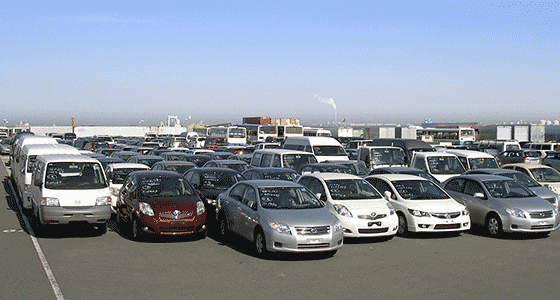
Since last year there had been some sort of instant growth in the car import sector, a lot of people took interest in it and thousands if not hundreds of people joined this business as well people enjoyed receiving a wide variety of cars with luxuries which the local market failed to offer.
However due to this recent amendment in the SRO 1067 issued by the Ministry of Commerce it has made the import harder if not significantly expensive.
Sources have reported, there are over 15,000 used second hand vehicles on the port of japan and 3000 are on the sea route to Pakistan. This scheme has brought a major loss for all the Pakistani car importers what once had become one of the fastest growing businesses in Pakistan. Not only has made it hard for importers here, car dealers in Japan are also in great difficulty because of this SRO. This amendment will make imported cars even more expensive as if they weren’t already inaccessible. It will stop all the current revenue inflows.
The SRO states that all vehicles that are imported either they are new or used to be imported under personal baggage or gift scheme, the import duty and other taxes on the vehicle must be paid through foreign exchange. This means now whoever imports a vehicle to Pakistan will have to arrange from foreign exchange or Pakistani nationals themselves supported by bank encashment certificate showing foreign currency changed to local currency.
A person importing their vehicle personally will not face that big of a problem they might be able to arrange it through relatives who live in foreign countries or such, But for Importers who do this out of a business perspective and import several cars at once how are they supposed to arrange thousands of dollars’ worth of cash.
It is also not understandable for a normal citizen as to why they would make this amendment since one was released already just a year ago in March 2016 and it also generates 60 to 70 billion rupees of revenue annually.
In a latest development Chairman APMDA met up with the Government officials in Islamabad to try and resolve this issue. What they have requested is to shift the date of amendment to 31st DEC 2017 so the consignments in between right now worrying dealers here and in foreign are cleared.
Hopefully we will get a more friendly policy from the Government!
by Ali Athar for AutoMark Magazine
Future of Electric Vehicles in Pakistan Science Ministry gives wake-up call to auto players
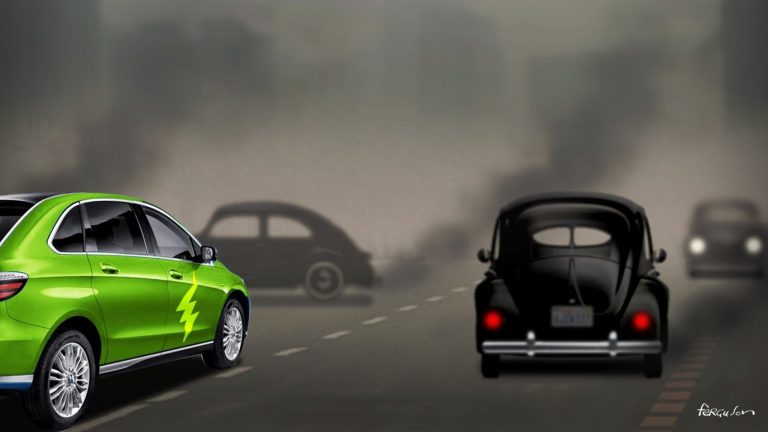
In a country where decades-old models still rule the roads and the relevant ministries and the assemblers lack any vision – the Ministry of Science and Technology (MoST) has given a wake-up call to the assemblers and their vendors to take initiative for “engineering foresight.”
The Science Ministry has asked the auto stakeholders to gear up for new challenges especially electric vehicle (EV). Various countries including India have already unveiled their plans about introduction of EV.
In this connection the Ministry held a meeting with the assemblers and vendors and universities in the second week of September and shared a “draft technology foresight report on auto sector” seeking their input.
Plying of electric vehicles on the roads of Pakistan appears a remote possibility at least for next 30-40 years when Pak Suzuki Motor Company, which enjoys over 50 per cent market share, still rolling out at least two to three decades old Mehran, Ravi and Bolan. But these old vehicles based on obsolete engine technologies have to be phased out.
At least consumers have enjoyed an experience of driving hybrid vehicles thanks to the government of allowing used car imports of three years’ old model under various schemes.
Technology Foresight (TF) 2017-2025 in this environment is challenging, especially when the automotive industry is in transition facing challenges daily of revolutionary technologies shaping and de-shaping. TF can also be described in a systematic approach in which various methodologies and techniques are combined in order to create a better preparedness for the future.
The Chinese government has tremendous impetus on electric vehicle deployment. It has not given any deadline but it has 40 per cent electric vehicle currently.
The targeted date for introducing electric vehicles by India, Germany and Sweden is 2030 followed by 2040 by the Netherlands and Britain.
Apart from the fact that the volumes are low in Pakistan but there is a need to start working on the capacity building of the institutions so that in future the country is well placed in adopting the evident new technology of electric vehicle and have human resource to cope with the challenges of the technology, the ministry said.
The Science Ministry feels that when the EV technology would be available it would just not impact on automotive sector but it would affect the power utility industry, petroleum Industry, construction/building industry for providing charging facilities, urban transportation etc.
EV offers zero tail pipe emission and reduction in noise, which is the most desirable scenario for growing urban centres all over the world, the ministry said.
The commonly used electric vehicles include BEV (Battery Electric Vehicle), PHEV (Plug-in Hybrid Electric Vehicle), and FCEV (Fuel Cell Electric Vehicle). The global sales of electric vehicles (BEV+PHEV) have crossed 2 million. China has taken the lead in electrification of vehicles. BEVs are well ahead of PHEVs in numbers.
There are now about one billion cars on the road, almost all powered by fossil fuels. These cars will progressively diminish; more slowly in the developing countries.
However, the batteries are getting better and better with more energy density and the prices are decreasing. It is predicted that by 2025 the cost of total ownership of an EV will equal that of an ICE vehicle at current technology level.
The Ministry said there is a lot of hype about EV in the world and Pakistanis are getting affected by it. However, Pakistan is not a major pollutant, so there should not be any undue hurry to go electric, beside if we replace the tail pipe emissions by chimney emission, it would help no body. Unless we replace our high fossil fuel based energy mix substantially by renewable energy (nuclear is frightening) we should not race forward, but move towards it in a pragmatic manner, the ministry added.
Pakistan will surely, however, traverse the path of EV, whether later or earlier, and the government will have to carry out the following activities like invest in making charging infrastructure widely available. This can be done in partnership with auto makers who want to sell EVs. Assess the effects of EV on national grid to avoid any mishap, subsidise the cost of EV. China subsidies by as much as 60 per cent. Incentivize investment in motor and power electronics. Batteries cannot be economically made at current technology levels for our expected enhanced volumes over 10 years. This will, however, eventually happen as technology improves as well as our auto volumes do. Train manpower in alternate skills to create employment. As a first step pure EV can be introduced in public transport/last mile transport and delivery trucks.
The world is moving towards Hybrid, Electric and Hydrogen fuel cell (HFC) vehicles. In the next fifteen years, the world will witness a plethora of Hybrid, Electric as well as some HFC vehicles. Still EVs only make up 0.2pc of total passenger vehicles in circulation in 2016. China accounted for 40pc of EVs sold and is by far the global leader in EVs.
The Ministry said an argument can be made that in Pakistan, the fossil fuel vehicle will continue for a longer period, especially in the lower strata, due to lower cost. It is estimated that cost of battery, which forms about half the cost of an electric vehicle, will in 12-15 years, reduce to an extent that the total ownership cost of EV will equal a fossil fuel vehicle. Even in China, where EVs are being pushed, fossil fuel vehicles will be around for at least 15 years. India has announced its aspiration to go all electric by 2030, but it is doubted by world bodies, as to transition to EV will require political and economic bandwidth besides home grown EV makers as well. Fossil fuel vehicles are likely to continue in the world beyond two decades.
A local car / LCV manufacturer in this transition period will be challenged to produce a small fossil fuel vehicle say 600-800cc with an outlook for 20 years, and at an appropriate time tie up with an EV manufacturer to co-develop an EV appropriate for our market. This activity requires deep pockets and extra ordinary support by the government.
Technology requirement is globally raised by an automaker (OEMs) to meet a market need or enhance competitiveness. The R&D must be carried out with the firm or in a University or by an auto part maker (APM), in conjunction with the OEM.
As in Pakistan there is no local auto maker, the R&D is carried out back home by the foreign partner and the local OEM and the APMs all make to print, having been provided the design, drawing, technical data and standards. Additionally technical support through technical man power, training and visits is provided. However design parameters and testing details & procedures are not provided, so technology is not wholly transferred.
Pakistan’s automotive industry had its beginning soon after the birth of the country. It did not inherit anything in the automotive field and little else in other industrial sectors too. General Motors started assembly of Bedford trucks in 1949 from semi knocked down kits. They later became Ghandhara Motor and introduced CBU Vauxhall cars, whilst indigenization of Bedford trucks continued steadily. Even an engine Assembly Plant for the truck called Bela engineers, was set up as separate company in the beginning of 70’s.
In the 60’s American Motors Jeep began to be progressively manufactured, but car manufacturing came into its own only when Suzuki tied up with Pakistan Automobile Corporation (PACO) and in early 80’s the first Suzuki FX and then Mehran was rolled out, followed later by Toyota and Honda in early 90’s. Nissan came in the same decade but played a very short innings. Chevorlet came and went at about the same time, with its Daewoo’s small car, Matiz, Hyundai LCVs came later, as well as their Santro car. The LCV became very popular but due to dispute within the sponsoring family could not sustain. KIA also came and went as a shooting star because the local sponsors ran into problems with the government.
Pakistan has had many false starts in indigenous manufacturing of Vehicles. In late 70’s Pakistan produced the first indigenous 4×4 vehicles called Nishan based on American Motors Jeep being manufactured by Naya Daur Motors. This was led by the armed forces at the behest of the head of government. The project had a very short life. In 80’s the first local LCV called Proficient based on Suzuki Pick up, was launched, in the 90’s the first local truck Yasoob came and later in the first decade of the century a local car REVO was introduced as well as Zabardast truck and Zabardast 4×4. The LCV and the car plus the Zabardast brand of vehicles, died because of paucity of working capital whilst the truck was killed by the armed forces, who had helped give it birth.
In 2007, the Auto Industry Development Programme (AIDP) was introduced to encourage local assemblers/ vendors / new investors to make medium to long term decisions to develop critical components and acquire technology transfer. AIDP aimed to facilitate the auto industry a safe transition from deletion programmes, not allowed under TRIMS to the Tariff Based System (TBS) environment and also assist in planned expansion of the capacity of OEMs and vendors, achieve competitiveness, encourage technology enhancement, and achieve further localization and possible integration with the global value chain. However, AIDP did not yield desired results due to lack of implementation in letter and spirit. Some of the salient reasons were lack of government funds to meet the programme parameters, as Technology Assistance Funds, HR development funds, machinery funding were not provided. As many as 49 fiscal interventions were made during the period inducing uncertainty. Conditions laid down for new investors in new investor’s policy were not attractive. The suggested tariff rates in the plan were not implemented on one pretext or another.
In 2016, the PML-N government came out with Auto Development Policy 2016-2021 envisaging development plans for the auto sector to facilitate higher volumes, attract investment, ensure a level playing field for competition and offer higher quality in-line with emerging opportunities within the country and in the region.
The policy was discriminatory against the existing OEMs in the country and did not offer anything to auto parts makers. The provision of Funds for Technology Assistance and HR development were also withdrawn. The policy provides consistency and predictability for new investors with a mid-term policy review mechanism to cater to emerging developments to increase production of automotives by 2021.
The Ministry of Science feels that the localization levels in cars and LCVs, motorcycles and tractors are satisfactory at the volumes that they are being produced. In the buses and trucks localization is low because very low volumes are produced. Similarly in case of SUVs the volume is low and thus the localization is low as well.
Because the models of cars change every five years volume are critical to increase localization. With each change in model beside the design, the technology is changed as well, which requires substantial investments of billions of rupees. In tractors and motorcycles as models do not change radically if at all, thus more localization is possible due to higher volumes.
The Ministry said there are not enough Technical Assistance Agreements (TAAs) or Joint Ventures (JVs). There is a need to do much more in auto part making. The technical fees and royalties that we pay are a fraction of what Malaysia, Thailand, Vietnam and India pays. Even that is taxed by provincial and federal tax authorities.
There is no indigenous vehicle manufacturer in Pakistan. Some attempts were made in the past as by Nishan (Late 70s) Proficient (mid 80s), Trans mobile (early 90s) and Adam Motors (mid 90s), but for various reasons could not be sustained.
This exclusive article published in Monthly Automark magazine’s October-2017 printed edition
Ministry of Science and Technology Ignores bike industry’s potential in Pakistan
The auto industry has achieved so-called milestone up to June 30th 2017 in which the two wheeler sector is at its peak as compared to segment of the automobile industry.
Some four years back, there were 125 bike assemblers approved by the Engineering Development Board (EDB) but currently more than 80 units are in operation.
Production of bikes has swelled to around 2.5 million units in 2016-2017 as per official figures of EDB but Chairman Association of Pakistan Motorcycle Assemblers (APMA), Mohammad Sabir Shaikh claims that “production has actually crossed 2.9 million units in which 300,000-400,000 units are not shown in the official production figures.”
Despite tremendous achievement, the bike industry is still ruled by one model – i.e. the 70cc — whose production has been closed down all over the world decades back including India but in Pakistan it is running successfully with no sign of its closure.
Sabir is firm on his stand that the government has to provide a free hand to the auto sector besides ensuring uniform policies especially to the two wheeler sector.
Suzuki and Yamaha are literally struggling for their survival as they do not assemble 70cc bike which is the one of the main reasons of their unimpressive and thin volumes. Atlas Honda Limited (AHL) has become the market leader due to production of 70cc bikes, he said.
Bike sales have been showing positive growth as two leading assemblers (one Japanese and another Chinese) are going neck to neck by breaking their sales record. Atlas Honda alone sold 187,249 units as compared to 136,476 in July-August 2016. Sale of United Auto Motorcycle swelled to 67,023 from 49,464 units. Honda and United Auto Motorcycle sales in 2016-2017 stood at 960,105 units and 326,298 units as compared to 811,034 units and 262,773 units in 2015-2017.
The figures of Pakistan Automotive Manufactures Association (PAMA) do not give a true picture of countrywide sales of automobile. As per PAMA figures, total bike and three wheelers sales surged to 1.63 million units in 2016-2017 from 1.35 million units in 2015-2016 but in reality the sales figures are much higher.
The Ministry of Science and Technology projects overall bike sale at 2.9 million units by 2020-2021 including the share of Honda at 1.6 million units. The current fiscal year may end with overall bike sales of 2.52 million units with projected sales of share 1.52 million units of Honda bikes.
The Ministry says this is a wonderful graph of growth, because the government’s policies on one hand remained stable and favorable to the industry and on the other hand prices have been maintained steady by the OEMs, as they went for volume increase and profit there from. This enabled greater localization and additional gain in cost.
On the contrary, the consumers who could not afford to buy costly brand new cars are bound to purchase bike or used cars of very old models. This stance has been justified by the Ministry of Science to some extent. Based on the count of road motor vehicles per 1,000 inhabitants, Motorization Index of Pakistan has been calculated using statistics of passenger cars, jeeps, station wagons, and tax-cabs as given in Pakistan’s Statistical Year Book 2015 excluding two and three wheelers. It shows an increasing trend.
Pakistan has 15.6 vehicles/1,000 persons, India 18, Philippines 30, Indonesia 69, Thailand 206, and Malaysia 361. Thus the potential for growth and ameliorating the economy is very large.
Due to lower per capita, only 16 out of 1,000 people in Pakistan currently own a vehicle, which is significantly lower than other regional countries. It is obvious that the potential for growth is huge which will substantially ameliorate the economy of the country.
Sabir said surprisingly the Ministry did not focus much on the two wheeler industry as how the volumes had soared to new peak in the last few years based on one 70cc model. The Ministry also ignored to highlight the future potential based on the robust growth in bike sales. Perhaps the Ministry has taken the two wheeler sector lightly as no new investment is coming up as compared to at least nine new players in the car and light commercial vehicle segment in coming years.
The Ministry perhaps has not taken any feedback from the stakeholders in the bike industry besides ignoring tractor and heavy vehicles industries. The Ministry mainly debated the car sector and its future prospects relating to the Electric Vehicle, Sabir said.
According to Ministry of Science and Technology, the localization levels in cars and LCVs, motorcycles and tractors are satisfactory at the volumes that they are being produced. In the buses and trucks localization is low because very low volumes are produced. Similarly in case of SUVs the volume is low and thus the localization is low as well.
Because the models of cars change every five years volume are critical to increase localization. With each change in model beside the design, the technology is changed as well, which requires substantial investments of billions of rupees. In tractors and motorcycles as models do not change radically if at all, thus more localization is possible due to higher volumes.
Sabir Shaikh did not agree on the above points. He said localization level as per Ministry of Science and Technology is 50-70 per cent in cars and LCVs, 50-55 per cent in buses, 30-40 per cent in trucks, 80-92 per cent in bikes and 75-92 per cent in tractors.
Disagreeing on the fictitious localization levels, he said on two wheelers – the localization levels achieved so far hovers between zero per cent to 69 per cent, while in cars and LCVs the local parts’ contents ranges between 30-35 per cent.
The only three and the big three companies – Toyota, Honda and Suzuki – claim to have achieved higher localization but these companies must inform about Honda BR-V, Suzuki Wagon R, Suzuki Swift, Suzuki New Cultus new model and Toyota Fortuner and Hilux which are being rolled with negligible localization.
Meanwhile, due to burning of the building and records thereof on September 10, 2017, the Engineering Development Board (EDB) had faced with the daunting task of timely issuance of manufacturing certificate for 2017-2018.
EDB has informed the auto stakeholders on September 18 that the validity date of all the manufacturing certificates issued by the EDB under SRO 656(I)2006 has been extended to December 31, 2017 from September 30, 2017 as per policy decision to ensure smooth and uninterrupted operations of the automobile industry. Sabir Shaikh has welcomed the EDB’s timely decision of extending the validity date of manufacturing certificate.
Exclusive article on Pakistan’s motorcycles industry; published in Monthly #Automark magazine’s October-2017 printed edition
Suggestions and Solutions – New Auto Policy 2016-21
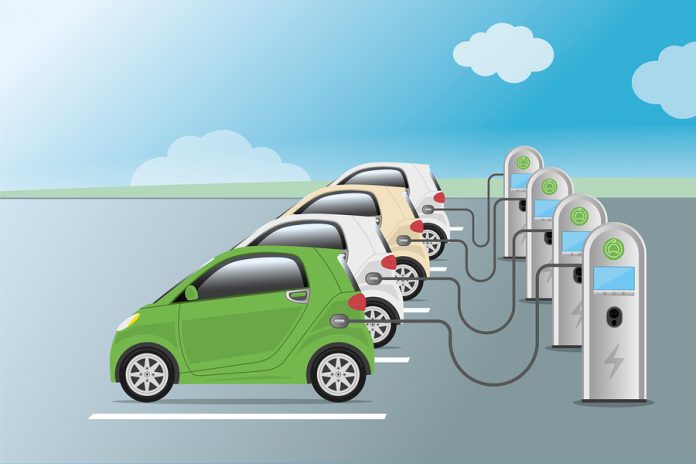
“We are a confused nation” the reflection of this phrase can be seen in every segment of our everyday life. New auto policy 2016-21 is one of an ideal example.
If we refer the document issued by the Government of Pakistan ADP 2016 – 21, we will find in article 4.3 under the heading of “Eligibility Criteria” in the section of new investment policy, it is mentioned that “The Auto Industry Development Committee (AIDC) and Engineering Development Board shall review results of the new investor policy once every two years and shall recommend modifications, if any. On this basis all concerned quarters are always refuse to make any change / amendments / improvement in the policy and also take stand that Government want to keep consistency in the policy to create confidence and trust among the new potential investor. However, as usual Government by herself break her own rules and did not reduce custom duty on the import of new cars as promised / mentioned in the new auto policy 2016 – 21 in article 3.1, under the heading “Tariff System for Cars, SUV’s & LCV’s (HS Codes 8703 & 8704) in section sub heading “Tariff Rationalization”, main heading is “Tariff Structure for Development of Automotive Sector”.
It is mentioned many times by the Government officials that existing automobile assemblers are over protected and Government want to create a healthy competition among the players. In order to provide an enabling environment, conducive to development and growth of the automotive industry a stable and consistent tariff regime is essential, on the other hand by not reducing the promised custom duty a signal of inconsistency has already given to the industry. On the other hand over protection to the existing players shall be continued.
The auto policy 2016 – 21 was announced in March 2016, so 2 years period shall be expired in march-2018. This is the high time that Ministry of Industry & Production and Board of Investment start working on the amendments and improvement in this policy and try to take in confidence to all stake holders.
THE PREMIUM OWN MONEY BLACK MARKET MENACE
Father of the nation, Quaid-e-Azam Mohammad Ali Jinnah in his first address to the constituent assembly on 11th August 1947 mentioned that “Black – Marketing in another cause, now you have to tackle this monster which today is a colossal crime against society in our distressed conditions”. The present scenario is the all three big Japanese brands having assembly plants in Pakistan are selling their vehicles on premium which is actually an act of black marketing the average premium is around (Rupees: Two Hundred Thousand) otherwise waiting period after booking is six months. Average annual sales of cars in Pakistan is 200,000 units. It means auto industry is creating a black market of 40 billion rupees per annum. This income is undocumented and tax free.
EXISTING PLAYERS
First of all please make some space for the existing players in new policy if they want to bring fresh investment and new models. Their terms and conditions could be different (Less Lucrative) in comparison to the all new investor and players.
BROWNFIELD WILL NOT BRING ANY FRUITFUL RESULT
Article 4.1.2, Category – B: Brownfield investment may be abolish from the policy as it brings no positive result as yet and even no hope in future. On the contrary this category created a confusion. If we see in broader spectrum this category is against the normal business practice, because it tries to support an industry which was closed due to inefficiency which could be management inefficiency, financial handicaps or product failure in the market. As a whole Brownfield industry did not contribute in national exchequer. On the other hand the industries which are contributing to national economy (existing players) are not allowed to get benefit from the new policy, I think this is a biased attitude. It is relevant to mention here that Pak Suzuki has submitted his new investment plan in December 2016 and seeking to get some benefit thru new auto policy which was rejected by the Government because no concession was available to existing player under new auto policy.
MKD / SKD OPERATIONS SHOULD BE ALLOWED
MKD / SKD (Medium Knock Down / Semi Knock Down) assembly category may be introduced for the new investor. Facilities and concessions to this category could be lesser / different than the facilities, concessions available to the CKD investors.We should realize our capabilities and market size. European Car makers do not see us as a viable option for CKD operations. If we want to create stir in Pakistan automotive industry MKD/SKD operations should be allowed.
CHECK VERIFY THE CREDIT WORTHINESS OF NEW ENTRANTS
It is usual practice in Pakistan to generate funds through advance booking of the vehicles. In 1994 Tawakal Motors scam has given a big blow to Pakistan automobile industry about 16000 people lost trier hard earned saving the accused were involved in KIA PRIDE car scam in which 16000 people were deprived of their cash through advance booking of vehicles all over the country. After collecting more than Rs. 800 million the accused failed to provide cars to their customers and fled to the U.S. So credibility and financial soundness of new entrant is of utmost importance. Submission of CIB, credit investigation report should make compulsory to all new entrantswhich isbeing issued by the State Bank of Pakistan. It is specially necessary for the consumer protection and generally for the smooth growth of automotive industry without financial juggleries and malpractices by the new entrants.
FRAME WORK ———– ??
It is mentioned in the preface of the automotive policy that “The Policy Provides Broader Guidelines”. It means that a frame work document should be prepared / issued by the ministry for the new entrants. Many issues need clarifications and explanations for the submission of applications by the new investors for the establishment of plant / factory under this policy. The following vital issues could be the part of the frame document.
a. Calculation of Concessional Period for Green Field Project
A Green Field Investor is entitled to import the non-localized and localized parts for the period of five years on concessional rate of custom duty. It may be mentioned when and how these five years shall be calculated means at what stage eligible time will start and when it will be finish i.e will it start from the date of approval or from the date of first launch of product.
b.Duty Free Import of Plant & Machinery
A prospective investor is eligible for duty free import of plant and machinery for setting up the assembly and/or manufacturing facilities on one-time basis.
A complete and comprehensive procedure may be explained in suggested frame work document that how and when this exemption could be availed and from which authority i.e Engineering Development Board, Board of Investment or direct from Ministry of Industry’s this exemption certificate will be issued.
It was verbally explained in different meetings by the Ministry of Industry & Production that the list of Plant & Machinery mentioned in SRO 656 shall be treated as the importable items. These relevant contents of the SRO 656 shall be made integral part of this suggested frame work document.
c. Agreement Between Investor and Government of Pakistan
It is mentioned in Auto Policy 2016-21, that an agreement will be signed between new entrant and Government of Pakistan. What is the format of this agreement.The contents of this agreement is not known. In our opinion this is a prime document which has to sign and agree between investor and Government of Pakistan. This document may not keep secret / confidential. It should be open document and its contents in shape of draft should be the part of framework document. Logically too, a prospective investor should know before the investment that what would be his rights and responsibility and what would be Government of Pakistan rights and responsibility.
d.50% Consession Duty of 100 Unit CBU
It is mentioned in the policy that “Import of 100 vehicles of the same variant in CBU form at 50% of the prevailing duty for test marketing after ground breaking of the project.” The concessionary period is five years in case of Greenfield project. If a company has plan to launch 5 different models on the basis of one new variant each year could it get approval for 100 units of each variant every year. Its methodology should be clearly mentioned in this framework document.
By Anwar Iqbal
New Motorcycles registrations in Karachi – Excise & Taxation department creating troubles without any logical reasons
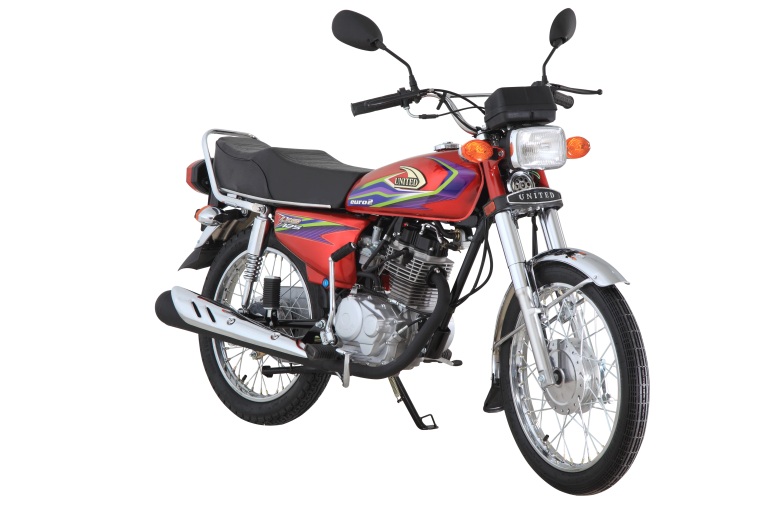
It was widely touted that the fire to the Engineering Development Board (EDB) office last month would severely affect the auto production in Pakistan.
With the issuance of Manufacturing Certificates is having become a daunting task to carry out, especially with the deadline of 30th September having already gone. As a result, EDB had wrote a letter titled ‘Extension in the Validity Date of Manufacturing Certificate Issued for the Year 2017-18’ to the Secretaries of Federal Board of Revenue, all the provincial Excise and Taxation departments, and to the Director of Excise and Taxation, Islamabad, informing them about the extension in the date of issuance of manufacturing certificates to all the automotive manufacturers, till 31st December, 2017. After this letter all the provincial excise and taxation departments are authorize to register new 4 and 2 wheeler vehicles in country.
Motorcycle registrations in Karachi have been facing unnecessary delays and problems as reported by market sources, the Excise & Taxation department is causing the most trouble post-incident while other provinces of the country’s bike buyers are not facing such problems.
Apart from some major motorcycle companies, registrations of motorbikes have almost hit a dead-end in Karachi due to the Excise department’s incompetency and inflexibility in getting bikes registered, with customers facing extreme problems in buying and registering their vehicles against their names.
The EDB should, firstly, look into the matter, and try to amicably resolve it so that the customers buying bikes, specifically in Karachi, are ridden of the unnecessary burden of getting their vehicles registered. Moreover, the Excise department should also carry out a crackdown against the culprits, and question them of why the people of Karachi are being harassed by them.
As reported by Automark Magazine last month, the Software Technology Park (STP-1), Islamabad’s better known as the Awami Markaz in Sector F-5/1, recently caught fire, claiming the lives of two people and completely burnt to ashes.The STP-1 housed several tech companies and call centers, and offices of the Federal Tax Ombudsman, CPEC Center of Excellence, and the Engineering Development Board (EDB).
Report by Automark
Toyota and Mazda to create new electric car company together
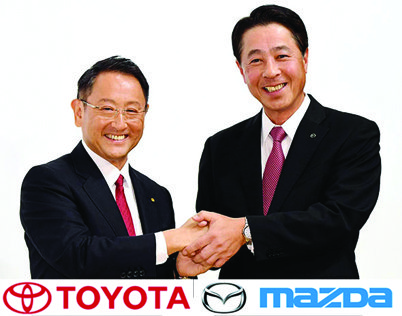
TOYOTA is to join forces with Mazda in a pursuit to develop electric car technologies together
Toyota is joining forces with Mazda to create a new company which will develop electric cars. The two manufacturers are pairing with Denso Corporation to develop structural technologies for electric cars. Engineers from each of the companies will join together to develop the technology.
Toyota will own the lions share of the business with a 90 per cent stake while Denso and Mazda each take a five per cent. The new company is called EV Common Architecture Spirt Co Ltd. Cars produced by the new company will use the same platform that vehicle such as the Prius and 2018 Camry.
Plans detail that a plethora of cars will be produced on the platform including SUVs, supermini and light trucks to name a few. Toyota has been manufacturing petrol-electric hybrids for a number of years now but has been pipped to the post by its rivals when it comes to introducing full EVs.
Mazda revealed earlier this year details about its internal combustion petrol engine the SkyActiv-X which allegedly produced diesel-like fuel-economy and performance but less emissions. From 2019 the car manufacturer will add electrified vehicles into all of the models in its range. In the statement provided by the company it reveals three points that the company want to hit.
The new company will engage in the following:
1. Research into the characteristics (common architecture) that define optimum performance and functions of EVs from the standpoint of both individual components and the whole vehicle.
2. Verification of component installation and vehicle performance realised by the characteristics achieved in item 1)
3. Examination of the optimum concept for each car classification with regard to each component and each type of vehicle realised by achieving items 1) and 2).