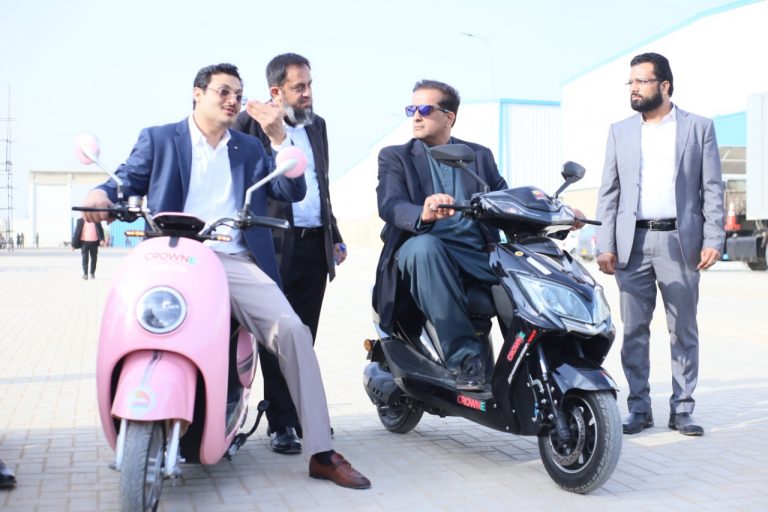
The Federal Adviser to Prime Minister of Pakistan for Climate Change, Mr. Malik Amin Aslam recently visited the Crown Electric Vehicle Co. Plant to personally observe the electric vehicles facility, test drive the vehicles and talk about the future of Electric Vehicles in Pakistan.
With this visit, Crown Group aims to strengthen the electric vehicle eco-system in Pakistan by promoting the use of rechargeable electric stations. Recently, Crown Group organized the market testing and sales display of its exclusive range of CROWNE Electric Vehicles which included two, three and four-wheelers, which be locally manufactured at the Groups Port Qasim facility on which PKR 2 billion has already been invested.
Besides helping the government in controlling pollution, CROWNE 3 wheeler costs Rs.1.50 per km thus benefiting the masses in economical transport facilities and low cost of cargo movement.
At the visit, Chairman Crown Group, Mr. M. Farhan Hanif stated: “It is an honour for us that the Federal Ministry is taking interest in our initiative. Our vision goes beyond the conventional ways travel is done in Pakistan. We aim to enable the masses of Pakistan to get affordable, economical and reliable vehicles for their everyday travel. Together, in coordination with the government, we will pursue our vision and aim and provide Pakistan with the technologies they need”.
Crown is a leading brand in the two and three wheeler industries of Pakistan and the only local consumer brand that exports to international markets while offering solutions for all segments of the industry within Pakistan. Crown Group has the largest network of spare parts and after sales service in Pakistan with 62,000 retailers, wholesalers and workshops on board.
Federal Minister Malik Amin Aslam said draft of Electrical Vehicle Policy will be submitted to the ECC soon
Federal Minister and Prime Minister’s Adviser for Climate Change Malik Amin Aslam has said that a draft of Electrical Vehicle Policy will be submitted to the ECC soon”
He further stated that currently work on policy concessions and SROs is in the final stages and a revolution of electric vehicles is in the coming in the country. Moreover USAID has shown the possibility of saving $2 billion in one of its reports. This will also be beneficial since it will utilise our capacity of producing 4,000 MW power which is currently utilised. Malik Amin Aslam said that there are more than 200 million motorcycles and rickshaws in the country, while more than 3,000 CNG stations across the country can be used for electrical charging stations.
About Crown Group: Crown Group has been the forerunner in two and three-wheeler automotive industries since 1963. Having the largest network of motorcycle parts across pan Pakistan, Crown deals in manufacturing motorcycles, tyres and tubes for more than 15 years.
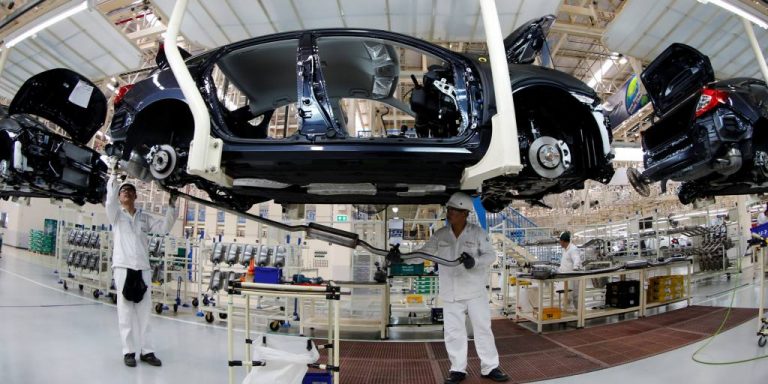
The Philippine unit of Honda said on Saturday its production facility will shut down next month, as the Japanese automaker struggles to shore up global automobile operations.
Japan’s third-largest automaker has seen its profitability decline by more than half in the past two years, led by a series of quality-related issues.
In a statement, Honda Cars Philippines said its production plant south of the capital Manila will cease operations next month. But automobile sales and after-sales services will continue through Honda’s regional network.
“To meet Honda’s customer needs in the Philippines for reasonably priced and good quality products, Honda considered efficient allocation and distribution of resources,” the company said.
Production will focus on other hubs in Asia and Oceania, it added.
Honda Philippines’ manufacturing plant, which has 650 employees and associates, started operations in 1992. It makes BR-V and City passenger cars catering to local demand.
Honda Philippines counts Rizal Commercial Banking Corp and a unit of conglomerate Ayala Corp as its local partners.
The Philippines’ automotive output is a minnow compared with its Southeast Asian peers, notably Thailand. A government tax incentive program launched in 2015 has failed to significantly raise the country’s local auto production.
This is the best look yet we have of the redesigned Kia Sorento, thanks to some leaked images circulating on Instagram that expose the mid-size SUV’s front and rear ends and its dashboard. So far, it’s looking good, although we’ll reserve full judgment until we can see more official photos from Kia. The rumor is that the real thing will debut sometime in February in Korea.
Up front, there’s a distinctive grille treatment with a U-shaped pattern and Kia’s signature “Tiger Nose” grille shape that dips down just above the large Kia badge. The blocky headlights have a nice chrome surround. Vertical two-bar taillights make the rear end look interesting enough, and the overall shape and size look relatively similar to the current Sorento, as we saw in earlier spy photos.
The interior design looks like more of a radical departure, as there’s a large touchscreen spouting atop the dash, a digital gauge cluster screen in front of the driver, and aggressively shaped air vents flanking the climate controls. We don’t know if the Sorento will continue to offer three rows of seats or if it will transition to being Kia’s two-row entry now that the larger three-row-only Telluride is in the picture.
Kia has confirmed that there will be a plug-in-hybrid variant of the new Sorento, but we don’t know for sure if that will come to the U.S. market or not. More details should come soon as Kia prepares to debut the new SUV on its own terms, rather than at the speed of social media.
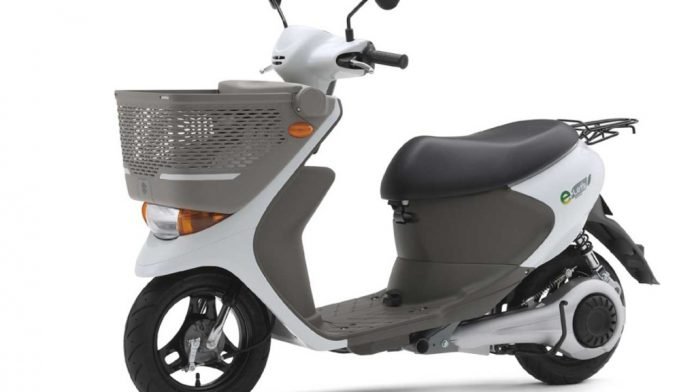
Suzuki is apparently working on a new EV platform, which would likely result in its first electric scooter for the Indian market, and will be launched next year.
The recent electric scooter launches by the two of the biggest 2-wheeler manufacturers in the country, namely Bajaj Chetak electric and TVS iQube, is encouraging other companies to develop EVs for the Indian market too. Now reportedly, Suzuki Motorcycle India is also working on a new EV platform in the country.
Satoshi Uchida, former Managing Director of Suzuki Motorcycle India talked about an EV platform while talking to a publication during his tenure. The said platform will spawn off a fully-electric scooter in 2021, and it will be put in line with the 110 – 125 cc ICE scooters in the country.
Mr Uchida had also confirmed that the design of the scooter will be unique to our country, however, the battery and the motor will be shared with other Suzuki products globally. For now, the company will be studying the demand for electric two-wheelers, as well as the charging infrastructure in the country.
pon launch, the Suzuki electric scooter will directly rival the TVS iQube as well as the Bajaj Chetak, which are priced at Rs 1.15 lakh and Rs. 1 lakh (both prices, ex-showroom) respectively. The iQube comes with a 4.4 kW electric motor, and has a claimed driving range of around 75 km on a full charge.
On the other hand, the Bajaj Chetak gets a 4 kW electric motor coupled with a Lithium-ion battery pack with IP67 rating. The Chetak electric can be ridden for 95 km on the Eco mode, while the Sport mode will bring the range down to 85 km. The TVS iQube has a claimed top speed of 78 kmph, while the Bajaj Chetak maxes out at 60 kmph.
As of now, Suzuki only retails two scooters in India, which are the Access 125 and the Burgman Street that come with the same 125 cc 4-stroke, air-cooled, SOHC, 2-valve, single cylinder engine with fuel-injection technology. The said motor puts out 8.7 PS of maximum power at 6750 rpm, and 10 Nm of peak torque at 5500 rpm.
Crown Group has been making auto parts since 1963. It displayed a number of environmentally friendly vehicles, including motorcycles, auto-rickshaws, cars and ambulances, which it says are energy efficient.
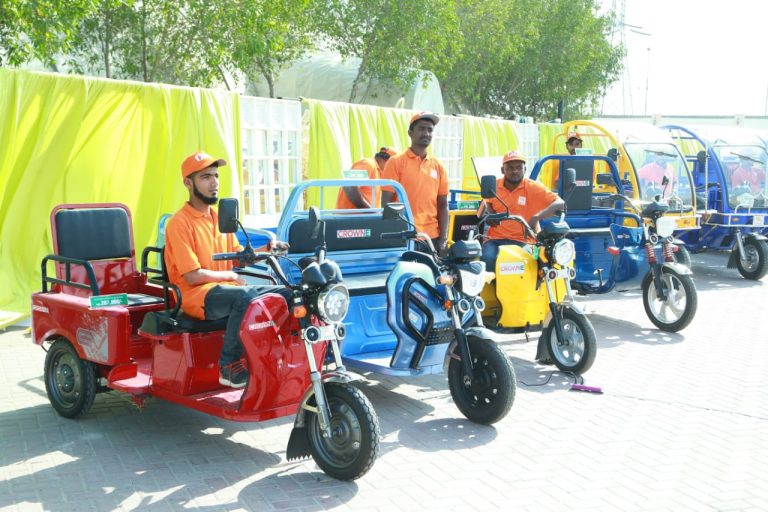
Crown Group recently organized the market testing and sales display of its exclusive range of CROWNE Electric Vehicles. These vehicles include two, three and four-wheelers and will enable people to drive 1 km in only Rs. 1.25.
The starting price for an electric car, a pilot project, is Rs400,000. It’s a two-door hatchback with a seating capacity of two persons. The prices of the rickshaws and motorcycles are between Rs200,000 and Rs55,000 respectively.
Moreover, the three-wheeler rickshaw (two-in-one) comes in both electric and engine equipped with manual switching options at a display price of PKR 300,000 and 250,000 respectively.
The electric vehicles will be locally manufactured at the Groups newly built 26 acre Port Qasim facility. Having an initial production capacity of 120,000 units per annum, the Group has already invested Rs. 2 billion on the plant in the first phase.
The electric vehicles include a four and three-wheeler car, two and three-wheeler scooty’s, cargo loaders, three-wheeler two-in-one, three-wheeler nine-seater, garbage trucks and ambulances. All electric vehicles come with an option of getting a factory-installed engine as well for those who wish to use the vehicle for longer routes.
Through this project, the economy will certainly get a boost as it will great more jobs and more entrepreneurial opportunities for the public. it will also provide affordable means of transportation as well.
Eight Chinese companies have partnered with the Crown Group in joint ventures and the company is ready to expand production as soon as the government implements its electric vehicle policy.
‘If the government keeps its word on the electric vehicle policy, the custom duty on imports of auto-parts will only be 1% while the sales tax will not exceed 5%’, said the Chairperson.
Crown group is known for its leadership in the spare parts market and services all over Pakistan and now it has invested Rs.2 billion to set up its EV manufacturing plant.
China’s annual auto show in Beijing has been postponed because of novel coronavirus, as the number of cases of people infected surpass 71,000.
The Beijing International Automotive Exhibition, which was scheduled to begin April 21, is the latest high-profile event that has been either cancelled or postponed over concerns of coronavirus. A new date will be announced in the future, organizers said on the official event website.
Earlier this month, MWC canceled its event in Barcelona, which was supposed to take place from February 24 to February 27. Most of the postponed events are in China, where the virus originated and where the vast majority of infections (more than 70,000 to date) have occurred. Coronavirus has also disrupted the automotive industry in China and abroad as many global manufacturers rely on the country’s supply chain for parts.
The Chinese government might delay the annual session of its Communist Party-dominated legislature, The New York Times reported Monday. Other postponed events include Credit Suisse Group AG’s Asia investment conference and the Chinese Grand Prix, a Formula 1 race scheduled for April 19 in Shanghai. Juss Sports Group, the promoter of the Chinese Grand Prix, requested the postponement after ongoing discussions with the Federation of Automobile and Motorcycle Sports of People’s Republic of China (CAMF) and Shanghai Administration of Sports.
Formula E, the all-electric motor sports event, has also postponed a race set for Sanya on March 21.
Source: The original news was reported on TechCrunch
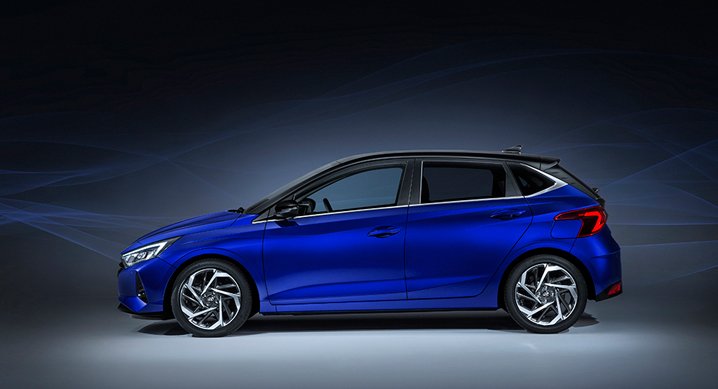
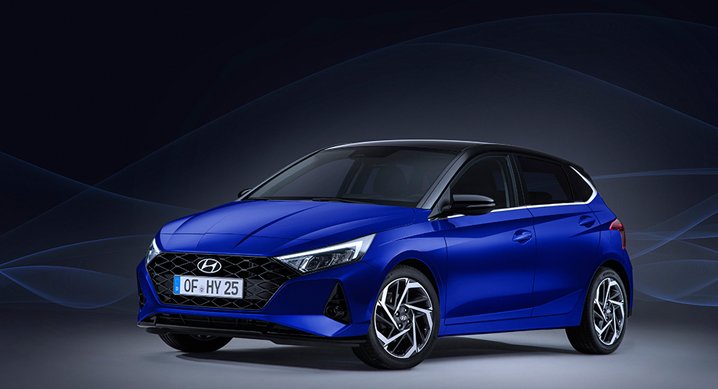
The all-new i20 features a completely new design inspired by Hyundai’s new ‘Sensuous Sportiness’ design language – the company’s first car in Europe to do so.
Itis equipped with the most comprehensive connectivity equipment in the B–segment, and a best-in-class advanced safety package. For the first time it is available with an electrified 48-volt mild hybrid powertrain for optimised efficiency.
The all-new Hyundai i20 will be unveiled at 2020 Geneva International Motor Show.
Hyundai Motor’s all-new i20 features a revolutionary and ambitious design that follows the company’s new Sensuous Sportiness design language. With best-in-class connectivity features and the most comprehensive safety package in its class, it sets new standards for a B-segment car.
The all-new i20 is the third-generation of Hyundai’s successful model, which first launched in 2008. One of Hyundai’s most successful models, the i20 stands for quality, reliability, and practicality. In addition to these core pillars, the all-new i20 introduces a completely new, dynamic style. The all-new i20 will be produced in Europe at Hyundai’s production plant in izmit, Turkey, and will be unveiled at the 2020 Geneva International Motor Show.
As well as a completely new exterior design, the all-new i20 has received a range of technological enhancements. There are two new 10.25” screens, consisting of a digital cluster and a navigation touchscreen, which are visually combined in the dashboard. Meanwhile, its segment-leading Hyundai SmartSense safety package includes alongside several new features a new generation Forward Collision-Avoidance Assist (FCA) that now offers pedestrian and cyclist detection for even more assurance on the road, as well as Navigation-based Smart Cruise Control (NSCC).
“Thanks to great quality, reliability and practicality, the i20 has continuously been one of the top sales drivers for Hyundai in Europe,” said Andreas-Christoph Hofmann, Vice President Marketing & Product at Hyundai Motor Europe. “The all-new i20 illustrates our ambition by delivering eye-catching design and comprehensive connectivity and safety to the B-segment.”
Sensuous Sportiness: Hyundai’s new, inspiring exterior design language
The all-new i20 is the first car in Europe to feature Hyundai’s ‘Sensuous Sportiness’ design language. It is characterised by the harmony between four fundamental elements: proportion, architecture, styling and technology. The purpose of this design direction is to create emotional value and to give Hyundai’s vehicles a distinctive new look.
Compared to its predecessor, the all-new i20’s proportions have been made more dynamic, while at the same time ensuring it is practical for navigating around busy urban areas. Its visual stance is improved by its lowered roof (-24mm), wider body (+30mm) and increased length (+5mm), while the wheelbase has also been increased by +10mm. This is further augmented by newly-designed 17” alloy wheels.
The all-new i20’s stylish character is emphasised with its dynamic-looking front and rear bumpers, as well as its new radiator grille. The side-view offers energetic proportions and a wedge style, which are amplified through a bold side character line and unique C-pillar design. Meanwhile, the redesigned unique lighting signature at the side connects seamlessly with the rear, emphasising the all-new i20’s width and stance. Together, these exterior features illustrate its modernity, while delivering a premium feeling for drivers.
All-new i20 customers can choose from 10 exterior colours overall, including four new ones:
Intense Blue, Aurora Gray, Aqua Turquoise and Brass. Moreover, the Phantom Black roof offers customers even more scope for personalisation with the option of a two-tone style.
Exterior colours: ㆍ [New] Intense Blue ㆍ [New] Aurora Gray ㆍ Polar White ㆍ Sleek Silver ㆍ Phantom Black ㆍ Dragon Red ㆍ [New] Aqua Turquoise ㆍ [New] Brass ㆍ Tomato Red ㆍ Slate Blue
An all-new interior offers enhanced aesthetics and provides a high-quality feeling
With a range of interior enhancements, all-new i20 customers can enjoy quality time inside their vehicle. Hyundai’s designers sought innovative aesthetic and technical solutions to convey its stylish proportions, while creating a fresh and appealing look.
The interior space achieves an airy feeling inside the cockpit, while appearing sculptured and appealing. One design highlight is the horizontal blades that cover the high and prominent dashboard. This gives it a very unconventional look by making the front fascia look slick and wide.
The all-new i20’s doors embrace the dashboard in an elegant, sensual way, having been inspired by shapes found in nature. The sculpture of the doors perfectly matches the instrument panel section. Its refined steering wheel is equipped with modern toggle switches, while its colour accents are also matched throughout the interior.
Occupants of the all-new i20 can also enjoy a pleasant interior lighting at night thanks to new LED ambient light technology.
In addition, customers can choose from three interior trims: Black Mono, Black & Gray, and Black Mono & Yellow Green for even more individualisation.
Increased roominess and visibility
The all-new i20’s dynamic proportions offer increased width and an enlarged wheelbase compared to the previous generation. This provides increased seating space for passengers in the rear. Boot space has been increased by +25 litres, offering 351 litres overall for luggage. Meanwhile, a decreased beltline and a small, quarter-fixed glass window behind the rear door provide drivers with improved visibility.
Best-in-class connectivity and premium sound quality
The all-new i20 offers best-in-class connectivity with a range of high-tech convenience features. Apple CarPlay and Android Auto, now offered wirelessly, enable customers to mirror the functionality of their iOS and Android smartphones. To increase the elegance and the visual comfort of the interior, the new 10.25’’ digital cluster and 10.25’’ centre touchscreen have been visually combined. The touchscreen also offers split-screen functionality for multitasking.
A wireless charging pad in the centre console means all-new i20 customers no longer need to use a cable to charge their smartphones. Additionally, a USB charging port is available for passengers in the rear. For even more in-car entertainment, the all-new i20 becomes the first Hyundai model in Europe to feature a premium Bose audio system. Eight speakers, including a sub-woofer, are strategically placed throughout the vehicle for a high-quality listening experience.
Bluelink Connected Car Services
The all-new i20 offers Hyundai’s Bluelink technology, which offers a wide range of Connected Car services such as Hyundai LIVE Services, as well as remote features via the Bluelink smartphone app. Bluelink comes with a free five-year subscription.
Features:
1. Hyundai LIVE Services: real-time traffic information powered by TomTom, fuel stations/parking spaces (with prices), speed cameras* and weather updates
2. Online voice recognition: powerful online (cloud-based) voice recognition with natural language understanding
Bluelink app services:
Find my car: drivers can locate their vehicle easily in an unfamiliar setting
Remote services: drivers can remotely lock their cars
Send to car (POI): search for local POIs and send results to car’s navigation system
Security: vehicle alarm notification
Maintenance: receiving vehicle report (e.g. tyre pressure), driving information
Available connectivity equipment:
ㆍ [New] 10.25” digital cluster ㆍ [New] 10.25” AVN (audio/video/navigation) touchscreen ㆍ [New] 8” touchscreen with Display Audio ㆍ [New] Android Auto and Apple CarPlay (wireless in combination with Display Audio) ㆍ [New] Wireless charging
The most comprehensive safety package in the segment
The all-new i20 is equipped with Hyundai SmartSense safety features and complies with the highest European safety standards. Many of these active safety features would not be expected to be found in B-segment cars.
The all-new i20 offers a range of new safety functions. One of these is Navigation-based Smart Cruise Control (NSCC), which uses the all-new i20’s navigation system to anticipate upcoming curves or straights on highways and adjusts the vehicle speed for safer driving. Another feature, Intelligent Speed Limit Assist (ISLA), alerts drivers through audio and visual warnings when they are driving too fast and exceed the speed limit. When combined with the manual speed limiter, ISLA can even adapt the speed autonomously. Lane Following Assist (LFA) automatically adjusts steering to help keep the all-new i20 centred in its lane of travel. Blind-spot Collision-avoidance Assist Warning (BCA) uses radar to monitor rear corners and, if another vehicle is detected, a visual alert appears on the exterior mirrors. Where necessary, BCA acts on the engine brake to avoid a collision or reduce the impact damage. Meanwhile, the upgraded Forward Collision-Avoidance Assist (FCA) function can now detect not only cars, but also pedestrians and cyclists.
The all-new i20’s safety package also protects drivers at low speeds, as well as offering increased parking convenience. Leading Vehicle Departure Alert (LDVA) warns the driver when the vehicle ahead of them starts moving forward in cases where there is a delay to their reaction, for example at traffic lights. Rear Cross-traffic Collision Assist (RCCA) sounds a warning in case of the risk of a rear collision from crossing vehicles while reversing. Meanwhile, Parking Collision-avoidance Assist – Reverse (PCA-R) automatically brakes in case of a collision risk. In addition, all-new i20 drivers also have Parking Assist (PA) at their disposal. PA allows for semi-autonomous parking, with a range of sensors and software working together to help drivers get into tight spaces.
Other safety features available with the all-new i20 include Lane Keep Assist (LKA), Driver Attention Warning (DAW) and High Beam Assist (HBA).
The all-new i20 will also be equipped with eCall, a system which allows the vehicle’s occupants to contact emergency services at the press of a button. In addition, the system activates automatically if the vehicle’s airbags are deployed.
Available Hyundai SmartSense safety and driving assistance features: ㆍ [New] Navigation-based Smart Cruise Control (NSCC) ㆍ [New] Leading Vehicle Departure Alert (LDVA) ㆍ [New] Lane Following Assist (LFA) ㆍ [New] Blind-spot Collision-avoidance Assist (BCA) ㆍ [New] Rear Cross-traffic Collision Assist (RCCA) ㆍ [New] Parking Collision-Avoidance Assist – Reverse (PCA-R) ㆍ [New] Parking Assist (PA) ㆍ [New] Intelligent Speed Limit Assist (ISLA) ㆍ Forward Collision-Avoidance Assist (FCA) – [New] now with pedestrian and cyclist detection ㆍ Lane Keep Assist System (LKA) ㆍ Driver Attention Warning (DAW) ㆍ High Beam Assist (HBA)
A new engine line-up provides enhanced efficiency and performance
By offering two engines with three transmission choices, the all-new i20 caters for different drivers’ needs and delivers even more efficient driving.
At the top of the range, a 1.0 T-GDi is available with 100 PS or 120 PS. For the first time, a 48-volt mild hybrid powertrain can be applied on this engine, either as an option with the 100 PS or as standard with the 120 PS. The 48-volt system contributes to a 3-4% reduction of fuel consumption and CO2 emissions. In terms of transmission, the 48-volt system is available with a seven-speed dual clutch transmission (7DCT) or a newly developed six-speed Intelligent Manual Transmission (iMT). iMT decouples the engine from the transmission after the driver releases the accelerator, allowing the car to enter into coasting mode and saving fuel.
When not mated to the 48-volt mild hybrid system, the 1.0 T-GDi 100 PS is available with the 7DCT or a manual 6-speed gearbox. A 1.2-litre MPi 4-cylinder is also available as an entry engine. This offers 84 PS and a five-speed manual transmission.
Thanks to Its weight reduction of 4% compared to its predecessor, the all-new i20 ensures it has very competitive CO2 values. This also means it drives more economically without compromising on driving pleasure. In addition, features such as standard Idle Stop and Go illustrate its environmentally-conscious credentials.
Thanks to Its weight reduction of 4% compared to its predecessor, the all-new i20 ensures it has very competitive CO2 values. This also means it drives more economically without compromising on driving pleasure. In addition, features such as standard Idle Stop and Go illustrate its environmentally-conscious credentials.
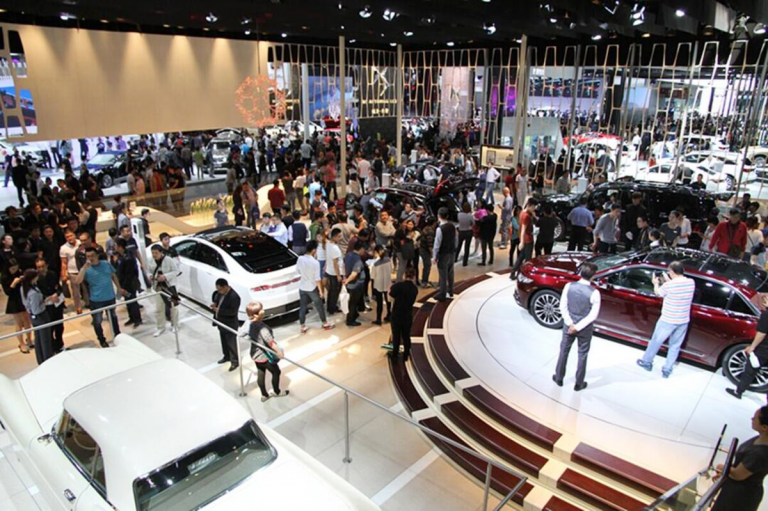
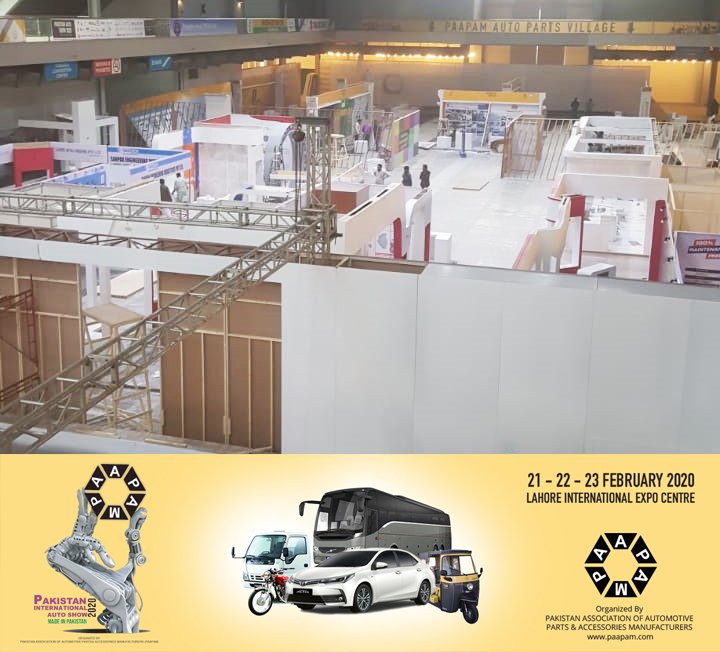
The largest exhibition of automobiles in the country – The Pakistan Auto Show 2020 (PAS-2020) is being held on 21st, 22nd, and 23rd of February 2020, at Lahore International Expo Center. It is a valuable initiative of the ‘Pakistan Association of Automotive Parts & Accessories Manufacturers’ (PAAPAM), representing over 3000 large, medium & small industries from all over Pakistan. The theme of this year’s PAPS show is; “MAKE IN PAKISTAN”. More than 100,000 local visitors are expected to see renowned companies from; Japan, Germany, Korea, China, France, Turkey, Thailand, Taiwan, England USA, UAE and Sri Lanka, while over 400 international visitors, including 150 global buyers and delegations will be there too. More than 100 exhibitors, including 10 international enterprises and 90 domestic companies will display their brands and services on 38,666 square feet. The show is supported by the Engineering Development Board, while the sponsors include: Honda, Suzuki, Hyundai, Master Motors, Sazgar Engineering, Millat Tractors and many other local vendors.
The diverse categories of exhibitors will include; passenger cars, trucks, buses, tractors, rickshaws, motorcycles, auto parts manufacturers, services providers, machinery makers, tool-makers, antique cars and heavy motorbikes along with related service industries like accessories, Tracking & insurance, etc. The general public is invited to visit the show between 10 AM and 7:00 PM, to see the fascinating innovations and cutting-edge technologies from the best institutions and projects, delivering great advantages for the consumers. While highlighting CSR, traffic-safety and public awareness campaigns, a FREE Exhibitors’ Directory will also be distributed among the visitors.
The quantum of local parts used for domestic car-assembly has risen substantially over the last 10 years, raising Pakistan among the top 40 automobile-manufacturing countries, while our auto sector is among the top-3 tax-contributors to the government treasury and nearly 34% of the cost of a locally-produced car is paid as taxes. Currently, four out of the top 10 global automobile companies have production plants in Pakistan, including; Suzuki, Toyota, Honda, FAW, KIA and Hyundai soon to be followed by other big names like Malaysian Proton, Volkswagen and BAIC by Sazgar Engineering.
Chairman of Pakistan Association of Automotive Parts & Accessories Manufacturers (PAAPAM) – Capt. (R) Muhammad Akram stated: “Implementation of stringent policies and monitoring by the government will ensure that only overseas Pakistanis can benefit from used-car import schemes. Foreign companies should be inspired to invest more, transfer technologies and “Make in Pakistan” for faster economic progress.
The senior vice chairman of PAAPAM –Saad Sherani stated, “The global automobile manufacturers are showing keen interest in Pakistan, as the demand for quality automobiles has risen rapidly in this emerging market, with a lot of unexplored potential. This show will further strengthen the investors’ confidence, to increase Foreign Direct Investments.”
Chief Organizer of Pakistan Auto Show 2020 and former chairman of PAAPAM – Syed Nabeel Hashmi commented; “The Pakistan Auto Show is now recognized as the most resourceful platform for sustainable enrichment of the Automobile industry. The regulators and stakeholders will come together once again, to explore the way forward, while finding solutions and exploring opportunities, while globally promoting Pakistan as a credible brand.”
Toyota Motor Corp. will partly resume operations at three plants in China this week, bringing back some of the capacity that had been on an extended halt in response to the coronavirus outbreak that’s killed more than 1,600 people and pitched Asia’s top economy into turmoil.
The factories in Changchun and Guangzhou will restart on Feb. 17, while operations in Tianjin resume the next day, Kensuke Ko, a spokesman for the Japanese automaker, said in an email. The plant in Chengdu will restart after next week, he said.
The spread of the virus has weighed on the global economy, with some major car-makers extending plant shutdowns amid shortages of parts and as efforts to combat the outbreak impeded the flow of workers. An initial plan by Toyota to reopen factories on Feb. 9. was delayed. Fellow Japanese car-marker Honda Motor Co. has said it plans to restart its China manufacturing operations in the week from Feb. 17.
It’s hard to pin down a reason for the delay in the resumption of operations at the Chengdu plant, according to Ko. The supply chain for parts and government policies are some of the factors, he said.
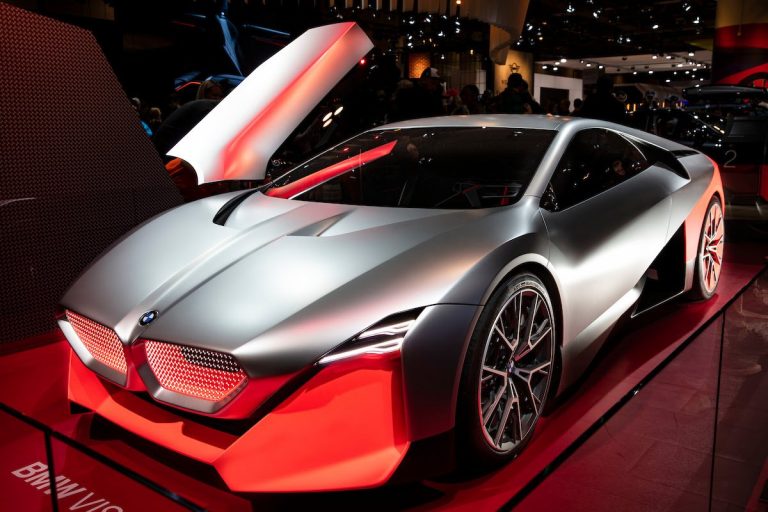
The BMW Vision M Next is just one of several concept cars that can be found on the main showroom floors of the 2020 Canadian International AutoShow at the Metro Toronto Convention Centre.
The 2020 Canadian International Auto-Show is underway, and it offers a stunning glimpse at the road ahead.
The concept cars on display on both main show floors are both striking in their design and innovative in the technology they encapture. Sometimes they are wildly futuristic with a funky design and features we can only imagine actually seeing on the road.
Other times, they are a true vision of the next generation of cars and trucks. Either way, concept cars are always a popular draw at the AutoShow.
Among the concepts on display at this year’s event:
BMW Vision M Next— The latest concept car from the BMW Group is a sporty look at what is coming. This is BMW’s interpretation of how the BMW M may look, in the form of an eye-catching, electrified sports car. Designed to engage the driver, the Vision M NEXT demonstrates how state-of-the-art technology can create a pure and emotionally-dynamic driving experience.
Hyundai Vision T— This innovative plug-in hybrid is the cutting edge of SUV design. It expresses Hyundai’s evolving Sensuous Sportiness design language, using crisp geometric angles and strong wedge lines. The Vision T is as striking as a concept vehicle should be, while also providing a very clear indication of the brand’s next compact SUV, a vehicle that is much closer than you might think.
Hyundai 45— The 45 Concept foreshadows a new era of Hyundai’s automotive design focused on electrification, autonomous technologies and intelligent design. It features Hyundai’s next-generation, 800-volt battery-electric platform, which is to be applied to upcoming production vehicles.
INFINITI QS Inspiration— A sports sedan for the electrified era, this concept is a preview of a future INFINITI electric vehicle. it offers a new perspective on sports sedans with an elevated driving position and high-performance electrified all-wheel drive power.
Lexus LF-30 Electrified Concept — The vision for the electrification of Lexus is contained in the LF-30 Electrified Concept. The car looks ahead to 2030 with advanced technologies like a steer-by-wire system and a human-centred cockpit design that amplifies the driving experience.
Lexus LC Convertible — A concept that is making the jump to reality, meaning you will soon see it on the road — quite possibly before the end of this year. The LC Convertible is strikingly designed with unmatched refinement and breathtaking performance.
Lexus GX Overland — With a retractable awning, a tent that gets pitched on top – even a shower stall that comes out — the GX Overland is a perfect mix of luxury and the rugged outdoors thanks to its off roading capabilities.
Toyota GR Supra Track Concept — Built on the return of the Supra to the Toyota lineup last year, this model features moe aggressive styling, additional features and more powerful inline-six engine.
VW MEB Chassis — Volkswagen is investing billions of dollars in its next generation of electric cars, the first of which will come to Canada sometime in 2021. The MEB chassis is a preview of what we can expect. This is a rare opportunity to see the parts of a car normally hidden underneath a sculpted body. Now that we’ve seen what’s underneath, hopes are we will see the whole car next year. Besides these new concepts, there is special historic concept occupying the place of honour in the Cobble Beach Classics exhibit. Imagine what car enthusiasts were thinking in 1959 when Chevrolet drew back the covers on the Corvette Stingray Concept, then take a trip down to the Chevrolet display to see how the Stingray has evolved with the 2020 convertible that made its Canadian debut here in Toronto.