Home Blog Page 42

Nissan Sales Witness A Downward Trend

Nissan, reeling from a scandal over its former superstar executive Carlos Ghosn, sank into red ink in the latest quarter as its vehicle sales fell around the world, and the Japanese automaker slashed its profit forecast for the year.

Nissan Motor Co. reported Thursday a loss of 26 billion yen ($237 million) for October-December, a reversal from the 70 billion yen profit recorded a year earlier.

Quarterly sales slipped nearly 18% to 2.5 trillion yen ($23 billion), as Nissan’s vehicle sales fell in Japan, the U.S., Europe and China.

Chief Executive Makoto Uchida told reporters at Nissan’s Yokohama headquarters that a turnaround plan was in place, with details to be released in May.

“The situation has worsened, but there is no moment to waste as we must keep investing in future products,” he said. “We are headed in the right direction, but it will take time.”

He acknowledged Thursday’s results didn’t take into account possible damage from production halts in China caused by the new virus outbreak, and further downward revisions may be coming.

Nissan’s plants in China have halted, although preparations are underway to resume production later in the month. But whether such restarts can happen remains uncertain, not just for Nissan but also other manufacturers in China.

Some production was being scaled back at Nissan’s Japan plants, although that was to be made up when the supply chain recovers, possibly next month, according to Nissan.

Nissan slashed its profit forecast for the fiscal year through March 2020, to 65 billion yen ($592 million), falling far short of its earlier forecast for a 110 billion yen ($1 billion) profit.

It now expects to sell 5.05 million vehicles globally for the fiscal year, a decrease of 4% from the previous forecast.

Shareholders will get zero yen in dividends for the latest quarter.

Nissan’s brand has been badly tarnished by Ghosn’s arrest in late 2018 on charges of under-reporting future compensation and of breach of trust in diverting company money for personal gain.

Ghosn, who has repeatedly said he is innocent, skipped bail late last year and is now in Lebanon. He held a news conference and accused Nissan officials of a conspiracy against him.

He has said Nissan and some Japanese government officials sought to block his attempts to realize a fuller merger with alliance partner Renault SA of France.

Nissan has sought to distance itself from the allegations against Ghosn. It filed a civil suit this week against him seeking damages. His lawyers have not yet commented on the suit.

In it, Nissan is accusing Ghosn of improperly using Nissan money for such things as overseas homes, use of corporate jets and consulting fees paid to Ghosn’s sister.

Nissan as a company must also stand trial in the criminal case in Japan. It does not have an extradition treaty with Lebanon and so Ghosn’s trial likely won’t go forward here.

Greg Kelly, an American former executive at Nissan who was implicated in the charges against Ghosn, will stand trial.

A date for the trial has not been set.Ghosn has said he fled because he could not get a fair trial. The conviction rate in Japan is higher than 99%.

Uchida took over the helm of the manufacturer of the Leaf electric car, Infiniti luxury models and the X-Trail SUV in December, replacing Ghosn’s successor, Hiroto Saikawa.

Courtesy: Manufacturing.Net

China's auto sales may fall 10% in H1 due to Corona-virus: Industry association

China’s auto market, the world’s largest, is likely to see sales slide more than 10% in the first half of the year due to the Corona-virus epidemic, the country’s top auto industry body told Reuters on Friday.

“We predict auto sales will drop by more than 10% in the first half of this year, and around 5% for the whole year if the epidemic is effectively contained before April,” Fu Bingfeng, executive vice chairman of the China Association of Automobile Manufacturers (CAAM), told Reuters in a written interview.

Its forecast is grimmer than an initial prediction made last month for a 2% dip in sales this year.

China has been a key market for global automakers from Volkswagen to General Motors, as well as domestic manufacturers Geely and SAIC Motor.

Tesla is also ramping up production from its $2 billion Shanghai factory.

Auto executives say the coronavirus, which has killed more than 1,380 people and infected nearly 64,000 in mainland China, is taking a severe toll on the industry, sapping buyer demand and disrupting supply chains for car makers globally.

CAAM, China’s top auto industry body, whose members include hundreds of automakers, suppliers and other companies in the sector, conducted a poll among members after the outbreak and submitted findings and suggestions to government, Fu said.

The association has asked the government to offer more policies to support the industry, such as changes to auto-related taxes, and moderately adjust interest rates and banks’ reserve requirement ratio, he said.

It has also asked Beijing to offer more fundraising support and credit lines to companies.

Auto sales in China, where more than 25 million vehicles were sold last year, likely fell around 18% in January from a year earlier, preliminary data from CAAM showed on Thursday.

Industry sales fell 8.2% last year, the second consecutive year of contraction, pressured by new emission standards in a shrinking economy and by trade tensions with the United States.

Courtesy: Auto.com

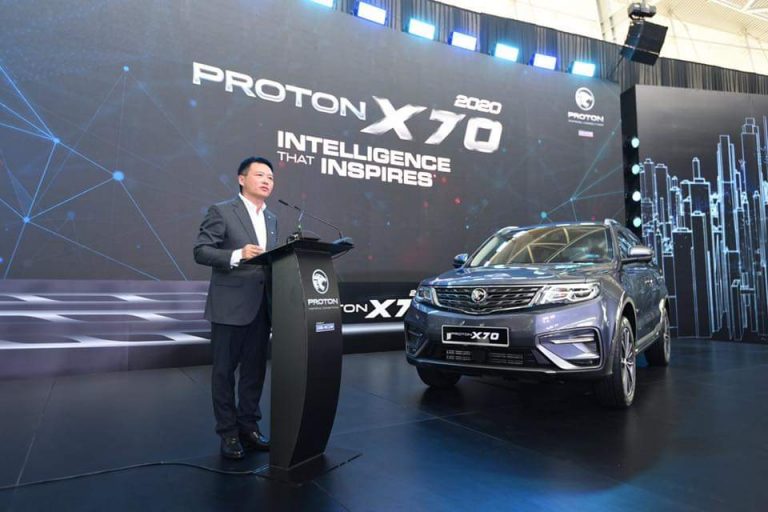
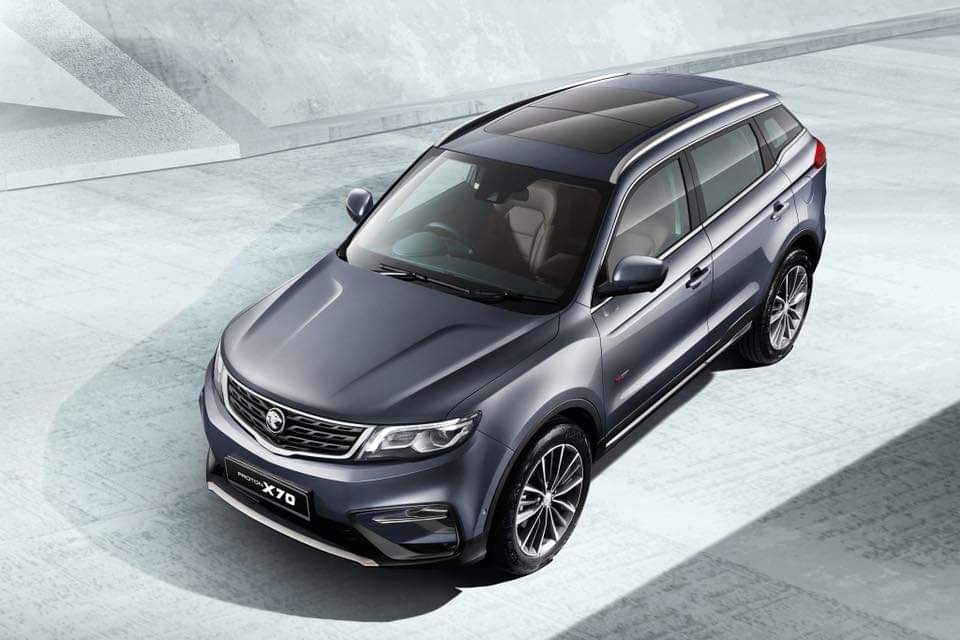
PROTON Launches The 2020 'PROTON X70'

PROTON launched the 2020 Proton X70, the latest iteration of the automakers’ segment leading sports-utility-vehicle (SUV) today. Built on a completely new production line at its refurbished plant in Tanjung Malim, the 2020 Proton X70 brings a host of features and new technology that further increase the value proposition of the award winning vehicle.

As the first SUV to roll off the Tanjung Malim shop floor, PROTON set itself an extremely high target in terms of quality. The aim was to better the quality standards of the first generation vehicle, which is something the Company says they have achieved with the Malaysian-built SUV as product quality audits show it now exceeds the standards of its predecessor.

PROTON Chairman, Dato’ Seri Syed Faisal Albar said, “the 2020 Proton X70 is a significant accomplishment for us as it not only represents the first model off the new line but, also because we have matched and exceeded the quality standards of the model we launched 14 months ago”.

He added the SUV was especially important from a manufacturing perspective as it signalled PROTON was able to build vehicles to global quality standards. ”This represents a big step forward for us because it shows we are more than capable of delivering valuable product propositions of a global standard’, he added.

Enhanced Features and New Technology:
The 2020 Proton X70 brings with it several new features designed to further delight customers as well as new technology to make it an even more competent vehicle. These include an increase in torque output, an improvement in fuel economy as well as the introduction of a brand new gearbox.

The most important technological enhancement is the introduction of a seven-speed Dual Clutch Transmission (7-DCT) in place of the six-speed Automatic Transmission (6AT) previously used. Among others things and as a result of taller ratios, the new gearbox helps to reduce fuel consumption by 13% to 7.6l/100km. It also results in much smoother and quicker gear changes resulting in a superior driving experience.

Fitting the new 7-DCT gearbox allowed PROTON’s engineers to use a new engine map, boosting the torque output. The 2020 Proton X70 now delivers 5% more torque, bringing its measured twisting force up to 300Nm. Combined with the quicker shifting gearbox the SUV has shaved 1 second off its 0-100km/h time, allowing it to accomplish the century sprint in 9.5 seconds.

Aside from the mechanical improvements, PROTON also added enhancements to the interior. Premium and Premium X variants now receive ventilated front seats that allow cool air to circulate to the driver and front seat passenger.

Further enhancing the practicality of the 2020 Proton X70 is the inclusion of a powered tailgate, which is available from the Executive variant. The feature is height adjustable allowing for hassle free access to the boot compartment and is supplemented by a foot sensor for the top-two specification levels. Regardless of variant, the split folding rear seat back now has a recline function to adjust the rake of the rear seats and boost passenger comfort.

Built and tested with Malaysian customers in mind:
The 2020 Proton X70 was put through rigorous testing to ensure that it would meet the challenge posed by Malaysian roads and driving conditions. The SUV was put through its’ paces by PROTON’s development engineers with over 2 million kilometres of testing clocked in an effort to ensure the robustness of the vehicle and its systems.

Based on the way it performed while undergoing tests in Malaysia, the 2020 Proton X70 also received an improved ride thanks to adjustments that were done to the suspension. This has resulted in a more refined and nuanced driving experience, matching the premium class aspirations of the brand. PROTON also said a pivotal difference with their newest model is how many, if not all of the interior changes were made based on extensive customer feedback, garnered from both existing customers and focus groups.

“We wanted to ensure our customer’s needs were met with the 2020 Proton X70 and so many of the new features you see are based on what customers felt they wanted. This is critical for us because our success moving forward will be determined by how well we listen to our customers and more importantly, how quickly we can move to meet the demands of the market”, said Dr Li Chunrong, Chief Executive Officer of PROTON.

“The launch of the 2020 Proton X70 also brings the Company full circle in its current product cycle. In 2019 we launched updated versions of the Proton Persona, Iriz, Exora and Saga and after today’s event, every model sold by PROTON has been updated and is manufactured in Malaysia,” he added.

Four variants offer options at different price points:
Similar to its predecessor, the 2020 Proton X70 is offered in four distinct variants though the line-up has been altered. The Standard variant still kicks off the range followed by the Executive. The AWD Executive has been dropped so the next variant is the Premium with the all-new Premium X topping the range.

All variants are offered with the Integrated Cockpit Information System (GKUI) system that made its debut in the previous model. Featuring voice recognition via an 8-inch Android based touchscreen interface.

Keeping occupants safe is a comprehensive list of safety equipment. All variants are equipped with six SRS airbags, rear seat ISOFIX mounts with top tether anchorage, Anti-Lock Braking System (ABS), Electronic Brake Distribution (EBD), Brake Assist (BA), Auto Brake Hold, Electronic Stability Control (ESC), Traction Control System (TCS), Hill Hold Assist (HHA), Hill Descent Control (HDC) and Emergency Stop Signal (ESS).

As with the previous model, a 360 Camera is offered on Executive, Premium and Premium X variants but the Tyre Pressure Monitoring System (TPMS) and Advanced Driver Assistance System (ADAS) suite is only fitted to the latter two.

Consisting of active and cognitive safety systems including Autonomous Emergency Braking (AEB), Forward Collision Warning (FCW), Adaptive Cruise Control (ACC), Lane Departure Warning (LDW), Blind Spot Information System (BLIS), Door Opening Warning System (DOW) and Intelligent High Beam Control (IHBC), the ADAS suite provides an additional layer of safety helps reduce the risk of accidents. Overall, the comprehensive safety equipment provided on the 2020 Proton X70 has seen it awarded a 5-Star safety rating by ASEAN NCAP.

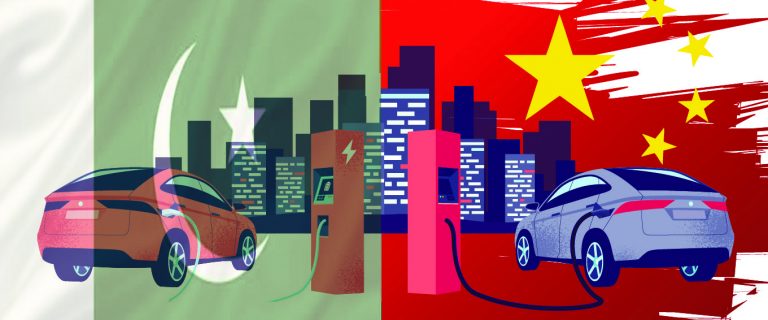
India has Electric Cars on the road while Pakistan is just formulating Electric Vehicle Policy

Pakistan seems to be far behind its neighbor India in the race to bring the transport shift from fossil fuel-based cars to electric cars. It seems that Pakistan’s dream to become an electric car exporter might be overshadowed by India.

India seems to be moving at an incredible speed in concern about getting electric cars on the road.

Indian automotive industry announced the ‘National Electric Mobility Mission Plan (NEMMP) 2020’in 2013 according to which the whole country’s transport system would be based on electric cars by 2030. Since then India has launched several electric cars like Hyundai Kona Electric, Mahindra e-Verito, Mahindra e2o, MG ZS EV. Tata Tigor EV (2019) and Tata Nexon EV (2020).

They have also launched electric bikes like Revolt Motors, Ultraviolette Automotive and plan to launch TorkMotors and Emflux Motors in the upcoming years.

They have also worked on the local transport system introducing electric busses the first launch was in 2014 in Bangalore and since then companies like Tata and Ashok Leyland have introduced their busses which are running on the roads. India even has an intercity electric bus that runs from Mumbai to Pune. They also have heavy-duty tractors and local electric rickshaws on the roads.

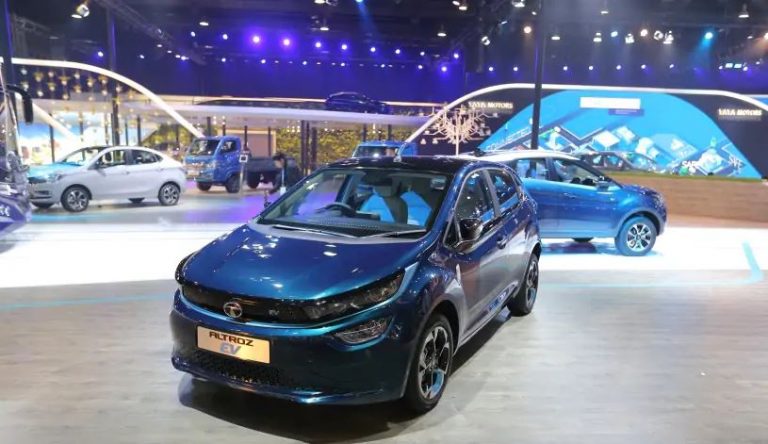
In their latest Auto Expo show 2020 India has several electric vehicles in their show. The most interesting one is the ‘Ora R1’ which is said to be the most affordable electric car.
While India is moving towards affordability and mass production of electric cars. Pakistan seems to be still undecided about its electric vehicle policy. The plans were announced in 2017 but because of the ministry quarrels and the mafia interruptions, they saw continuous delays.

The first policy was first announced in 2020. The plans to become the biggest South Asian country in exporting electric vehicles might turn out to be just a dream. The speed at which India is progressing to make its footprint Pakistan seems to be nowhere near that.
The biggest example of this can be India’s auto show in which they will be showcasing a variety of electric vehicles. Meanwhile the auto expo 2020 in Lahore, Pakistan has no electric cars.
If things go the way they are going then the Auto industry will foresee a recession in the upcoming years as well.

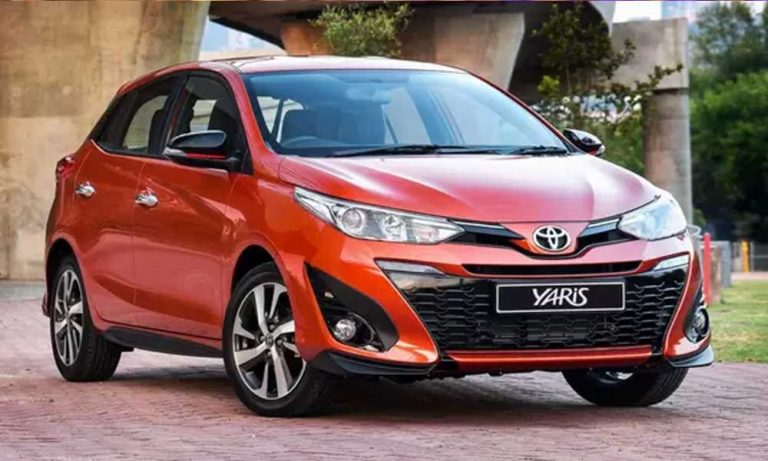
Toyota To Launch Yaris in First Quarter Of 2020

Toyota Indus is planning to launch the Toyota Yaris in early 2020. Toyota Yaris was first introduced as a sub-compact hatchback car in 1999. Later, Toyota introduced Yaris as a sedan car (also known as Toyota Vios) in multiple countries. Reports suggest that Indus Motor Company (IMC) will launch 1,300cc Toyota Yaris in Pakistan will be launched hopefully in March 2020. 

Toyota Yaris price in Pakistan will be kept near 23-25 lacs.

According to the vendors, they have already been asked to manufacture parts for Toyota Yaris and that the production has already started. Reports suggest that Toyota has given up on its plans of launching Toyota Vios, however, Yaris is likely to hit the roads in 6-8 months time.

The vendors, while talking to a private news channel, said that they plan on providing the parts to IMC by November or December this year so that the car can hit the markets in January or February next year but the launch is further extended.

Another vendor, on condition of anonymity, disclosed that the ‘vendors have already started parts development of Yaris’ despite the downward trend of the auto market.

IMF Warns Of Detrimental Impact On Pakistan's Economy Due To Corona Virus Outbreak

The IMF mission has expressed concerns over corona-virus impact on Pakistan’s economy as spillover effect of slowing down of Chinese economy might negatively affect Islamabad’s GDP growth endeavors for the current fiscal year. However, Pakistani authorities rejected any negative impact on its economy in totality and argued that there would be no negative impact so the GDP growth target of 3.3 percent and inflation hovering around 11 to 12 percent must remain intact. 

The IMF projected Pakistan’s GDP growth at 2.4 percent and inflation around 11 to 12 percent for the current fiscal year.

The IMF team also kick-started exact costing exercise to ascertain financing requirements for achieving Sustainable Development Goals (SDGs) related to education, health, water and sanitation as well as provision of electricity till 2030. The initial rough estimates suggest that Pakistan requires additional 7 percent of GDP equivalent resources to meet ambitious targets under SDGs every year till 2030 to fulfill its commitment.

However, Pakistan and the IMF mission kick-started policy level talks to finalise policy prescription on fiscal, monetary, external and energy sectors and evolving consensus which could pave the way for striking staff level agreement with Pakistan and the IMF visiting mission.

Regarding coronavirus impact on Pakistan’s economy, the IMF mission raised this issue before Pakistani authorities fearing that it might result into further slowdown of the economy in the current fiscal year.

Pakistani authorities argued that there was need to understand linkages between Pakistan and Chinese economies before ascertaining its real impact.

China’s economic size stood at over $14 trillion having 16 percent share in global economy. The China’s GDP possessed contribution of agriculture sector to the tune of 8 percent, industry 40 percent and services sector by 52 percent. The Wuhan, the capital of Hubei province, that remained the worst hit area of coronavirus, possessed around 4.5 percent share in China’s overall GDP growth with contribution of industry 46 percent, service 43 percent and agriculture 11 percent. The major industries located in this area are related to automotive, textile, steel, iron, petrochemicals, electronics, food processing and manufacturing having major destinations of exports included USA, South Korea, Netherlands, India, Germany, Japan, UK, Singapore and Brazil.

Its major imports are from Japan, South Korea, Taiwan, US, Germany, Australia, Malaysia, Saudi Arabia and Brazil.

Now Pakistan’s share of export to China stood at $937 million or 7.6 percent while import from China was $4.9 billion (22.0 percent) during July-December period of the current financial year 2020. The major exports to China included food $216 million or 23.1 percent, raw material (7.1 percent; 67 million) and Textile (59.9 percent; $561 million).

The impact on Pak economy dependent on time length of handling coronavirus and its intensity of spreading in surroundings.

The import from China has already slowdown traditionally during severe winter season every year because the government closed down the Pak-China border on Nov 30 and opened on 1st week of April, because heavy snow made transportation impossible, so slow down in China will not negatively impact Pakistan immediately as traders have sufficient stocks of Chinese products, if the impact continues after April.

Our textile industry and exports may increase as Hubei’s textile is going to slow down and our textile industry may get more orders from global market.

It is expected that Chinese currency Yuan will depreciate 3 to 5 percent, import bill of Pakistan may decline $200 million to $300 million.

There is projection that commodity prices will decline e.g. crude oil and Palm oil/soya bean oil, these are our major import items, so their decline will have favorable impact on our trade balance and ease out inflation/domestic prices, they further argued.

Source: The News

Hyundai to halt S. Korea production as coronavirus causes parts shortage

Hyundai Motor Co. said it will suspend production in South Korea, its biggest manufacturing base, becoming the first major automaker to do so outside of China due to disruption in the supply of parts resulting from the coronavirus outbreak.

Hyundai has seven factories in South Korea, catering to the local market and the U.S, Europe, Middle East and other countries. Hyundai’s production at home accounts for about 40 percent of its global output.

The automaker’s decision to halt assembly lines at home could delay supplies of popular and new crossovers such as the Palisade and Genesis GV80.

The production suspension follows a shortage of wiring harnesses which Hyundai sources mainly in China.

Two of the affected suppliers, Kyungshin and Yura Corp., said they were trying to boost production at their factories in South Korea and Southeast Asia to compensate for the disrupted supply from China.

They both also plan to resume production at their Chinese factories after Feb. 9.

“We are in an emergency,” a Kyungshin official told Reuters.

Volkswagen, BMW, Fiat Chrysler, General Motors and Ford Motor Co. said their factories outside of China remain unaffected by supply bottlenecks.

Hyundai’s decision to power down assembly lines at home could delay its recovery. The automaker recently turned in its best quarterly profit in over two years and said it was on track for higher profit margins, aided by more sales of crossovers such as the Palisade and Kona.

Hyundai already stopped production of the popular Palisade over the weekend due to a shortage of components from China.

Most of Hyundai’s South Korean factories will be fully idled from Feb. 7, while some production lines are expected to restart on Feb. 11 or Feb. 12, a union official said, declining to be identified given the sensitivity of the matter.

Schedules for suspension will vary by production line, a Hyundai spokeswoman said.

“The company is reviewing various measures to minimize the disruption of its operations, including seeking alternative suppliers in other regions,” Hyundai said in an emailed statement.

“Hyundai Motor will closely monitor developments in China and take all necessary measures to ensure the prompt normalization of its operations,” the automaker said.

Hyundai and its affiliate Kia Motors do not keep large stocks of the affected parts, said Lee Hang-koo, senior researcher at Korea Institute for Industrial Economics & Trade. “Hyundai and Kia may be more affected as they tend to import more parts from China than other global automakers,” Lee said.

Hyundai’s reliance on China has grown sharply as it built a huge production capacity in the country several years ago when its business was booming there, he added.

“South Korean parts makers followed and built their own facilities along with Hyundai,” Lee said.

South Korea imported $1.56 billion worth of auto parts from China in 2019, versus $1.47 billion in 2018, trade data shows.

Japanese trading house Mitsui & Co has also warned that the virus outbreak may slow manufacturing activities in automobiles and other sectors.

Manufacturers in China are struggling to get factory workers back to production lines due to extended holidays and suspension of public transport systems in some cities.

Many global automakers, including Tesla, Ford, PSA Group, Nissan and Honda, have already suspended production in China this week in line with government guidelines.

The flu-like virus has killed more than 420 people and spread to about two dozen nations, sparking fears for global economic growth and rattling markets, with Shanghai’s stock index losing about $400 billion in market value on Monday.

Courtesy: Automotive news

Malaysia to open a car assembly plant in Pakistan to manufacture affordable vehicles

Malaysia will open car assembly plant in Pakistan by 2021 to produce affordable vehicles in the country.

Renowned Malaysian car manufacturing company Proton will open its plant in Pakistan under a joint venture project between the two countries. It will be Proton’s first assembly plant to be set up in any South Asian Country.

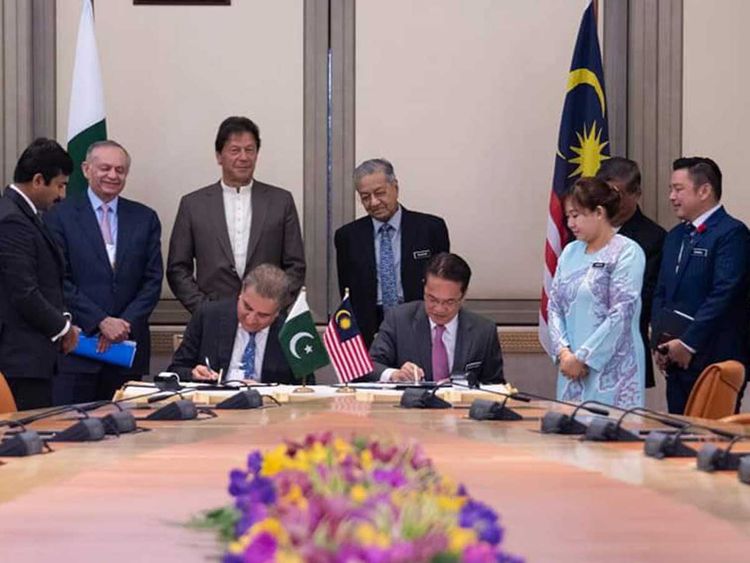
The agreement was reviewed during Pakistan Prime Minister Imran Khan’s visit to Malaysia on February 3rd and 4th. Prime Minister Imran during his meeting with his Malaysian counterpart Mahathir Mohamad, both the leaders discussed the symbolic ground breaking of the Proton Assembly Plant jointly officiated in Islamabad on March 22, 2019, and were pleased to note the progress made at the facility in Karachi, scheduled for completion in the first half of 2021.

They also discussed the joint venture between Malaysia’s Proton Holdings and Pakistan’s Al-Haj Automotive that add value with the commencement of selling Malaysian-made Proton vehicles (CBU) in Pakistan in the second half of 2020, and eventually, assembly and sale of Pakistan-made Proton vehicles (CKD) in Pakistan in the first half of 2021. The Malaysian-based corporation, Proton was established in 1983 and has so far sold more than 3 million cars. Proton cars are sold in more than 25 countries including Britain, Singapore and Australia.

Meanwhile, both the leaders also have also agreed that the strategic partnership status is a testament to the new level of bilateral cooperation between the two countries in various fields, reported APP, Pakistan’s official news agency.,.

According to a joint statement issued on Wednesday on the conclusion of Prime Minister Khan’s two-day official visit to Malaysia, the Malaysian prime minister recognised the essential role of the Pakistan Prime Minister in ensuring peace and security in the South Asian and West Asian regions through his goodwill diplomatic efforts towards the maintenance of international peace and security.

Malaysia and Pakistan will further increase collaborative efforts in international forums in upholding the true values of Islam and in addressing the common challenges facing the Ummah, including Islamophobia and the rights of Muslim minorities.

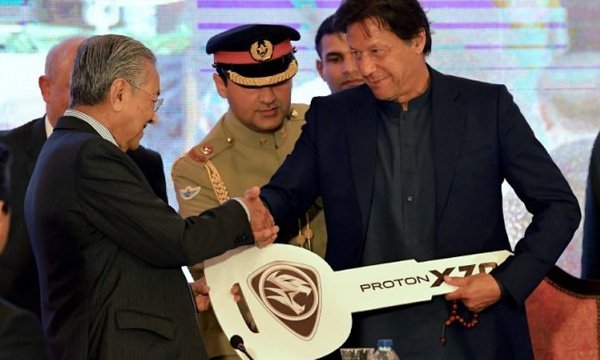
Also read: Malaysian PM Mahathir Mohamad gifts PM Imran Khan Proton X70 SUV

Malaysia and Pakistan together with Turkey will proceed with the initiatives in broad areas of strategic cooperation under the Joint Committee Meeting (JCM) to complement the efforts by the community of the Muslim world aimed at uplifting the socio-political and socioeconomic condition of the Ummah and promoting the true values of Islam, while being mindful of the centrality of the Organisation of Islamic Cooperation (OIC) and in this regard.

Malaysia and Pakistan will explore institutional collaboration in the area of halal food and services, and consumer products. Both the countries look forward to strengthening bilateral cooperation in the field of tourism, as well as continue to encourage tourism and hospitality investment and enhance educational ties.

Malaysia and Pakistan will explore new possible areas of cooperation in trade and investment, such as renewable energy, natural resources, aerospace and aeronautical, digital technology, artificial intelligence and e-commerce.

Pakistan International Airlines (PIA) will add a new direct flight destination soon from Lahore to Kuala Lumpur in order to cater for the increasing number of Pakistani travellers to Malaysia.

The prime minister of Malaysia acknowledged the extensive counter-terrorism efforts by Pakistan and progress it continue to make in complying with the recommendations of the Financial Action Task Force (FATF).

Source: Gulfnews.com

Tussle between industry, climate ministries delays EV assembling in Pakistan

PM Imran Khan wants quick implementation of NEVP

When the National Electric Vehicle Policy (NEVP), spearheaded by Ministry of Climate Change, was given a green signal by the Federal Cabinet on November 5, 2019; there was no need for another Ministry to interfere because Cabinet’s decision is considered final.

However, in case of NEVP, the situation is almost reverse owing to continuous backlash by the Japanese dominated assemblers’ body – Pakistan Automotive Manufacturers Association (PAMA) since the day NEVP was announced by the Federal Cabinet on November 5, 2019.

PAMA’s series of letters showing serious reservations over NEVP to the Advisor to Prime Minster on Industries and Production, Abdul Razzak Dawood has finally paid off as Mr Dawood made an entry to support Japanese vehicle assemblers.

Mr Dawood in the 30th meeting of Auto Industry Development Committee (AIDC) has authorized the strong arm of Ministry of Industries, the Engineering Development Board (EDB) as the key department to formulate the electric vehicle (EV) policy and directed it to submit draft proposals in this regard by the next month.

On the above developments, Chairman Association of Pakistan Motorcycle Assemblers (APMA), Mohammad Sabir Shiekh said “what is the legal status of November 5 NEVP when EDB has now been tasked with fresh mandate to formulate EV policy.”

Before new role of EDB, the Ministry for Climate Change (MoCC) had summoned an inter-ministerial meeting in Islamabad in last week of December 2,109 to discuss NEVP. The MoCC had also informed relevant ministries and government departments that the “NEVP needs to be operational by January 2020 by validation of incentive packages through the Economic Coordination Committee (ECC).”

Amid lack of infrastructure, Prime Minister Imran Khan has already called for early implementation of NEVP, especially for two- and three-wheelers as well as buses for public transport in order to prevent smog.

The climate ministry said the subject policy under section 8 envisages the constitution of an inter-ministerial committee which would include members from the federal line ministries, provinces, private sector and the academia.

This committee would be responsible for overseeing all issues related to the entire electric vehicle value chain in order to smoothly introduce and coordinate efforts towards local manufacturing.

It will also be responsible for overseeing standardization, regulation and compliance towards infrastructure. Periodic amendments in the policy based on changing technology and marketplace will also be its responsibility.

Again PAMA came hard saying that it had neither been taken into confidence on NEVP nor invited in the inter-ministerial meeting.

PAMA recalled that on November 4, 2,019, the news was swirling in the market that NEVP policy was on agenda of federal cabinet meeting the next day.
Before this, the climate ministry had circulated draft policy of electric vehicle while requisite input from the stakeholders on it was still to be obtained.

On the instance of MoCC, the EDB conveyed a meeting on May 23, 2019 with the auto sector people on the formulation of electric vehicle policy.
Here, the stakeholders had unanimously voiced that the concerned ministry was alien to the subject and it was the domain of Ministry of Industries and Production (MoIP).

PAMA had been interacting with the MoIP and the EDB and further held a consultative meeting with its own officials on November 1, 2019 in Karachi to discuss proposal on NEVP formulation for auto industry.

It was surprising for PAMA that NEVP was on the agenda of November 5 federal cabinet meeting when stakeholders were in the process of discussing it with EDB and the policy on same subject was being presented by the other arm of the government for approval.
The government had taken a crucial decision on electric vehicle policy while the entire auto industry was groping in the dark as it had neither discussed nor heard an official word in this regard, the Association said.

PAMA informed the Commerce and Production Adviser Abdul Razzak Dawood that it was unusual that the EDB under the aegis of MoIP had initiated discussion with the stakeholders on electric vehicle policy while the other ministry had already espoused the summary, on the same subject, and submitted it to the cabinet for approval.

Sabir Sheikh, by telling his story on NEVP, said after the announcement of NEVP on November 5, 2019 by the federal cabinet, the EDB called upon all car assemblers of Pakistan on January 16, 2020 for the 30th meeting of AIDC. Letter was issued on January 10, 2020.
Around 50 stakeholders including government departments were invited in the meeting. The main agenda of the meeting was discussion and formulation of NEVP by the EDB (four and two/three wheelers).

Chairman APMA Sabir Sheikh, who is also the chairman of Pakistan Electric Vehicles Manufacturers Association, said he was invited in the meeting as per invitation letter but the EDB did not send intimation or letter or email or phone for the meeting.

Surprisingly, on January 21, 2020, another government department of Islamabad sent me a letter seeking reason for not attending the meeting. He said he had informed the government official that he had been the member of AIDC for the last 10 years and still the member of AIDC.

“I do not know who had omitted my name from new list of AIDC,” he said adding that the government has not been holding negotiations on EV with genuine stakeholders who want to start EV business in Pakistan.

“When the Federal Cabinet had already approved NEVP on November 5, I fail to understand why EDB is trying to formulate EV policy,” he said adding “which department is powerful whether the federal cabinet or the EDB.”
Half of the stakeholders, who were invited in the meeting, could not participate in the meeting, he said.

Serious apprehensions were expressed by the auto sector that several government functionaries including the Ministry of Science and Technology and the environment agencies were also involved in EV policy making.

The representatives of Pakistan Automotive Manufacturers Associ¬ation (PAMA), Association of Pakistan Motorcycle Assemblers (APMA) and Pakistan Association of Auto Parts and Accessories Manufacturers (Paapam) expressed the query in this regard.

It was decided by Dawood that EV Policy is the domain of MoIP as per the rules of business and thus EDB should be the focal department.

Sabir urged the Federal Minister Abdul Razzak Dawood to take feedback from all the stakeholders including APMA before finalizing NEVP.

Dawood authorized preparation of policy to EDB and it was directed that the first draft within one month. Various tariff and non-tariff proposals were discussed in the meeting, while stakeholders sought 15-20 days for submission of concrete recommendation on local manufacturing of EVs.

EDB Chairman Raza Abbas asked the auto industry to respect the timeline for submission of proposals to the board so the first draft could be finalised before the end of February.
Sabir asked EDB Chairman Raza Abbas that he should mention APMA chairman name in the list of AIDC.

The meeting noted that investment in the EVs would be under the Auto Development Policy (ADP 2016-21), which would include investment plans, standardization of equipment, promotion of localisation, exports of parts and components in long run, employment generation and positive impact on national economy.

Sabir said all the sick industries of two and three wheelers should be allowed without wasting time to start production of EVs in their factories. They are already approved assemblers with vast experience of assembling coupled with already available infrastructure at the factories for assembly of EVs.

However, Dawood stressed that “Make in Pakistan” will be supported in each policy including EV manufacturing, and highlighted the government’s policy to discourage imports to promote creation of job in country.

“We also support” Make in Pakistan” policies for EVs to support Ministry of Industries’ policies,” he said.

Adviser to the Prime Minister on Climate Change Malik Amin Aslam in another inter ministerial meeting held in the third week of January 2,020 said electric vehicle policy would focus on encouraging manufacturing of vehicles locally with made-in-Pakistan tagline.

He said local production incentives would be offered to auto manufacturing sector.
Sabir said the EDB, AIDC, PAMA, PAAPAM, APMA, PEVMA etc are all one agenda organizations of the auto sector. The above names give an impression that they are different departments but practically they have same agenda and issue.

The agenda included finalisation of modalities regarding two and three wheelers import, manufacturing of infrastructure and parts after discussing them with relevant stakeholders including AIDC and PAAPAM and sending them to ECC for approval.

Listing benefits, the prime minister’s adviser said that possible benefits of electric vehicle penetration included decrease in emissions from transport sector, reduction in fuel import bill, and enabling the localization of EV manufacturing.

“It would enable Pakistan to become part of the global value chain of EV manufacturing,” he said.

Participants called for further consultations with stakeholders for four wheeler electric vehicles. They emphasized that standardization was an area where parameters needed to be specified.
Participants also decided that a subcommittee would be formed to draft parameters for standardization and finalization of recommendations for the ECC for two and three wheeler electric vehicles.

However, the Ministry of Industries and Production was requested to discuss proposed incentives with AIDC and PAAPAM etc., and convey their input for two and three wheelers within a week and for four wheelers within 15 days.

He invited AIDC and PAAPAM through the industries ministry for consultative meetings with the existing automobile manufacturers to address their concerns, if any.

An auto industry stakeholder said a Pandora box has been opened after the task to formulate the EV policy was given to the EDB, thus posing serious legal and constitutional issue when Federal Cabinet of the PM was not competent enough to approve any policy.

There were also reports that some serious stakeholders, who pushed on this government towards EV, were not invited in the January 16, 2020 meeting.

Some EDB officials were blamed for playing negative role by sidelining genuine stakeholders from the meeting. This is evident from a recent local newspaper report headlined “Govt officials accused of taking billions from auto sector.”

This exclusive article on Electrical Vehicle, published in Automark Magazine’s printed edition of February-2020
Honda and Toyota to keep Chinese plants closed over virus fears

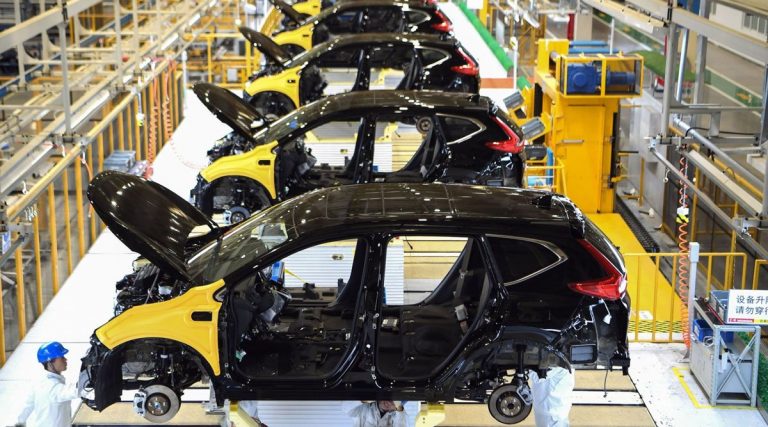
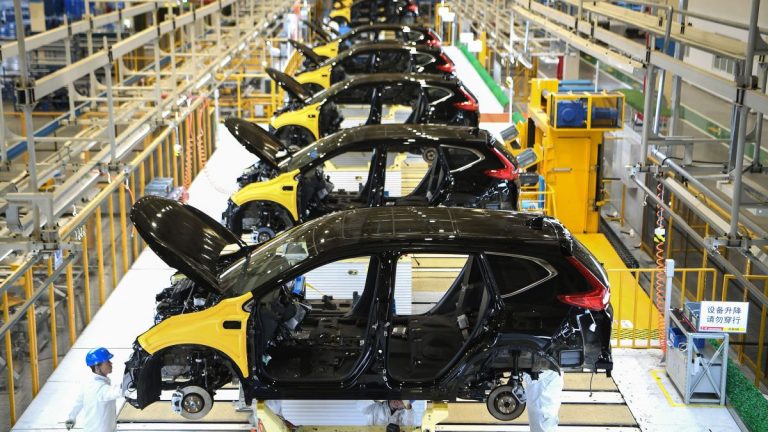
Honda Motor and Toyota Motor will keep shuttered auto plants in China closed in response to the coronavirus epidemic, Nikkei has learned.

Honda on Friday announced that it will aim to restart production in the Wuhan area of Hubei Province on Feb. 17. On Jan. 29, it decided to suspend operations until Feb. 9 in response to a Chinese government notice following the viral outbreak.

Honda aims to restart production in Guangzhou on Feb. 10. If the carmaker can restart production as now scheduled, it “will not have much impact,” said Seiji Kuraishi, Honda’s executive vice president, at a news conference the same day.

Honda is the first Japanese automaker in China to extend the suspensions.

Honda’s Wuhan plants can make up to 600,000 vehicles a year — about half the manufacturer’s capacity in China — and 12,700 employees work at the plants. In 2019, the company sold 1.55 million vehicles in the country, a record.

The viral outbreak risks hurting the automakers’ upcoming results, underscoring their dependence on China in terms of production and sales.

Honda on Friday raised its net profit estimate for the year ending March 2020 to 595 billion yen from 575 billion yen, down 3% from the previous year.

Toyota, which had planned to restart operations at its four Chinese plants as early as Feb. 10, extended its production halt to Feb. 17.

All four of the automaker’s plants — in Tianjin, Sichuan, Jilin and Guangdong — are joint ventures with local companies.

Courtesy: Nikkei Asian Review