Home Blog Page 23

Pakistan’s Auto Industry: Unleashing Export Potential for Engineering GoodsPakistan’s Auto Industry:

Exports play a vital role in modern economies, opening up new markets for goods and fostering economic growth through international trade. Governments worldwide actively engage in diplomacy and foreign policy to promote and facilitate trade, encouraging exports and imports for the benefit of all parties involved. With this global context in mind, let’s explore the potential of Pakistan’s auto industry in the world market.
The auto industry is a significant player in the realm of global exports, contributing to the economy in multifaceted ways. In Pakistan, the auto industry stands poised to make its mark on the international stage. A substantial portion of auto parts—approximately 44%—is theoretically addressable for global markets. These include high-tech aggregates and proprietary components like cylinder blocks and motors. The remaining 56% consists of diverse parts, ranging from skill-intensive to labor-intensive components, steel/casting/iron rubber-intensive parts, and a blend of plastic and metal aggregates.
The potential for Pakistan to enter the global auto industry market is substantial. Globally, the aftermarket size stands at an impressive US $480 billion. To fully realize this potential, the government must play a pivotal role. A well-defined roadmap for at least the next five years is essential. Under this framework, each Original Equipment Manufacturer (OEM) should export at least one model within five years. OEMs can strategically plan to maximize localization, with based on technological collaboration.
TDAP, in collaboration with commercial attachés, should organize webinars with trade associations and buying houses to create a conducive environment for exports. Additionally, the development of an EXPORT portal is crucial for streamlining export-related processes. The Engineering Development Board (EDB) should facilitate Joint Ventures and Technical Collaborations with international companies, with government financial support, ensuring no taxes on royalty and Technical Assistance Agreement (TAA) fees.
A key aspect of enhancing export potential is the development of local raw material manufacturing. Plastic, sheet metal, and other essential components should be produced domestically. Furthermore, the government should invest in public-private partnerships to establish testing facilities, development labs, and design houses. The Small and Medium Enterprises Development Authority (SMEDA) should offer extensive training to improve productivity, build capacity, and modernize management.
SMEDA can also develop Supply Chain Management Software to benefit Small and Medium-sized Enterprises (SMEs) and initiate export coaching programs, subsidizing relevant certifications as per export requirements. SME Export Club clusters can be formed to facilitate joint exports of engineering goods.
Entrepreneurs have a crucial role to play in this endeavor. They should transition their mindset to focus on making their companies export-oriented. This can involve developing export desks, conducting desk research to identify distributors, reinvesting in technology, and creating export-oriented websites. Entrepreneurs can also learn from role models who have successfully exported engineering goods.
MCE is building a distributor database, MCE can export like sun visors, foam kits, door trim and gearboxes Rexene covers. MCE have already ventured into exporting to significant European markets like the UK, Ireland, and the Czech Republic, with future targets set on the USA, Canada, and Australia.
The ultimate goal is to create SME clusters that unite and empower SMEs to explore the global market. The message is clear: “YOU CAN DO IT!”
Numerous individuals and businesses have achieved remarkable success in the realm of engineering goods exports. They have not only done it but have thrived in their endeavors. Their experiences offer inspiration and proof that success is achievable. The path has been forged, and there’s no doubt: “YOU CAN DO IT TOO.”

Mashood Khan
Director – Mehran Commercial Enterprises / Expert Auto Sector

Future of local Car Production in Pakistan

Pakistan’s automotive industry has grown significantly over the past two decades, yet it remains heavily reliant on imported high-tech components and has not achieved the capability to design and manufacture a car from scratch. Despite having assembly plants, a strong supplier network, and government policies promoting localization, challenges such as limited R&D facilities, lack of advanced manufacturing technology, and small market size hinder the country’s progress toward producing a fully localized car. Overcoming these obstacles is crucial for achieving self-reliance, reducing import dependency, and fostering sustainable growth in the automotive sector.

The automotive industry has mushroomed in Pakistan since the last two decades with many assembly plants coming up and an increased demand for locally assembled as well as imported cars. The country is currently assembling different models but has not produced a car designed and manufactured from scratch within the country. This article discusses the facilities, capabilities, and challenges available to produce a fully localized car in Pakistan and the realistic level of localization that can be achieved.

Current Automotive Manufacturing Facilities in Pakistan

Pakistan’s automotive industry is dominated by assembly units, with a well-developed component supplier ecosystem and an emerging local vendor base. Pak Suzuki, Indus Motors (Toyota), and Honda Atlas are some of the leading car manufacturers with assembly facilities in the country, while Hyundai and KIA, which recently entered, have stiffened competition and increased investments in technology.

We have local:

Assembly Plants: Available plants can support vehicle assembly with a wide range of models from small cars to SUVs depending on imported CKD and SKD kits.

Body Fabrication and Welding Capacity: Pakistani manufacturers are capable of fabricating and welding car body frames. Simple and intermediate parts such as body panels, chassis and interior parts are gradually being made in Pakistan.

Paint Shops: Most assembly plants have modern paint facilities to allow multi-coat finishes and corrosion protection with high-quality painting processes.

Component Supplier Network: Pakistan has an active network of suppliers, which are producing critical parts, including seats, tires, batteries, exhaust systems, wiring, glass, and plastic components. Over 1,600 small and medium-sized enterprises are assisting the automotive supply chain in Pakistan.

Engine and Powertrain Facilities: Scaled up production of powertrain components such as air filters, gaskets, etc. In the country, there is no unit producing complete engine or transmission system.

Possible Localization of the Car Industry in Pakistan

Localization in the automobile industry defines up to which degree a car is assembled by local sources, such as labour, materials, and components. While Pakistan imports the more complex parts, right infrastructure with policy support could mean that it has a huge potential for localization in basic and mid-range vehicles.

 Localization Stages-Key Components:

With the manufacturing setup, most of the basic vehicle parts like seats, dashboards, wheels, tires, batteries, window glass, and exterior lights can be localized. More than 60% of the non-mechanical parts have high potential of localization

Chassis, fuel tanks, exhaust systems, and parts for suspension will be locally produced but will depend upon relatively minor technological upgradation and vendor training have moderate localization potential

High technology components like engines, transmissions, electronic control units (ECUs), and sophisticated safety systems must be imported because Pakistan has relatively low technical capability for the accurate manufacture and high-technology applications can have low localization potential:

Localization Feasible by Vehicle Model:

Economy Models and Small Cars: These models require relatively low technology and have a high localization potential; up to 60-70%.

Mid-Range Cars: Imports in the form of electronics and performance components will provide an attuned level of localization, probably 40-50%.

Luxury and Premium Cars: As technology demands are higher, localization may be low, around 20-30%, with most critical parts imported.

Government Policies Support Localization

The government of Pakistan has introduced auto policies to encourage local production, reduce dependency on imports, and encourage vendor development. There is a framework for localization through the Automotive Development Policy 2016-2021 and the new Auto Industry Development and Export Policy 2021-2026, in which the following are practiced:

Import duties on localized components are reduced, which encourages manufacturers to source locally rather than import. Subsidies by the government for new entrants and electric vehicles attract both foreign and domestic investment to produce and assemble locally. Locally trained vendors can become suppliers of high-quality parts, thus helping in increasing the local supply chain.

Challenges to Attaining High Localization

Pakistan lacks high-tech R&D facilities required for the designing and testing of critical components like engines, transmissions, and ECUs. Investment in technical education and vocational training is required to develop local expertise in these areas. Quality automotive component production requires a significant investment in advanced manufacturing technology. Encouraging local businesses to invest in precision manufacturing will help bridge this gap. Local production of automotive parts requires a huge volume for economies of scale. Due to a relatively small automobile market in Pakistan, economies of scale cannot be easily achieved, especially for niche or premium components.

Government support, private investment, and transfer of technology would be inevitable to ensure successful production in Pakistan for the fully localized car. Collaborating with overseas manufacturers would promote knowledge and joint ventures among local businesses to develop technology and upgrade the quality of production. The production line could remain focused on higher demand models like budget cars and electric vehicles.

One of the most ambitious targets remains the car produced wholly in Pakistan. Pakistan does have some good ground on which to build facilities, workforce, and vendor base for increasing local content. Therefore, Pakistan can raise local car production in following years by utilizing available infrastructure, improving local capabilities of vendors, and formulating policies that will support localization. The Pakistani automotive sector, with a steady R&D focus, a developed workforce, and strategic investments will move toward self-reliance, job creation, and economic growth.

Article is written by Abdul Daiyem Final year student of B.S., Industrial Engineering from UMT and published in Automark’s printed and digital of January-2025 edition.

Karachi’s Drainage System Gets a Boost 38 Advanced Suction Vehicles Unveiled for Urban Development

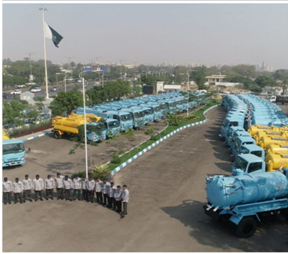
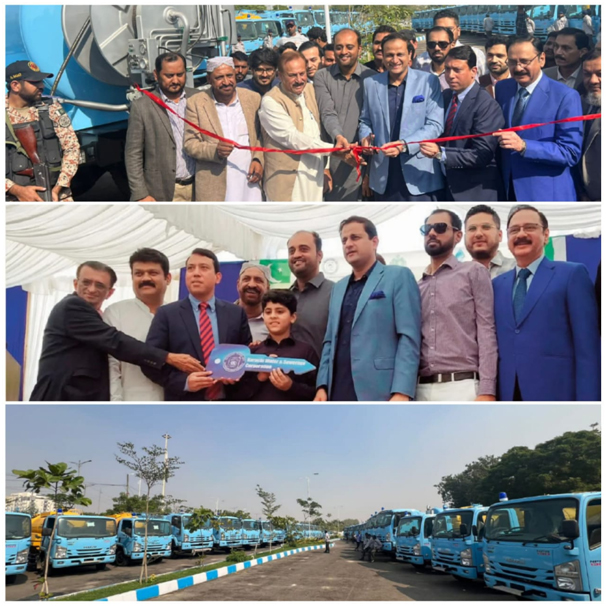
I recently had the opportunity to attend the ceremony for the handover of 38 suction vehicles to the Karachi Water and Sewerage Board (KWSB) by the Sindh Government, and it was a remarkable experience. The revelation that these advanced vehicles were locally manufactured by Meraj Limited, a Pakistani company, not only surprised me but also instilled a sense of pride in the potential and capabilities of our domestic

The introduction of these 38 advanced jetting and suction machines by Meraj Limited represents a significant leap in addressing Karachi’s longstanding drainage challenges, aligning seamlessly with the city’s developmental agenda. Equipped with Euro 2 engines and imported pumps from Italy, these vehicles not only bring cutting-edge technology but also offer a cost-effective solution to the growing demands of a city grappling with population growth and urban development.

The capacity of 7000 litres and the efficiency in unclogging severe sewage blockages underscore the efficacy of these locally produced machines. Meraj Limited’s role in this initiative sheds light on the importance of fostering and supporting local industries. By manufacturing specialized vehicles within the country, Meraj Limited contributes not only to immediate problem-solving but also to long-term economic sustainability by saving costs that would otherwise be incurred through importing similar machinery.

The Sindh Government’s decision to support Pakistani enterprises, exemplified by choosing Meraj Limited for this project, is commendable. Beyond addressing crucial infrastructure needs, this collaboration contributes to the growth and sustainability of local industries, aligning with the broader vision of promoting self-sufficiency and recognizing the intrinsic value of indigenous products.
In a time where imports often dominate, the utilization of locally manufactured vehicles for vital tasks signifies a positive shift. This move not only bolsters the national economy but also showcases the competency of Pakistani companies, such as Meraj Limited, in producing high-quality, advanced machinery.
In conclusion, the ceremony not only offered valuable insights but also underscored the commendable commitment of the Sindh Government towards the betterment of Karachi. The collaborative effort stands as a shining example of proactive governance, showcasing the immense potential within Pakistan to address its challenges domestically. This strategic partnership not only fosters national pride but also positions Karachi on a trajectory of sustained progress, highlighting the pivotal role of local initiatives in steering the city towards a brighter and more self-reliant future.

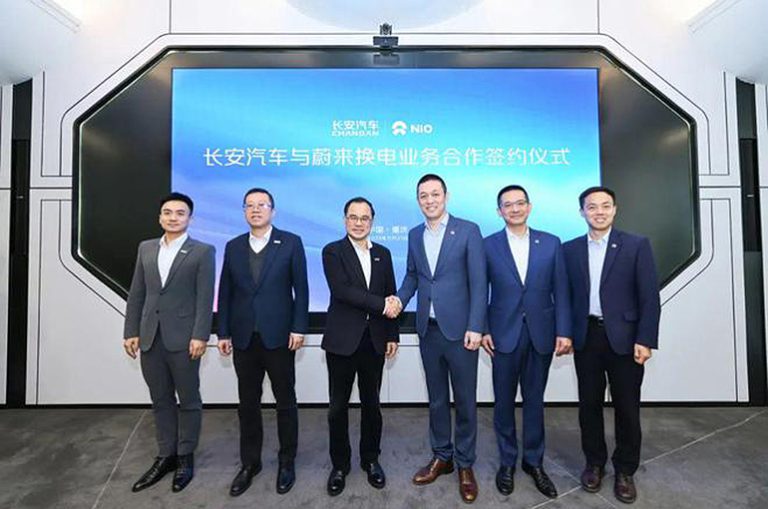
China’s Nio, Changan Auto Link Arms to Develop Battery-Swapping EVs

Chinese electric vehicle startup Nio and Changan Automobile have agreed to jointly develop battery-swapping EVs, making the carmaker Nio’s first partner since it started working on swappable batteries five years ago.

The pair will also work together on standardizing batteries and Changan Auto’s first passenger car to use Nio’s battery-swapping station network is scheduled for launch in 2025, they said yesterday.

Battery swapping allows drivers to quickly change depleted batteries for fully charged ones, and Nio’s Battery as a Service model allows customers to subscribe to a service plan, thereby separating vehicle purchase from ownership of the battery. Nio has been creating a network of battery swap stations, and has over 2,100 globally.

Shanghai-based Nio is discussing battery-swapping partnerships with four or five carmakers, according to a speech founder William Li made to the company.

“Nio has accumulated rich experience in research and development, construction and operations of Power Swap stations, and is ready to open to the entire industry,” Li said.

Changan Auto Chairman Zhu Huarong said the partnership with Nio would not be limited to battery swapping. The pair will continue to strengthen their cooperation in other platforms and fundamental areas, including energy, charging and swapping, complete vehicles, and ecology, forming a positive ecosystem, he said.

Nio and Changan Auto set up a joint venture in 2018, which was renamed Avatr Technology in May 2021. Battery giant Contemporary Amperex Technology was among the investors in the high-end smart electric vehicle brand.

Nio has more than 1,600 battery swapping patents, and has served more than 32 million users as of Nov. 20. It costs about CNY3 million (USD420,805) to build a single Power Swap station equipped with batteries, according to Nio co-founder and President Qin Lihong. Each station needs to complete over 50 swaps a day on average for eight years to break even, Qin pointed out.

In addition to Nio, Geely Auto, SAIC Motor, and CATL have also launched battery-swapping businesses.

Pak-Iran parts manufacturers announce to exchange technologies barter auto parts: PAAPAM delegation visits Iran

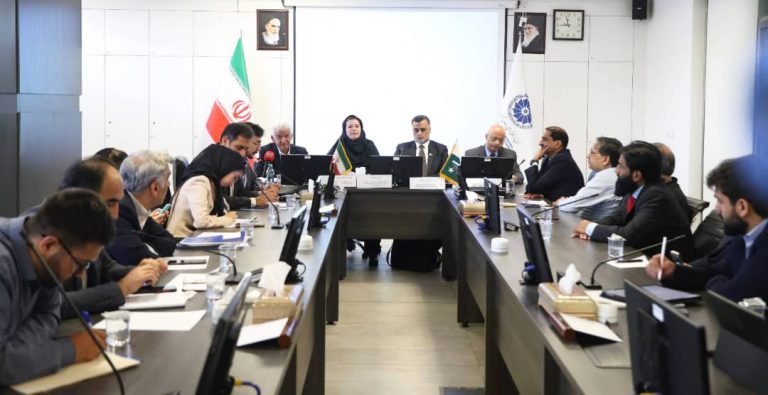
The Pakistan Association of Automotive Parts and Accessories Manufacturers (PAAPAM) and the Iranian Auto Parts Manufacturers Association (IAPMA) have announced the plan to exchange technologies and barter the parts and raw materials, exploiting the immense scope for the manufacturing and supplying auto parts and accessories between Iran and Pakistan.
The delegation of auto parts makers visited Iran under the banners of the Pakistan Association of Automotive Parts and Accessories Manufacturers and Pak Iran Business Council of FPCCI, at the invitation of the Iranian government to attend the Auto Parts exhibition held in Tehran, besides meeting high-ups of Iran Chambers and the Iranian Auto Parts Manufacturers Association (IAPMA) to pave the pathway of trade venues.
The Iranian officials and entrepreneurs reciprocated their big cooperation between two great friends tied by religion, neighborhood, culture, and friendship. Pakistan embassy and its commercial section dedicatedly remained active during the seven-day-long hectic trip of the leading parts producers. After affirming the barter trade agreement, positive energy is seen on both sides of the Pak-Iran border. The visiting side especially thanked Dr. Reza Malkia, a renowned parts producer and a board member of the association, the President (IAPMA), Syed Ahmad Hosseini, and Dr. Amir Husain, CC, for their endeavors to bring both sides closer.
Referring to the great capabilities and long history of the relationship between Iran and Pakistan, Nilofar Esadi, the deputy head of the international affairs of the Iran Chamber, said the two countries could fill the gaps in the auto industry in their countries by cooperating in this field. Pursuing the memorandum of understanding signed between the presidents of the Iran Chamber and the Federation of Pakistan Chambers of Commerce for establishing the Iran-Pakistan Joint Business Council, she added that we planned to cooperate closely to develop trade with Pakistan.
Mr. Muhammad Nasim, Head of the Delegation, and Mr. Najam Ul Hassan Jawa, Co-head of the delegation, said the Pakistan auto parts sector was producing quality parts since they had to aftermarket the world’s best Japanese standards. They had localized tractors and motorcycles, more than 95%, followed by cars, 60%. Nasim further stated that Pakistan was producing the cheapest tractor in the world. Pakistan is strategically located in an ideal position due to CPEC’s ability to connect the Iranian markets to the world. Pakistan was enjoying preferential or zero duty to all major markets, which could give respite to Iranian auto parts makers in the form of export excess to the world they were clipped due to sanctions.
The delegation expressed identical thoughts at the reception honored by the (IAPMA). The association’s President greeted the board and said they had many common things to cooperate. Muhammad Nasim underlined the close interaction between the two auto-parts-producing countries to remove existing barriers and misperceptions. Najam Ul Hassan Jawa requested both governments to ease the modus operandi for making barter trade. The delegation also visited the Pakistan embassy, and the HE Rahim Hayyat Qureshi, Ambassador to Iran, and Dr. Amir Husain, Commercial Counselor, briefed the delegations on how to work with the emerging Iranian market under the new regime. The delegation thanked the embassy for its exceptional support to them and for connecting the chain. The consensus for not letting appear the cracks between two great friends were evidently seen.

Achieving Workplace Safety and Occupational Health: A Comprehensive Approach to Employee Well-being

Introduction:

In today’s dynamic and fast-paced work environments, ensuring the safety and well-being of employees is of paramount importance. A strong commitment to workplace safety and compliance with Occupational Health and Safety (OHS) regulations are essential for fostering a secure and productive working environment. In this article, we will explore the integration of workplace safety and OHS practices, highlighting their significance in various industries and presenting strategies for creating a safe and healthy workplace for employees.

  1. Understanding the Link between Workplace Safety and Occupational Health:

Workplace safety and occupational health are inherently interconnected aspects of employee well-being. While workplace safety primarily focuses on preventing accidents and injuries, OHS takes a broader approach, encompassing physical, mental, and emotional health concerns. Recognizing this symbiotic relationship allows organizations to develop a more holistic approach to employee safety and well-being.

  1. The Impact of Workplace Safety and OHS Compliance:

Compliance with OHS regulations goes beyond just adhering to legal requirements; it directly influences the overall success of a business. Reduced absenteeism, increased employee morale, higher productivity, and a positive organizational culture are some of the tangible benefits that result from prioritizing workplace safety and OHS compliance.

  1. Identifying and Assessing Workplace Hazards:

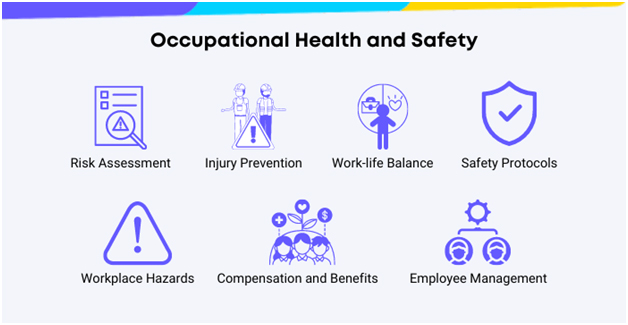
Effective workplace safety and OHS programs begin with a thorough identification and assessment of potential hazards. Conducting regular workplace risk assessments helps organizations identify workplace hazards, ergonomic concerns, exposure to hazardous substances, and psychosocial factors affecting employees’ health.

Implementing Preventive Measures:

Once hazards are identified, organizations must take proactive measures to prevent accidents and health risks. This may include implementing engineering controls, providing personal protective equipment (PPE), ergonomic adjustments, and designing safety protocols tailored to specific job roles and tasks.

  1. Training and Employee Engagement:

Empowering employees with the knowledge and skills to identify and address safety and health risks is essential. Regular training sessions on safety protocols, emergency response procedures, and OHS guidelines foster a safety-conscious culture where employees actively participate in maintaining a safe working environment.

  1. OHS Compliance in Diverse Industries:

Different industries present unique safety challenges, and compliance with OHS regulations must be tailored accordingly. For example, the manufacturing industry may focus on machine guarding and chemical safety, while the IT sector may emphasize ergonomic workstations and mental health support.

  1. Safety Leadership and Communication:

Leadership plays a pivotal role in promoting workplace safety and OHS compliance. By demonstrating a strong commitment to safety, leaders set an example for employees and encourage open communication about safety concerns.

  1. Monitoring and Continuous Improvement:

Ongoing monitoring and evaluation of workplace safety and OHS practices are crucial to maintaining compliance and effectiveness. Regular inspections, incident reporting, and data analysis help identify areas for improvement and implement corrective actions.

Conclusion:

Integrating workplace safety and Occupational Health and Safety (OHS) practices is a proactive approach that demonstrates a company’s commitment to the well-being of its employees. By prioritizing employee safety and complying with OHS regulations, organizations create an environment where employees can thrive both physically and mentally. Through ongoing assessment, employee engagement, and continuous improvement, businesses can achieve a safer workplace, higher productivity, and a positive organizational culture that fosters success and longevity. Embracing a comprehensive approach to workplace safety and OHS not only protects employees but also becomes a driving force behind an organization’s prosperity in today’s competitive landscape.

This exclusive article has been written by Arsalan Ahmed and published in Automark Magazine’s printed edition of August-2023

MG Pakistan Unveils Ambitious Plans: Introducing New Variants and Expanding Market Presence in 2023

Karachi, July 24: MG Pakistan, A prominent player in the country’s automotive industry aims to introduce two new variants of its popular models, the MG HS Excite and 2.0 AWD, in a bid to further strengthen its market presence and cater to evolving consumer preferences.

As part of their expansion strategy, MG Pakistan is also turning its focus towards the sedan segment, which currently holds a substantial 45% market share.

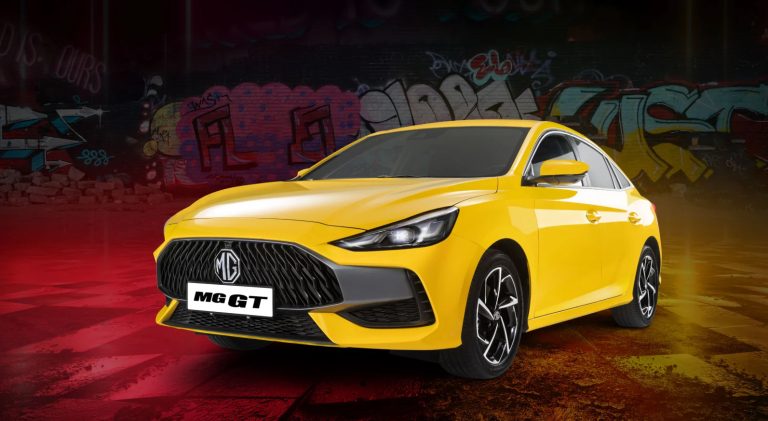
Syed Asif Ahmed, General Manager Marketing Division, expressed optimism about the potential of the sedan market and revealed that their first sedan offering for Pakistani consumers might be the MG GT, a 1600 CC Sedan car.

Following the remarkable success of the MG C-SUVs, with over 15 thousand units sold in the last two and a half years, MG Pakistan sees great potential in the sedan category, as well as in other C and D SUVs.

Key to MG Motors’ vision is the localization of high-value parts to enhance competitiveness within the domestic market and explore potential export opportunities. While the company currently relies on imported parts due to its greenfield status, it aims to seek partnerships with global manufacturers to enable the local production of high-tech components, which will further contribute to the growth of Pakistan’s auto industry.

Amidst the prevailing economic situation, MG Motors remains positive about Pakistan’s automotive potential.

Asif Ahmed noted that Auto industry has always shown ‘V’ type recovery and indicated a promising and prosperous market in the near future.

MG Pakistan majority share holder Shanghai Motor International Limited (SMIL) have expressed a long-term commitment to the Pakistani market. As the fourth Knock Down (KD) plant globally, the MG plant in Pakistan represents a significant $100 million investment, reaffirming the company’s dedication to the country.

Currently, the MG plant has an annual production capacity of 25,000 vehicles. However, due to the impact of the economic situation, the monthly output has been limited to 400 cars.

Speaking about the difference between locally assembled MG vehicles, Asif Ahmed highlighted that the locally assembled MG HS Essence offers the same build quality and specifications as the MG HS Exclusive CBU.

MG Pakistan aims to maintain global standards and specifications for its clients, setting the brand apart from other local manufacturers.

Asif Ahmed emphasized that MG is the only company in Pakistan with Hybrid Electric Vehicles (HEV), Plug-in Hybrid Electric Vehicles (PHEV), and Electric Vehicles (EV) in its lineup. He stressed the importance of a stable and long-term robust auto policy with a focus on New Energy Vehicles for Pakistan’s automotive industry.

Regarding the current industry trends and sales volumes, Asif Ahmed attributed the situation to economic turmoil and historic interest rates, resulting in price increases due to PKR devaluation, which has occurred in the past as well.

To transform into a vehicle export market, Pakistan must forge global partnerships for the production of high-value and high-tech auto parts. As the country has historically produced low-value auto parts, becoming competitive is essential for entering the export market. The potential for attracting Chinese investment in the Pakistani automobile sector is high, as Chinese companies are increasingly setting up production facilities outside China to export their vehicles.

Historically, the Pakistani market offered limited options to consumers, but with the entry of new players like MG, customers now have access to various quality options and enhanced features and warranties.

MG is part of SAIC, the number one Chinese and the sixth-largest global automobile group, which encompasses several well-known automotive brands. With a legacy spanning 99 years as a notable British brand, MG stands as a significant joint venture between SAIC and local partners, with the SMIL holding a 51% stake and the local share at 49%, indicating their long-term commitment to the Pakistani market.

Asif Ahmed proudly highlighted the industry benchmarks set by MG, offering features such as 6 airbags, Auto Pilot, Lane Assistance, Traffic Jam Assistance, and an impressive 150,000 warranty for their customers. He expressed the desire for healthy competition among Pakistani automobile players, where the focus is on providing the best options and features to benefit consumers and not just the sellers.

#Automark #mggt #MGPakistan

Promoting exports from a pre-established assembling / vendor setup to other Emerging markets with similar range

Dear Readers according to market study Principal manufacturer of renowned Brands can play a vital role in promoting exports of pre-established vendor parts to other countries world engaged in same brand range, especially during a local economic recession.

However, it’s essential to acknowledge that expanding into new markets during an economic downturn also comes with risks. Economic uncertainties, currency fluctuations, and regulatory challenges may pose obstacles that need to be carefully considered and managed. Nonetheless, with a well-thought-out strategy and leveraging the advantages of an established brand and vendor setup, the principal manufacturer usually play a vital role in promoting exports and expanding its reach during a local economic recession.

Here’s how:

  1. Brand Recognition: A renowned brand carries significant weight in the global market. Consumers in other parts of the world may have a higher level of trust in products associated with a well-known brand, which can make it easier to penetrate new markets and gain acceptance.The brand recognition can be leveraged to attract potential buyers in other parts of the world, even during an economic downturn, as consumers may seek trusted products from well-known brands.
  2. Quality Assurance: The Principal manufacturer can vouch for the quality and reliability of the vendor’s setup, ensuring that the assembled vehicles meet international standards and customer expectations. This quality assurance can be a significant selling point when targeting new markets.
  3. Economies of Scale: During an economic recession, the Principal manufacturer may experience reduced domestic demand. Exporting to other parts of the world can help utilize excess production capacity, allowing the manufacturer to benefit from economies of scale and maintain profitability.Economic Incentives: Governments in some countries may offer incentives to foreign companies to set up manufacturing operations in their territories, especially if it leads to job creation and technology transfer. These incentives can help offset some of the risks associated with expanding during an economic downturn.Boosting Local Economy: Exporting vehicles / parts from the vendor setup to other parts of the world can provide a positive impact on the local economy. It can create additional jobs and support the businesses within the supply chain, contributing to the economic recovery of the region where the principal manufacturer is located.
  4. Diversification of Revenue: Expanding to new markets reduces dependence on the local economy. Diversifying revenue streams can provide stability and a buffer against economic downturns in a specific region.
  5. Support to Vendors: The Principal manufacturer can provide technical assistance, training, and support to the vendors involved in assembling vehicles for export. This collaboration strengthens the vendor’s capabilities and increases their competitiveness on the global stage.Utilizing Existing Vendor Setup: The principal manufacturer can use its pre-established vendor setup to assemble similar range of vehicles in other regions. This setup likely includes a network of suppliers, manufacturers, and distribution channels that are already in place, which can significantly reduce the time and cost required to start operations in new locations.
  1. Government Incentives: During a recession, governments may offer incentives for companies to boost exports and strengthen the country’s balance of trade. The Principal manufacturer can leverage these incentives to make exporting more financially attractive.
  2. Market Research and Access: The Principal manufacturer likely has extensive market research and distribution networks in various regions. Utilizing this knowledge can help identify promising markets and establish distribution channels more efficiently.Exporting to Emerging Markets: During a local economic recession, demand for vehicles in the manufacturer’s home market may decrease. However, in other parts of the world, particularly in emerging markets, there could still be demand for vehicles. By tapping into these regions, the manufacturer can diversify its revenue streams and reduce its dependence on the domestic market.
  3. Building Alliances: The Principal manufacturer can collaborate with other organizations, such as trade associations or government bodies, to form alliances and promote the export of locally assembled vehicles / parts. This collective effort can have a more substantial impact and improve the chances of success.Long-term Strategy: Expanding into new markets during a local economic recession can be a strategic move for the principal manufacturer. It allows them to gain a foothold in new regions, which can prove beneficial once the economic situation stabilizes and demand increase.

Automobile related exports from Asia:Asia is a significant player in the global automotive industry, with several countries being major exporters of vehicles and automotive parts. Some of the prominent Asian countries with significant automobile exports include:

  1. Japan: Historically, Japan has been one of the leading exporters of automobiles and automotive components, with major brands like Toyota, Honda, Nissan, and others dominating the global market.
  2. South Korea: South Korean brands like Hyundai and Kia have gained popularity worldwide, contributing to the country’s strong export figures in the automotive sector.
  3. China: China has become the world’s largest automobile market and has also expanded its export presence in recent years. Many international automakers have manufacturing facilities in China, leading to increased export figures.
  4. India: India is known for its competitive automotive manufacturing sector, and brands like Maruti Suzuki and Tata Motors have been exporting vehicles and components to various countries.
  5. Thailand: Thailand has emerged as a major production and export hub for automobiles and automotive parts in Southeast Asia.

This exclusive article has been written by @Aqeel Bashir and published in Automark Magazine’s printed edition of August-2023

Effectiveness of hand brake [PKB] in an emergency!!!

Reflection from the discussion in the group that if the main brake failed (stops working) due to any reasons, whether the hand brake will work?

The reply is yes, but again it depends from model to model. In this article, we will talk about the effectiveness of hand brakes in an emergency situation. The hand brake, also known as the parking brake (PKB), can work when the main brakes fail, this is the most noticeable reason why the hand brake is important, If the hydraulic lines or master cylinder in a vehicle’s braking system fail, the hand brake will still allow you to stop the car.

The hand brake is a separate system from the main brakes, and it uses cables to apply the rear brakes. This means that even if the main brakes fail due to a hydraulic issue, the hand brake (PKB) will still work.In older vehicles and some modern models, the handbrake is usually a mechanical system that operates independently of the main hydraulic brake system.

A mechanical handbrake can still function if the main brake system fails and may provide some degree of braking power. However, it’s important to note that the hand brake is not designed to provide the same level of braking power as the main brakes. It is primarily intended for use when parking the vehicle or as a backup in case of brake failure.

Therefore, relying solely on the hand brake for braking in an emergency situation is not recommended. Furthermore, the effectiveness of PKB can vary depending on factors like the condition of the handbrake, the terrain, and the speed of the vehicle. It might not be as powerful as the main brakes, but it could help slow the vehicle down and potentially bring it to a stop, whereas in many modern cars, especially those equipped with electronic parking brake systems, the handbrake may be linked to the main brake system.

If the main brake system fails, the electronic handbrake may also be affected and might not work as expected. However, some electronic systems have fail-safe mechanisms allowing the handbrake to function independently in emergencies. However, it is important to note that the hand brake is not as strong as the main brakes.

This means that it will take longer to stop your car with the hand brake, and your stopping distance will be longer. Additionally, if you pull the hand brake too hard, you could lock up the rear wheels, which could cause you to lose control of your car.If your main brakes fail, you should use the hand brake to slow down your car and bring it to a stop. However, you should be prepared for a longer stopping distance and the possibility of losing control.Here are some tips for using the hand brake to stop your car if your main brakes fail.

In case of emergency, pull the hand brake slowly and steadily, stay calm and focused, and activate your hazard lights to aware other drivers. Do not pull the hand brake too hard, as this could lock up the rear wheels, and downshift to lower gears (if you have a manual transmission) to help slow down the vehicle. Use the main brakes as well, if they are still working, need to apply steady and gradual pressure to the hand brake while keeping the steering wheel straight to avoid skidding.

Be prepared and keep in mind that the stopping distance is longer with the hand brake application. If you are driving in a hilly area, you should use the hand brake to hold your car in place when you are parked, this will help to prevent your car from rolling away.

In case you start to skid, applying the hand brake can help to regain control of your car, this is because the hand brake applies a braking force to the rear wheels, which can help to straighten out the car. This is essential to note that relying solely on the handbrake to stop a vehicle in the event of a main brake failure is not recommended at all, the handbrake is primarily designed for parking and emergency situations and might not have enough stopping power to handle the full weight and momentum of a moving vehicle. If the main brakes fail, it’s crucial to take additional safety measures:

Brakes (main braking system) are an essential part of any vehicle, and they play a vital role in safety, without brakes, it would be very difficult to control a moving vehicle, and accidents would be much more common. In addition to these safety benefits, brakes also help to extend the life of your tires. When you brake, the kinetic energy of your vehicle is converted into heat.

This heat is dissipated through the friction between the brake pads and the rotors or drums. If your brakes are not working properly, they will not be able to dissipate this heat as effectively, which can lead to premature wear of tires. Here are some of the reasons why brakes are so important in automotive. The main brake system, allowsthe driver to stop the vehicle, this is obviously essential for safety, as it allows you to avoid collisions and other hazards.

It allows you to slow down your vehicle, this can be important in a variety of situations, such as when approaching a stop sign or red light, or when driving in bad weather. The proper braking system enables the driver to maintain a safe distance from other vehicles, or for navigating curves or hills. As we know that skidding can be dangerous, as it can cause you to lose control of your vehicle, the braking mechanism helps to prevent skidding by providing a smooth and controlled deceleration.

A brake is a mechanical device that inhibits motion by absorbing energy from a moving system. It is used for slowing or stopping a moving vehicle, wheel, or axle, or to prevent its motion, most often accomplished by means of friction. There are many different types of brakes, but they all work on the same basic principle. When the brake is applied, a force is created that opposes the motion of the system.

This force can be created by friction, electromagnetism, or other means. The most common type of brake is the friction brake. This type of brake uses friction to slow down or stop a moving object. The friction brake is typically made up of two surfaces, one of which is stationary and the other of which is movable. When the brake is applied, the movable surface is forced against the stationary surface, creating friction. The friction between the two surfaces slows down or stops the movable surface. Other types of brakes include electromagnetic brakes, which use electromagnetism to create a force thatopposes the motion of the system, and hydraulic brakes, which use hydraulic fluid to transmit force from the brake pedal to the brake pads.

Here are some different types of brakes:

  • Disc brakes: These brakes are the most common type of brake on cars and trucks. They consist of a rotor, which is attached to the wheel, and brake pads, which are mounted in a caliper. When the brake pedal is pressed, the caliper moves the brake pads against the rotor, creating friction that slows down the wheel.
  • Drum brakes: These brakes were once more common than disc brakes, but they are now less common. They consist of a drum, which is attached to the wheel, and brake shoes, which are mounted in a backing plate. When the brake pedal is pressed, the backing plate moves the brake shoes against the drum, creating friction that slows down the wheel.
  • Anti-lock brakes (ABS): These brakes help to prevent skidding by automatically pumping the brakes when the wheels start to lock up. ABS is a very important safety feature, and it is now standard on most cars and trucks.

For all of these reasons, it is important to keep your brakes in good working order. You should have your brakes inspected regularly by a qualified mechanic, and you should replace them as needed.

By taking care of your brakes, you can help to keep yourself and others safe on the road. There are some tips for maintaining your brakes like you should always get your brakes to be inspected regularly by a qualified mechanic. This will help to ensure that they are in good working order and that they will not fail unexpectedly.

Replace your brakes as needed, this can vary depending on the type of brakes you have, your driving habits, and the environment in which you drive. You should always avoid driving with low brake fluid levels, low brake fluid levels can cause the brakes to become spongy or unresponsive.Avoid riding your brakes. 

Riding your brakes means applying them lightly for a long period of time. This can cause the brakes to overheat and fail.

Take away from this article>Automotive technology is the practical application of knowledge about self-propelled vehicles, considering the fast-moving technology that is being used by vehicle manufacturers and is well considered for safety as first priority.

This exclusive article has been written by Muhammad Rafique and published in Automark Magazine’s August-2023 printed edition.