Home Blog Page 31

COVID19 – Proton of Malaysia may shut production of SAGA, X70 and X50 as Malaysia enters lockdown

Infection surges in Southeast Asia threaten global supply chains

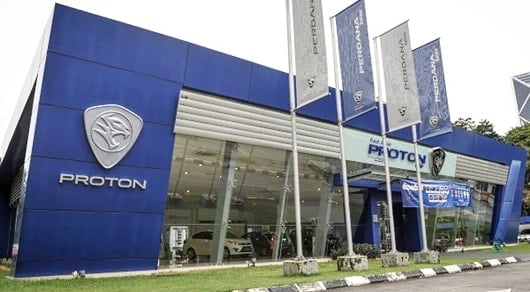
Due to the commencement of the Movement Control Order (MCO) from 1 June-14 June 2021, sales activities at all PROTON outlets will temporarily cease starting Tuesday, 1 June.

Our service centres will continue to operate, and servicing of vehicles will be by appointment only. Bookings can be made by calling individual service centres or via the MyProton app. Walk-in customers will not be entertained.
For emergency cases, please contact our Customer Care hotline, for urgent assistance (available 24-hours). For inquiries, please send us an e-mail.

Malaysian automakers Proton may shut their production plant of SAG, X-70 and X-50 as Toyota Motor and Honda Motor already shut down production in Malaysia from 1st June, as the nation goes into a lockdown, raising concerns that surging coronavirus cases in Southeast Asia will cripple global supply chains.

Supply of Proton products including CBU units and CKD to Pakistan already effected due to pandemic and now this current lockdown will brings more halt, while production facilities equipments and other necessary plant related machinery may delay too.


According to official announcement at Proton website “Due to the commencement of the Movement Control Order (MCO) from 1 June-14 June 2021, sales activities at all PROTON outlets will temporarily cease starting Tuesday, 1 June.

Our service centres will continue to operate, and servicing of vehicles will be by appointment only. Bookings can be made by calling individual service centres or via the MyProton app. Walk-in customers will not be entertained.
For emergency cases, please contact our Customer Care hotline, for urgent assistance (available 24-hours). For inquiries, please send us an e-mail.”


Malaysia imposes a nationwide lockdown on Tuesday, shutting most industries through June 14. Auto manufacturers and steelmakers will be permitted to continue operating but may send only 10% of their employees to work, while electronics, chemical and pharmaceutical companies will be limited to 60%.

Malaysia, Thailand and Vietnam, countries that previously avoided the worst of the pandemic, are now seeing rapid increases in infections. The region serves as a key manufacturing hub for intermediate goods as companies shift production away from China. Now the surging cases are threatening to disrupt global manufacturing.


PROTON in April-21 began work on a further addition to their Tanjung Malim plant. The company performed a ground breaking ceremony for a new stamping facility that will complement the existing lines. This expansion will house a new Super large press machine to further enhance stamping abilities. More significantly, it is part of PROTON’s overarching plan to increase levels of localisation, both for current and future models.

With an investment of RM 200 million, this new facility is part of PROTON’s plan to make Tanjung Malim a world class manufacturing plant. This is on top of the RM 1.2 billion that was spent previously. The new press will allow for the stamping of much larger pieces of bodywork and other parts.

The company says that this investment is part of its growth strategy as well as for future planning as it is designed to allow for the manufacturing of more model lines. It is also in line with PROTON’s technology strategy as the new area will include state-of-the-art tools as well as systems.

New daily infections in Malaysia have nearly doubled over the past week as low vaccination rates lead to the spread of contagious variants. Reported cases reached a record of 9,020 on Saturday, or more than 200 per 1 million people — a higher rate than in India, which has only recently shown signs of improvement from one of the world’s worst outbreaks.

Infections have trended upward in Thailand since March, when a cluster of cases tied to a more infectious variant first found in the U.K. was detected in a Bangkok nightlife district. Taiwan’s New Kinpo Group halted operations at a printer and telecommunications equipment factory in Thailand on May 20 after an outbreak was detected there.
Meanwhile, a “hybrid” with traits from the U.K. and India variants has been found in areas of northern Vietnam that are packed with industrial parks, and authorities are increasingly worried about the threat to supply chains.

Thailand is the region’s largest car manufacturing hub, from which Toyota and other Japanese automakers export finished vehicles to elsewhere in Southeast Asia as well as markets in the Middle East and Oceania. Vietnam is a top manufacturing center for Samsung Electronics, supplying handsets to markets as distant as Europe and the U.S.
In Thailand, a few factories on the end of supply chains were forced to close due to outbreaks among workers. Medical glove manufacturer Sri Trang Gloves shut its plants indefinitely in the southern cities of Trang and Surat Thani on orders from authorities, after 41 employees tested positive for COVID-19.

The company had benefited from higher demand for latex gloves during the pandemic. The two factories have a combined production capacity of 1.9 billion pieces per year, accounting for around half of Sri Trang Gloves’ total capacity.

Charoen Pokphand Foods, the food-processing arm of Thailand’s largest conglomerate, is closing a poultry processing plant roughly 100 km north of Bangkok for five days until Thursday. Two hundred forty-five out of 5,800 workers at the closed plant had tested positive as of Sunday. CP Foods’ 18 other food-processing and feed factories will continue operating as normal, according to the company.

The 10-member Association of Southeast Asian Nations has become an increasingly important producer and exporter of intermediate goods in recent years. The annual added value of exports from nine ASEAN members more than doubled in the decade through 2019, according to Mizuho Research & Technologies, the sharpest rise among the five main global regions studied. The region held a 10.5% share of this added value.
Asia had endured fewer coronavirus cases than the U.S. and Europe until recently. But the region recently reported more than 210,000 new daily infections, more than 40% of the worldwide total, with slow vaccine rollouts seen as a major factor.
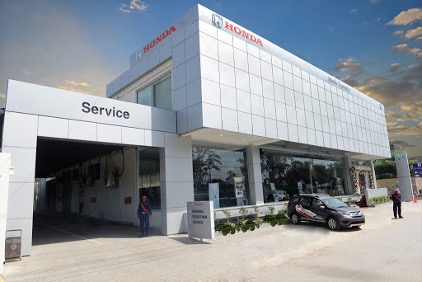
Honda Pakistan Accelerates Customer Spare Part Planning by 80% Using IBM Systems and Storage Solutions

Infrastructure transformation enables enhanced data-driven capabilities and faster and better-informed decision-making

Karachi, Pakistan –xx 2021: IBM (NYSE: IBM) and GBM Pakistan (Private) Limited (GBM Pakistan), an IBM Business Partner, today announced that Honda Atlas Cars Pakistan (Honda Pakistan) has selected IBM Systems and IBM Storage solutions to run its real-time planning solution, based on SAP S/4HANA. The move was designed to enhance customer experience across Honda Pakistan’s 35 dealerships in the country and boost its after-sales services. Today, Honda Pakistan benefits from an approximately 80% acceleration in spare part planning for its customers.

Honda Pakistan is a joint venture between Honda Motor Company Limited and the Atlas Group of Companies and produces over 50K units per annum. In 2015, it turned to IBM Global Business Services (GBS) to deploy its initial SAP ECC Enterprise Resource Planning (ERP) system to benefit from real-time planning and in turn, improve customer experience.

Recently, IBM GBS completed an IBM HANA Impact Assessment, which helped Honda Pakistan plan for the technical and operational requirements of the SAP S/4HANA move. To further enhance and nurture long-term customer loyalty, the company decided to revamp its after-sales services, which include maintenance, repairs, and vehicle servicing and collaborated with IBM and GBM Pakistanto implement IBM Power Systems and IBM FlashSystem Storage for its new SAP S/4HANA environment.

“In just a few years, rapid economic growth in Pakistan has caused dramatic changes both in the competitive landscape and consumer expectations,”Mr. Maqsood-ur-Rehman Rehmani Vice President, Honda Pakistan. “At Honda Pakistan, customer experience lies at the core of everything that we do and our after-sales service is no different. It is incredibly important for maintaining customer loyalty which is why we have turned to IBM processing and storage solutions and GBM Pakistan to revamp our services and further enhance customer satisfaction.”

Through the deployment of IBM Power Systems, Honda Pakistan today benefits from optimized performance and real-time planning. It also was able to drive up server utilization and reduce its spending on power and cooling in its data center.

As part of the transformation, Honda Pakistan also moved SAP S/4HANA to the IBM FlashSystem 5000 for fast access to its growing data volumes. With the addition of the FlashSystem and the greater availability to data the company is able to fuel analytics to make better-informed decisions, more quickly. In the past, generating reports on spare parts orders from its dealerships across Pakistan required up to 20 minutes to complete. Today, this process only requires a few minutes—a reduction of approximately 80 percent, freeing up the time of employees for more strategic initiatives.

“In a growing sector like the automotive industry in Pakistan, digital transformation and implementation of new technologies such as IBM Power Systems and IBM FlashSystem storage determines how much data can be stored and how fast it can be transmitted, processed and accessed,”says Asif Ahmad, Country General Manager, IBM Pakistan. “The improvement in efficiency for Honda Pakistan’s unique business requirements truly demonstrates the importance of continuing to evolve technology provisions within enterprises.”

“We are delighted to be announcing yet another landmark IT project, this time for a leading automotive company, Honda Pakistan,”said Saqib Ahmad Khan, Country General Manager, GBM Pakistan. “Honda Pakistan has been taking bold, innovative steps to redefine customer experience, and this project is yet another testament to the company’s commitment to its customers.”

GBM Pakistan is a member of IBM PartnerWorld, IBM’s partner program that empowers businesses with the tools and resources they need to help transform clients into industry leaders.

  • Press Release

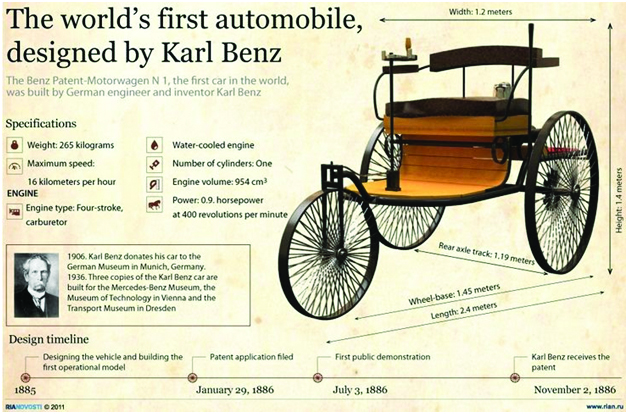
Beginning of Automobile Industry

Most of the Automobile concerns might know that the Registered Journey of Automobile started from UK back in 1860. Most of the intellectuals worked on the development of a successful Vehicle which could serve the need of the time. As the Journey Started from UK it went on in West (US), Europe (France & Germany), Asia Pacific & so on. Only successful Brands were heard whereas many merged into renowned brands or role down their private projects.

Automobiles successful Market has been revolving from UK, US, Germany, France, Japan, Korea & Now CHINA / Asia Pacific. Companies more or less have been learning from Top seller’s success stories. Almost every follower enhanced features & technology in-accordance to market demand by the passage of time. Companiesfocusing on R&D made it in the top Club of Big producers / sellers.

Today’s Automobile Companies are focusing on innovation based on mainly Safety, Comfort, Luxury& Economy.  There was a time when vehicles were sold through huge advertisements whereas now a days vehicles are sold based upon its Reputation / customer experience of Dealership & Product it-self.

This is the list of the 15 largest publicly-traded car manufacturers by market capitalization as of 23 January 2021, according to CompaniesMarket.

RankGroupReg. baseMarket cap (US dollars)
1TeslaUnited States$772.50 billion
2ToyotaJapan$222.83 billion
3BYDChina$111.32 billion
4VolkswagenGermany$106.55 billion
5NIOChina$95.49 billion
6DaimlerGermany$85.29 billion
7General MotorsUnited States$78.75 billion
8BMWGermany$55.45 billion
9VolvoSweden$51.62 billion
10FerrariItaly$51.24 billion
11Great Wall MotorsChina$50.90 billion
12StellantisNetherlands$50.19 billion
13HyundaiSouth Korea$48.96 billion
14HondaJapan$48.84 billion
15FordUnited States$46.78 billion
Top 10 largest motor vehicle manufacturers by revenue (2019)
RankGroupCountryRevenue (USD)
1VolkswagenGermany$290.2B
2ToyotaJapan$272.3B
3Stellantis
(PSAFCA)
Netherlands$205.6B
4FordUnited States$156B
5HondaJapan$143.1B
6General MotorsUnited States$137.2B
7BMWGermany$116.9B
8DaimlerGermany$104.6B
9NissanJapan$92B
10HyundaiSouth Korea$90.8B

Share Holdings:

It is common for automobile manufacturers to hold stakes in other automobile manufacturers. These ownerships can be explored under the detail for the individual companies.

Notable current relationships include:[citation needed]

Joint ventures

China joint venture

Beijing Automotive Group has a joint venture with Daimler called Beijing Benz, both companies hold a 50-50% stake. Both companies also have a joint venture called Beijing Foton Daimler Automobile.

By Chinese Companies out of China.

Daimler AG and BYD Auto have a joint venture called Denza, both companies hold a 50-50% stake.

The above information has been gathered from different Media sources, Hence any variation in stated information is regretted in Advance.

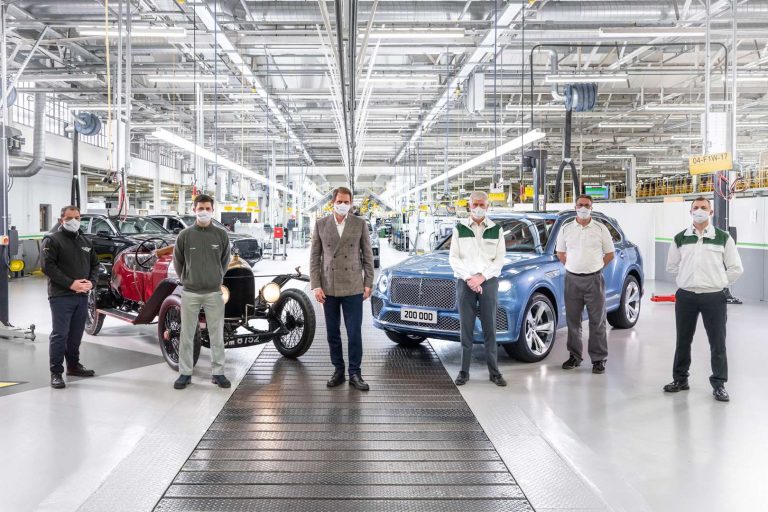
Bentley’s 200,000th car has left the factory, and it’s a hybrid

Bentley has announced that it has passed the symbolic milestone of 200,000 cars having left the factory since the brand was founded in 1919. And the 200,000th is a hybrid Bentayga, symbolizing the electric transition of the British manufacturer.


Incredibly, more than three quarters of these 200,000 cars have been produced in the last 18 years. And in fact 85 cars currently roll off the Bentley production line every day.

That’s the number of cars the brand was producing every month just 20 years ago. Each car is still carefully assembled by hand, as has been the tradition for over 100 years.


Bentley announced earlier that it will only produce electric cars from 2030.
For the purposes of communicating on this milestone, Bentley decided to have this Bentayga posed next to the EXP2, the oldest Bentley in history.

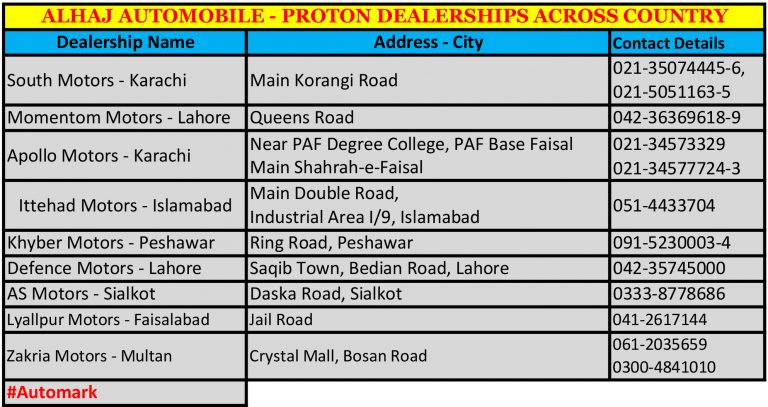
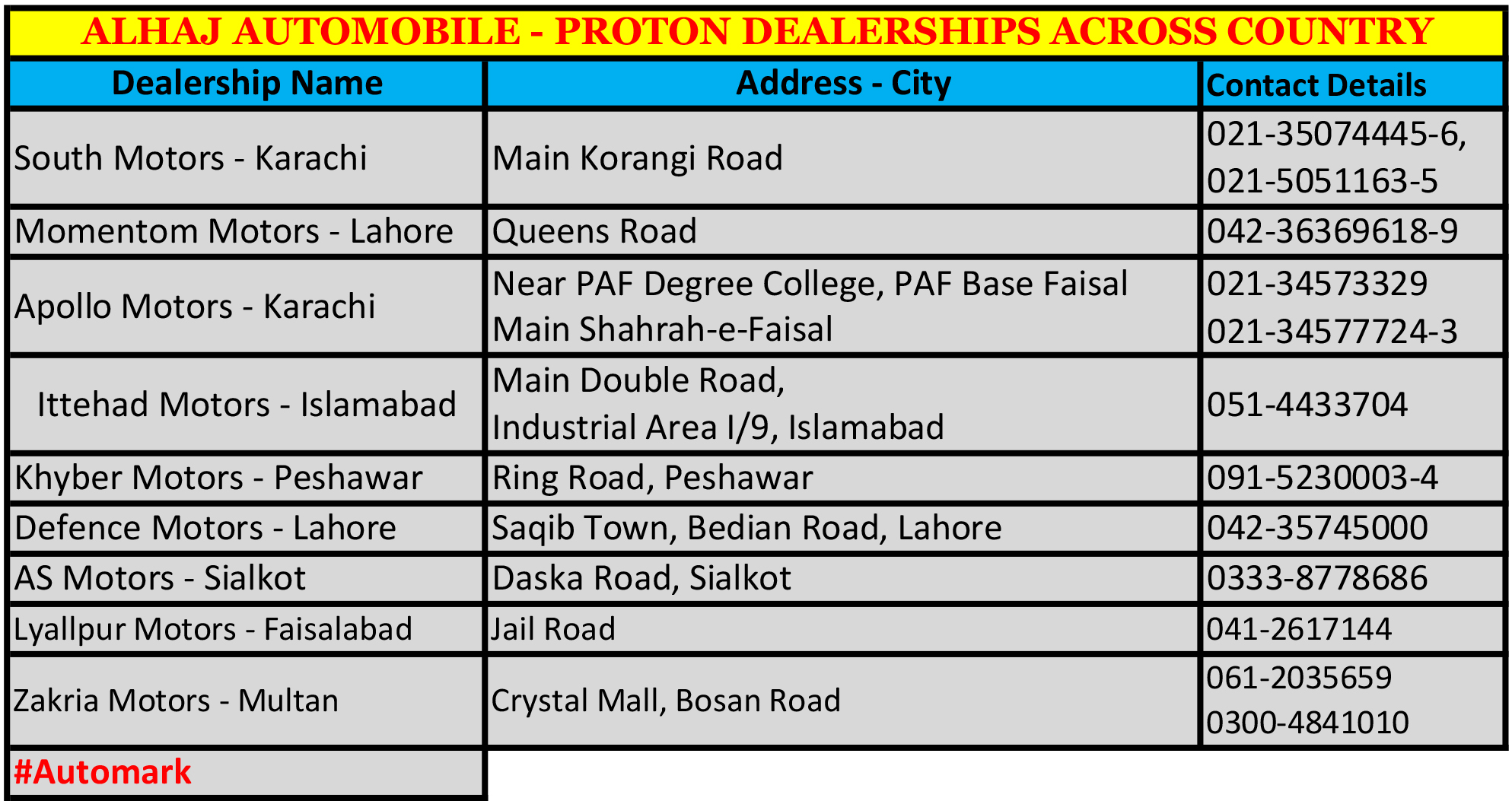
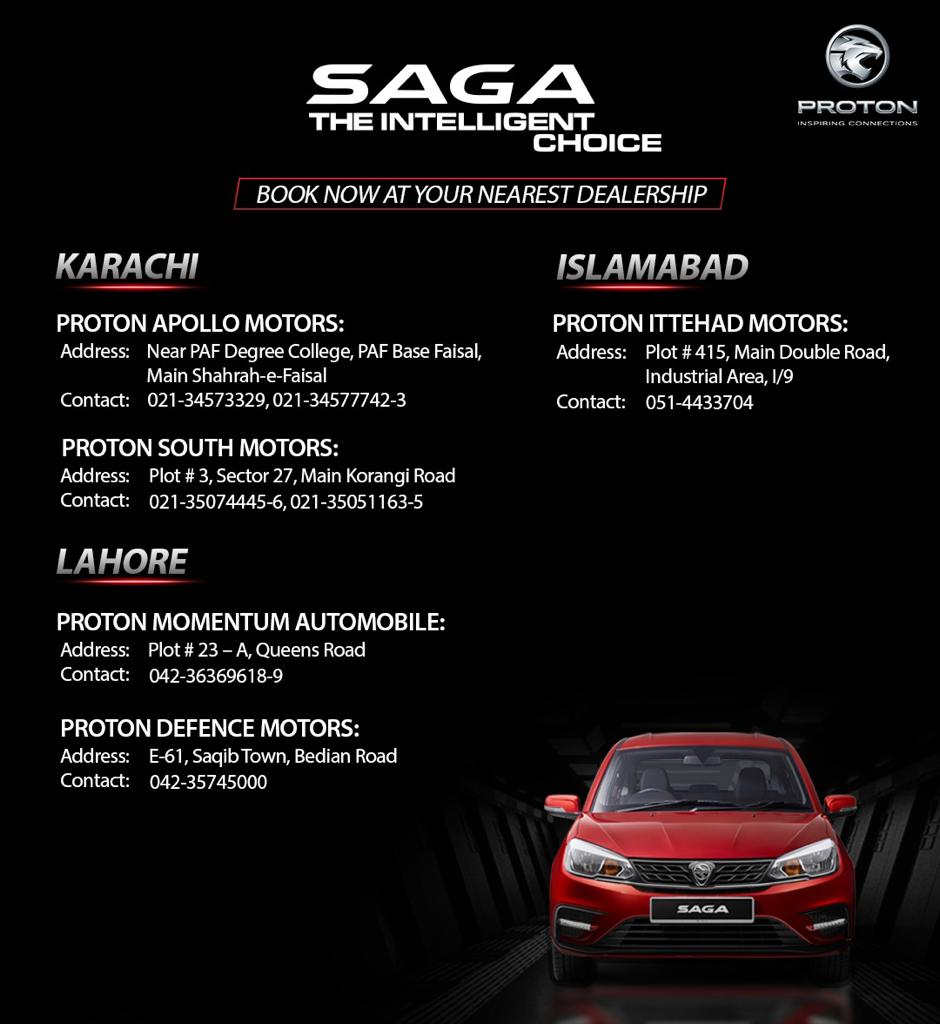
ALHAJ AUTOMOBILE – PROTON DEALERSHIPS ACROSS COUNTRY

ALHAJ AUTOMOBILE – PROTON DEALERSHIPS ACROSS COUNTRY

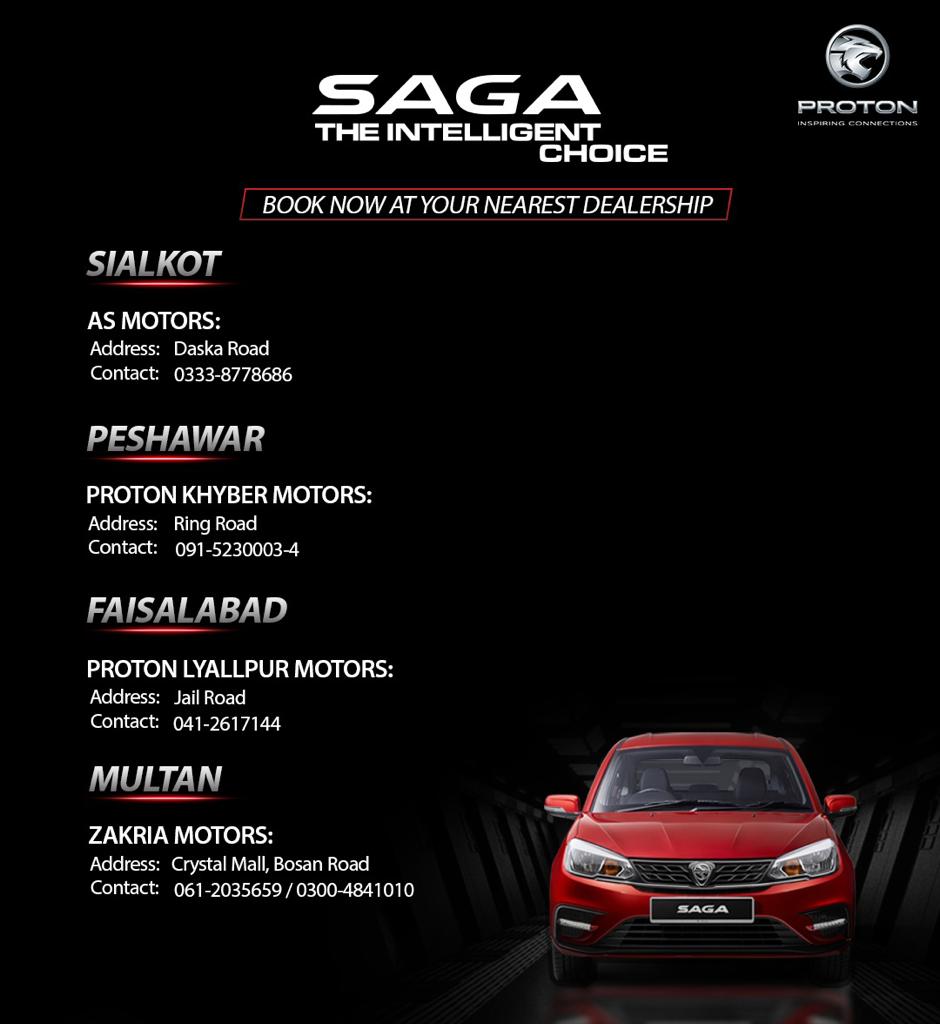
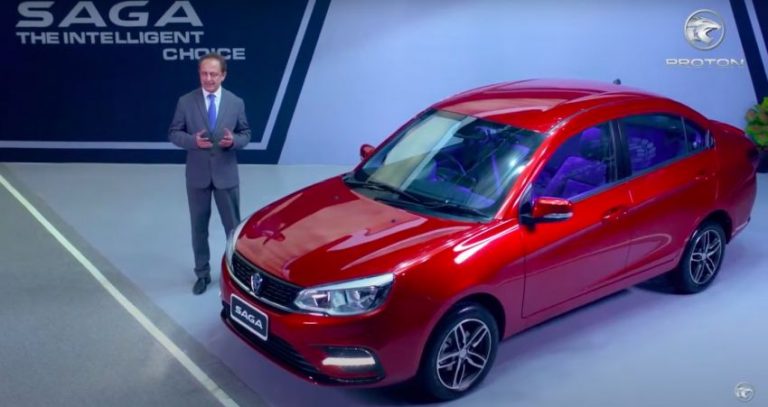
Proton Saga launched in Pakistan – smaller 1298cc engine; R3 with manual gearbox; from Rs. 2,175,000

Following the introduction of the Proton X70 last December, Al-Haj Automotive, the authorised distributor and assembler of Proton vehicles in Pakistan, has now launched the more affordable Saga sedan in the country.

The Saga on sale there is being offered in five variants, including the Saga MT and AT, the range-topping Saga Ace AT, as well as the limited-edition Saga R3. What’s interesting is the Saga R3 in Pakistan is available with either an automatic or manual transmission – the latter is something we don’t get.

In terms of equipment, both the Saga MT and AT are similar to the Standard MT and AT variants we have here, including halogen headlamps, 14-inch steel wheels with plastic covers, rear parking sensors, powered side mirrors with indicators and remote trunk release.

Stepping up to the Ace AT, it matches the Premium variant in Malaysia, adding on LED daytime running lights, a small boot spoiler, 15-inch alloy wheels, a multi-function steering wheel, a seven-inch touchscreen media system with smartphone mirroring, a reverse camera and a N95 cabin filter.

As reported previously, the Saga sold in Pakistan is powered by a S4PE engine with a displacement of 1,299 cc, which is 33 cc less than the Malaysian model that has a capacity of 1,332 cc. The lower engine displacement of below 1.3 litres allows the Saga to be priced more competitively in Pakistan, thanks to the tax breaks it qualifies for with this classification.

According to Proton Pakistan, the engine makes 92 PS (91 hp) and 120 Nm of torque, and comes with an Eco Drive Assist mode. The transmission pairings include a four-speed torque converter automatic and a five-speed manual.

Safety-wise, the base MT and AT variants receive two front airbags, ABS and EBD as standard, while traction control and Electronic Stability Control (ESC) is only found on the Ace AT. There are six colours to choose from – Armour Silver, Ruby Red, Rosewood Maroon, Jet Grey, Snow White dan Quartz Black.

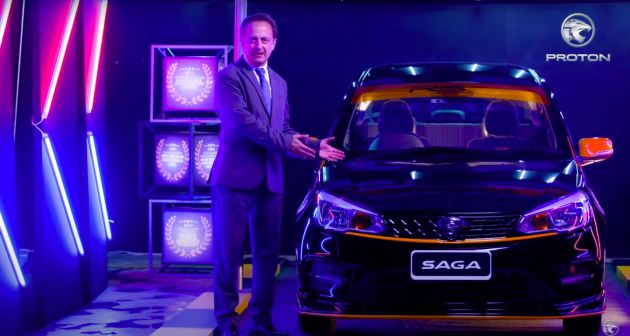
The Saga R3 is a little different than the MT, AT and Ace AT, as it uses the 1,332-cc engine that we have here. Equipped with the same kit as the Premium, the variant features cues inspired by the Sepang 1000KM race car, including a body kit consisting of a front spoiler lip, side skirts and accents in the official R3 colour, yellow.

The hue is seen on the front grille, front and rear windscreen stickers, as well as the side mirror caps. Other exterior touches include 15-inch alloys in matte grey, an R3 emblem on the boot lid and the race car’s number “82” that is part of the body decals.

Inside, more yellow accents can be seen on the centre console and the analogue meter cluster, complemented by an “R3 Limited Edition” emblem on the dashboard, R3-branded carpets, R3-embroidered leather seats and the stitching on the steering wheel.

Prices start at 1.975 million Pakistani rupees (RM53,665) for the Saga in MT guise, while the AT goes for PKR2.125 million (RM57,741). The Ace AT is priced at PKR2.225 million (RM60,458) and the Saga R3 goes for PKR2.175 million (RM59,100) with a manual, or PKR2.425 million (RM65,893) with an automatic. A five-year/150,000-km warranty is standard, and Proton is one of the first car brands in Pakistan to offer such a coverage package.


Only 100 units of the Saga R3 will be offered in Pakistan, which is far less than the 2,000 units we get here. According to Proton Pakistan marketing manager Ibad Jamal, to ensure a fair chance for customers to secure a unit, they must first register their interest online, after which a lucky draw will be done to decide who is fortuitous to buy one.

Source: https://paultan.org/2021/04/05/proton-saga-launched-in-pakistan/